Skip to content
Menu

Albania · Bosnia & Herzegovina · Croatia · Montenegro · Serbia · Slovenia

Roman sites you can actually visit.

The Roman remains between the Alps, the Adriatic and the Danube: what is left standing, how to reach it, and whether it is worth the detour. Every entry cites its sources.
AlbaniaBosnia and HerzegovinaCroatiaMontenegroSerbiaSlovenia
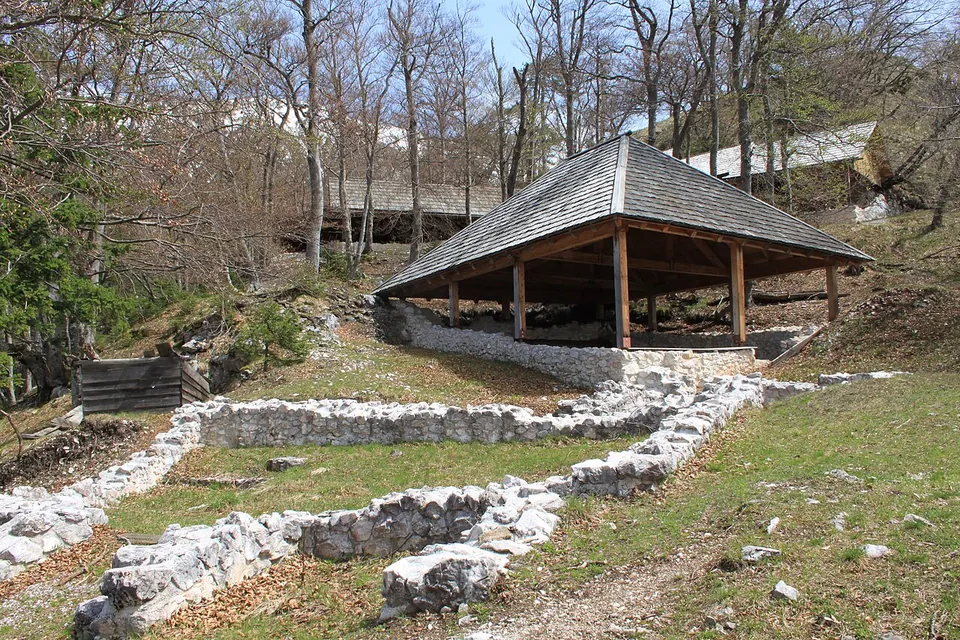
Low drystone wall footings laid out across a clearing in bare woodland, with a large open-sided pavilion roofed in wooden shingles covering further remains behind them.

Photo: JakobZ · CC BY-SA 3.0 · Commons

fort · Žirovnica

Ajdna

The settlement was built on terraces just below the summit (the register says three; sl.wikipedia two, joined by a ridge).
Hidden gem
Open page →
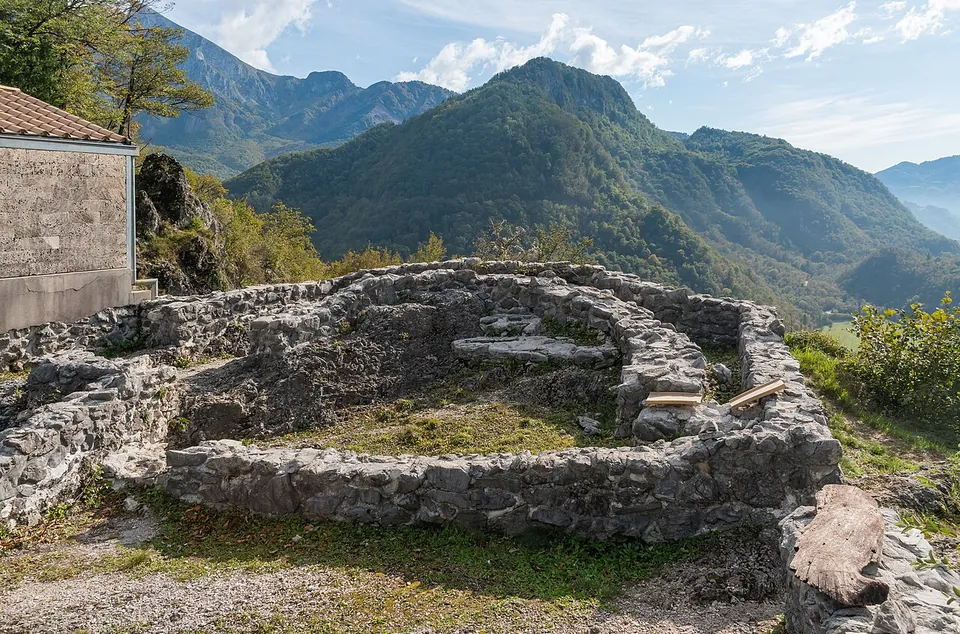
The rebuilt stone footings of a small building with a rounded end, knee to waist high, on a rocky hilltop, with steep forested mountains rising behind under a blue sky.

Photo: Krzysztof Golik · CC BY-SA 4.0 · Commons

fort · Kobarid

Tonovcov grad

The settlement of the second half of the 5th and the 6th centuries was about 150 m long and 90 to 120 m wide — published figures differ (sl.wikipedia; the Tolmin museum) — inside a double defensive wall, with many stone houses and four early Christian churches (the Tolmin museum).
Hidden gem
Open page →
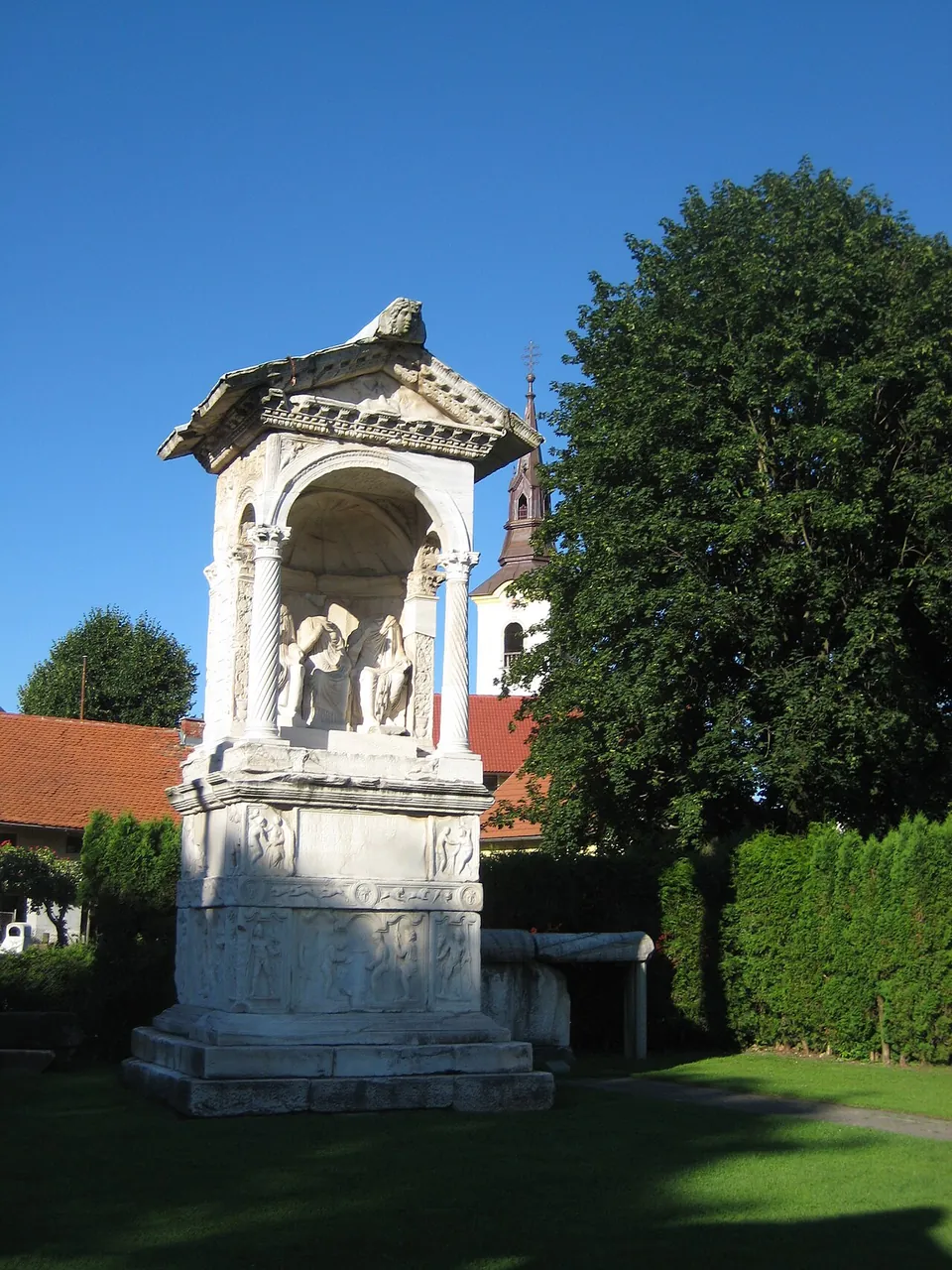
A tall white marble tomb against a blue sky, a pedimented roof on twisted columns sheltering carved figures, standing on a high base whose sides are covered in relief panels.

Photo: Sl-Ziga · Public domain · Commons

necropolis · Žalec

Šempeter Roman Necropolis

An open-air archaeological park, hedged round, south-west of the church of St Peter.
Hidden gem
Open page →
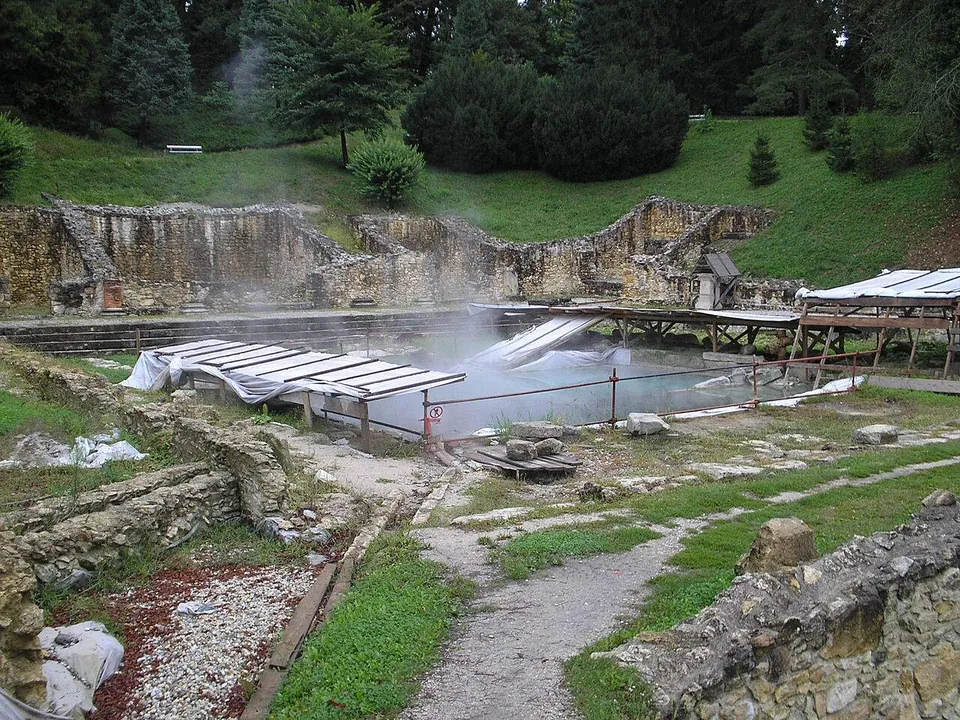
Roman stone walls several metres high along the foot of a green slope, with steam rising from a pool of water behind a railing and gravel paths among the ruins in the foreground.

Photo: Fraxinus · CC BY-SA 3.0 · Commons

bath · Varaždin County

Aquae Iasae

A compact archaeological park covering about 6,000 m² of Roman public buildings of the 1st to 4th centuries.

Hidden gem
Open page →
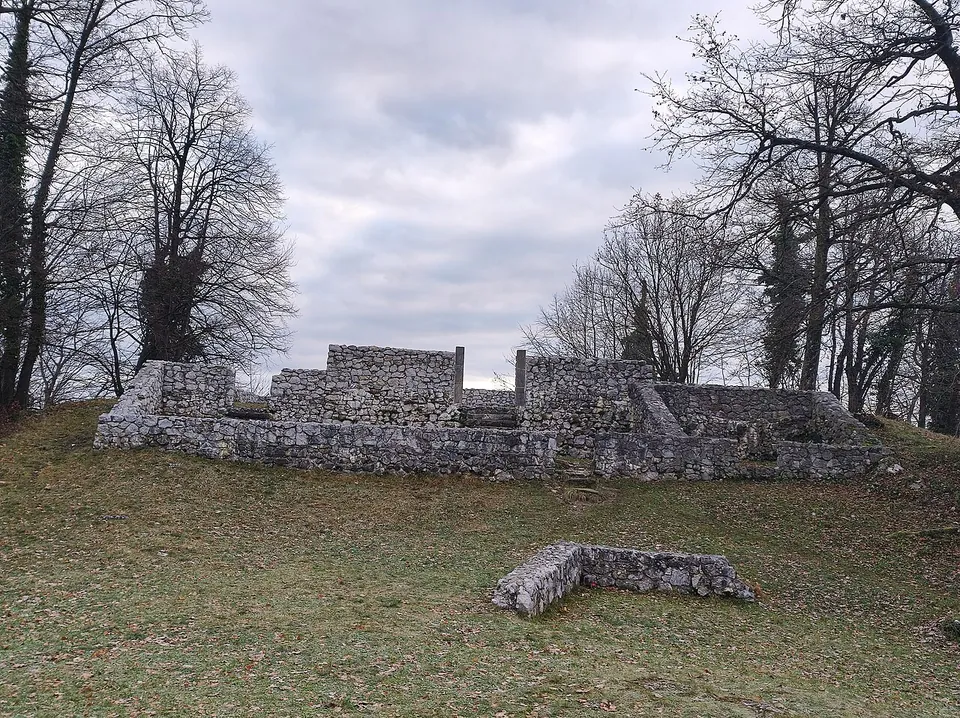
Grey drystone walls standing about head height on a grassy clearing among bare trees, with lower foundation courses running away from them across the slope.

Photo: Ajznponar · CC BY 4.0 · Commons

fort · Šentjur

Rifnik

The plan of the settlement is the point.

Hidden gem
Open page →
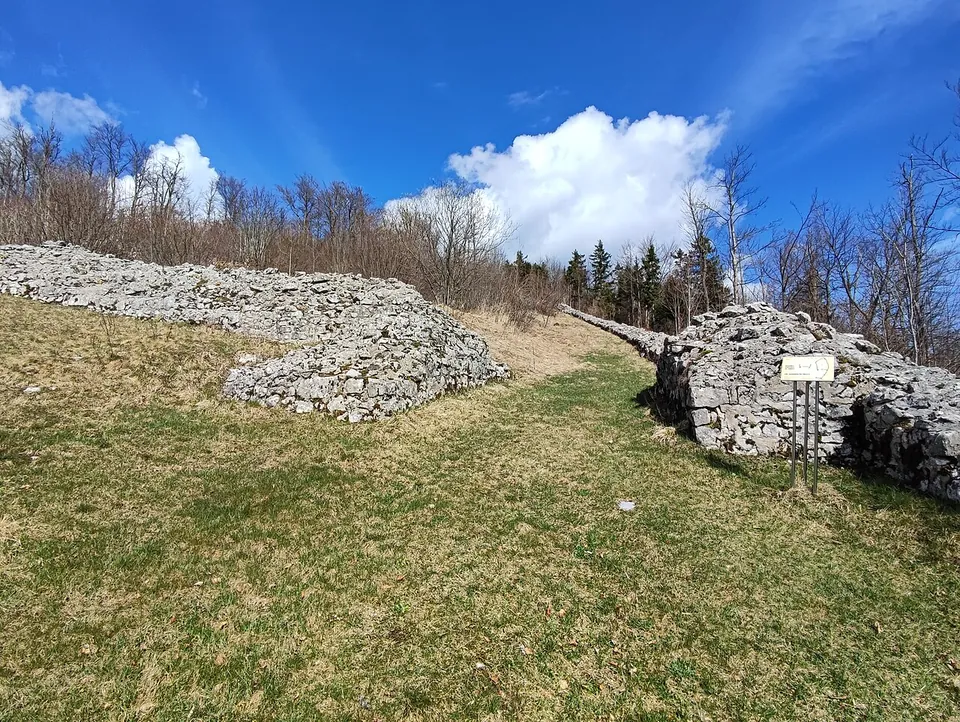
Two banks of piled pale limestone rubble, waist to head high, ending either side of a grassy gap, with a small information sign on a post and bare trees behind.

Photo: Ajznponar · CC0 · Commons

fort · Ajdovščina

Ad Pirum

The fort follows the ground in an irregular oval, 250 m long and up to 75 m wide.
Hidden gem
Open page →
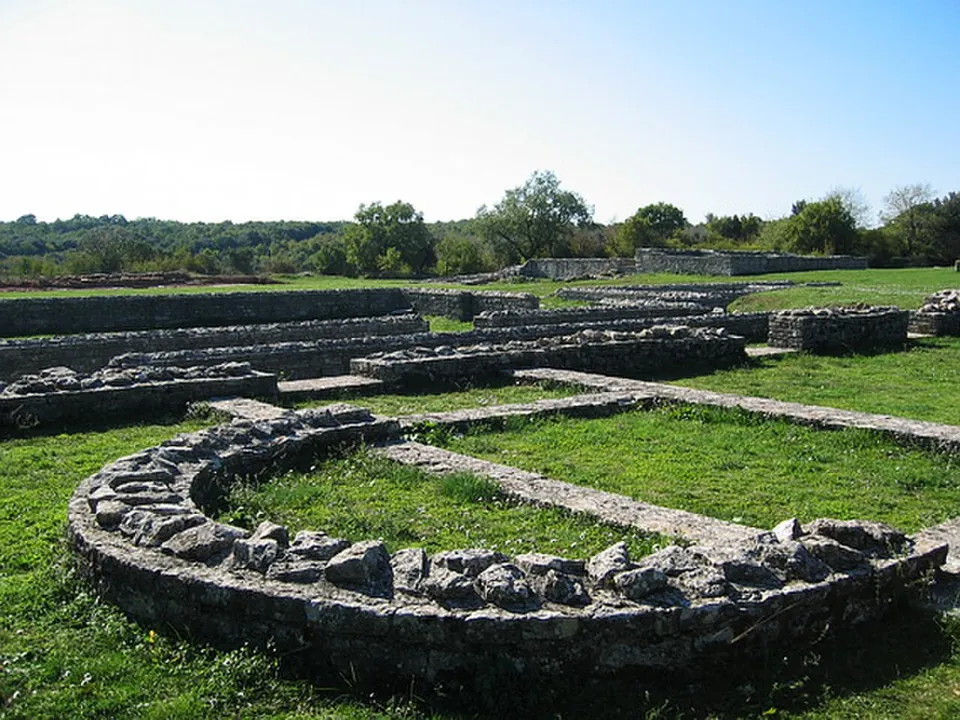
The curved low stone wall of a church apse in the grass in the foreground, with the long parallel wall lines of the nave running away behind it and trees on the horizon.

Photo: Hieronymushistriae · CC BY-SA 3.0 · Commons
city · Istria County

Nesactium

An open archaeological park of conserved walls.

Hidden gem
Open page →
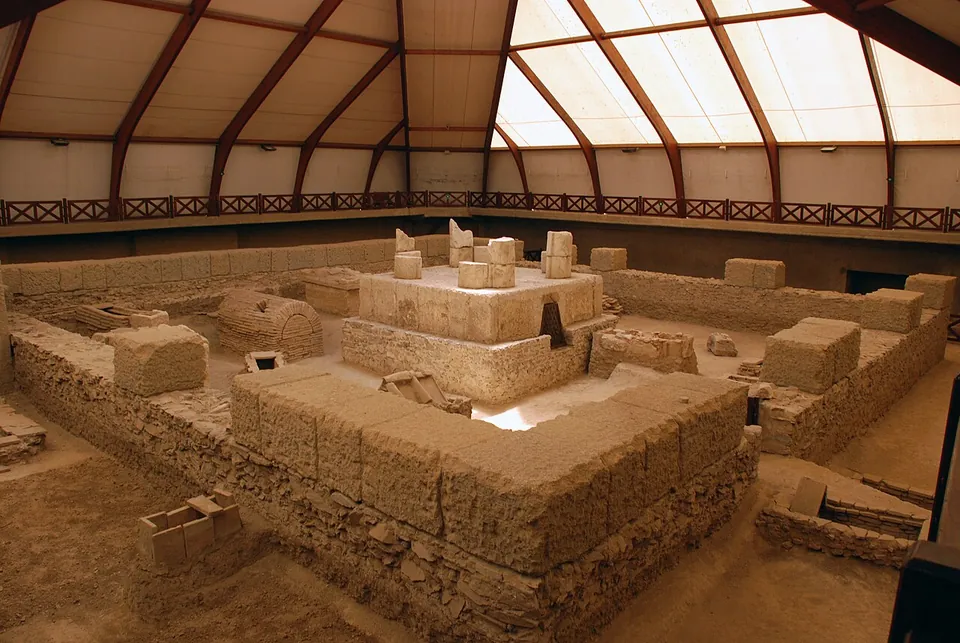
A square stone structure with thick walls and internal compartments, excavated below floor level and covered by a modern tent roof of pale fabric on steel arches, with a visitors' walkway running round it.

Photo: Saskafoto · CC BY-SA 3.0 · Commons

city · Braničevo District

Viminacium

The excavated area is presented as a park rather than a ruin field: several buildings sit under permanent protective roofs, with walkways round them, and a guide takes you between them.
Hidden gem
Open page →
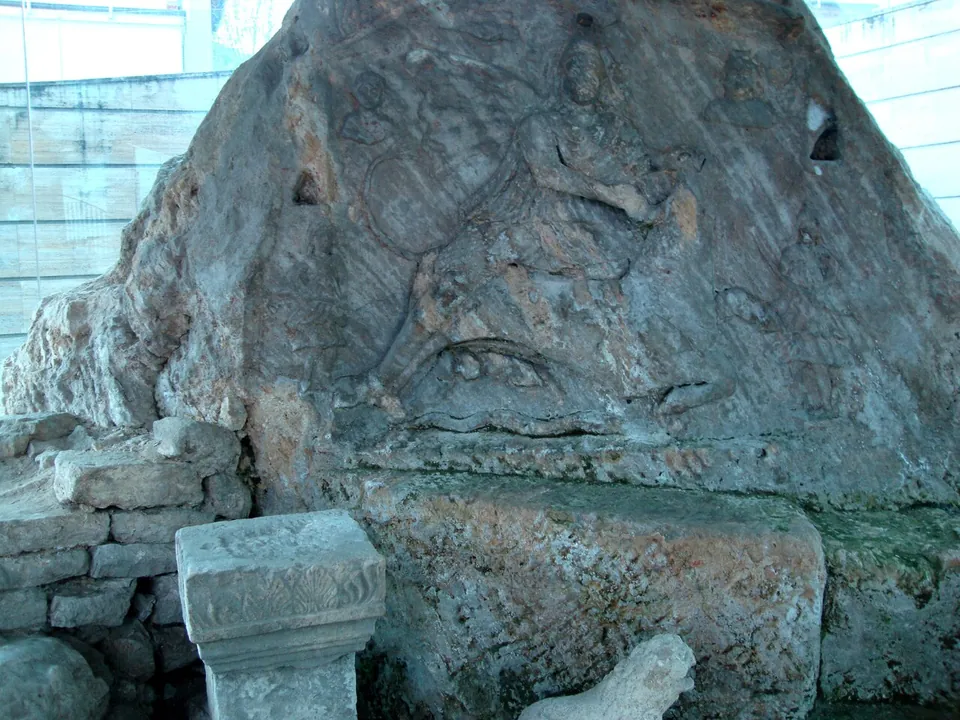
A large relief carved into a block of grey rock, worn but showing a figure kneeling on a bull, with a small carved stone altar and a sculpted animal fragment in front of it, seen through glass.

Photo: Kisanova · CC BY-SA 4.0 · Commons

temple · Jajce

Jajce Mithraeum

A single small room, about 7 m long, dug into the ground to feel like the cave the cult preferred.
Hidden gem
Open page →
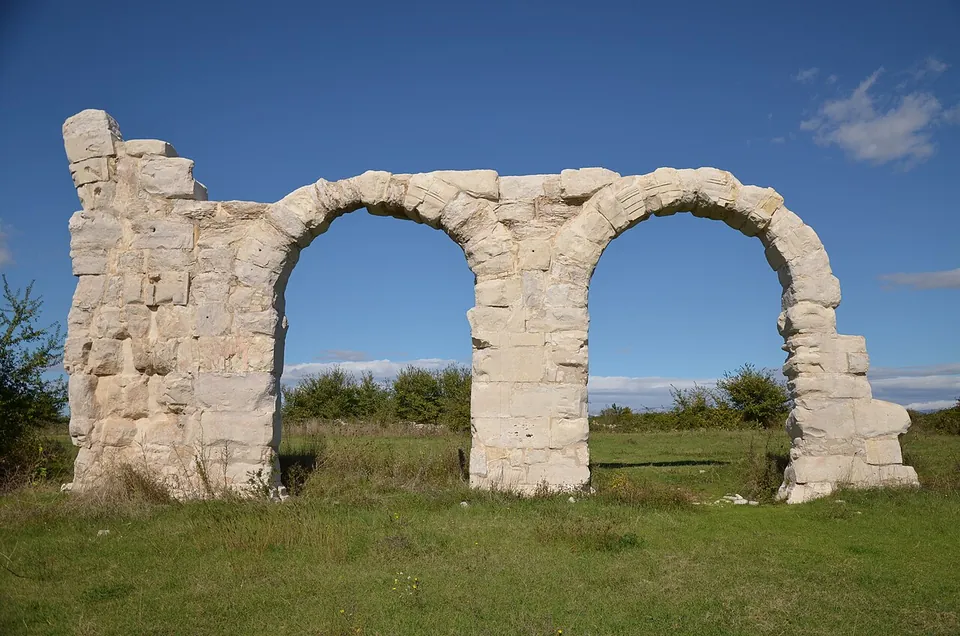
Two round arches of large pale stone blocks on three piers, the end piers broken off at different heights, standing on grass against a blue sky.

Photo: Carole Raddato · CC BY-SA 2.0 · Commons

fort · Šibenik-Knin County

Burnum

The site is in two parts, both inside Krka National Park.
Hidden gem
Open page →
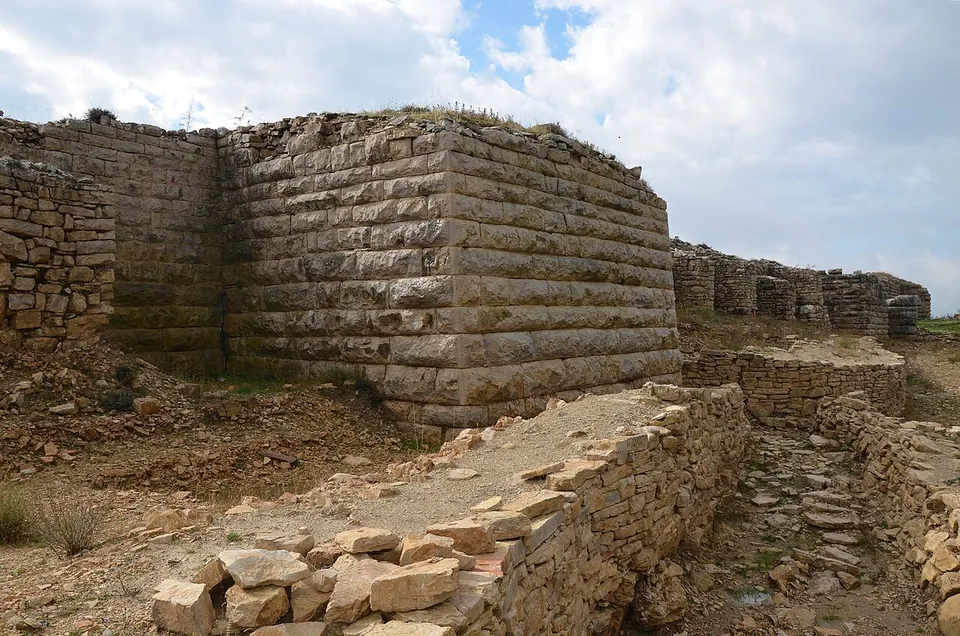
A corner of massive city wall built of long courses of squared limestone blocks, standing several metres high, with lower stone foundations and a rubble path in front of it.

Photo: Carole Raddato · CC BY-SA 2.0 · Commons

city · Zadar County

Asseria

Long stretches of the city wall survive, in courses of massive squared blocks, with corner towers; English Wikipedia says the ashlar walls predate the Roman occupation, while German Wikipedia says the monumental late antique walls largely replaced the earlier Roman and Liburnian defences.
Hidden gem
Open page →
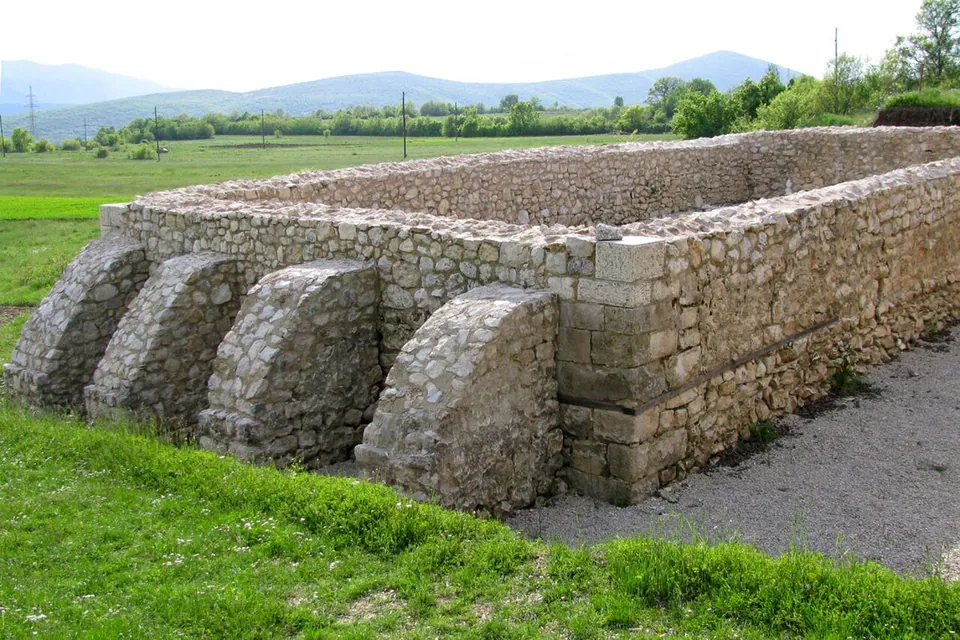
A rectangular block of conserved Roman walls of rough limestone, about head high, with a row of sloping buttresses along one side, standing in grass with fields and low hills behind.

Photo: Ante Perković · CC BY-SA 3.0 · Commons

fort · Split-Dalmatia County

Tilurium

The camp covered about 12 hectares, and the village of Gardun sits over it (en.wikipedia).

Hidden gem
Open page →
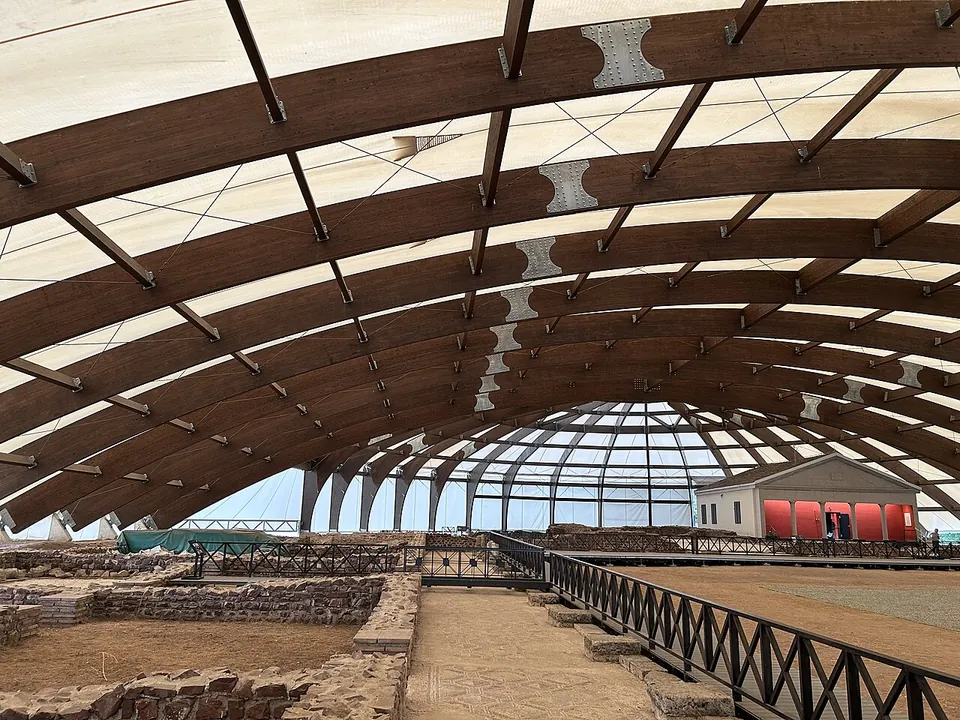
The inside of a large modern canopy of curved timber ribs and pale fabric, spanning the excavated walls of the villa, with a raised walkway along one side and the red-panelled pavilion visible beyond the open end.

Photo: Sadko, Wikipedia · CC BY 4.0 · Commons

villa · Nišava District

Mediana

An archaeological park, and a recently reopened one.
Hidden gem
Open page →
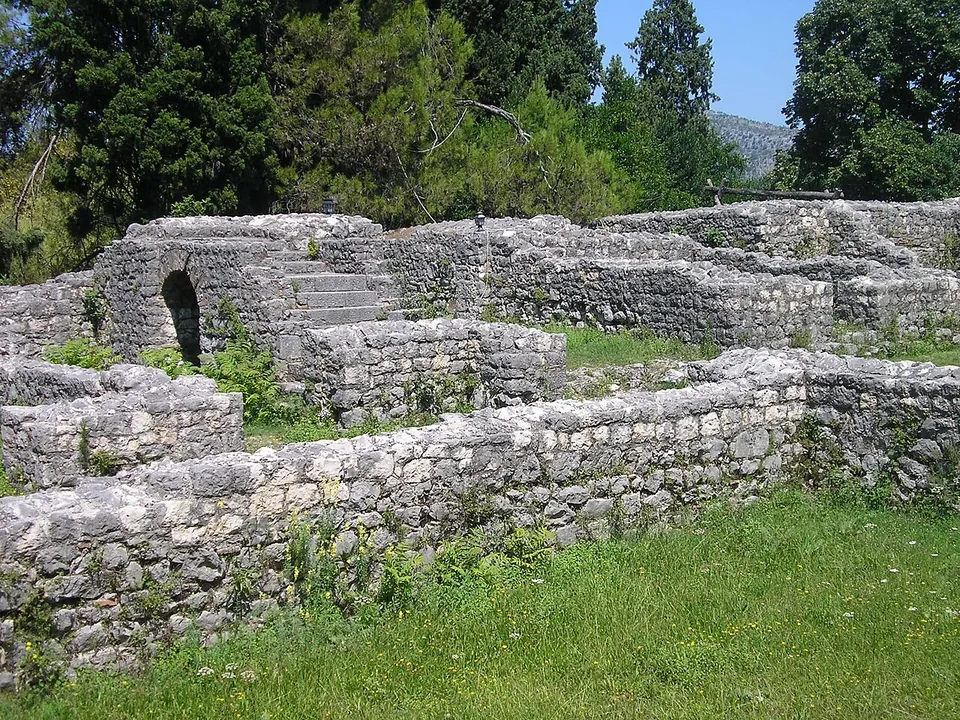
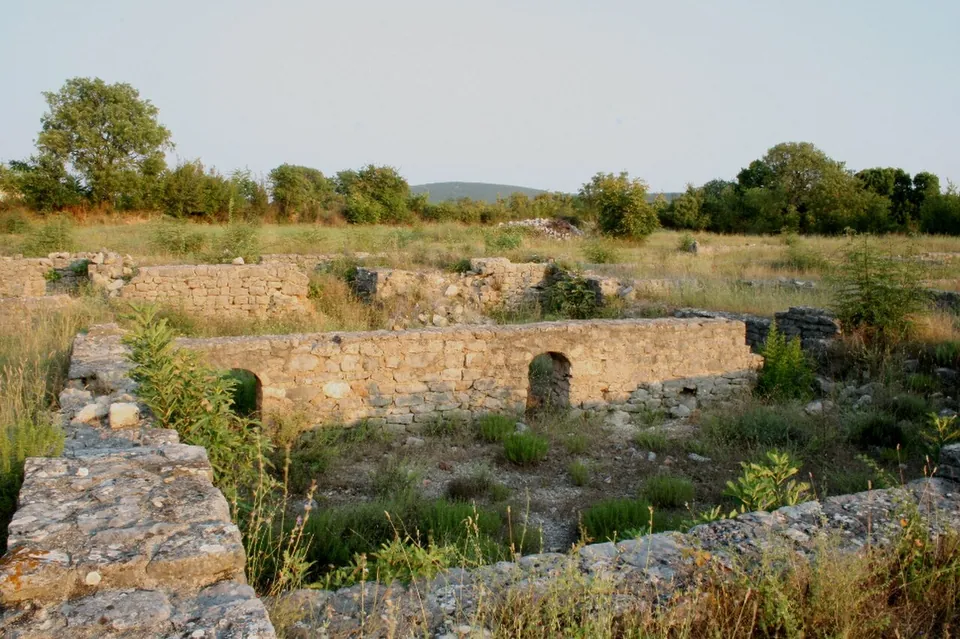
Conserved Roman walls of pale stone around a sunken room, with a low arched opening in the far wall, weeds growing among the stones and trees on the horizon.

Photo: Croromano · CC BY-SA 3.0 · Commons

fort · Ljubuški

Castra of Gračine

The site covers about 4 hectares, of which the walled complex took about 1.5; its wall, about 0.9 m thick, ran 140 m north to south and 110 m east to west (hr.wikipedia).

Hidden gem
Open page →
Thick rubble-stone walls about head high, with a small round-arched opening and a flight of stone steps rising along the wall, on a lawn with tall cypresses behind.

Photo: Ma Ga · CC BY 3.0 · Commons

villa · Čapljina

Mogorjelo

The 4th-century compound measures 102 by 86 m, with a tower at each corner — three square and one, the eastern, round — and gates on three sides, the north gate once flanked by carved blocks with acanthus and vine.
Hidden gem
Open page →
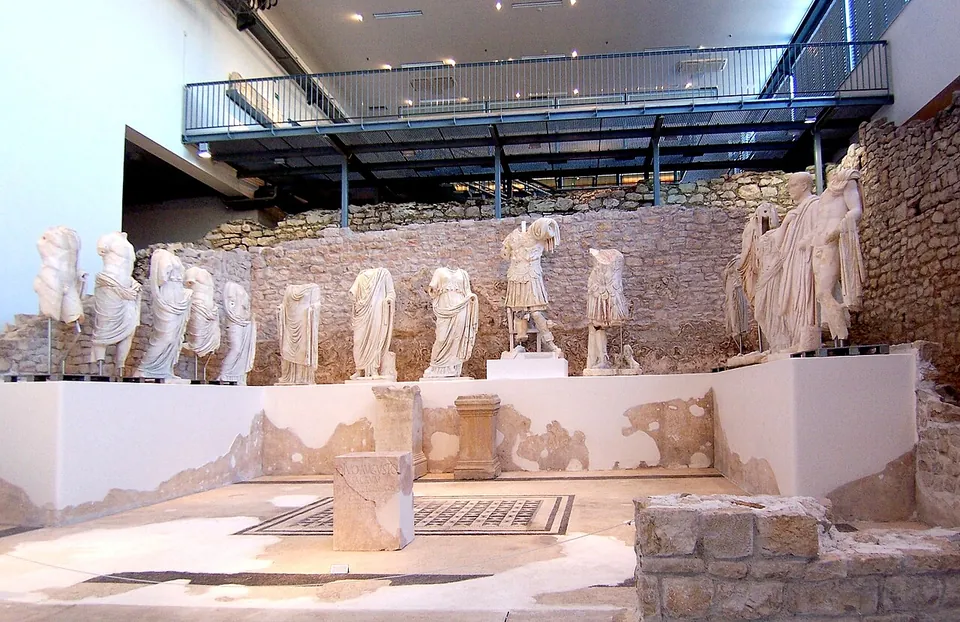
A row of headless and damaged white marble statues of men and women in togas and robes standing on a plinth along the back of an excavated temple room with a mosaic floor, under a modern metal gallery.

Photo: Rolf Kawel · CC BY-SA 3.0 de · Commons

city · Dubrovnik-Neretva County

Narona

The Narona Archaeological Museum was the first museum in Croatia built in situ, over the remains of the Augusteum, the temple of the emperor Augustus (hr.wikipedia).
Hidden gem
Open page →
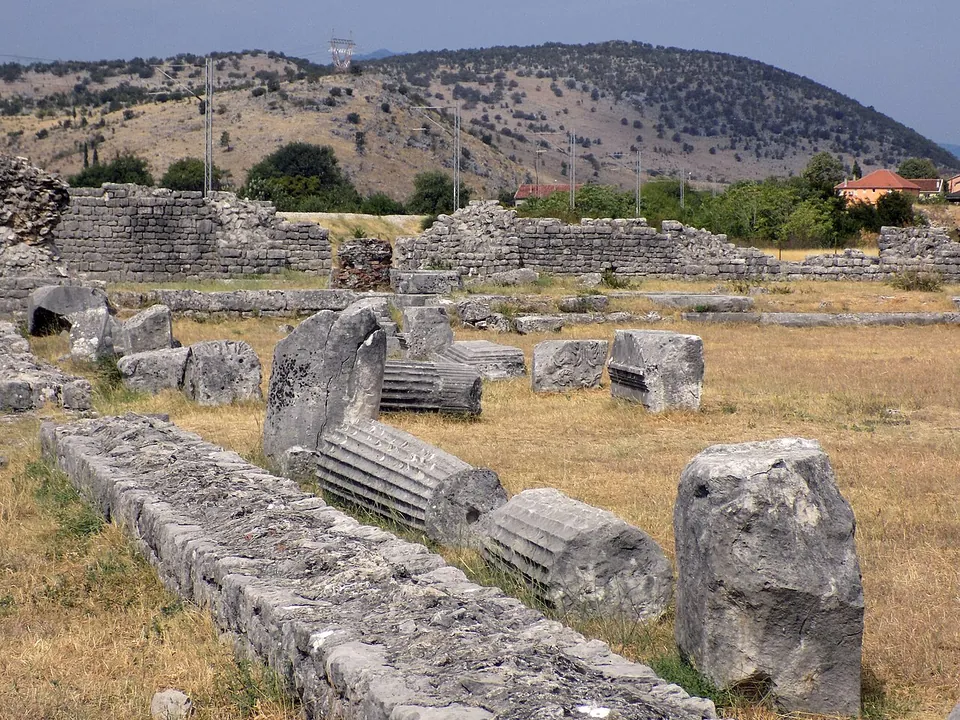
A dry grassy field strewn with fallen column drums and carved stone blocks beside a low line of wall, with ruined walls several metres high and scrubby hills behind.

Photo: BuhaM · CC BY-SA 4.0 · Commons

city · Podgorica

Doclea

The walled town was a long, irregular polygon protected by rivers on three sides, with walls 2 to 2.3 m thick, strongest on the east, and remains of towers still visible on the north side (sr.wikipedia).

Hidden gem
Open page →
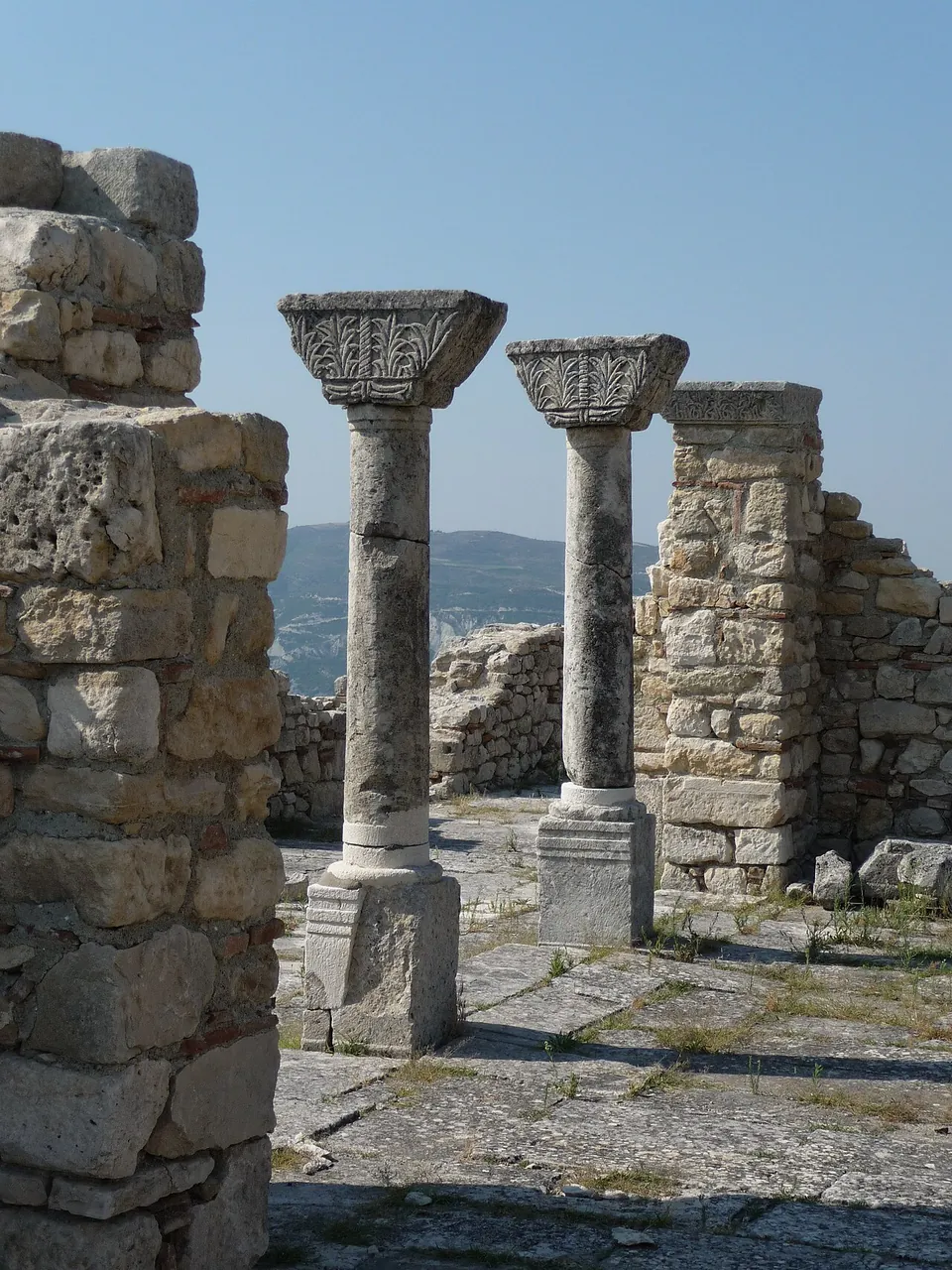
Two stone columns with carved capitals standing on a paved floor between stone walls, with hills in the distance behind.

Photo: Riet Prins · CC BY 3.0 · Commons

city · Fier County

Byllis

The walls of about 350 BC run for 2.25 km and enclosed some 30 hectares round the hill; inscriptions record their rebuilding by the engineer Victorinus on the orders of Justinian.
Hidden gem
Open page →
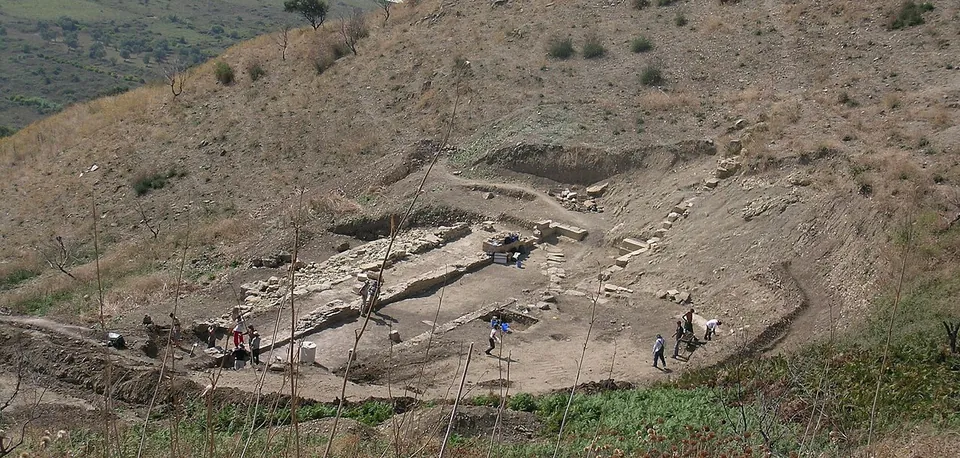
The curved hollow of an ancient theatre cut into a grassy hillside, with its lower stone rows and stage foundations exposed in an excavation, and a few people working.

Photo: Giuseppe Lepore · CC BY-SA 3.0 · Commons
city · Vlorë County

Phoenice

The large theatre had a stage front 30 m wide.

Hidden gem
Open page →
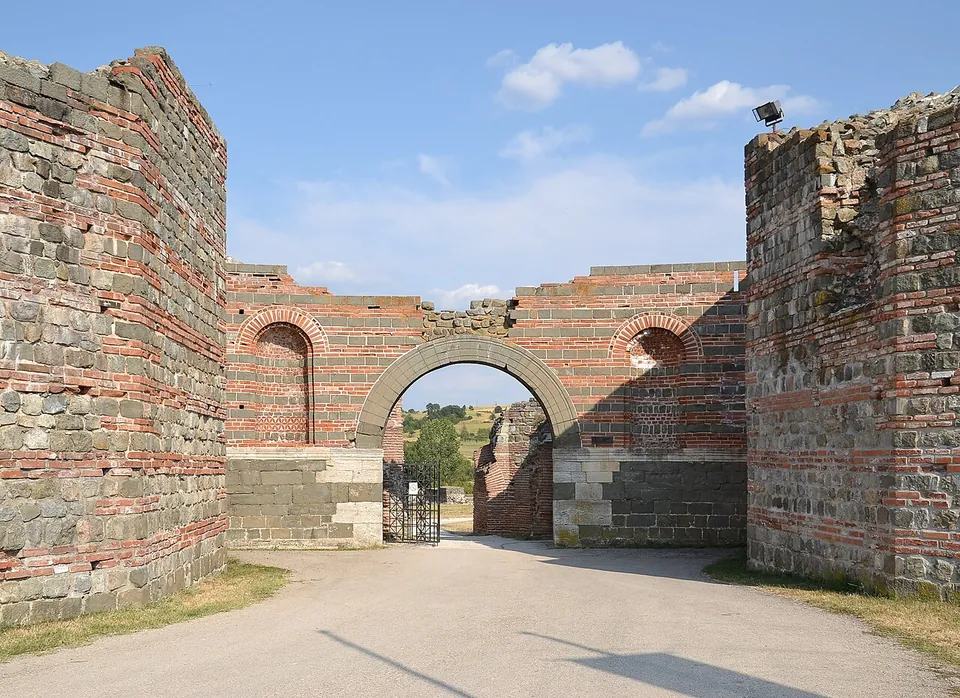
A round-headed brick arch in the circuit wall, flanked by two massive towers of grey stone banded with courses of red brick, with a gravel track running out through the opening.

Photo: Pudelek (Marcin Szala) · CC BY-SA 3.0 rs · Commons
palace · Zaječar District

Felix Romuliana

The enclosure is the set piece.

Landmark
Open page →
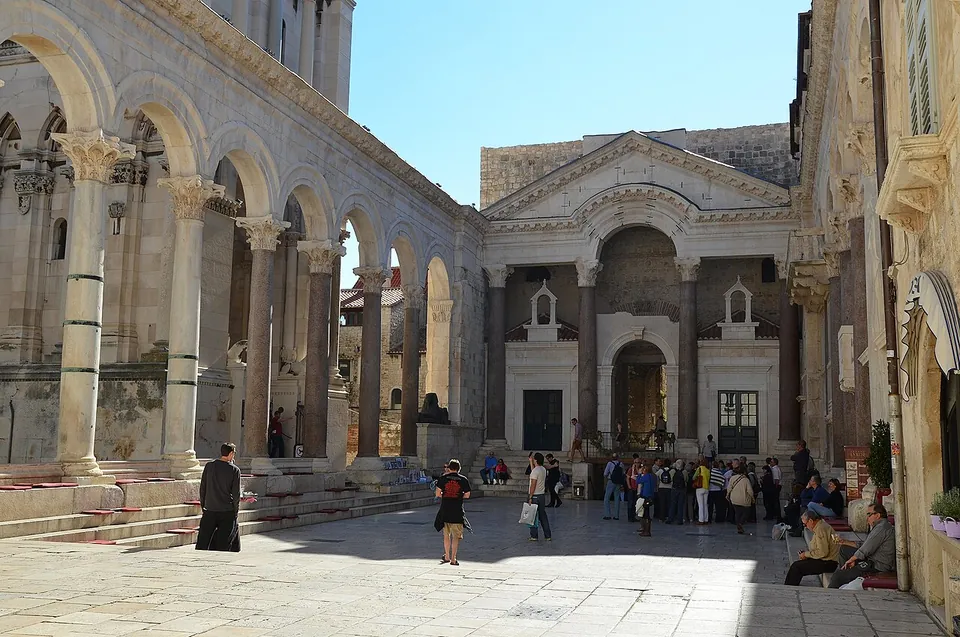
A paved Roman court lined on the left by an arcade of granite columns carrying round arches, closed at the far end by a pedimented front on four columns with an arched opening, with visitors standing in the sun.

Photo: Following Hadrian · CC BY-SA 2.0 · Commons

palace · Split-Dalmatia County

Diocletian's Palace

The palace is an irregular rectangle of roughly 215 by 175–180 m, laid out like a legionary fort, with towers on its three landward walls and a gate in the middle of each side.
Landmark
Open page →
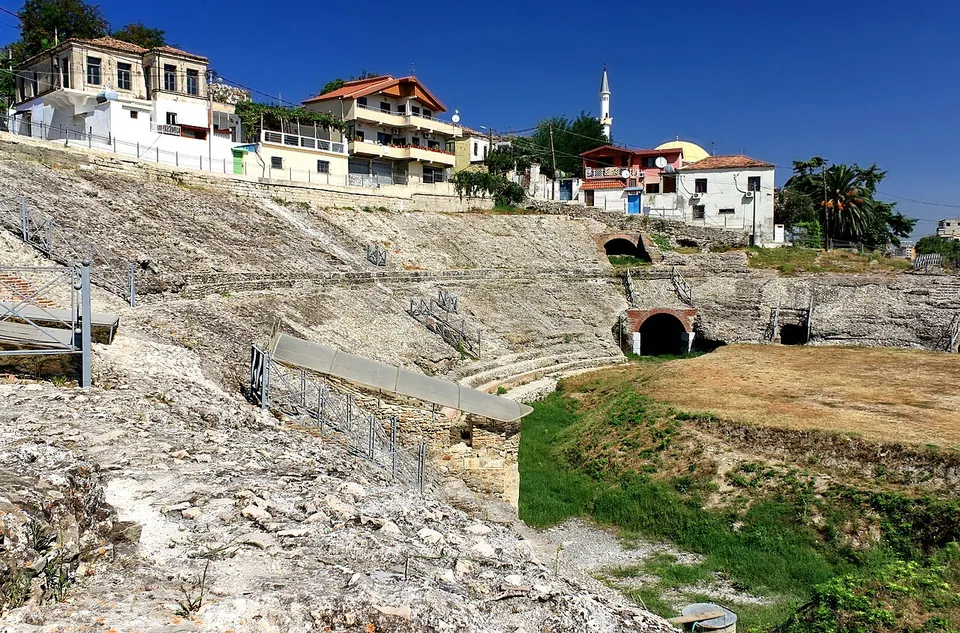
Rows of worn stone seating and ruined walls curving round a grassy arena, with metal railings on the slopes and white houses above the rim.

Photo: Marcin Konsek · CC BY-SA 3.0 · Commons

amphitheatre · Durrës County

Epidamnos

Built on a hillside in the early 2nd century under Trajan, the amphitheatre is an ellipse of about 132 by 113 m, with an arena of about 61 by 42 m; it once held up to 20,000 spectators.
Landmark
Open page →
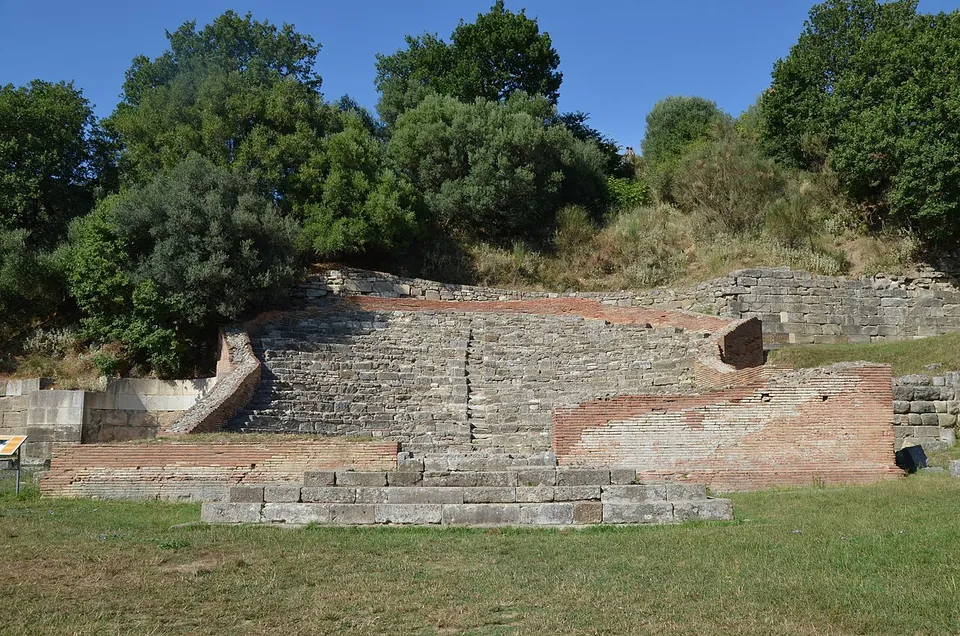
A small semicircular auditorium of stone seats rising behind a low stage platform, flanked by brick walls, set against a wooded slope.

Photo: Carole Raddato · CC BY-SA 2.0 · Commons
city · Fier County

Apollonia

A partly excavated city.

Landmark
Open page →
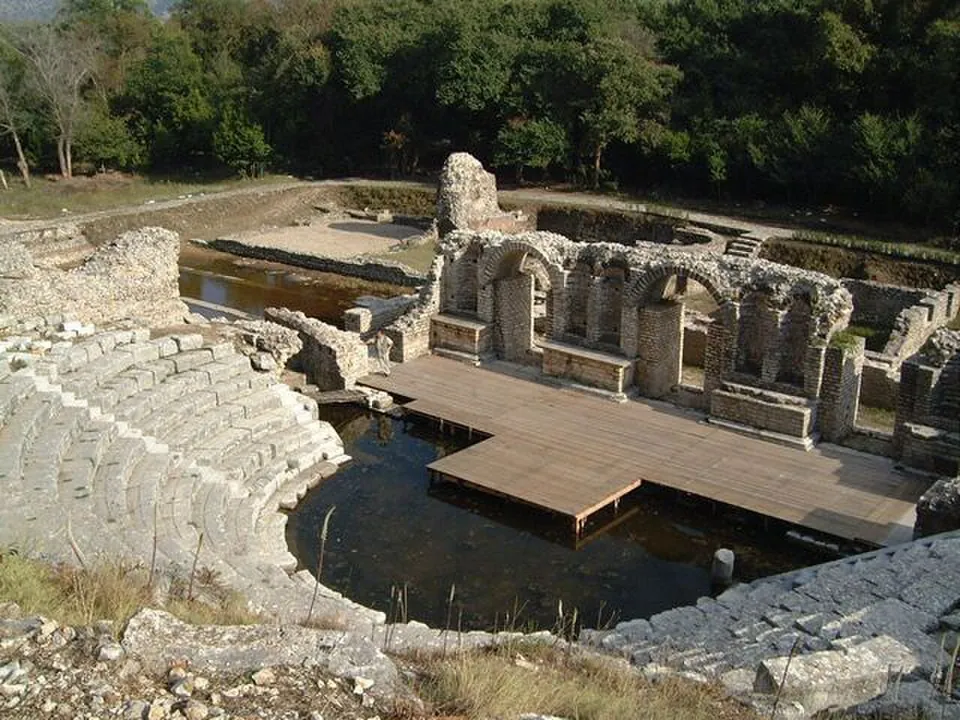
A theatre's curved stone seating dropping to a flooded orchestra, with a wooden walkway laid over the water in front of the ruined stage building and its row of arches, among trees.

Photo: Marc Morell · CC BY-SA 3.0 · Commons

city · Vlorë County

Butrint

The city spreads across the peninsula below the acropolis hill; the site museum is housed in the Venetian castle on the acropolis (en.wikipedia, Archaeological Museum).
Landmark
Open page →
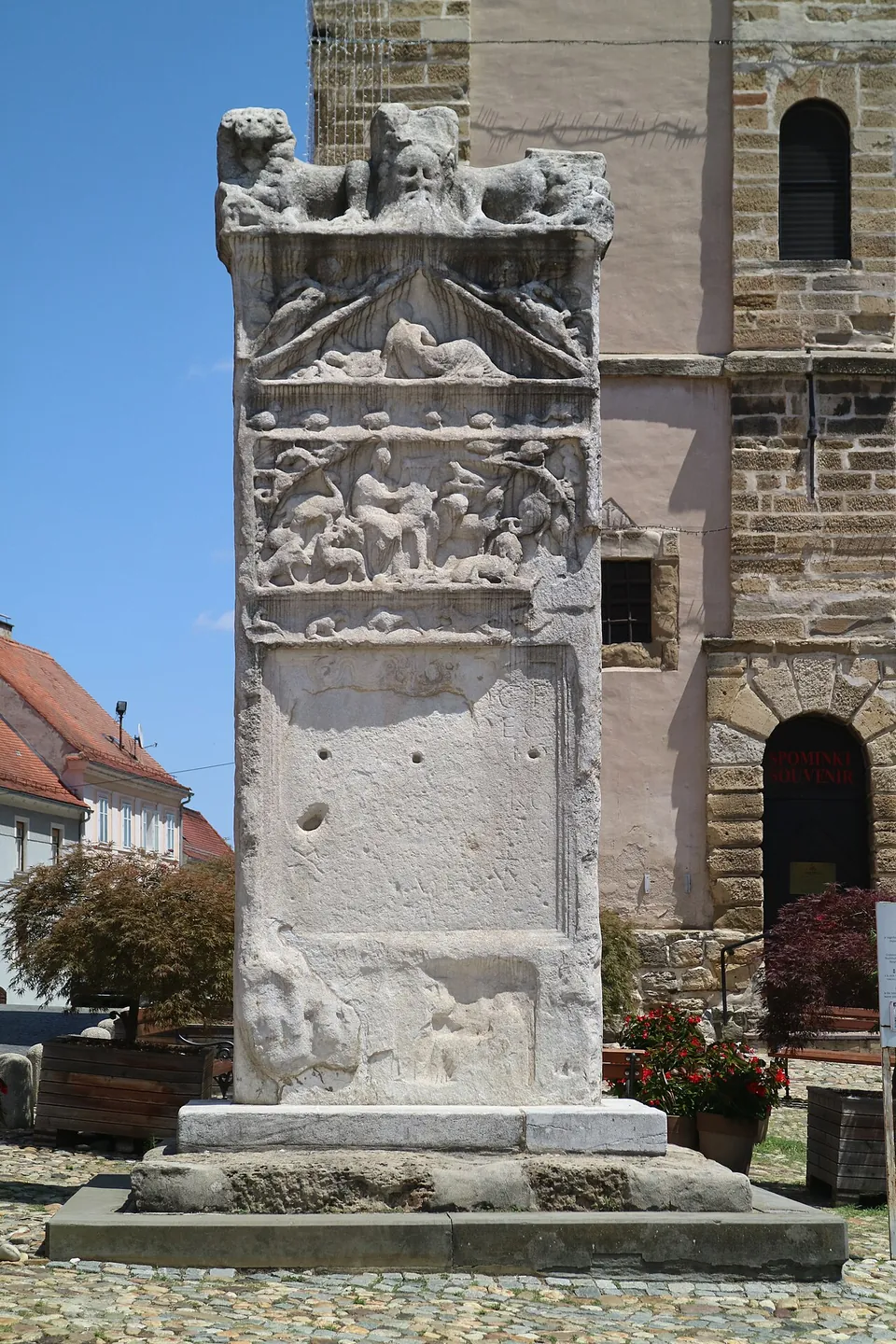
The same stele seen close and square on, its upper panels carved with figures and animals, the lower half plain stone pierced by several round holes, standing on a stepped stone base.

Photo: Clemens Stockner · CC BY-SA 4.0 · Commons

city · Ptuj

Poetovio – Ptuj

The Orpheus Monument stands on Slovenski trg in front of the Town Tower, where it has always stood: it is the oldest public monument in Slovenia still in its original place, and the largest known monument from the Roman province of Pannonia Superior (en.wikipedia).

Also here
  1. 1Mithraeum I of Ptuj
  2. 2Mithraeum III of Ptuj
Hub · 2 stops
Open page →
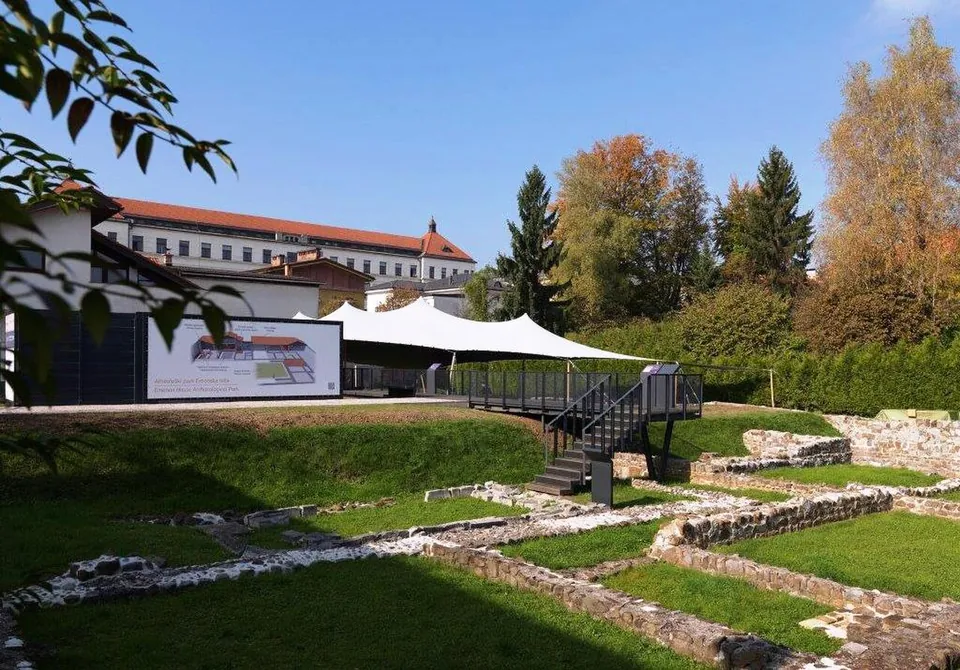
A sunken lawn crossed by low excavated stone walls, with a black metal viewing platform and steps, a white fabric canopy behind it, an illustrated information panel on the left and a large red-roofed building beyond the trees.

Photo: Matevž Paternoster, dokumentacija Muzeja in galerij mesta Ljubljane · CC BY-SA 3.0 · Commons

city · Ljubljana

Emona – Ljubljana

The best of it is in two small archaeological parks run by the city museum (MGML).

Also here

  1. 1Roman Walls in Mirje
Hub · 1 stop
Open page →
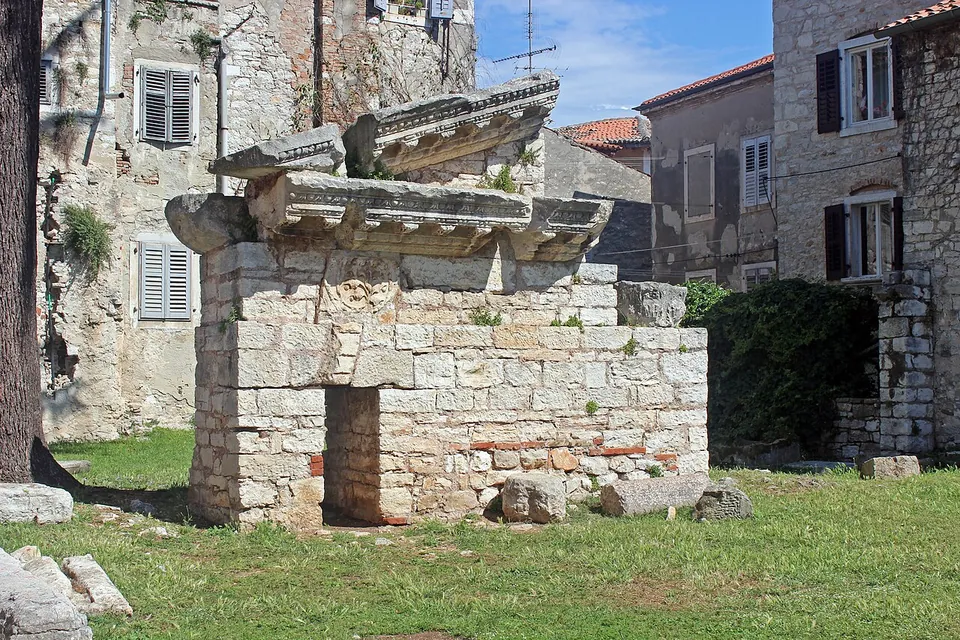
The ruined corner of a Roman temple built of large squared stone blocks, carrying fragments of a carved cornice, standing on a lawn among old stone houses.

Photo: Maesi64 · CC0 · Commons

city · Istria County

Parentium – Poreč

The town plan still shows the shape of the Roman castrum, and the two main streets, the Decumanus and the Cardo Maximus, keep their original lines.

Also here

  1. 1Euphrasian Basilica
Hub · 1 stop
Open page →
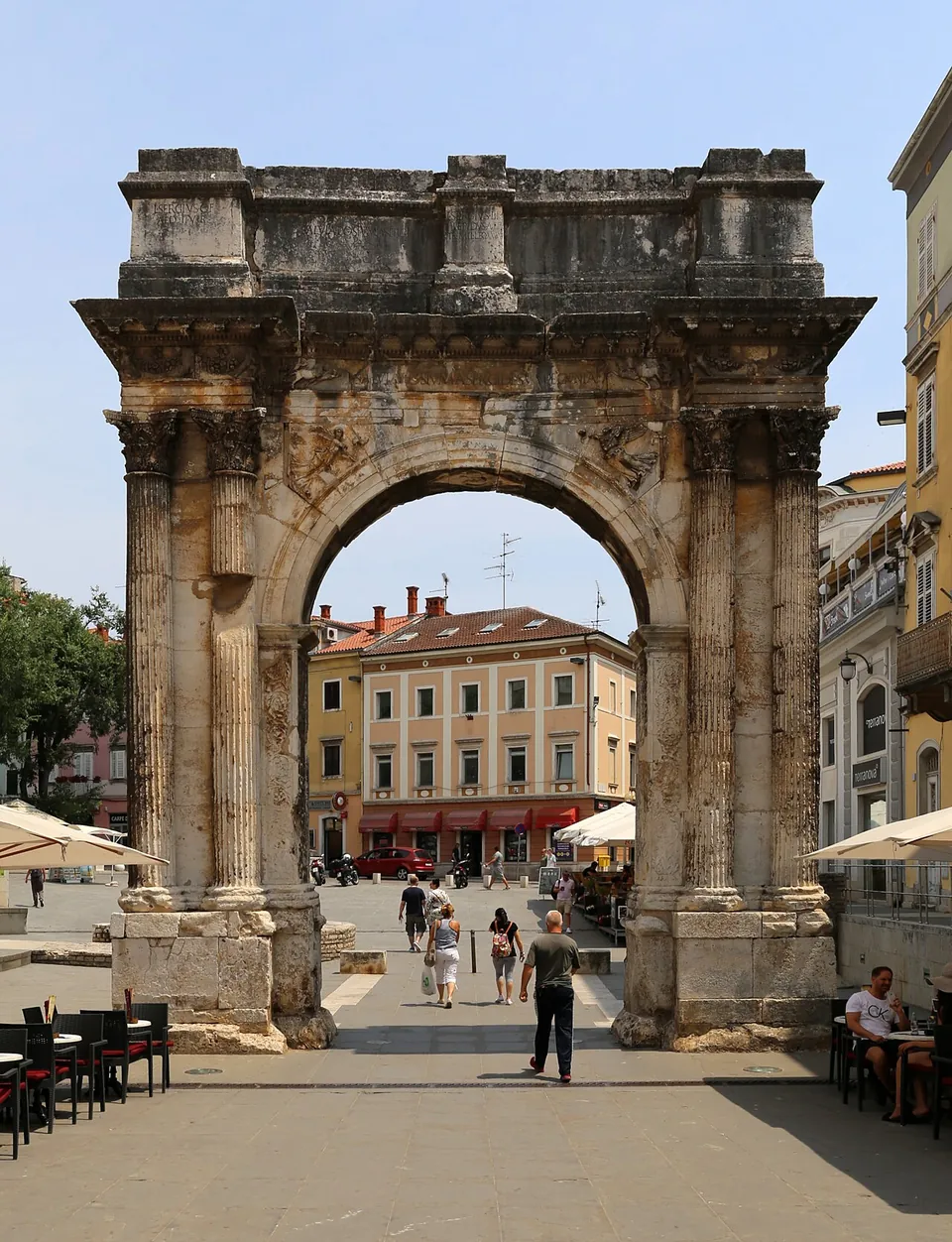
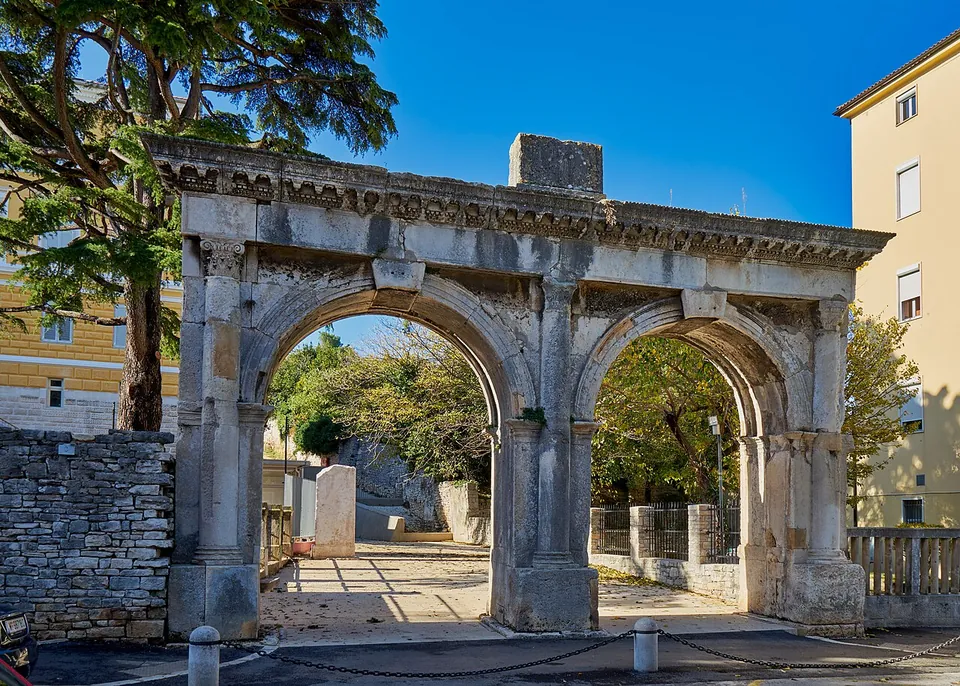
A Roman gateway with two equal round arches under one carved cornice, standing at the edge of a street with a stone wall on its left, trees behind and a paved path leading through.

Photo: Georg Karl Ell · CC BY-SA 4.0 · Commons

city · Istria County

Pola – Pula

The stops each have their own page: the Pula Arena, the amphitheatre; the Temple of Augustus on the forum; the Arch of the Sergii at the end of the main street; and the Small Roman Theatre on the slope of the central hill.

Also here

  1. 1Pula Arena
  2. 2Small Roman Theatre, Pula
  3. 3Arch of the Sergii
  4. 4Temple of Augustus
Hub · 4 stops
Open page →
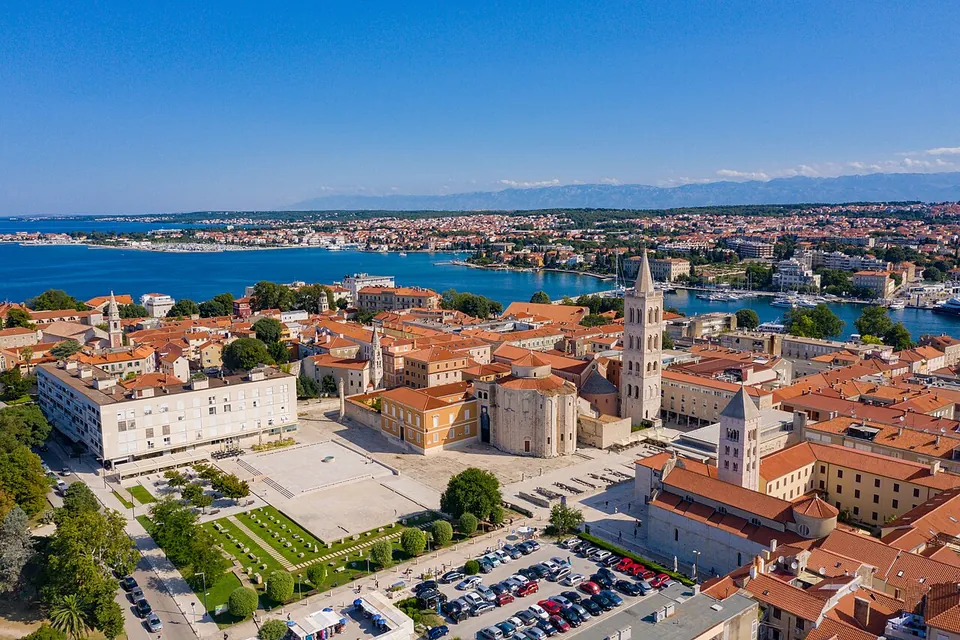
An aerial view of an old town square with a round domed church and a tall bell tower, the open area of the Roman forum beside it, a park and car park in the foreground and the sea behind.

Photo: dronepicr · CC BY 2.0 · Commons

city · Zadar County

Iader – Zadar

The one stop with its own page is the Roman Forum, an open square of Roman paving, foundations and carved blocks beside the church of St Donatus.

Also here
  1. 1Roman Forum in Zadar
Hub · 1 stop
Open page →
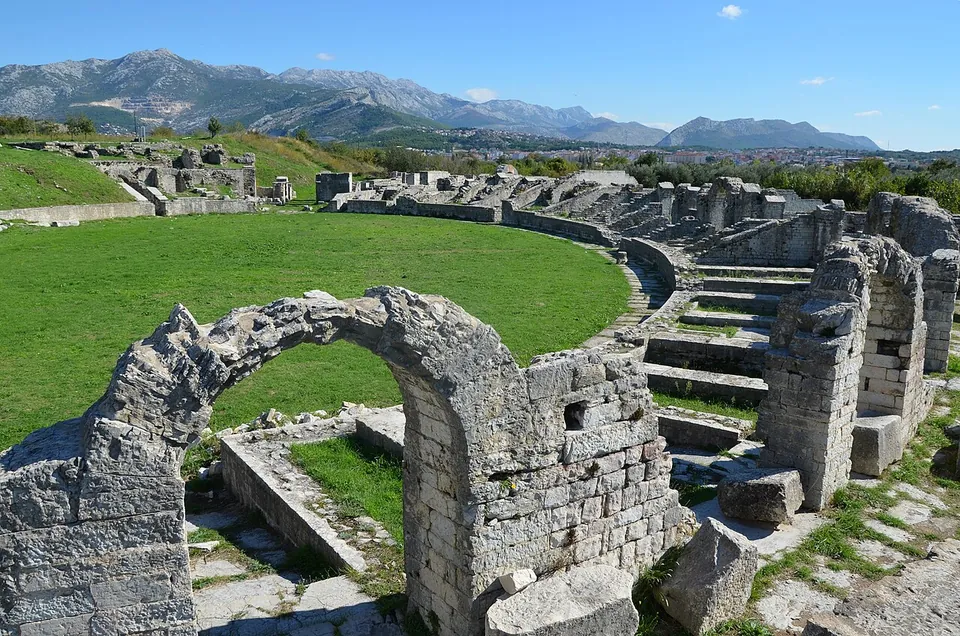
The oval of a Roman amphitheatre with a lawn for its floor, surrounded by the broken lower walls and stairs of its seating, a single stone arch standing in the foreground and mountains beyond.

Photo: Carole Raddato · CC BY-SA 2.0 · Commons

city · Split-Dalmatia County

Salona – Solin

A spread-out archaeological park rather than a single monument: the ruins run across fields and roads between the houses of Solin, and English Wikipedia calls it the largest archaeological park in Croatia.

Also here

  1. 1Diocletian's Aqueduct
Hub · 1 stop
Open page →
LandmarkOther sitesHubSelect a country to browse it, or a marker for a summary.

How to read an entry

Landmark
Worth planning a trip around.
Hidden gem
Remains that most visitors to the region never see.
Hub
A Roman town with several sites close together. One base, a day on foot.
Access
Free · Ticketed · Restricted · Private. Hours and prices come from the operator, and every page says when they were checked.

Roman towns to base yourself in

Where several sites share one modern town, we group them into a hub: one page, one walking route, every stop linked.

A Roman gateway with two equal round arches under one carved cornice, standing at the edge of a street with a stone wall on its left, trees behind and a paved path leading through.

Photo: Georg Karl Ell · CC BY-SA 4.0 · Commons

Hub · 4stops

Istria County · Croatia

Pola – Pula

  1. 01Pula Arena
  2. 02Small Roman Theatre, Pula
  3. 03Arch of the Sergii

+ 1 more · ≈ 17 min on foot between them

A sunken lawn crossed by low excavated stone walls, with a black metal viewing platform and steps, a white fabric canopy behind it, an illustrated information panel on the left and a large red-roofed building beyond the trees.

Photo: Matevž Paternoster, dokumentacija Muzeja in galerij mesta Ljubljane · CC BY-SA 3.0 · Commons

Hub · 1stop

Ljubljana · Slovenia

Emona – Ljubljana

  1. 01Roman Walls in Mirje

≈ 5 min on foot from the centre

Start with the landmarks

A theatre's curved stone seating dropping to a flooded orchestra, with a wooden walkway laid over the water in front of the ruined stage building and its row of arches, among trees.

Photo: Marc Morell · CC BY-SA 3.0 · Commons

city · Vlorë County

Butrint

The city spreads across the peninsula below the acropolis hill; the site museum is housed in the Venetian castle on the acropolis (en.wikipedia, Archaeological Museum).

A paved Roman court lined on the left by an arcade of granite columns carrying round arches, closed at the far end by a pedimented front on four columns with an arched opening, with visitors standing in the sun.

Photo: Following Hadrian · CC BY-SA 2.0 · Commons

palace · Split-Dalmatia County

Diocletian's Palace

The palace is an irregular rectangle of roughly 215 by 175–180 m, laid out like a legionary fort, with towers on its three landward walls and a gate in the middle of each side.
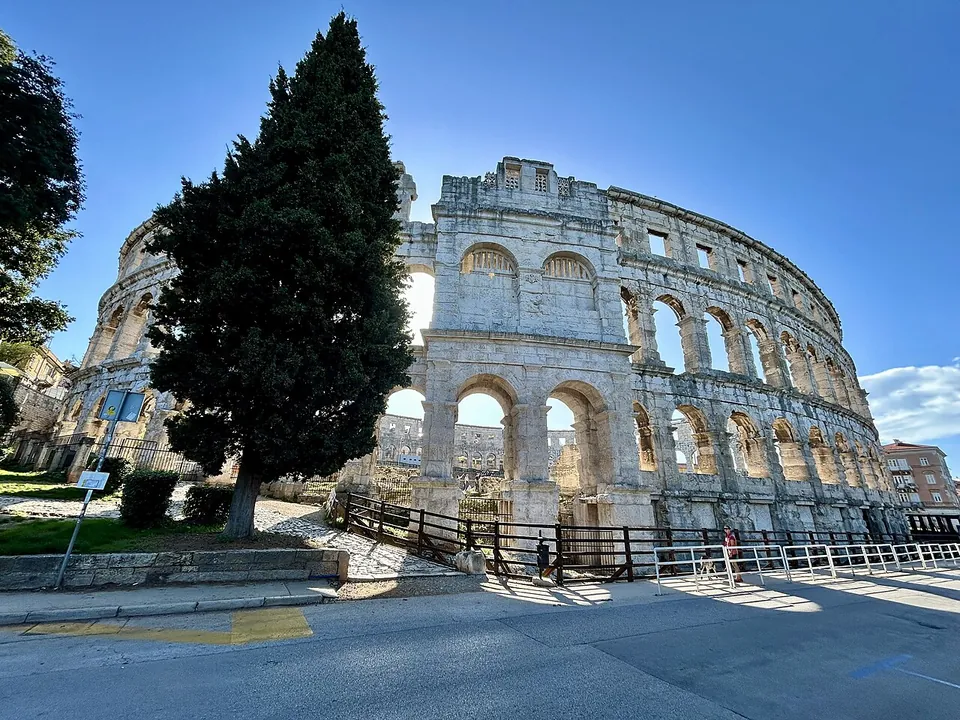
The pale limestone outer wall of the amphitheatre seen from the pavement, three storeys of arches and square windows rising against a blue sky, with a tall cypress in front.

Photo: Olgierd Rudak · CC BY-SA 4.0 · Commons

amphitheatre · Istria County

Pula Arena

The oval measures about 132 by 105 m, and the wall rises to 32.45 m at its highest (the operator; en.wikipedia).
Hidden gems

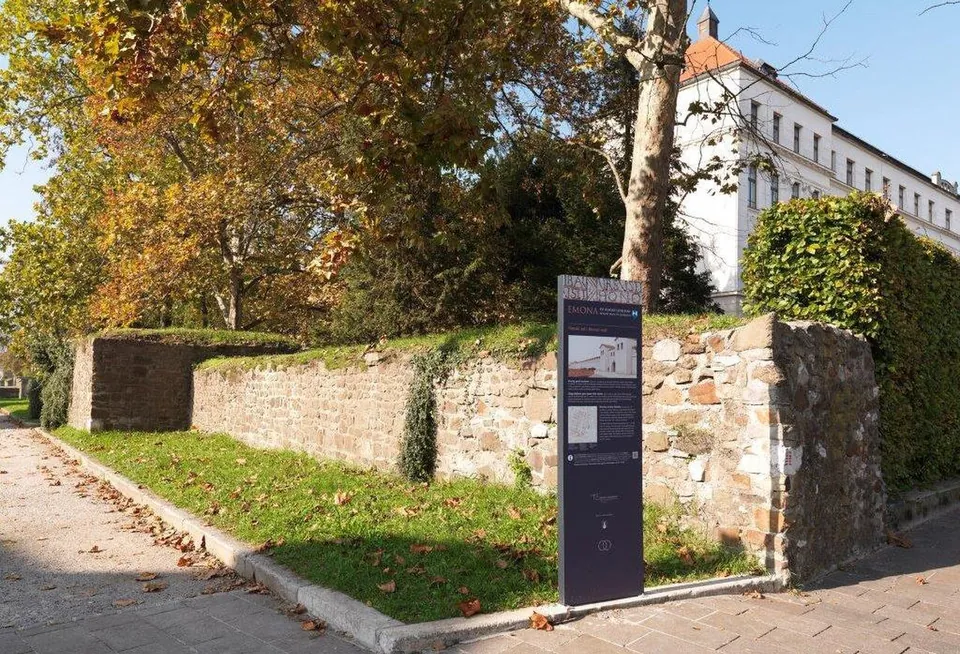
A stretch of rough stone wall capped with turf, with a square tower projecting at its far end, a paved pavement in front and a dark information stele standing against it; autumn trees and a large white building behind.

Photo: Matevž Paternoster, dokumentacija Muzeja in galerij mesta Ljubljane · CC BY-SA 3.0 · Commons

wall · Ljubljana

Roman Walls in Mirje

A long wall of rubble stone, grassed along the top, with square towers projecting from it, runs through a park between Aškerčeva cesta and the street Mirje, from the junction with Barjanska cesta to the junction with Snežniška ulica.

A tall white marble tomb against a blue sky, a pedimented roof on twisted columns sheltering carved figures, standing on a high base whose sides are covered in relief panels.

Photo: Sl-Ziga · Public domain · Commons

necropolis · Žalec

Šempeter Roman Necropolis

An open-air archaeological park, hedged round, south-west of the church of St Peter.
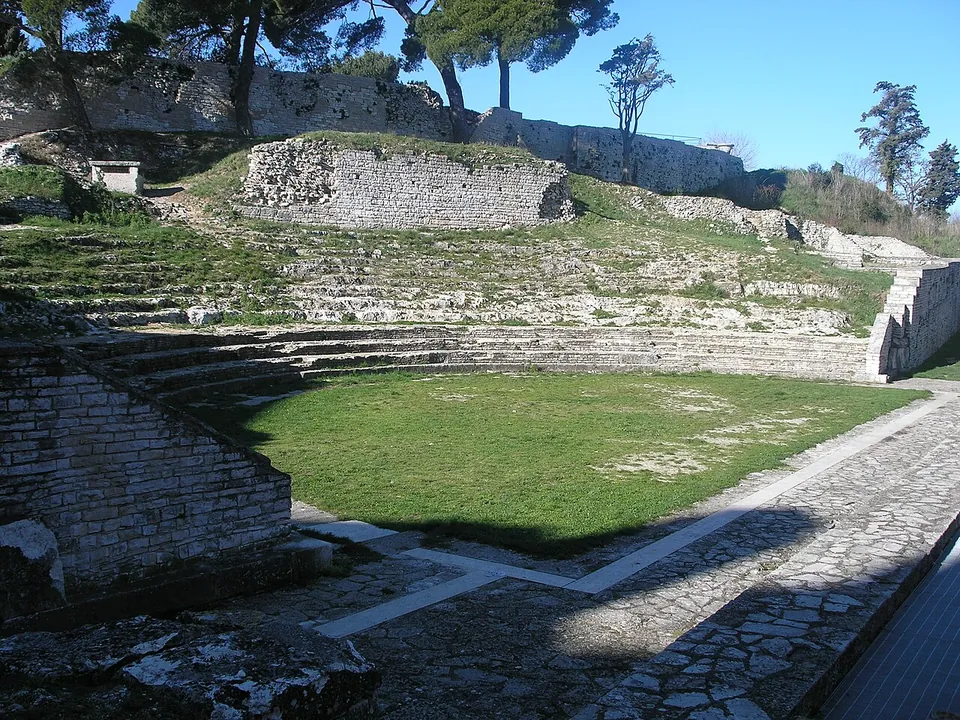
Tiers of stone seats rising in a curve up a hillside behind a green lawn, with the paved stage area and its low walls in the foreground and pine trees on the ridge above.

Photo: Orlovic · CC BY-SA 4.0 · Commons

theatre · Istria County

Small Roman Theatre, Pula

The foundations of the stage building and the semicircular auditorium, its seating partly cut into the living rock of the slope, with the stage and the actors' area on the flat side (the museum; hr.wikipedia).

Low drystone wall footings laid out across a clearing in bare woodland, with a large open-sided pavilion roofed in wooden shingles covering further remains behind them.

Photo: JakobZ · CC BY-SA 3.0 · Commons

fort · Žirovnica

Ajdna

The settlement was built on terraces just below the summit (the register says three; sl.wikipedia two, joined by a ridge).