

What is there today
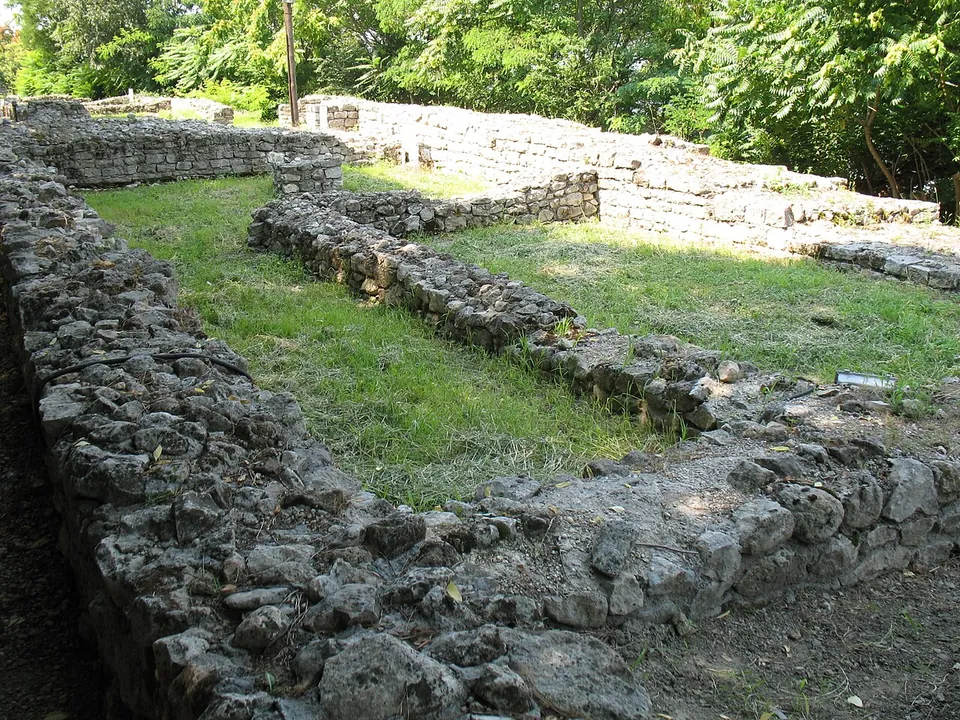
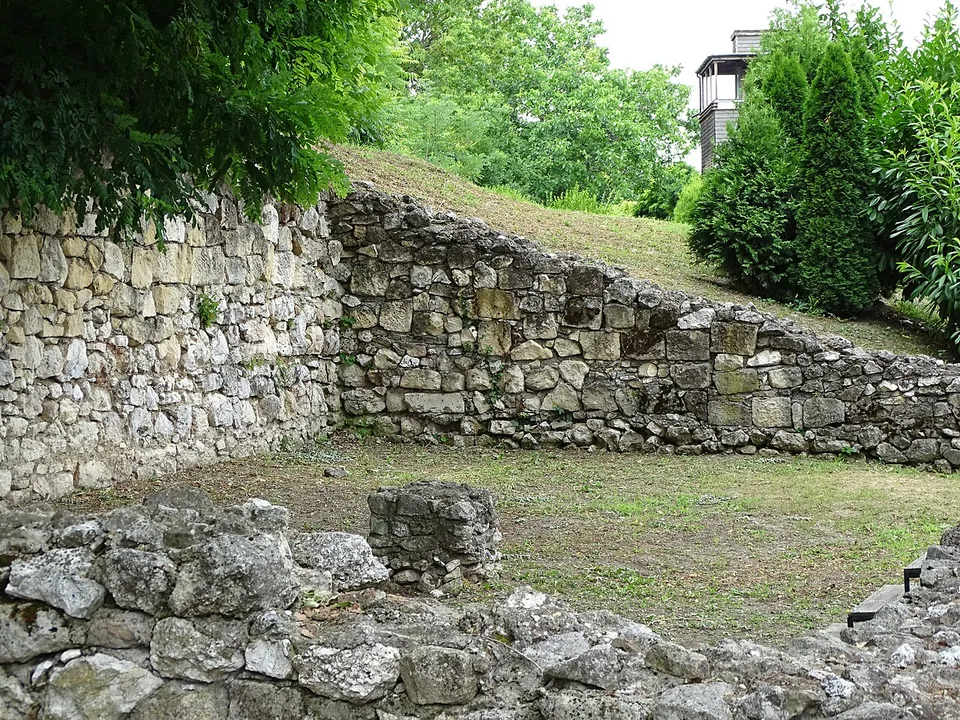
Excavations in 1976–1978 and 2005–2006 uncovered about 50 m of the fort’s north-western wall with a tower, six buildings, a temple of Apollo and the principia, the headquarters of the garrison. The remains found in the first campaign were conserved in 1976–1978, the site opened as an open-air exhibition in 2002 (the museum), and a project to restore and display the remains was completed in 2012 (en.wikipedia). The temple, of the 2nd–3rd century, stood among civilian buildings on the hill; in it were found an altar to Apollo with its inscription and votive plaques of Apollo and the Thracian Horseman, and its plan, unusually for a pagan temple, resembles that of a church. The principia was built over it under Constantine the Great, early in the 4th century (the museum).
Is it worth the trip?
If you are in Ruse, yes: it is in the centre, cheap and quick to see. It is a set of low walls and foundations rather than standing buildings, so it does not justify a journey on its own. The Regional Museum of History, which runs the site, is about 330 m away (OpenStreetMap).
Getting there
The fort is at 2 Tsar Kaloyan Street in central Ruse (the museum). A car park is mapped about 80 m away and the Uchilishte Hristo Botev bus stop about 290 m away (OpenStreetMap).
It is open daily, 09.00 to 17.30, with a break from 12.00 to 12.30. A ticket is €4.00, or €2.50 for pupils, students and pensioners; a guided talk costs €7.50 in Bulgarian and €12.50 in English (the museum, read 2 October 2026).
Visiting details
- Opening hours
- Daily 09.00–17.30, closed for lunch 12.00–12.30.
- Tickets
- €4.00; €2.50 for pupils, students and pensioners. A guided talk is €7.50 in Bulgarian and €12.50 in English; a day ticket for the museum's sites in the city is €7.50.
- Parking
- A car park is mapped about 80 m away (OSM way/508250810); the Uchilishte Hristo Botev bus stop is about 290 m away (OpenStreetMap).
- On foot
- About 1 min from the parking
Hours and prices checked 2 October 2026 on the operator's own site. Confirm before travelling.
History
The hill was first a Thracian cult place: hundreds of pits of the 1st century BC to the 1st century AD, about 50 of them excavated, held pottery, bronzes, coins and bones (the museum). The name is traditionally translated “harbour of sixty ships”. The museum ties it to Domitian’s Dacian war of 85–89, when a legion of about 6,000 men was ferried across the Danube at the mouth of the Rusenski Lom, an operation that needed sixty ships of the kind called pristis (the museum). Published dates for the first Roman base differ, from Vespasian’s reign to the end of the 1st century (en.wikipedia; de.wikipedia; the museum). It was a base of the Roman Danube fleet (de.wikipedia; en.wikipedia).
The first Roman camp has not been found on the excavated hill and probably lay at the mouth of the Rusenski Lom; the fort whose walls are on show was built at the end of the 3rd or the start of the 4th century (the museum). An inscription of Diocletian’s reign records its rebuilding as a praesidium after the Goths destroyed it in 250 (en.wikipedia). The headquarters went out of use during the Gothic troubles at the end of the 4th century and was reused into the first decades of the 5th (the museum). The town was the seat of a bishop in the 4th and 5th centuries, and was destroyed by Avars and Slavs at the end of the 6th or the start of the 7th century (en.wikipedia; bg.wikipedia). The fort was identified by Felix Kanitz at the end of the 19th century, from the distances in Roman road lists (the museum).
Sources
Every fact on this page comes from the records below, each used under the licence noted.
| Source | Licence |
|---|---|
| Pleiades 216982 | CC BY |
| Wikidata Q12293503 | CC0 |
| OpenStreetMap way/309038059 | ODbL |
| Rousse Regional Museum of History — Sexaginta Prista | licence not recorded |
| Rousse Regional Museum of History — opening hours and prices | licence not recorded |
| Wikipedia (bg) — Сексагинта Приста | CC BY-SA 4.0 |
| Wikipedia (de) — Sexaginta Prista | CC BY-SA 4.0 |
| Wikipedia (en) — Ruse, Bulgaria | CC BY-SA 4.0 |