

What is there today
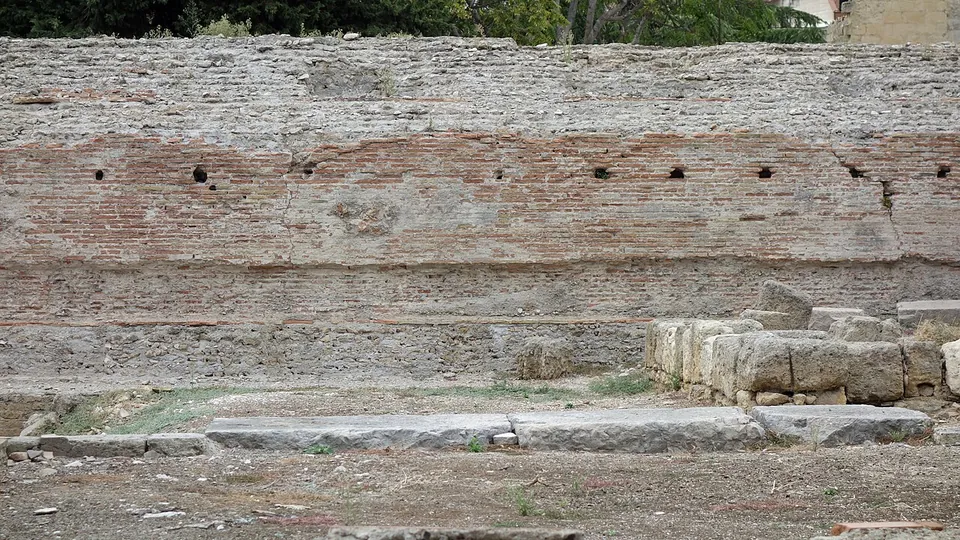
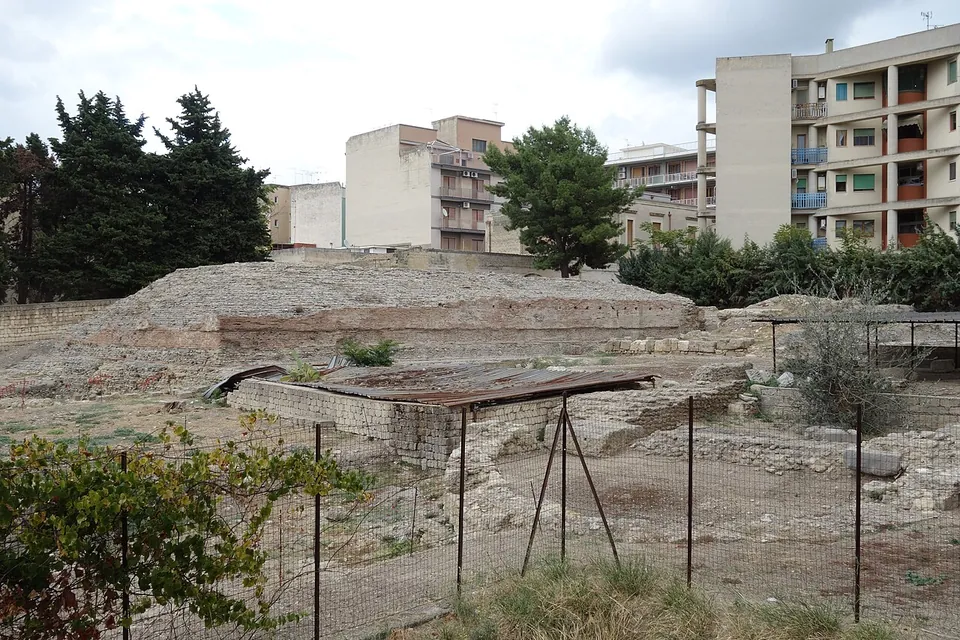
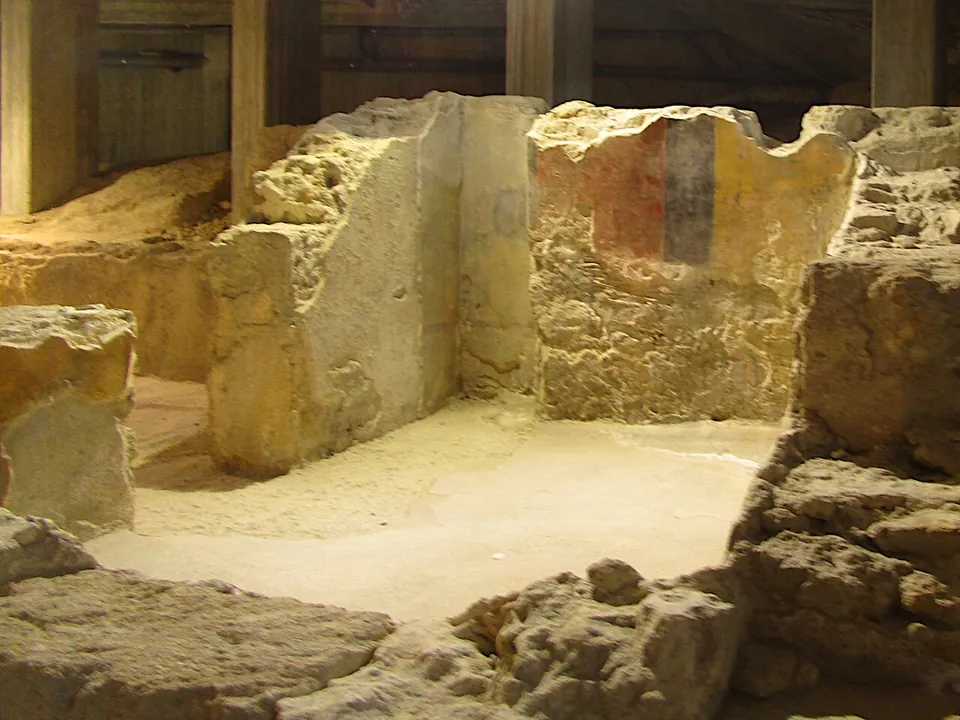
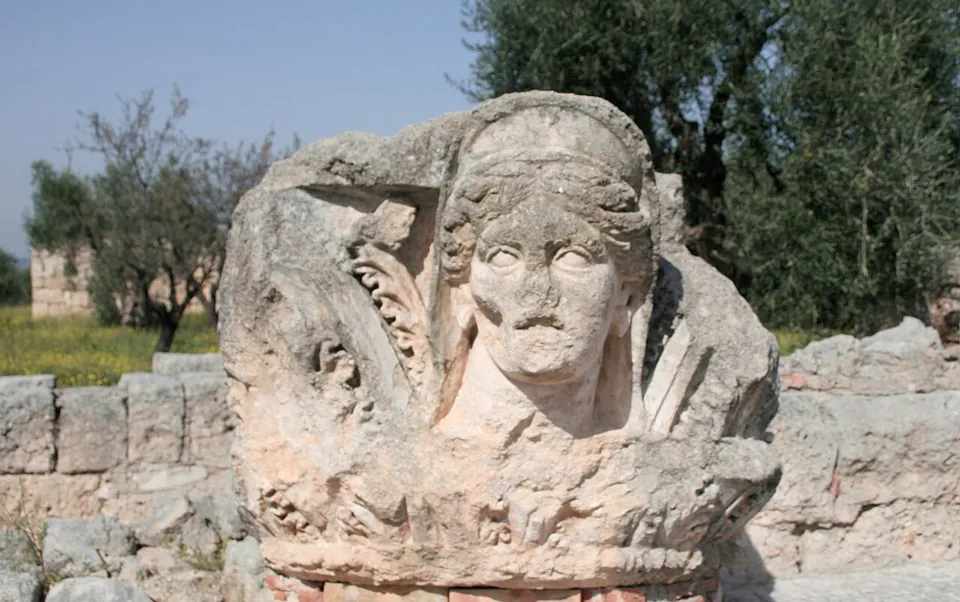
The temple of Jupiter “Toro” stands in the town centre, on Via Imbriani. Its remains belong to a peripteral temple of the Antonine period, which had six columns on the short sides and ten on the long ones, stood on a high podium faced with brick and was reached by a broad stair on the east side (Fondazione Archeologica Canosina). Its remains have been excavated since 1978. The dedication to Jupiter rests on a statue of the god found there, and “Toro” comes from a medieval place name meaning a raised area. The temple stood in a portico with an exedra that held honorary statues, and it was built over a building of the early first century AD, some of whose rooms survive with frescoes and mosaic floors (it.wikipedia).
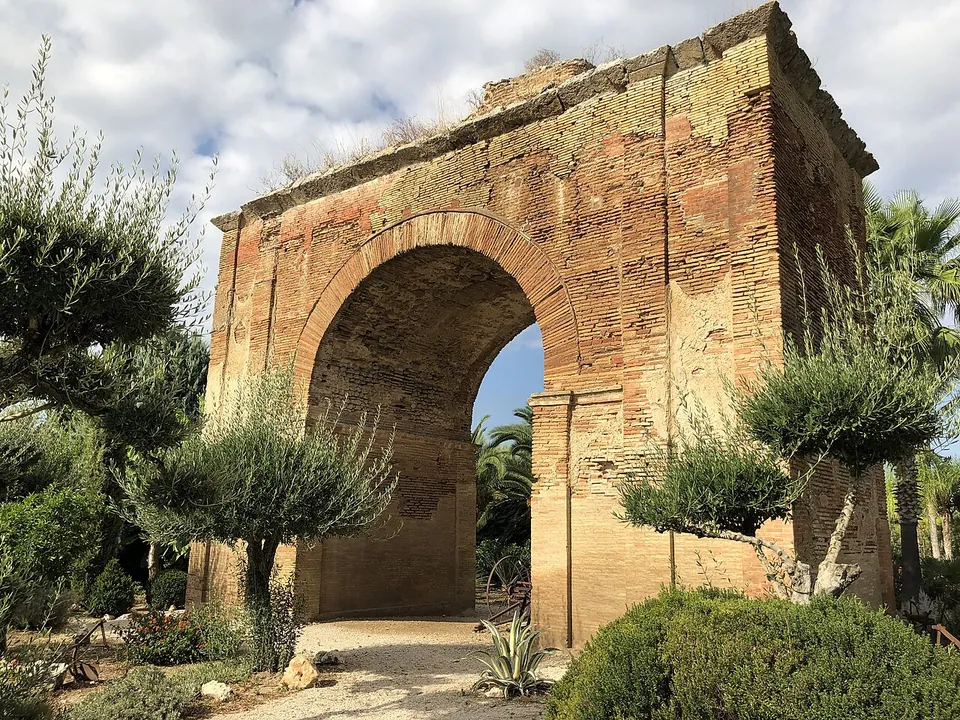
The Arch of Trajan stands about a kilometre outside the modern town (Fondazione Archeologica Canosina). It is a single arch of brick, probably once faced with marble, now partly buried. It is 12 m wide and 5 m deep, and would have stood about 13 m high. It was restored several times in the 19th century and again in 1911, with a great deal of modern rebuilding (en.wikipedia). The Via Traiana probably entered the town through it. Two Roman tombs also survive, the mausoleum called Torre Casieri, a brick-faced concrete tomb built in three stages, and the Barbarossa mausoleum, dated between the first century BC and the first century AD (Fondazione Archeologica Canosina).
In the town, the Fondazione also opens the Roman house on Colle Montescupolo, an Augustan-period house where several rooms with wall paintings and mosaic floors can still be made out, and the Lomuscio baths, probably a neighbourhood bath building of the second century AD, with apsed rooms, a furnace and a round latrine with its drainage channels. The amphitheatre is recorded at the foot of the castle hill (en.wikipedia), but vici.org classes it as invisible, and the Ferrara baths lie under an apartment block and cannot be visited (it.wikipedia). On Via della Resistenza a stretch of Roman paved road lies beside three Daunian chamber tombs of the 3rd-2nd century BC (Fondazione Archeologica Canosina).
Much of what Canosa is known for comes from before Roman rule or after it. Finds from its Daunian chamber tombs (hypogea) are in museums across Italy and abroad (Direzione regionale Musei Puglia). The Museo Archeologico Nazionale in Palazzo Sinesi shows grave goods from archaic tombs and Hellenistic hypogea of the 6th to 3rd centuries BC (Ministry of Culture), so its subject is Daunian and Hellenistic Canosa rather than the Roman town. On a hill south-east of the town, the San Leucio park holds the remains of an Italic temple to Minerva and the early Christian basilica built over it, with an antiquarium (Fondazione Archeologica Canosina).
Is it worth the trip?
Not for one great Roman monument. The arch is heavily rebuilt and the temple survives mainly as its podium, behind a fence. If you are already in northern Apulia, though, Canosa makes a good long half day: the Roman pieces, the Daunian tombs and the early Christian churches show the same town over more than a thousand years.
The catch is planning. Apart from the museum, the excavated sites in town are not walk-in: you book free access with the Fondazione Archeologica Canosina, by telephone or e-mail, before you go. The museum itself is open Wednesday to Sunday, so a Monday or Tuesday visit misses it.
Getting there
Canosa sits at the junction of the A16 motorway from Naples and the A14 between Bologna and Taranto, and it has a railway station on the Barletta–Spinazzola line, where services have been much reduced since the 1990s (en.wikipedia). The temple, the museum and the Lomuscio baths are in the town centre; a public transport stop (Piazza Terme) is mapped about 100 m from the centre point and a car park about 230 m from it (OpenStreetMap). The arch is outside the town, so you will want a car or a walk for it.
The Museo Archeologico Nazionale, at Via J. F. Kennedy 18, is open Wednesday to Sunday 09.00–18.00, with the ticket office open until 17.15. It closes on Mondays, Tuesdays and on a set list of Sundays; for the rest of 2026 these are 25 October, 8, 22 and 29 November, and 13 and 27 December. A ticket is €5, reduced €2 (Ministry of Culture, read 24 October 2026). For the excavations, the Fondazione Archeologica Canosina’s booking line, +39 333 88 56 300, answers daily 09.00–13.00 and 15.00–19.00. Access to its sites is free; its guided visits are paid, at prices it does not publish.
Visiting details
- Opening hours
- Museo Archeologico Nazionale (Palazzo Sinesi, Via J. F. Kennedy 18): Wednesday to Sunday 09.00–18.00, ticket office until 17.15; closed Monday and Tuesday, and on some Sundays (for the rest of 2026: 25 October, 8, 22 and 29 November, 13 and 27 December). The excavated sites in and around the town are opened on request by the Fondazione Archeologica Canosina, whose booking line, +39 333 88 56 300, answers daily 09.00–13.00 and 15.00–19.00.
- Tickets
- Museum €5, reduced €2. Access to the archaeological sites the Fondazione Archeologica Canosina manages is free but booked through the Fondazione; its guided visits are paid, at prices it does not publish.
- Parking
- A car park is mapped about 230 m from the town-centre point (OSM way/398963991).
Before you go
- The excavated sites (the temple of Jupiter "Toro", the Montescupolo house, the Lomuscio baths) are not walk-in sites. Book free access through the Fondazione Archeologica Canosina before you go.
- The museum closes on Mondays and Tuesdays and on a list of Sundays that the Ministry publishes for each year.
Hours and prices checked 24 October 2026 on the operator's own site. Confirm before travelling.
History
Canusium was one of the main centres of the Daunians (Ministry of Culture), and legend made the Homeric hero Diomedes its founder (de.wikipedia). It first appears fighting on the Samnite side against Rome, and after Roman armies had repeatedly laid waste its land it surrendered in 318 BC to the consul Lucius Plautius Venox. It went on striking coins with Greek legends and stayed bilingual into the imperial period (de.wikipedia). After Hannibal’s victory at nearby Cannae in 216 BC, the survivors of the Roman army took refuge in the town (de.wikipedia).
In the Social War it broke with Rome and held out against a siege by Gaius Cosconius in 89 BC. It became a municipium in 88 BC (Pleiades; de.wikipedia) and prospered on trade, with wool-working a mainstay (de.wikipedia). The Via Traiana reached it in AD 109 (en.wikipedia), and the arch has been dated to that year on the assumption that it was built with the road; other scholars prefer the reign of Hadrian (en.wikipedia).
In the mid-second century (Ministry of Culture) the town became a colony, Colonia Aurelia Augusta Pia, under Antoninus Pius or Marcus Aurelius: published accounts differ on the emperor (de.wikipedia; en.wikipedia). Herodes Atticus gave it an aqueduct to cure its shortage of drinking water (de.wikipedia), and the temple of Jupiter “Toro” belongs to the same building programme (it.wikipedia). In late antiquity Canusium was the seat of the governors of the province of Apulia et Calabria and of an important bishopric. Bishop Sabinus, in the 6th century, built and rebuilt churches around the town (Ministry of Culture). It was still one of the leading places of Apulia in the 6th century and was later devastated by the Saracens (de.wikipedia).
More photographs


Sources
Every fact on this page comes from the records below, each used under the licence noted.