

What is there today
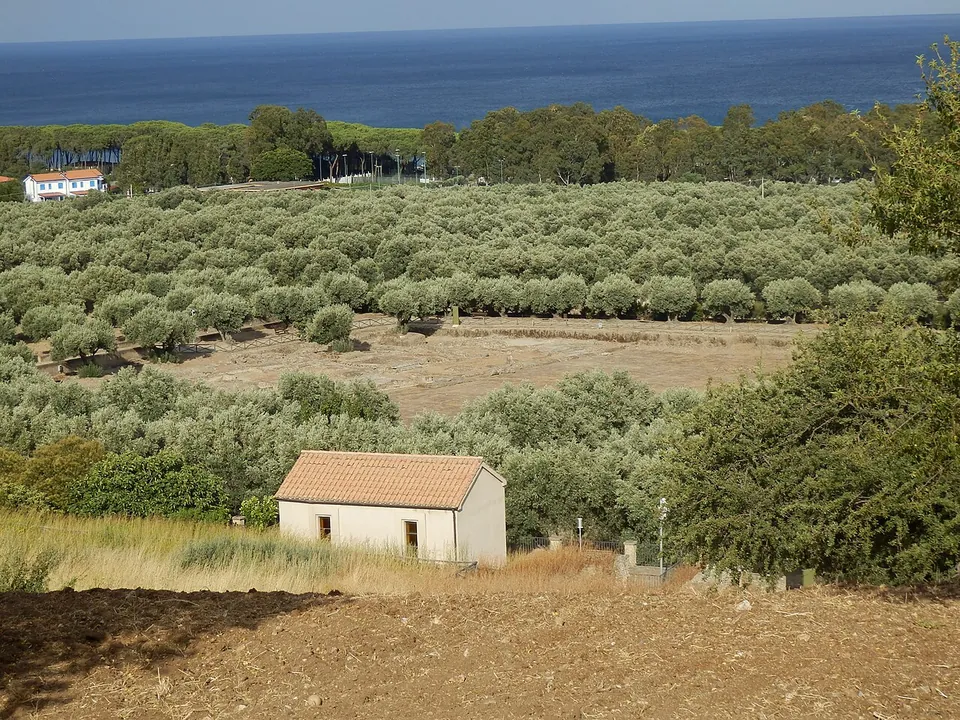
The remains lie in the olive groves of a former olive-oil estate (the Ministero della Cultura).
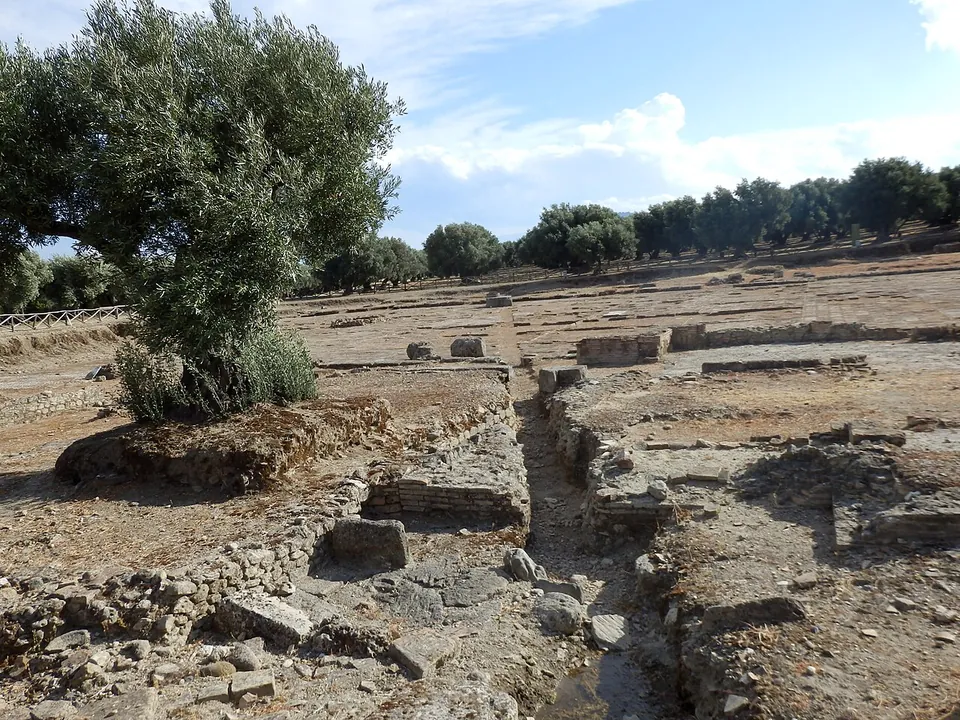
The forum. The paving of brick on the town square survives, which the ministry’s description calls unmatched anywhere in the Roman world, together with the remains of buildings around it that the ministry identifies as the curia, the Caesareum and the Capitolium. Stretches of paved street, baths, fountains, two aqueducts, mausolea and cemeteries are also known from the town, and parts of it have never been excavated (fr.wikipedia).
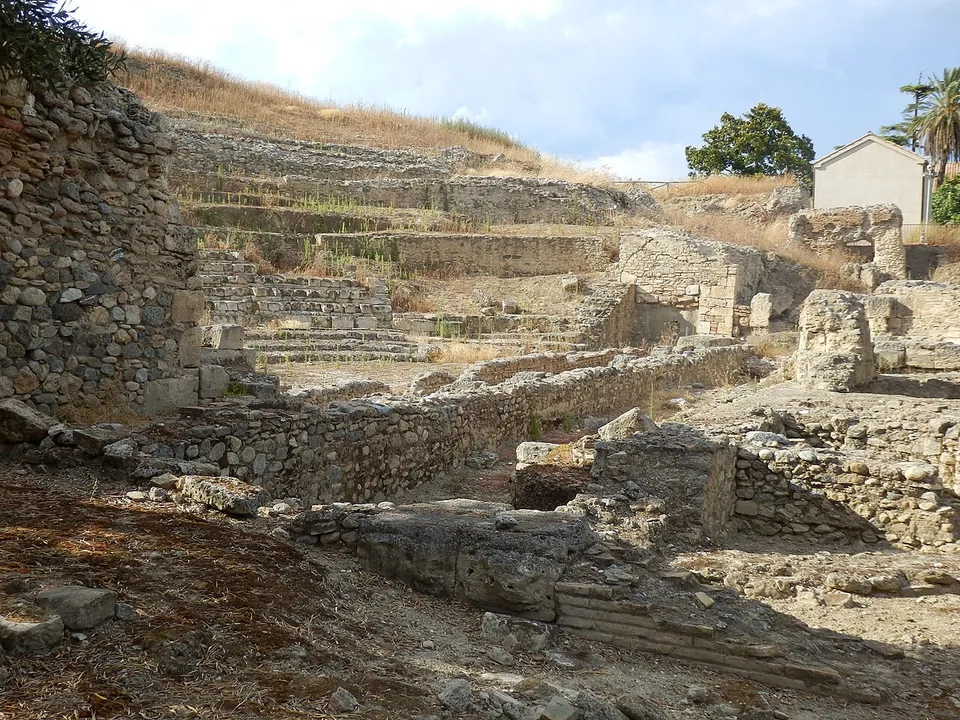
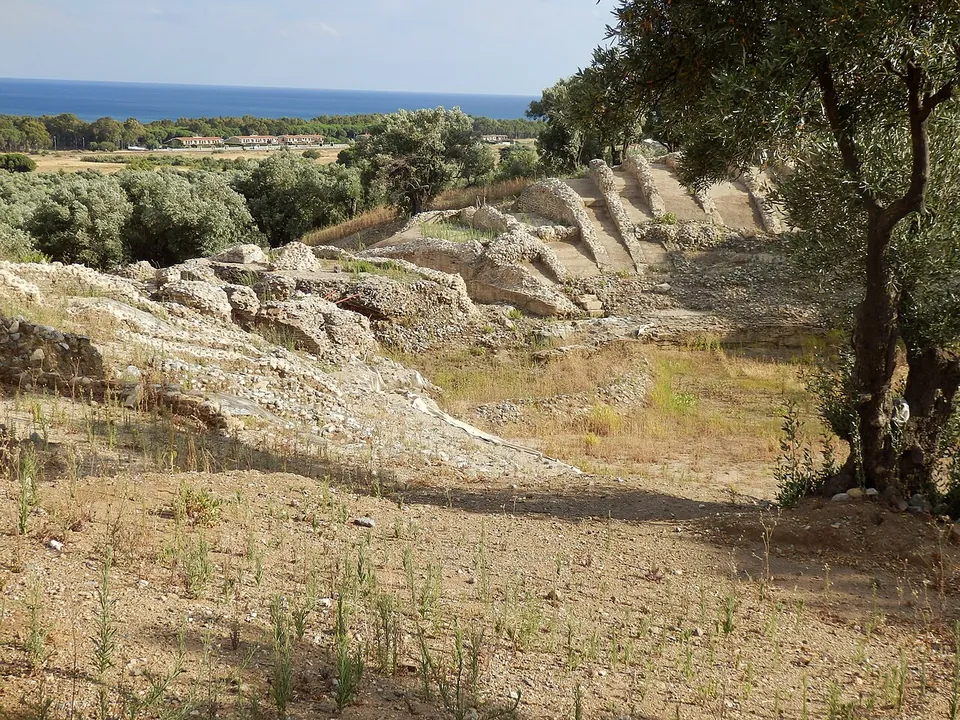
The theatre. A short way from the forum, the theatre is laid against the natural slope of the hill in the Greek manner. Published estimates of its capacity range from 3,500 to 5,000 seats. It was built in the 1st century, given a new stage building when Nerva refounded the colony, and altered until the 4th century; most of the finds from the excavations came from it, among them portraits of the Julio-Claudian family, including Agrippina and Germanicus (fr.wikipedia; it.wikipedia; the Ministero della Cultura).
The amphitheatre. Close to the theatre lie the remains of the amphitheatre, dated to the time of Nerva. Its seating is partly cut into the hillside, and it has not been fully excavated (fr.wikipedia).
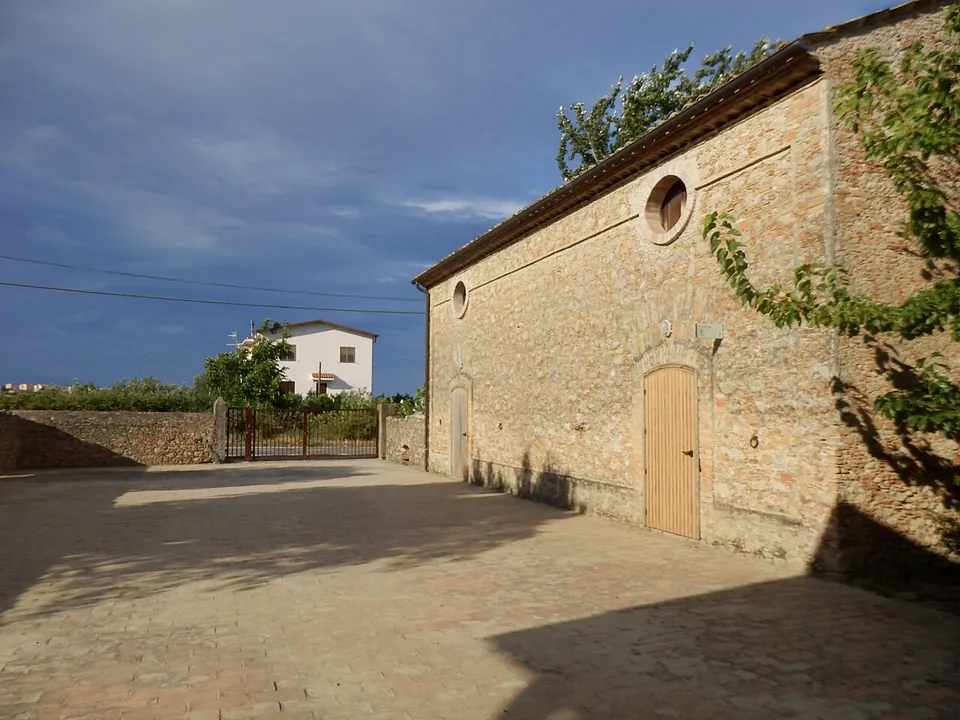
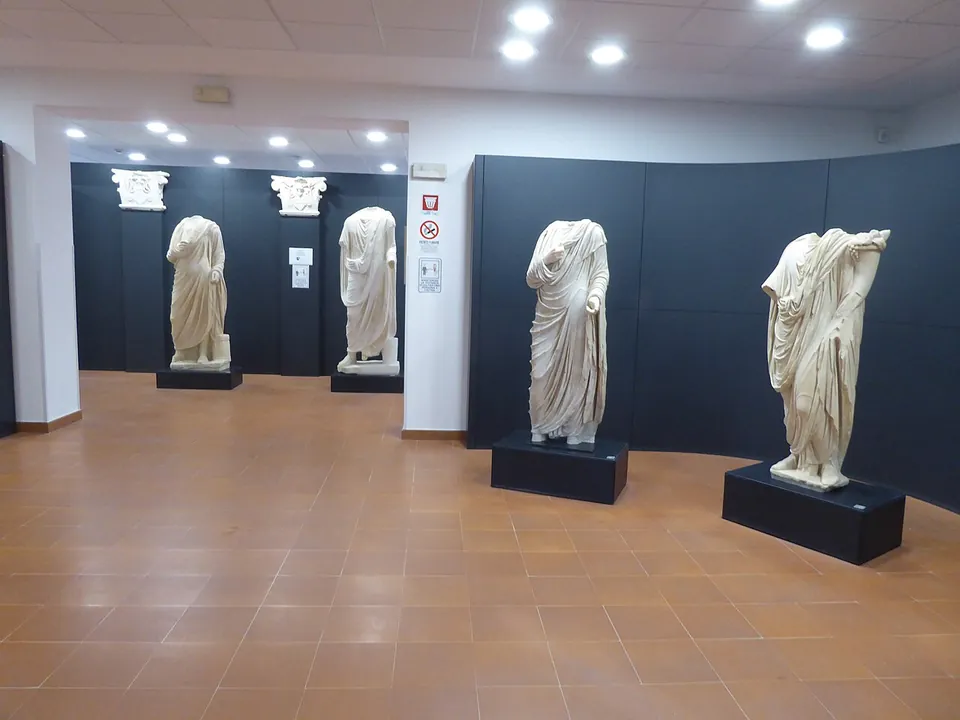
The museum. The site museum, in the former Villa Mazza, a house of the 1930s, shows the finds, chiefly sculpture and architectural fragments from the theatre; the ministry singles out a cycle of Roman statues and portraits and a colossal bronze forearm (fr.wikipedia; the Ministero della Cultura). An olive mill built by the Mazza family in 1934 is kept intact as a small museum of its own (the Ministero della Cultura; it.wikipedia).
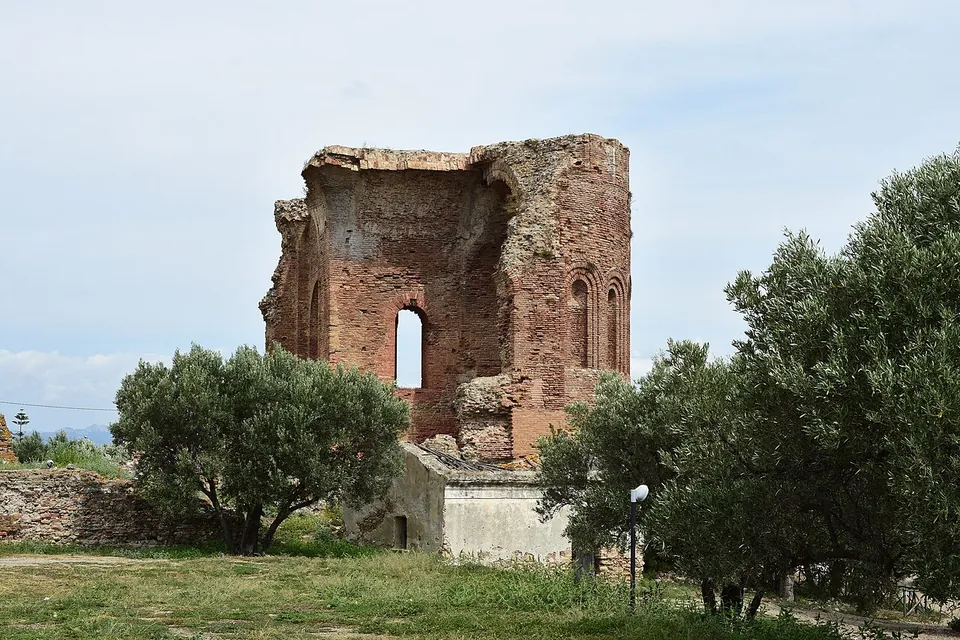
The ruin that dominates the park is not Roman. The high brick walls at the entrance belong to Santa Maria della Roccella, a Norman abbey church of the late 11th and early 12th century built over the Roman town and wrecked by the earthquake of 1783 (fr.wikipedia).
Is it worth the trip?
Yes, if you are on the Ionian coast of Calabria or passing Catanzaro. The ministry calls the Roman colony unique among Calabria’s archaeological sites, and it puts a forum, a theatre and the region’s only amphitheatre in one ticketed park, among olive groves that run down towards the sea. Set expectations to match: the forum and the town are low foundations, the theatre’s rows of seating are the part that stands up, and the amphitheatre is still partly in the ground. A traveller who has seen Pompeii will find it modest; one who enjoys reading a Roman town plan on the ground among the olive trees will find it rewarding.
Getting there and what it costs
The park is at Roccelletta in the municipality of Borgia, about 2.4 km from Catanzaro Lido, just off the Strada Statale 106 Jonica coast road. A car park is mapped about 120 m from the museum area, and no bus stop or railway station is mapped near the gate, so plan on a car (OpenStreetMap).
The park opens daily, 09.00 to 18.00, with the ticket office closing at 17.00. A ticket is €5, reduced €2, paid at the park’s ticket office in cash or by card or through the Musei Italiani app; booking is not needed. The ministry’s page still carries a notice that until 15 May 2026 only the park could be visited, the museum and the olive-mill museum being closed for building works, and it does not say whether they have reopened, so ring ahead (+39 0961 391356) if the museum matters to you (the Ministero della Cultura, read 24 October 2026).
Visiting details
- Opening hours
- Daily 09.00–18.00; the ticket office closes at 17.00. The operator's page also carries a notice that until 15 May 2026 only the park could be visited, with the archaeological museum and the olive-mill museum closed for building works.
- Tickets
- €5; reduced ticket €2. Paid at the park's ticket office in cash or by card, or through the Musei Italiani app. No booking needed.
- Parking
- Car park about 120 m from the museum area (OSM way/170098096), near the Strada Statale 106 Jonica.
Before you go
- No bus stop or railway station is mapped near the park; plan on a car.
- The museum's reopening after the works announced until 15 May 2026 is not confirmed on the operator's page; ring +39 0961 391356 if the museum matters to you.
Hours and prices checked 24 October 2026 on the operator's own site. Confirm before travelling.
History
Ancient tradition credited the foundation of Greek Skylletion to Athenians returning from the Trojan War, led by Menestheus, or to Ulysses; the archaeology goes back no further than the 6th century BC, and the Greek town has left few remains (fr.wikipedia; it.wikipedia; the Ministero della Cultura). It stood at the entrance to the narrowest land crossing between the Ionian and Tyrrhenian seas and gave its name to the Gulf of Squillace (it.wikipedia). The Bruttii took it in the 4th century BC (fr.wikipedia).
In 123–122 BC a Roman colony was planted here on the initiative of Gaius Gracchus, with a new town plan and its farmland divided into regular plots. The town did well under the Julio-Claudian emperors, and around AD 96 Nerva settled a new colony, renamed it Colonia Minervia Nervia Augusta Scolacium and gave it a programme of monumental building (fr.wikipedia; the Ministero della Cultura). An early Christian basilica built in the forum area shows the community still there in the 6th century. Cassiodorus, the statesman of the Ostrogothic court, was born here, and after 555 he founded the monastery of Vivarium on his estates nearby (fr.wikipedia; en.wikipedia).
The town’s life ended in the 7th and 8th centuries, when the land turned to marsh and the people moved to the site of modern Squillace (fr.wikipedia; the Ministero della Cultura). The Normans then built their abbey on the ruins. The estate passed from the Massara family to the Mazza family, and after the archaeologist Ermanno Arslan was allowed to examine the Mazza land, the Italian state bought part of it in 1982 to create the park (fr.wikipedia).
More photographs




Sources
Every fact on this page comes from the records below, each used under the licence noted.
| Source | Licence |
|---|---|
| Pleiades 452439 | CC BY |
| Wikidata Q1084264 | CC0 |
| OpenStreetMap way/170098139 | ODbL |
| Ministero della Cultura — Museo e Parco archeologico nazionale di Scolacium (hours and tickets) | licence not recorded |
| Wikipedia (fr) — Scolacium | CC BY-SA 4.0 |
| Wikipedia (it) — Scolacium | CC BY-SA 4.0 |
| Wikipedia (en) — Scylletium | CC BY-SA 4.0 |
| Wikidata — Roman Theatre of Scolacium (Q55974724) | licence not recorded |
| Pleiades — Roman amphitheater at Scylletium/Scolacium | licence not recorded |
| Pleiades — Forum of Scylletium/Scolacium | licence not recorded |