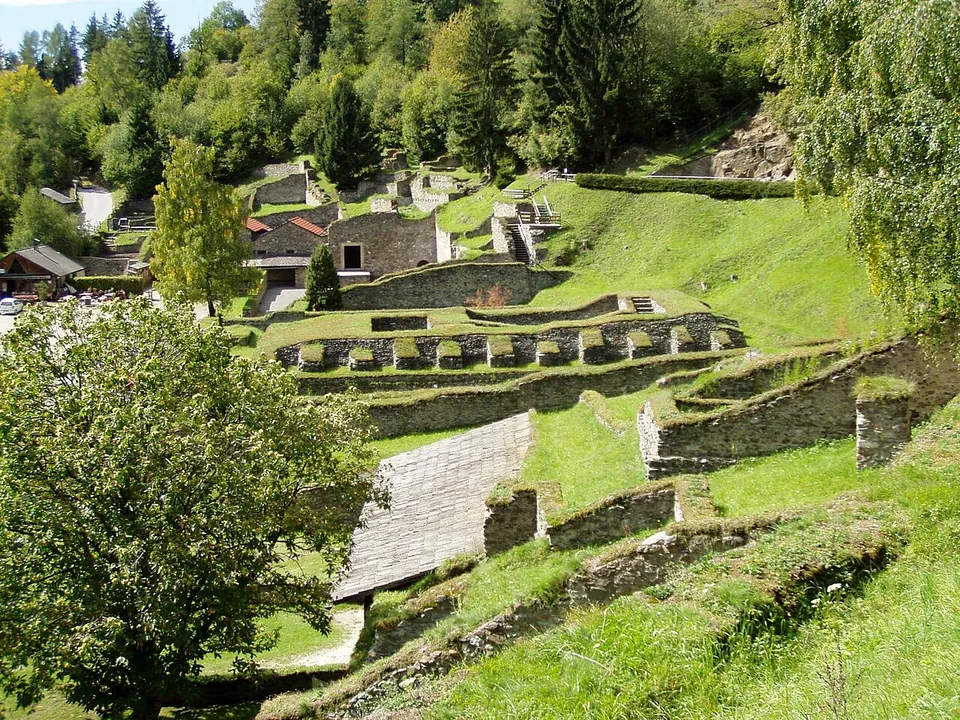
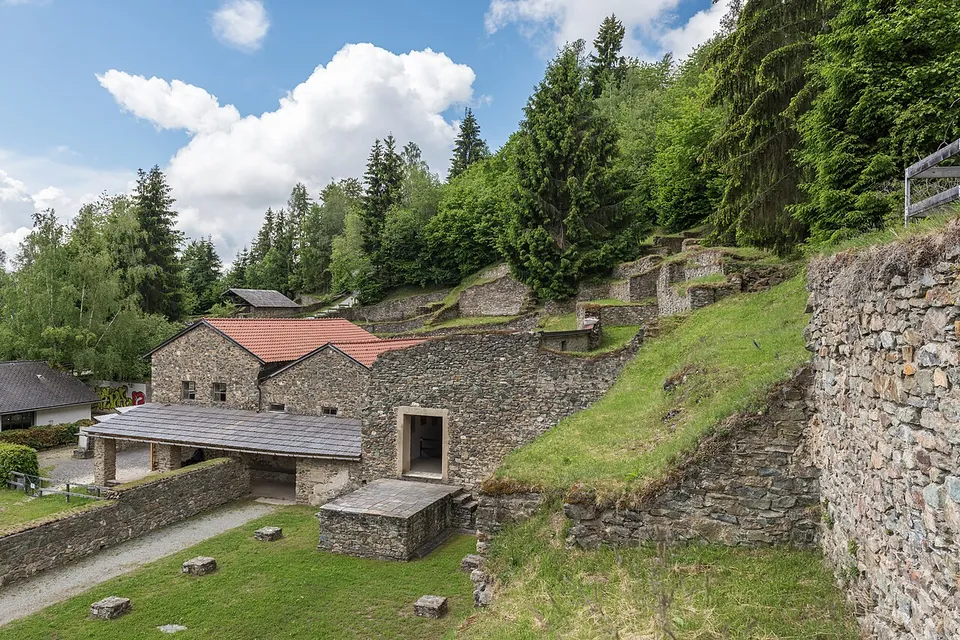


The Magdalensberg in Carinthia carries the excavated remains of a hill town that traded in Noric iron before and during the first years of Roman rule, and became the political centre of the Roman eastern Alps before it was abandoned around the middle of the 1st century AD. Its forum quarter is now an open-air museum: terraces of conserved and partly rebuilt houses, a temple, baths and wall paintings in the style of Roman Italy.
What is there today
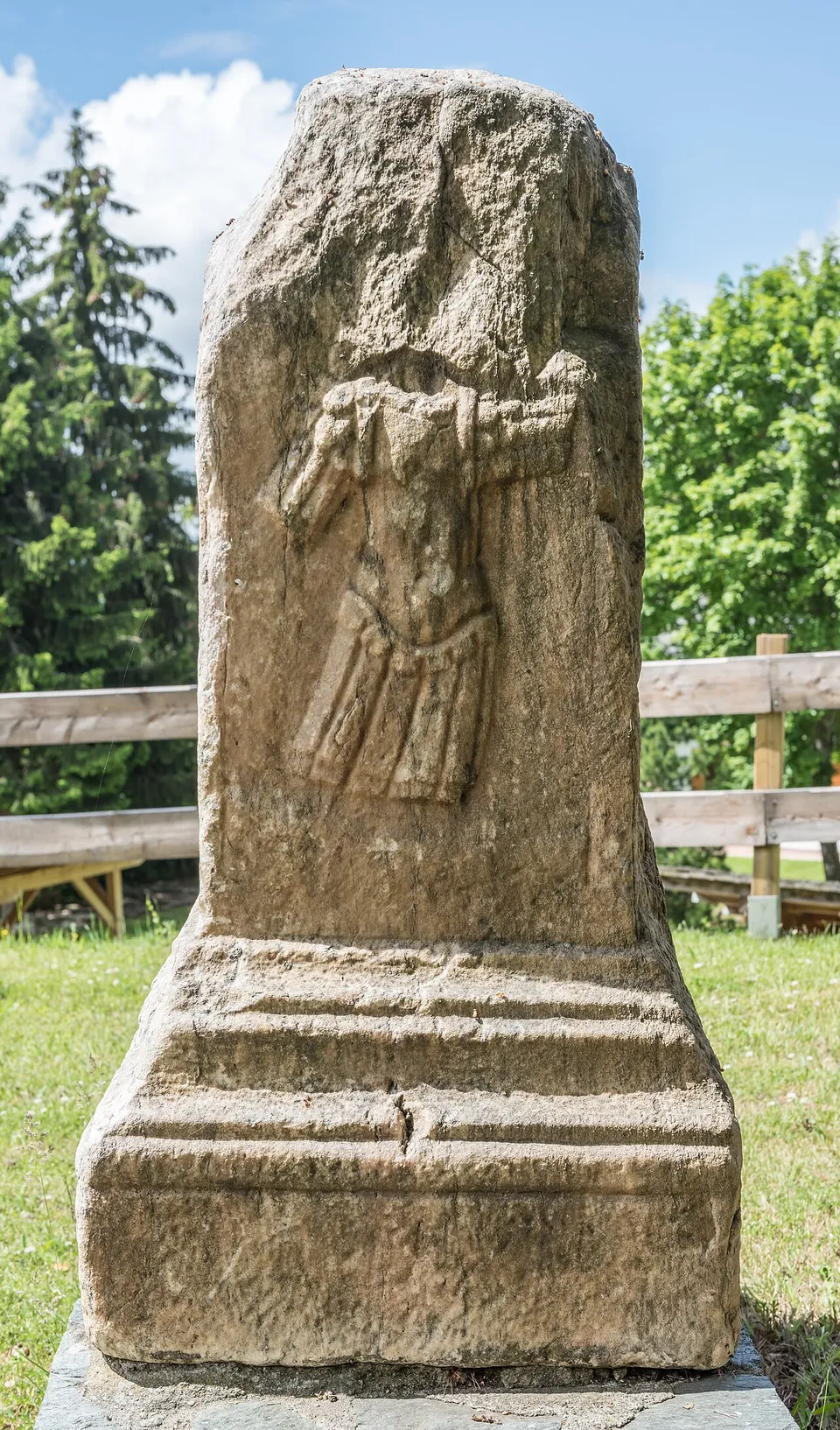
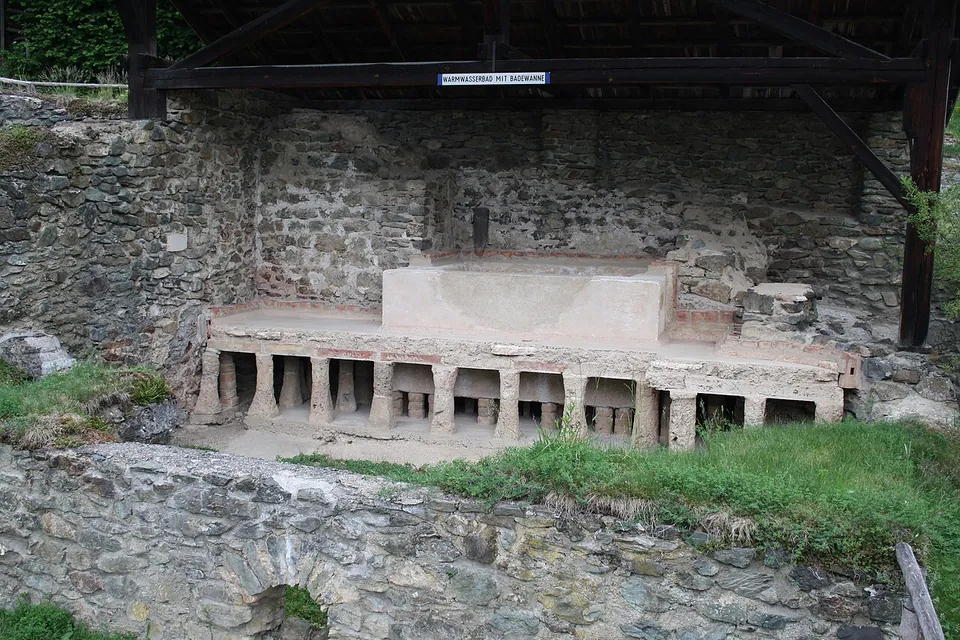
Since 1948 annual excavations have uncovered the buildings around the forum, and most of them are now open as an open-air museum in which they have been conserved and in part rebuilt; the park is a branch of the Carinthian state museum (de.wikipedia). The forum itself measures 110 by 42 m, and the path to the summit still runs past its long south side. A circuit of eleven stops leads through the traders’ forum and quarter, the wall paintings, the residential and workshop quarters, a double gate, the temple precinct, the praetorium and basilica, a grand house built for show, a collection of inscribed stones, terraced houses with a bath, and a foundry for gold bars (de.wikipedia).
The wall paintings are the surprise. They span about 80 years, from late in Caesar’s time to the end of Tiberius’s reign, and they are so close in style and so high in quality to the painting of Roman Italy that they cannot be called provincial art; one underground room was painted with gods, among them Athena with her shield and Aphrodite with Eros (de.wikipedia). On the summit, where a Celtic sanctuary stood inside a massive fortification, almost nothing has been conserved above ground: only a few walls on the road up to the church, part of a double gate, can be seen (de.wikipedia).
Is it worth the trip?
Yes, if you are in central Carinthia in season. This is a town of the very first years of Roman rule in the Alps, laid out on its mountainside, and the setting is part of the pleasure. The catch is the timetable: the park is open only five days a week from May to September, only on Fridays and Saturdays in October, from 11.00 to 16.00, and not at all in winter. Combine it with Virunum, the Roman town that replaced it on the plain below.
Getting there
The archaeological park is at Magdalensberg 15, with a bus stop (“Magdalensberg Archäologischer Park”) about 50 m away and a car park about 65 m away (OpenStreetMap). It is open from May to September, Tuesday to Saturday 11.00–16.00, and in October on Fridays and Saturdays 11.00–16.00, with extra openings in 2026 on Whit Monday and on 26 October; last entry is half an hour before closing. A ticket is €8, €6 reduced and €14 for a family, and under-18s go free (kärnten.museum, read 5 October 2026).
Visiting details
- Opening hours
- May to September, Tuesday to Saturday 11.00–16.00; October, Friday and Saturday 11.00–16.00; in 2026 also Whit Monday (25 May) and the national holiday (26 October). Last entry half an hour before closing.
- Tickets
- €8; reduced €6; under-18s free; family €14; themed guided tour €4 a person.
Before you go
- Closed from November to April, and in October open on Fridays and Saturdays only.
Hours and prices checked 5 October 2026 on the operator's own site. Confirm before travelling.
History
The town was inhabited from the 1st century BC and was an important trading place, above all for Noric iron (de.wikipedia). When Noricum was absorbed peacefully into the Roman Empire in 16 or 15 BC, the town became the political centre of the Roman eastern Alps, and a large building programme followed: a governor’s building, the praetorium, replaced the traders’ hall on the forum, a podium temple went up under Tiberius, a large bath building was added, and two-storey houses of up to 150 m² were built on the slope. At its height the town covered about 300 hectares and had perhaps 3,000 to 5,000 inhabitants (de.wikipedia).
Just before the middle of the 1st century the finds stop. The town was given up quickly, with buildings such as the temple left unfinished, and its place was taken by Virunum, founded in the late 40s as a planned Roman town on the Zollfeld at the foot of the mountain, which took over its role as capital and perhaps its name; what the hill town was called is still uncertain (de.wikipedia). Only the summit sanctuary stayed in use, into late antiquity. The ruins were forgotten until the Youth of Magdalensberg, the town’s most important single find, was discovered in 1502 (de.wikipedia).
More photographs

Nearby
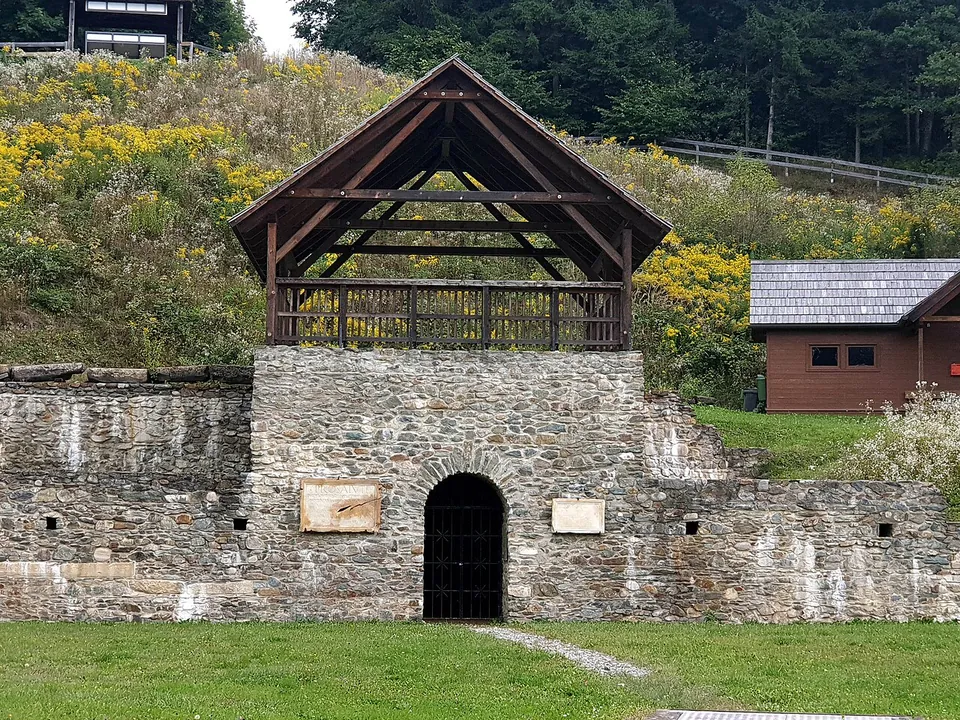
Photo: Alfred Platschka · CC BY-SA 4.0 · Commons
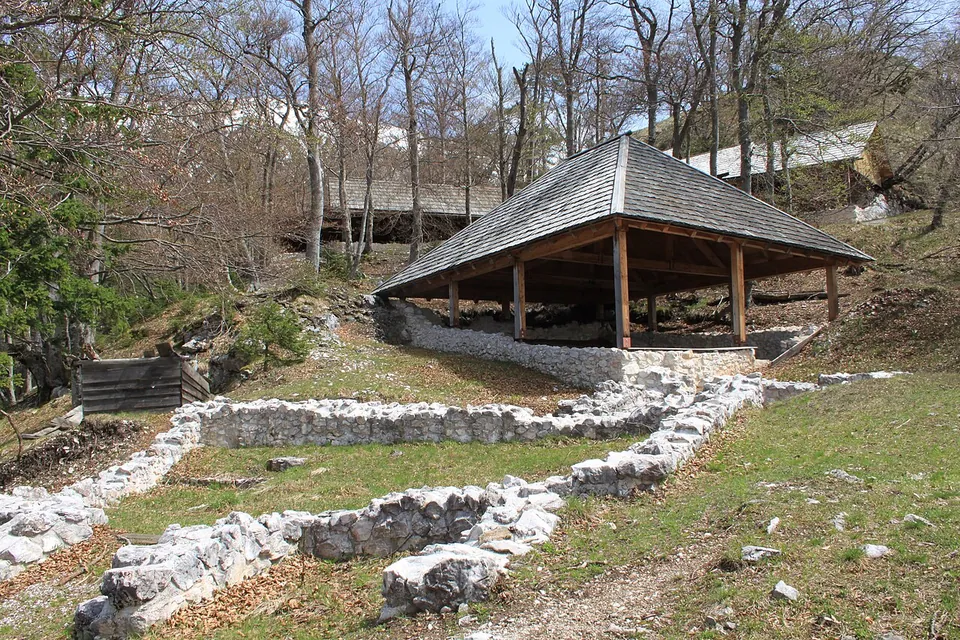
Photo: JakobZ · CC BY-SA 3.0 · Commons
41 km · fort · Žirovnica
Ajdna
The settlement was built on terraces just below the summit (the register says three; sl.wikipedia two, joined by a ridge).


Straight-line distances.
Sources
Every fact on this page comes from the records below, each used under the licence noted.
| Source | Licence |
|---|---|
| Pleiades 197365 | CC BY |
| Wikidata Q877620 | CC0 |
| Vici.org 12878 | CC BY-SA (text), CC0 (metadata) |
| Wikipedia (de) — Stadt auf dem Magdalensberg | CC BY-SA 4.0 |
| Wikipedia (en) — City on the Magdalensberg | CC BY-SA 4.0 |
| kärnten.museum — Archäologischer Park Magdalensberg (the operator) | licence not recorded |