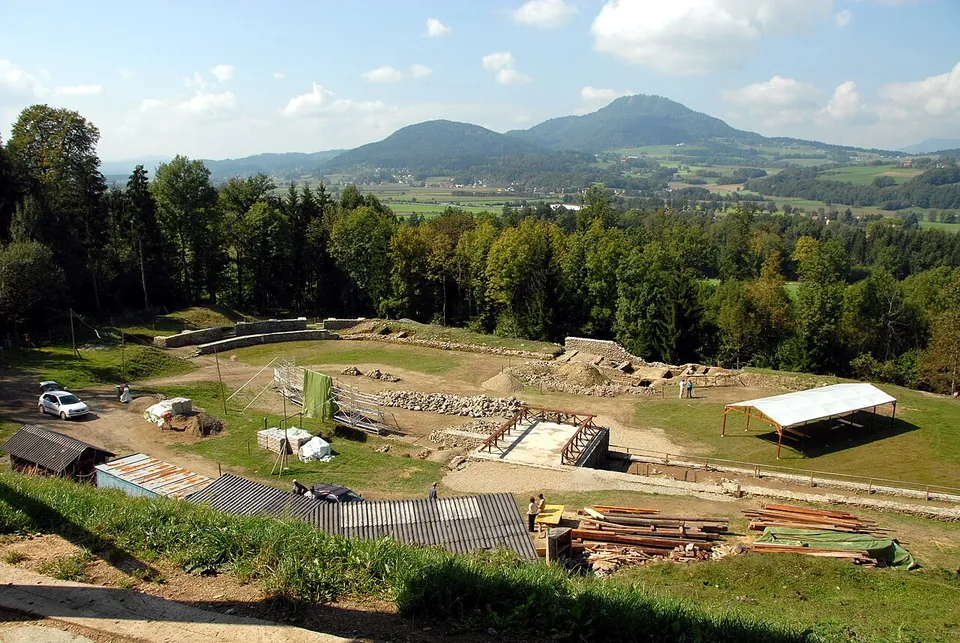
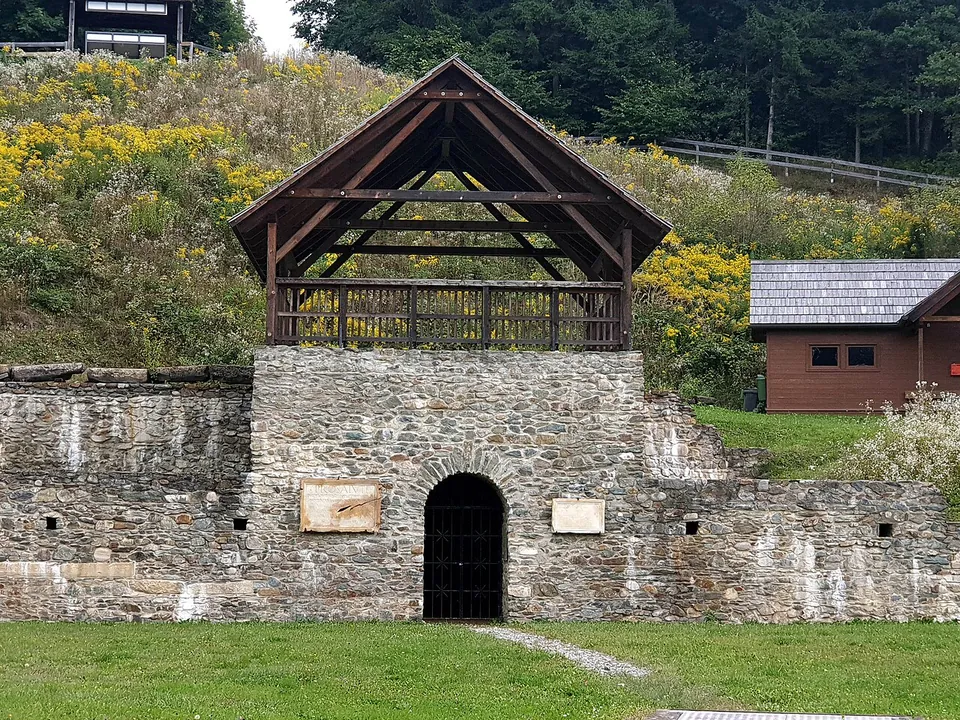
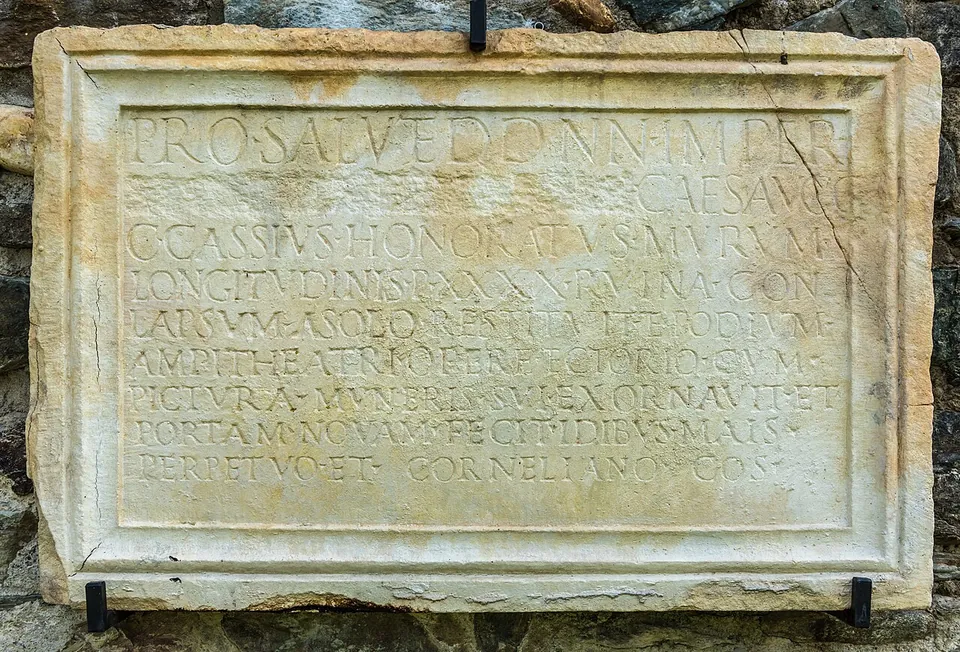


Virunum was the Roman capital of Noricum, a planned town founded under Claudius on the Zollfeld near Maria Saal in Carinthia. The part of it that has been dug out and restored for visitors is its amphitheatre, with a shrine of Nemesis beside the arena. The catch is that you cannot simply turn up: the amphitheatre opens only for events and for groups that have booked.
What is there today
The town covered about 100 hectares. After excavations from the late 19th century to 1931, digging resumed only at the end of the 20th century, when the amphitheatre was uncovered (de.wikipedia). It is a long, elliptical amphitheatre, now restored, with an underground passage for the gladiators and a sanctuary of Nemesis, the Nemeseum, which holds inscriptions, altars and reliefs of animal fights; the Nemeseum is currently closed (the operator). In summer the arena is used for historical shows, including staged gladiator fights put on since 2020 with the Carinthian state museum (de.wikipedia).
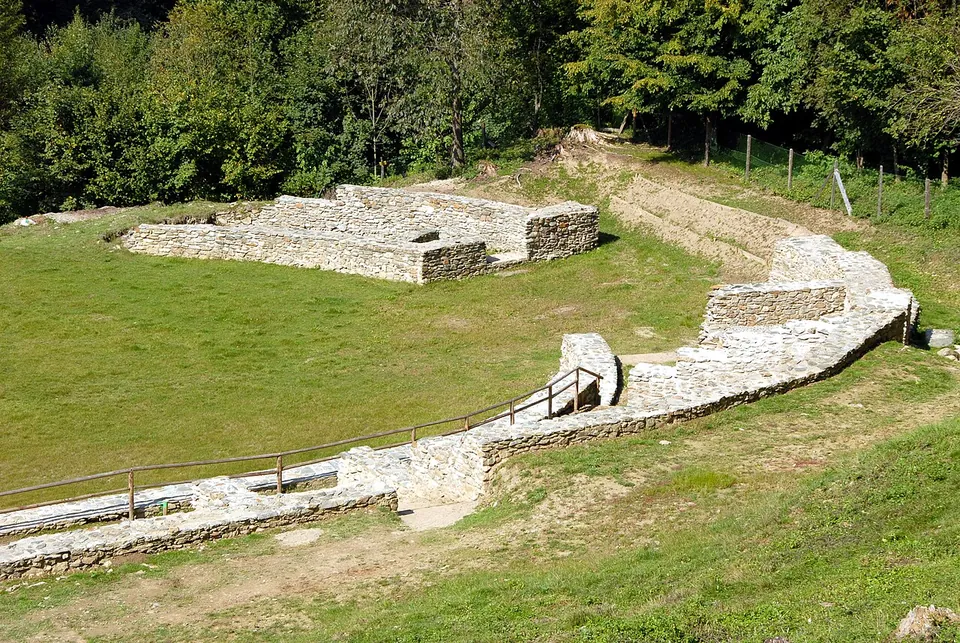
On the slope of the Töltschach hill was a theatre with a stage, the only one known in Noricum, and east of the amphitheatre stands a large building thought to be the governor’s palace (de.wikipedia); the theatre, excavated in 1926, is overgrown with woodland again, though its half-circle can still be made out in the ground (Commons).
Is it worth the trip?
For most travellers, only in combination. The amphitheatre is a genuine and well-restored Roman monument, but with no open hours for individual visitors you will need to join an event, such as the summer gladiator shows, or come as a booked group. The obvious pairing is the Magdalensberg, the hill town that Virunum replaced, on the mountain above the Zollfeld.
Getting there
The amphitheatre is on the Zollfeld in the municipality of Maria Saal (the operator), with the nearest mapped car park about 250 m away (OpenStreetMap). Visits are possible only during events or for groups booked in advance: a guided tour is €9 a person for groups of ten or more, €5 a person for smaller groups, or €100 for the group (kärnten.museum, read 5 October 2026). The operator publishes no opening hours and no ticket for individual visitors.
Visiting details
- Tickets
- Amphitheatre - guided group tours only, booked in advance; €9 a person for groups of 10 or more, €5 a person for smaller groups, or €100 for a group tour. No ticket for individual visitors is published.
Before you go
- The amphitheatre can be visited only during events or by groups that have booked in advance (the operator).
- The shrine of Nemesis beside the arena is currently closed (the operator).
Hours and prices checked 5 October 2026 on the operator's own site. Confirm before travelling.
History
Virunum was founded around the middle of the 1st century under Claudius as the capital of Noricum, replacing the hill town on the Magdalensberg, whose name it may have taken. It stood on the road from the Adriatic to the Danube, on a terrace safe from floods at the edge of the Zollfeld (de.wikipedia). The town had Latin rights and was the seat of the provincial governor until the second half of the 2nd century; after the Marcomannic Wars the administration moved to Ovilava (Wels), leaving only the finances here. When Diocletian divided Noricum, Virunum became a provincial capital again, of inland Noricum, and it is recorded as a bishop’s seat from 343. Its territory took in central and eastern Carinthia and parts of Styria (de.wikipedia).
The end of the town is poorly known. Lying open in the valley without walls, it lost at least part of its population to the surrounding hills in the course of the 5th century, and by then Teurnia was named as the capital of Noricum (de.wikipedia).
More photographs

Nearby
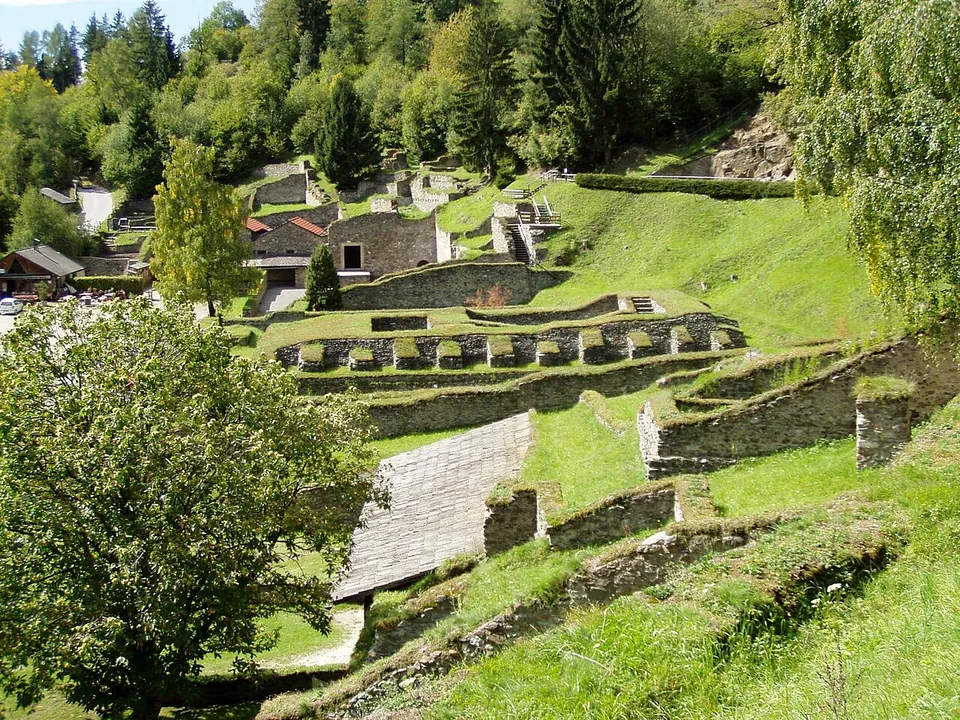
Photo: de:Benutzer:Griensteidl · CC BY-SA 3.0 · Commons
6 km · city · Klagenfurt-Land District
Magdalensberg
Since 1948 annual excavations have uncovered the buildings around the forum, and most of them are now open as an open-air museum in which they have been conserved and in part rebuilt; the park is a branch of the Carinthian state museum (de.wikipedia).
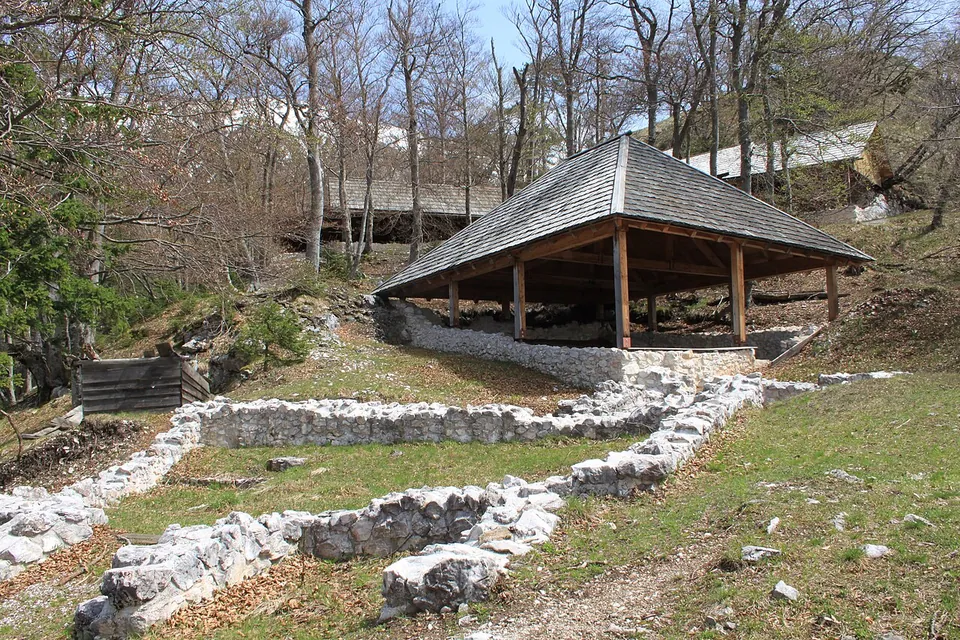
Photo: JakobZ · CC BY-SA 3.0 · Commons
36 km · fort · Žirovnica
Ajdna
The settlement was built on terraces just below the summit (the register says three; sl.wikipedia two, joined by a ridge).


Straight-line distances.
Sources
Every fact on this page comes from the records below, each used under the licence noted.
| Source | Licence |
|---|---|
| Pleiades 197583 | CC BY |
| Wikidata Q701582 | CC0 |
| OpenStreetMap way/351973266 | ODbL |
| Pleiades — Virunum amphitheatre | licence not recorded |
| Wikipedia (de) — Virunum | CC BY-SA 4.0 |
| Wikipedia (en) — Virunum | CC BY-SA 4.0 |
| kärnten.museum — Amphitheater Virunum (the operator) | licence not recorded |