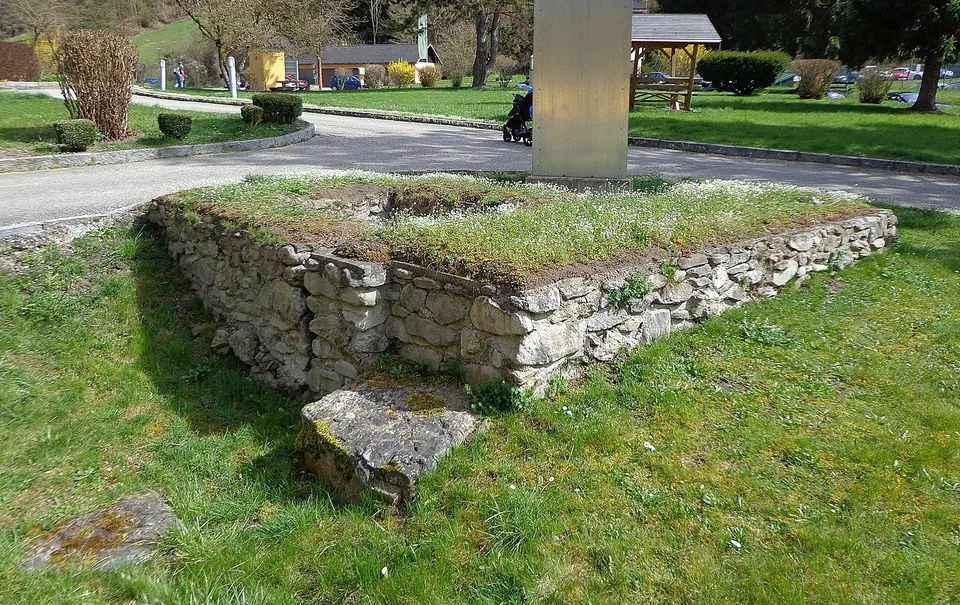
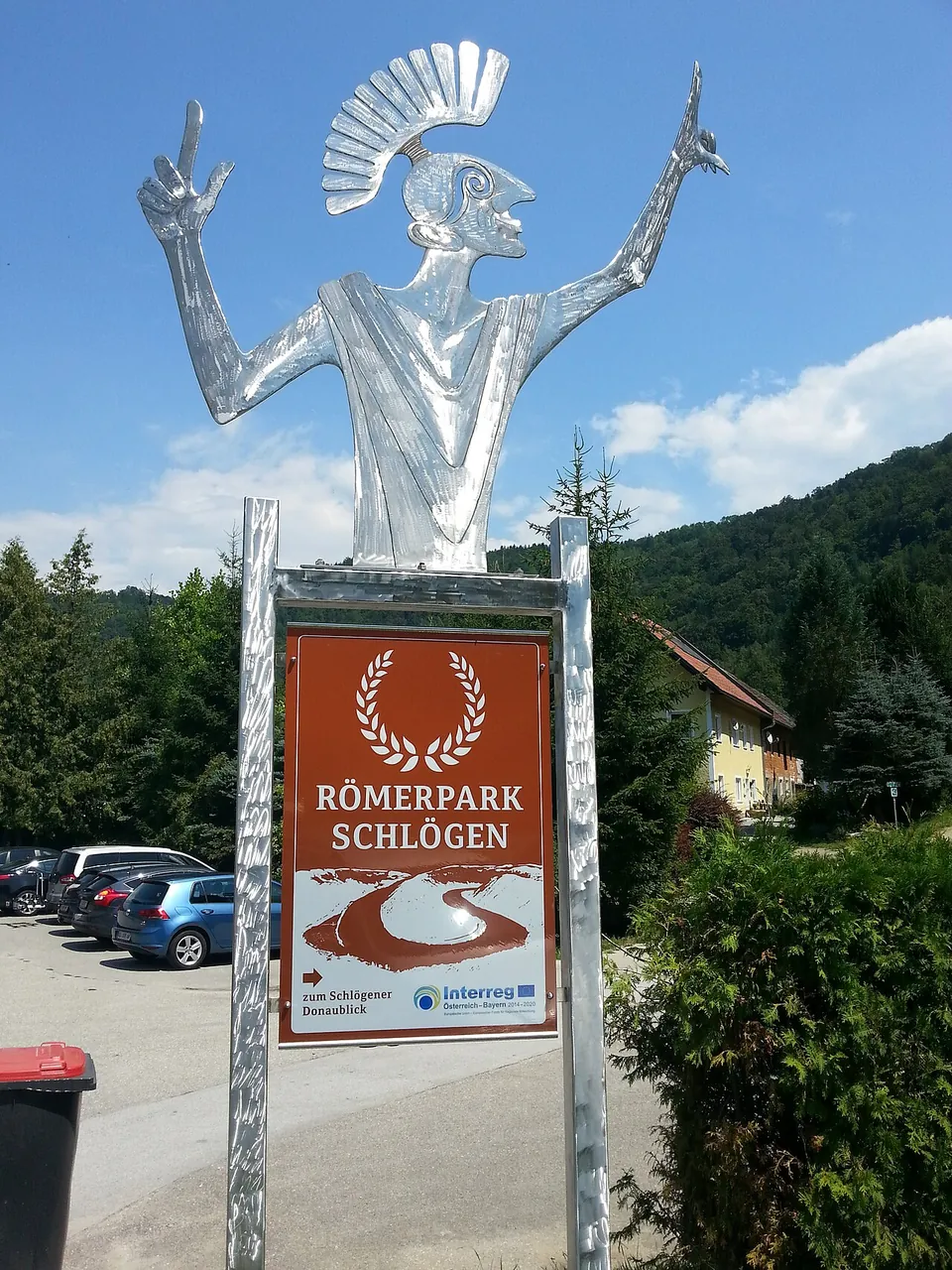
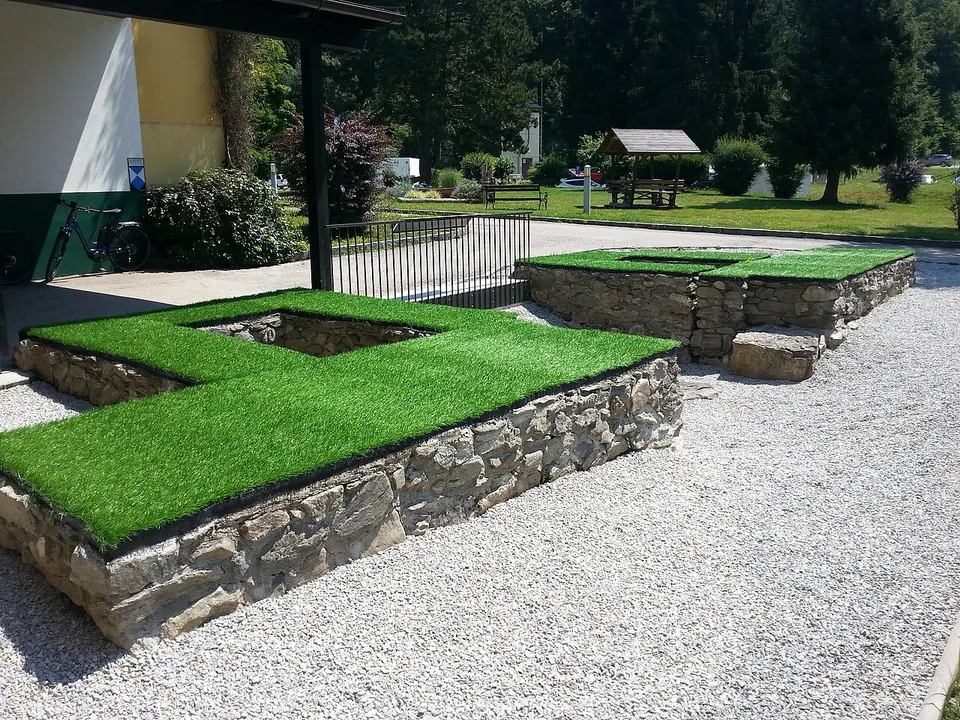


Schlögen, at the great loop of the Danube in Upper Austria, was a small Roman frontier fort. Two parts of it are shown in a free open-air Römerpark: a Roman bath house, its foundations kept under a modern shelter, and the conserved foundations of the fort’s west gate, on the lawn beside the riverside hotel.
What is there today
The bath house, excavated in 2014 and 2015, measures 14 by 6 m and its masonry was found in unusually good condition. It was built between 130 and 150 and probably used for about 300 years; it had three rooms in a row, a hot, a warm and a cold bath, the hot and warm rooms heated from a furnace outside, and three apses held the plunge pools; it served soldiers and civilians alike (de.wikipedia). For the Upper Austrian state exhibition of 2018 the remains were covered with a shelter and opened to the public (de.wikipedia). The park around it adds a stereoscope that shows the fort in three dimensions and digital reconstructions of Schlögen around 200 (the operator).
The foundations of the west gate, restored by the Federal Monuments Office in 1959 and 1972, can be seen beside the Hotel Donauschlinge (de.wikipedia; the operator); for the 2018 exhibition the gate was partly rebuilt and newly presented (Commons). It was a gate with two small towers about 3 m square and a paved roadway 3.3 m wide between them; the rest of the fort, about 0.65 hectares, is not exposed, though a geophysical survey in 2013 showed that large parts of its walls survive below ground (de.wikipedia). The finds are in the Upper Austrian state museum in Linz (de.wikipedia).
Is it worth the trip?
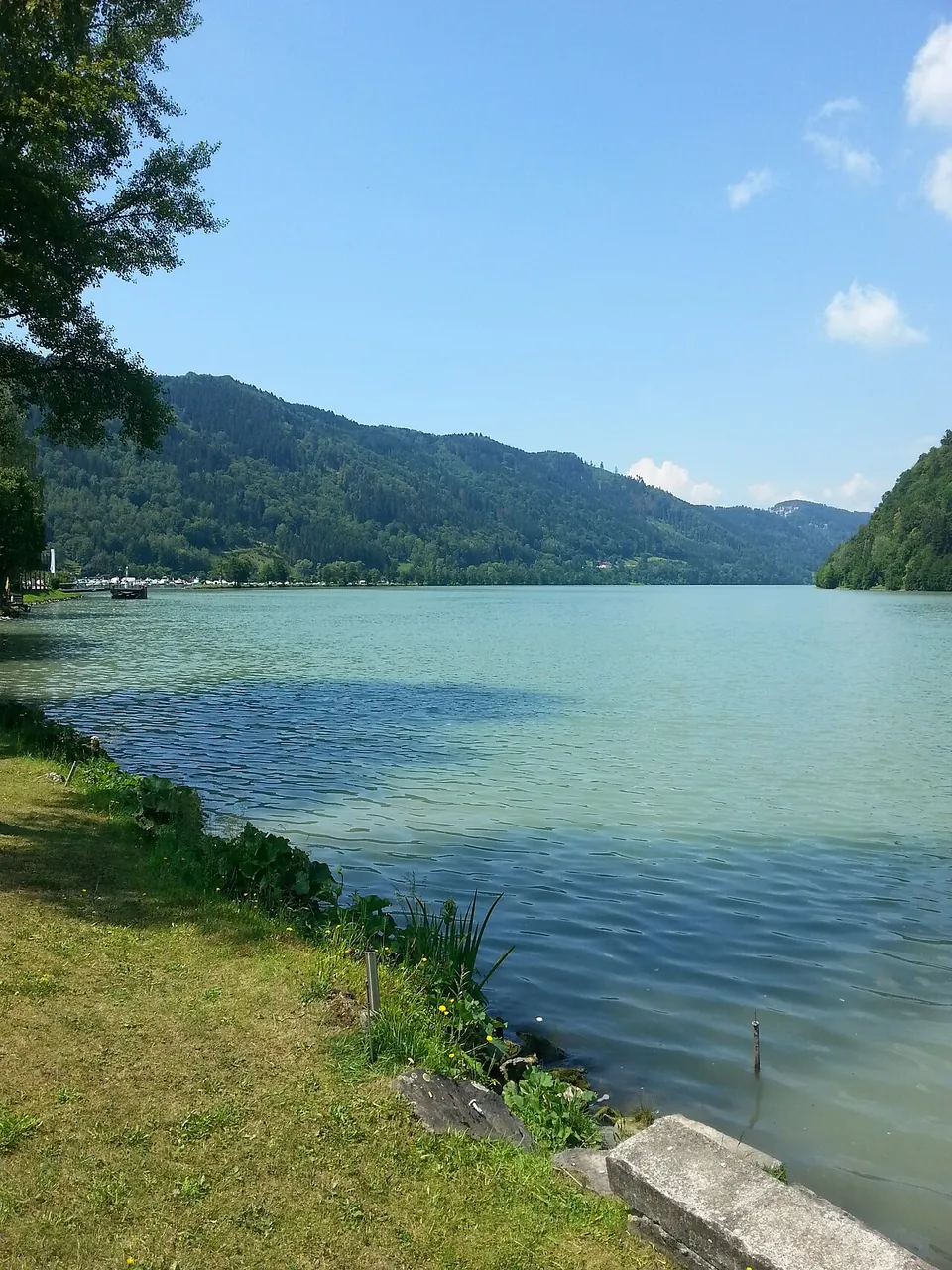
As a stop on the Danube, yes, and especially if you are cycling or boating past the Schlögen loop anyway: it is free, the bath house is a real Roman building at foundation level, and the setting at the bend of the river is lovely. As a destination in its own right it is small, with an hour’s worth of remains.
Getting there
The fort lies at Schlögen in the municipality of Haibach ob der Donau, on the right bank of the Danube. The Schlögen boat landing is about 115 m from the west gate, and the bath house about 250 m (OpenStreetMap). The Römerbad and Römerpark are open daily 10.00–18.00 from 29 March to 31 October 2026, and entry is free (OÖ Kultur, read 5 October 2026); the west gate is in the open.
Visiting details
- Opening hours
- Römerbad and Römerpark - daily 10.00–18.00 from 29 March to 31 October 2026. The west gate of the fort is in the open beside the Hotel Donauschlinge.
- Tickets
- Free.
Hours and prices checked 5 October 2026 on the operator's own site. Confirm before travelling.
History
When the fort was founded is disputed. Earlier scholars dated it to the 3rd century; later work on the coins and pottery points to a first fort somewhere between the late reign of Hadrian and around 200 (de.wikipedia). That fort burned around 300 and lay empty for decades before it was rebuilt on exactly the same plan, a puzzle for a late Roman fort. It guarded the road along the Danube where it left a granite massif, and the river itself at a point where the loop forced boats past several posts (de.wikipedia).
The fort has long been identified with Ioviacum, a station on the Danube road, though that identification is now disputed. If it is Ioviacum, the Life of St Severin records its end: Severin warned its people of a coming raid, they did not listen, and the town was destroyed, its inhabitants killed or captured and its priest Maximianus hanged. Its end is placed no earlier than 455 (de.wikipedia). The remains have been part of the Danube Limes World Heritage Site since 2021 (de.wikipedia).
More photographs

Nearby
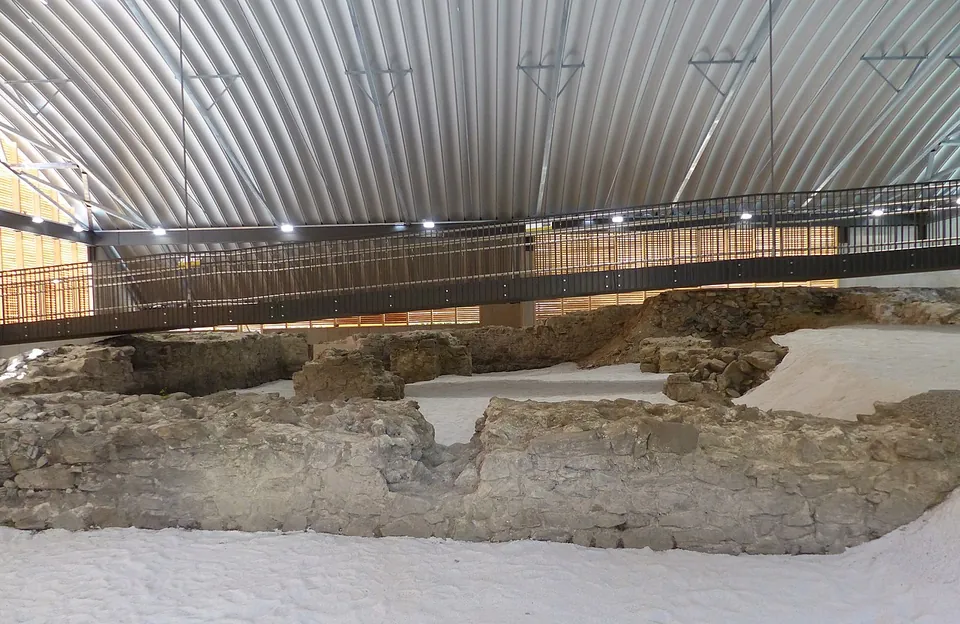
Photo: Wolfgang Sauber · CC BY-SA 4.0 · Commons
9 km · fort · Schärding District
Burgus Oberranna
The fort's central court measured about 15 by 17 m and the whole fort about 28 by 29 m, with a round tower about 8–10 m across at each corner, probably three storeys and up to 10 m high when complete.

Straight-line distances.
Sources
Every fact on this page comes from the records below, each used under the licence noted.
| Source | Licence |
|---|---|
| Wikidata Q1746891 | CC0 |
| Vici.org 7299 | CC BY-SA (text), CC0 (metadata) |
| OpenStreetMap way/618195130 | ODbL |
| Wikipedia (de) — Kleinkastell Schlögen | CC BY-SA 4.0 |
| OÖ Kultur — Römerbad & Römerpark Schlögen (the operator) | licence not recorded |