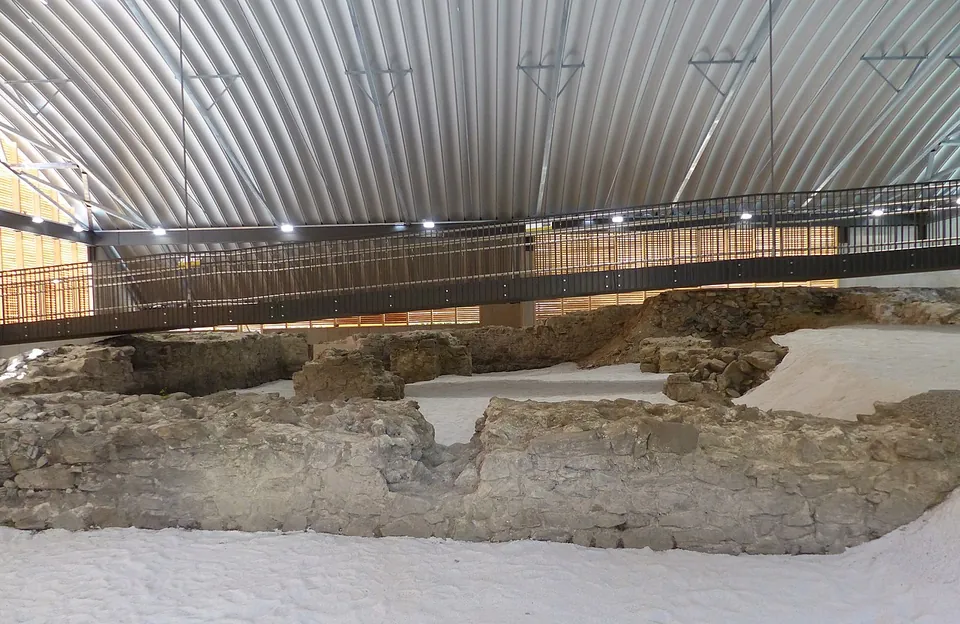


The Burgus Oberranna is a small late Roman fort on the Danube in Upper Austria, a square stronghold with round towers at its corners and a bath built into one of them, and it is counted the best-preserved Roman building in Upper Austria. Since 2018 it has stood under a timber-and-steel hall, where a raised walkway carries you over its walls; entry is free.
What is there today
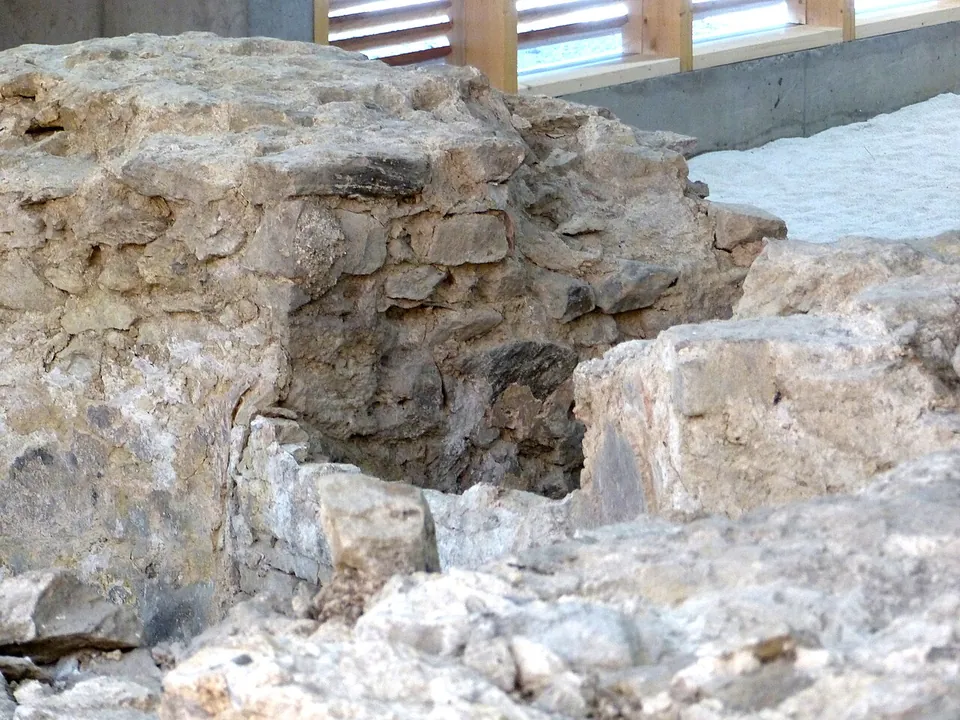
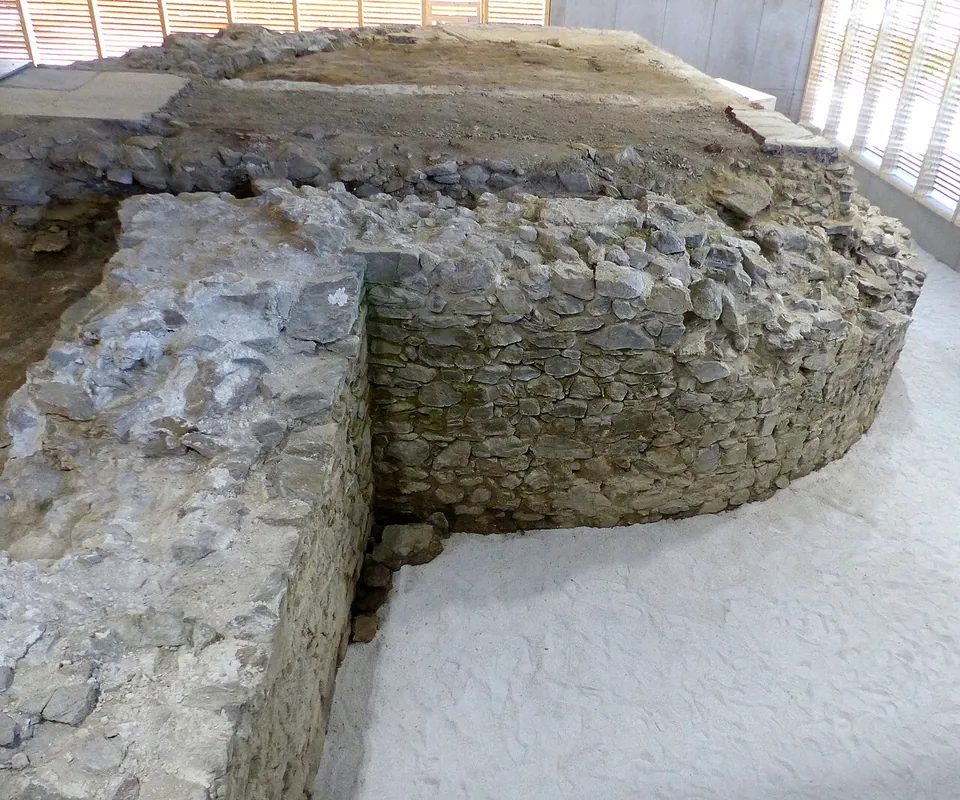
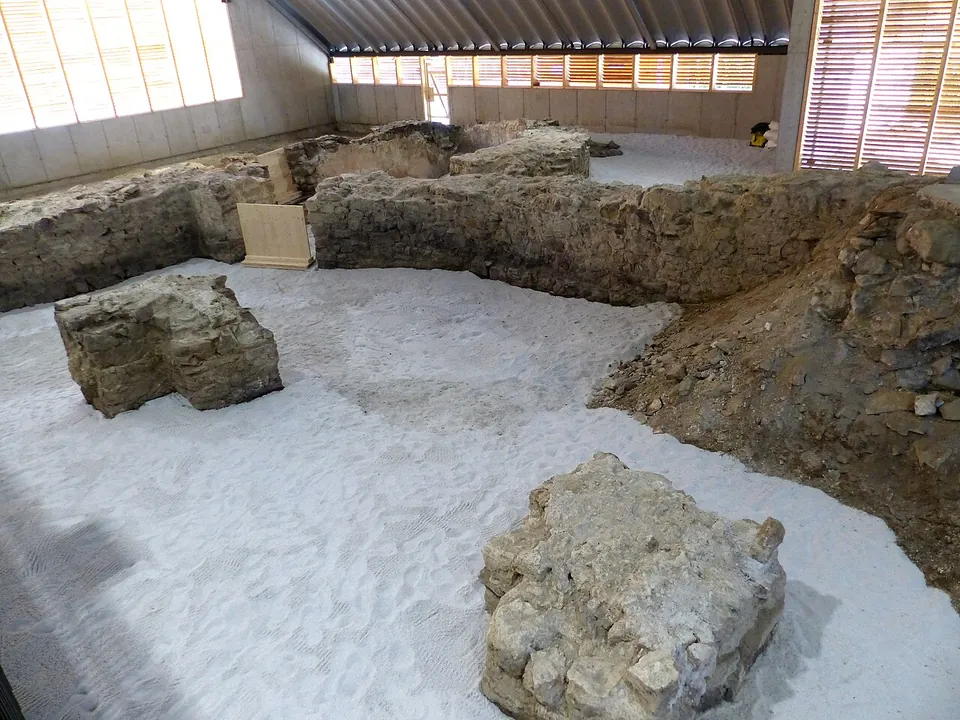
The fort’s central court measured about 15 by 17 m and the whole fort about 28 by 29 m, with a round tower about 8–10 m across at each corner, probably three storeys and up to 10 m high when complete. Its walls still stand more than 2 m high in places, and one jamb of the gate between the north and east towers was uncovered in 2018 (de.wikipedia). The north tower’s basement survived complete because a house built over the ruins around 1500 used it as a foundation; later it was an inn’s wine cellar (de.wikipedia).
The surprise is the bath built into the north-western tower: a heated room with underfloor heating and wall flues, and next to it a cold room whose plunge pool survives complete, with patches of its hard, waterproof Roman render, fingerprints still visible in it, three stone benches and the lead pipe that drained it (de.wikipedia). Inside the protective building a partly suspended steel walkway leads visitors over the walls, with views out over the Danube valley that show why a fort stood here (de.wikipedia).
Is it worth the trip?
Yes, for anyone travelling the Danube in Upper Austria. It is small, but it is counted the best-preserved Roman building in the state, the shelter and walkway make it easy to understand, the bath with its intact pool is a memorable survival, and it costs nothing. Pair it with Schlögen, about 11 km downstream.
Getting there
The fort is on the eastern edge of Oberranna in the municipality of Engelhartszell, between the Danube bank and the B 130 road (de.wikipedia), at Oberranna 5 (the operator). The bus stop “Engelszell Oberranna” is about 20 m away and a car park about 45 m (OpenStreetMap). It is open daily 10.00–18.00 from 29 March to 31 October 2026, and entry is free (OÖ Kultur, read 5 October 2026).
Visiting details
- Opening hours
- Daily 10.00–18.00 from 29 March to 31 October 2026.
- Tickets
- Free.
Before you go
- Closed from November to late March.
Hours and prices checked 5 October 2026 on the operator's own site. Confirm before travelling.
History
In the 4th century, from Constantine I to Valentinian I, the Danube frontier was rebuilt and strengthened, and small forts like this one were inserted between the established ones; most were short-lived and abandoned by the early 5th century. Oberranna was destroyed by fire in late Roman times, cause unknown (de.wikipedia). It is probably the ancient Stanacum, a station on the road along the Danube, and it watched the mouth of the Ranna opposite and a sheltered landing for boats just upstream (de.wikipedia).
The walls were discovered in 1840 and dug out without proper records. A house built on the site around 1500 later became an inn, which stood over the fort until it was demolished in 2006–07; in 1960 excavator work for a petrol station badly damaged three of the towers. Whether the remains were a fort or a bath house was argued until the excavation of 2017, after the municipality had bought the land, settled it (de.wikipedia). Since 2021 the fort has been part of the Danube Limes World Heritage Site (de.wikipedia).
More photographs

Nearby
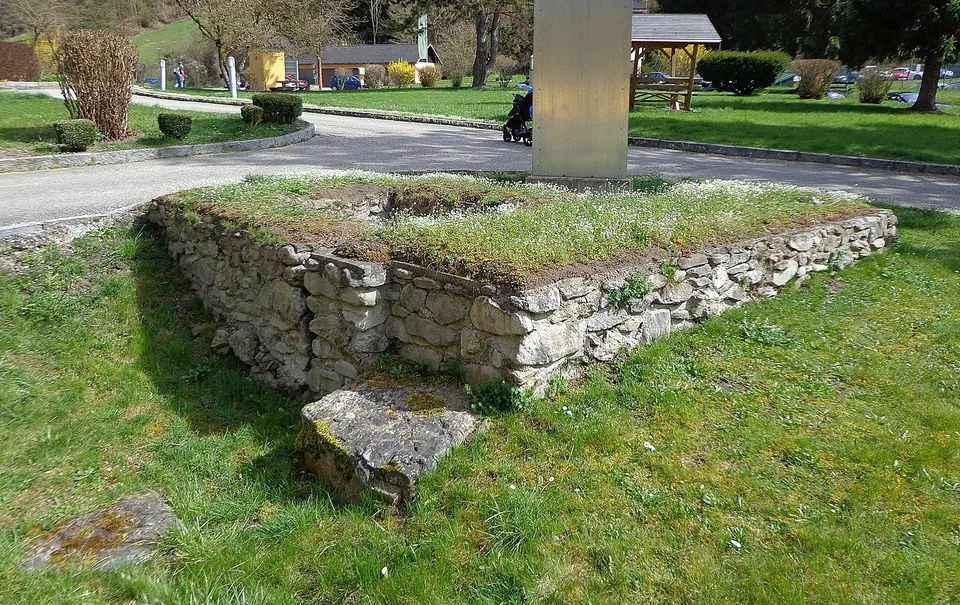
Photo: ViennaUK · CC BY-SA 4.0 · Commons
9 km · fort · Eferding District
Castra of Schlögen
The bath house, excavated in 2014 and 2015, measures 14 by 6 m and its masonry was found in unusually good condition.

Straight-line distances.
Sources
Every fact on this page comes from the records below, each used under the licence noted.
| Source | Licence |
|---|---|
| Pleiades 118972 | CC BY |
| Wikidata Q2741490 | CC0 |
| Vici.org 10548 | CC BY-SA (text), CC0 (metadata) |
| OpenStreetMap node/9100653433 | ODbL |
| Wikipedia (de) — Burgus Oberranna | CC BY-SA 4.0 |
| OÖ Kultur — Römerburgus Oberranna (the operator) | licence not recorded |