

Teurnia was a Roman town on a hill above the Drau, west of Spittal in Carinthia, and in late antiquity the capital of inland Noricum and the seat of a bishop. What you come for are its two early Christian churches: one under a shelter on the hill beside the Römermuseum, and one in the valley with a floor mosaic paid for by the governor Ursus and his wife.
What is there today
The town was built on the Holzer Berg, a hill rising about 70 m above the valley, and the village of St. Peter in Holz now occupies the site (de.wikipedia). Its bishop’s church, the Römermuseum, a town house and the west gate of the late Roman town wall are shown on site, while the residential terraces and the forum, once excavated, have been filled in or built over. A circuit with new information boards, put up in 2018, links them (de.wikipedia).
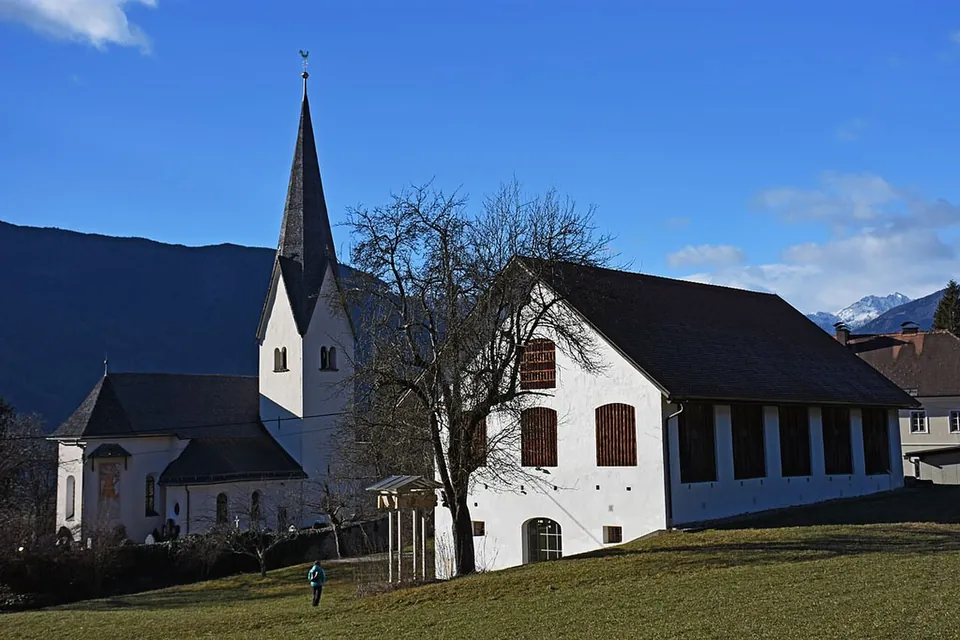
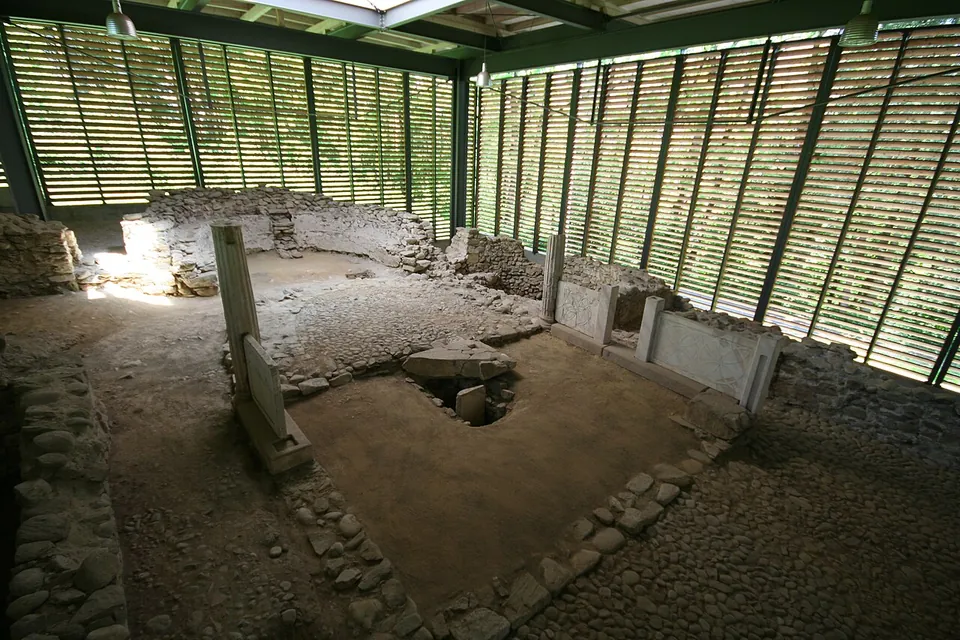
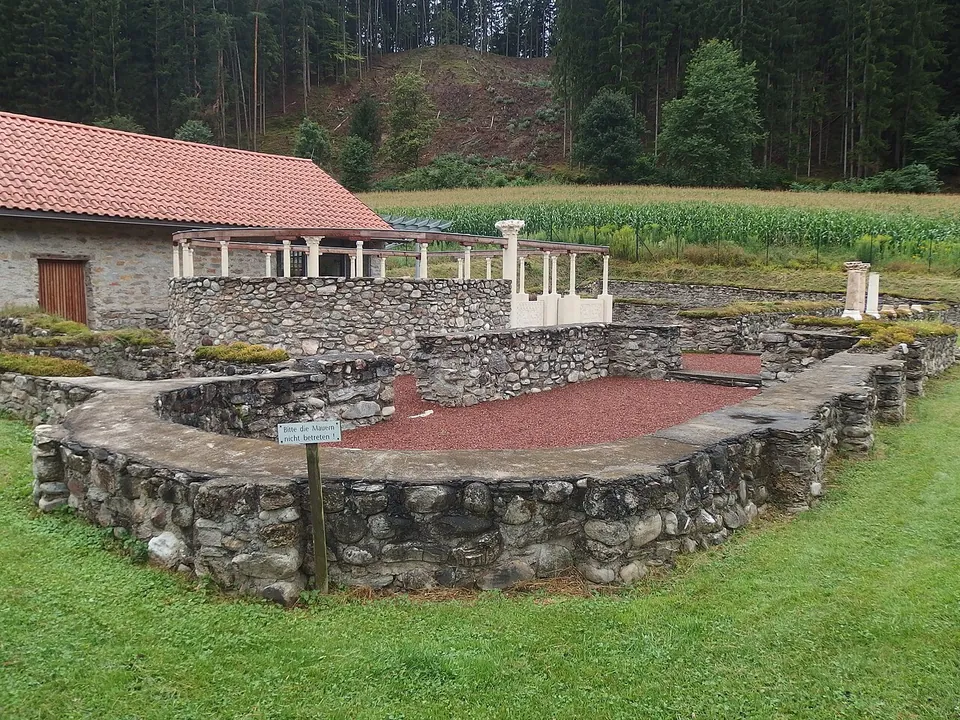
On the way up to the museum, under a modern shelter, stand the walls of the bishop’s church, up to 2 m high. It was a single-naved church with an apse built around 400, with a free-standing bench for the clergy; after a fire it was rebuilt, probably in the 6th century, with a trefoil east end and open halls along its sides, and fragments of its wall paintings show women in Byzantine court dress (de.wikipedia). The Römermuseum, a branch of the Carinthian state museum in a former parish barn, shows finds from the town (de.wikipedia).
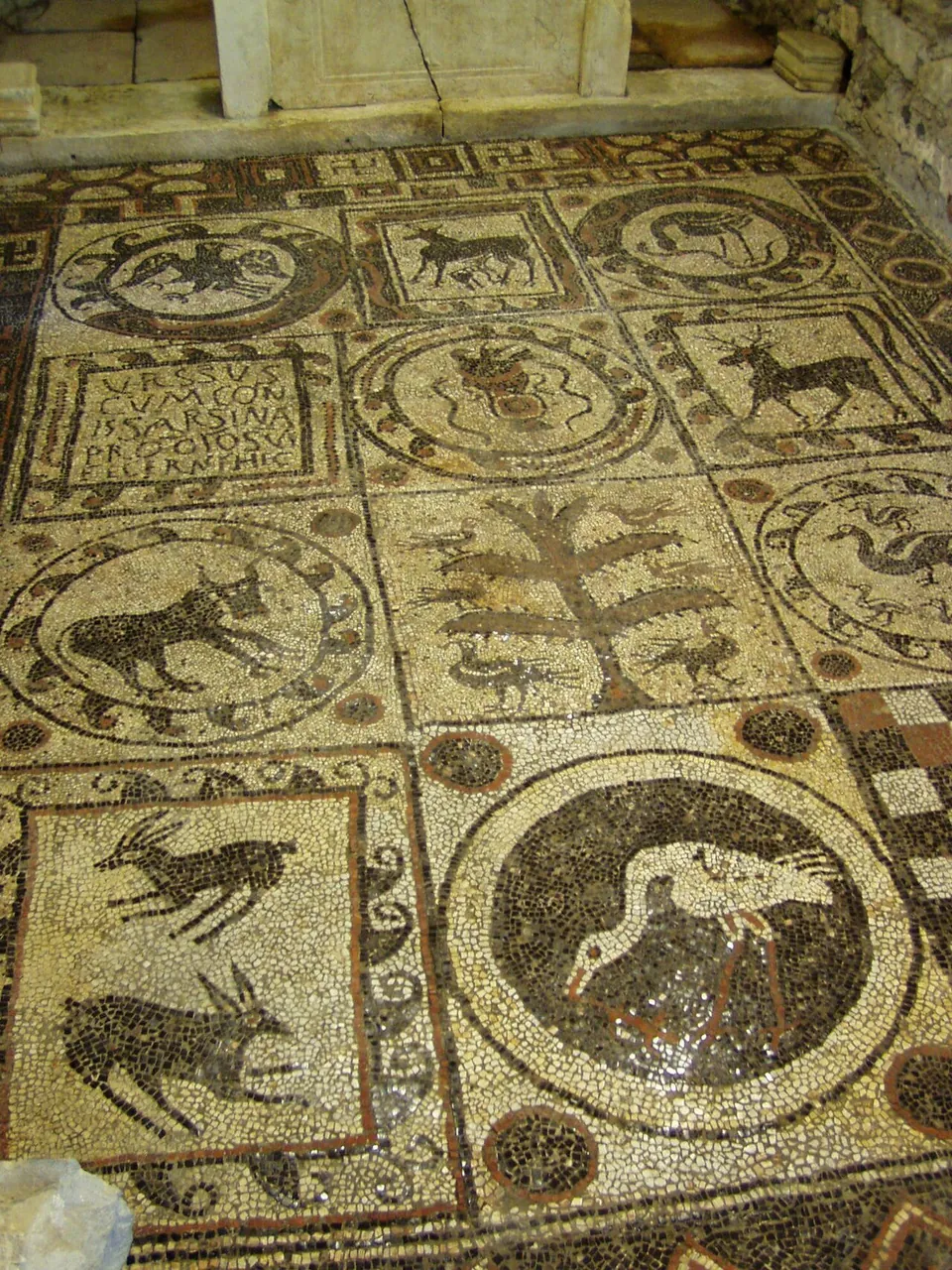
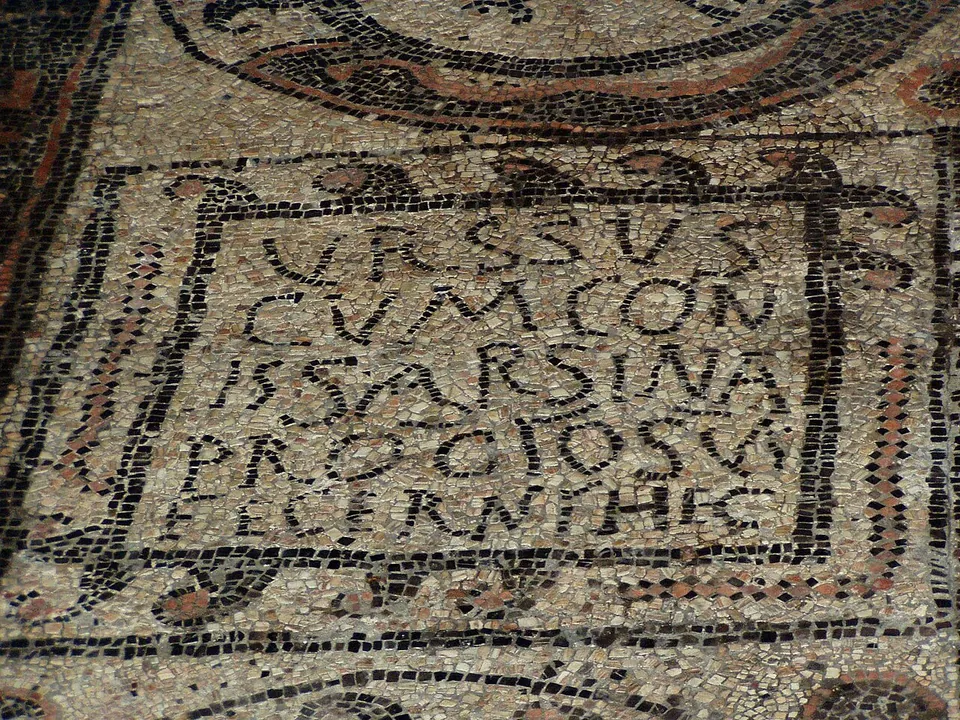
Down in the valley, the cemetery church is presented as an open-air museum. It is a rectangular hall church whose side annexes give it the shape of a Latin cross, and it is famous for the donor’s mosaic of the governor Ursus in its south side chapel, now under a museum wing; 65 graves were found around it (de.wikipedia). The mosaic’s inscription says that Ursus and his wife Ursina made it in fulfilment of a vow (Commons).
Is it worth the trip?
Yes, if you are in Upper Carinthia between May and September, and above all for the mosaic, for which the cemetery church is known. The bishop’s church, with its walls standing to head height, makes the late Roman town easy to picture. But Teurnia keeps short hours: the museum opens only five days a week and only until 16.00, and it is closed from October to April, so plan around it.
Getting there
St. Peter in Holz is in the municipality of Lendorf, west of Spittal an der Drau (de.wikipedia). The cemetery church is in the valley, about 190 m from the bus stop “St. Peter in Holz Teurnia”; the Römermuseum is on the hill about 500 m to the south-east, with the bishop’s church about 200 m from it and the town house about 100 m (OpenStreetMap). The museum, at St. Peter in Holz 1, is open from May to September, Tuesday to Saturday 10.00–16.00, with last entry half an hour before closing. A ticket is €8, €6 reduced and €14 for a family; under-18s go free, and a guided tour costs €4 a person (kärnten.museum, read 5 October 2026).
Visiting details
- Opening hours
- Römermuseum Teurnia - May to September, Tuesday to Saturday 10.00–16.00, last entry half an hour before closing; in 2026 also open on Whit Monday, 25 May.
- Tickets
- €8; reduced €6; under-18s free; family €14; guided tour €4 a person.
Before you go
- The museum is closed from October to April.
- No source says whether the cemetery church and the bishop's church can be seen outside the museum's opening hours.
Hours and prices checked 5 October 2026 on the operator's own site. Confirm before travelling.
History
Finds of the Hallstatt and La Tène periods suggest an early settlement on the hill. After the Celtic kingdom of Noricum joined the Roman Empire around 15 BC the place was romanised, and around AD 50 Claudius made it a municipium and gave it a forum; the finds show a prosperous town with metal workshops and probably textile production (de.wikipedia). In late antiquity the capital of Noricum moved here from Virunum, a move often linked to the Visigoths’ threat to Italy, and a wall was built round the town centre (de.wikipedia).
The town, now called Tiburnia, became the seat of a bishop; the bishop’s church, discovered in 1984, was built around 400, and two of its bishops, Paulinus and Leonidas, are known by name. Urban life ended in the 6th or early 7th century, probably with economic decline and the arrival of Slavic settlers in the region (de.wikipedia).
More photographs


Nearby
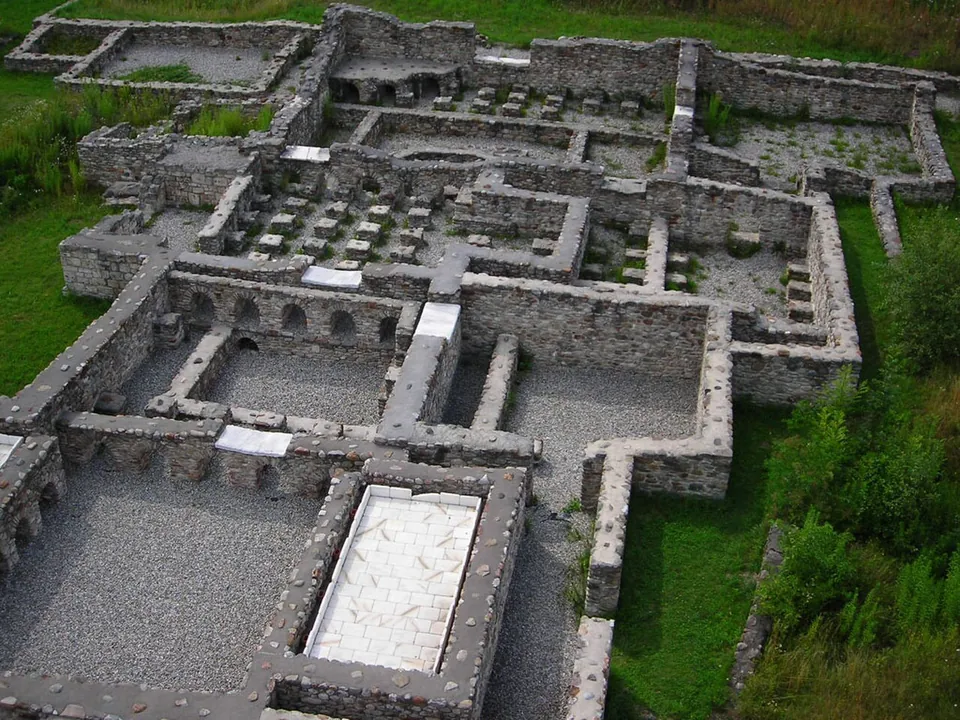
Photo: Simfunkel · CC BY-SA 3.0 · Commons
47 km · city · Lienz District
Aguntum
Alongside the museum, visitors can see the town wall, the atrium house, the baths, the craftsmen's quarter and the macellum (de.wikipedia).

Straight-line distances.
Sources
Every fact on this page comes from the records below, each used under the licence noted.
| Source | Licence |
|---|---|
| Pleiades 187583 | CC BY |
| Wikidata Q697154 | CC0 |
| Vici.org 11412 | CC BY-SA (text), CC0 (metadata) |
| OpenStreetMap way/314509227 | ODbL |
| Wikipedia (de) — Teurnia | CC BY-SA 4.0 |
| Wikipedia (en) — Teurnia | CC BY-SA 4.0 |
| kärnten.museum — Römermuseum Teurnia (the operator) | licence not recorded |