

What is there today
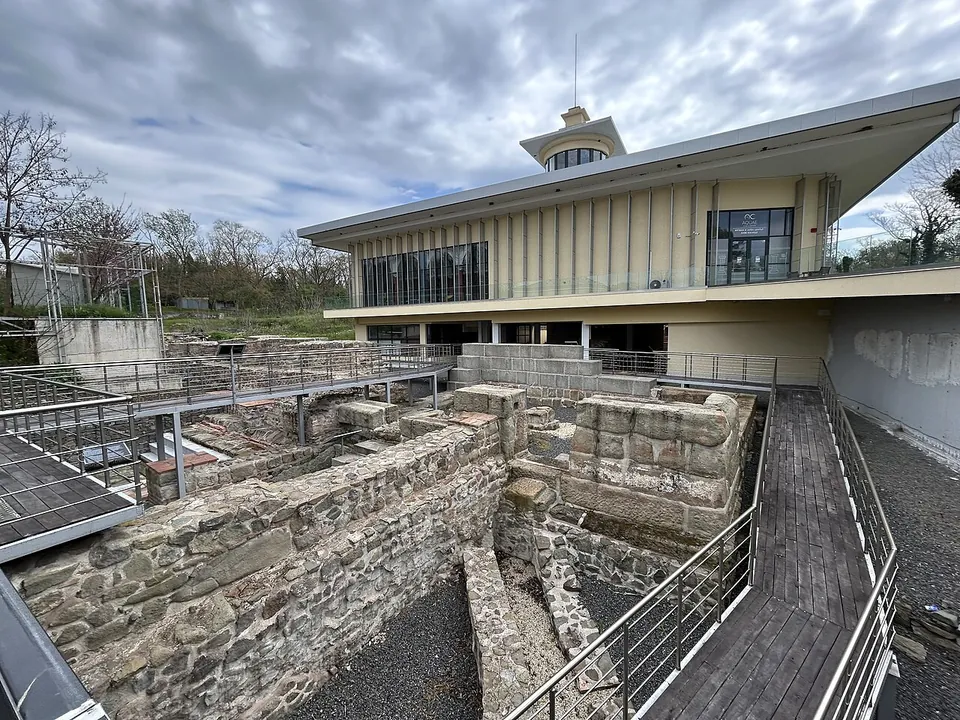
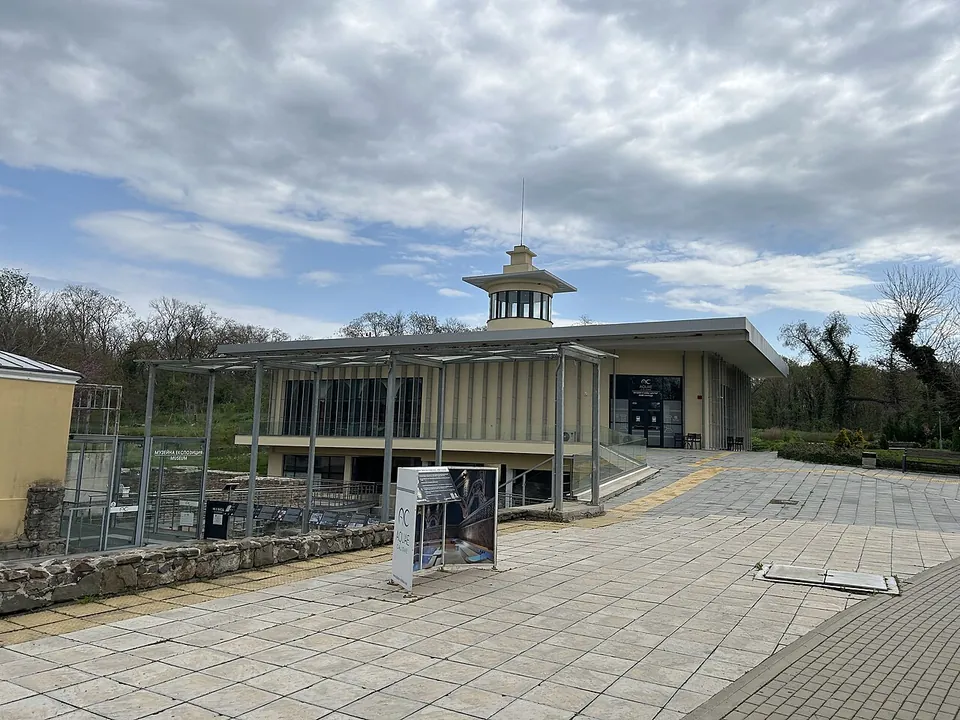
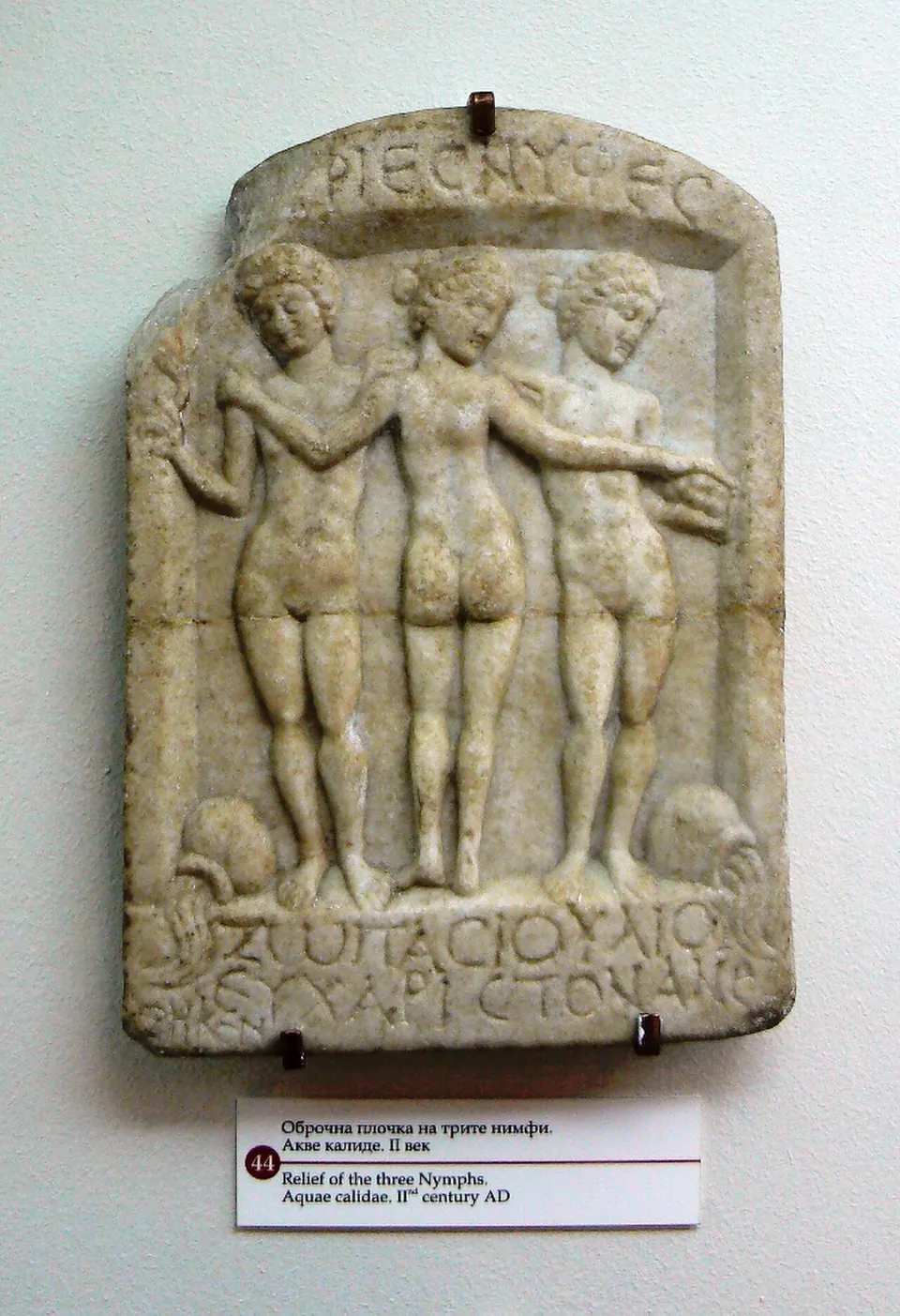
The ruins of the town walls, the Roman baths with their warm and cold pools, and medieval rooms are shown from raised walkways, and a museum displays the finds: gold coins and jewellery, lead seals, bathing tools, pottery, carved marble and inscriptions (the museum). Excavation since 2008 had uncovered 3,800 m² by 2010, including the ancient baths, the north gate and parts of the town walls, 5 m thick (en.wikipedia; bg.wikipedia).
The complex, opened in 2015, also includes the bath that the Ottoman sultan Suleiman the Magnificent had built over the half-ruined medieval pools in 1562, now fully restored and used for a film on the history of the place, fountains of mineral water, and an open-air stage with a glass floor over the excavations (bg.wikipedia; the museum). A modern spa centre on the site has warm mineral and cold pools.
Is it worth the trip?
If you are in Burgas, yes. The walkways make the ruins easy to read, and the springs still feed a working spa beside them. Be clear about what is Roman: the walls and the pools at ground level are ancient, while the restored bath named after Suleiman is Ottoman, of the 16th century.
Getting there
Aquae Calidae lies in the Vetren and Banevo districts of Burgas, at the Burgas mineral baths (bg.wikipedia). Street-side parking is mapped about 25 m away and the Mineralni Bani bus stop about 110 m away (OpenStreetMap).
The museum is open Tuesday to Sunday, 09.00 to 17.00. A ticket for the museum complex with the 3D film costs €8, or €7 for students and pensioners, and the Suleiman bath with its projection alone €3.50 (the museum complex, read 2 October 2026).
Visiting details
- Opening hours
- The museum is open Tuesday to Sunday, 09.00–17.00; the spa centre Tuesday to Sunday, 09.00–20.00.
- Tickets
- Museum complex with the 3D film €8; €7 for students and pensioners; €5 for children aged 3–7; free under 3 and for visitors with disabilities. The Suleiman bath with its projection alone is €3.50 (€2.50 for students and pensioners).
- Parking
- Street-side parking is mapped about 25 m away (OSM way/403162713); the Mineralni Bani bus stop is about 110 m away (OpenStreetMap).
- On foot
- About 1 min from the parking
Hours and prices checked 2 October 2026 on the operator's own site. Confirm before travelling.
History
The hot springs were used as early as the Neolithic, and the Thracians made them a sanctuary of the Three Nymphs in the 1st millennium BC (en.wikipedia; bg.wikipedia). Published dates for the first Roman baths differ: en.wikipedia places them after Lucullus’s conquest of the region in 72 BC, bg.wikipedia after Rome conquered Thrace in the middle of the 1st century AD. Under Trajan, when nearby Anchialos became the centre of the district, the baths were enlarged with more pools, and a road station called Aquae Calidae stood on the coast road, the Via Pontica, appearing on the Tabula Peutingeriana (en.wikipedia). Under Septimius Severus, in 209–211, three years of games and festivals called the Severia Nymphaea were held at the baths (en.wikipedia).
The baths were rebuilt and enlarged at the end of the 4th or early in the 5th century, and Justinian I surrounded the place with walls, as Procopius records. Around 580 the empress Anastasia, wife of Tiberius II, was cured here; in 584 the Avars took the town but spared the baths (en.wikipedia). As Thermopolis it lived on into the Middle Ages, until the Latin emperor Henry burned it in 1206 (en.wikipedia; bg.wikipedia).
Nearby
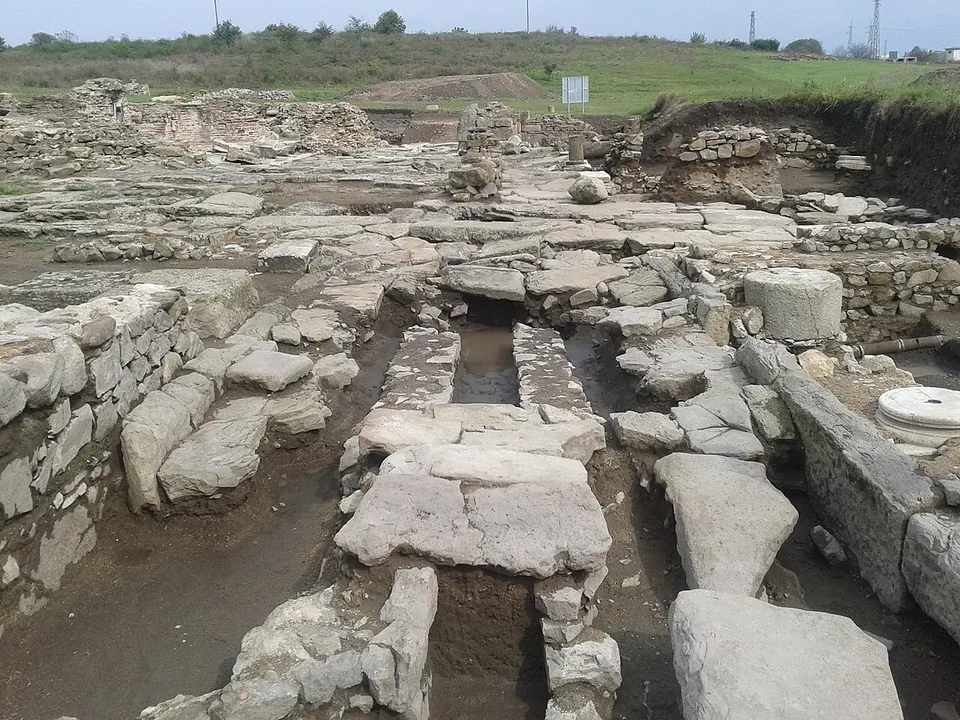
Photo: Камен Ханджиев · CC BY-SA 4.0 · Commons
27 km · city · Burgas Province
Deultum
Excavations since the 1980s have fully uncovered the town's east gate and part of its main street, with niches on the inner side of the gate for statues of the town's guardian gods (bg.wikipedia).
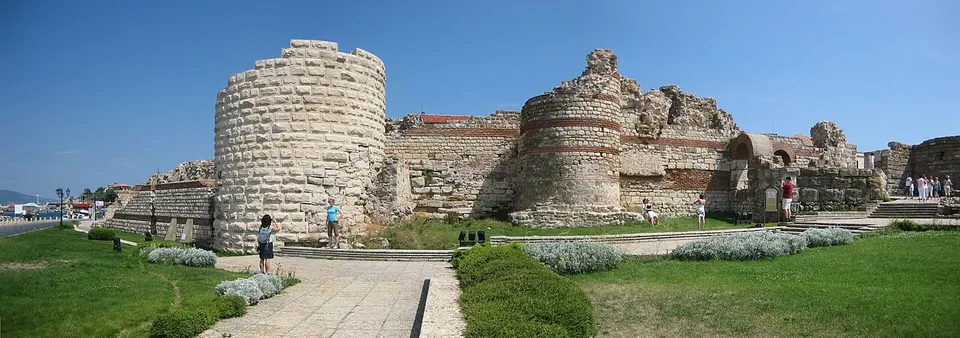
Photo: B0rder at en.wikipedia · Public domain · Commons
28 km · city · Burgas Province
Mesembria
Be clear about what is Roman: most of what Nesebar is famous for, its churches of the 11th to 14th centuries, is medieval, and the town's earliest remains are Thracian and Greek (en.wikipedia; the museum).


Straight-line distances.
Sources
Every fact on this page comes from the records below, each used under the licence noted.
| Source | Licence |
|---|---|
| Pleiades 216709 | CC BY |
| Wikidata Q622976 | CC0 |
| OpenStreetMap node/4055485454 | ODbL |
| Wikipedia (en) — Aquae Calidae, Bulgaria | CC BY-SA 4.0 |
| Wikipedia (bg) — Акве Калиде | CC BY-SA 4.0 |
| Aquae Calidae museum complex — about, prices and opening hours | licence not recorded |