

What is there today
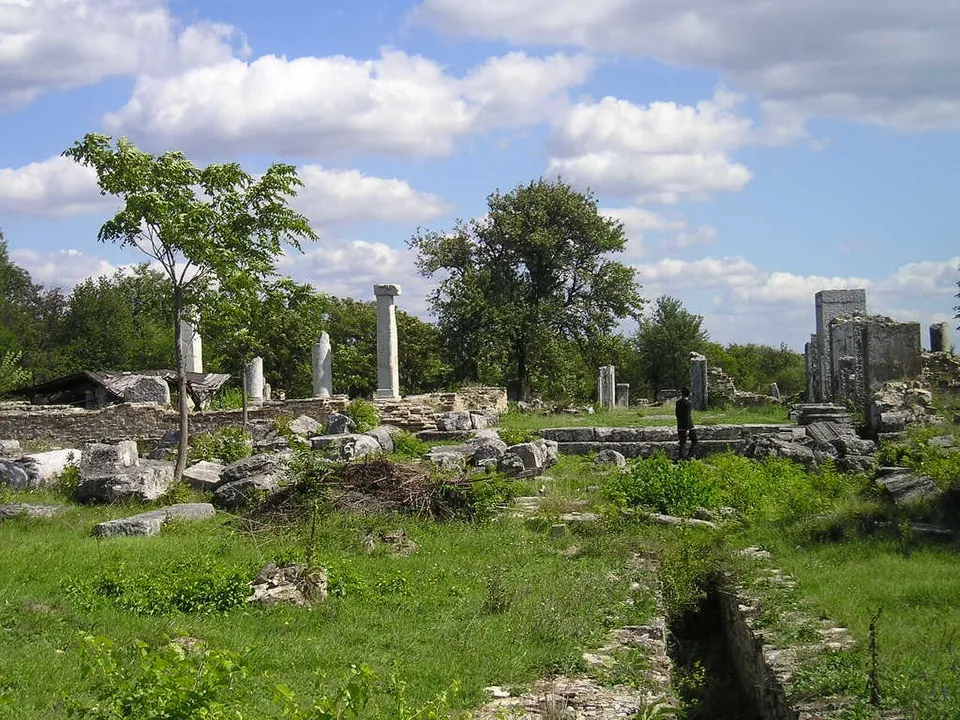
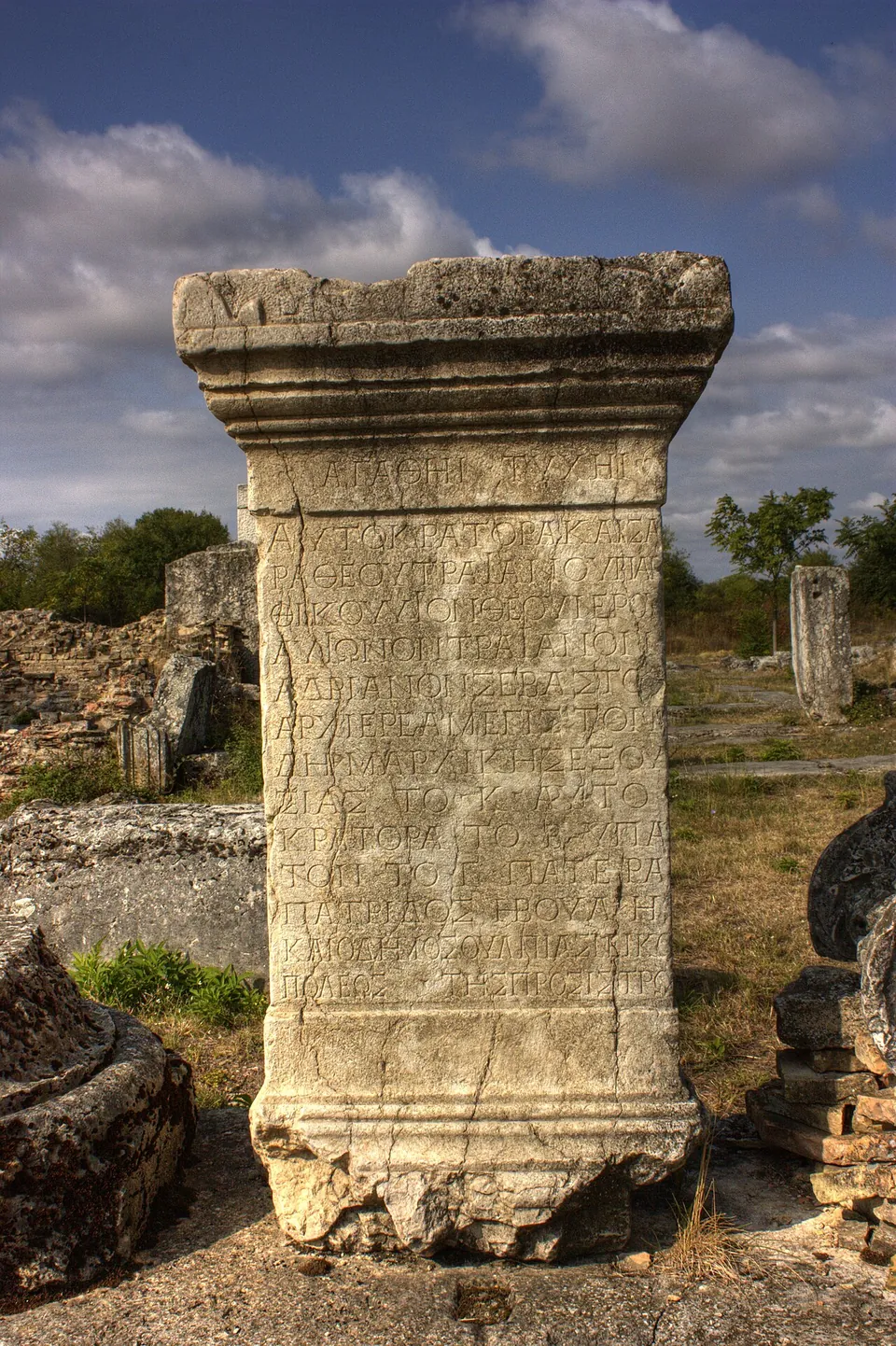
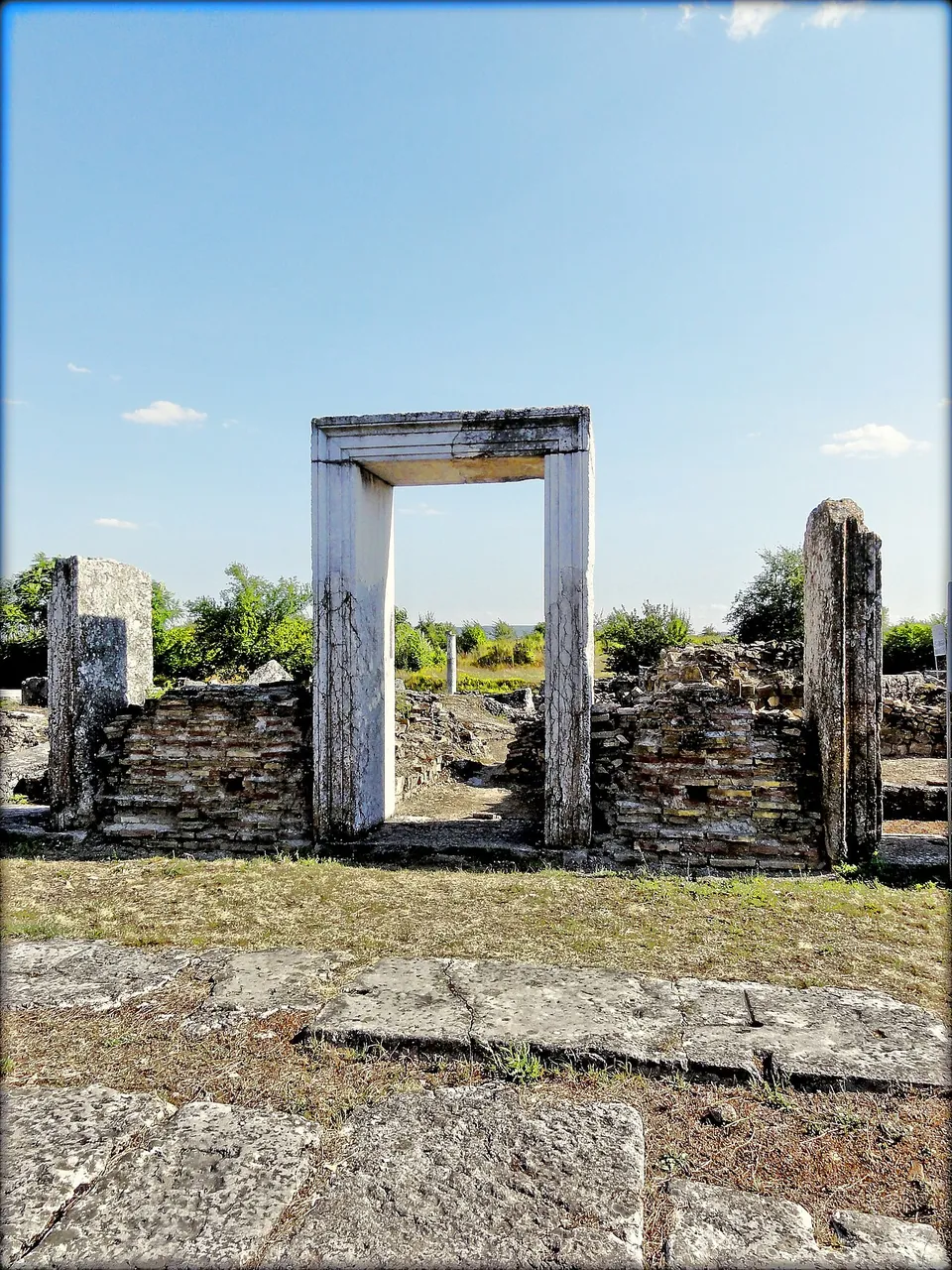
You walk the city’s streets, paved with huge stone blocks, with their pavements and the central drain and its inspection shafts still in place. Around them are the remains of the odeon, a small theatre for up to 400 people; the agora, the main square, with remains of the colonnade that surrounded it; the buildings round the square, including the council house; a street latrine; part of a large public bath; and two of the city’s gates (bg.wikipedia). The Ionic frieze of the agora is richly carved, and the city has the only columns of heart-shaped section found in Bulgaria (bg.wikipedia). Several ancient wells survive, one of them open and 16 m deep (bg.wikipedia; the museum).
The reserve has decking paths and is accessible to visitors with disabilities, with an electric vehicle (the museum). A statue of Asclepius found here, recovered from treasure hunters, is in the historical museum in Veliko Tarnovo (bg.wikipedia).
Is it worth the trip?
Yes. It is a Roman town plan you can walk through, with its streets and drains, its square and its public buildings, and it has been on UNESCO’s Tentative List since 1984 (en.wikipedia). The remains stand mostly at foundation level, with a few re-erected columns and doorways, and the site is out in open country, so bring water and dress for the heat in summer, as the museum itself advises.
Getting there
The ruins lie 18–20 km north of Veliko Tarnovo, by the road to Ruse and 3 km south-east of the village of Nikyup, on the left bank of the Rositsa just after the bridge (bg.wikipedia; the museum). No bus stop is mapped nearby (OpenStreetMap), so you will need a car.
From April to September it is open daily, 09.00 to 18.00 (last entry 17.00); in October, 09.00 to 17.00; and from November to March, 09.00 to 16.30. In the winter of 2025–26, from 1 December to 20 March, visits were by appointment only, on 0885 144 304. A ticket is €5.11, or €2.56 for students and Bulgarian citizens over 60; a guided talk in English or another foreign language costs €20.45 (the Regional Historical Museum, Veliko Tarnovo, read 1 October 2026).
Visiting details
- Opening hours
- Daily 09.00–18.00 from April to September (last entry 17.00), 09.00–17.00 in October (last entry 16.00) and 09.00–16.30 from November to March (last entry 15.30). In the winter of 2025–26, from 1 December to 20 March, visits were by appointment only, on 0885 144 304.
- Tickets
- €5.11; €2.56 for students and for Bulgarian citizens over 60; €7.67 for parents with up to three children aged 7–18. A guided talk costs €10.23 in Bulgarian, €15.34 with interpreting and €20.45 in a foreign language.
Before you go
- The old streets have hollows and open shafts, and an exposed well is 16 m deep; keep to the decking paths and do not walk on the walls (the museum).
- No bus stop is mapped near the site; you will need a car.
Hours and prices checked 1 October 2026 on the operator's own site. Confirm before travelling.
History
Trajan founded the city, named Ulpia Nicopolis after his family name, in honour of his victory over the Dacians; bg.wikipedia gives 102, en.wikipedia “around 102–106”. It stood where two important roads of Lower Moesia crossed: one from Odessos (Varna) through Marcianopolis to Serdica and the western provinces, the other from Novae over the Haemus passes to Byzantion. It belonged at first to the province of Thrace and passed to Lower Moesia at the start of 193. It was run on the model of the cities of Asia Minor, with Greek as its official language, and its mint struck more than 1,000 types of bronze coin (the museum).
The city had no walls until a raid by the Costoboci in 170–171 (en.wikipedia; the museum gives 172); they then rose 8 m high, with towers of 12 m (the museum). It reached its height under Hadrian, the Antonines and the Severans (en.wikipedia). In 250 the emperor Decius defeated the Goths under Cniva nearby (en.wikipedia). In 347–348 the Gothic bishop Wulfila settled near the city with his converts, and there he created the Gothic alphabet and led the translation of the Bible into Gothic (bg.wikipedia). The Huns destroyed the town in 447; a new, much smaller walled town was built against its southern wall in the middle of the 5th century and became a bishopric (en.wikipedia), and it lasted until the Avar and Slav invasions of the 7th century (de.wikipedia).
Nearby
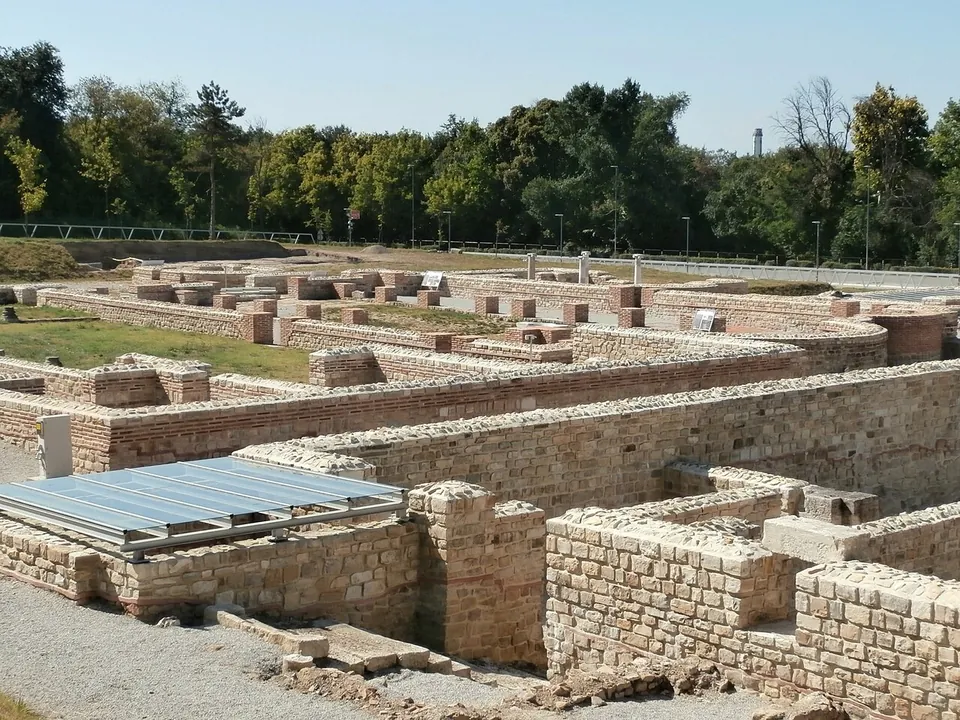
Photo: Alexander.D.Hristov · CC BY-SA 4.0 · Commons
47 km · fort · Veliko Tarnovo Province
Novae
The most complete remains are those of the bishop's complex, 6,500 m² with two churches, houses and service buildings, built from the first quarter of the 5th century on the site of the soldiers' baths, which were destroyed in the Gothic wars of 376–382.

Straight-line distances.
Sources
Every fact on this page comes from the records below, each used under the licence noted.
| Source | Licence |
|---|---|
| Pleiades 216895 | CC BY |
| Wikidata Q1987323 | CC0 |
| Vici.org 2188 | CC BY-SA (text), CC0 (metadata) |
| OpenStreetMap way/449044282 | ODbL |
| Wikipedia (en) — Nicopolis ad Istrum | CC BY-SA 4.0 |
| Wikipedia (bg) — Никополис ад Иструм | CC BY-SA 4.0 |
| Wikipedia (de) — Nicopolis ad Istrum | CC BY-SA 4.0 |
| Regional Historical Museum, Veliko Tarnovo — Nicopolis ad Istrum archaeological reserve | licence not recorded |
| Regional Historical Museum, Veliko Tarnovo — prices and tickets | licence not recorded |