

Novae was a Roman legionary fortress on the Danube frontier, 4 km east of Svishtov, which grew into a town and, in late antiquity, a bishop’s seat. It is one of the few fortresses along the Danube frontier to have been excavated and opened to the public (en.wikipedia; bg.wikipedia).
What is there today
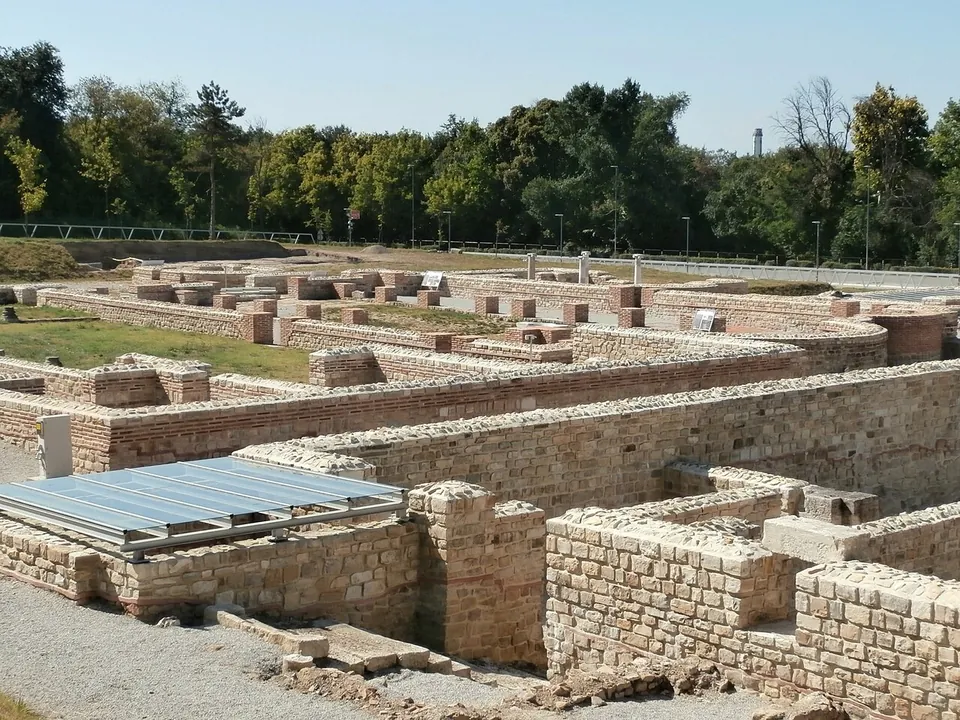
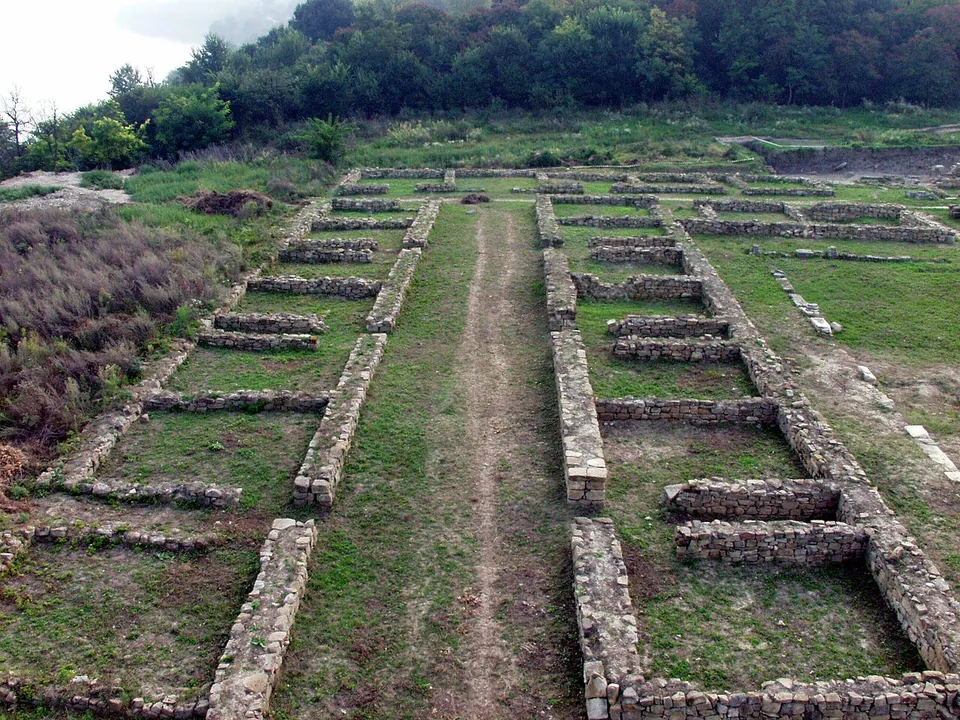
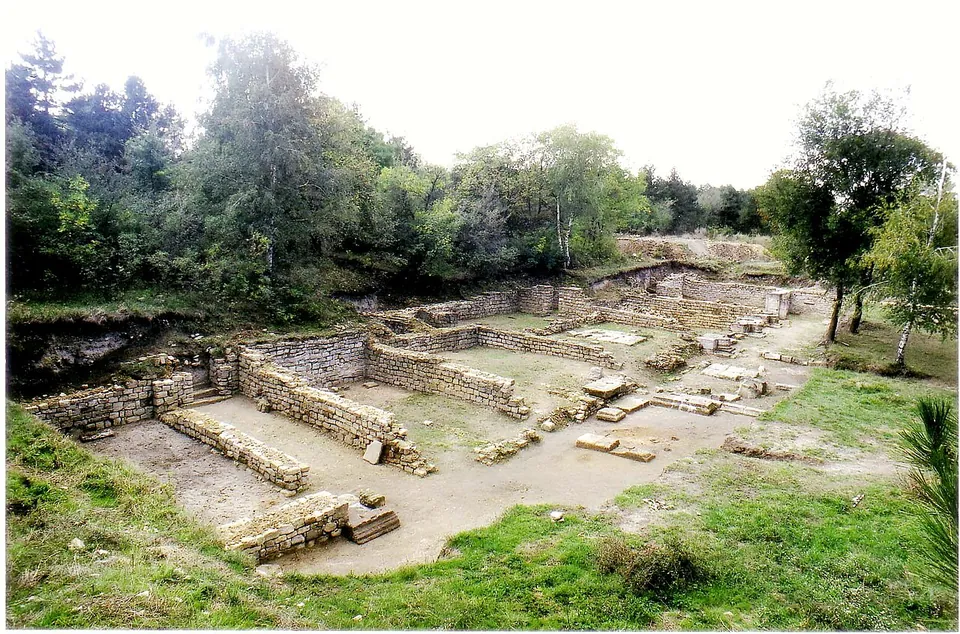
The most complete remains are those of the bishop’s complex, 6,500 m² with two churches, houses and service buildings, built from the first quarter of the 5th century on the site of the soldiers’ baths, which were destroyed in the Gothic wars of 376–382. The cathedral, at the western end of the forum, was a basilica with three aisles, 40.60 m long and 24.30 m wide (bg.wikipedia). The foundations of the legion’s headquarters and of its hospital have also been excavated, and four more churches are known in the ancient town (bg.wikipedia; the photographs’ own descriptions).
Is it worth the trip?
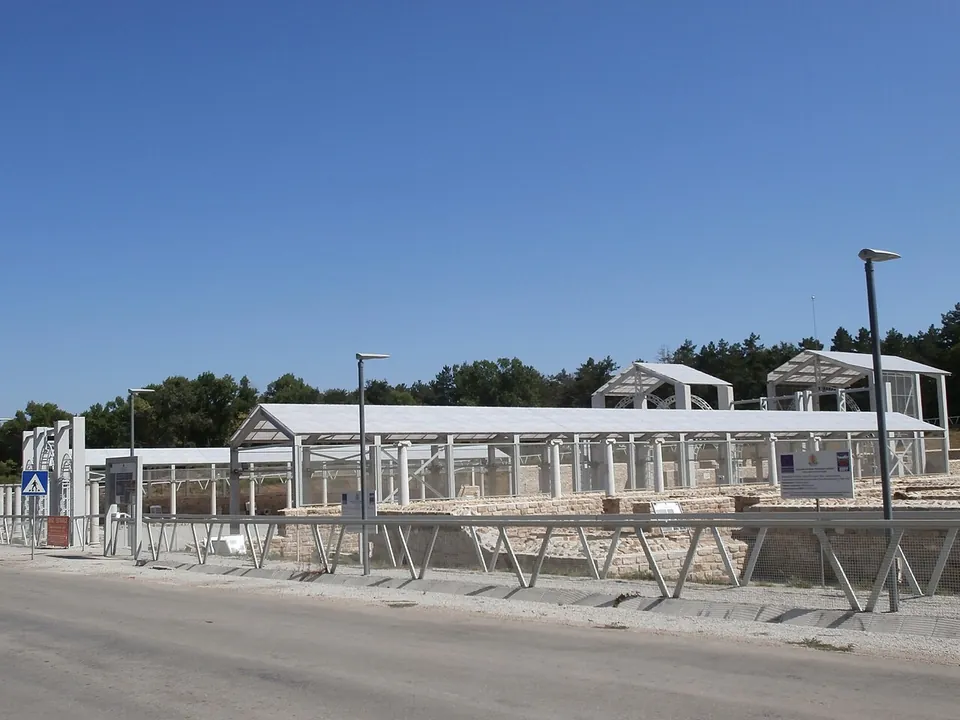
If you are travelling along the Danube, yes: a legionary fortress you can walk into is rare along the Danube frontier. What you see is foundations and low restored walls under modern canopies, so the interest is in the plan and the story rather than in standing buildings.
Getting there
Novae is 4 km east of the centre of Svishtov, at the place called Pametnitsite or Staklen (bg.wikipedia). Car parks are mapped about 265 m from the centre of the site; no bus stop is mapped nearby (OpenStreetMap). We could find no opening hours or fee published by an operator.
Visiting details
- Tickets
- Unknown
- Parking
- Car parks are mapped about 265 m from the point (OSM way/1527951296 and way/1527951297).
Before you go
- We could find no operator page with opening hours or a fee for the site (searched 2 October 2026); figures on tour and route websites are not the operator's.
- No bus stop is mapped near the site; you will need a car.
History
The legion VIII Augusta was stationed here in 48 and built the first fortifications; in 69/70 it was replaced by the legion I Italica, which built a permanent base and stayed for almost four centuries as the main force guarding Lower Moesia. The camp measured 368 m by 492 m, and a civilian settlement of colonists, veterans and traders grew up beside it. The emperors Trajan, Hadrian and Caracalla visited (bg.wikipedia).
In 250 some 70,000 Goths under Cniva crossed the Danube here; they besieged Novae but did not take it (bg.wikipedia). The fortress was rebuilt under Constantine I, and the last major building work was done under Justinian I. At the end of the 6th and the start of the 7th century the town was attacked by the Avars (bg.wikipedia).
More photographs

Nearby
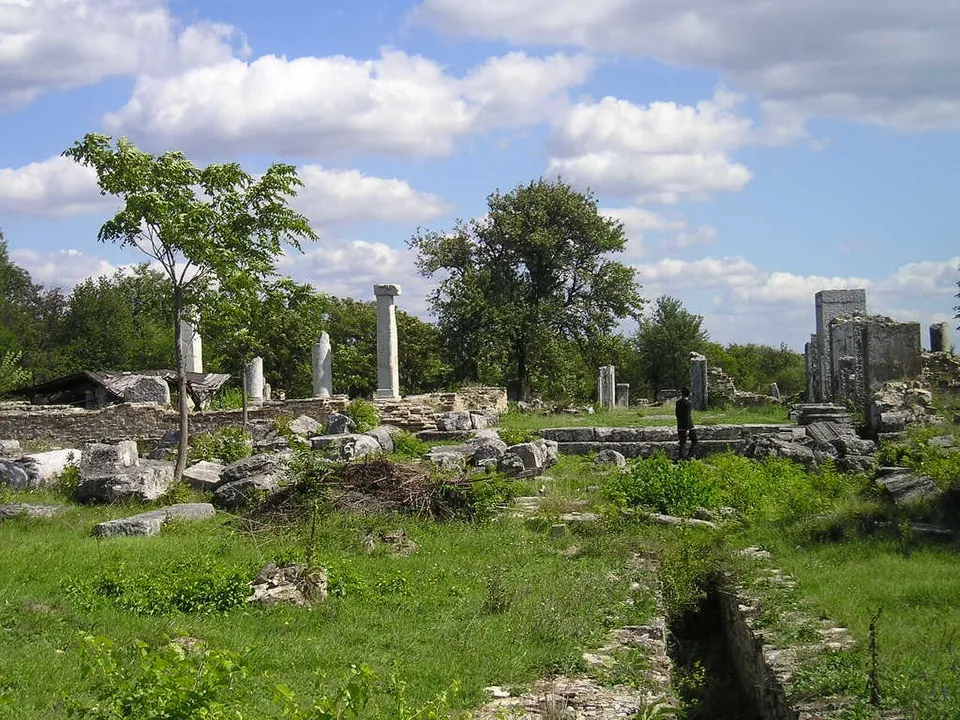
Photo: Nk · Public domain · Commons
47 km · city · Veliko Tarnovo Province
Nicopolis ad Istrum
You walk the city's streets, paved with huge stone blocks, with their pavements and the central drain and its inspection shafts still in place.

Straight-line distances.
Sources
Every fact on this page comes from the records below, each used under the licence noted.
| Source | Licence |
|---|---|
| Pleiades 216899 | CC BY |
| Wikidata Q2257083 | CC0 |
| Vici.org 11286 | CC BY-SA (text), CC0 (metadata) |
| OpenStreetMap relation/16388886 | ODbL |
| Wikipedia (en) — Novae (fortress) | CC BY-SA 4.0 |
| Wikipedia (bg) — Нове | CC BY-SA 4.0 |