What is there today
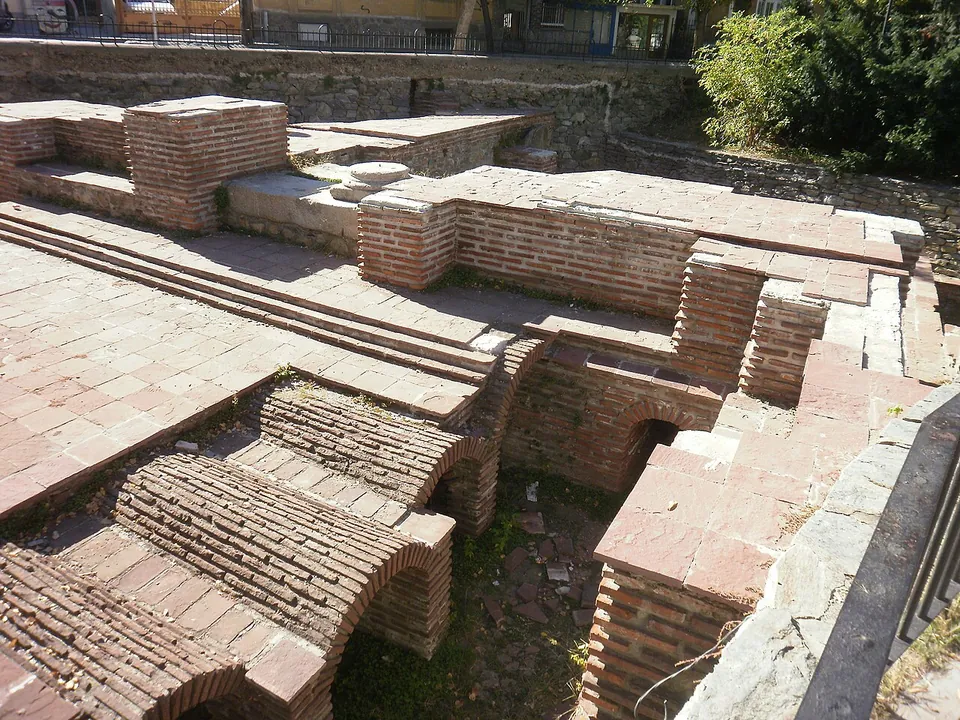
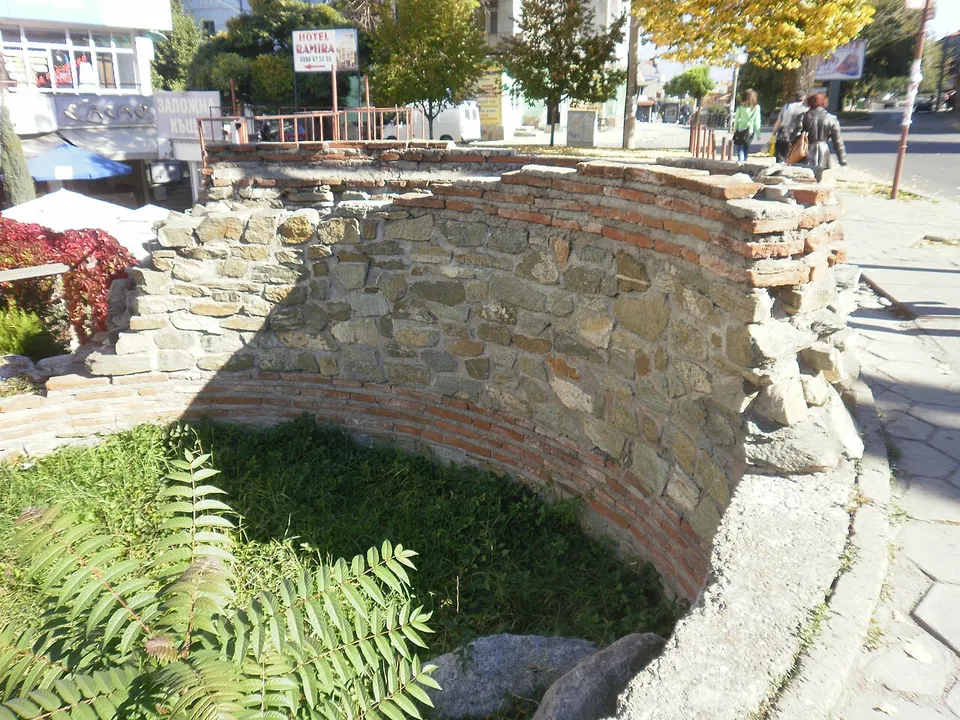
Parts of six rooms have been uncovered over about 1,000 m², of a building thought to have covered some 3,000 m². The large rectangular rooms open into each other through doorways with granite thresholds that still show the marks of double doors. The walls are in opus mixtum, courses of stone alternating with bands of four rows of brick, and every room had a hypocaust: in some the floor stood on brick pillars or pipes, in others on a system of arched corridors. Some rooms have semicircular niches and pools, and the floors and walls were once faced with marble (bg.wikipedia).
The baths belonged to a large complex, an asklepieion, a sanctuary of the healing god Asclepius, who was the patron of the town (bg.wikipedia).
Is it worth the trip?
If you are in Kyustendil, yes, for a short look: the brick heating system is unusually well exposed, and it is in the middle of town. It is a set of excavated foundations by the street, not a building you walk into, and not worth a journey on its own.
Getting there
The baths are in the centre of Kyustendil, next to the Ahmed Bey mosque (bg.wikipedia). Car parks are mapped about 115 m and 195 m away, and the Pazara bus stops about 180 m away (OpenStreetMap). We could find no operator, opening hours or fee for the site.
Visiting details
- Tickets
- Unknown
- Parking
- Car parks are mapped about 115 m and 195 m away (OSM way/724273861 and way/724271061); the Pazara bus stops are about 180 m away (OpenStreetMap).
Before you go
- We could find no operator page with opening hours or a fee for the site (searched 2 October 2026).
History
Pautalia was the town of the Thracian Dentheletae, and its name, meaning “spring city”, refers to its hot springs (en.wikipedia). After Thrace became Roman in 45, the Romans made it an important trading centre and a well-known spa (bg.wikipedia). Trajan gave it town status in 106, as Ulpia Pautalia; it struck its own coins from Antoninus Pius to Caracalla, and its coins show temples, public buildings, basilicas and baths (en.wikipedia; bg.wikipedia).
The baths were built in the 2nd–3rd century: the pottery, hairpins, fragments of votive plaques and a hoard of 61 silver coins of the emperors from Antoninus Pius to Gordian II date them (bg.wikipedia). They are a monument of national importance (bg.wikipedia).
Nearby
48 km · fort · Municipality of Vinica
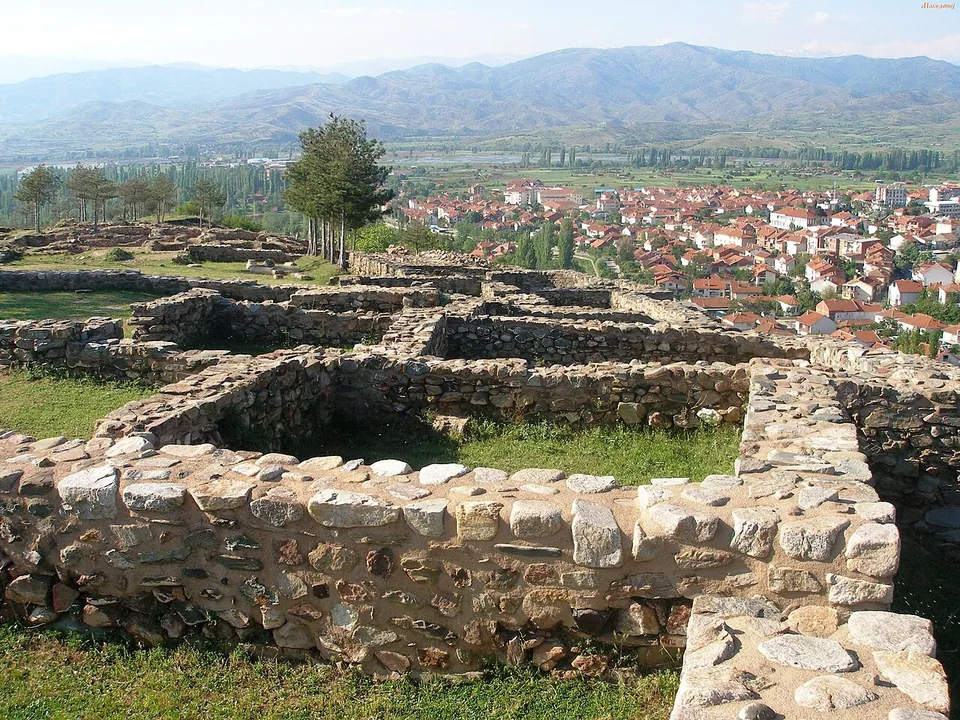
Vinica Fortress
The site stands on a promontory of the Plačkovica range, about 70 m above the town (it. and mk.wikipedia).


Straight-line distances.
Sources
Every fact on this page comes from the records below, each used under the licence noted.
| Source | Licence |
|---|---|
| Wikidata Q12292390 | CC0 |
| Wikipedia (bg) — Римски терми (Кюстендил) | CC BY-SA 4.0 |
| Wikipedia (en) — Pautalia | CC BY-SA 4.0 |
| Wikipedia (bg) — Пауталия | CC BY-SA 4.0 |
| Pleiades — Pautalia | licence not recorded |