Melos was the ancient city of the island of Milos, its main town in antiquity, lived in from the 9th or
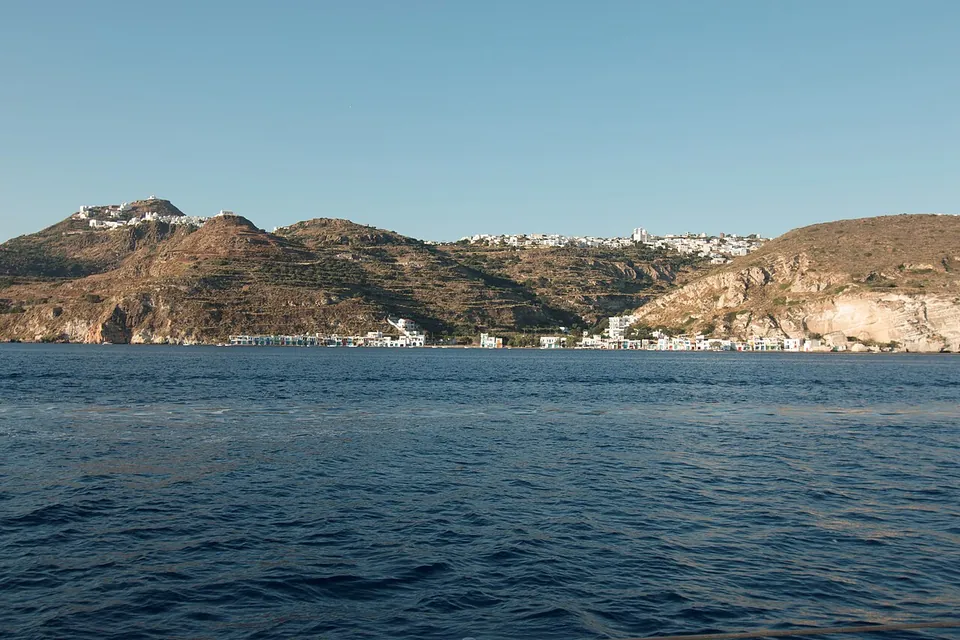
8th century BC to the 6th or 7th century AD (the site’s board). It lay on the slope between the village of
Trypiti and its old harbour at Klima (en.wikipedia), and its two main sights today are Roman and early
Christian: a marble theatre of the Roman period above the bay and a Christian catacomb cut into the volcanic rock (the site’s
board; the operator).
What is there today
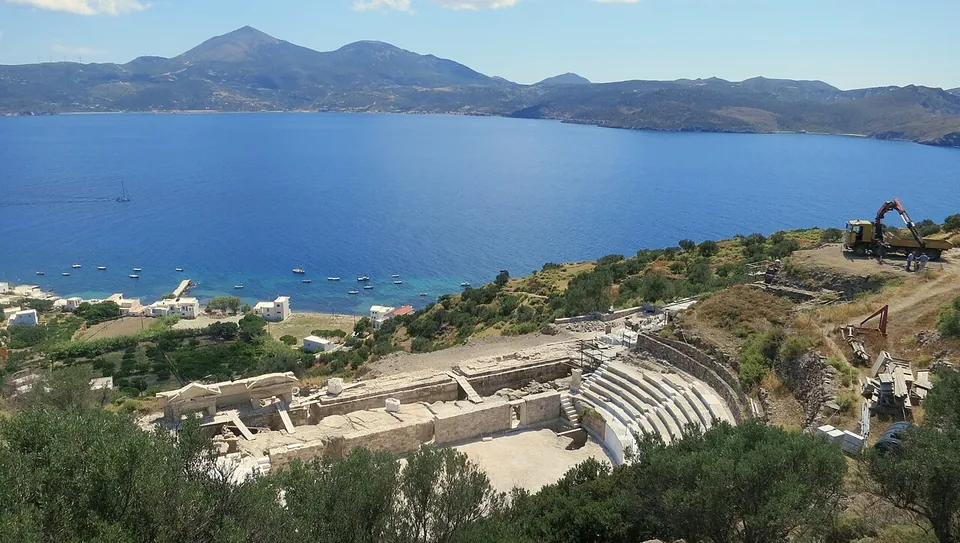
- The Ancient Theatre of Milos, a marble theatre of the 1st to 4th century AD on the hillside above
the old harbour, is counted by the site’s board among the best-preserved ancient theatres in the
Cyclades. Only its lower part has been excavated, with seats for about 800 people (the site’s board).
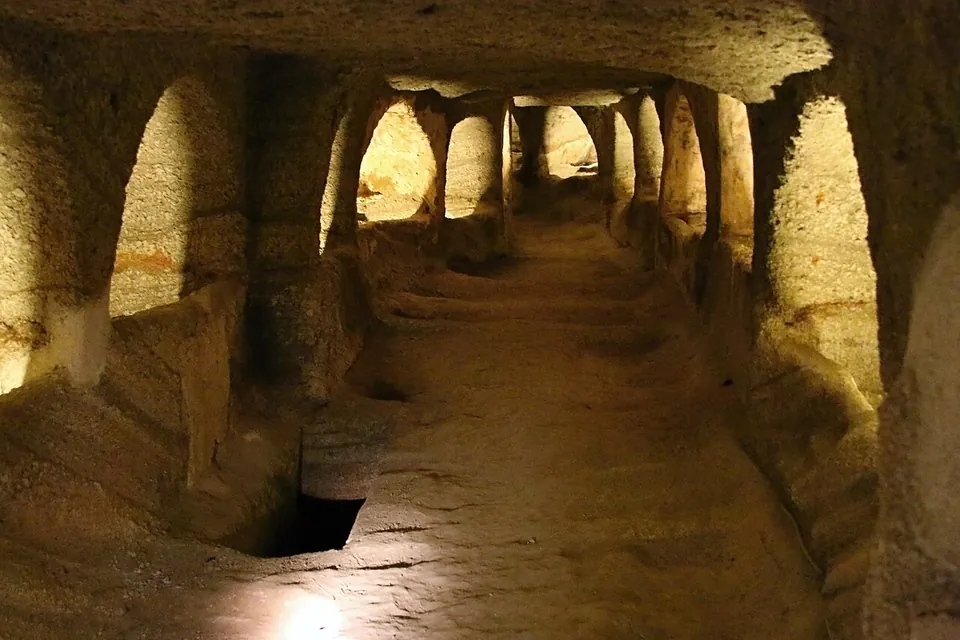
- The Catacombs of Milos, about 200 m east of the theatre, are an underground Christian cemetery
outside the city walls, with about 200 m of galleries cut into the soft volcanic rock and used from the
mid-1st to the 7th century AD by the operator’s dating (the operator; en.wikipedia). A ticket is €10 (the
operator).
The Venus de Milo, the Aphrodite now in the Louvre, was found in the ancient city, along with an Asclepius
now in London and a Poseidon and an archaic Apollo in Athens (en.wikipedia). The Archaeological Museum
in Plaka shows finds from across the island, from the Neolithic to Late Antiquity, and a modern replica of
the Venus, a work of the 1st century BC; a ticket is €5 (the operator).
Is it worth the trip?
Yes, if you are on Milos. The theatre and the catacombs are 250 m apart and make one visit, with the museum in Plaka nearby (OpenStreetMap; the operator). No operator publishes hours or
a fee for the theatre; the catacombs close on Tuesdays (the operator).
Getting there
The theatre and the catacombs are near Trypiti: the catacombs are a 13-minute walk from the centre of
Trypiti and 18 minutes from Plaka, and 15 minutes by car from Adamas, the island’s port (the operator).
The bus stop “Katakombes (Arch. Theatro)” and two free car parks are close to both (OpenStreetMap). The museum
is a 3-minute walk from the centre of Plaka (the operator).
History
Dorian settlers founded the city in the 1st millennium BC. In the Peloponnesian War, Melos refused to side
with Athens; in 416 BC the Athenians besieged and took it, killed the men, sold the women and children as
slaves and settled 500 colonists of their own, and in 405 BC the Spartan general Lysander brought back the
survivors. After Rome forced Philip V of Macedon out of Greece in 197 BC, Melos came under Roman influence
(en.wikipedia). Under Rome the marble theatre was built, in the 1st to 4th centuries AD, and the city’s
Christians buried their dead in the catacombs (the site’s board; the operator). The theatre went out of
use probably in the 4th century, and the city lived on until the 6th or 7th century (the site’s board).