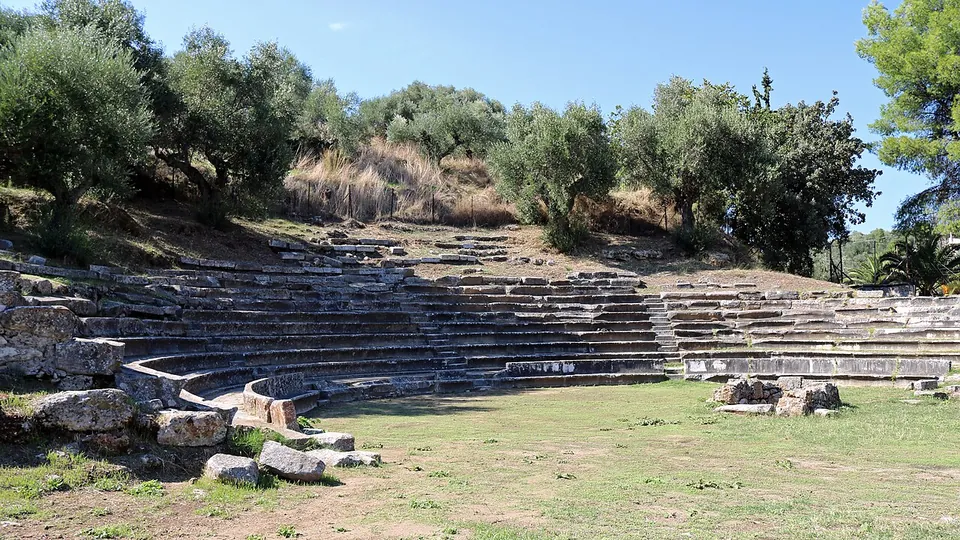
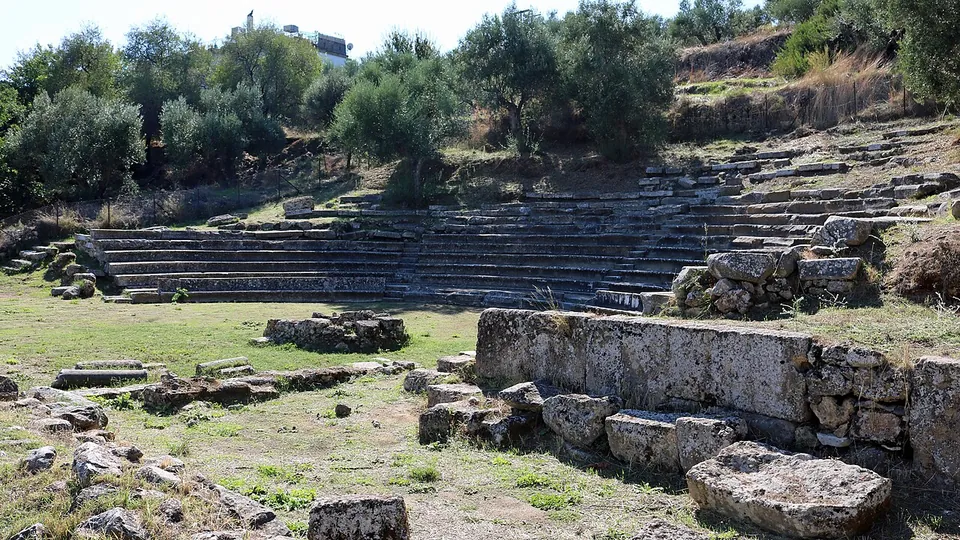


The theatre of Gytheion is a small Roman theatre of the 2nd century AD in the north of the harbour town of Gytheio, built of the local off-white marble at the foot of the ancient acropolis (the Ministry). With the buildings partly sunk in the sea, it is the most noteworthy remain of Roman Gytheion, and it still hosts performances in summer (the Ministry; en.wikipedia).
What is there today
Of the marble seating, six full rows survive and parts of the seventh and eighth; the retaining walls on the north and east sides are of tufa. The stage was 12 m long and 5 m wide (the Ministry). OpenStreetMap maps a Roman bath house about 130 m away.
Is it worth the trip?
Worth a short visit if you are in Gytheio: a Roman theatre in the middle of a small town, among olive trees, and used again for summer performances (the Ministry; the photographs). No operator publishes opening hours or a fee, so check locally.
Getting there
The theatre lies in the north of the town at the foot of the acropolis (the Ministry), reached by town streets from two sides; the site is fenced, and OpenStreetMap marks it open to the public.
Visiting details
- Tickets
- Unknown
- Parking
- In the north of the town, at the foot of the ancient acropolis (the Ministry); the site is fenced, and OpenStreetMap marks it open to the public (way/738797134, access=yes). Streets reach it from two sides (way/31473814, way/39263183); no car park or bus stop is mapped nearby. No operator publishes hours or a fee.
History
In Roman times Gytheion was the most important member of the Union of Free Laconians, towns that Augustus declared free, and it prospered as a port, exporting purple dye, porphyry and “rose antique” marble. The theatre was built in that period; the archaeologist Andreas Skias excavated it in 1891, and the British School at Athens continued his work (en.wikipedia; the Ministry). In the 4th century AD the city was destroyed: by Alaric’s Visigoths, by Slav raiders or by the great earthquake of 375, and no record says which (en.wikipedia).
Nearby
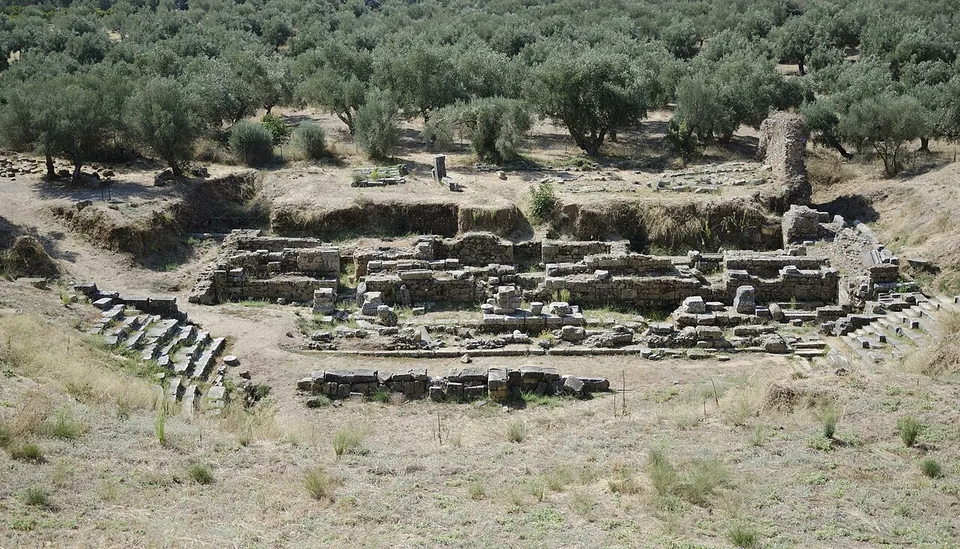
Photo: Peulle · CC BY-SA 4.0 · Commons
37 km · city · Laconia
Sparta
The modern town built over it, natural disasters and raids have left few traces of ancient Sparta; most of what has been found is on the acropolis, a low, broad hill that was the political, religious and economic centre of the city (el.wikipedia).

Straight-line distances.
Sources
Every fact on this page comes from the records below, each used under the licence noted.
| Source | Licence |
|---|---|
| Wikidata Q28217908 | CC0 |
| OpenStreetMap way/738797134 | ODbL |
| Hellenic Ministry of Culture (All of Greece One Culture) — Ancient Theatre of Gythio | licence not recorded |
| Wikipedia (en) — Gytheio | CC BY-SA 4.0 |
| Wikipedia (el) — Αρχαίο θέατρο Γυθείου | CC BY-SA 4.0 |
| Wikipedia (en) — Achaia (Roman province) | CC BY-SA 4.0 |