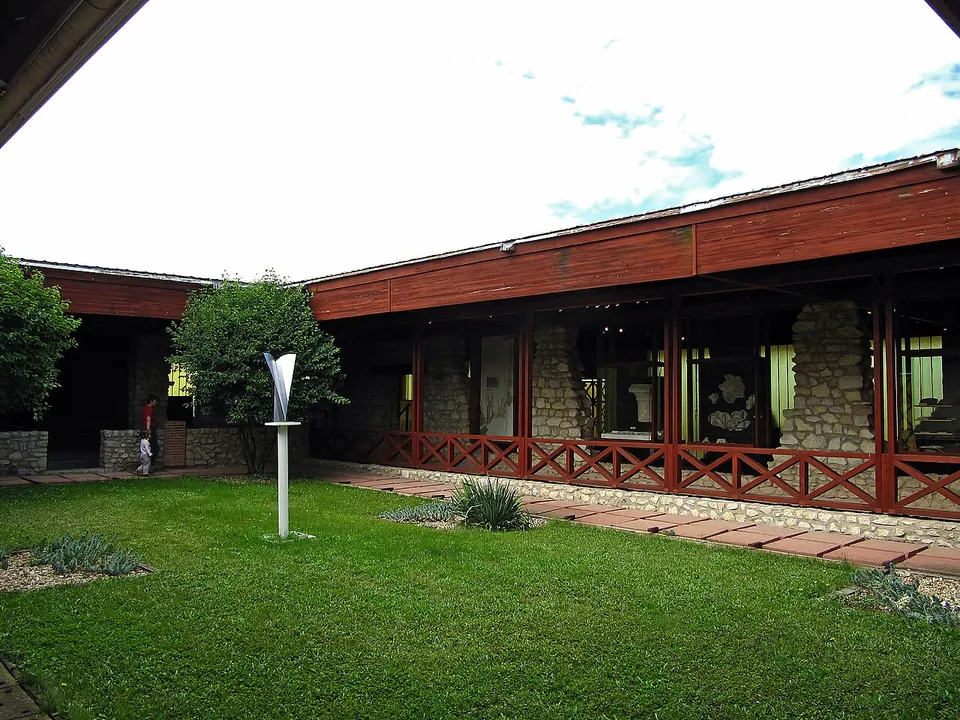
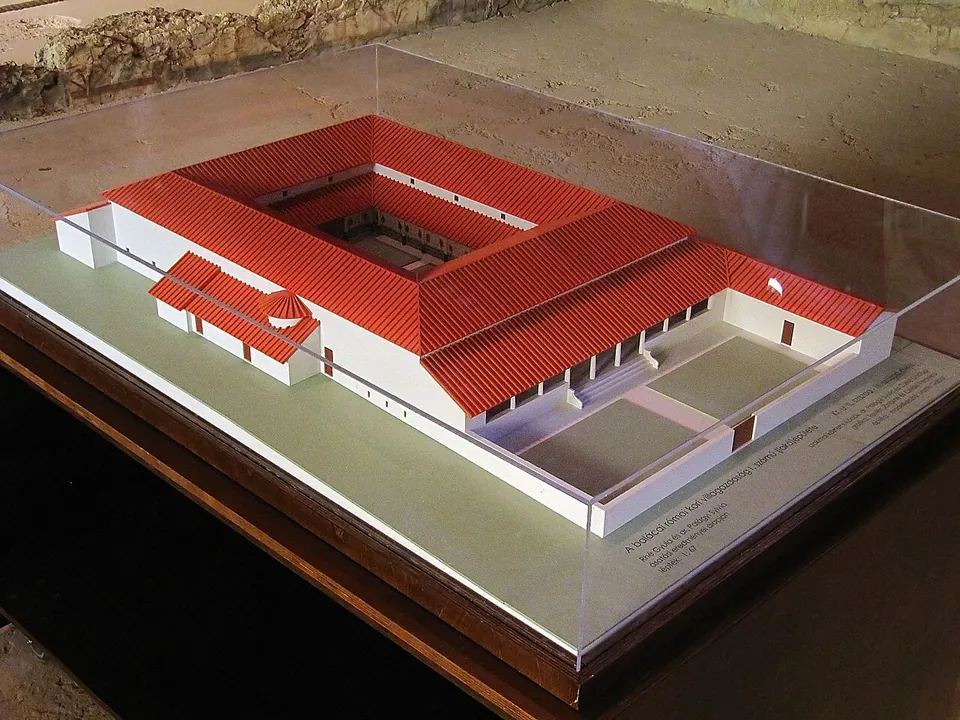
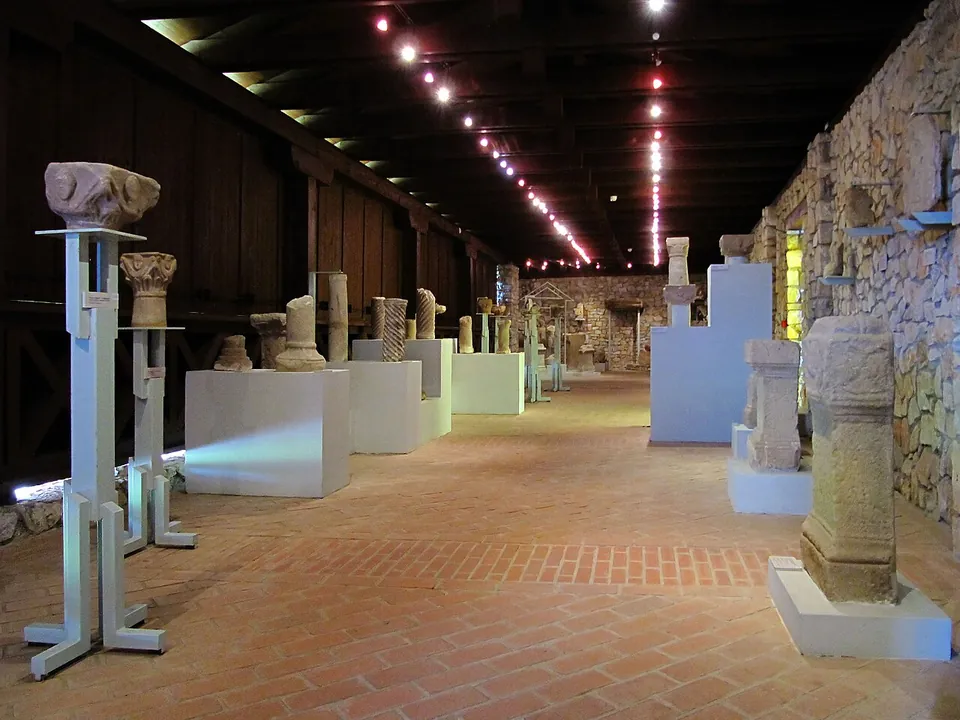


What is there today
The heart of the site is the owners’ main house, about 2,400 m² in floor area and one of the largest villa buildings known in Pannonia; its mosaic floors and wall paintings show how wealthy the owners were (the operator). The building complex is partly reconstructed, and since 2012 the display has included multimedia, models and furnished rooms (hu.wikipedia). The grounds are laid out as a park, with a Roman sundial, a Roman-style oven and a display of herbs and spices (the operator).
Is it worth the trip?
Yes, if you are near Veszprém between April and October: it is Hungary’s largest Roman villa estate, with mosaic floors and wall paintings on show, and a bus from Veszprém stops at the gate. Out of season it is closed.
Getting there
The site is at Nemesvámos-Baláca, 9 km from Veszprém, on the road between Nemesvámos and Veszprémfajsz; buses from Veszprém to Veszprémfajsz stop in front of it (the operator).
It is open from 1 April to 31 October, Tuesday to Sunday: on weekdays from 09.00 to 18.00, with the last ticket at 17.30, and at weekends from 10.00 to 19.00, with the last ticket at 18.30. Published prices differ between the museum’s pages: an adult ticket is given as 1,450 HUF on its visitor information page and 2,000 HUF in its announcement of the 2025 season, so expect to pay between about €3.90 and €5.40; reduced tickets are 700 to 1,000 HUF and a family ticket 3,800 to 4,500 HUF (mnm.hu, read 4 October 2026).
Visiting details
- Opening hours
- 1 April to 31 October, Tuesday to Sunday - weekdays 09.00–18.00 (last ticket 17.30), weekends 10.00–19.00 (last ticket 18.30). Closed in winter.
- Tickets
- Adult 1,450–2,000 HUF (about €3.90–5.40), reduced 700–1,000 HUF, family 3,800–4,500 HUF; the museum's own pages give both sets of prices.
Before you go
- Open only from 1 April to 31 October, and closed on Mondays.
Hours and prices checked 4 October 2026 on the operator's own site. Confirm before travelling.
History
The villa was discovered in 1904 in the Balácapuszta fields of the village of Vámos (Pleiades). The grand house of the 3rd and 4th centuries belonged to wealthy owners whose estate is now presented as Hungary’s largest Roman villa farm (the operator).
Nearby
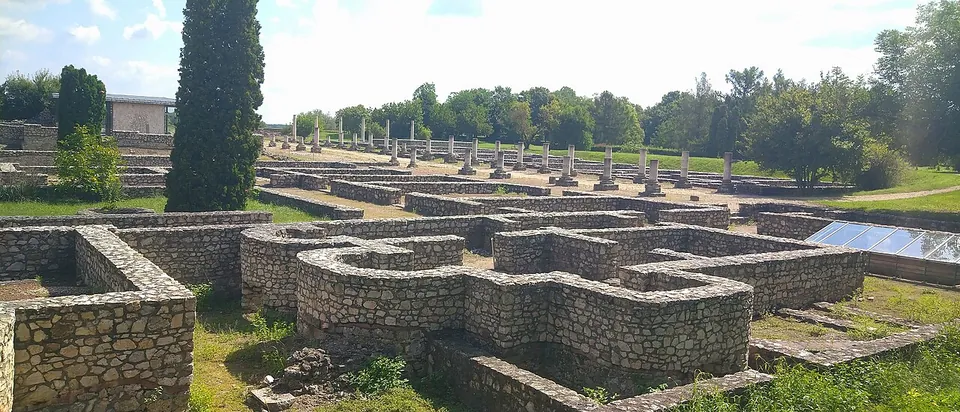
Photo: Cornu · CC BY-SA 4.0 · Commons
41 km · city · Fejér County
Gorsium
The park is a walk through a town of foundations, with a few reconstructions.

Straight-line distances.
Sources
Every fact on this page comes from the records below, each used under the licence noted.
| Source | Licence |
|---|---|
| Pleiades 580782181 | CC BY |
| Wikidata Q1253466 | CC0 |
| OpenStreetMap way/938426290 | ODbL |
| Wikipedia (hu) — Balácapuszta | CC BY-SA 4.0 |
| Hungarian National Museum — Villa Romana Baláca, visitor information (the operator) | licence not recorded |
| Hungarian National Museum — Villa Romana Baláca, Roman villa farm and ruin garden | licence not recorded |
| Hungarian National Museum — the 2025 season at Baláca (prices) | licence not recorded |