

What is there today
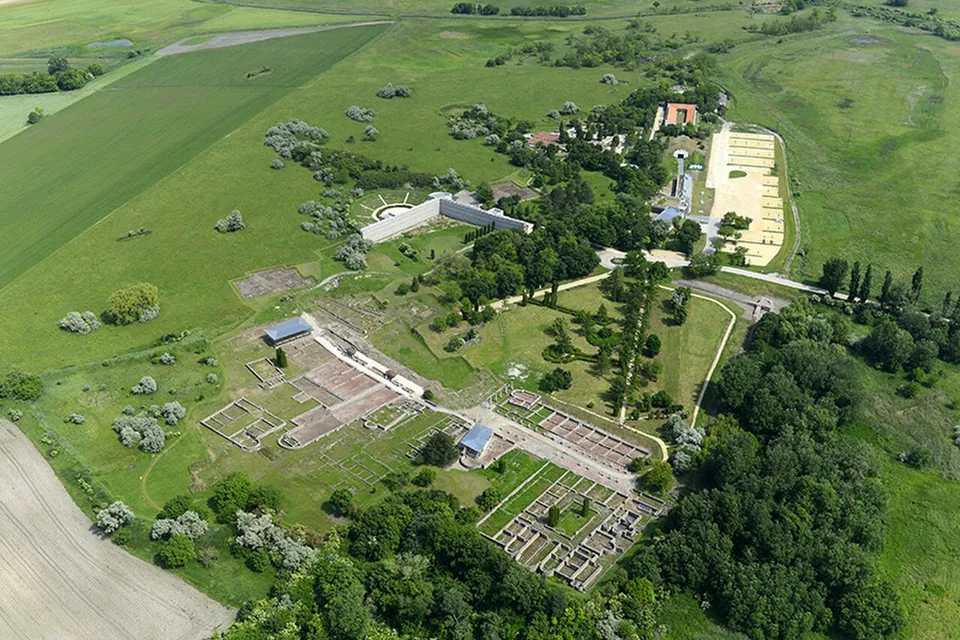
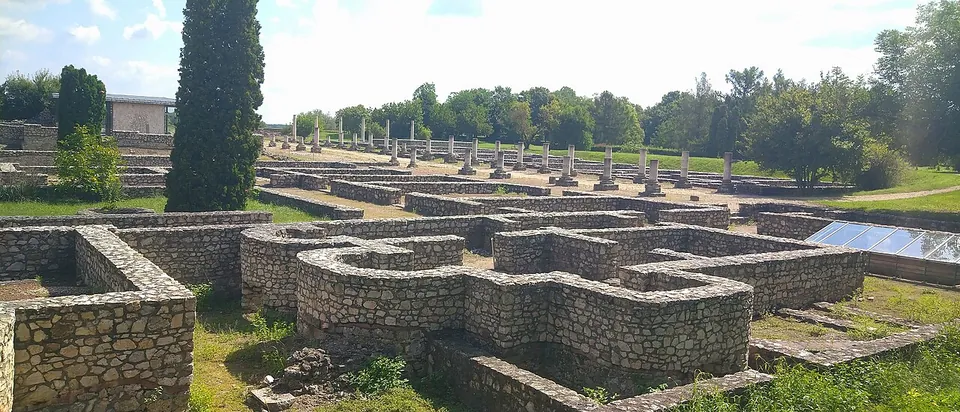
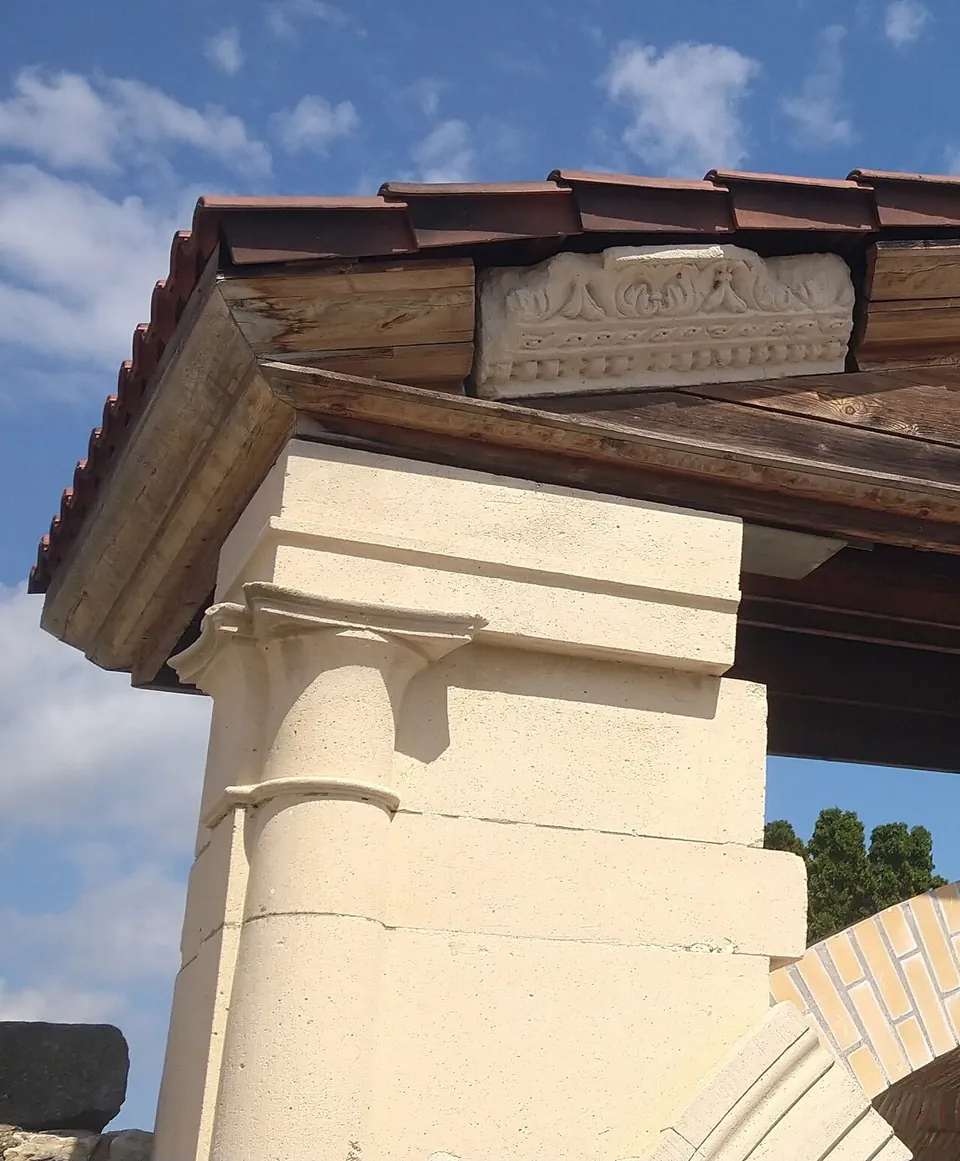
The park is a walk through a town of foundations, with a few reconstructions. Along the path stand stone monuments found before the excavations, gravestones and carved mythological scenes, and the route passes the governor’s palace (palatium) of the 4th century. The facade of one of the early Christian basilicas can be seen, and inside it the wall paintings of an earlier building can be seen. A great temple was raised here in honour of the deified Augustus, a banqueting hall stands under a modern protective building modelled on a Roman one, and there are houses of the 4th century, abandoned by their owners in the troubles at the century’s end (the operator). The museum has recently built a new exhibition space with permanent and temporary exhibitions (hu.wikipedia).
Is it worth the trip?
Yes. It is one of the most important Roman ruin sites in Hungary (hu.wikipedia), it is open every day of the week all year round, and the operator reckons on about two hours for a visit. What you get is a large town plan in conserved foundations, given shape by a few rebuilt pieces, rather than standing walls. In spring the park holds the Floralia festival (below).
Getting there
The park lies in open country at Tác, in Fejér County, about 10 km south of Székesfehérvár (hu.wikipedia). It has its own car park, about 130 m from the ruins, but no bus stop or railway station is mapped within 300 m, so it needs a car (OpenStreetMap).
From 1 April to 31 October it is open daily from 10.00 to 18.00, and from 1 November to 31 March daily from 08.00 to 16.00. In summer a ticket is 1,600 HUF, about €4.30; students and pensioners pay 800 HUF, about €2.20, and a family ticket for five, with at most two adults, is 3,800 HUF, about €10.30. From November to March the prices drop to 1,200 HUF (about €3.30), 600 HUF (about €1.60) and 2,500 HUF (about €6.80). Card and cash are both accepted on site (gorsium.org, read 4 October 2026; check before travelling, since prices move).
Visiting details
- Opening hours
- Daily 10.00–18.00 from 1 April to 31 October; daily 08.00–16.00 from 1 November to 31 March.
- Tickets
- 1 April–31 October, 1,600 HUF (about €4.30); students and pensioners 800 HUF (about €2.20); family ticket for five with at most two adults 3,800 HUF (about €10.30). 1 November–31 March, 1,200 HUF (about €3.30), reduced 600 HUF (about €1.60), family 2,500 HUF (about €6.80). Card and cash accepted.
- Parking
- The park's own car park, about 130 m from the point (OpenStreetMap, operator Gorsium).
Before you go
- No bus stop or railway station is mapped within 300 m; the site needs a car.
Hours and prices checked 4 October 2026 on the operator's own site. Confirm before travelling.
History
In the middle of the 1st century a unit called the ala Scubulorum, transferred here from the lower Danube, built a military camp at Gorsium, and from 103 a new town was laid out (hu.wikipedia). When it received town status is not settled; one scholar, István Tóth, connects it with Hadrian’s tour of Pannonia in 124. From its foundation the town was the seat of the provincial assembly of Lower Pannonia, its inhabitants held Roman citizenship, and several emperors visited, among them Trajan, Septimius Severus and Caracalla (hu.wikipedia). Each spring the park stages the Floralia festival in memory of Septimius Severus’s visit in 202 (hu.wikipedia).
Under Diocletian the town took a new name, Herculia, after his co-emperor (hu.wikipedia; some, the article notes, hold that it took the name when it first became a town). Its decline began in the last third of the 4th century, and in 430 Rome ceded the province to the Huns. Systematic excavation began in 1958 under Jenő Fitz (hu.wikipedia). As a strategic crossroads it can be seen as the Roman forerunner of Székesfehérvár, the town Prince Géza founded (hu.wikipedia).
More photographs

Nearby
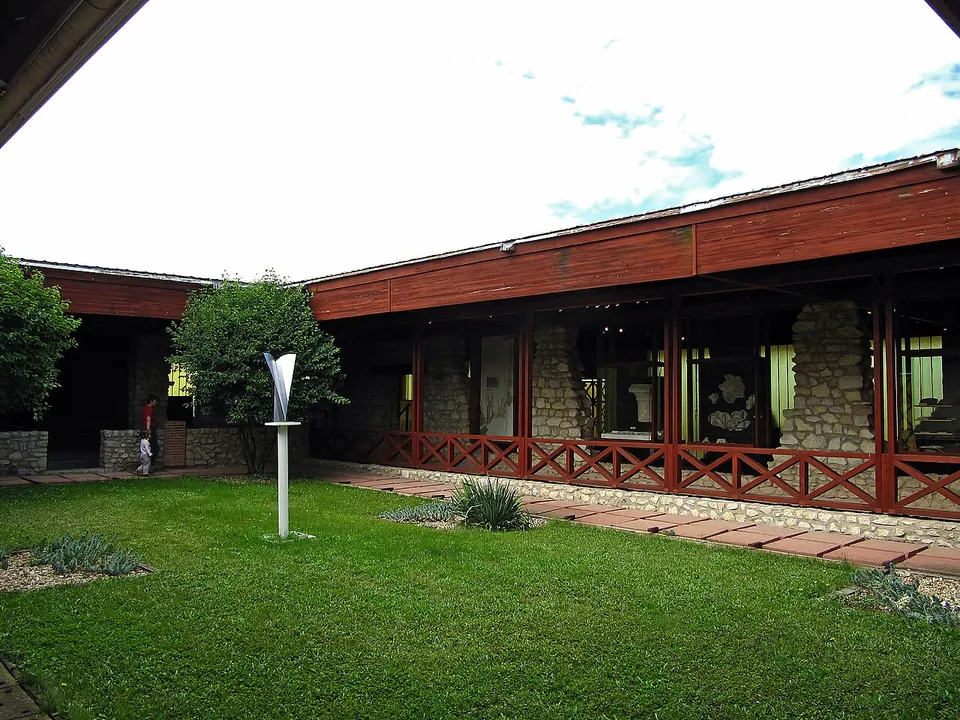
Photo: Monyesz · CC BY-SA 3.0 · Commons
41 km · villa · Veszprém County
Villa Romana Baláca
The heart of the site is the owners' main house, about 2,400 m² in floor area and one of the largest villa buildings known in Pannonia; its mosaic floors and wall paintings show how wealthy the owners were (the operator).
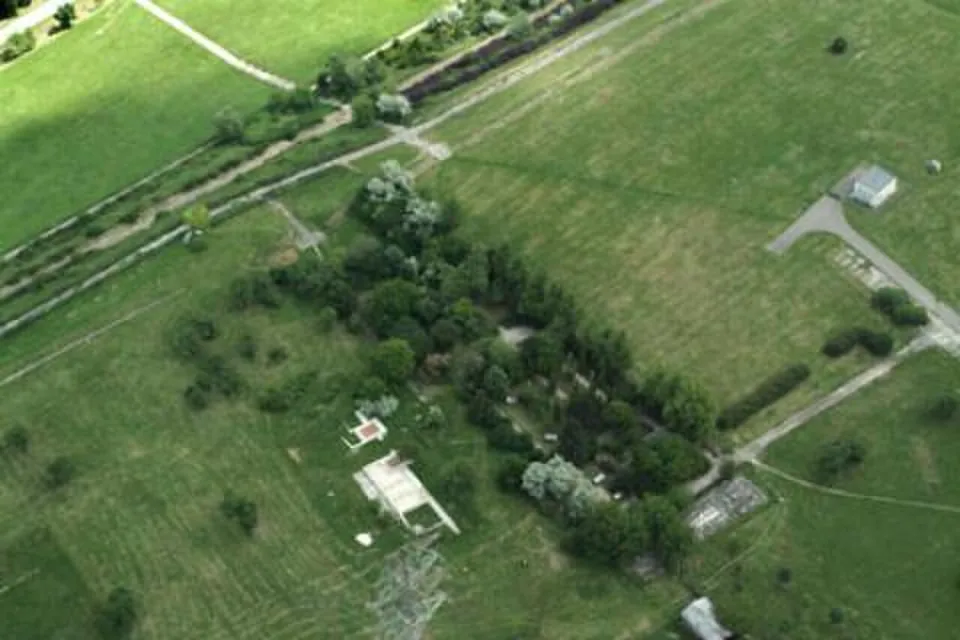
Photo: Civertan · CC BY-SA 3.0 · Commons
41 km · fort · Fejér County
Intercisa
On the fort site the museum's Roman lapidarium displays carved stones from the camp, which was in use from the 1st century AD to the early 5th, and around it you can see restored remains of part of the commander's building, a road leading from it, the north-east and south-east towers and the south gate (the operator).


Straight-line distances.
Sources
Every fact on this page comes from the records below, each used under the licence noted.
| Source | Licence |
|---|---|
| Pleiades 197287 | CC BY |
| Wikidata Q1027637 | CC0 |
| OpenStreetMap relation/5503554 | ODbL |
| Wikipedia (hu) — Gorsium | CC BY-SA 4.0 |
| Gorsium Régészeti Park (the operator) | licence not recorded |
| Gorsium — opening hours | licence not recorded |
| Gorsium — tickets | licence not recorded |