

What is there today
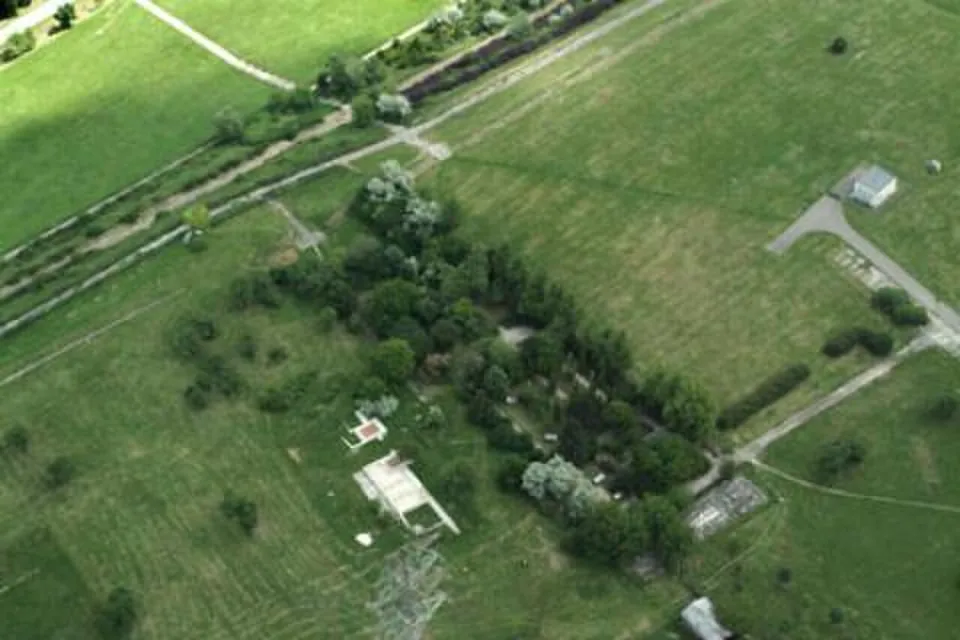
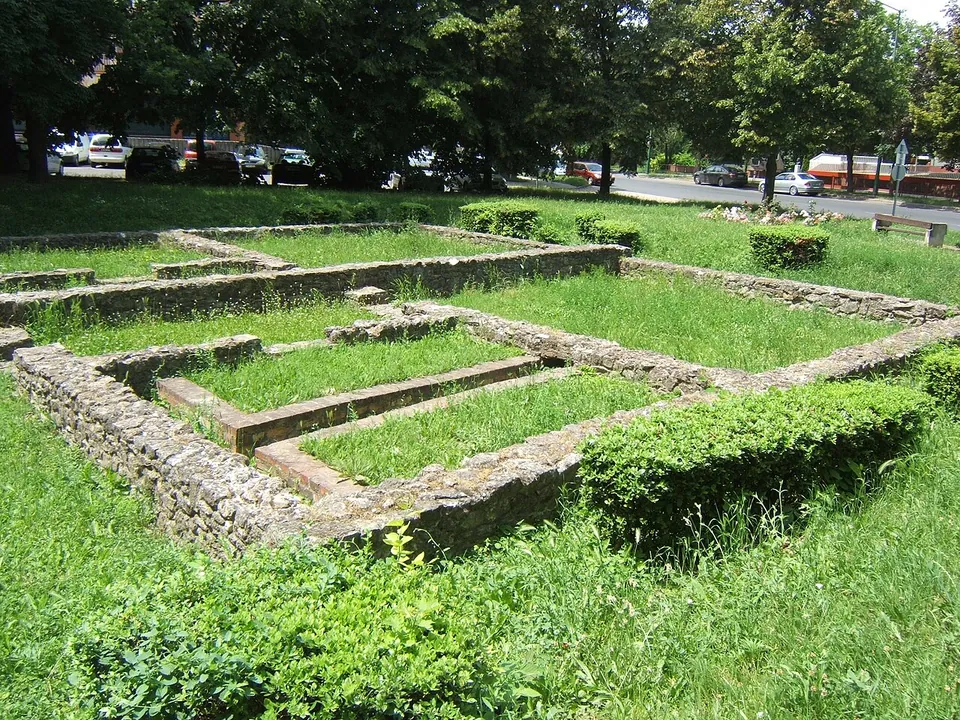
On the fort site the museum’s Roman lapidarium displays carved stones from the camp, which was in use from the 1st century AD to the early 5th, and around it you can see restored remains of part of the commander’s building, a road leading from it, the north-east and south-east towers and the south gate (the operator). Nearby is a Roman bath, found in 1992, built at the end of the 2nd century and used to the end of the 3rd, with two cold-water pools, a terrazzo-lined tub and parts of its heating system (the operator). A late Roman apsidal building, often called an early Christian chapel, is shown in the open air, though the museum notes that excavation found nothing to show what it was used for (the operator). de.wikipedia mentions a small 4th-century early Christian church, perhaps a martyrium, among the conserved remains.
Is it worth the trip?
For a frontier enthusiast, yes, between mid-April and mid-October: Intercisa is counted among the best-known and best-researched forts on the Danube frontier (de.wikipedia), and the museum shows several pieces of it on the hill. For a casual visitor it is a lot of arranging for a short visit: the outdoor sites open only four mornings a week in season, and the ticket has to be bought at the museum in town first.
Getting there
The fort lies on the Öreghegy, the old hill of Dunaújváros, directly above the Danube (de.wikipedia). The lapidarium’s address is simply Öreghegy, and the bath is on Öreghegyi utca (the operator). Car parks are mapped about 180 to 230 m from the lapidarium, some marked free; no bus stop is mapped within 300 m (OpenStreetMap).
The lapidarium and the bath are open from 15 April to 15 October, Tuesday to Friday, 10.00 to 14.00, and closed in winter. Tickets are sold at the Intercisa Museum, Városháza tér 4, which is open Tuesday to Friday 10.00 to 16.00 and Saturday 14.00 to 18.00. The lapidarium ticket is 1,000 HUF, about €2.70; students and pensioners pay 500 HUF, about €1.40, and a family ticket is 1,500 HUF, about €4.10 (intercisamuzeum.hu, read 4 October 2026; check before travelling, since prices move).
Visiting details
- Opening hours
- Roman lapidarium and Roman bath - 15 April to 15 October, Tuesday to Friday 10.00–14.00; closed in winter. Tickets are sold only at the Intercisa Museum in the town centre (Városháza tér 4), open Tuesday to Friday 10.00–16.00 and Saturday 14.00–18.00.
- Tickets
- Lapidarium 1,000 HUF (about €2.70); students and pensioners 500 HUF (about €1.40); family 1,500 HUF (about €4.10).
- Parking
- Car parks about 180–230 m from the lapidarium, some marked free (OpenStreetMap).
Before you go
- Buy the ticket at the Intercisa Museum in the town centre before going up to the Öreghegy; it is not sold on site.
- The outdoor sites are closed from 16 October to 14 April, and at weekends and on Mondays.
Hours and prices checked 4 October 2026 on the operator's own site. Confirm before travelling.
History
Intercisa’s garrison guarded a stretch of the Danube, which here formed the empire’s frontier (de.wikipedia). The fort was used from the 1st century AD to the early 5th (the operator). In the 20th century most of Hungary’s archaeologists of the Roman provinces worked here at one time or another (de.wikipedia). The town that stands beside it today was built in the 1950s as a new industrial city on the site of the village of Dunapentele (en.wikipedia).
Nearby
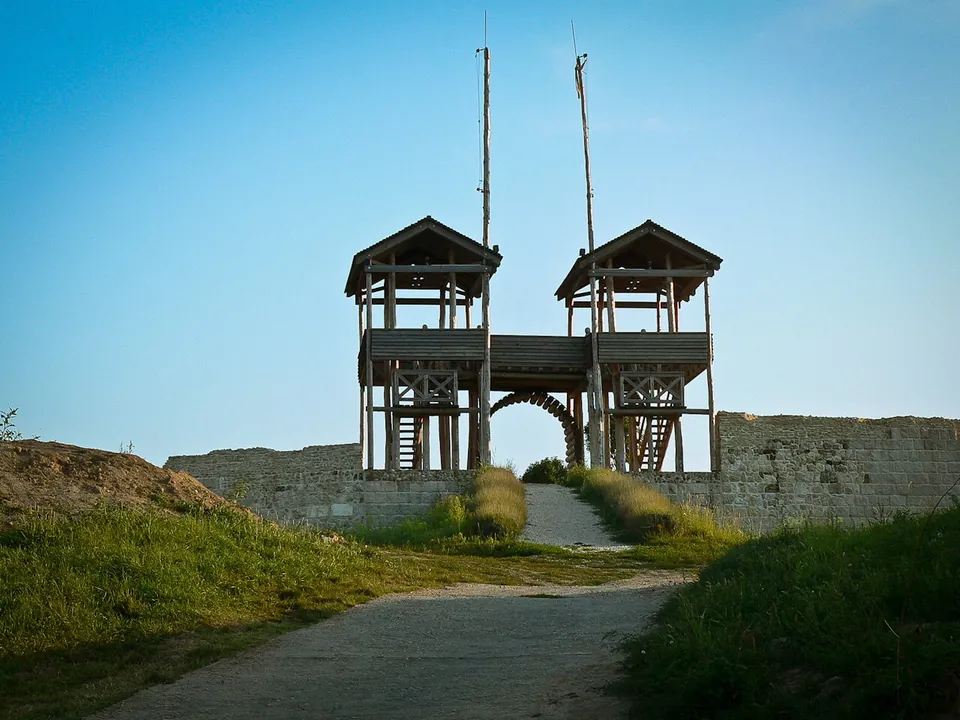
Photo: gergo_ · CC BY-SA 2.5 hu · Commons
36 km · fort · Tolna County
Lussonium
The park shows the remains of the fortifications, the defensive ditches and walls 1.3 m thick (the town of Paks).
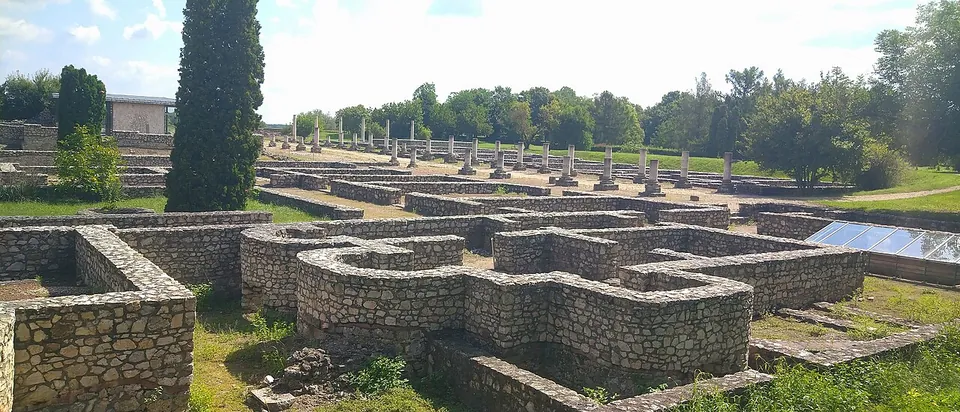
Photo: Cornu · CC BY-SA 4.0 · Commons
41 km · city · Fejér County
Gorsium
The park is a walk through a town of foundations, with a few reconstructions.
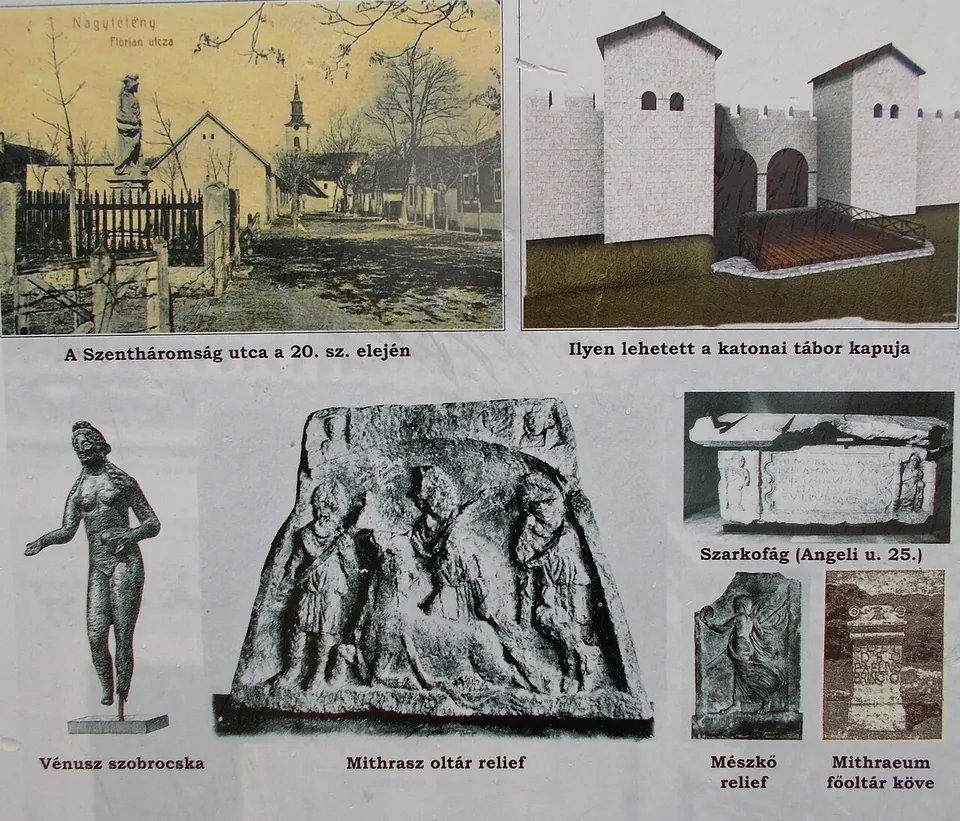
Photo: Globetrotter19 · CC BY-SA 3.0 · Commons
46 km · fort · Budapest
Campona
Of the fort itself, little stands: its ruins were visible for a long time, but today only the stumps of a few wall sections show above ground (hu.wikipedia).


Straight-line distances.
Sources
Every fact on this page comes from the records below, each used under the licence noted.
| Source | Licence |
|---|---|
| Pleiades 197323 | CC BY |
| Wikidata Q1513659 | CC0 |
| OpenStreetMap way/1132702730 | ODbL |
| Wikipedia (de) — Kastell Intercisa | CC BY-SA 4.0 |
| Wikipedia (en) — Dunaújváros | CC BY-SA 4.0 |
| Intercisa Museum — Roman lapidarium (the operator) | licence not recorded |
| Intercisa Museum — Roman bath | licence not recorded |
| Intercisa Museum — late Roman apsidal building | licence not recorded |
| Intercisa Museum (home page, museum hours and address) | licence not recorded |