

What is there today
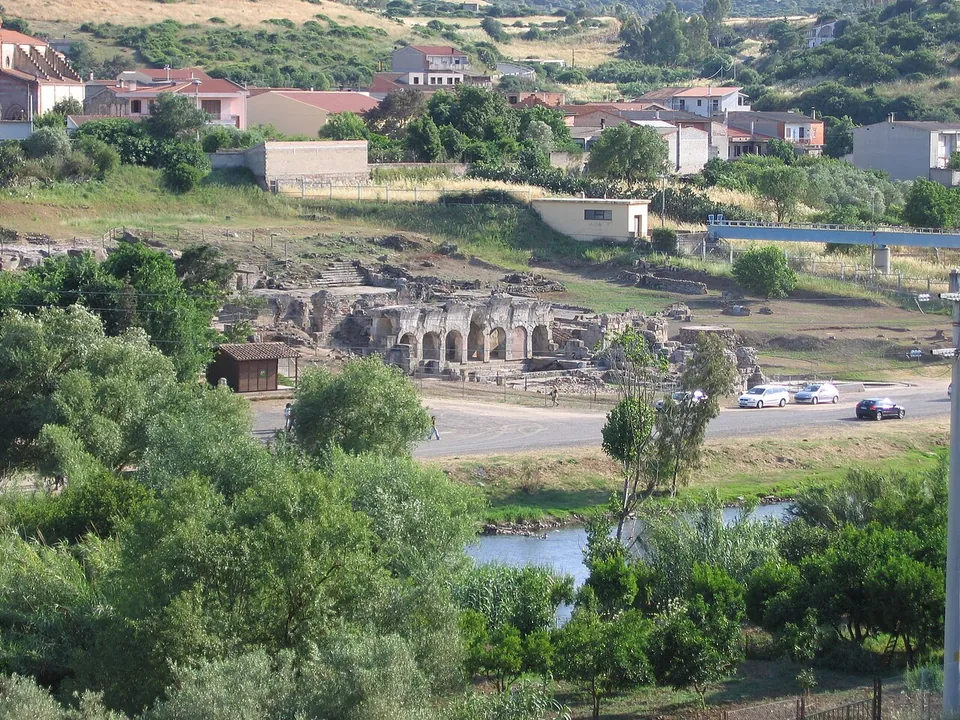
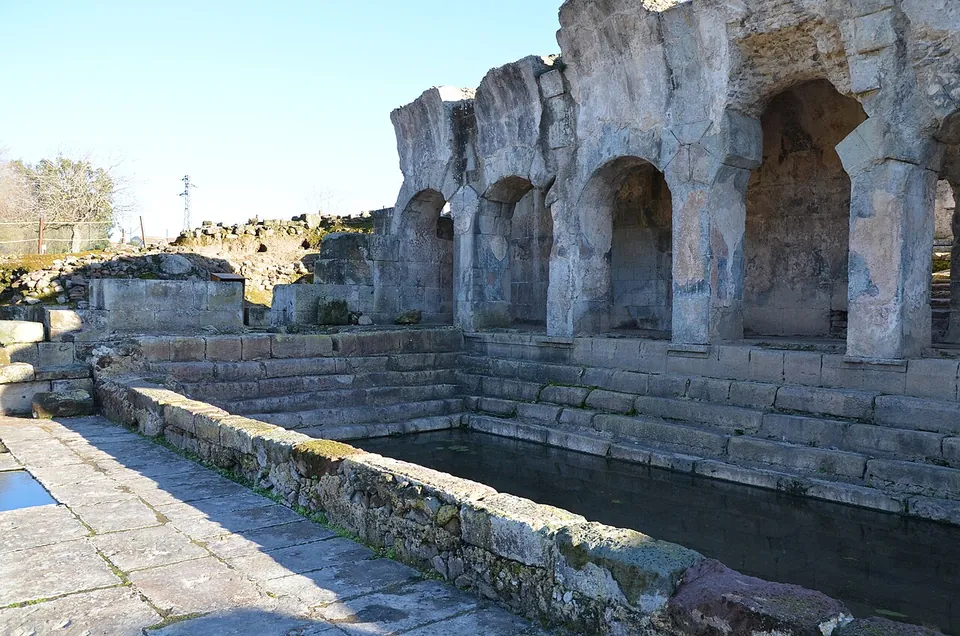
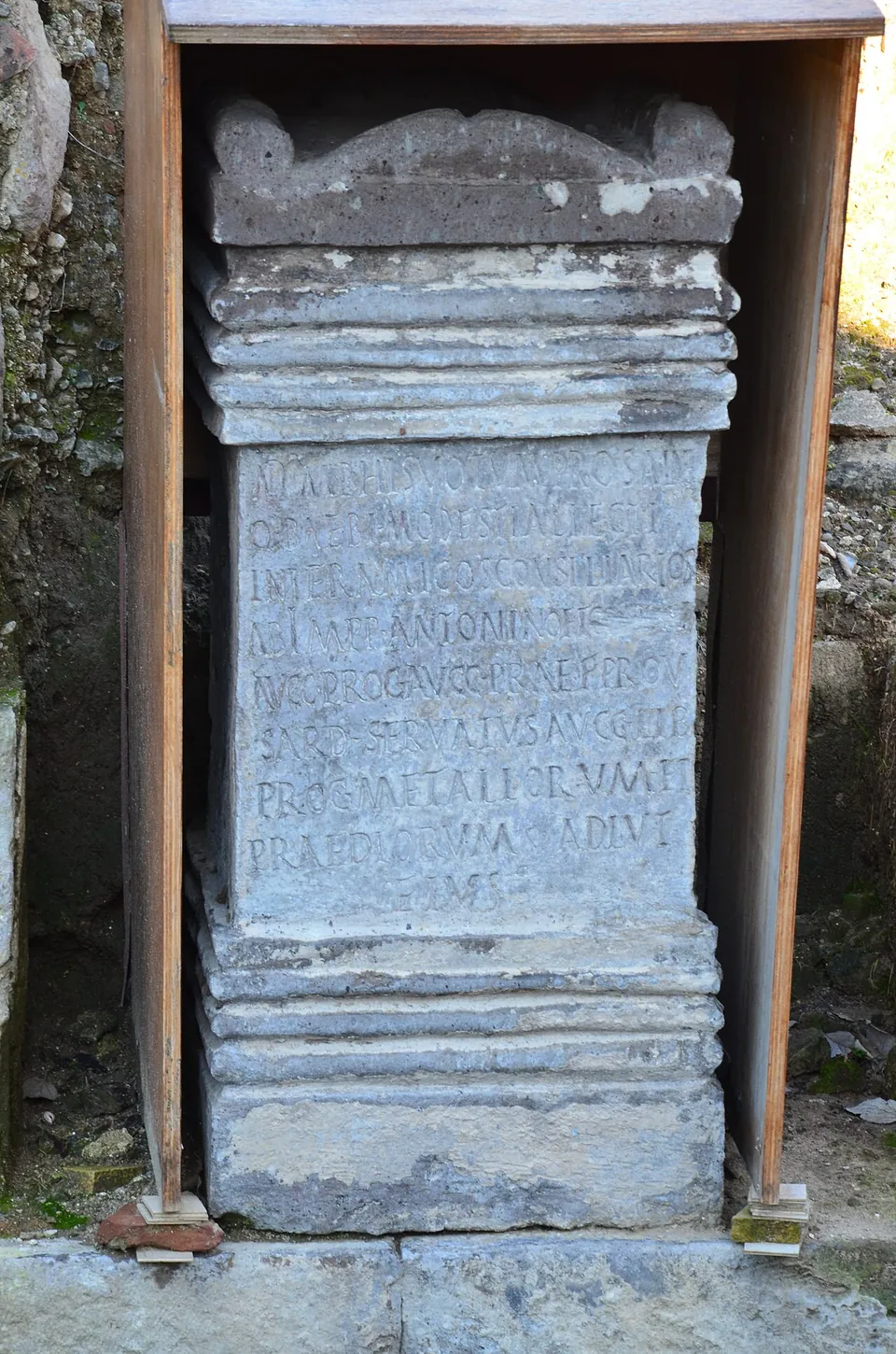
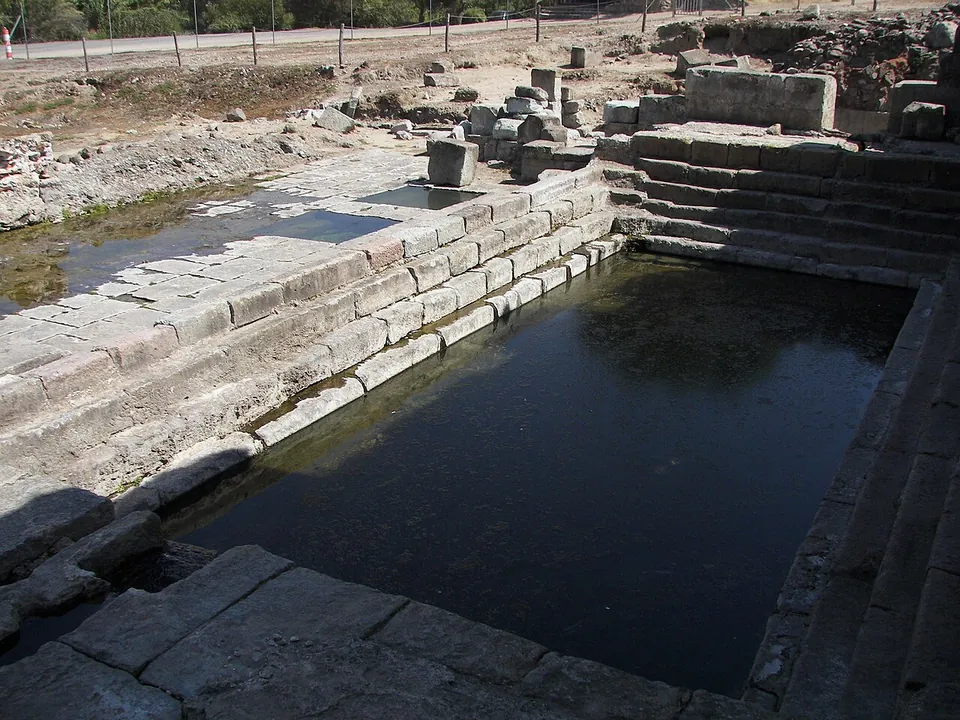
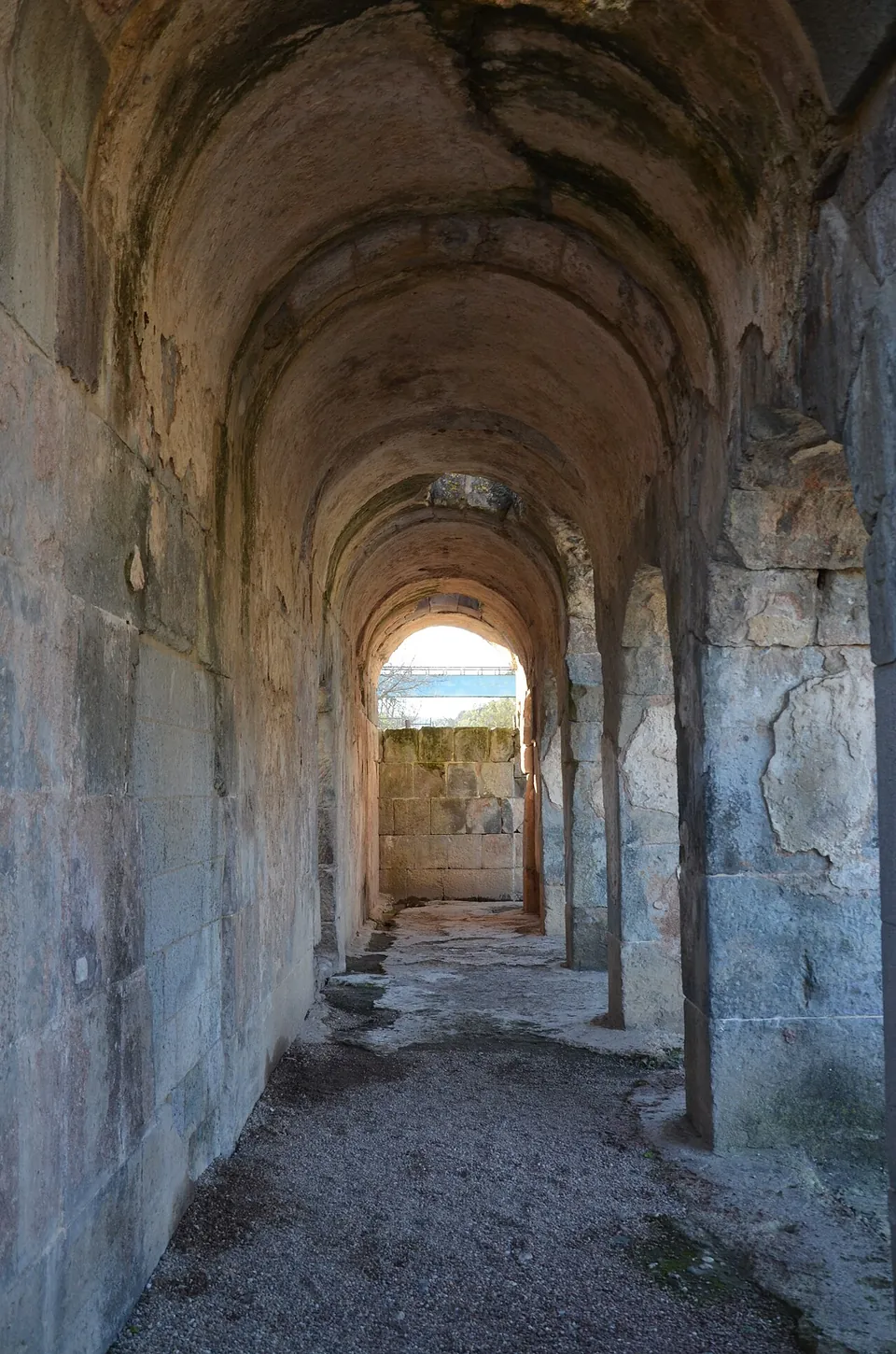
The heart of the site is the 1st-century building at its northern end. Its natatio, a rectangular pool 13 by 6.5 metres and 1.5 metres deep with steps down its sides, still holds water, and one of its porticoes still stands: a row of square pillars of volcanic stone carrying a barrel vault (SardegnaCultura). The hot spring water was cooled with cold water from reservoirs upstream, and it reached the pool through a spout carved as a panther’s head that still runs today (it.wikipedia). Around the pool are smaller basins, among them a nymphaeum, where an altar dedicated to the nymphs was found (it.wikipedia, SardegnaCultura).
South of it lies a second, 3rd-century bath building of 30 by 12 metres, heated artificially, with the usual sequence of changing room, cold, warm and hot rooms. It opens onto a paved square of about 690 m² (it.wikipedia), with an L-shaped building on one side, perhaps lodgings for bathers, one of whose rooms was frescoed around AD 200 (SardegnaCultura). Channels, wells and cisterns of the water system can be seen across the site (it.wikipedia).
Is it worth the trip?
Yes, if you are in central or western Sardinia. This is not a field of foundations: the pool holds water, the portico stands to its vault, and the spring that made the place still runs into it. A visit can be combined with the free hot-water pools in the river next to it, where the 54 °C spring mixes with the cold Tirso (the operator), and with the other sights the same ticket or office covers in the village. OpenStreetMap also maps the remains of the town’s amphitheatre about 500 m away.
Getting there
Fordongianus is about 20 km from Oristano and about 90 km from Cagliari (the operator). From Oristano take the SP 55 towards Silì, then the SS 388 through Simaxis and Ollastra to Fordongianus, and follow the road to the baths from the centre of the village (SardegnaTurismo; Via Terme on OpenStreetMap). The operator points drivers to free parking on the other side of the Tirso. No bus stop is mapped near the site, so plan on a car.
The baths are open every day, 09.30–13.00 and 15.00–18.00, except 25 December and 1 January. A ticket is €6 and also covers the Casa Aragonese in the village; children aged 6 to 14 pay €3, under-sixes go free, groups of twenty or more pay €5 each, and disabled visitors enter free. Tickets are sold at the site’s ticket office or online. Audio guides are available in Italian, English, French, German and Spanish and in sign language (forumtraiani.it, read 23 October 2026). The operator warns that the site is not easily accessible for wheelchair users, though the archaeological area can be seen from outside.
Visiting details
- Opening hours
- Daily, 09.30–13.00 and 15.00–18.00; closed on 25 December and 1 January.
- Tickets
- €6, a combined ticket with the Casa Aragonese in the village; €3 for children aged 6 to 14; free under 6; €5 each for groups of 20 or more. Free for disabled visitors.
- Parking
- Free parking on the far side of the Tirso (the operator); OSM maps a free surface car park about 100 m from the site.
Before you go
- The operator says its sites are not easily accessible for wheelchair users; the archaeological area can be seen from outside.
- No bus stop or railway station is mapped near the site; the directions published for it assume a car.
Hours and prices checked 23 October 2026 on the operator's own site. Confirm before travelling.
History
The town was known to Ptolemy, writing around AD 170, as Aquae Ypsitanae, and to the Antonine Itinerary as Forum Traiani, a name given to it under the emperor Trajan (it.wikipedia). SardegnaCultura describes it as a market town between the communities of the interior and the Romanised country behind the Gulf of Oristano. The modern name, Fordongianus, comes from Forum Traiani (SardegnaCultura).
No excavation records date the two bath buildings, so they are dated by their building techniques: the northern one, of large squared blocks laid without mortar (opus quadratum), to the 1st century AD, and the southern one, of concrete faced in opus vittatum mixtum, to the 3rd (it.wikipedia). The altar to the nymphs was set up by Servatus, a freedman of the emperors and procurator of the mines and imperial estates, for the recovery of Quintus Baebius Modestus, governor of Sardinia under the joint emperors Caracalla and Geta (AD 211–212; SardegnaCultura).
After the fall of the empire the baths were gradually abandoned, and in the Middle Ages they were dismantled to make way for churches, convents and other places of worship, though the parts used for bathing were spared (SardegnaTurismo). The historian Giuseppe Manno located Aquae Ypsitanae and Forum Traiani in 1825; the first excavations took place between 1899 and 1902, and the regional archaeological superintendency resumed systematic work in 1969 (it.wikipedia, SardegnaCultura).
More photographs


Nearby
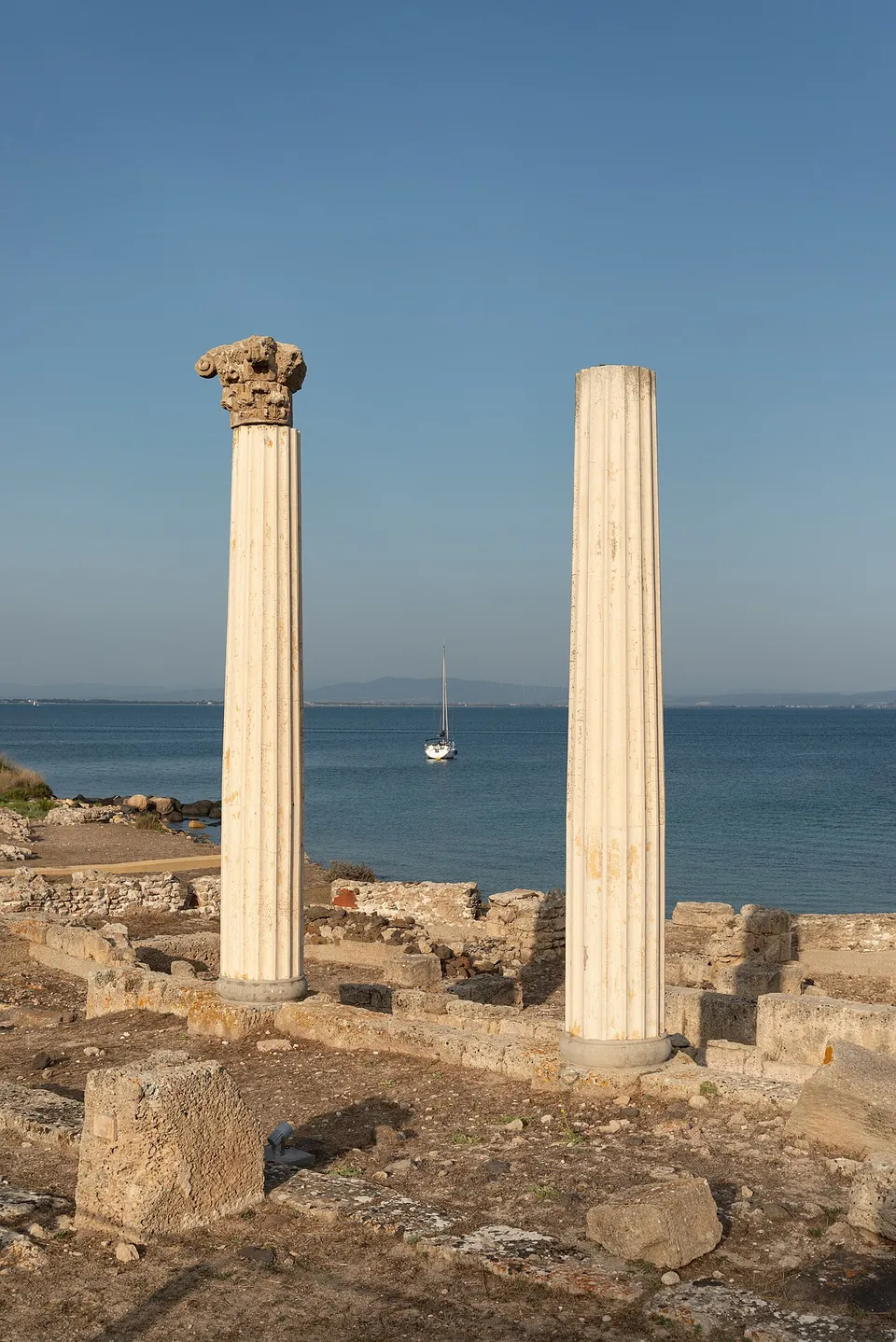
Photo: GiorgioGaleotti · CC BY-SA 4.0 · Commons
34 km · city · Sardinia
Tharros
The site is an open-air museum (it.wikipedia) on a narrow promontory, in places only 100 m wide, at the southern end of the Gulf of Oristano (de.wikipedia; SardegnaTurismo).

Straight-line distances.
Sources
Every fact on this page comes from the records below, each used under the licence noted.
| Source | Licence |
|---|---|
| Pleiades 652509965 | CC BY |
| Wikidata Q3984400 | CC0 |
| OpenStreetMap way/228544530 | ODbL |
| Wikipedia (it) — Terme di Fordongianus | CC BY-SA 4.0 |
| SardegnaCultura (Regione Sardegna) — Fordongianus, Roman Baths of Forum Traiani | licence not recorded |
| SardegnaTurismo (Regione Sardegna) — Terme di Forum Traiani | licence not recorded |
| Forum Traiani cooperative (the site's operator) — useful info, hours and prices | licence not recorded |