


Photo: Alessandro Vecchi · CC BY-SA 3.0 · Commons

gate · Piedmont
Porta Savoia
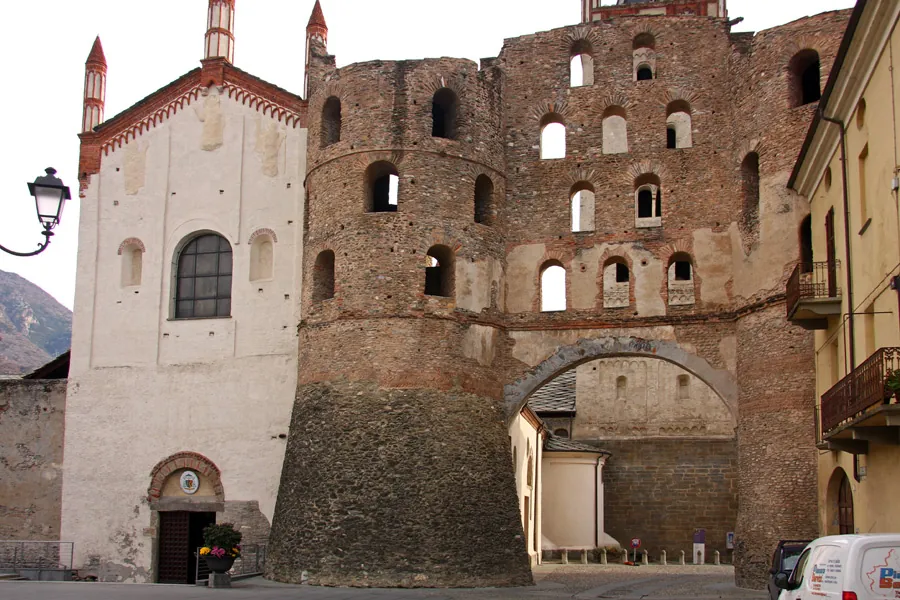
The gate is two cylindrical towers with a central block between them over the carriageway.
Free
Segusio, Segusium, Secusia, Aree archeologiche di Susa
city · Piedmont, Italy
1 place to see, the best preserved and best known first.
Photo: Alessandro Vecchi · CC BY-SA 3.0 · Commons
gate · Piedmont
The gate is two cylindrical towers with a central block between them over the carriageway.
Segusio was the Roman town under Susa, at the foot of the Cottian Alps 51 km west of Turin, and the capital of the Alpine province named after them. Much of it is still on view in a compact old town: a 3rd-century gate and long stretches of the town walls, the marble Arch of Augustus of 9–8 BC, two arches of the aqueduct, the excavated governor’s palace under the castle, and a small amphitheatre.
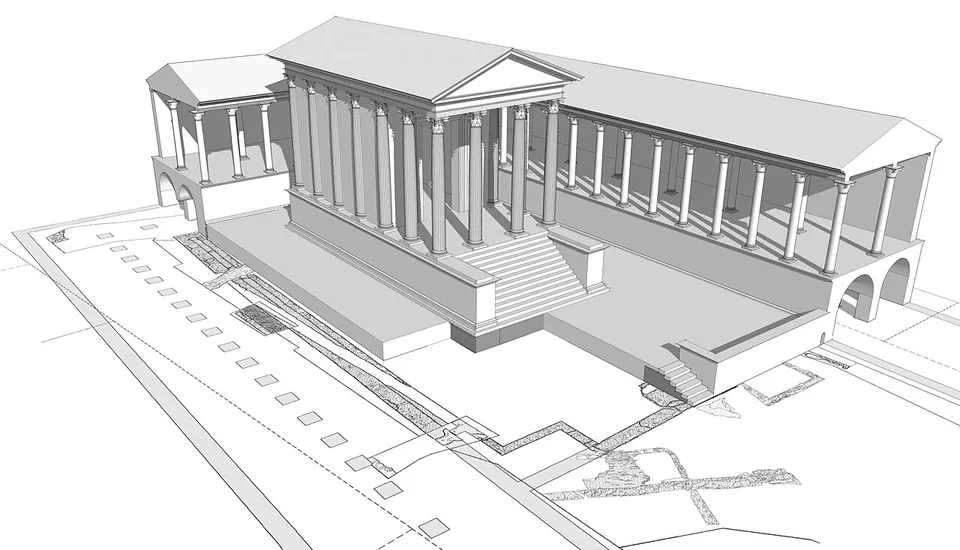
Porta Savoia, the arch, the aqueduct, the castle and the amphitheatre all lie within about 400 m of one another (OpenStreetMap), and everything is free except the castle museum. The Ministry of Culture suggests starting from Piazza Savoia, where the remains of the temple of the forum, uncovered when the square was redeveloped in 2005–2008, are on view, and where the Roman gate opens onto the square.
Porta Savoia, the western gate of the 3rd-century walls, still stands with both its towers, and about 200 m away, on the rise at the western edge of the town, is the Arch of Augustus, which the Ministry calls the symbol of the town. Both are described on the Porta Savoia page.
Beside the arch, on the rise above the old town, are the aqueduct arches: two arches of limestone blocks whose piers stand on a rock cut with protohistoric cup-marks (Ministry of Culture), which the comune takes for a Celtic altar. The name “Terme Graziane” sometimes given to them is a mistake, taken from an inscription that named baths restored between 375 and 378 and the aqueduct serving them (the comune). In the Middle Ages they were built into the defences and joined to a tower of the walls, and they were restored only in the 19th century (the comune).
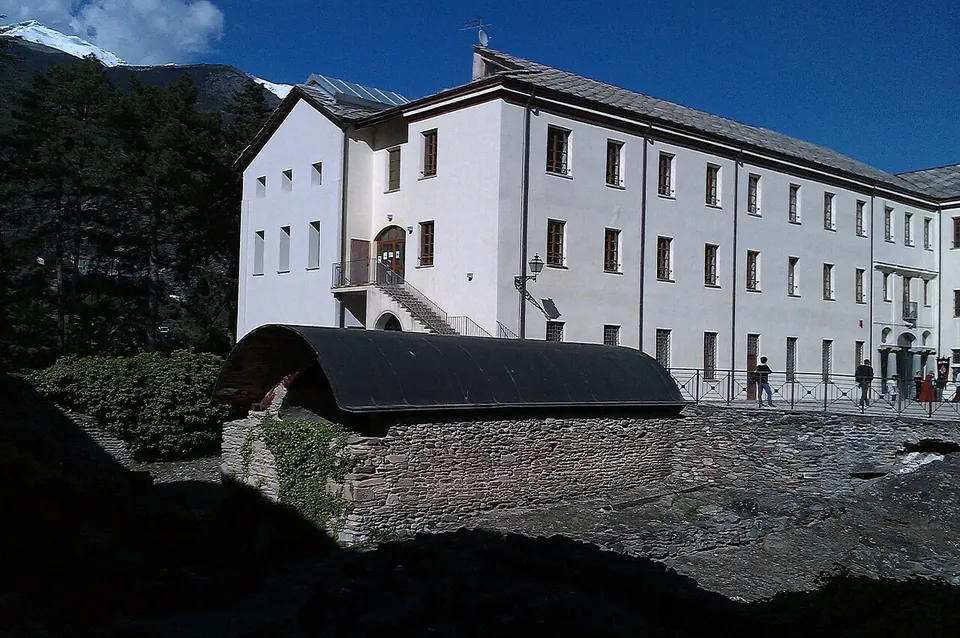
On the same height is the castle, called after Adelaide of Susa, the 11th-century countess (it.wikipedia). It stands on the praetorium, the palace of the Roman governor of the province, which occupied the highest part of the town and was altered and fortified between the end of the 3rd and the 4th century (Ministry of Culture). Excavation in the courtyard has found a monumental 1st-century entrance with a stone stair, which must have led up from the Roman road, just past the arch, to the palace. Under the modern floors are fragments of mosaic and mortar floors over barrel-vaulted rooms, which have served for centuries as the castle’s cellars; an open-air excavation, entered by a late-antique gate, shows rooms of the palace with a late-antique cistern and latrine (Ministry of Culture). The castle now houses the town’s Museo Civico, whose archaeological route begins with the praetorium (the comune).
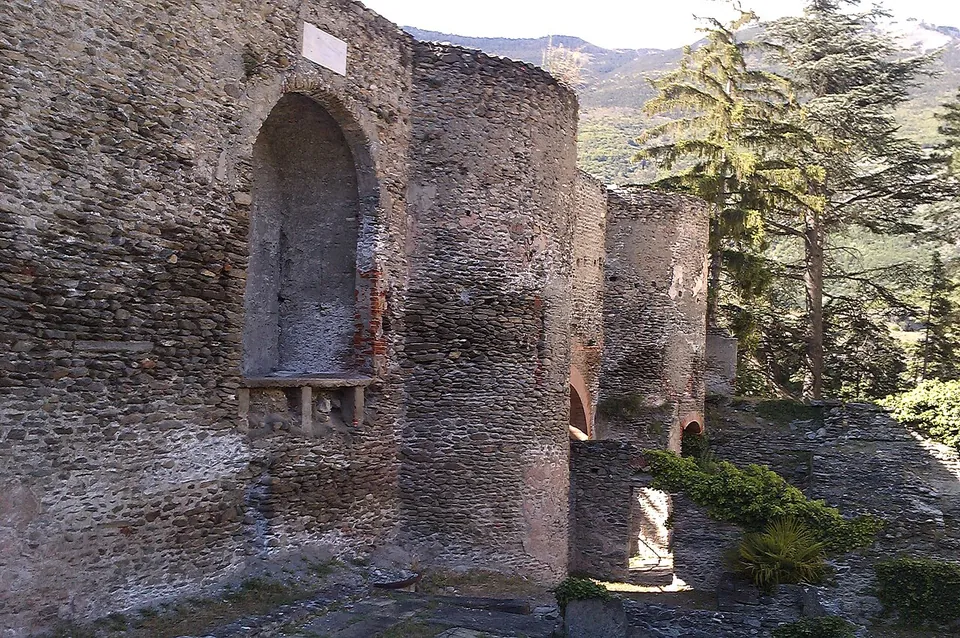
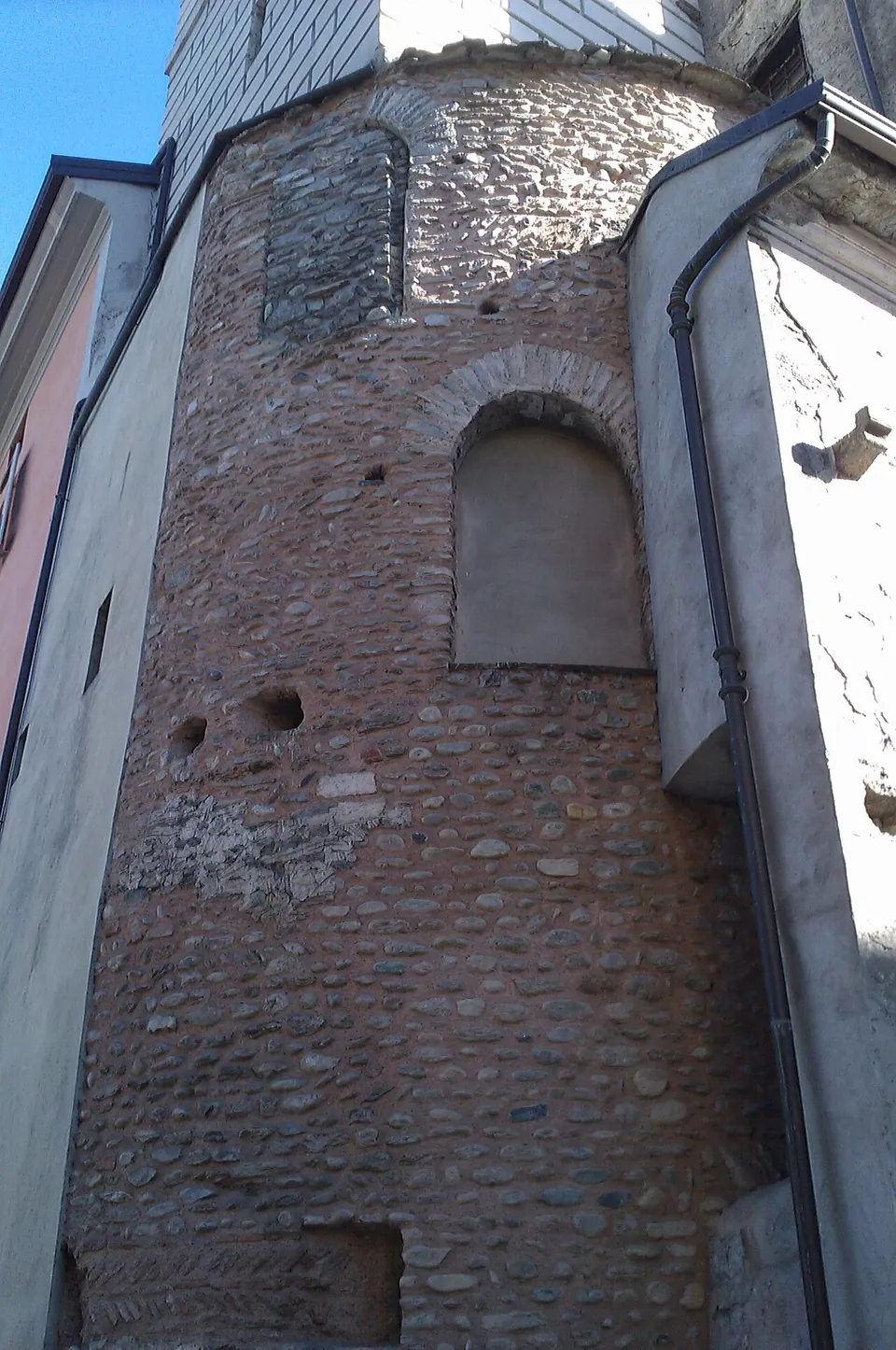
The walls themselves, from the 3rd century, are in good condition for most of their circuit, which gives the old town its peculiar triangular plan; their line is easy to see, and long stretches still stand (it.wikipedia). Of the east gate, the Porta di Piemonte in today’s Piazza Trento, one round tower survives, about three storeys high, under the civic tower; it was found again in the 1990s when an 18th-century addition was demolished (it.wikipedia).
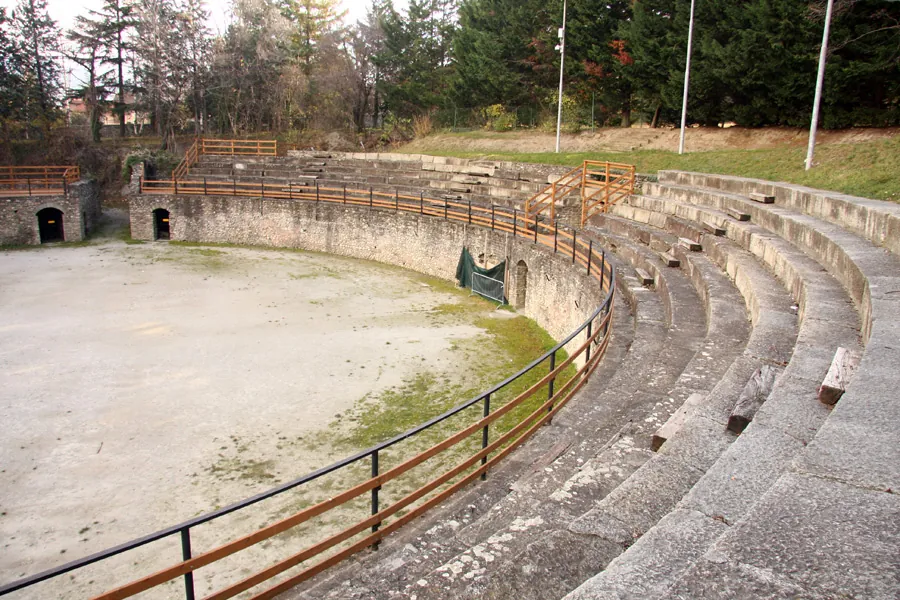
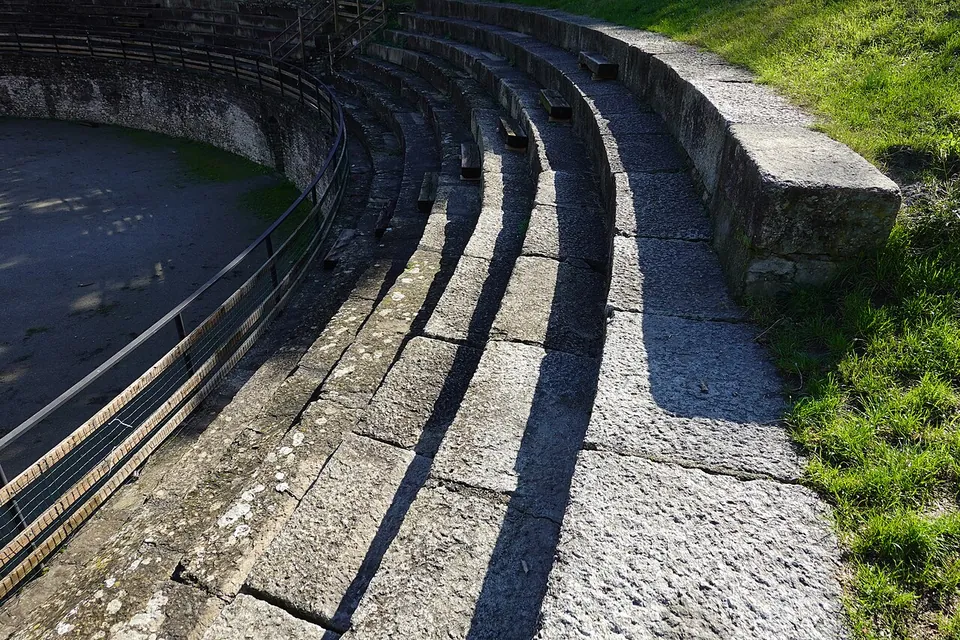
The amphitheatre lies south of the ancient town centre, about 400 m from Porta Savoia (Ministry of Culture; OpenStreetMap). It is small, about 60 by 53 m, and keeps the wall round the arena with its carceres, a vaulted corridor running round it, and part of the stone seating, heavily restored (Ministry of Culture). It is generally dated to the 2nd century AD (Ministry of Culture; the comune says the 2nd or 3rd) and was rediscovered in the 1960s (it.wikipedia). It opens every day, from 09.00 to 17.00 in winter and to 19.00 in summer, closes during events, and is free (the comune).
Yes, if you are in the Susa valley or crossing the Alps by this road. Susa keeps a great deal of its Roman town in one short walk: a gate still standing with both its towers, a marble arch that is largely intact, aqueduct arches, a circuit of walls and an amphitheatre you can walk into, and only the castle museum charges admission. Together they fill a morning.
Two caveats. The amphitheatre is small and much of its seating has been heavily restored, so it is better as part of the walk than as a reason to come on its own. And the governor’s palace opens only on Fridays, Saturdays and Sundays, and not at all from early October to early December; time a visit for a weekend if you want to see it.
Regional trains run every hour from Torino Porta Nuova to Susa, and by road the town is the Susa exit of the A32 motorway from Turin towards Bardonecchia (the comune). From Susa station it is about 550 m to Porta Savoia, where free street-side parking is mapped about 60 m from the gate (OpenStreetMap). The tourist office is at Corso Inghilterra 39, +39 0122 622447 (the comune).
The arch, the aqueduct arches and Porta Savoia are open at all times and free. The amphitheatre is open daily, 09.00 to 17.00 in winter and 09.00 to 19.00 in summer, and free. The castle and its Museo Civico open on Fridays, Saturdays and Sundays: 14.00–18.00 from 3 April to 4 June, 10.00–13.00 and 14.00–18.00 from 5 June to 4 October, and 14.00–18.00 from 4 December to 10 January 2027, with last entry half an hour before closing; it is closed from 5 October to 3 December. A ticket is €8, or €4 for ages 6 to 16; children up to 5, visitors with a disability and their companion, and holders of the Abbonamento Musei go free (the comune, read 20 October 2026 — check before travelling).
Before you go
Hours and prices checked 20 October 2026 on the operator's own site. Confirm before travelling.
Segusio was founded by the Ligures and was the capital of the Segusini, also called the Cottii (en.wikipedia); it.wikipedia describes it as probably a Celto-Ligurian town that grew up on the plain below the rock that held the praetorium and the arch. The Romans, under Julius Caesar, fought the local peoples and then made a pact with their king, Donnus, to secure safe passage for troops and goods over the passes into Gaul (it.wikipedia), and the Ministry of Culture dates the Romanisation of the district to 13 BC. In 9–8 BC the local king Cottius dedicated the arch to Augustus (it.wikipedia; see Porta Savoia). Segusio was the capital of the province of the Cottian Alps (Pleiades; en.wikipedia).
The walls were probably built around the 3rd century, and in haste, to judge by how much earlier stone and even marble they reuse; and they cut large parts of the older town, the forum among them, out of the walled area (it.wikipedia). Constantine’s troops besieged and burned the town in 312 (it.wikipedia). An inscription records baths restored between 375 and 378 by the emperors Gratian, Valens and Valentinian (the comune). After 476 Susa declined; it passed to Theoderic’s Ostrogothic kingdom, then, after the Gothic war, to the praetorian prefecture of Italy, then to the Lombards, and in 575 the Frankish king Guntram took it, with Aosta (it.wikipedia).
By around the 10th century the governor’s palace had probably given way to a medieval castle (it.wikipedia), which seems to have been one of the residences of Adelaide of Susa in the 11th century (the comune). The superintendent Carlo Carducci excavated there in 1938–1947 (Ministry of Culture), and the castle museum reopened in 2017 after fifteen years of restoration (it.wikipedia).
Every fact on this page comes from the records below, each used under the licence noted.
| Source | Licence |
|---|---|
| Pleiades 167919 | CC BY |
| Wikidata Q55677935 | CC0 |
| Città di Susa (Visita Susa) — Castello della Contessa Adelaide, hours and tickets | licence not recorded |
| Città di Susa (Visita Susa) — Anfiteatro romano | licence not recorded |
| Città di Susa (Visita Susa) — Acquedotto romano (Terme Graziane) | licence not recorded |
| Città di Susa (Visita Susa) — How to get here | licence not recorded |
| Ministero della cultura — Aree archeologiche del castello e dell'anfiteatro romano di Susa | licence not recorded |
| Pleiades — Susa Roman amphitheater | licence not recorded |
| Wikidata — Segusium amphitheatre (Q28978083) | licence not recorded |
| Wikipedia (it) — Susa (Italia) | CC BY-SA 4.0 |
| Wikipedia (en) — Susa, Piedmont | CC BY-SA 4.0 |
| Wikipedia (it) — Mura romane di Susa | CC BY-SA 4.0 |
| Wikipedia (it) — Porte romane di Susa | CC BY-SA 4.0 |
| Wikipedia (it) — Castello della contessa Adelaide | CC BY-SA 4.0 |


