

What is there today
The theatre
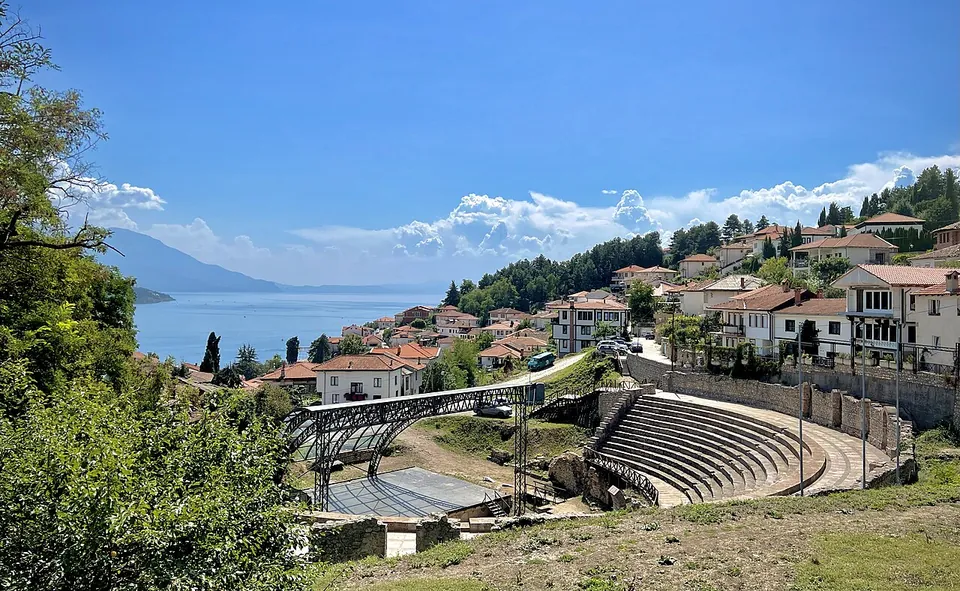
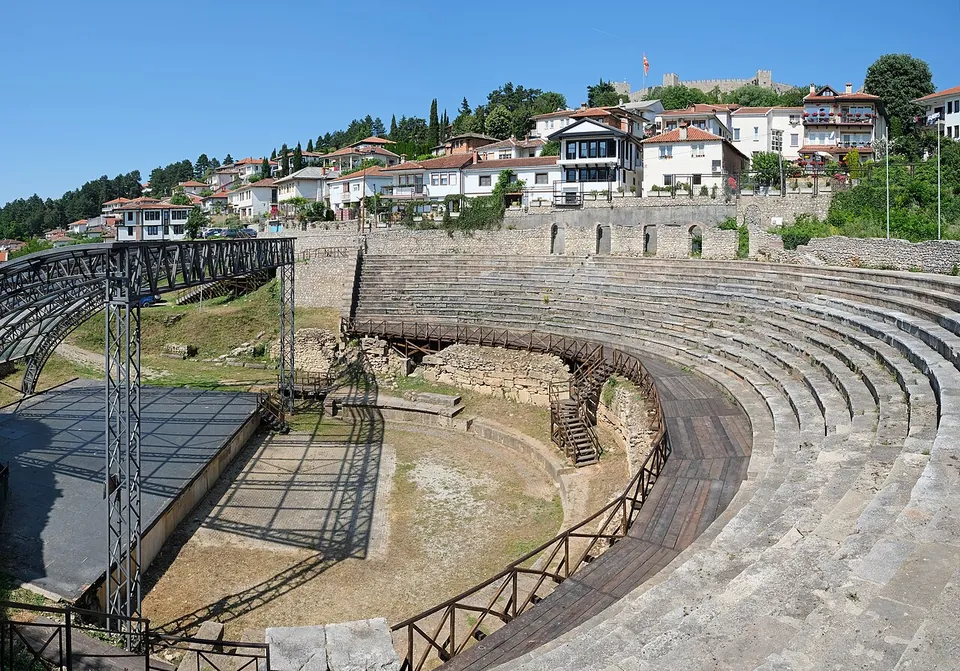
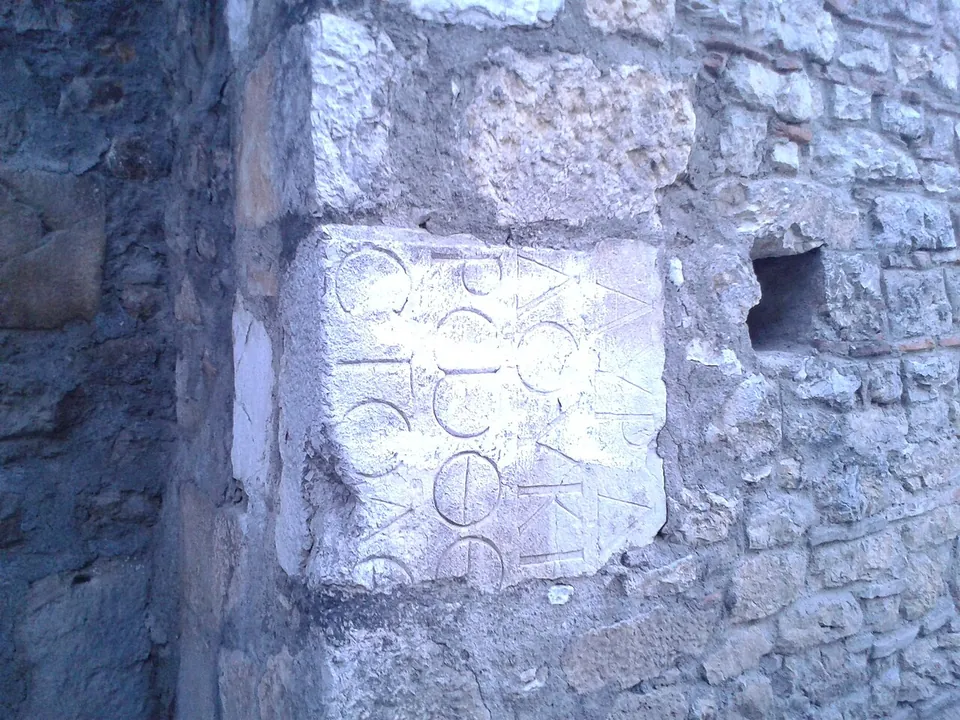
The theatre was built at the end of the 3rd or the beginning of the 2nd century BC. After the Roman conquest it became an arena for gladiatorial fights and fights with wild beasts: some of the lowest rows of seats were removed to make way for animal cages, and a protective wall was built round the orchestra and the seats of honour. Excavation has uncovered nine rows of seats, and since 2001 the theatre has again been used for plays and concerts. Two spectators, Crispus and Topos, are still known by name, because their names are carved into the seat blocks (the operator).
Plaošnik
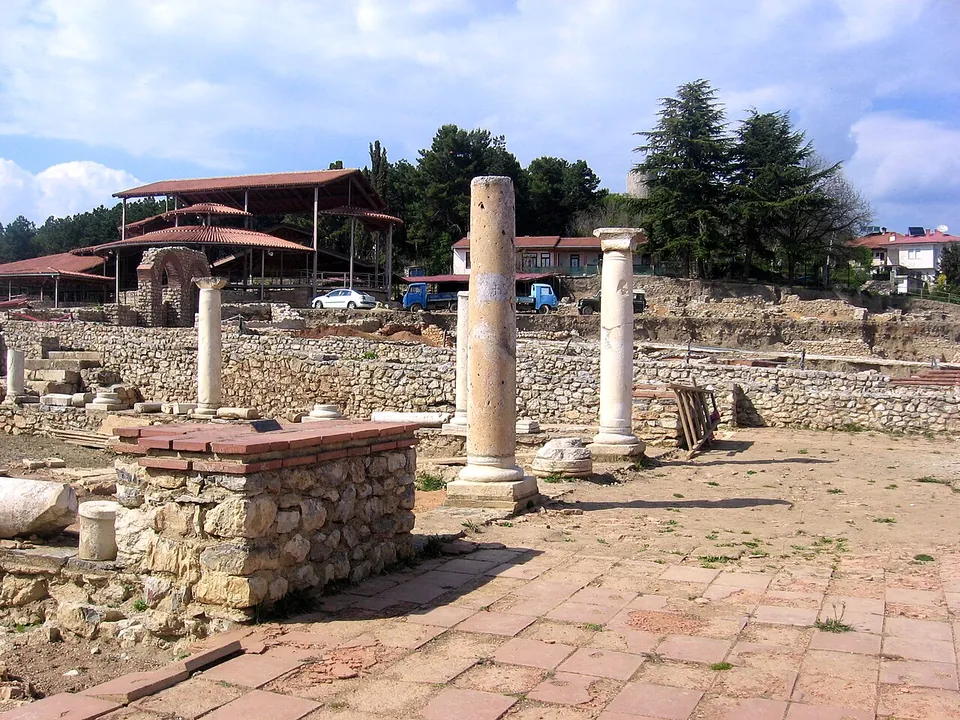
At Plaošnik, about 250 m south of Samuel’s Fortress (en.wikipedia), the church of St Clement has been rebuilt on the foundations of the old church. The site also holds two early Christian churches. A polyconch church of the 5th–6th century now stands under a protective roof, and the mosaic floors of its baptistery have been conserved. A monumental three-aisled basilica, fully uncovered in 1999–2002, has mosaic floors in its narthex and northern aisle and a baptistery with a circular font whose floor mosaic, of vines and grapes, flowers, animals and birds, the operator calls extraordinarily well preserved (the operator).
The rest of the ancient city — an agora, a gymnasium, a council house, temples, known partly from inscriptions — has not been excavated, because modern Ohrid stands on top of it (mk.wikipedia).
Is it worth the trip?
If you are in Ohrid, yes. The theatre is the only Hellenistic-type theatre in North Macedonia — those at Scupi, Stobi and Heraclea are Roman (en.wikipedia) — and it is still a working venue, and Plaošnik holds two early Christian churches with conserved mosaic floors. Neither is a reason to cross the country on its own. But Ohrid, a UNESCO World Heritage site (en.wikipedia), is a destination anyway, and both places are in its old town.
Getting there
Both sites are in Ohrid’s old town: the theatre below Samuel’s Fortress, near the Upper Gate (mk.wikipedia), and Plaošnik about 250 m south of the fortress (en.wikipedia). OpenStreetMap maps several car parks within about 100 m of the old-town point used for this page, one of them private, and no bus stop within 300 m.
The institute that runs both sites lists tickets at 150 denars, about €2.40, for foreign visitors, 120 denars (about €2) for domestic visitors and 60 (about €1) for children and students, but it does not say which of its sites these prices apply to, and it publishes no opening hours for the theatre or Plaošnik (muzejohrid.mk, read 29 September 2026).
Visiting details
- Opening hours
- The operator publishes no opening hours for the theatre or Plaošnik; its office is open Monday to Friday 07.30–15.30.
- Tickets
- The operator lists tickets at 150 MKD (about €2.40) for foreign visitors, 120 MKD (about €2) for domestic visitors and 60 MKD (about €1) for children and students, without saying which of its sites these prices apply to.
- Parking
- Several car parks are mapped within about 100 m of the old-town point used for this page, one of them private (OpenStreetMap).
Before you go
- No bus stop is mapped within 300 m of the old town point; the sites are reached on foot through the old town.
Hours and prices checked 29 September 2026 on the operator's own site. Confirm before travelling.
History
Lychnidos was a chief place of the Illyrian Dassaretae and a trading town on the border between southern Illyria and western Macedonia. In Roman times the Via Egnatia, the road from Dyrrachium on the Adriatic to Byzantium, ran through the city on its way east to Heraclea Lyncestis (de.wikipedia). The city grew to nearly 40 hectares: the Hellenistic town on the hill of the later fortress spread south to the lake shore, and in the Roman period east onto the neighbouring hill of Deboj (mk.wikipedia). The theatre was adapted to Roman use immediately after the Roman conquest of the region in 148 BC (the operator).
The city prospered in late antiquity. The remains of seven early Christian churches have been found; the central one, and probably the cathedral, was a polyconch basilica at Imaret, built from the second half of the 5th century (mk.wikipedia) — Imaret being the site now called Plaošnik (the operator). Its bishops appear at the councils of the church: Zosim and Dionisij at Serdica in 343, and Anatolij at the second council of Ephesus in 449 (mk.wikipedia).
More photographs

Nearby
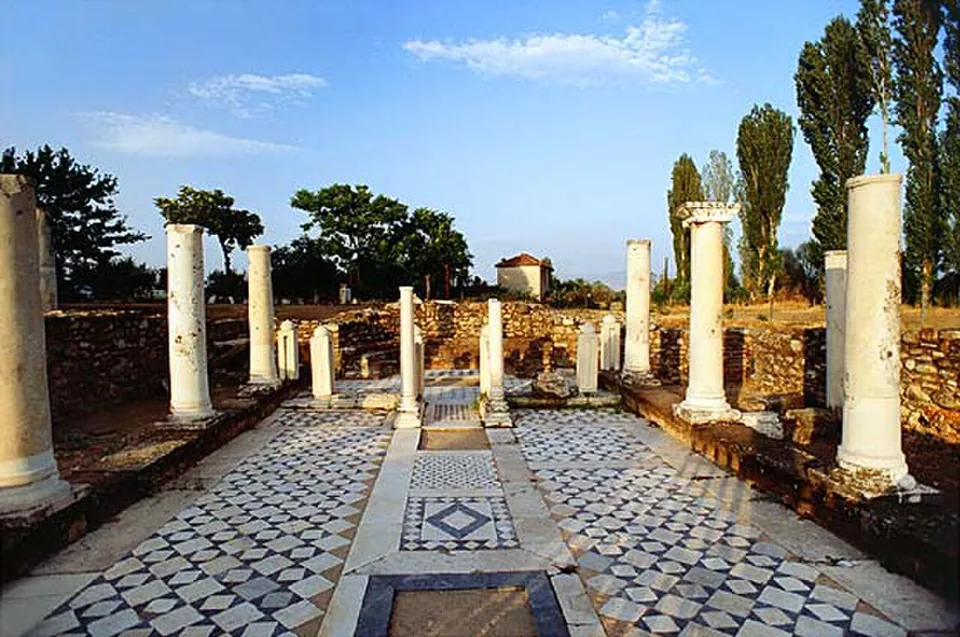
Photo: Revizionist at Macedonian Wikipedia · CC BY-SA 3.0 · Commons
47 km · city · Municipality of Bitola
Heraclea Lyncestis
The site covers 4 hectares, of which 1,300 m² are covered with mosaics.

Straight-line distances.
Sources
Every fact on this page comes from the records below, each used under the licence noted.
| Source | Licence |
|---|---|
| Pleiades 481900 | CC BY |
| Wikidata Q1456371 | CC0 |
| Vici.org 22770 | CC BY-SA (text), CC0 (metadata) |
| OpenStreetMap node/390757439 | ODbL |
| NI Institute for Protection of Monuments of Culture and Museum – Ohrid (the operator) — Antique Theater Ohrid | licence not recorded |
| NI Institute for Protection of Monuments of Culture and Museum – Ohrid (the operator) — Plaoshnik | licence not recorded |
| NI Institute for Protection of Monuments of Culture and Museum – Ohrid (the operator) — tickets | licence not recorded |
| Wikipedia (de) — Lychnidos | CC BY-SA 4.0 |
| Wikipedia (mk) — Лихнид | CC BY-SA 4.0 |
| Wikipedia (en) — Ancient Theatre of Ohrid | CC BY-SA 4.0 |
| Wikipedia (en) — Plaošnik | CC BY-SA 4.0 |
| Wikipedia (en) — Ohrid | CC BY-SA 4.0 |
| Wikidata — Ancient Theatre of Ohrid (Q3180446) | licence not recorded |