

What is there today
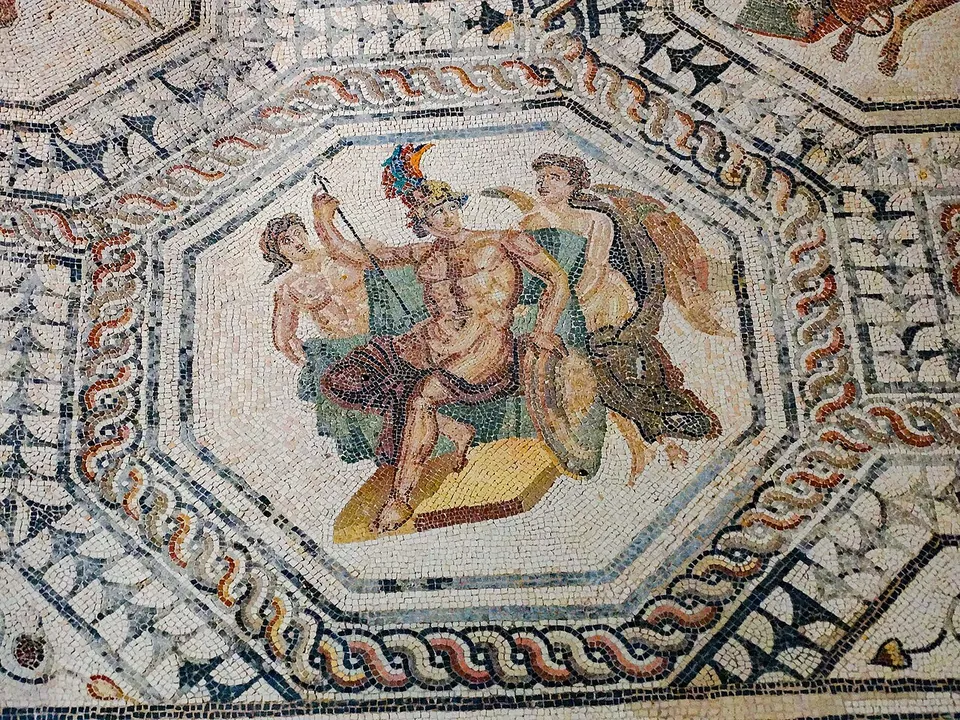
The mosaics are all there is to see: the operator says plainly that the nine floors, found in the 19th and 20th centuries, are the only remains visible today. They are kept in their original places under several pavilions and range from mythological scenes to geometric compositions. A reception pavilion has an exhibition with a model of the residence and a multimedia show, and one of the mosaic pavilions also holds three Roman milestones found in the area (the operator). Pleiades calls the mosaic pavements extensive and in situ.
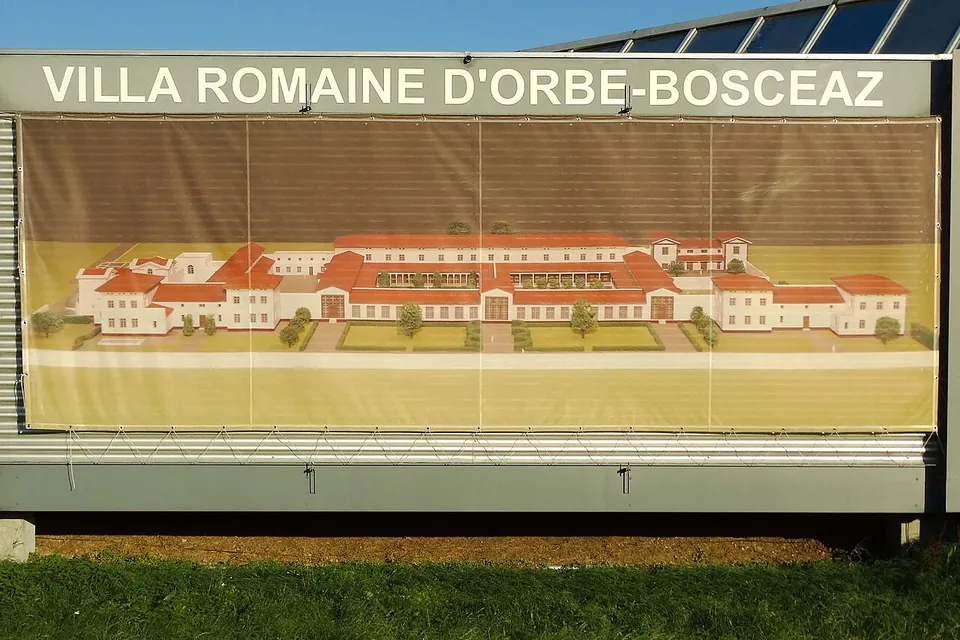
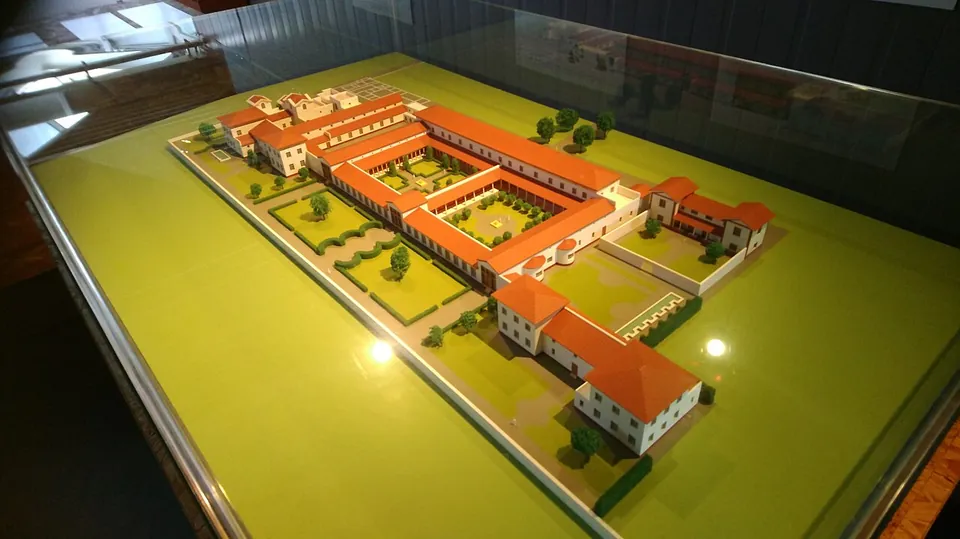
What the mosaics belonged to was very large. The operator describes a villa rustica built around 170 on an estate of 16 hectares, the largest known Roman country estate in Switzerland, with a residence of 230 by 90 m around five courtyards, the two main ones lined with colonnades, and private baths with heated pools. None of that stands; the model in the reception pavilion shows its probable appearance (Wikimedia Commons description of the model).
A mithraeum is recorded about 300 m south of the pavilions (Wikidata); nothing of it is on show.
Is it worth the trip?
Yes, for anyone who likes mosaics: the floors are the point of the visit, they are where the Romans laid them, and the operator allows about an hour for a visit on your own and an hour and a half with a guide. Do not come expecting walls or ruins, and check the season: it opens only on weekends in spring and autumn and from Wednesday to Sunday in summer, and not at all in winter without a booking.
Getting there
By car, leave the A9 at exit 3 (Orbe), take the first left at the “Mosaïques romaines” sign and cross the bridge over the motorway; parking in front of the reception pavilion is free. By public transport, take the train from Chavornay to Orbe and a PostBus (680, 681 or 682) to the Montchoisi stop, then walk about 20 minutes by the Route du Signal (the operator).
In 2026 the villa opens 10.00–18.00 on Saturdays and Sundays from 1 May to 30 June, from Wednesday to Sunday from 1 July to 4 October, and again on Saturdays and Sundays from 5 October to 1 November, plus Ascension (14–15 May), Whit Monday, 1 August and the Monday of the Federal Fast (21 September); other days only by booking. Entry is CHF 10 (about €10.70), CHF 8 for pensioners, apprentices, students and ages 12 to 18, CHF 25 for a family and CHF 15 for a single-parent family; under-twelves go free (pro-urba.ch, read 7 October 2026 — check before travelling).
Visiting details
- Opening hours
- 2026 season, 10.00–18.00: Saturdays and Sundays from 1 May to 30 June, Wednesday to Sunday from 1 July to 4 October, Saturdays and Sundays from 5 October to 1 November; also on Ascension (14–15 May), Whit Monday (25 May), 1 August and the Monday of the Federal Fast (21 September). Other days by booking only.
- Tickets
- CHF 10 (about €10.70); CHF 8 (about €8.55) for pensioners, apprentices, students and ages 12–18; family CHF 25, single-parent family CHF 15; free under 12.
- Parking
- Free car park in front of the reception pavilion (the operator).
Before you go
- Closed outside the season (after 1 November until May) except by prior booking.
- The nearest bus stop, Montchoisi, is about 20 minutes' walk away (the operator).
Hours and prices checked 7 October 2026 on the operator's own site. Confirm before travelling.
History
Pleiades records the site as a palatial Roman villa of the 1st and 2nd centuries AD, discovered in 1841, and the operator dates its construction to around 170. The mosaics came to light over the 19th and 20th centuries (the operator); the national inventory lists the villa with its mosaics as a cultural property of national significance (KGS 6366).
Nearby
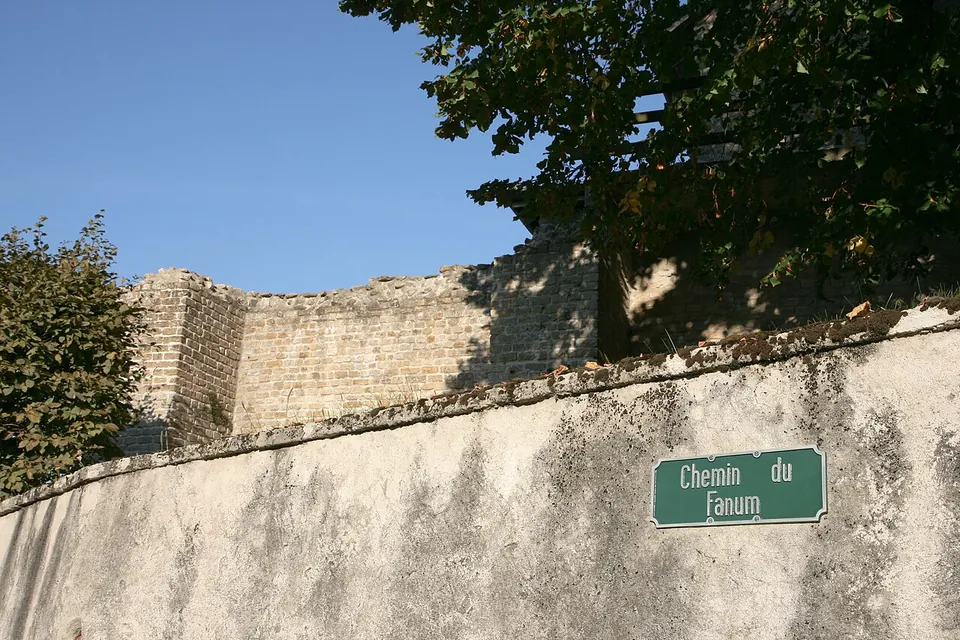
Photo: Olivier Anh · CC BY-SA 2.5 · Commons
10 km · temple · Jura-Nord vaudois District, Vaud
Gallo-Roman temple of Ursins
The Roman walls are the thing to see.
Photo: Odrade123 · CC BY-SA 3.0 · Commons
28 km · villa · Lavaux-Oron District, Vaud
Roman villa of Pully
The heart of the visit is a semicircular pavilion of the villa that has been uncovered and can be visited (Lausanne Tourisme).
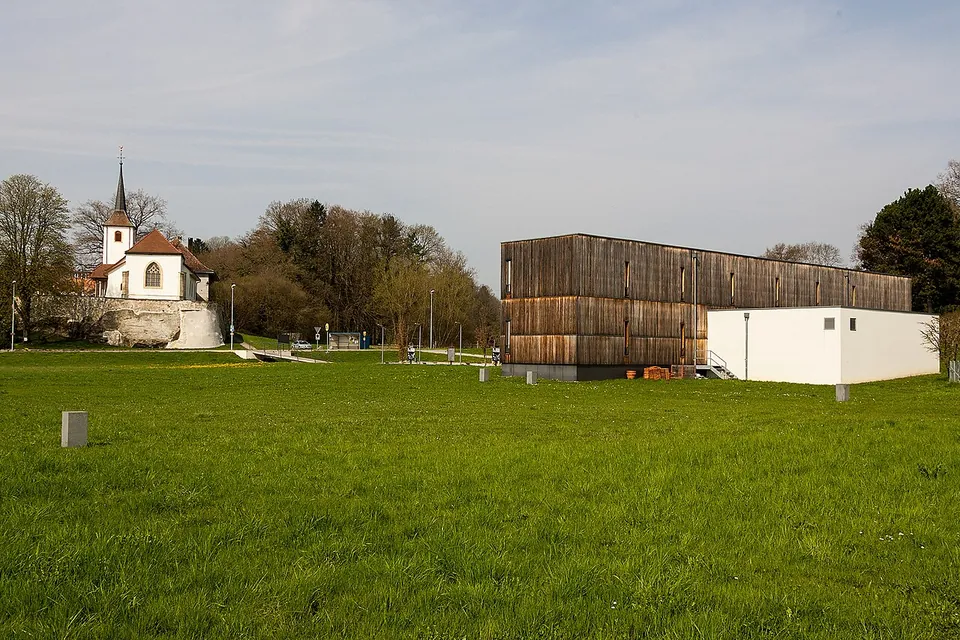
Photo: Roland Zumbuehl · CC BY-SA 4.0 · Commons
35 km · villa · Broye District, Fribourg
Roman villa of Vallon
The museum stands on the site of the villa and its L-shaped building follows the plan of the Roman one (fr.wikipedia).


Straight-line distances.
Sources
Every fact on this page comes from the records below, each used under the licence noted.
| Source | Licence |
|---|---|
| Pleiades 177598 | CC BY |
| Wikidata Q3355178 | CC0 |
| OpenStreetMap way/81645578 | ODbL |
| Wikidata — Mithraeum of Orbe-Boscéaz (Q140421929) | licence not recorded |
| Wikipedia (en) — Gallo-Roman villa of Orbe-Boscéaz | CC BY-SA 4.0 |
| Wikipedia (fr) — Villa gallo-romaine d'Orbe-Boscéaz | CC BY-SA 4.0 |
| KGS inventory 6366 — Boscéaz, villa gallo-romaine avec mosaïques (BABS) | licence not recorded |
| Pro Urba — the Roman villa of Boscéaz (the operator) | licence not recorded |
| Pro Urba — access, season and prices (the operator) | licence not recorded |