

What is there today
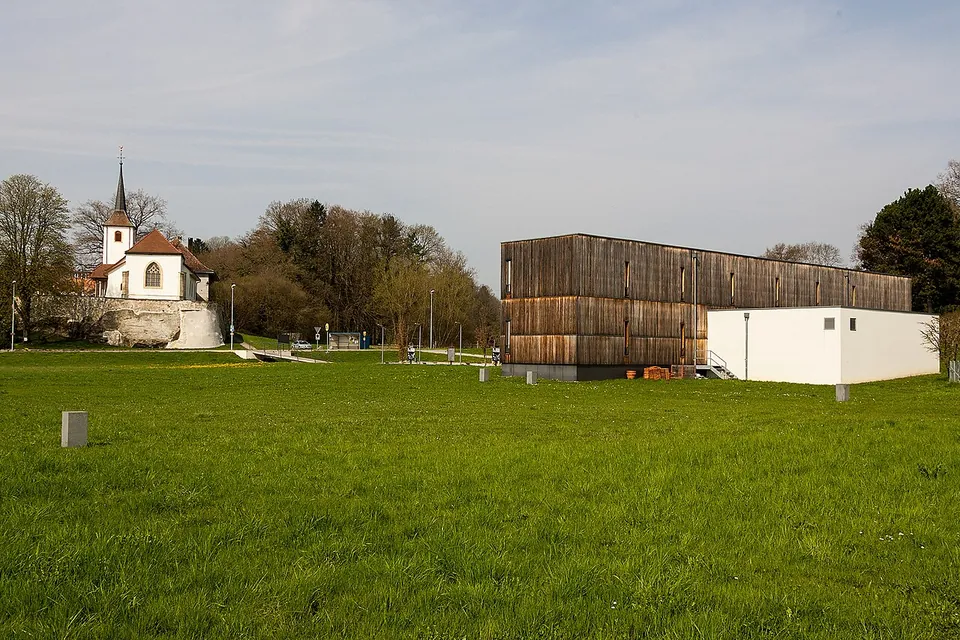
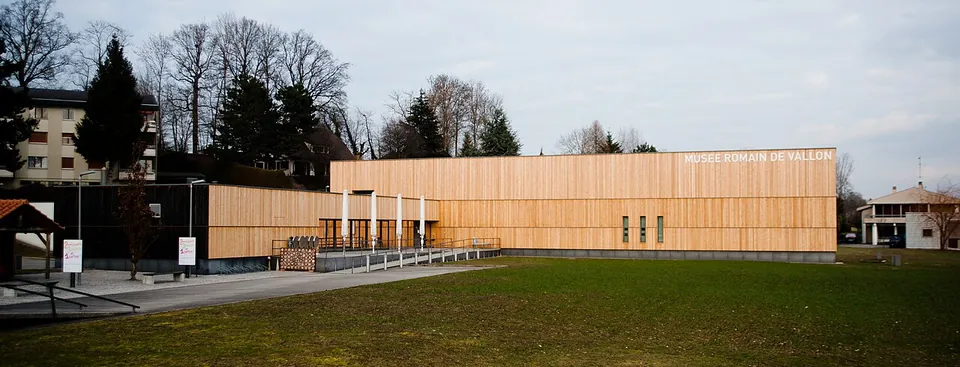
The museum stands on the site of the villa and its L-shaped building follows the plan of the Roman one (fr.wikipedia). Inside, the two mosaics of the late 2nd and early 3rd century AD are in situ: the hunting mosaic (venatio), 97 m², shows four hunting scenes in the amphitheatre (Swiss museums association), and the other is the Bacchus and Ariadne mosaic (the museum). The hunting mosaic’s ten large medallions show men provoking a brown bear with whips and cloths, hunters with javelins and axes facing a charging bull, a big hunting dog chasing a stag with sixteen points, and a lion obeying its master’s order towards a fleeing doe (the museum).
The museum also has a 1:50 model of the house as it was in the 3rd century, and a set of bronze statuettes from the household shrine, the lararium (the museum; Swiss museums association).
Is it worth the trip?
Yes, for the mosaics: two Roman floors in the place where they were laid, one of them the largest still preserved in Switzerland. It is open only in the afternoons from Wednesday to Sunday, so plan around that; Avenches, the capital of Roman Helvetia, is about 6 km away (fr.wikipedia), so the two fit into one day.
Getting there
The museum is at Carignan 6 in Vallon (the museum), about 5 km north of Payerne (fr.wikipedia). Free parking, in a time-limited disc zone, is at the foot of the Carignan church; by bus, the TPF stop “Vallon, Musée romain” is served from Domdidier station, Avenches and Estavayer-le-Lac, and is mapped about 110 m from the site point (the museum; OpenStreetMap). The museum and its toilets are accessible to people with reduced mobility (the museum).
It opens Wednesday to Sunday, 13.00–17.00, and also on Easter Monday and Whit Monday; it is closed on Mondays and Tuesdays, and visits at other times can be arranged. Entry is CHF 6 (about €6.40) from age 17 and CHF 4 per person for groups of ten or more; under-17s go free, and so do holders of the Swiss Museum Pass and some other cards (museevallon.ch, read 7 October 2026 — check before travelling).
Visiting details
- Opening hours
- Wednesday to Sunday 13.00–17.00, and on Easter Monday and Whit Monday; closed on Mondays and Tuesdays; other times by arrangement.
- Tickets
- CHF 6 (about €6.40) from age 17; CHF 4 (about €4.30) per person in groups of ten or more; free up to 16, and for holders of the Swiss Museum Pass and some other cards.
- Parking
- Free parking (time-limited disc zone) at the foot of the Carignan church (the museum).
Hours and prices checked 7 October 2026 on the operator's own site. Confirm before travelling.
History
Roman tile fragments and painted plaster first turned up in December 1970, when a water pipe was laid; trial trenches in 1981 and 1982 found several rooms with their floors, demolition layers and a Roman road, and in May and June 1985 the mosaic of a beast-fighter and a bear came to light. The site was protected a year later, and the museum opened in 2000 (fr.wikipedia). The known plan of the building is an L, 160 m long and 20 m wide: three wings fronted by a long portico of columns and arches that served some forty rooms, and to the east a hall with three aisles divided by four rows of pillars (fr.wikipedia). The national inventory lists the villa with its mosaics and collection as a cultural property of national significance (KGS 2339).
Nearby
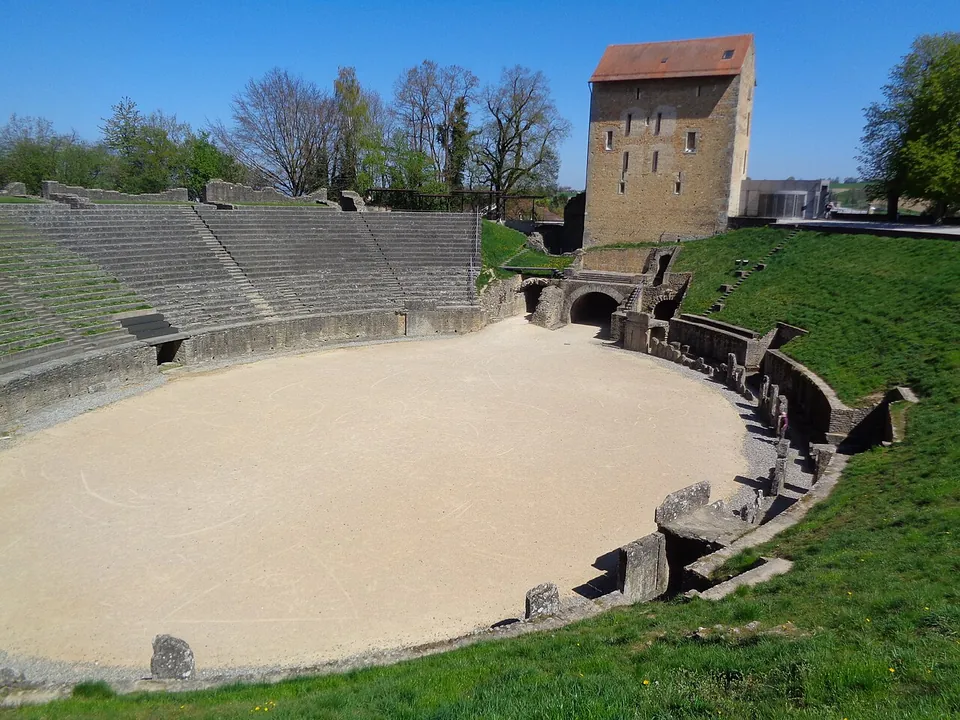
Photo: Nursangaion · CC BY-SA 4.0 · Commons
6 km · city · Broye-Vully District, Vaud
Aventicum
The ruins are not one enclosure but a set of monuments spread through the town and the fields beyond it.
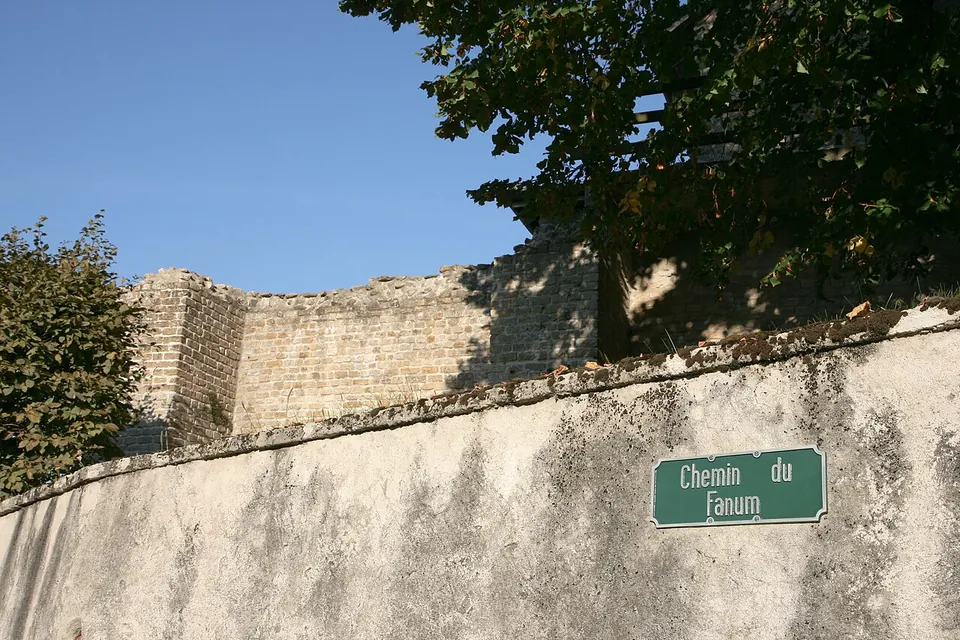
Photo: Olivier Anh · CC BY-SA 2.5 · Commons
27 km · temple · Jura-Nord vaudois District, Vaud
Gallo-Roman temple of Ursins
The Roman walls are the thing to see.
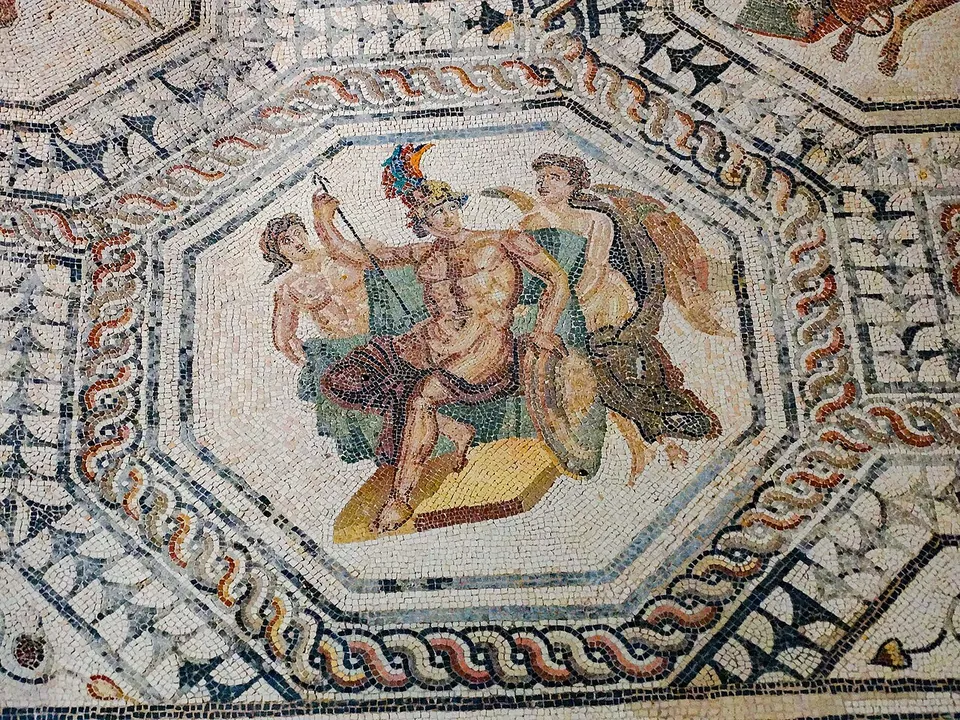
Photo: Leemburg-CH · CC BY-SA 4.0 · Commons
35 km · villa · Jura-Nord vaudois District, Vaud
Orbe-Boscéaz
The mosaics are all there is to see: the operator says plainly that the nine floors, found in the 19th and 20th centuries, are the only remains visible today.


Straight-line distances.
Sources
Every fact on this page comes from the records below, each used under the licence noted.
| Source | Licence |
|---|---|
| Wikidata Q29479263 | CC0 |
| OpenStreetMap way/246270285 | ODbL |
| Wikipedia (fr) — Musée romain de Vallon | CC BY-SA 4.0 |
| KGS inventory 2339 — Sur Dompierre, villa gallo-romaine avec mosaïques et collection (BABS) | licence not recorded |
| Musée romain de Vallon — information and contact (the operator) | licence not recorded |
| Musée romain de Vallon — the mosaics (the operator) | licence not recorded |
| Musée romain de Vallon — the villa (the operator) | licence not recorded |
| Swiss museums association — Musée romain de Vallon | licence not recorded |