

What is there today
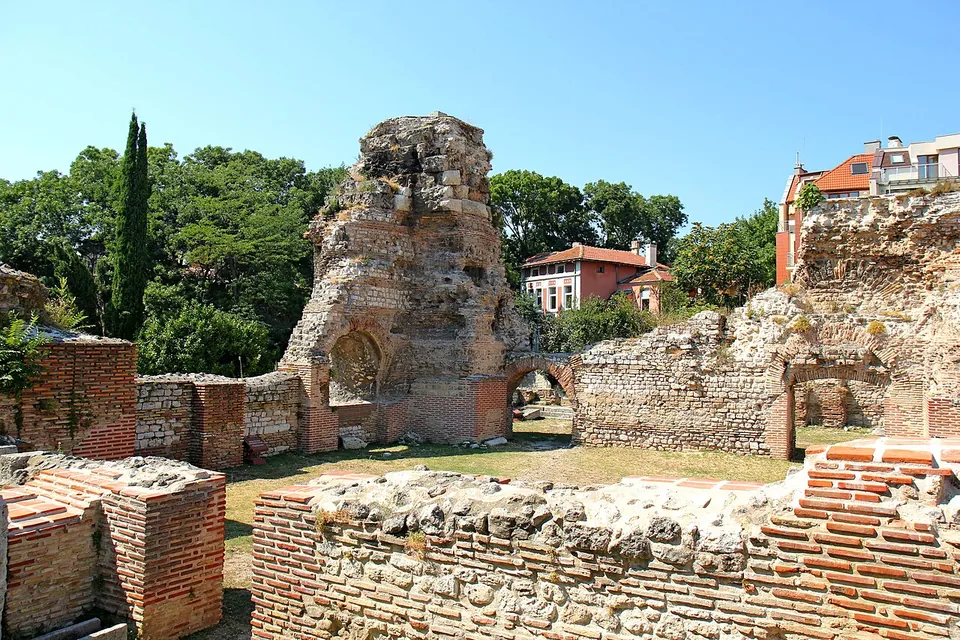
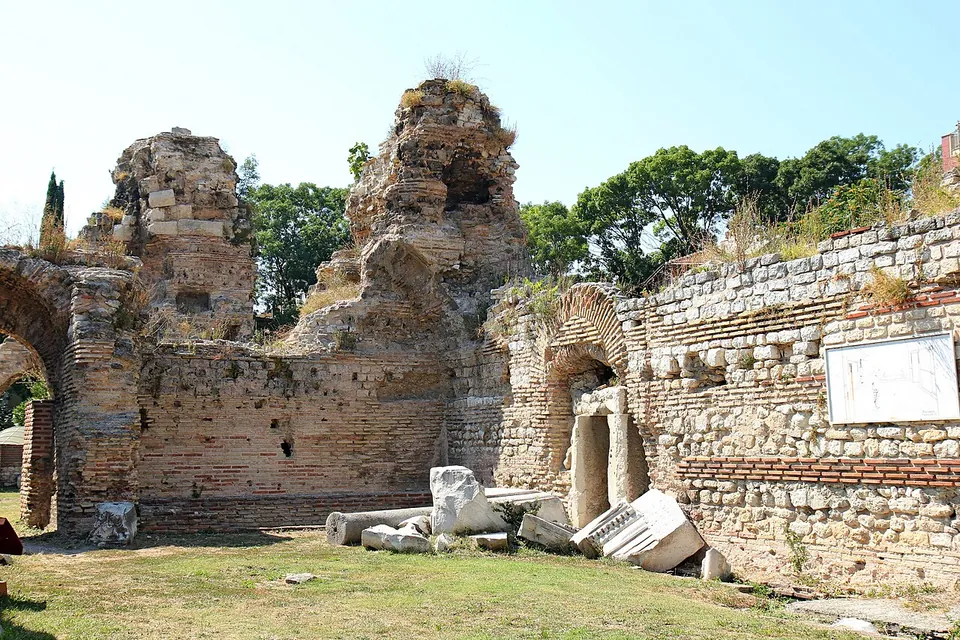
The large Roman baths lie in the south-east of the modern city, near the port. They were built at the end of the 2nd century or the start of the 3rd — coins of Septimius Severus found in the drains confirm the date — and covered more than 7,000 m² (bg.wikipedia; the museum). Their heating ran through double floors and channels that carried the warm air up through the building. Bathers passed through entrance halls into a great hall where, by bg.wikipedia’s account, the men of Odessos met to discuss public affairs (bg.wikipedia).
The excavations found the base of a statue of Claudius Aquila and statues of Heracles, Victory and Mercury, and inscriptions show a shrine of Asclepius and Hygieia, the gods of health, in the north-west part of the building. Later the ruins served as the citadel of Varna’s fortress, an Ottoman powder store and a prison; in summer they are used for open-air theatre and concerts today (bg.wikipedia).
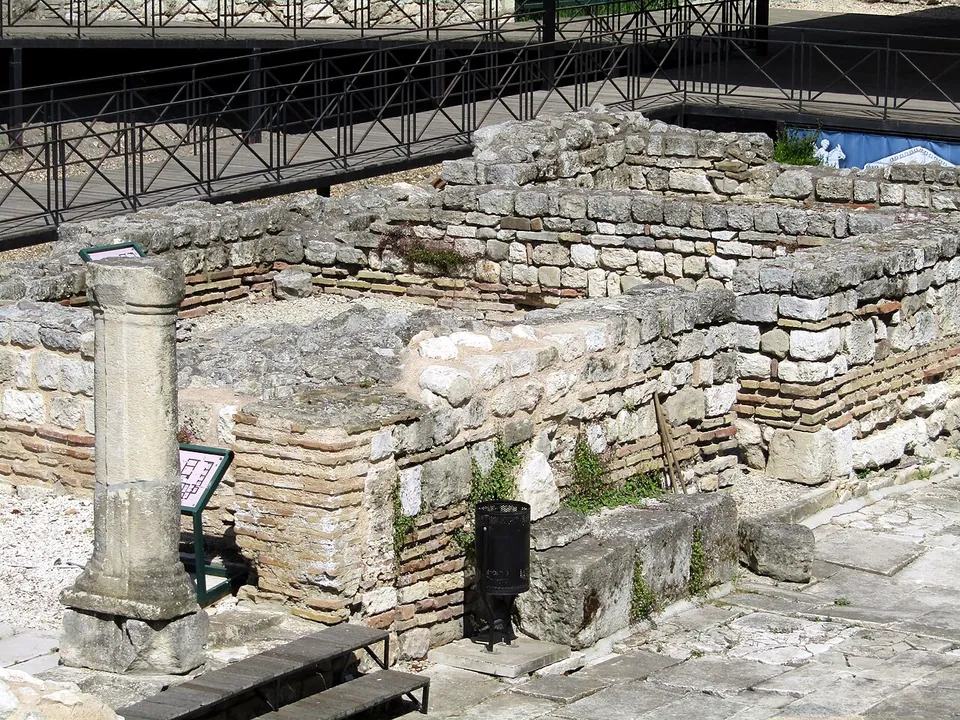
About 200 m to the south are the small Roman baths, one of the town’s several lesser bath houses (bg.wikipedia), a fenced national monument mapped as a visitor attraction (OpenStreetMap).
Is it worth the trip?
Yes. The large baths are among the best-preserved ancient buildings in Bulgaria (bg.wikipedia), and they have real height, in the middle of a seaside city, for a modest ticket. They are a ruin rather than a restored building, so the plan takes some reading, and the small baths are a quick look through a fence rather than a second visit.
Getting there
The large baths are on San Stefano Street in the south-east of central Varna, near the port (the museum; bg.wikipedia). Car parks are mapped about 60 m and 150 m away, and the Basseyna bus stops about 250 m away (OpenStreetMap).
From June to September they are open daily, 10.00 to 18.00; from October to May, 10.00 to 17.00, closed on Sundays and Mondays. A ticket is €4.00 for adults and €2.00 for pupils and students, free under 7, and it is sold only at the desk on site (the Regional Historical Museum, Varna, read 1 October 2026).
Visiting details
- Opening hours
- The Roman baths are open daily 10.00–18.00 from June to September, and 10.00–17.00 from October to May, when they close on Sundays and Mondays.
- Tickets
- Roman baths €4.00 for adults, €2.00 for pupils and students, free under 7. Tickets are sold only at the ticket desk on site.
- Parking
- Car parks are mapped about 60 m and 150 m from the baths (OSM way/952705237 and way/175402789); the Basseyna bus stops are about 250 m away (OpenStreetMap).
Before you go
- The museum sells tickets only at its own desks and warns against anyone offering them online (the museum).
Hours and prices checked 1 October 2026 on the operator's own site. Confirm before travelling.
History
Odessos was founded around 570 BC by colonists from Miletus, near an older Thracian settlement, and led the Pontic Pentapolis of Greek cities on this coast. When Rome reached the Balkans it sided with the kings of Pontus, Pharnaces I and later Mithridates VI, but it was taken in the end like the other Black Sea cities (bg.wikipedia). Published dates for its entry into the province of Moesia differ, from 15 BC to after AD 12. It kept some privileges and self-government, minted its own bronze coins from Domitian to Gordian III, and traded goods from the Marmara and the Aegean on to Marcianopolis, Abritus and Nicopolis ad Istrum (bg.wikipedia).
The large baths were in use until about the end of the 3rd century; the latest coins found are of Tacitus, from 275 (bg.wikipedia). Excavation in the city has also found a theatre, a gymnasium with a palaestra, temples and workshops for pottery and bronze (bg.wikipedia).
Nearby
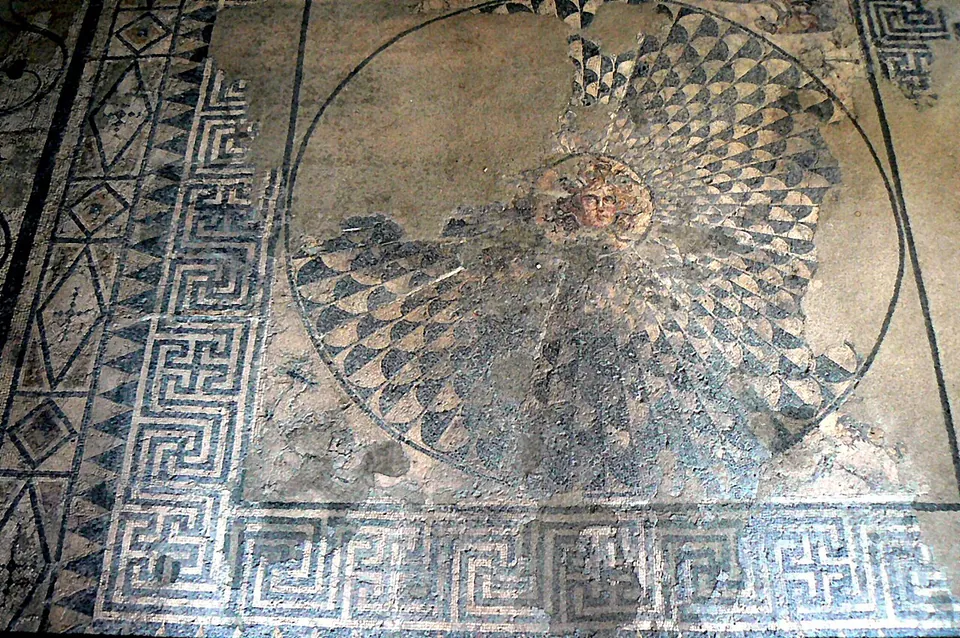
Photo: Vassia Atanassova - Spiritia · CC BY-SA 3.0 · Commons
27 km · city · Varna Province
Marcianopolis
The museum stands over the House of Antiope, a house of the late 3rd or early 4th century that filled a whole city block, with 21 rooms around a paved courtyard with a well (en.wikipedia; the municipality).
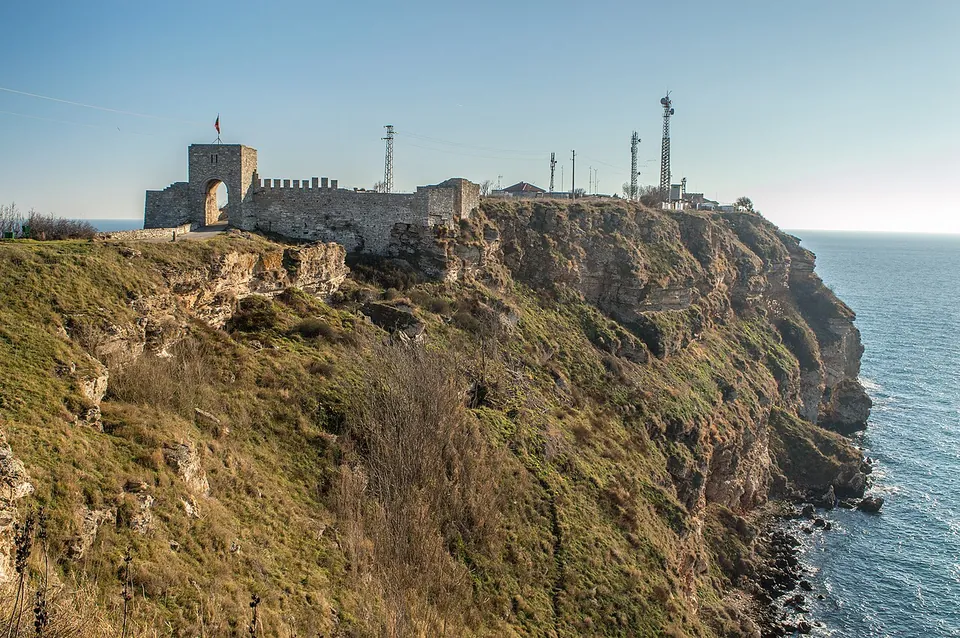
Photo: www.bdmundo.com · CC BY-SA 2.0 · Commons
48 km · fort · Dobrich Province
Kaliakra
A gate and stretches of fortress wall run across the headland, and inside them lie the remains of a water supply, baths, churches and the residence of the 14th-century rulers (bg.wikipedia; OpenStreetMap).


Straight-line distances.
Sources
Every fact on this page comes from the records below, each used under the licence noted.
| Source | Licence |
|---|---|
| Pleiades 216904 | CC BY |
| Wikidata Q11796095 | CC0 |
| Pleiades — Roman Thermae in Varna | licence not recorded |
| Wikidata — Roman Thermae in Varna (Q12292389) | licence not recorded |
| Wikidata — Small Roman thermae (Q52555115) | licence not recorded |
| Wikipedia (bg) — Одесос | CC BY-SA 4.0 |
| Wikipedia (bg) — Римски терми (Варна) | CC BY-SA 4.0 |
| Wikipedia (en) — Roman Thermae (Varna) | CC BY-SA 4.0 |
| Regional Historical Museum, Varna — Roman Thermae | licence not recorded |
| Regional Historical Museum, Varna — prices and tickets | licence not recorded |