


Photo: Asurnipal · CC BY-SA 4.0 · Commons

site · Kos
Asclepeion of Kos
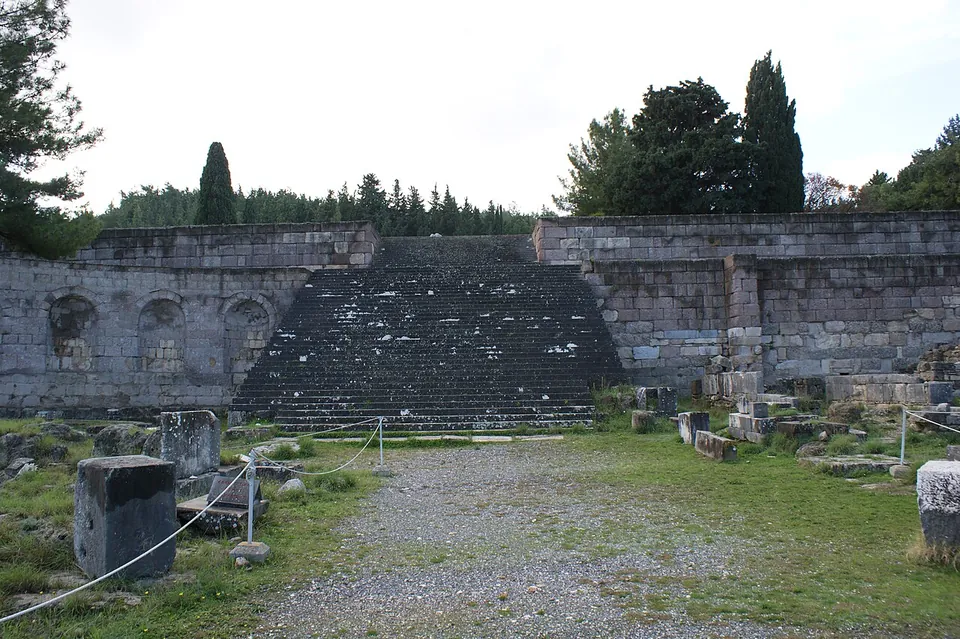
The sanctuary is laid out on three terraces joined by staircases (the Ministry's leaflet; the operator).
Ticketed
Kos, Κως
city · Kos, Greece
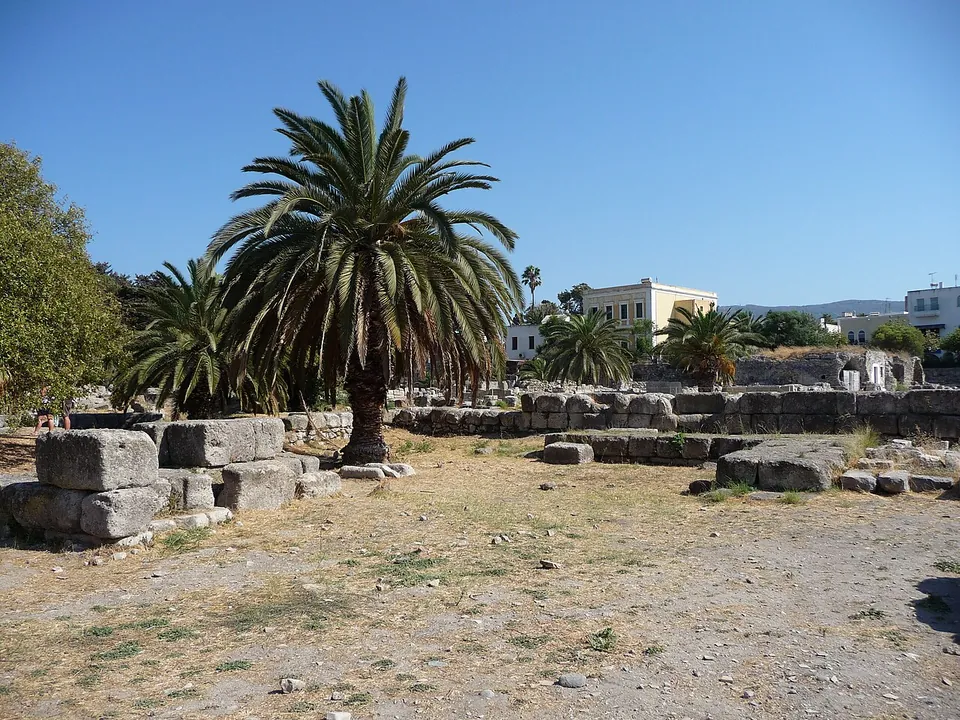
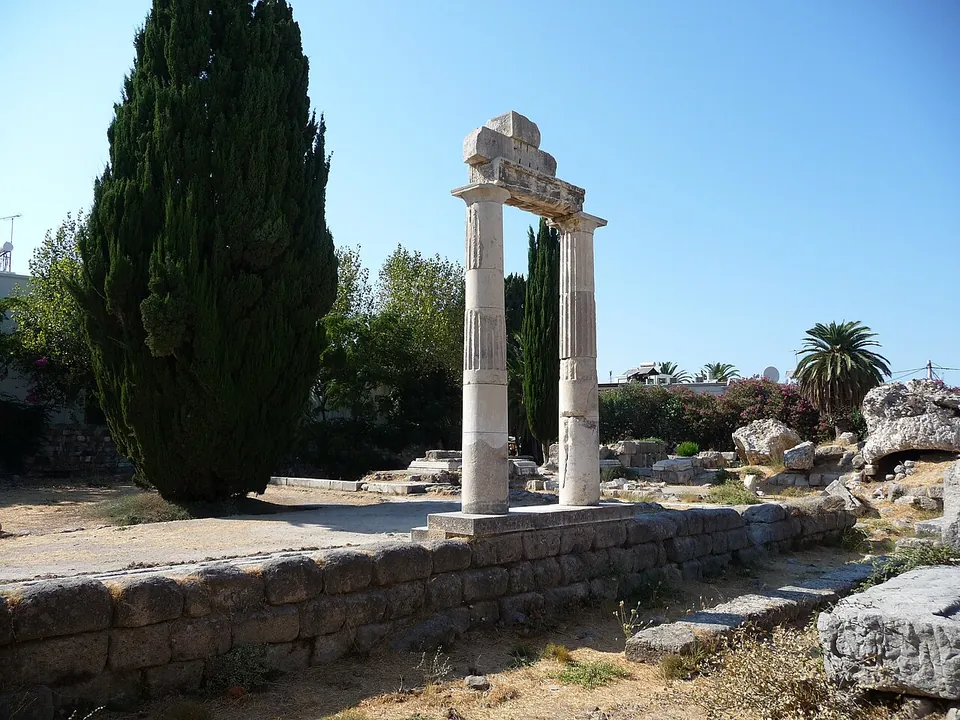
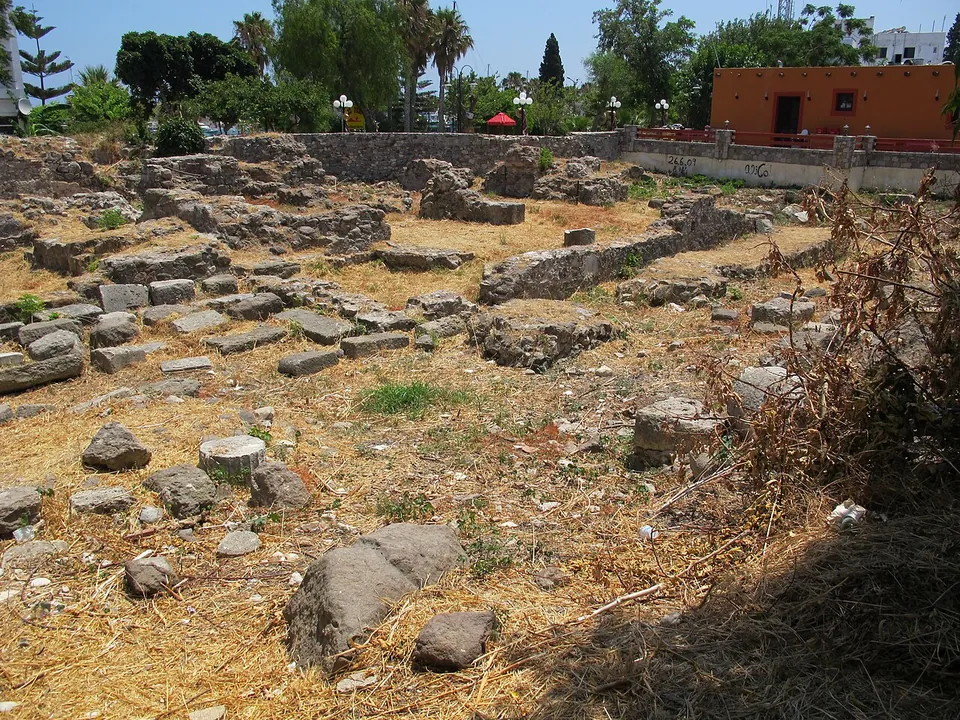
2 places to see, the best preserved and best known first.
Photo: Asurnipal · CC BY-SA 4.0 · Commons
site · Kos
The sanctuary is laid out on three terraces joined by staircases (the Ministry's leaflet; the operator).
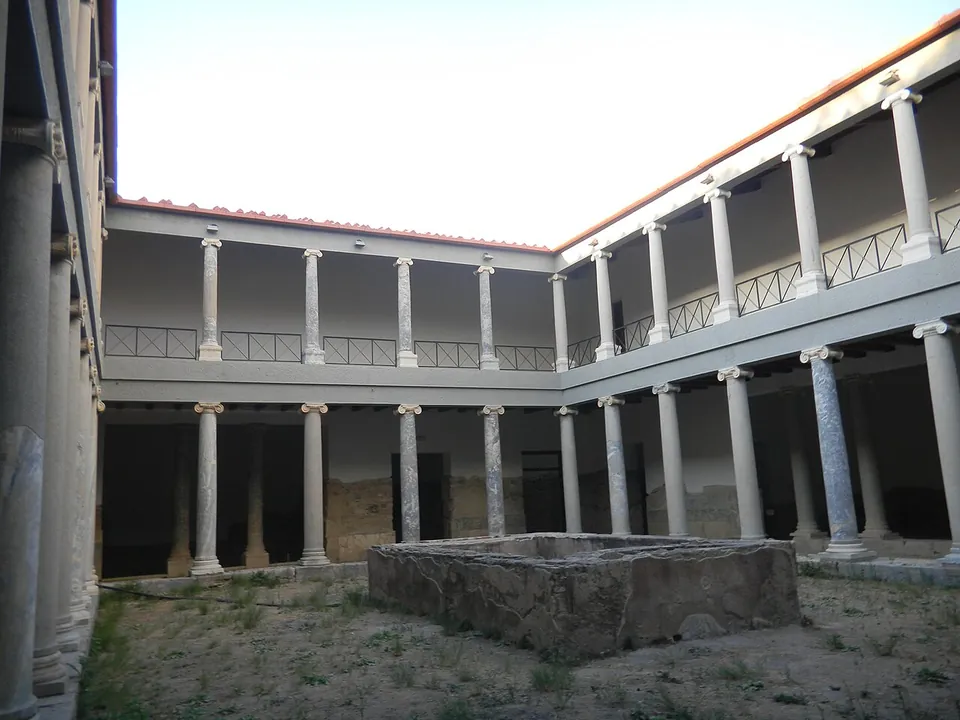
Photo: Elisa Triolo · CC BY-SA 2.0 · Commons
villa · Kos
The rebuilt house covers about 1,800 m² within an excavated area of some 6,000 m² (de.wikipedia).
Cos, today the town of Kos, is the ancient city of the island of Kos, whose remains lie open in the middle of the modern town: the great agora, a restored Roman odeon, the ancient main street in the western excavations and a rebuilt Roman house, the Casa Romana (en.wikipedia; the Ministry; de.wikipedia; the operator). The sanctuary of Asklepios lies 3.4 km outside the town.
The stops each have their own page:
The Archaeological Museum on Eleftherias Square shows sculpture and mosaics from the agora, the western site, the odeon and the Casa Romana, among them a mosaic of Asclepius arriving on the island (the operator).
Yes, if you are on Kos: the Roman town can be walked in the middle of the modern one, much of it free, and the Casa Romana and the museum are a few minutes apart; the Asklepieion lies 3.4 km out of town (en.wikipedia; the operator; the Ministry).
The agora is in the centre of the town by the Archaeological Museum on Eleftherias Square, 5 minutes on foot from the port; the Casa Romana is on Grigoriou E’ Avenue, 10 minutes from the port (the operator). KTEL buses stop about 200 m from the agora (OpenStreetMap). For the summer of 2026 the Ministry lists the odeon open daily except Tuesdays, 08.30–15.30, with free entry (read 10 October 2026).
Kos was friendly to Rome, following its neighbour Rhodes, and was made a free city in AD 53. Herod of Judaea endowed the post of the gymnasiarch here, and in the 1st century AD the island built a public library, among whose donors was Gaius Stertinius Xenophon, a doctor from Kos who served the emperors Tiberius, Claudius and Nero in Rome. The agora’s building was destroyed by an earthquake in 469. The earthquake of 1933 destroyed much of the old town, and the Italian authorities then running the island turned the old quarters into an archaeological park (en.wikipedia).
Every fact on this page comes from the records below, each used under the licence noted.
| Source | Licence |
|---|---|
| Pleiades 599728 | CC BY |
| Wikidata Q65238016 | CC0 |
| OpenStreetMap way/37133706 | ODbL |
| Wikipedia (en) — Kos | CC BY-SA 4.0 |
| Ministry of Culture and Sports (Odysseus) — Roman Odeion of Kos | licence not recorded |
| Ministry of Culture and Sports (Odysseus) — Roman Odeion of Kos, information | licence not recorded |
| Hellenic Heritage (H.O.C.R.E.D., for the Ministry of Culture) — Archaeological Museum of Kos | licence not recorded |
| Hellenic Heritage (H.O.C.R.E.D., for the Ministry of Culture) — Roman Villa (Casa Romana), Kos | licence not recorded |
| Hellenic Heritage (H.O.C.R.E.D., for the Ministry of Culture) — Asclepieion, Kos | licence not recorded |
| Wikipedia (de) — Casa Romana | CC BY-SA 4.0 |
