

Philippi was a Roman colony in eastern Macedonia, settled with veterans after the Battle of Philippi in 42 BC, on the Roman road called the Via Egnatia. Its forum, its theatre turned arena, its walls and the great churches of its Christian centuries still stand, and in 2016 it joined UNESCO’s World Heritage List for its Roman architecture and its place in early Christianity (en.wikipedia; the operator). Here, by tradition, the apostle Paul founded the first church in Europe (the operator).
What is there today
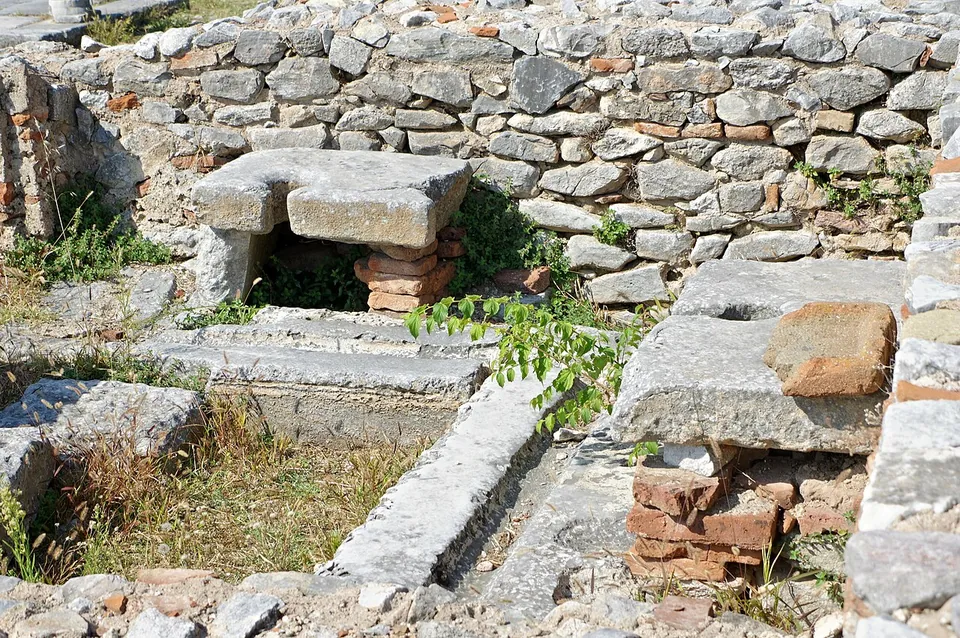
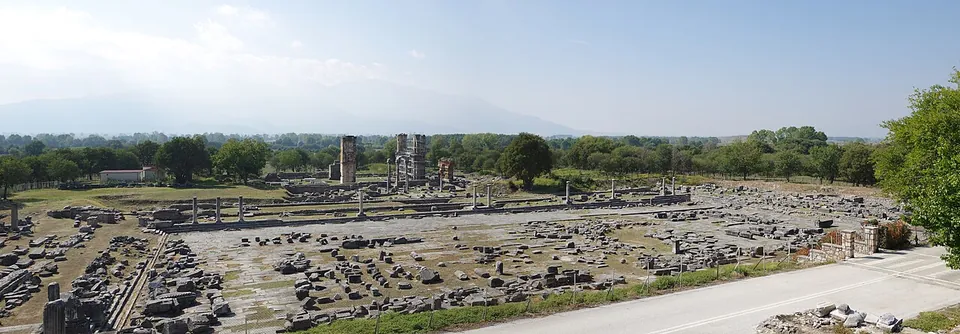
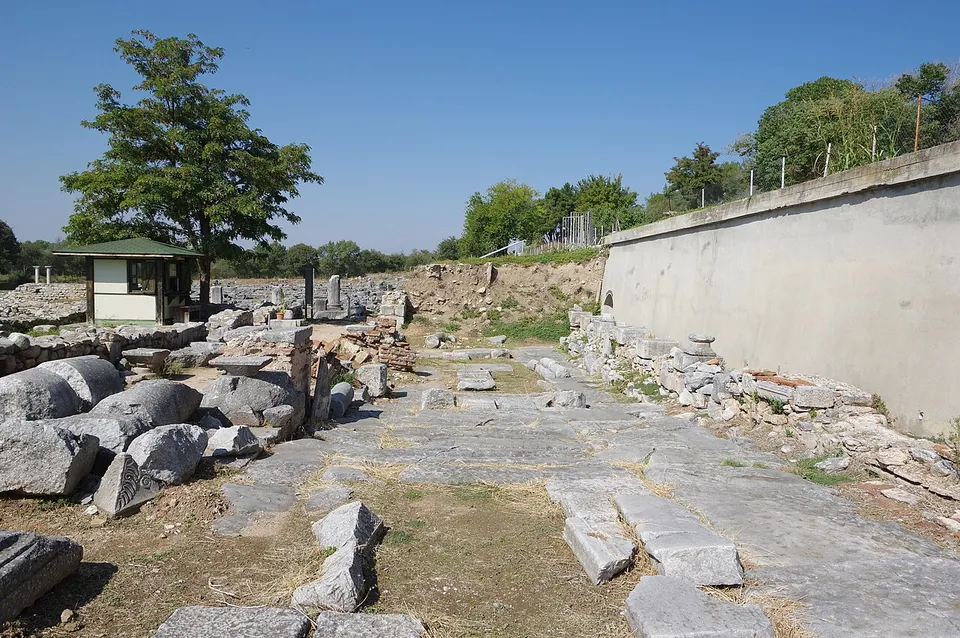
The forum was laid out on two terraces on either side of the main road, the Via Egnatia, and built in several phases between the emperors Claudius (41–54) and Antoninus Pius (138–161). The colony kept its Macedonian walls, and its plan changed only where the forum went in, a little east of the Greek agora. Latin inscriptions in abundance show its wealth (en.wikipedia). Around it lie houses, a gymnasium and a market hall (de.wikipedia), and a Roman latrine with its stone seats still in place (the photograph).
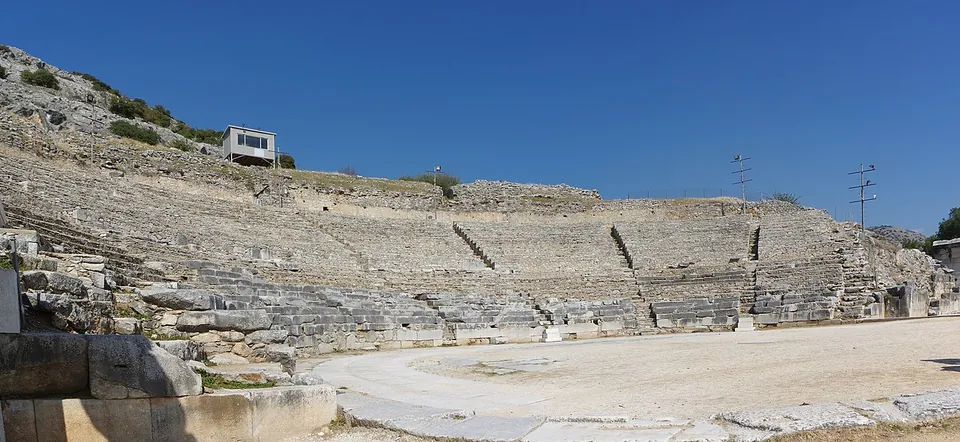
The theatre, at the foot of the acropolis and bounded on the east by the city wall, was first built under Philip II soon after 356 BC (Pleiades; de.wikipedia). Rome enlarged it for its games and turned it into an arena for gladiatorial fights, and in the early Byzantine period it became workshops (the operator; en.wikipedia). It is used again for the Philippi Festival (de.wikipedia).
The churches are the other great sight. Seven were built between the mid-4th and the end of the 6th century, some rivalling those of Thessalonica and Constantinople in size and decoration. The first, the Basilica of Paul, was a small building of about 343; at the end of the 5th century a cathedral built round an octagonal church took its place, and Basilica B is linked by its plan and decoration to Hagia Sophia and Saint Irene in Constantinople (en.wikipedia).
Is it worth the trip?
Yes. UNESCO listed it for its exceptional Roman architecture and for a plan that is a smaller reflection of Rome itself (en.wikipedia), and the operator calls it the most important archaeological site in Eastern Macedonia, with its walls and acropolis, the Roman forum and the early Christian basilicas still standing. It is 25 minutes from Kavala, and a ticket is €10 (the operator).
Getting there
The site is at Krinides, 5 minutes by car from the village, 20 minutes on foot, and 25 minutes from both Kavala and Drama. Intercity (KTEL) buses between Kavala and Drama stop at “Krinides – Ancient Theatre” or, in the other direction, at “Lydia” (the operator). A free car park for visitors is mapped about 300 m away (OpenStreetMap).
It opens daily: 08.00–18.00 in April and May, 08.00–20.00 from June to August, closing earlier through September and October (18.00 by the second half of October), and 08.00–15.30 from November to March. Last entry is 20 minutes before closing; it is shut on 1 January, 25 March, 1 May, Easter Sunday and 25–26 December. A ticket is €10, reduced €5, and entry is free on 6 March, 18 April, 18 May, the last weekend of September, 28 October, and on the first and third Sunday of each month from November to March (hh.gr, read 9 October 2026 — check before travelling). There is a shop, toilets and parking (the operator).
Visiting details
- Opening hours
- Daily, 08.00–18.00 in April and May, 08.00–20.00 from 1 June to 31 August, then closing earlier through the autumn (19.30 in early September, 18.00 by late October); 08.00–15.30 from 1 November to 31 March. Last entry 20 minutes before closing. Closed 1 January, 25 March, 1 May, Easter Sunday and 25–26 December.
- Tickets
- €10; reduced €5. Free on 6 March, 18 April, 18 May, the last weekend of September and 28 October, and on the first and third Sunday of each month from November to March.
- Parking
- A free car park for visitors is mapped about 300 m from the point (OSM way/509625602, fee=no); intercity buses between Kavala and Drama stop at "Krinides – Ancient Theatre" (the operator).
Hours and prices checked 9 October 2026 on the operator's own site. Confirm before travelling.
History
Settlers from Thasos founded Krenides here around 360 BC; in 356 BC Philip II of Macedon took it and renamed it after himself, to control the gold mines nearby and the road between Amphipolis and Neapolis (en.wikipedia; the operator).
In October 42 BC Mark Antony and Octavian defeated Brutus and Cassius, Caesar’s assassins, on the plain west of the city. Veterans were settled here and the city refounded as a colony, Colonia Victrix Philippensium; Octavian added more settlers, and after he took the title Augustus in 27 BC it became Colonia Augusta Iulia Philippensis. It was a “miniature Rome”, governed under Roman municipal law by two officers, the duumviri, appointed from Rome, and its land was divided among the colonists (en.wikipedia).
Paul came here around AD 49 or 50 and baptised Lydia, a seller of purple cloth; his letter to the Philippians dates from around 61–62 (en.wikipedia). The 5th and 6th centuries were prosperous, and the walls were rebuilt; in 473 Ostrogoths besieged the city without taking it. Slavic invasions at the end of the 6th century and probably the plague of 547 weakened it, and an earthquake around 619 almost destroyed it (en.wikipedia). French archaeologists excavated the forum, theatre, basilicas and walls from 1914 to 1937, and Greek archaeologists continued from 1958 (en.wikipedia).
More photographs

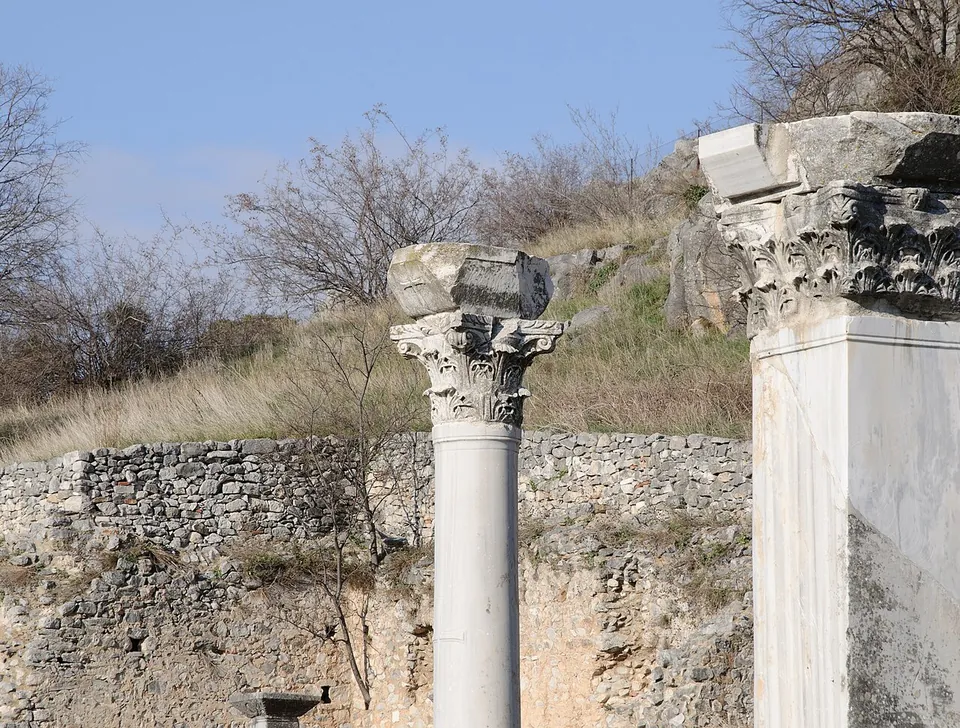

Nearby
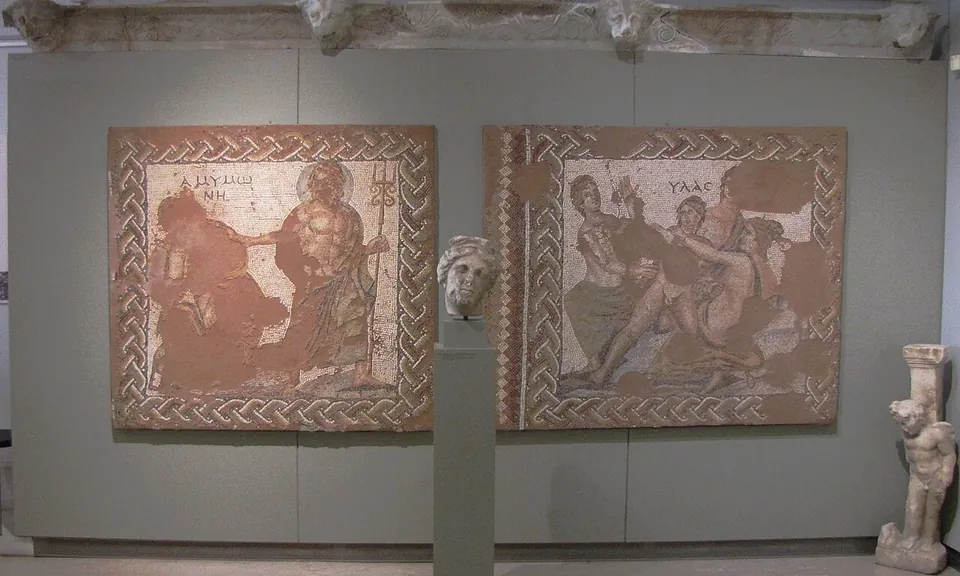
Photo: Juergen Weidner · CC BY-SA 4.0 · Commons
43 km · city · Serres
Amphipolis
The Archaeological Park takes in the city wall, parts of the acropolis, houses, tombs and monuments of the Hellenistic and Roman period, and the museum beside it shows the finds, among them those from the Early Christian basilicas (the national tourism organisation).
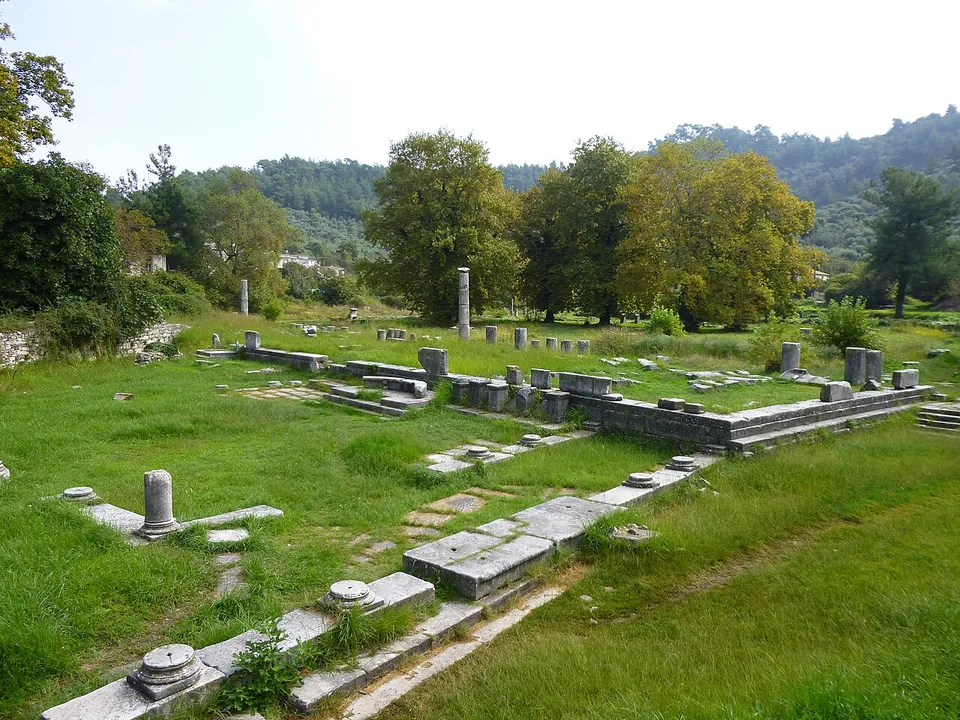
Photo: Rosa-Maria Rinkl · CC BY-SA 4.0 · Commons
44 km · site · Thasos
Thasos
The agora, in the middle of the town, was laid out in the 4th century BC and took on the form still visible today then; under Augustus a monument to the emperor and his family, Lucius Caesar above all, was set up in its centre.


Straight-line distances.
Sources
Every fact on this page comes from the records below, each used under the licence noted.
| Source | Licence |
|---|---|
| Pleiades 501482 | CC BY |
| Wikidata Q379652 | CC0 |
| OpenStreetMap way/245445583 | ODbL |
| Hellenic Heritage (H.O.C.R.E.D., for the Ministry of Culture) — Philippi, hours and tickets | licence not recorded |
| Wikipedia (en) — Philippi | CC BY-SA 4.0 |
| Wikipedia (de) — Philippi | CC BY-SA 4.0 |
| Wikipedia (en) — Macedonia (Roman province) | CC BY-SA 4.0 |