What is there today
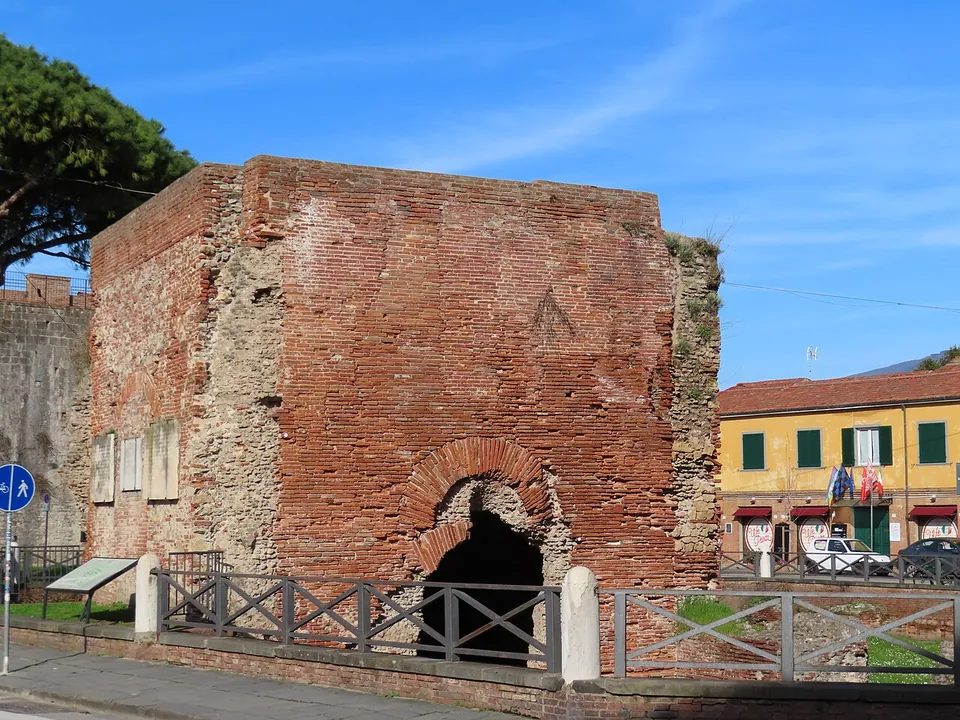
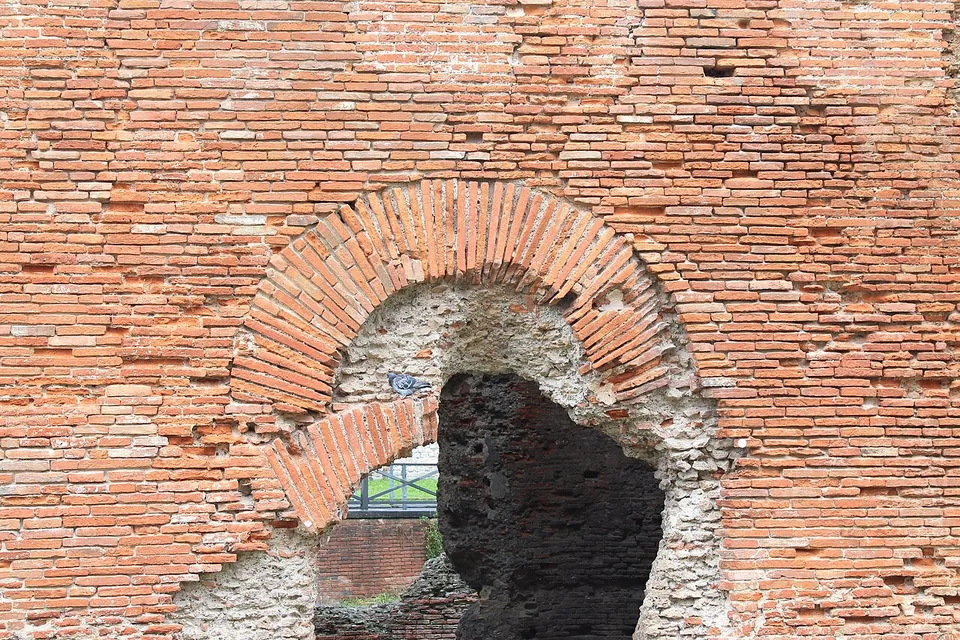
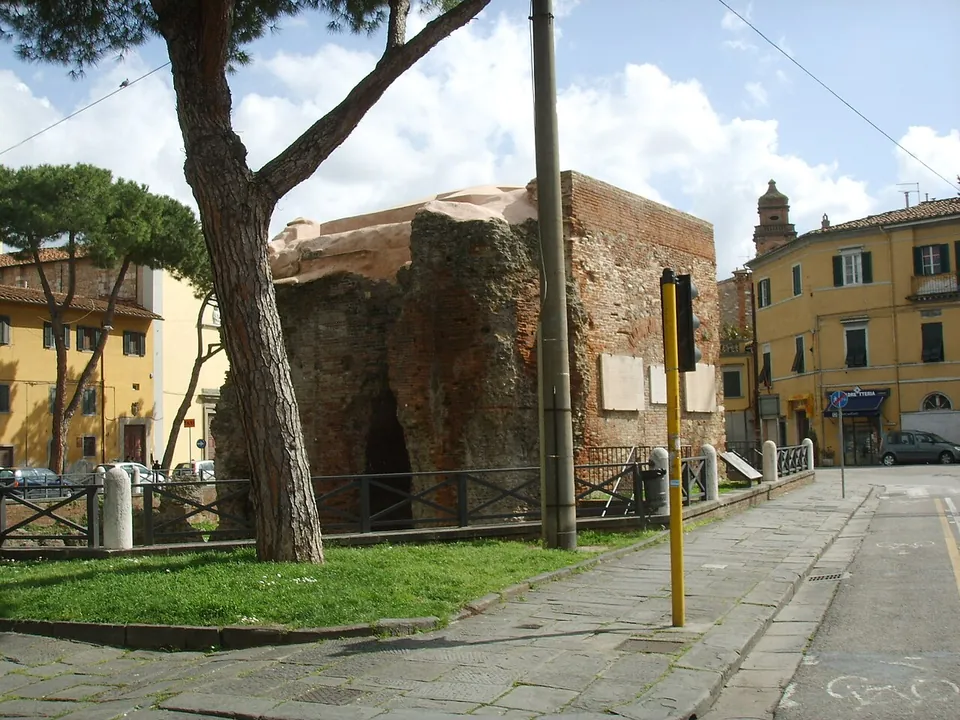
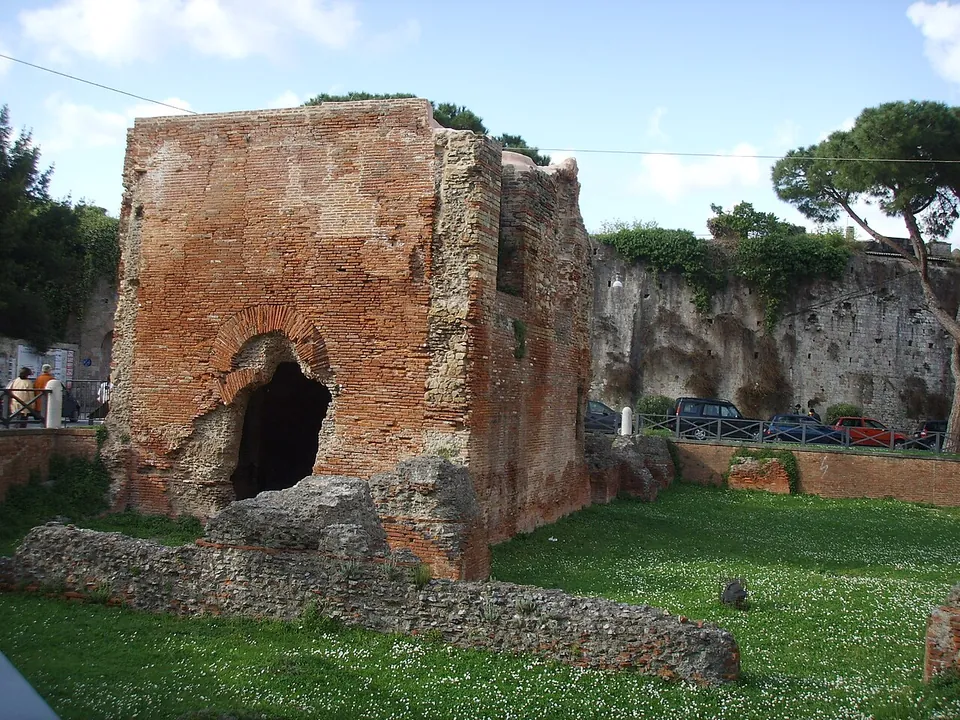
The piece that stands is the laconicum, the room for hot-air bathing: square on the outside and octagonal inside, it keeps its four brick outer walls (Comune di Pisa). Its small domed roof, pierced with openings, has been partly restored (it.wikipedia). Around it are the remains of walls from the exercise ground and the changing room, and two walls of the tepidarium, the warm room (Comune di Pisa; it.wikipedia). The remains lie below today’s street level in a railed enclosure on Largo del Parlascio (it.wikipedia; Comune di Pisa), and you look at them through the railings from the pavement beside it.
Is it worth the trip?
Not on its own. This is one brick room and some low walls in a fenced plot, and ten minutes is enough. But it is a short walk from the Piazza del Duomo (it.wikipedia) and costs nothing to look at, so if you are in Pisa for the Leaning Tower it is an easy add-on, and the only chance in the city to see a Roman building still standing. The Porta a Lucca and the city walls, with the Parlascio bastion, are right beside it (Comune di Pisa).
Getting there
The baths are at Largo Parlascio 14, next to the Porta a Lucca (Comune di Pisa). Two bus stops are mapped within about 100 m, Parlascio and Bagni di Nerone; the nearest mapped car parks are on Piazza Giordano da Rivalto, about 110 m away, and Piazza Santa Caterina, about 190 m away (OpenStreetMap).
The Comune di Pisa’s tourism page, read on 21 October 2026, gives no opening hours or admission for the enclosure itself, so what you can count on is the view through the railings from the street, which is free.
Visiting details
- Tickets
- Free
- Parking
- Piazza Giordano da Rivalto, about 110 m away, is the nearest mapped car park, with Piazza Santa Caterina about 190 m away (OpenStreetMap).
Before you go
- The ruins stand in a railed enclosure and are seen from the street. The Comune di Pisa publishes no opening hours or admission for the enclosure itself.
History
The name is wrong. The baths were built in the last twenty years of the first century AD, some two decades after Nero’s death (Comune di Pisa); the masonry, alternating courses of brick and local stone, suggests the reign of Domitian (it.wikipedia). The label has been traced to a medieval belief that the ruins belonged to a palace of Nero (it.wikipedia), and the Comune di Pisa connects it to the legend of St Torpé, a Pisan said to have served at Nero’s court and to have been beheaded in AD 68.
In the second century the baths were rebuilt at the expense of Lucius Venuleius Apronianus Priscus, patron of the Roman colony of Pisa (Pleiades; it.wikipedia); an inscription from the rebuilding, now in the Museo Nazionale di San Matteo, names his family (it.wikipedia). Water came from the nearby river Auser and by the Roman aqueduct of Caldaccoli, which began near San Giuliano Terme and is still partly visible there (it.wikipedia; Comune di Pisa). The marble and sculpture found on the site suggest a building of some show (it.wikipedia).
The ruins were brought to light and restored in the 16th and 17th centuries on the orders of Cosimo III, while from the 17th century the plot around them was levelled and divided into vegetable gardens. They were excavated from 1881 by Clemente Lupi, fenced in 1938 once surrounding houses had been pulled down, and restored in several campaigns between 1943 and 1949; the covering dome was replaced in 2007 after weather damage. Excavation in the summer of 2017, between the baths and the city walls, found further Roman walls (it.wikipedia).
More photographs
Nearby
47 km · villa · Tuscany
Archaeological site of San Vincenzino
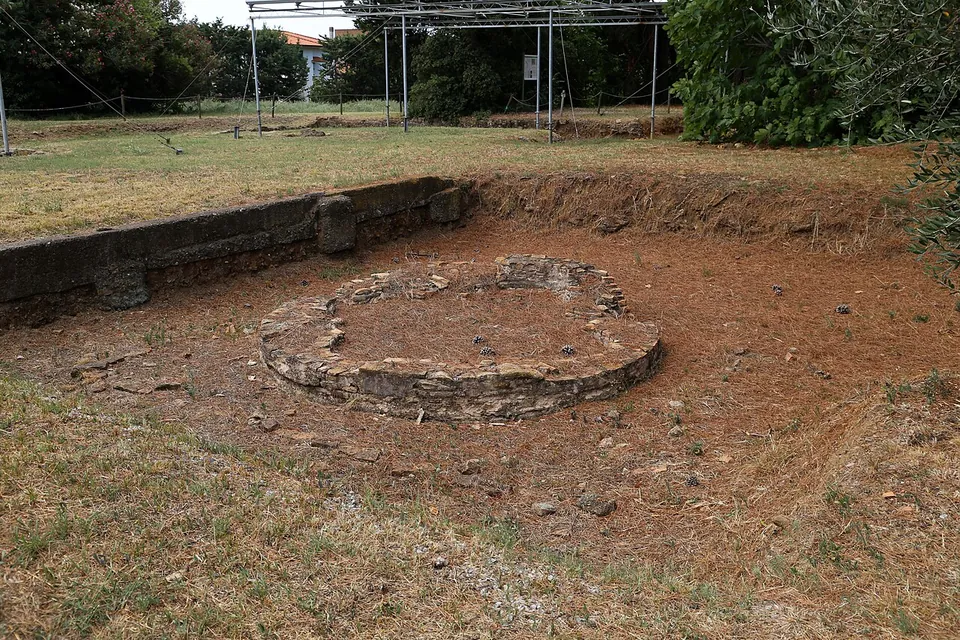
The villa survives as low walls and floor levels, partly in a shaded park among tall trees and partly under metal shelters over the excavations.
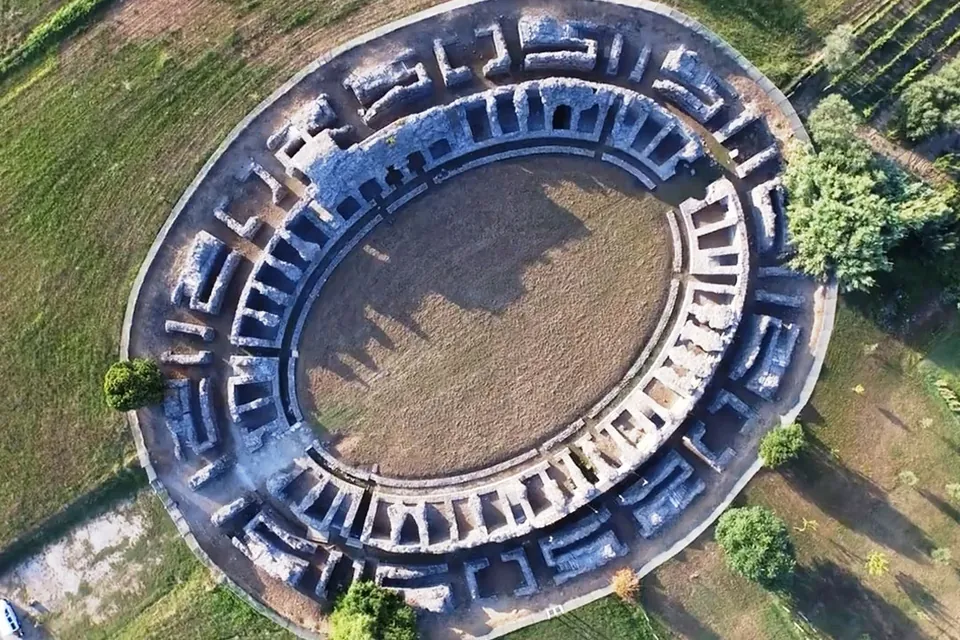
Photo: Roccella~frwiki · CC BY-SA 4.0 · Commons
49 km · city · Liguria
Luna
The archaeological area covers almost the whole of the Roman town, and the operator suggests allowing about two hours (the operator).


Straight-line distances.
Sources
Every fact on this page comes from the records below, each used under the licence noted.
| Source | Licence |
|---|---|
| Pleiades 483627781 | CC BY |
| Wikidata Q3632901 | CC0 |
| Vici.org 19293 | CC BY-SA (text), CC0 (metadata) |
| OpenStreetMap way/184955974 | ODbL |
| Comune di Pisa, Turismo — Bagni di Nerone (Baths of Nero) | licence not recorded |
| Wikipedia (it) — Bagni di Nerone | CC BY-SA 4.0 |
| Wikipedia (en) — Baths of Nero (Pisa) | CC BY-SA 4.0 |