

What is there today
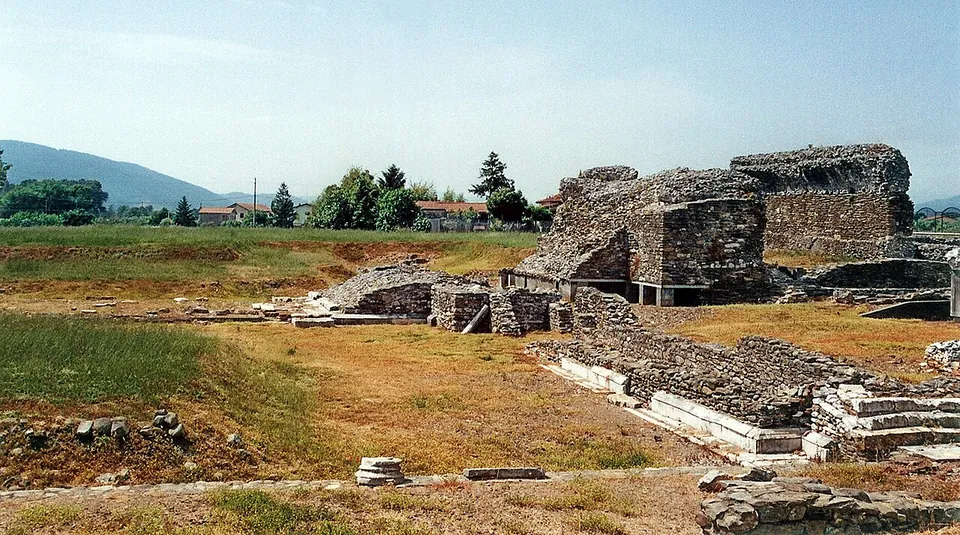
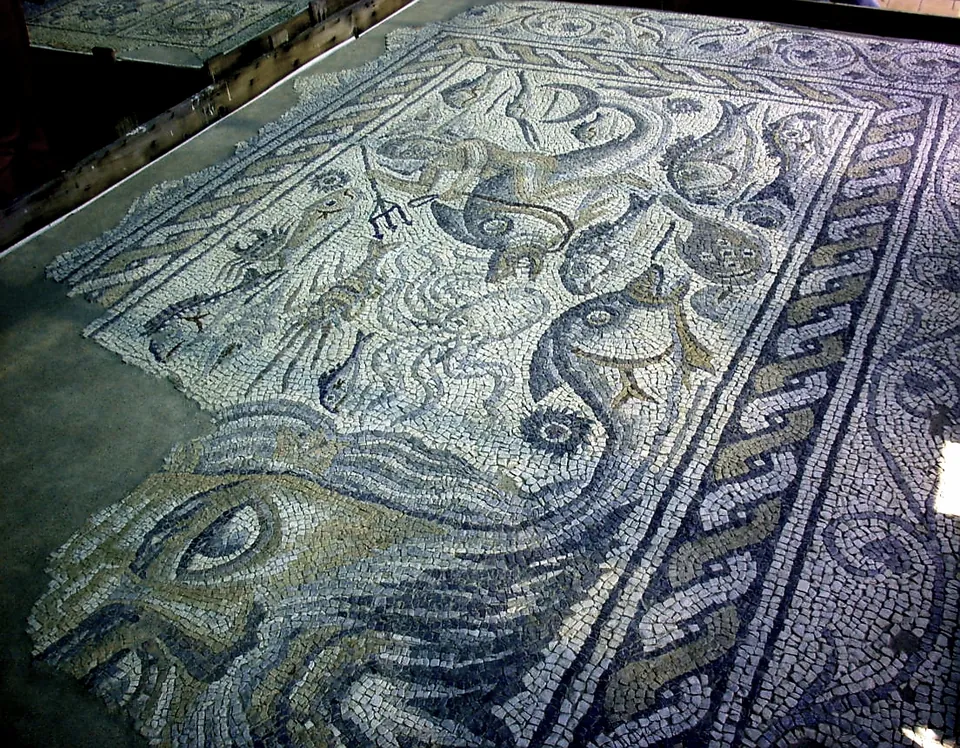
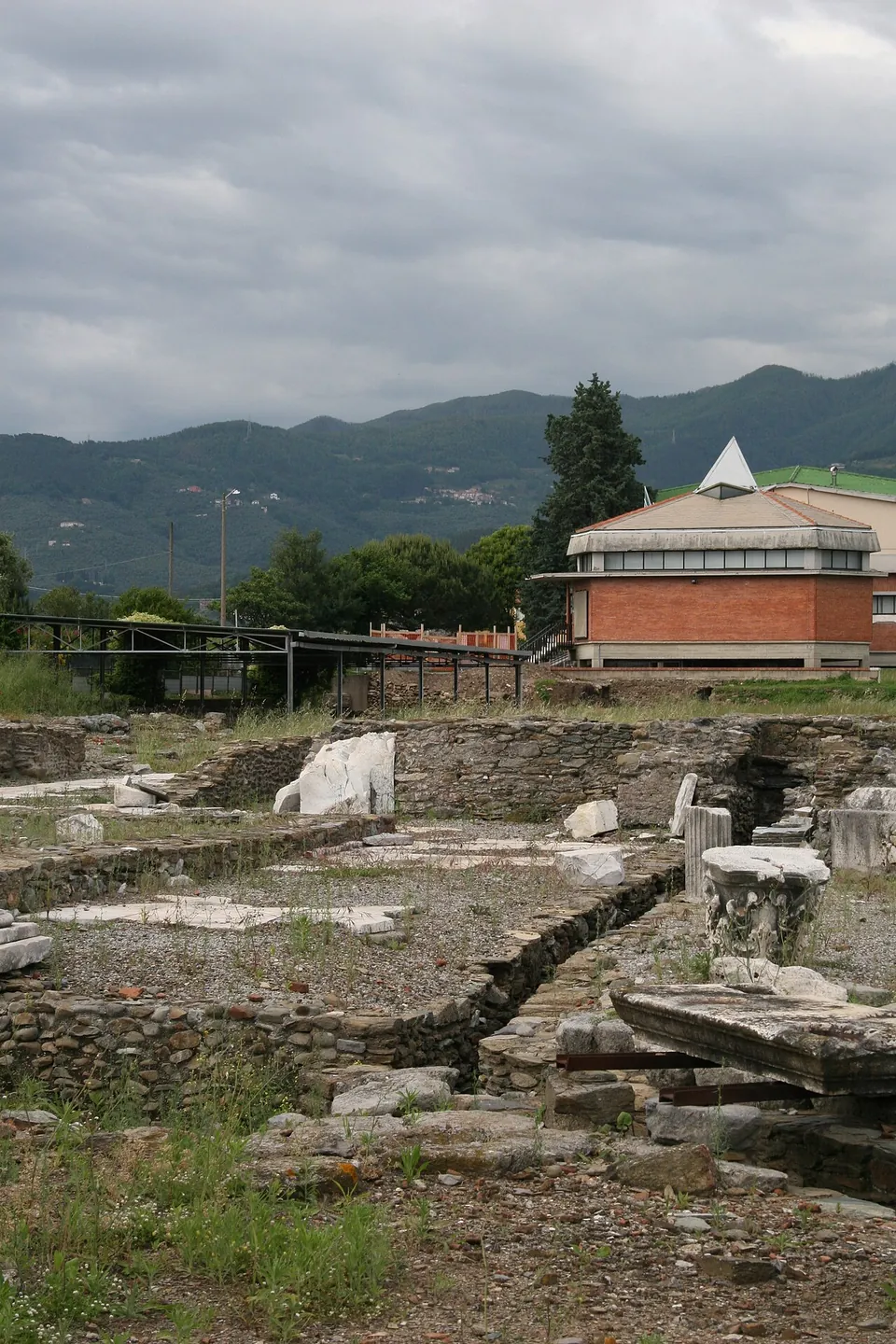
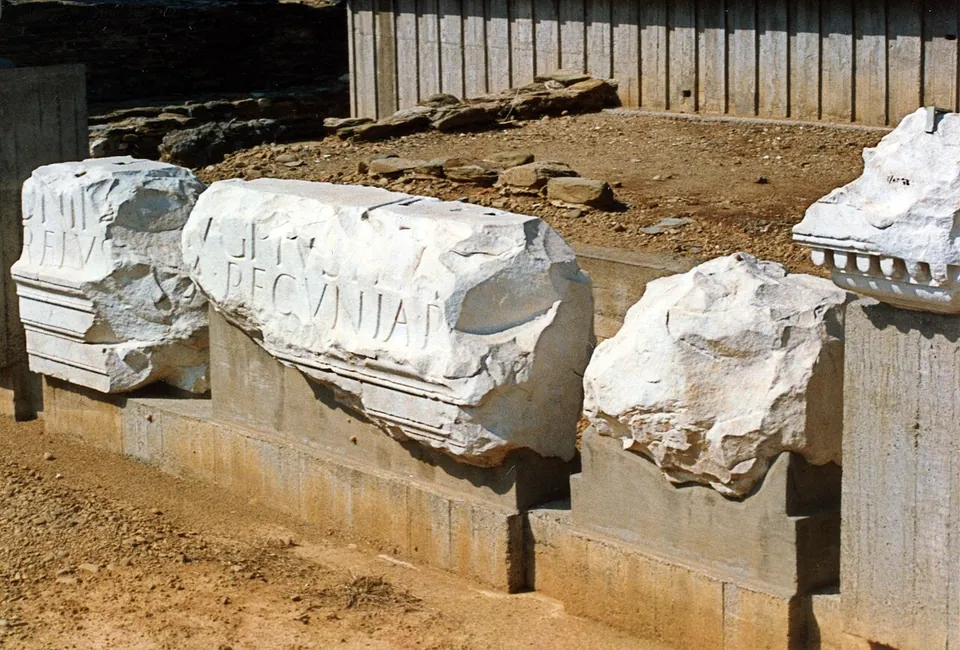
The archaeological area covers almost the whole of the Roman town, and the operator suggests allowing about two hours (the operator). At its centre is the forum, and the visitors’ route takes in the main street through the town, the forum portico with its shops, the House of the Mosaics and the Northern House, and the remains of storage rooms that show how perishable food was kept (it.wikipedia). At the head of the square stood the Capitolium, the oldest building of the colony, a temple on a podium of 20 by 30.6 m (it.wikipedia). The so-called Great Temple, now identified as the temple of the goddess Luna who gave the town its name, was rebuilt in marble under Augustus and Tiberius and again under the Severans, and parts of its podium still stand (it.wikipedia; de.wikipedia). The mosaics of the House of Oceanus are on the operator’s list of things not to miss; it and the House of Frescoes were among the town’s most notable houses (it.wikipedia; the operator).
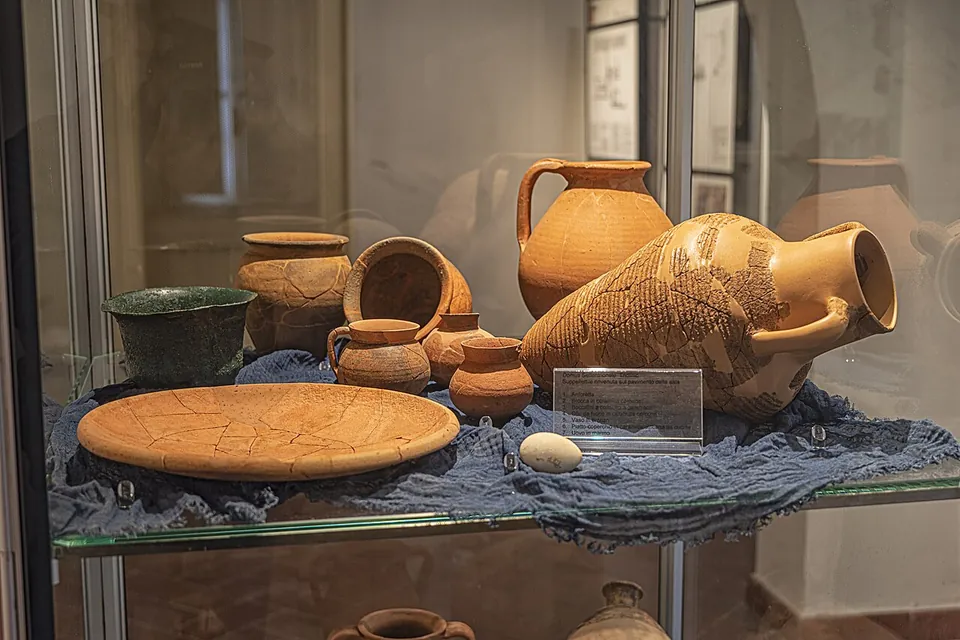
The museum is spread across several buildings inside the archaeological area. The main building shows sculpture and portraits, pottery, coins and everyday objects of glass and bronze; sections on temples, houses and inscriptions sit in 19th-century farmhouses close to the buildings their finds came from, among them the decoration of the Capitolium and mosaics and wall paintings from the great houses (it.wikipedia). A new museum with a renewed display has since opened, so the arrangement may differ from that description (OpenStreetMap; the operator). Some of the most famous finds are not here: the terracotta pediments of the Great Temple are in the National Archaeological Museum in Florence, and much that was dug up in the 18th and 19th centuries went to museums in Florence, Turin, Bologna and Genoa (it.wikipedia).
Outside the line of the walls, about 450 m east of the forum, stands the amphitheatre (see below), and the operator also lists the theatre among its highlights.
Is it worth the trip?
Yes, and it is little known: the museum had under 15,000 visitors in 2015 (it.wikipedia). This is a whole Roman colony laid out flat among fields. The amphitheatre and the podium of the temple of Luna stand up; most of the rest is floors, low walls and column fragments, so the visit is a walk through a town plan rather than through standing buildings. Panels, a free map and a free audio guide for your own phone help with that, and the operator advises comfortable shoes and a hat against the sun (the operator).
Check the day before you go. The site is closed on Mondays and shuts at 13.30 on Sundays, and the amphitheatre has its own ticket office and shorter, seasonal hours (the operator).
Getting there
The museum is at Via Appia 9, Luni, in the province of La Spezia, signposted “Antica Città di Luni”; its car park is in Via Falaschi, and OpenStreetMap maps a free car park about 300 m from the forum. Coming along the A12 motorway you can also stop at one of two rest areas signed “Antica Luni” between Sarzana and Carrara and walk 1.2 km to the archaeological area without leaving the motorway; keep the pass from the turnstile, since you need it to get back to the car (the operator). Without a car, OpenStreetMap maps the Luni railway halt about 1.1 km from the forum in a straight line, and no bus stop within 1.5 km.
The museum and archaeological area open Tuesday to Saturday 08.30–19.30 and Sunday 08.30–13.30, with last entry an hour before closing; they are closed on Mondays. A ticket is €5, €2 reduced, and free under 18; entry is free for everyone on the first Sunday of the month, and a combined ticket with the Roman villa of Varignano costs €8. The amphitheatre is €2 extra, sold only at its own ticket office; its autumn hours are Thursday to Sunday, 10.00–13.00 and 14.30–17.30 (the operator, read 21 October 2026; check before travelling). The site is open-air and closes during weather alerts, as it did on 17 September 2026 (the operator).
Visiting details
- Opening hours
- Museum and archaeological area Tuesday to Saturday 08.30–19.30 (last entry 18.30), Sunday 08.30–13.30 (last entry 12.30), closed Monday. The amphitheatre keeps its own hours; in autumn it opens Thursday to Sunday, 10.00–13.00 and 14.30–17.30.
- Tickets
- €5 full price, €2 reduced, free under 18 and for the other categories set by the national rules; free for everyone on the first Sunday of the month. A combined ticket with the Roman villa of Varignano is €8. The amphitheatre has a separate €2 ticket, sold only at its own ticket office. Tickets for the museum can also be bought online through the Musei Italiani portal, which the operator links to.
- Parking
- The operator's car park is in Via Falaschi; OSM maps a free surface car park about 300 m from the forum (way/77287962). From the A12 motorway two rest areas signed "Antica Luni", between Sarzana and Carrara, give access on foot without leaving the motorway, with a 1.2 km walk to the archaeological area; keep the pass from the turnstile to get back to the car.
Before you go
- Closed on Mondays, and on Sundays it closes at 13.30.
- The amphitheatre is a separate visit with its own ticket office and shorter, seasonal hours.
- An open-air site that closes during weather alerts; it shut for one on 17 September 2026 (the operator).
Hours and prices checked 21 October 2026 on the operator's own site. Confirm before travelling.
The amphitheatre
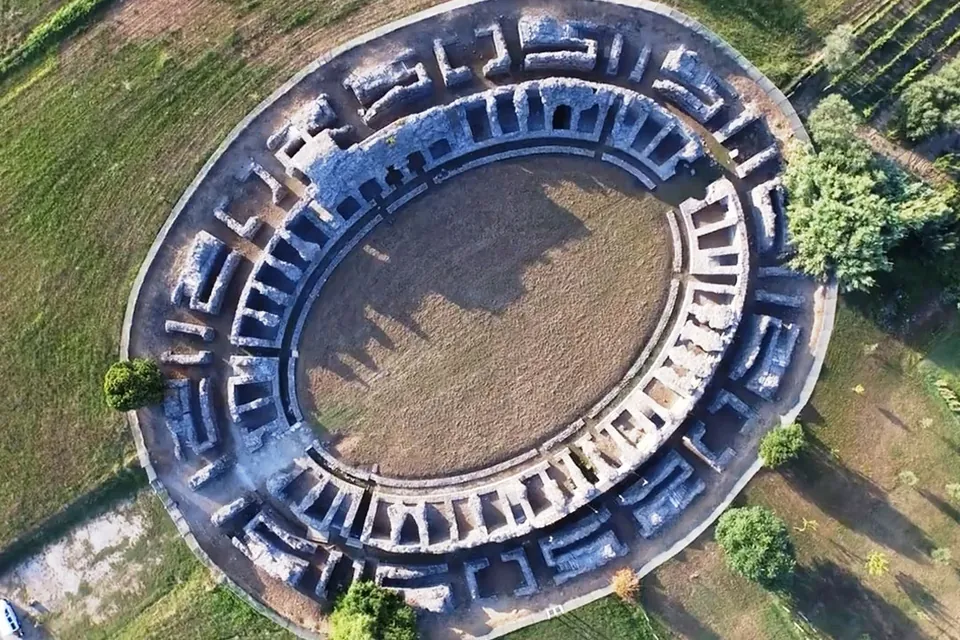
The amphitheatre was built in the 2nd century AD, probably under the Antonine emperors, on the east side of the town beside the old line of the Via Aurelia (it.wikipedia; de.wikipedia; en.wikipedia gives the 1st century). It is an oval of 88.5 by 70.2 m and is reckoned to have held about 7,000 spectators (it.wikipedia). What survives are the substructures of the seating: two concentric rings of vaulted chambers, with stairs and passages in the inner ring leading to the lower seats and stairs in the outer ring to the upper ones. It was built of Roman concrete, with the stair vaults faced in irregular blocks of schist from Monte Caprione and the main gates in small regular blocks of grey limestone and sandstone cobbles (it.wikipedia). After the end of the Western Empire it served as a quarry (de.wikipedia), and it was cleared of rubble around the turn of the 20th century (it.wikipedia). The operator also stages events in it, such as an evening programme on 18 July 2026.
The theatre
The town’s theatre stood inside the walls near its northern corner (it.wikipedia). It has been excavated, and the operator lists it among the things not to miss; de.wikipedia describes it as closed to visitors, so ask at the ticket office.
History
Before there was a town there was a harbour. The name Portus Lunae is older than the colony, and Rome used the natural port at the mouth of the Magra as a base for its fleets bound for Spain and its campaigns against the Ligurians: the consul Cato called there in 195 BC. The colony itself was founded in 177 BC as a military outpost in the war against the Apuan Ligurians; Livy says two thousand Roman citizens were settled, each given 51.5 iugera of land (it.wikipedia).
The town prospered from the Augustan age, when Augustus placed it in the Regio VII Etruria, the forum was enlarged, and the white marble of the nearby Apuan Alps, the marble of Luna, began to reach Rome and the cities of the empire in large quantities; it was shipped from the town’s own quays (it.wikipedia). The amphitheatre belongs to a new burst of building under the Antonines, and the temple of Luna was rebuilt in marble under the Severans (it.wikipedia).
In the second half of the 4th century the public buildings and great houses were abandoned. An earthquake has been proposed as the cause, as a hypothesis; another reading sees a slower decline tied in part to the crisis of the marble trade (it.wikipedia). The town was not dead: in 417 Rutilius Namatianus, sailing along the coast, still saw its “white walls”, a first cathedral was built inside the walls, and Luni became a bishop’s seat in the 5th century. The Goths sacked it early in the 6th century, the Byzantines retook it in 552, and two Byzantine houses have been excavated in the forum; the Lombards took it in 643 (it.wikipedia). With its harbour silting up and the land turning to marsh, the town was finally abandoned, and in 1204 the bishop’s seat moved to Sarzana (it.wikipedia).
The forum was found in 1837, a museum opened on the site in 1964, and from the 1970s to the early 2000s large-scale excavation uncovered the forum, the civil basilica, the Capitolium, the Great Temple and the houses; since 2014 the University of Pisa has been digging near the cardo maximus, where two large houses of the late Republic have come to light (it.wikipedia; de.wikipedia).
More photographs




Nearby
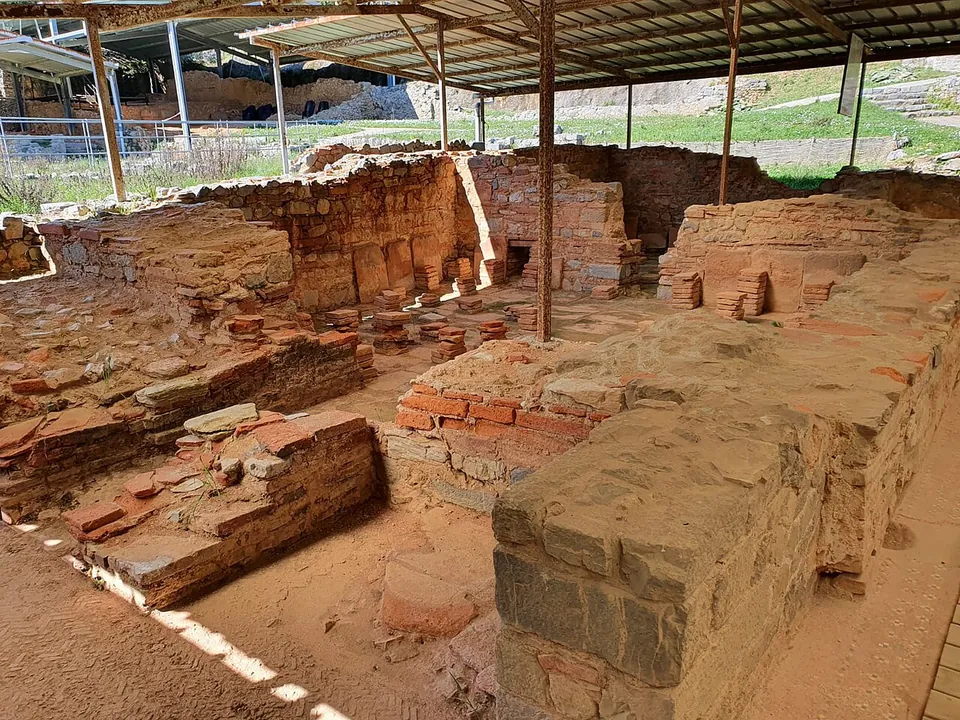
Photo: Donatella Chiapponi · CC BY-SA 4.0 · Commons
14 km · villa · Liguria
Varignano Roman Villa
The excavations lie under long metal roofs in a small valley running down to the cove.
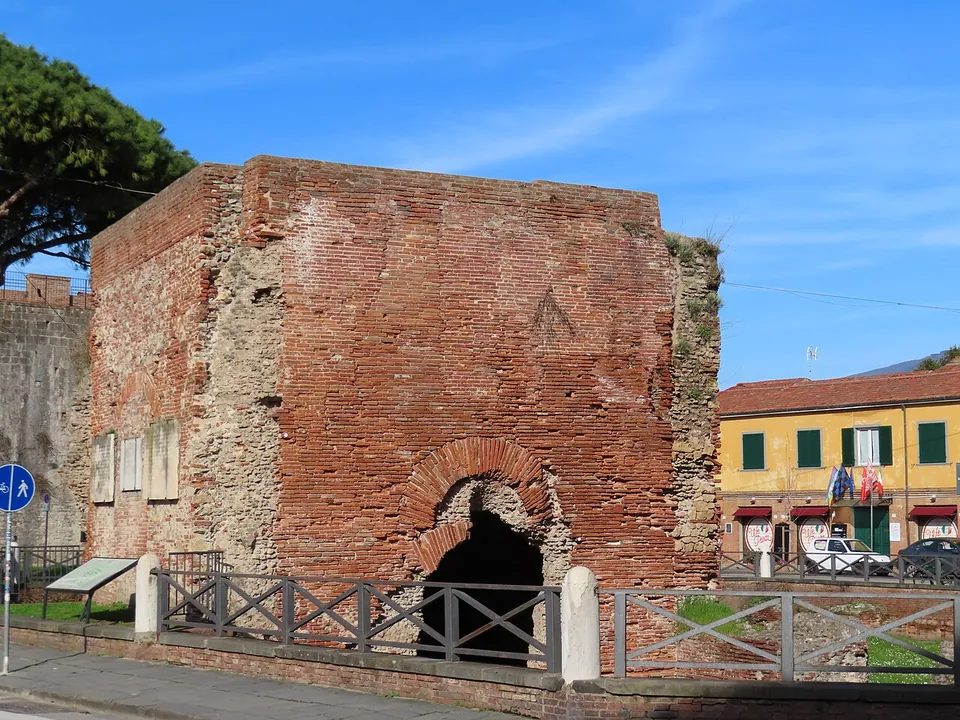
Photo: Superchilum · CC BY-SA 4.0 · Commons
49 km · bath · Tuscany
Baths of Nero
The piece that stands is the laconicum, the room for hot-air bathing: square on the outside and octagonal inside, it keeps its four brick outer walls (Comune di Pisa).


Straight-line distances.
Sources
Every fact on this page comes from the records below, each used under the licence noted.
| Source | Licence |
|---|---|
| Pleiades 403235 | CC BY |
| Wikidata Q3867715 | CC0 |
| OpenStreetMap relation/1174832 | ODbL |
| Wikidata — Luna, the Roman colony (Q3267409) | licence not recorded |
| Wikipedia (it) — Luna (colonia romana) | CC BY-SA 4.0 |
| Wikipedia (it) — Museo archeologico nazionale di Luni | CC BY-SA 4.0 |
| Wikipedia (it) — Anfiteatro romano di Luni | CC BY-SA 4.0 |
| Wikipedia (de) — Luna (Italien) | CC BY-SA 4.0 |
| Wikipedia (en) — Luni, Italy | CC BY-SA 4.0 |
| Museo Nazionale e Parco Archeologico di Luni — visit, hours and tickets (the operator) | licence not recorded |
| Museo Nazionale e Parco Archeologico di Luni — home page and notices (the operator) | licence not recorded |