Photo: sailko · CC BY 2.5 · Commons
bath · Tuscany
Roman baths of Fiesole
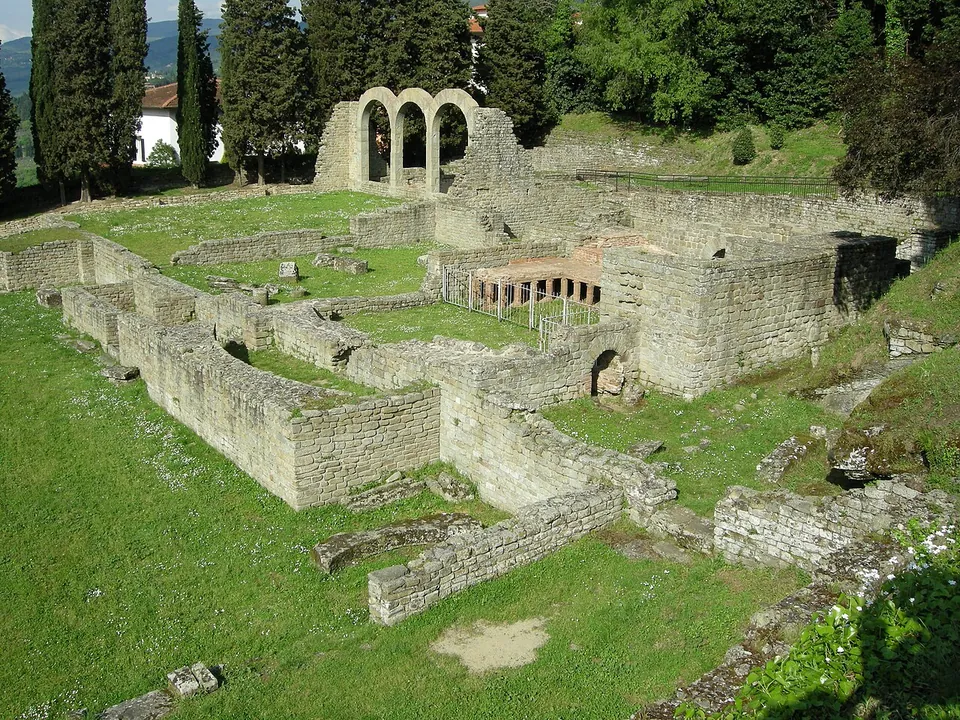
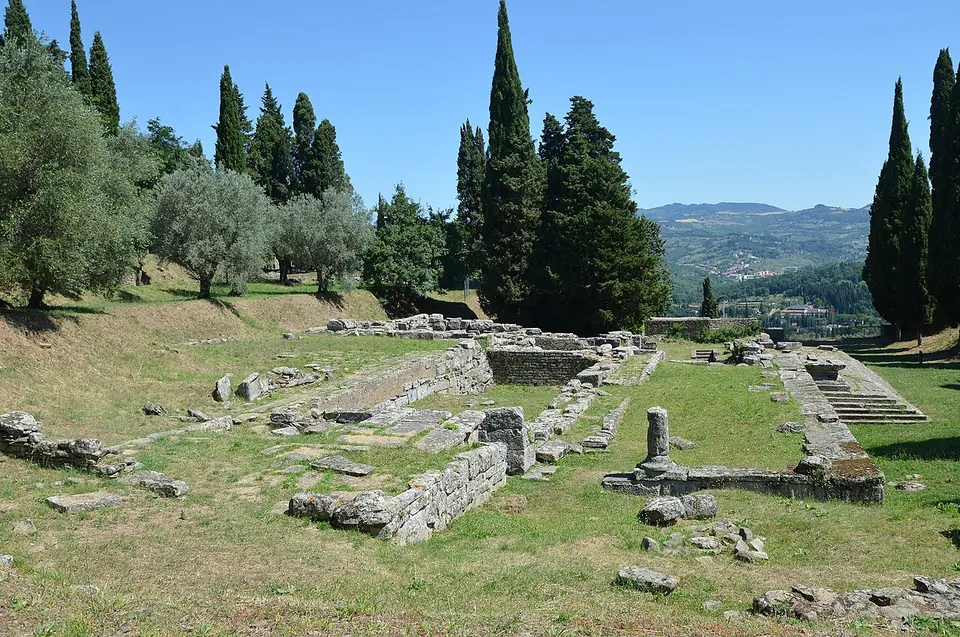
The complex is almost rectangular, about 75 m by 53 m, between the back of the theatre and the Etruscan city wall (de.wikipedia).
Ticketed
Area archeologica di Fiesole, Fiesole archaeological site
city · Tuscany, Italy
1 place to see, the best preserved and best known first.
Photo: sailko · CC BY 2.5 · Commons
bath · Tuscany
The complex is almost rectangular, about 75 m by 53 m, between the back of the theatre and the Etruscan city wall (de.wikipedia).
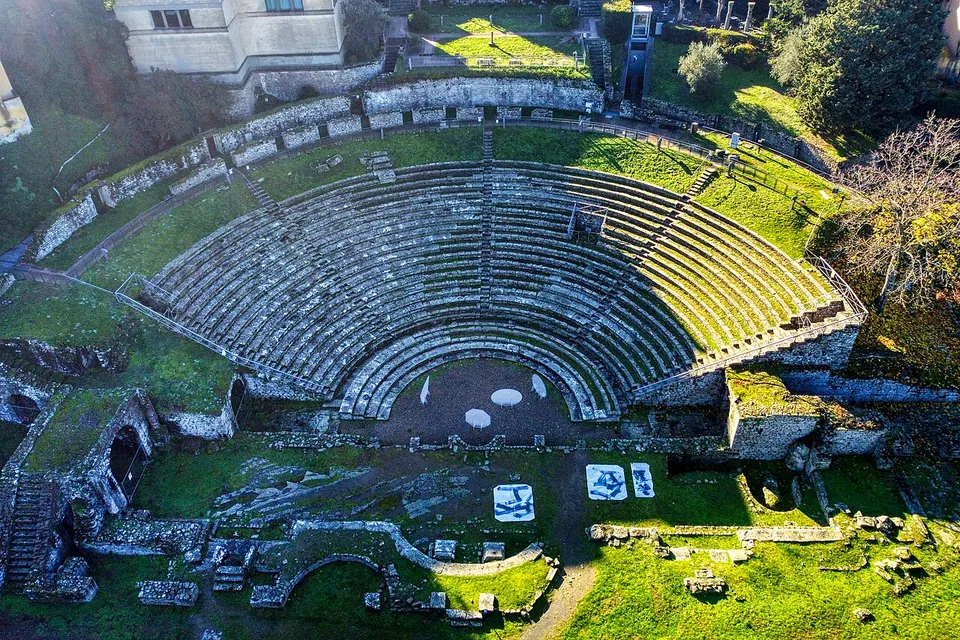
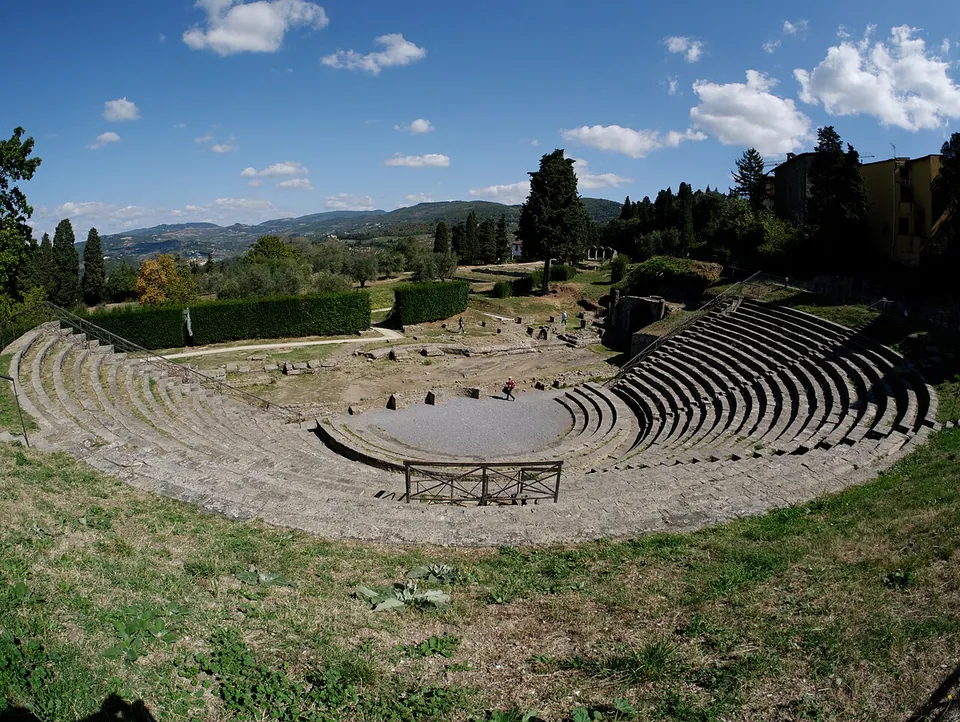
The theatre is the set piece: a semicircle of stone tiers, partly cut into the rock of the slope, facing out over the countryside, with the orchestra and the foundations of the stage building in front (it.wikipedia, the operator). It is still used in summer for the Estate Fiesolana festival, and has its own section below.
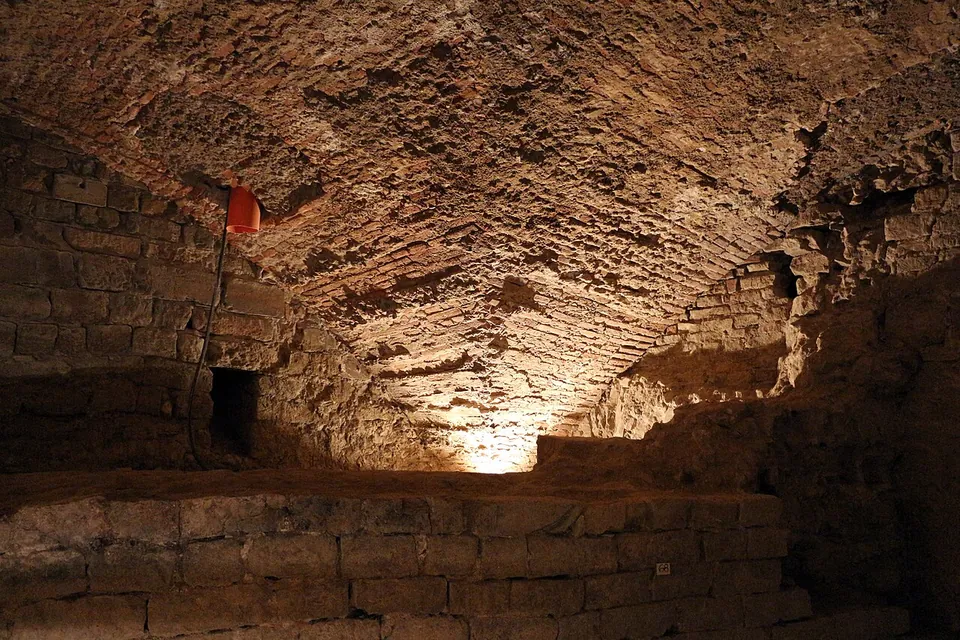
Behind the theatre are the baths: open-air pools, and the rooms of the covered bath house, where three stone arches divide the cold room, the frigidarium (it.wikipedia). The ovens, the small brick pillars that carried the heated floor and the hollow bricks that took warm air up the walls can still be seen, though largely as restorations (the operator).
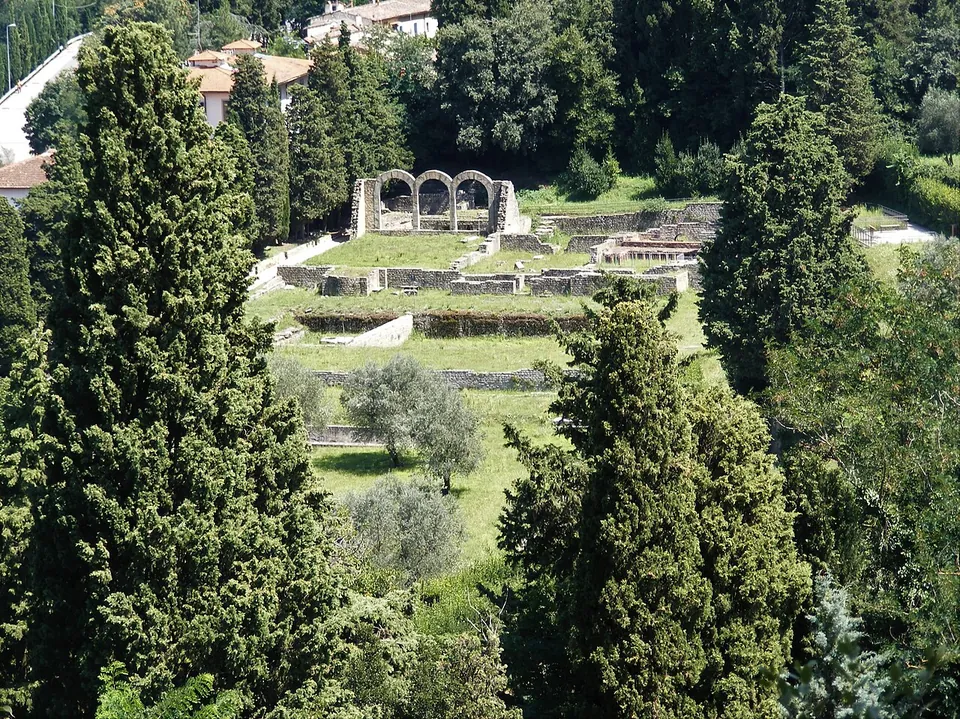
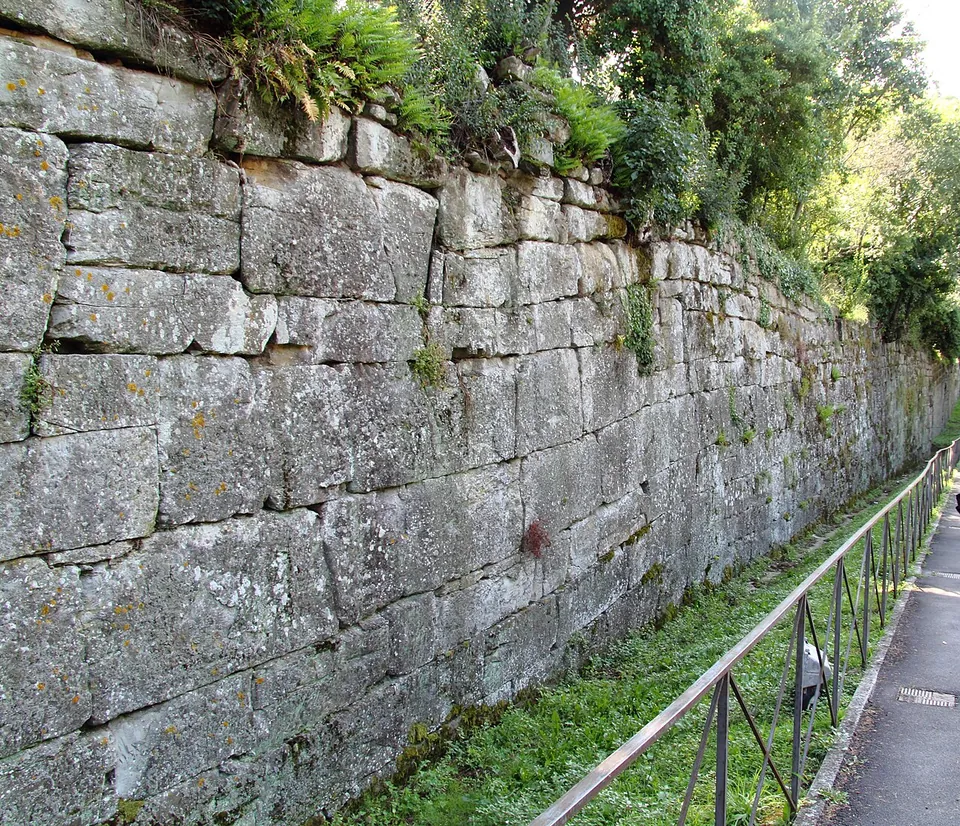
At the northern end is the Etrusco-Roman temple. An imposing flight of steps leads up to where the cella stood, and a copy of the Etruscan altar stands in front of them (the operator). Some stone-lined graves of the Lombard cemetery later dug among the ruins can still be seen there (the operator, de.wikipedia). West of the theatre runs a stretch of ancient street paved with large stone slabs, perhaps the main north–south street, which led down from the forum – probably sited at today’s Piazza Mino – to the lower town (it.wikipedia). The Etruscan wall, of big sandstone blocks, closes the north side of the area, and a stretch of it can also be seen from outside (it.wikipedia, de.wikipedia).
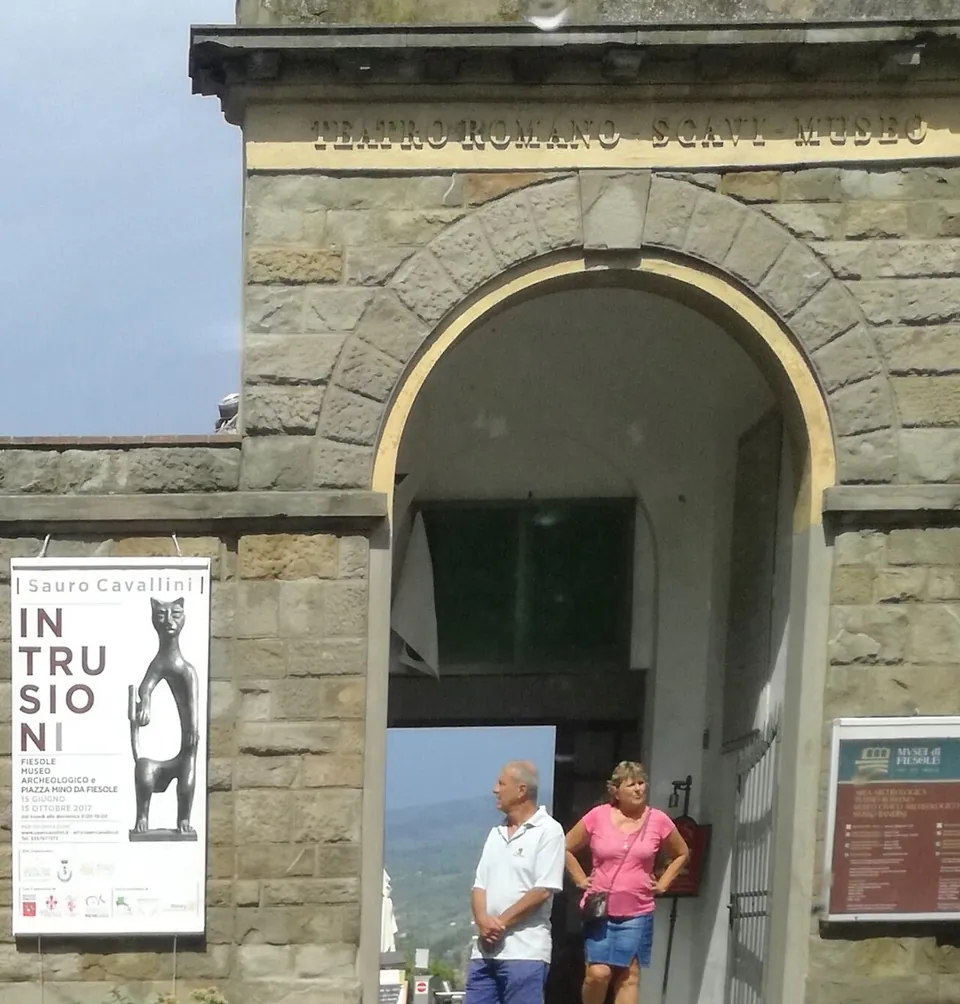
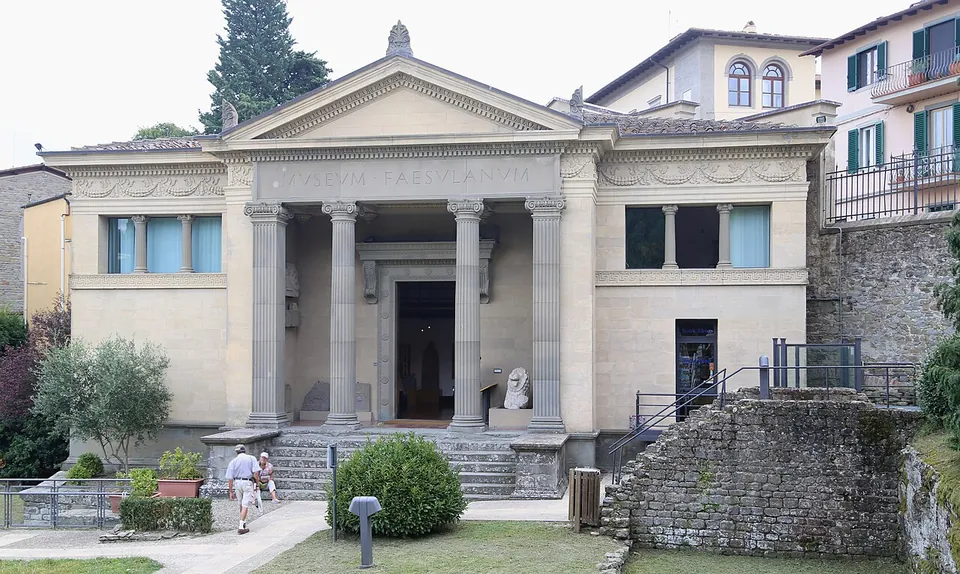
The combined ticket adds the Archaeological Museum, in a temple-fronted building put up above the theatre in 1912–14 (de.wikipedia, fr.wikipedia). It holds finds from the excavations and the town, among them the carved local gravestones known as “pietre fiesolane” and a bronze torso long taken for a she-wolf and now, with some reservations, read as a lioness (it.wikipedia); four Lombard burials from another cemetery in the town are rebuilt there in full (the operator).
Yes, if you are in Florence. A city bus runs up from the city, and the theatre is the reason to come; the temple and the Etruscan wall are a few steps further on and worth them.
Two caveats. The baths have been heavily restored since they were dug up, so take them as a plan of how a Roman bath worked rather than as untouched ruins (it.wikipedia, the operator). And from November to February the area shuts at 15.00 and all day on Tuesdays, which is easy to miss on a day out.
Bus 7 runs from Piazza della Libertà in Florence to Fiesole (it.wikipedia). Get off at the terminus, “Fiesole, Piazza Mino”, cross the road and walk behind the cathedral of San Romolo to via Duprè: the entrance and ticket office are where via Duprè meets via Portigiani (the operator). By car the operator recommends the road up via di San Domenico. There is no car park of its own: there are paid bays in the streets round the entrance and free car parks in the town, and a mapped car park lies about 100 m from the area (the operator, OpenStreetMap).
From April to September the area is open every day, 09.00 to 19.00; in March and October every day, 10.00 to 18.00; from November to February 10.00 to 15.00, closed on Tuesdays. The ticket office shuts half an hour before closing, and the area is closed on 25 December. The area alone costs €7 (reduced €5), theatre included; with the Archaeological Museum it is €10 (reduced €6), and €12 (reduced €8) adding the Bandini Museum. Reductions are for ages 7 to 18, groups of ten or more and university students; children up to six go free. A multimedia guide is included, against an ID document left at the desk, and the museums are part of the FirenzeCard (museidifiesole.it, read 23 October 2026 – check before travelling, since prices move).
Before you go
Hours and prices checked 23 October 2026 on the operator's own site. Confirm before travelling.
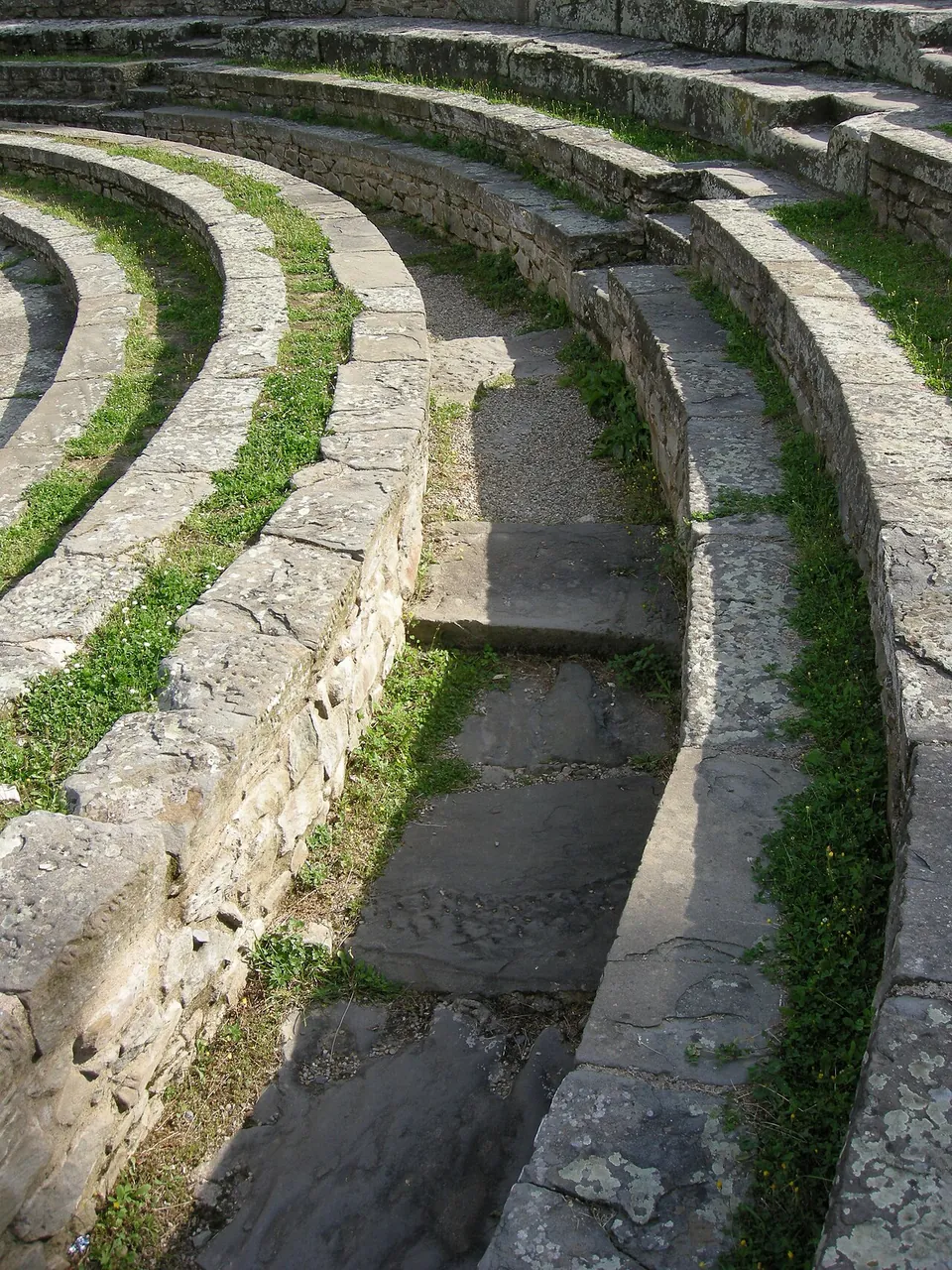
The seating is what you come to see. Its tiers, divided by narrow stairways into wedge-shaped sectors, rest on the rock of the slope in the middle; at the two ends, where the hill gave out, they stand on vaulted structures over the side passages that led into the orchestra, and those passages survive (it.wikipedia, de.wikipedia). Spectators came in through them and through entrances at the top of the seating (the operator). Behind the top, where the structure above has gone, a curving gallery lies exposed, linked to the tiers by four passages (de.wikipedia).
In front of the seats is the semicircular orchestra, which keeps traces of its coloured floor, described as mosaic (it.wikipedia) and as marble slabs (de.wikipedia). Of the stage building only some walls and foundations remain (the operator, de.wikipedia), and the foundation of the stage wall still shows where its three doors for the actors were (it.wikipedia). Behind the stage, nine pillars of a portico survive, much restored (it.wikipedia). Fragments of the marble that faced the stage wall, carved with plant motifs and mythological scenes – among them Dionysus with a panther – are in the Archaeological Museum (it.wikipedia, the operator).
Two things to know. The stage building survives only at ground level, so what you see is the auditorium rather than a complete theatre, and not all the seating is ancient: the theatre was partly rebuilt after it was dug up, and of its wedge-shaped sectors only the right-hand part is original (de.wikipedia, it.wikipedia). And it is still a working venue. In summer it hosts the Estate Fiesolana festival of concerts, drama, dance and film; the 2026 season, the festival’s 79th, ran from 8 June to 12 September, with most performances starting at 21.15 or 21.30 (the festival’s page). An evening ticket, sold by the festival rather than by the museums, is another way to see it.
The theatre was long dated to the time of Sulla, whose veterans were settled at Faesulae, because its building looked archaic (it.wikipedia); de.wikipedia still allows that an earlier form, now unknown, may go back to then. A stratigraphic excavation behind the seating in 1958 found material from the first years of Augustus’s reign in the layers laid down before it was built, and it is now dated to the last quarter of the 1st century BC (it.wikipedia), which makes it one of the very early Roman theatres (de.wikipedia). It held about 3,000 spectators (de.wikipedia, fr.wikipedia), and after its rebuilding seats about 2,000 again (de.wikipedia). The decoration of the stage was renewed more than once: de.wikipedia dates a frieze on the front of the stage to the reign of Claudius, and the marble facing of the stage wall was redone around the 3rd century AD (it.wikipedia), the century up to which the theatre is known to have been in use (it.wikipedia, the operator). In a later phase a structure with three niches, read as a nymphaeum (a fountain house), faced the seating (it.wikipedia).
From the end of the Middle Ages until the early 19th century the theatre lay buried under rubble and earth, with trees planted on the slope and a path running across the top of the seating, as a study published in 1877 describes it (de.wikipedia). Some years after von Schellersheim’s digging ended in 1814, the remains he had exposed were covered over again to stop local people taking the stone (de.wikipedia). Work on the theatre began again in 1873 for the Comune (de.wikipedia), and the commission set up in 1877 brought it back to light and restored it (it.wikipedia). The digging there ended in 1882, and the theatre was partly rebuilt in 1900 so that it could be used again (de.wikipedia). The tiers and the front of the stage were restored again in 2004–06 (it.wikipedia).
Faesulae began as an Etruscan town, called Viesul, Viśl or Vipsul (Pleiades), and by the 4th century BC it had become the leading centre of the middle Arno valley (it.wikipedia). The Romans conquered it in 283 BC (Pleiades).
The town took the losing side in Rome’s civil wars. Having backed Marius, it had to take in a colony of Sulla’s veterans, against whom it rose in 78 BC; in 63 BC it supported Catiline, who gathered the conspirators’ army there before the battle of Pistoia (it.wikipedia; Pleiades). After that it was firmly Roman, and the monuments of the archaeological area went up: the temple, rebuilt after the fires of those wars, the theatre and the baths (it.wikipedia). Both the theatre and the baths were restored in the 3rd century AD (the operator).
The town prospered until the 3rd century and fell into crisis in the 5th (it.wikipedia). Stilicho defeated Radagaisus and his army at Fiesole in 405 or 406 – published dates differ (it.wikipedia, en.wikipedia) – and Procopius records Goths and Byzantines contesting the town between 539 and 542 (it.wikipedia). From the end of the 6th century the ruined theatre, baths and temple became a Lombard cemetery (it.wikipedia).
Digging began in the 18th century and went on in 1809–14 under the Prussian baron von Schellersheim (it.wikipedia, de.wikipedia). The Comune of Fiesole bought the land in the 1870s – 1870 in de.wikipedia, 1873 in it.wikipedia and fr.wikipedia – and from 1877 a municipal commission directed by Demostene Macciò excavated and restored the theatre (it.wikipedia). The Etruscan temple beneath the Roman one was identified in excavations of the 1950s (it.wikipedia, de.wikipedia).
5 km · city · Tuscany
The theatre is the one place where Roman structures can be seen where they were built.
Straight-line distances.
Every fact on this page comes from the records below, each used under the licence noted.
| Source | Licence |
|---|---|
| Pleiades 413124 | CC BY |
| Wikidata Q3019577 | CC0 |
| OpenStreetMap way/140234645 | ODbL |
| Wikidata — Faesulae, the ancient city (Q11921497) | licence not recorded |
| Pleiades — Roman theater at Fiesole (488345053) | licence not recorded |
| Wikidata — Roman theatre of Fiesole (Q2575871) | licence not recorded |
| Vici.org — the theatre (11033) | licence not recorded |
| OpenStreetMap — Teatro Romano di Fiesole | licence not recorded |
| Wikipedia (it) — Area archeologica di Fiesole | CC BY-SA 4.0 |
| Wikipedia (de) — Archäologische Zone Fiesole | CC BY-SA 4.0 |
| Wikipedia (fr) — Site archéologique de Fiesole | CC BY-SA 4.0 |
| Wikipedia (en) — Fiesole | CC BY-SA 4.0 |
| Wikipedia (it) — Fiesole | CC BY-SA 4.0 |
| Musei di Fiesole — Area Archeologica (the operator) | licence not recorded |
| Musei di Fiesole — opening hours (the operator) | licence not recorded |
| Musei di Fiesole — tickets (the operator) | licence not recorded |
| Musei di Fiesole — how to get there (the operator) | licence not recorded |
| Estate Fiesolana 2026 — the summer festival held in the theatre | licence not recorded |