

Florentia was the Roman colony that lies beneath the historic centre of Florence. Almost nothing of it stands above ground, but the modern city still keeps some of its streets, the houses around Piazza dei Peruzzi follow the curve of its amphitheatre, and the substructures of its theatre have been excavated beneath Palazzo Vecchio (it.wikipedia).
What is there today
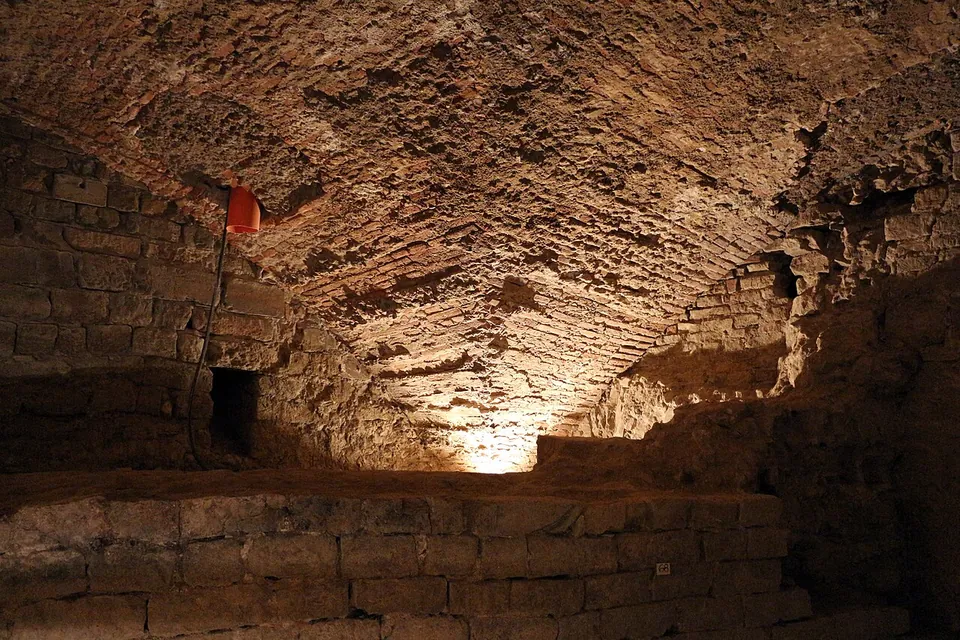
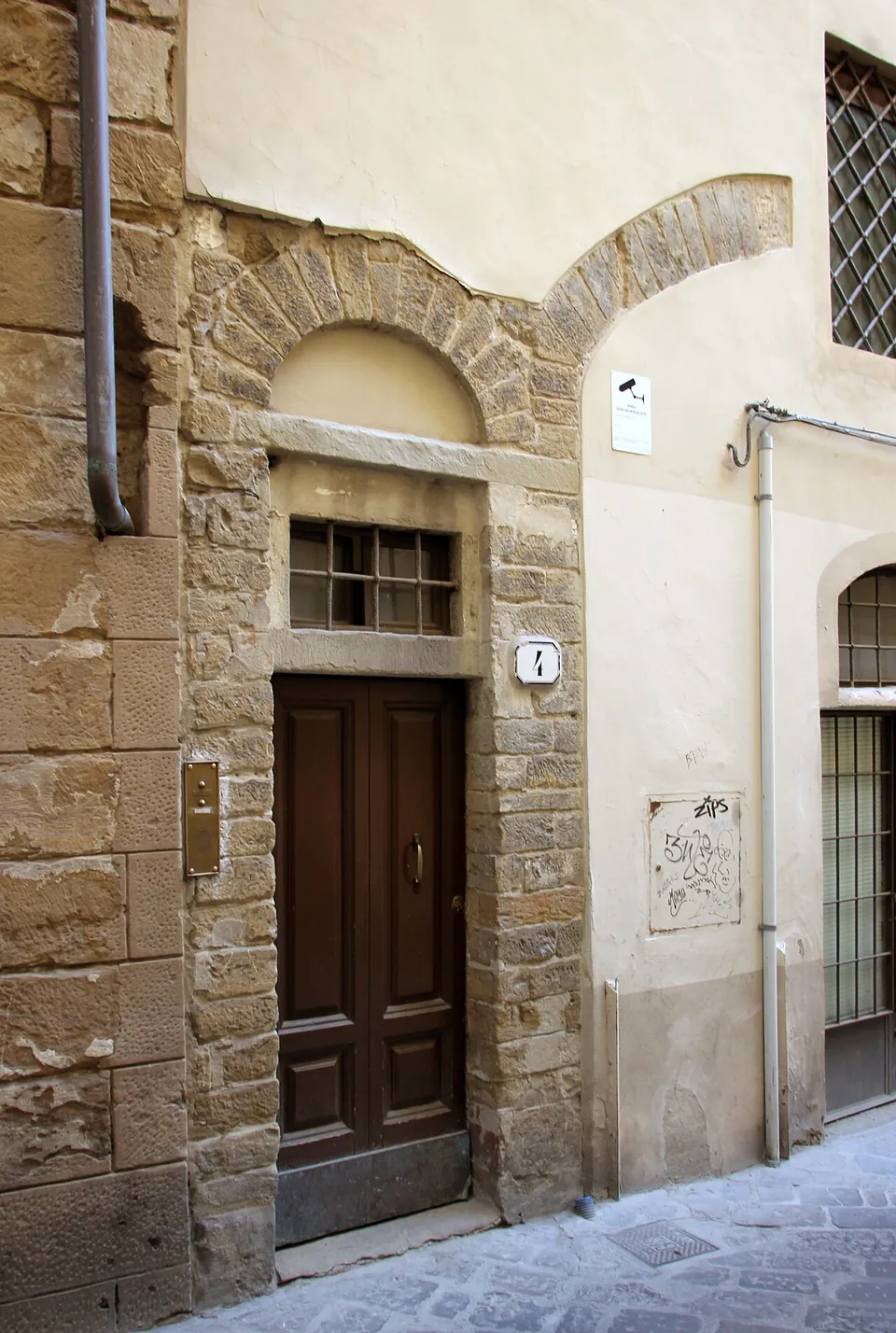
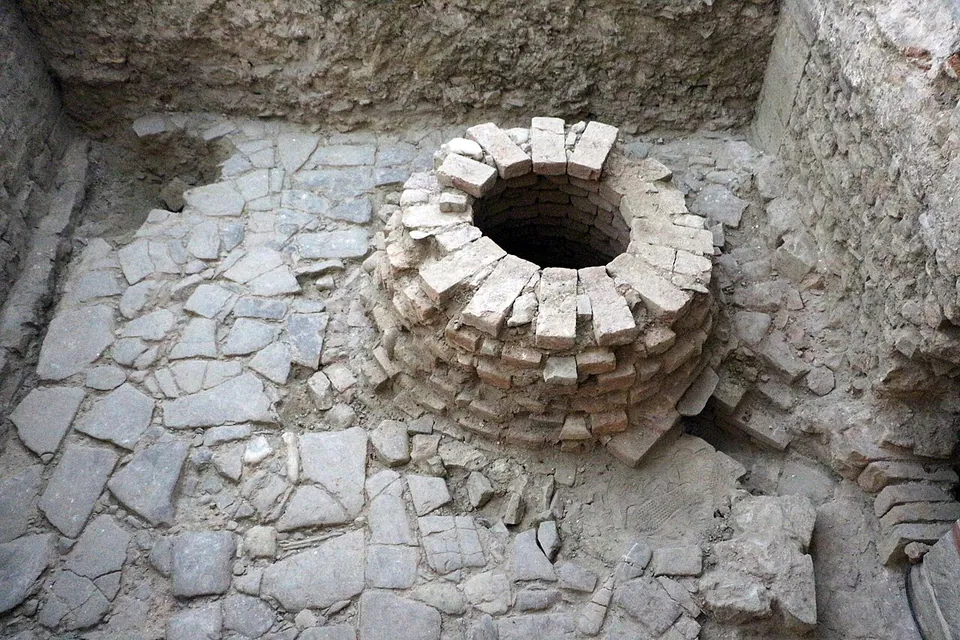
The theatre is the one place where Roman structures can be seen where they were built. It lay under what is now Palazzo Vecchio and Palazzo Gondi, with its seating backing on to Piazza della Signoria and the stage along via dei Leoni (it.wikipedia). Excavation under the palace began in 1935 (it.wikipedia), and the campaign that uncovered what is shown today ran from 2004 to 2010 (the Musei Civici Fiorentini). The seating stood on radial walls carrying barrel vaults, the burelle (it.wikipedia). The visit takes in stretches of them, among them the vomitorium, the central passage by which spectators came in, and the inner edge of the orchestra, with medieval wells, house foundations and a paved street front with its doorways laid over the Roman remains (the Musei Civici Fiorentini). From the Lombard age some of the burelle became rubbish dumps, lime kilns, burial places and animal pens, and around the 12th–13th century some became prisons, while tower houses were built over the top (the Musei Civici Fiorentini). It can only be seen on a guided visit, and those visits are suspended for now: see Getting there.
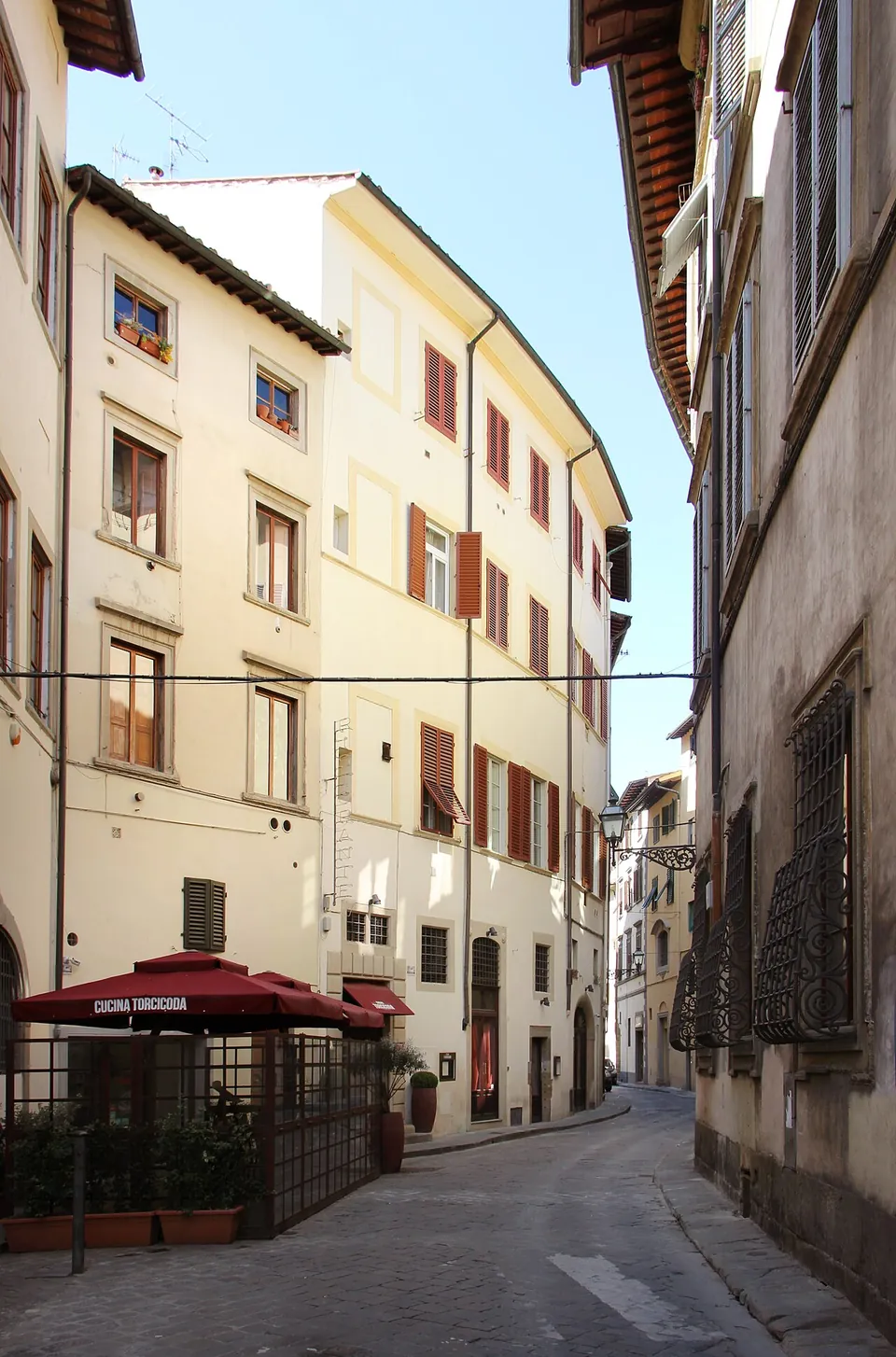
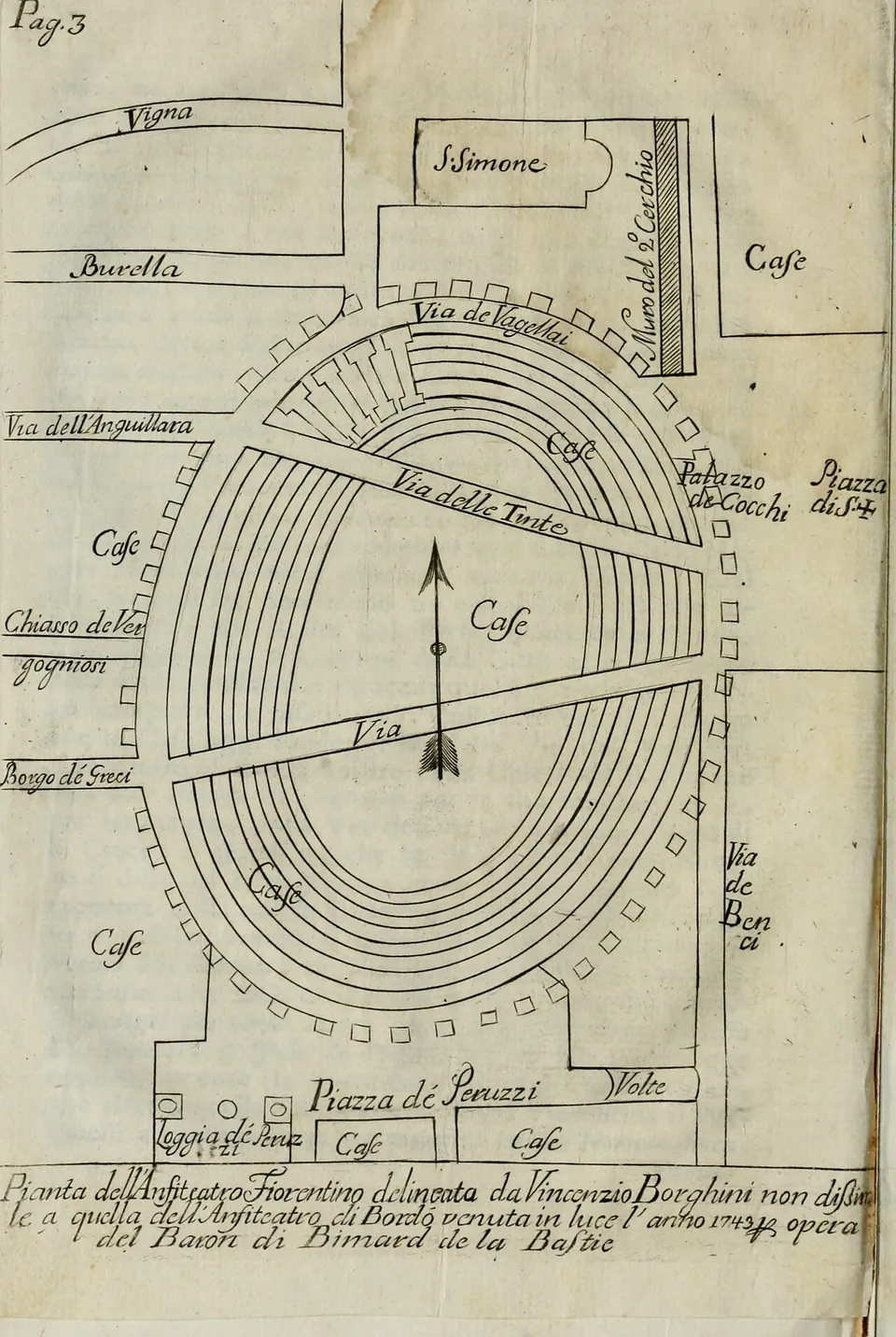
The amphitheatre, built under Hadrian outside the walls, has disappeared as a building and survives as a shape: the houses of the Peruzzi and the line of via de’ Benci, via Bentaccordi and via Torta trace its ellipse (it.wikipedia). It is a free walk in the Santa Croce quarter, best taken with a plan of the arena in mind; it has its own section below.
The forum lay under today’s Piazza della Repubblica, where the cardo maximus (via Roma and Calimala) crossed the decumanus maximus (via del Corso, via degli Speziali, via degli Strozzi). Nothing of its buildings was left standing when the medieval market on the site was demolished in the 1880s; most of the finds went to the National Archaeological Museum (it.wikipedia).
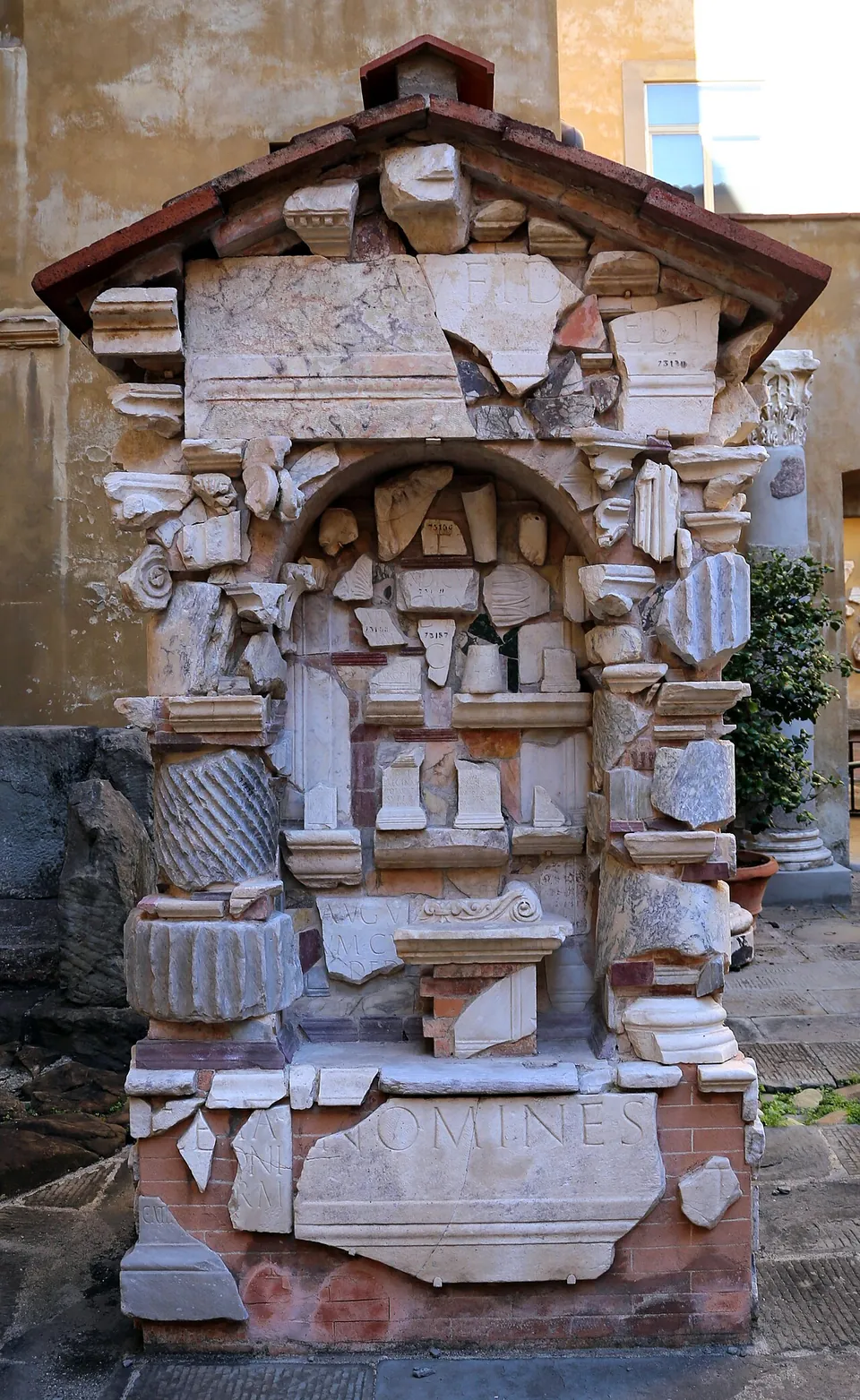
That museum is where the town’s stones ended up. Its courtyard holds remains of the Roman monuments found during the rebuilding of the centre at the end of the 19th century (the Ministry of Culture), among them fragments of the temple of Isis assembled into a small shrine-like display, and part of a round tower of the north gate, uncovered in 1895 (it.wikipedia).
Is it worth the trip?
Not on its own. Nobody should go to Florence for Florentia: the Roman town is a layer under a Renaissance city, and most of it is either built over or in a museum. If you are in Florence anyway, it turns a walk you would take regardless into a reading of the street plan. The curve of the amphitheatre is a short detour from Santa Croce and costs nothing, and Piazza della Repubblica is where the forum was. The theatre excavations are the real prize, and the one thing worth planning around, but only if they are running when you visit.
Getting there
Everything is in the historic centre and on foot. Firenze Santa Maria Novella, the main railway station, is about 500 m north-west of Piazza del Duomo (en.wikipedia). The theatre is under Palazzo Vecchio on Piazza della Signoria, and the amphitheatre streets and Piazza della Repubblica are each about 300 m away (measured between the sites’ mapped points). The National Archaeological Museum is at piazza Santissima Annunziata 9b (the Ministry of Culture).
The theatre excavations are seen only on a guided visit. After a long closure they reopened on 13 December 2025 (the city’s tourism site), with visits on Saturdays and Sundays at 12.00 and 12.45 for up to 15 people and a €5 ticket, starting from the Palazzo Vecchio ticket office and booked through Fondazione MUS.E. Since 16 October 2026 those visits have been temporarily suspended, with no date given for their return (the Musei Civici Fiorentini, read 24 October 2026). Check the Palazzo Vecchio museum page before you plan around them. The Palazzo Vecchio museum itself is open 09.00–19.00, except on Thursdays, when it closes at 14.00, and ticket sales end an hour before closing. A ticket is €18 plus €1 for booking online, €12 for 18–25-year-olds and university students, and free under 18 (the Musei Civici Fiorentini). The palace is also the city hall, and the museum closes wholly or in part on some days for official events, which its page lists month by month.
The National Archaeological Museum opens 08.30–19.00 on Tuesdays and Thursdays and 08.30–14.00 on the other weekdays, Saturdays, the first Sunday of the month and public holidays. It is closed on the other Sundays. A ticket is €8, reduced €2 (the Ministry of Culture’s page, as of May 2026).
Visiting details
- Opening hours
- Roman theatre excavations under Palazzo Vecchio: guided visits only, Saturdays and Sundays at 12.00 and 12.45, up to 15 people - temporarily suspended since 16 October 2026, with no date given for their return. Palazzo Vecchio museum: 09.00–19.00 every day except Thursday, when it closes at 14.00; ticket sales end one hour before closing. National Archaeological Museum: Tuesday and Thursday 08.30–19.00; Monday, Wednesday, Friday, Saturday, the first Sunday of the month and public holidays 08.30–14.00; closed on the other Sundays, 1 January and 25 December; last entry 45 minutes before closing.
- Tickets
- Theatre excavations: €5 for the guided visit. Palazzo Vecchio museum: €18 (plus €1 for booking online); €12 for 18–25-year-olds and university students; free under 18. National Archaeological Museum: €8, reduced €2.
Before you go
- The Roman theatre under Palazzo Vecchio is seen only on a guided visit of the excavations. The weekend visits that resumed in December 2025 have been temporarily suspended since 16 October 2026, and the city museums give no date for their return. Check the Palazzo Vecchio museum page before planning around them.
- Palazzo Vecchio is also the city hall, and the museum closes wholly or in part on some days for official events; the museum page lists them month by month.
Hours and prices checked 24 October 2026 on the operator's own site. Confirm before travelling.
The amphitheatre
No ruin of the amphitheatre stands. As the medieval houses went up on its outer walls and on the wedges of its seating they closed most of its arches, and the palazzi along the curve stand on its foundations (it.wikipedia). Piazza dei Peruzzi, via dei Bentaccordi and via Torta, the “crooked street”, bend together into an incomplete ellipse; two more streets, via dell’Anguillara and Borgo dei Greci, cut across the old arena, and the rest of the inside is built over (fr.wikipedia). On Piazza dei Peruzzi the evenly spaced arched openings have been suggested to follow the arena’s old entrances, a hypothesis rather than a finding (it.wikipedia). Remains are said to be visible in via dei Bentaccordi (en.wikipedia), but no published description says which stones are Roman, and vici.org classes the amphitheatre as invisible. Walk the curve from Piazza dei Peruzzi round to via Torta: it is free, has no timetable, and lies about 200 m east of the theatre under Palazzo Vecchio (measured between the two mapped points). The nearest bus stops, both named Verdi, are about 140 m away (OpenStreetMap).
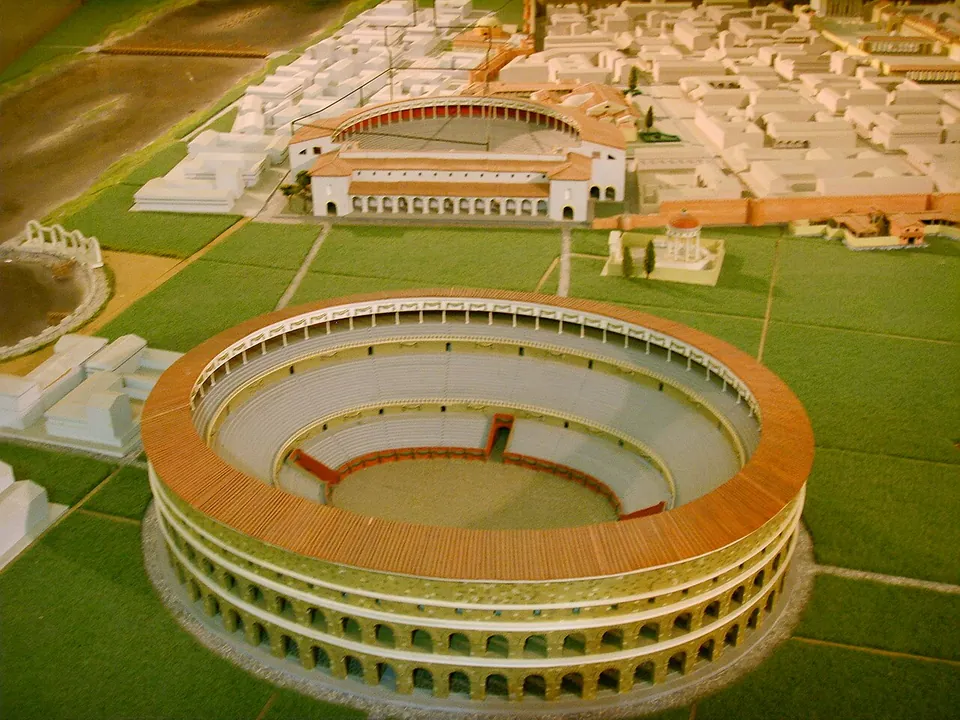
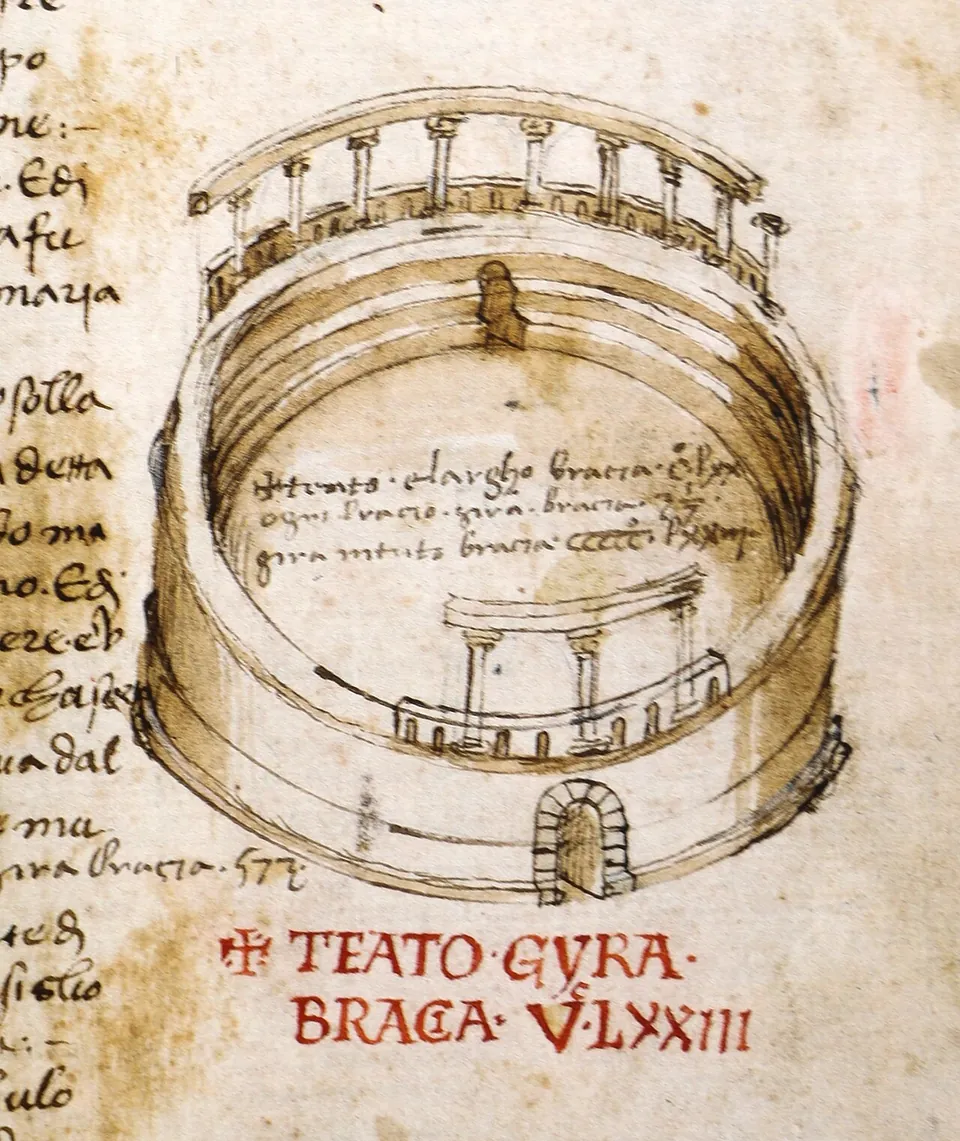
It was built between 124 and 130 (Pleiades; it.wikipedia), well outside the walls, and marked the furthest the Roman town reached to the east (it.wikipedia). Published figures for its size differ: the long axis is given as 113 to 126 m, the short axis as 89 m, and the arena floor as 64 by 40 m; the capacity is put at 15,000 to 20,000 spectators, a middle-sized arena beside the Colosseum’s 87,000 (it.wikipedia). Its outer wall rose three storeys in local stone faced with marble, two of them arcades one above the other and the top one a solid wall with small windows. Its capacity and its masonry of coursed pietraforte are what date it to Hadrian, and a size beyond what the town alone needed has suggested it also served the people of the outskirts and of Fiesole. How the inside was laid out is partly conjecture, and where the main entrances lay is not known (it.wikipedia).
It probably went out of use by the second half of the 4th century, and from the end of that century it was partly dismantled for its materials, often reused in religious buildings (it.wikipedia). The name outlived the building: it is recorded from 1013 as Perilasio, Perilascio, Parlascio and Parlagio, from a Greek word for a circular space (it.wikipedia), and nearby via del Parlagio was called via del Parlascio until 2012 (fr.wikipedia). As the medieval city grew it was taken inside the new walls, the Peruzzi built their palace on it, and medieval chroniclers say it served as a prison (it.wikipedia). In the late 19th century the rebuilding of the centre planned a broad avenue from Piazza della Signoria to Piazza Santa Croce through the quarter; it was never built (it.wikipedia).
It has never been systematically excavated (it.wikipedia). The first detailed study was published by the scholar Domenico Maria Manni in 1746. Remains that had come to light in the 16th century were uncovered again and surveyed by Desiderio Fraschetti in 1886 (it.wikipedia), and a small part emerged in 1887 during work on a sewer in Borgo dei Greci (it.wikipedia). A test trench dug in Borgo dei Greci, inside the arena, in 2014 found no Roman levels even at almost 4 m below the street (it.wikipedia). The scale model photographed on this page, with the amphitheatre in front, was shown in the Museo di Firenze com’era, which closed in October 2010 (fr.wikipedia), so it cannot be seen there.
History
Florentia was founded as a Roman colony beside the Arno, in Regio VII Etruria, on a site where a small Etruscan settlement had grown up from the 8th century BC (it.wikipedia). Its date has long been argued over. The decision to found the colony is linked either to a law of 59 BC or to the years after Caesar’s death, and the excavated town plan dates from between 30 and 15 BC. The older attribution to Sulla has been rejected (it.wikipedia). It was laid out as a grid with the forum where its two main streets crossed, next to the bridge where the road crossed the river, and walled in brick with round towers (it.wikipedia). In AD 15, the historian Tacitus records, a delegation from Florentia went to the Senate in Rome to oppose a plan to divert the Chiana into the Arno, and the plan was dropped (it.wikipedia).
The town reached its peak under Hadrian. The aqueduct, the amphitheatre and the large baths were built, the forum was enlarged and repaved in marble, and the theatre’s seating, until then largely of timber, was built in masonry (it.wikipedia). Published capacities for the theatre run from 8,000 to 15,000 spectators (it.wikipedia, en.wikipedia). From the end of the 3rd century Florentia was probably the seat of the governor of Tuscia et Umbria; a statue dedicated to Diocletian in 287 was found near Por Santa Maria in 1873 (it.wikipedia).
Christianity reshaped the town early. The first known bishop of Florence, Felix, is recorded in 313, and in 394 Ambrose of Milan consecrated the basilica of San Lorenzo just outside the north gate. From the end of the 4th century the public buildings were abandoned and stripped. The town came through the Ostrogothic period and the Gothic war, but by the Lombard age its Roman layout had dissolved (it.wikipedia). The theatre became a fortified strongpoint, remembered in the Middle Ages as the Guardingo (it.wikipedia).
More photographs





Nearby
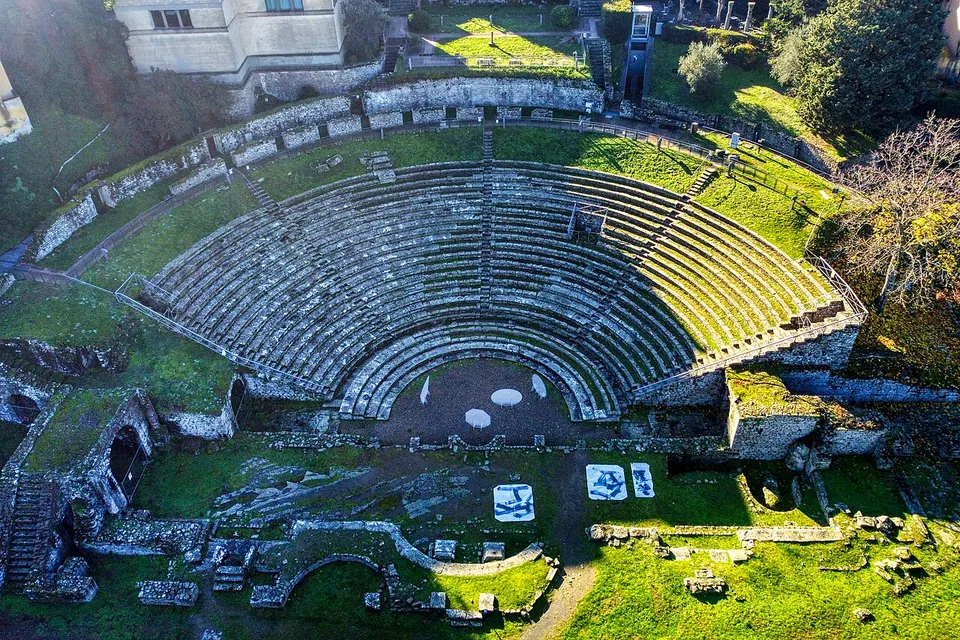
Photo: Hagai Agmon-Snir حچاي اچمون-سنير חגי אגמון-שניר · CC BY-SA 4.0 · Commons
5 km · city · Tuscany
Faesulae – Fiesole
The theatre is the set piece: a semicircle of stone tiers, partly cut into the rock of the slope, facing out over the countryside, with the orchestra and the foundations of the stage building in front (it.wikipedia, the operator).
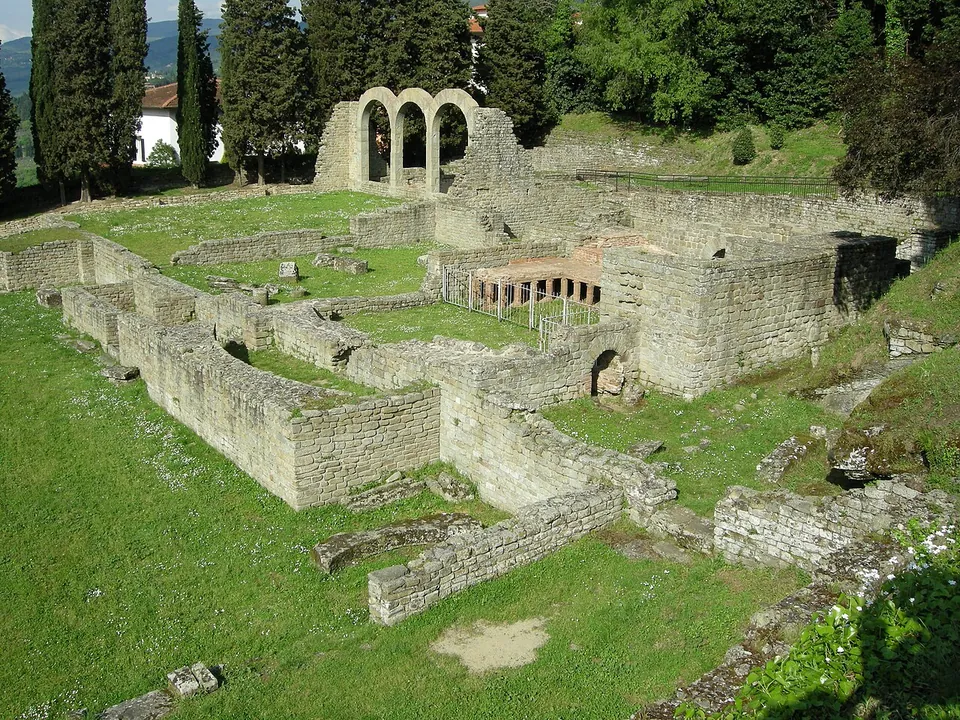
Photo: sailko · CC BY 2.5 · Commons
5 km · bath · Tuscany
Roman baths of Fiesole
The complex is almost rectangular, about 75 m by 53 m, between the back of the theatre and the Etruscan city wall (de.wikipedia).


Straight-line distances.
Sources
Every fact on this page comes from the records below, each used under the licence noted.