Larinum is the Roman town under modern Larino, in Molise, and the part you can visit is an archaeological park on the edge of the ancient town: the remains of a 1st-century AD amphitheatre and of a bath building with mosaic floors, in the grounds of a villa that now belongs to the heritage authority. Entry is free.
What is there today
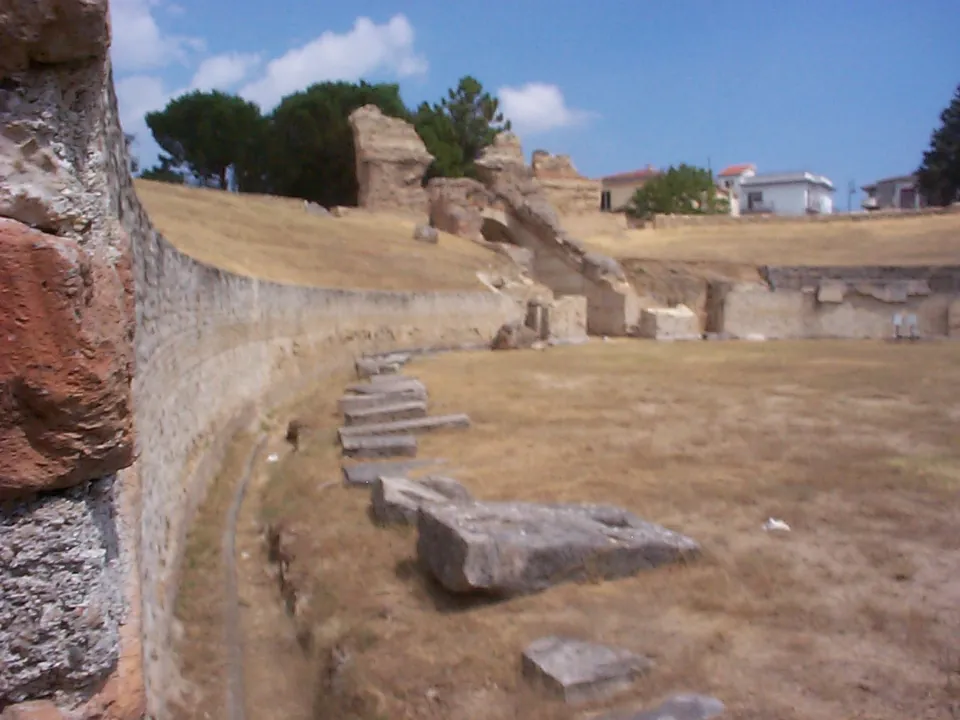
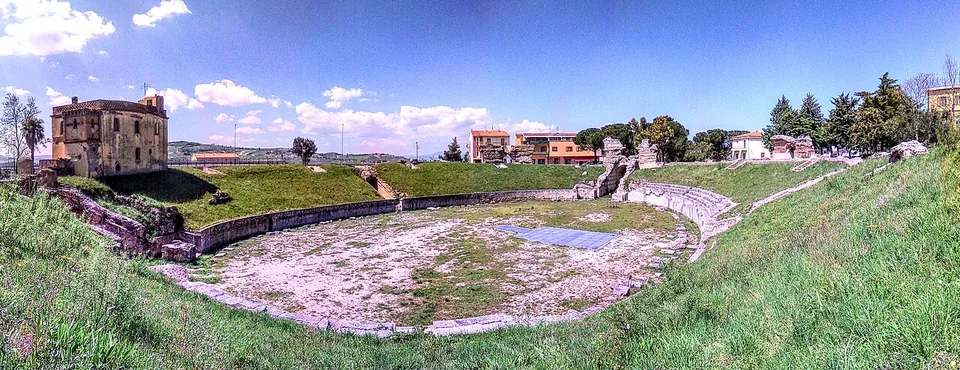
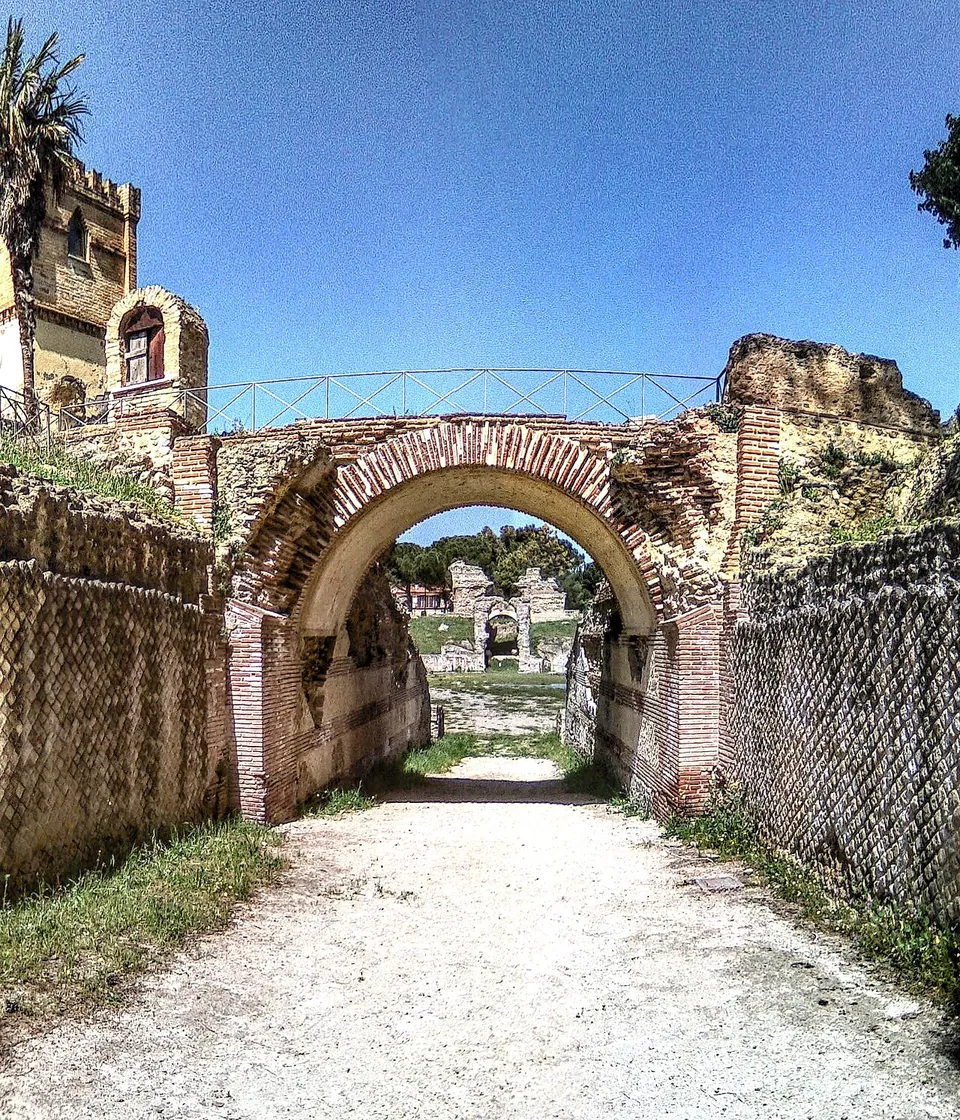
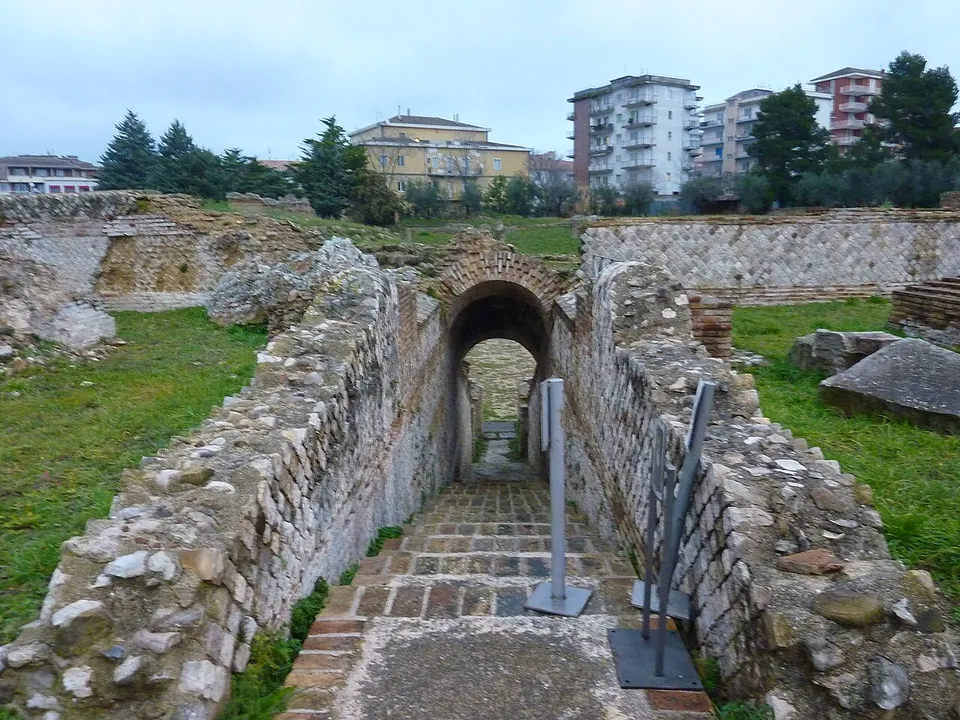
The amphitheatre is the main sight. It is a medium-sized elliptical arena, about 98 by 80 m overall with an arena of about 59 by 42 m, able to hold close to eleven thousand people (it.wikipedia). The arena and the lowest tiers of seating were cut straight into the soft bedrock and the upper tiers were built up in masonry (the operator; MOVIO). What survives is the arena with the wall of its podium, the sloping ground of the lower seating, some of the passages the crowd used to reach the seats, and the structures of the corridor that ran round the first tier (the operator). Centuries of stone-robbing took the rest: excavation found no trace of the stepped seats, and above ground little stands beyond the corridor and outer wall at the north gate and short stretches elsewhere (it.wikipedia; MOVIO). The gate passages and the corridor are faced in brick and opus reticulatum, small stones set in a diamond net pattern (MOVIO). Near the middle of the arena a rectangular pit almost 5 m deep was found with counterweight stones in it, almost certainly from a lift that raised animal cages to the arena floor (it.wikipedia).
Next to the arena, inside the same park, are the remains of a bath building: two pools for hot, warm and cold bathing, the furnace room, a room with the small pillars that carried a heated floor, and a large drain. Its polychrome mosaics, with geometric patterns and marine and fantastic animals, are under a protective roof and seen from a metal walkway (it.wikipedia; the operator). MOVIO dates them to the 2nd century AD.
Elsewhere in the town, at Torre Sant’Anna, the east side of the forum has been identified, with brick walls of a building that may have been a temple of Mars still standing to a good height, and the floor of a Republican house’s rainwater basin, a mosaic of an octopus and four groupers, is shown in place under a metal shelter (it.wikipedia; the operator). OpenStreetMap maps the forum remains about 300 m from the amphitheatre; no source read says whether that area keeps the park’s hours. Three polychrome mosaics from Roman houses, among them a she-wolf suckling the twins, were lifted and are kept in the Palazzo Ducale (it.wikipedia; MOVIO).
Is it worth the trip?
Worth an hour if you are in Molise or passing between the Adriatic coast and inland Molise; not a reason on its own to cross Italy. The amphitheatre is a real arena you can walk into, free, but it has been stripped to its lower walls and grassed slopes, and modern housing, the railway and the main road press close round it (it.wikipedia). The bath mosaics add a second reason to stop. The catch is the timetable: mornings only, Tuesday to Saturday, so a Sunday or an afternoon visit finds the gate shut unless there is a special opening.
Getting there
The park is on Via Dante Alighieri in Larino, beside the SS 87 road, about 26 km inland from the Adriatic coast (the operator; it.wikipedia; OpenStreetMap). A free car park is mapped about 80 m from the amphitheatre. Larino railway station is mapped about 650 m away, but no bus stop is mapped near the gate (OpenStreetMap).
Admission is free. The park is open Tuesday to Saturday, 09.00 to 13.00, and closed on Sunday and Monday; a visit at another time can be arranged by ringing 0874 4271 or 0874 822787 or by e-mail to [email protected] (the Soprintendenza for Molise, the operator, on its page as archived on 19 May 2026). That page is no longer online, so ring before travelling. The Soprintendenza also opens the park on some Sundays for local festivals and heritage days, as it did, free, on 11 October 2026.
Visiting details
- Opening hours
- Tuesday to Saturday 09.00–13.00; closed Sunday and Monday. Visits at other times can be arranged by telephone (0874 4271 or 0874 822787) or by e-mail to [email protected]. The Soprintendenza adds Sunday openings for local festivals and heritage days.
- Tickets
- Free.
- Parking
- A free surface car park is mapped about 80 m from the amphitheatre (OpenStreetMap way/336485091).
Before you go
- Open mornings only, and not on Sunday or Monday outside the announced special openings.
- The operator's page with the timetable was last readable in May 2026 (archived copy) and has not answered since; telephone before travelling.
- No bus stop is mapped within 600 m. Larino railway station is mapped about 650 m away.
Hours and prices checked 19 May 2026 on the operator's own site. Confirm before travelling.
History
Larinum was a town of the Frentani, on the routes that joined the Adriatic coast to inland Samnium (the operator). It flourished most in the 3rd and 2nd centuries BC, when it struck its own coins with legends in Greek and in Oscan. Published accounts differ on when Rome took control: MOVIO says the Romans conquered it in the 4th century BC, the operator that it became Rome’s ally during the 3rd. It became a municipium only after the Social War of 91–88 BC (the operator; MOVIO gives 89 BC). Under Augustus the river Biferno became the boundary between two of Italy’s regions, and Larinum fell in Regio II with Apulia, although Pliny still called its people Frentani (it.wikipedia).
In 66 BC Cicero defended a citizen of Larinum, Aulus Cluentius Habitus, in a Roman court, and his speech, the Pro Cluentio, is the main ancient picture of the town: rich, busy, holding games and markets, and split by faction in the years after the Social War (it.wikipedia). Prosperity lasted into the 2nd century AD (the operator). The forum was given monumental buildings from the middle of the 1st century AD, and the amphitheatre was built under the Flavian emperors, paid for under the will of a man of senatorial rank, according to a fragmentary inscription from one of its gates (the operator; it.wikipedia; MOVIO). A second inscription, from its south gate, probably records restoration or embellishment by another senator between about 120 and 140 (MOVIO).
The town was still inhabited in the 4th century, when it was hit by the earthquake of 346 that struck all Samnium, and its forum buildings were restored afterwards (it.wikipedia). MOVIO records a bishop’s seat here until the 5th century. The amphitheatre fell out of use and became a burial ground, and a lime kiln worked in the ramp of its east gate until the early 8th century (the operator; it.wikipedia). The town in the plain was finally abandoned in the 9th century, when Saracen raids drove its people away (the operator), and the stone of the ruins went into the houses of the medieval town (it.wikipedia).
Most of the Roman town now lies under the post-war town, built over Piana San Leonardo, so excavation since 1977 has been limited to the plots left open between modern buildings, where the finds have been consolidated and, as far as possible, left in place (it.wikipedia).
More photographs
Nearby
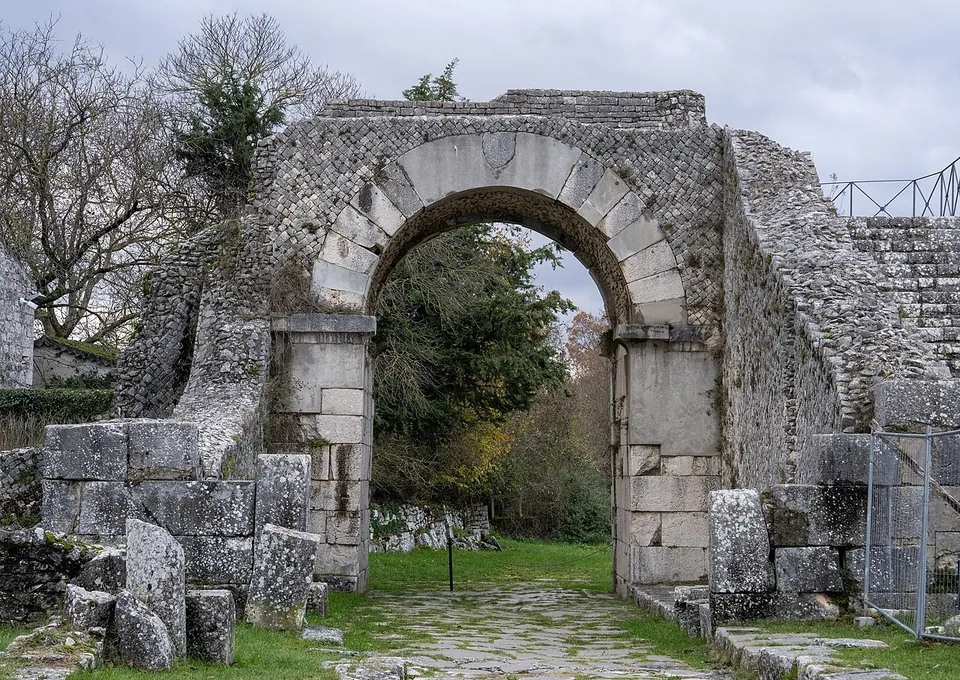
Photo: Stapinium · CC BY 4.0 · Commons
48 km · city · Molise
Saepinum
The walls are the first thing you see: a circuit of about 1,270 m in small-stone net-pattern masonry, punctuated by round towers, enclosing about 12 hectares, with a monumental gate at each end of the two main streets (it.wikipedia).
49 km · amphitheatre · Apulia
Roman amphitheatre of Lucera
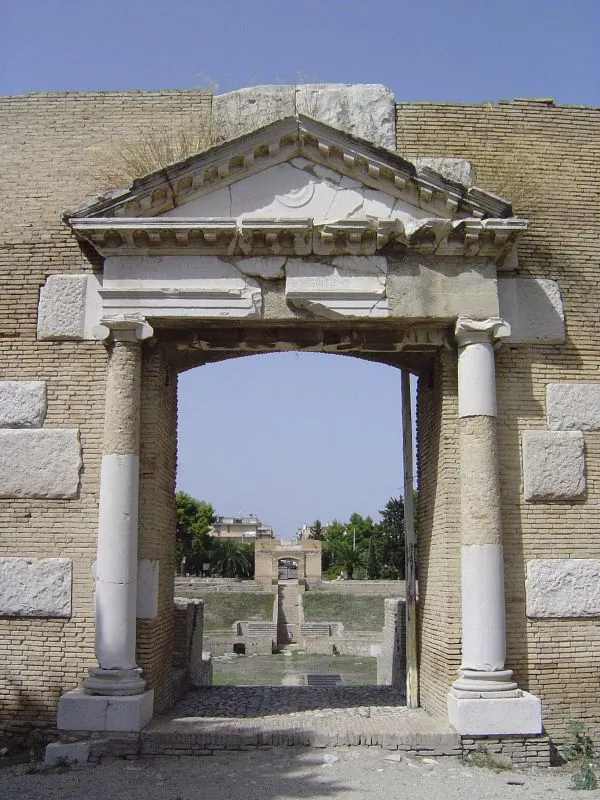
The amphitheatre sits in a natural hollow, dug out into a rough oval, with part of the seating laid on the slope (fr.wikipedia).


Straight-line distances.
Sources
Every fact on this page comes from the records below, each used under the licence noted.
| Source | Licence |
|---|---|
| Pleiades 442629 | CC BY |
| Wikidata Q3827093 | CC0 |
| OpenStreetMap relation/4758578 | ODbL |
| Soprintendenza Archeologia, Belle Arti e Paesaggio per il Molise — Area archeologica di Larino (the operator; archived copy of 19 May 2026) | licence not recorded |
| Soprintendenza Molise — special opening of the Parco Archeologico di Larino e Villa Zappone, 11 October 2026 (archived copy) | licence not recorded |
| Ministero della Cultura, MOVIO — Archeologia a Larino | licence not recorded |
| Wikipedia (it) — Larinum | CC BY-SA 4.0 |
| Wikipedia (en) — Larinum | CC BY-SA 4.0 |
| Wikipedia (it) — Anfiteatro romano di Larino | CC BY-SA 4.0 |
| Wikipedia (fr) — Amphithéâtre de Larino | CC BY-SA 4.0 |
| Pleiades — Larinum Roman amphitheater | licence not recorded |
| Wikidata — Roman amphitheatre of Larino (Q2844407) | licence not recorded |
| Vici.org — the amphitheatre of Larinum (4234) | licence not recorded |