Patavium was the Roman town under modern Padua, one of the richest in Italy at the end of the 1st century BC, and what is left of it today is one stretch of amphitheatre wall in a city park, one Roman bridge standing in the open, and a museum of finds - most of the rest lies under the streets.
What you’ll see
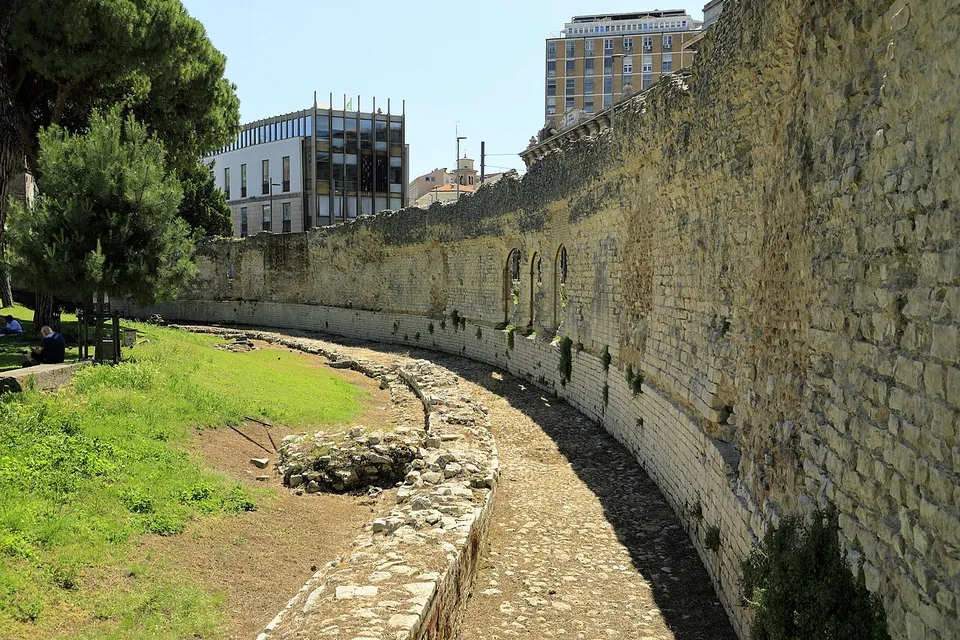
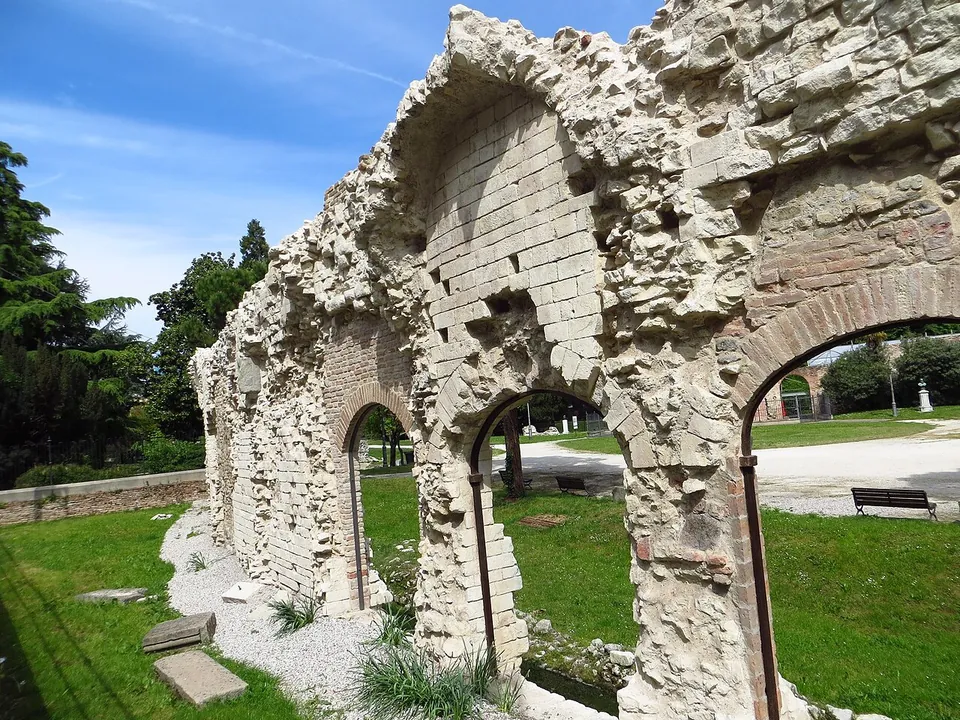
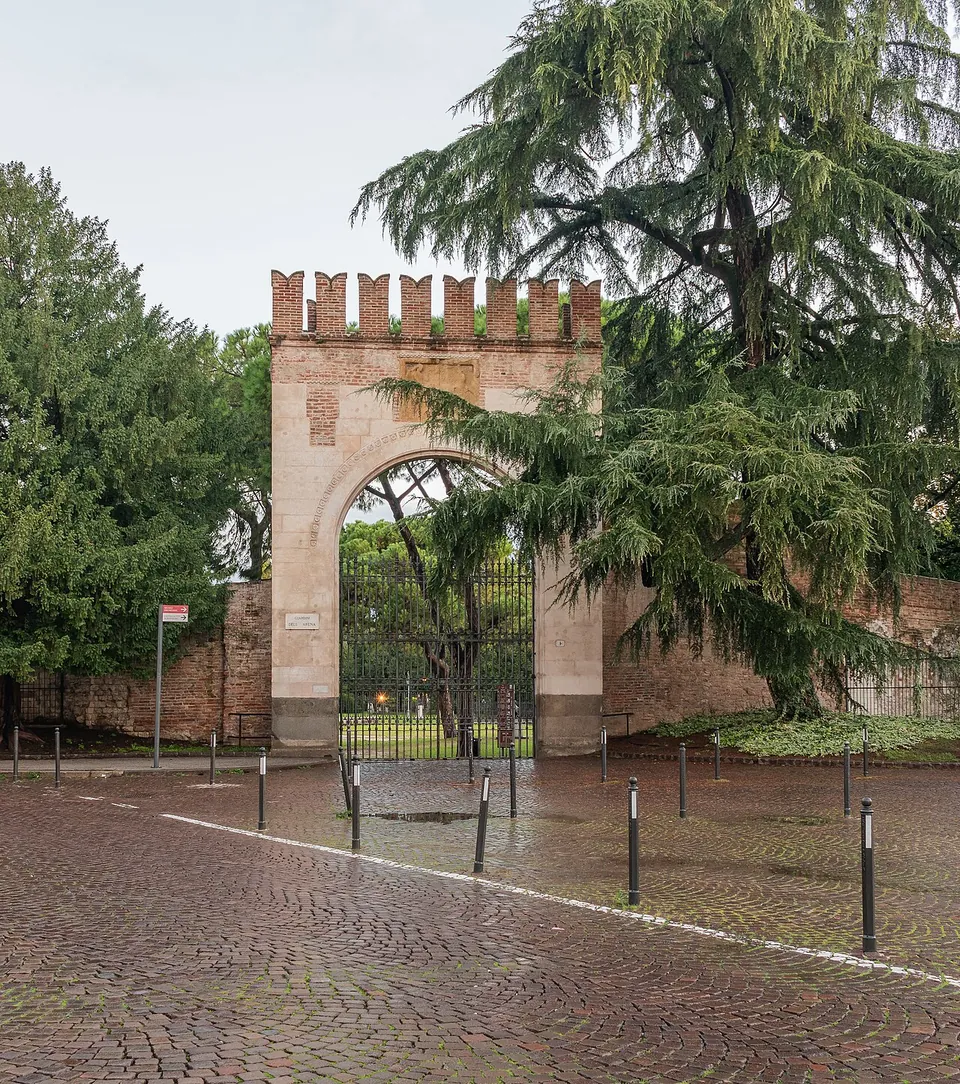
The amphitheatre is the one thing to walk round. Its elliptical building measured about 134 by 97 m; what survives is roughly two-thirds of the middle wall of the ellipse, with its 2 m-wide arched openings, and some loose fragments, standing in the public gardens of the Giardini dell'Arena (ArcheoVeneto, University of Padua).
Worth the trip?
Not for Roman Padua alone. The city's own museums put it plainly: almost nothing of the ancient city is visible (Padova Musei Civici).
Getting there & cost
Padua is on the Milan–Venice railway, 30 minutes from Venice by train (en.wikipedia).Free · The Arena gardens and Ponte Molino are free · checked 18 October 2026Hours, tickets and parking
The surviving ring wall of the amphitheatre in the Giardini dell'Arena, seen from the inside. · Photo: Falk2 · CC BY-SA 4.0 · Wikimedia Commons
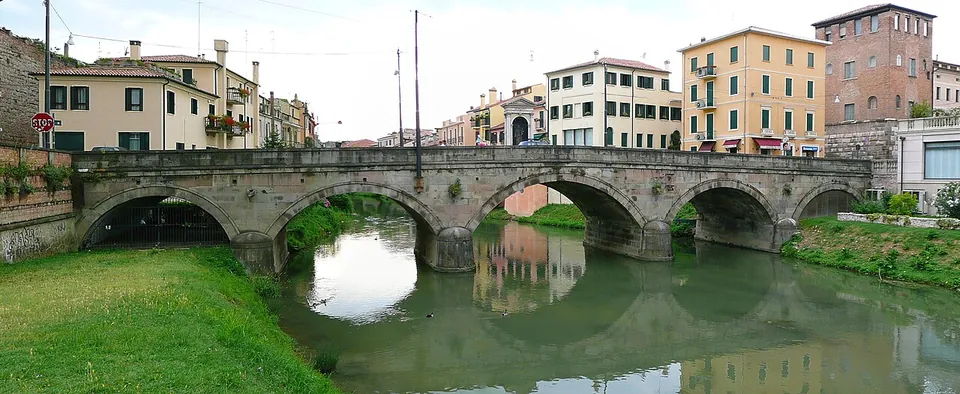
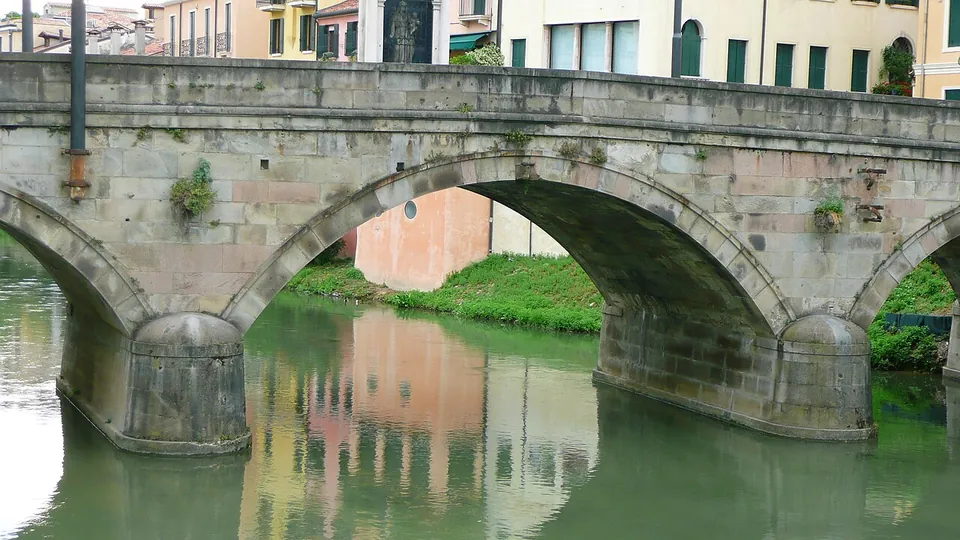
Ponte Molino over the Bacchiglione, the only one of Padua's Roman bridges that stands above ground. · Photo: Gun Powder Ma · CC BY-SA 3.0 · Wikimedia Commons
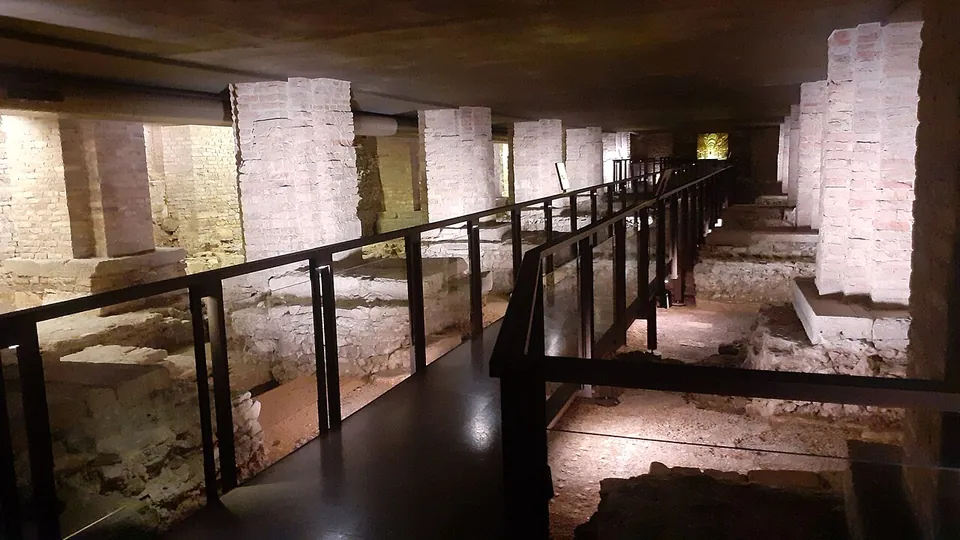
From the street, nothing: the river it crossed was filled in, and the bridge sits entirely below the modern road (OpenStreetMap; Turismo Padova, the city's tourism site).
Restricted access
What is there today
The amphitheatre is the one thing to walk round. Its elliptical building measured about
134 by 97 m; what survives is roughly two-thirds of the middle wall of the ellipse, with its
2 m-wide arched openings, and some loose fragments, standing in the public gardens of the
Giardini dell’Arena (ArcheoVeneto, University of Padua). The Scrovegni Chapel, with Giotto’s
frescoes, stands on part of the same site (en.wikipedia).
Five Roman bridges are recorded in the town, and they are in very different states
(en.wikipedia; Turismo Padova, the city’s tourism site):
Ponte Molino carries the street over the Bacchiglione on five flattened stone arches. It
dates from the late Republic, was restored in the Middle Ages and in the 19th century, and
its cutwaters are 19th-century additions (it.wikipedia). The Porta Molino gate rises at its
southern end.
Ponte San Lorenzo, built between 47 and 30 BC according to its inscription, is the
technically remarkable one: three arches of 12.5-14.4 m on piers only 1.72 m thick, which
makes it one of the earliest segmental-arch bridges known (en.wikipedia). It lies intact
below Via San Francesco, reached through an underpass, and opens only on special occasions
(Turismo Padova).
Ponte Corvo, of the 1st or 2nd century AD, keeps three arches over a branch of the river,
partly buried and partly walled up (en.wikipedia).
Ponte Altinate, at the crossing of Via Altinate, is completely buried under the road and
cannot be seen (en.wikipedia).
Ponte San Matteo, near the church of the same name, is the fifth (en.wikipedia).
The finds are in the Museo Eremitani on Piazza Eremitani, next to the gardens: the city
museums describe floor mosaics, statues, grave goods and funerary monuments from the
cemeteries outside the town (Padova Musei Civici).
Is it worth the trip?
Not for Roman Padua alone. The city’s own museums put it plainly: almost nothing of the
ancient city is visible (Padova Musei Civici). Above ground the amphitheatre is a single ring of
limestone wall rather than a standing arena, and the most interesting bridge is shut most
of the year.
As part of a day in Padua, though, it is easy and mostly free. The amphitheatre, the
Scrovegni Chapel and the Museo Eremitani share one address on Piazza Eremitani, and the chapel
is entered through the museum (padovamusei.it), so anyone who comes for Giotto is already at
the Roman wall; Ponte Molino is about 400 m away. A
ticket for the Museo Eremitani is €11, or €15 with the Scrovegni Chapel.
Getting there
Padua is on the Milan–Venice railway, 30 minutes from Venice by train (en.wikipedia). The
historic centre is partly closed to cars, with car parks around it (en.wikipedia); the
Emanuele Filiberto bus stops lie about 60 m from the centre point (OpenStreetMap). The stops
are spread over about 1.5 km, from Ponte Molino in the north-west to Ponte Corvo in the
south-east.
The Giardini dell’Arena are a public park with no ticket, entered during the park’s opening
hours (ArcheoVeneto); the hours themselves are not published online. The Museo Eremitani, Piazza Eremitani 8, is open every day
09.00-19.00 except 1 May, 25-26 December and 1 January. A museums ticket (with Palazzo
Zuckermann) is €11, reduced €9, €5 for young people and students; with the Scrovegni Chapel
it is €15, reduced €11, plus €1 for the chapel’s compulsory booking (padovamusei.it, read
18 October 2026 - check before travelling, since prices move).
Ponte San Lorenzo opens on special occasions, for visits run by the volunteers of the FAI’s
Padua delegation (Turismo Padova). The city museums also run a walking tour for school classes
along the line of the Via Annia, from the Arena to Ponte San Lorenzo and Prato della Valle,
only in March, April and May (Padova Musei Civici). A guided “Padua underground” tour, sold by the city’s tourism consortium,
takes in the basement of the Palazzo della Ragione, with the mosaic floor of a Roman house of
the late 1st or early 2nd century AD, and then the buried Ponte San Lorenzo (Regione del
Veneto).
Visiting details
Opening hours
The Giardini dell'Arena, the public park around the amphitheatre, is entered during the park's opening hours, which are not published online. Ponte San Lorenzo opens only on special occasions. The Museo Eremitani, with the city's Roman collection, is open daily 09.00–19.00, closed 1 May, 25 and 26 December and 1 January.
Tickets
The Arena gardens and Ponte Molino are free. Museo Eremitani (with Palazzo Zuckermann) €11, reduced €9, young people and students €5; with the Scrovegni Chapel €15 (reduced €11), plus €1 for the chapel's compulsory booking.
Parking
The historic centre is partly closed to traffic, with car parks around it; the Emanuele Filiberto bus stops are about 60 m from the centre point.
Before you go
Ponte San Lorenzo, the best-preserved of the bridges, lies under the street and opens only on special occasions, for visits run by FAI volunteers.
Ponte Altinate is completely buried under the road and cannot be seen.
Hours and prices checked 18 October 2026 on the operator's own site. Confirm before travelling.
History
Padua was one of the chief centres of the Veneti before Rome (en.wikipedia). By the late 3rd
century BC its people were allied with Rome against the Gauls, and men from Patavium fought
beside the Romans at Cannae; in 175 BC the town asked Rome for help against a civil war of its
own (en.wikipedia). It became a Roman municipium in 49 BC in name and in 45 BC in substance, under the Lex
Julia Municipalis (it.wikipedia). Under Augustus it was part of the tenth region of Italy,
whose capital was Aquileia, and the Via Annia linked it to Aquileia (it.wikipedia; Pleiades).
The town grew rich on horse breeding and the export of wool (it.wikipedia); by the end of the
1st century BC it seems to have been the wealthiest city in Italy outside Rome
(en.wikipedia). The historian Livy is recorded as a native of Patavium (Pleiades), though
en.wikipedia places his birth at nearby Abano; Thrasea Paetus and Asconius Pedianus were born
here (Pleiades). The city museums describe a town with a forum, a port, buildings for
spectacles and covered markets (Padova Musei Civici).
The amphitheatre is dated to the reign of Augustus (ArcheoVeneto; Pleiades), although the
city’s tourism site puts it around AD 70. It was identified in the 17th century and excavated
in 1880-1881 and 1906-1907 (ArcheoVeneto). In the Middle Ages it was used as a quarry; the
Scrovegni family later bought the site and built their palace and chapel on it (Turismo
Padova). Remains of baths lie under the Palazzo Storione, and of the forum, around Piazza
Garibaldi and Piazzetta Cavour, a single column survives (it.wikipedia).
The end came slowly. Attila’s Huns sacked the city in the mid-5th century; it passed to
Odoacer and Theodoric, was retaken by the Eastern Empire during the Gothic War and fell to the
Lombards in 568. In 601 it rose against the Lombard king Agilulf, and after a twelve-year
siege the Lombards stormed and burned it (en.wikipedia).
The flattened arches of Ponte Molino; the cutwaters on its piers were added in the 19th century. · Photo: Gun Powder Ma · CC BY-SA 3.0 · Wikimedia Commons