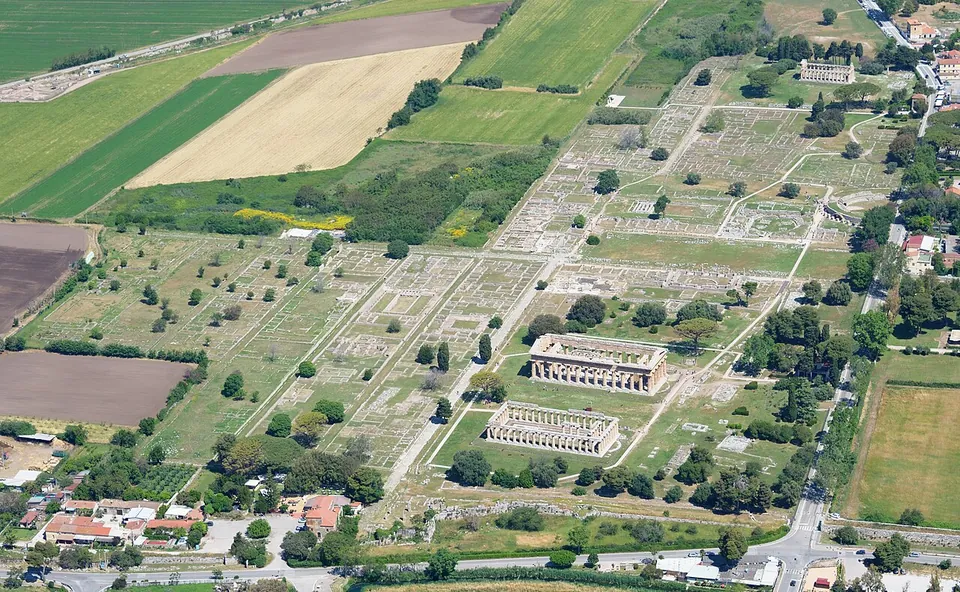


Paestum, 40 km south of Salerno, is the Greek city of Poseidonia that Rome took over in 273 BC and made a Latin colony. Three Greek temples are what bring most people here, and they are in an excellent state of preservation; around them lie the Roman town’s forum, its assembly place, an early amphitheatre and streets of excavated houses, all inside a circuit of walls that is still almost complete.
What is there today
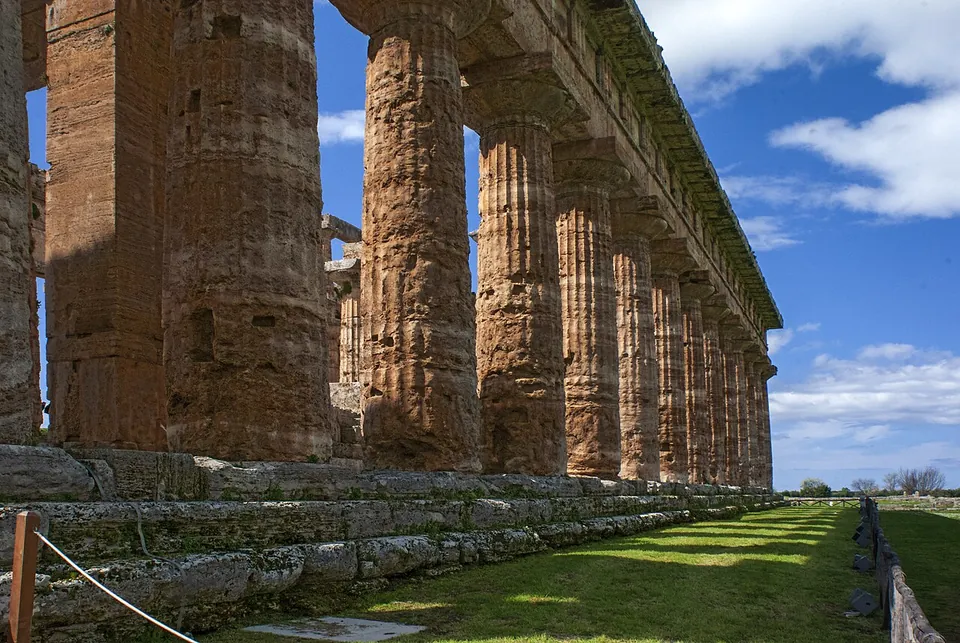
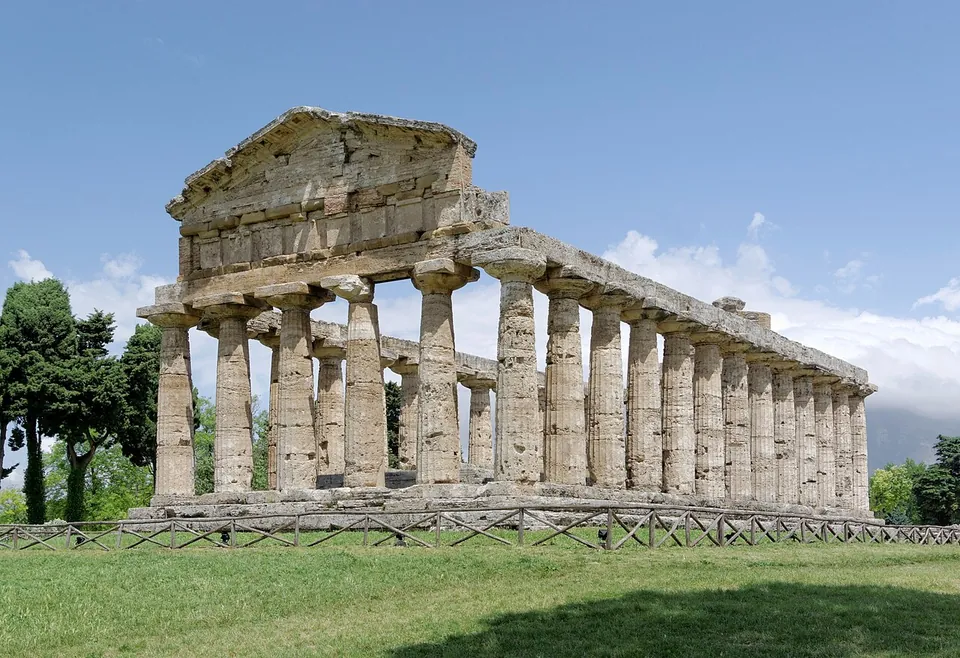
The temples come first, and there is no point pretending otherwise: two temples of Hera stand side by side in the southern sanctuary, and a third, smaller one, to Athena, on the high ground to the north. All three are Greek and date from about 550 to 450 BC (en.wikipedia). The Second Temple of Hera still carries most of the stonework above its columns, and the Temple of Athena keeps the gable of its front (en.wikipedia).
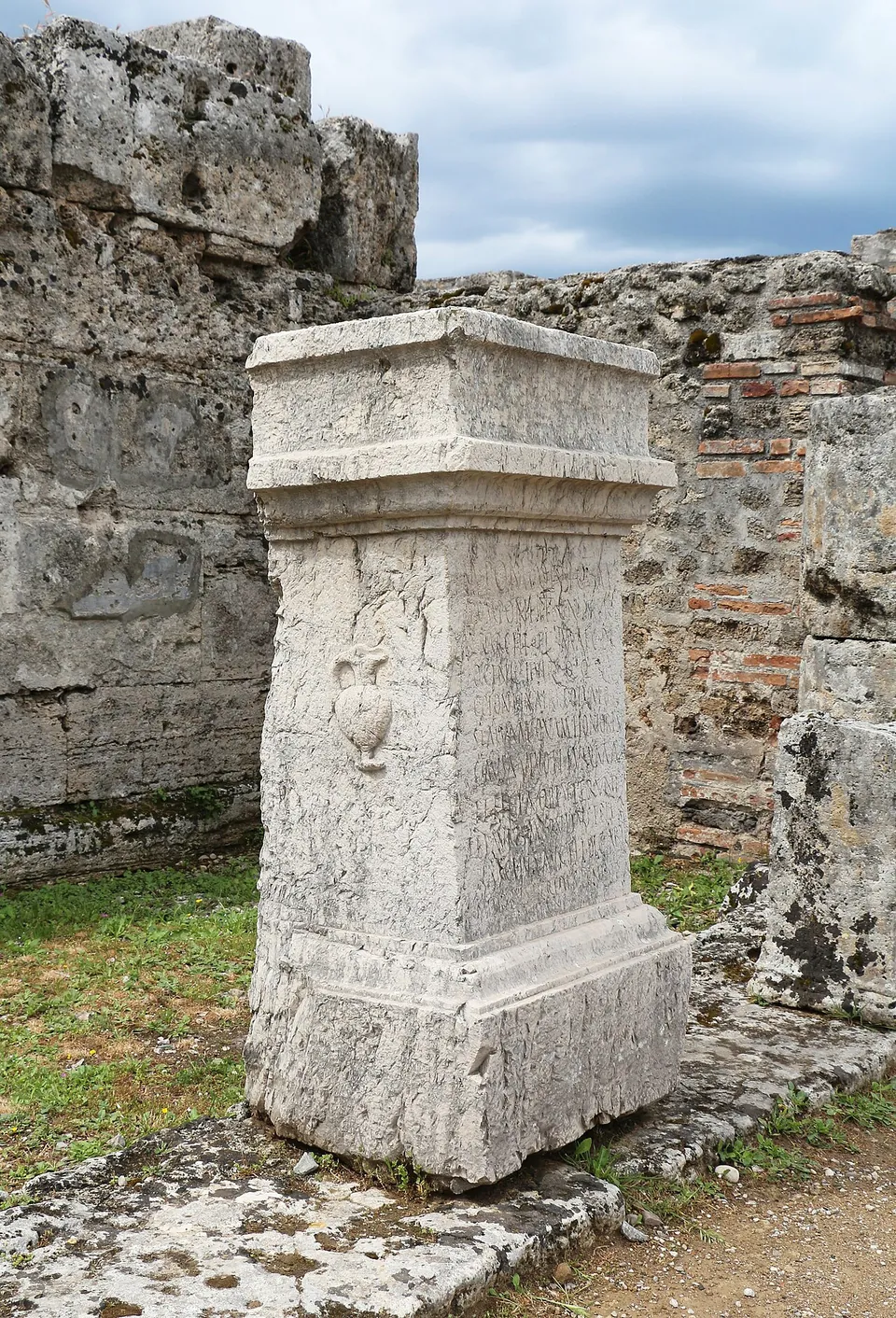
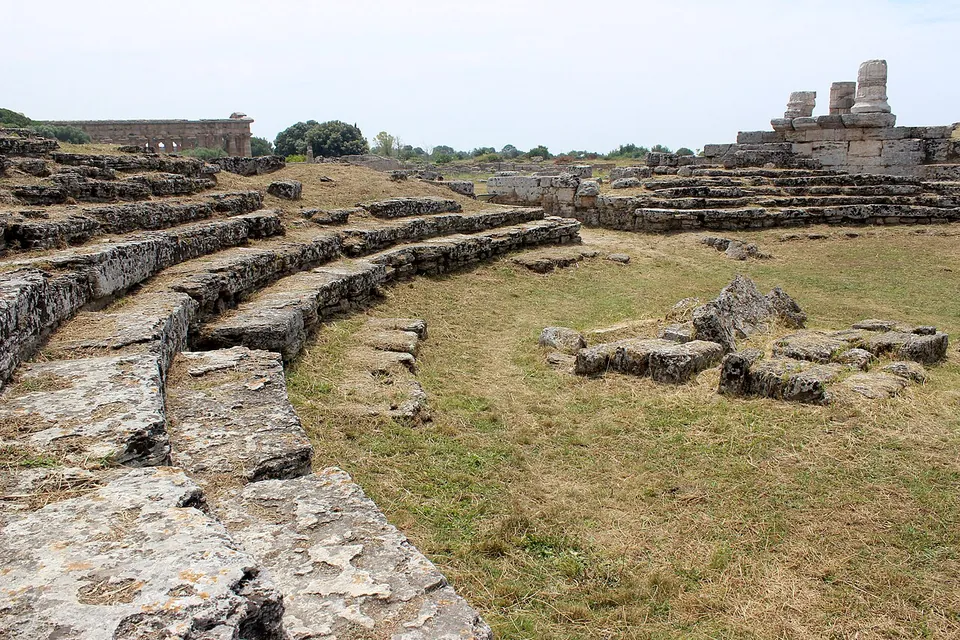
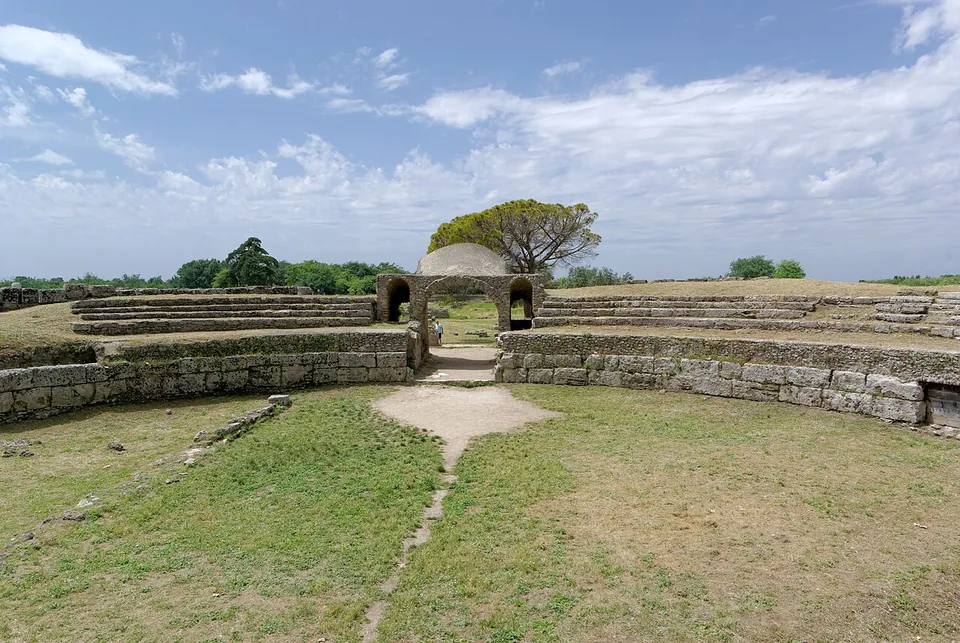
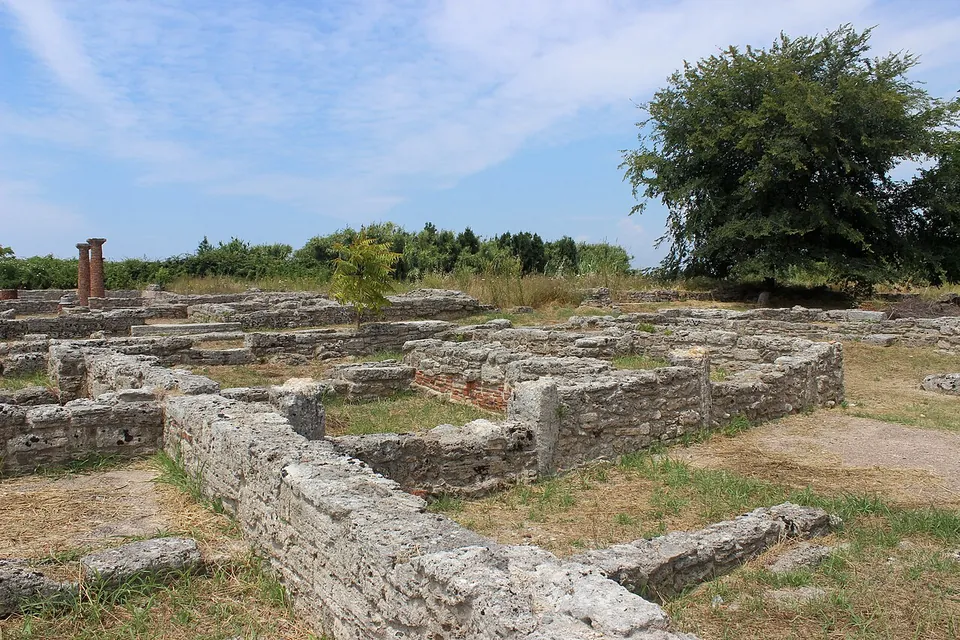
The Roman town is spread out between them, mostly at the height of footings and low walls. The forum is a long open square of column stumps, laid out over the Greek agora after the colony was founded; on its north side are the stepped comitium, an assembly place, and the podium of a Roman temple; to the north-east is the amphitheatre, of about 50 BC, one of the earliest surviving (Pleiades), with only part of it visible because a modern road runs across it. Along the Via Sacra, a paved main street, lie excavated houses, large residences built over older ones (it.wikipedia). The walls, about 4.75 km round, survive almost complete (en.wikipedia); they are Greek, altered by the Lucanians and again under Rome (it.wikipedia). Only about 25 of the city’s roughly 120 hectares have been excavated (en.wikipedia). The National Archaeological Museum stands inside the site and is included in the ticket.
Is it worth the trip?
Yes, but know which trip it is. Come for the temples and you will not be disappointed: UNESCO listed the Greek temple complex in 1998 (de.wikipedia), and the Second Temple of Hera has been called the best preserved of all Greek temples (A. W. Lawrence, quoted by en.wikipedia). The Roman layer is real, and it is what makes Paestum a Roman site as well as a Greek one, but it is a plan on the ground rather than standing buildings: the forum, the comitium and the houses are low walls and paving, and the amphitheatre keeps only a few rows of its seating. Allow time to walk the whole excavated area, not just the southern sanctuary, or the Roman town will pass you by.
Timing matters outside summer. From late September the Porta Cerere gate closes in the afternoon, after which only the southern sanctuary, with the two temples of Hera, can be visited; to see the forum and the amphitheatre as well, arrive before 17.00 until 24 October 2026, 15.30 from 25 October and 15.00 from 14 November (the operator).
Getting there
The remains lie in the frazione of Paestum, part of the comune of Capaccio Paestum, about 40 km south of Salerno and 97 km south of Naples (it.wikipedia). Paestum station, on the Naples–Salerno–Reggio Calabria line, is directly east of the ancient walls (en.wikipedia), and a bus stop is mapped about 200 m from the Temple of Hera I (OpenStreetMap). Paid car parks are mapped at both ends of the excavated area, near the temples of Hera and near the Temple of Athena. Tickets are sold at the main gate near the Second Temple of Hera and at the museum.
The site opens daily from 08.30 to 19.30, with last admission at 18.30; see above for the earlier afternoon cut-off on the full visit between autumn and spring. A ticket is €15 from March to November and €10 from December to February, €2 for visitors aged 18 to 24, and free for under-18s and for visitors with disabilities and their carers. It covers the archaeological area, the museum and the archaeological area of Velia for three consecutive days. Entry is free on the first Sunday of every month. Rucksacks and bulky bags are not allowed and there is no cloakroom (the operator, read 13 October 2026; check before travelling, since hours change through the year).
Visiting details
- Opening hours
- Daily 08.30–19.30, last admission and ticket office closing 18.30. From autumn to early spring the northern Porta Cerere gate closes early, and after that only the southern sanctuary (the two temples of Hera) can be visited: to see the whole area, including the forum and the amphitheatre, arrive before 17.00 until 24 October 2026, 15.30 from 25 October to 13 November, and 15.00 from 14 November 2026 to 1 January 2027 (the time then moves later again through the winter). In summer 2026 the whole area could be visited until 18.30.
- Tickets
- €15 from March to November and €10 from December to February; €2 for visitors aged 18 to 24; free under 18, and for visitors with disabilities and their carers. The ticket covers the archaeological area, the National Archaeological Museum of Paestum and the archaeological area of Velia, and is valid for three consecutive days. A one-year pass is €30. Admission is free on the first Sunday of every month and on 25 April, 2 June and 4 November 2026. Booking is not required.
- Parking
- Paid car parks are mapped at both ends of the excavated area, one about 250 m from the temples of Hera (tagged €5, OSM way/231602846) and one about 185 m from the Temple of Athena (tagged €4, OSM way/1462851750).
Before you go
- Rucksacks and bulky bags are not allowed in the archaeological areas, and there is no cloakroom.
- The park has no guided tours of its own; guides accredited by the Campania Region can be booked outside the gates.
Hours and prices checked 13 October 2026 on the operator's own site. Confirm before travelling.
The forum and the comitium
The forum of Roman Paestum measures about 57 by 150 m and stands north of the sanctuary of Hera, on the site of the Greek agora; it was surrounded by a portico of re-used Doric columns, with shops on its south side, baths paid for by M. Tullius Venneianus to the south-west and a building with three podiums, perhaps a shrine to the household gods of the town, on the west (Pleiades). Laying it out cut a strip from the Greek sanctuary to the south (it.wikipedia). Around the square, it.wikipedia identifies a market hall (macellum), probably the curia where the town council met, a Republican-era temple, and on the north side a temple on a high podium approached by a broad flight of steps, probably the Capitolium. The comitium beside it, a stepped assembly place reached by vaulted passages, was built as part of the forum complex after 273 BC (Pleiades, it.wikipedia).
The amphitheatre
Built around 50 BC, it is one of the earliest amphitheatres to survive (Pleiades). It began without an outer ring; towards the end of the 1st century AD a ring of arches on brick piers was added, and the parapet round the arena was built high to protect spectators from the animals (it.wikipedia). Only a few rows of seating survive, and a modern road cuts across it: published accounts put the buried part at between a third and a half (en.wikipedia, it.wikipedia).
The First Temple of Hera (the “Basilica”)
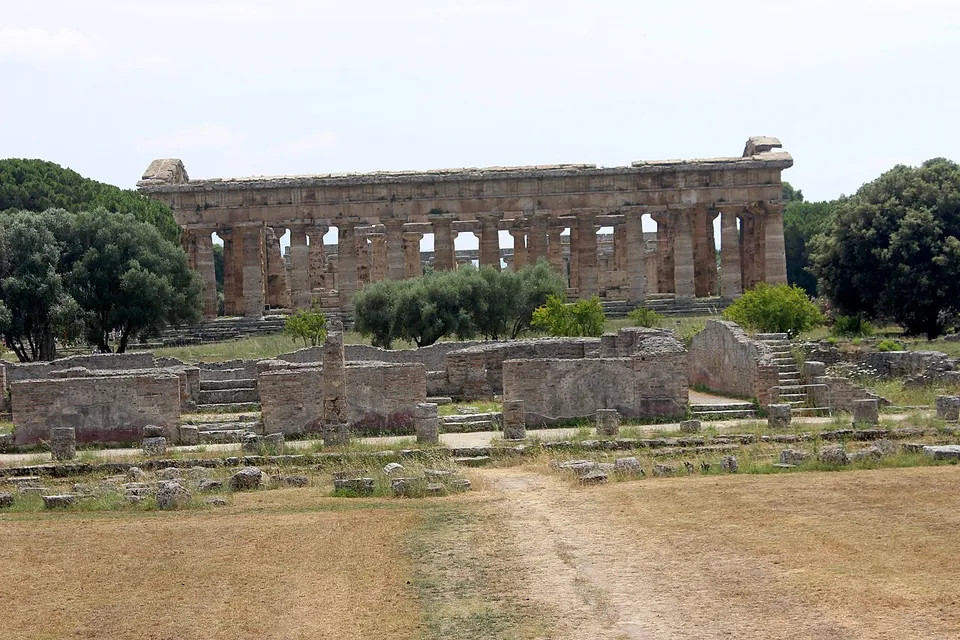
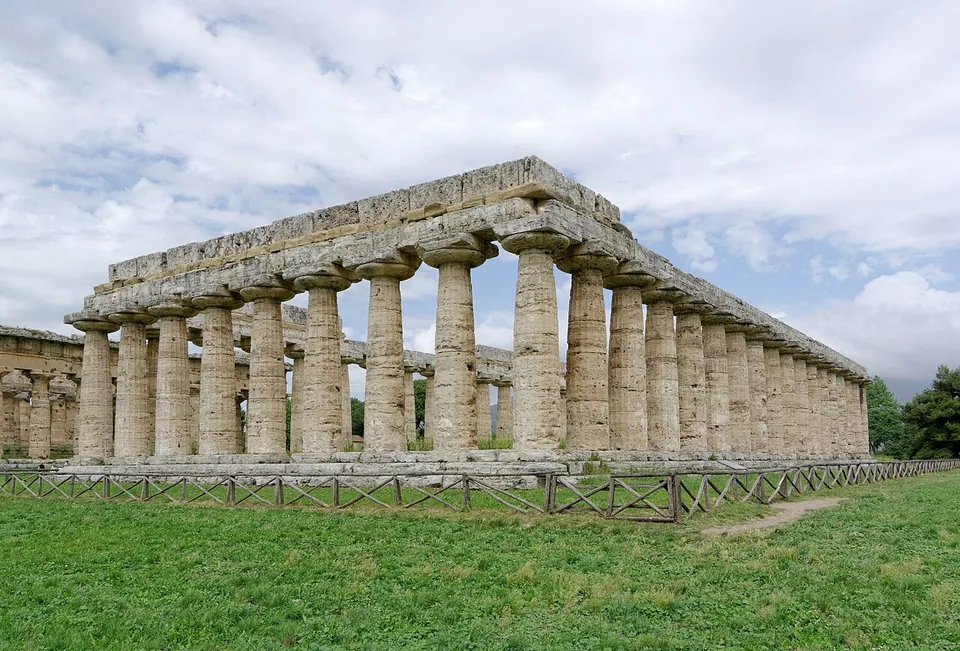
The oldest of the three temples, built in the mid-6th century BC (en.wikipedia), and the southernmost. Eighteenth-century scholars called it “the Basilica” because some took it for a Roman building (en.wikipedia). It has nine columns across each end and eighteen along each side, and its full outer ring of fifty columns survives, the only Archaic Greek temple where that is so (it.wikipedia). The path through the site gives access to its interior (the operator).
The Second Temple of Hera (“Temple of Neptune”)
Built around 460–450 BC just north of the first temple, it is the largest of the three (it.wikipedia). The name “Temple of Neptune” is an 18th-century mistake; the temple is most often attributed to Hera, though Zeus and Apollo have also been proposed (en.wikipedia, it.wikipedia). Inside, two rows of columns in two storeys still divide the cella into three aisles (it.wikipedia). On its east side are two altars, and the smaller one is Roman, built when a road leading to the forum was cut through the larger one (en.wikipedia).
The Temple of Athena
Built around 500 BC on the highest point of the town, and for a long time wrongly thought to be a temple of Ceres. It is Doric outside, while its porch held Ionic columns, of which the bases and two capitals remain; this seems to be the first time the two orders were combined in one building (en.wikipedia). Around the 8th century it was used as a church, with walls built between its columns and burials along its south side, and those additions were cleared during the excavations of the 1940s (en.wikipedia).
Walls and gates
Four main gates opened in the circuit: Porta Sirena to the east, Porta Giustizia to the south, Porta Marina to the west, towards the sea, and Porta Aurea to the north, of which little is left (en.wikipedia, it.wikipedia). Porta Marina is a gate of the Hellenistic fortifications on a main street leading to the port (Pleiades), with a paved entrance court defended by a round and a square tower (it.wikipedia). Published counts of the towers differ, between 24 and 28, most of them now ruined (en.wikipedia, it.wikipedia).
History
Greek settlers from Sybaris founded Poseidonia around 600 BC. The local Lucanians took it around 400 BC and called it Paistos, and Rome took it in 273 BC, after the war against Pyrrhus, renaming it Paestum and settling a Latin colony there (en.wikipedia). Paestum was a naval ally of Rome, owing ships and sailors when needed. It stayed loyal through Hannibal’s invasion: after Cannae it offered Rome the gold bowls from its temples, which were refused, and it sent ships of grain to the Romans besieged in Tarentum. As a reward it was allowed to go on striking its own bronze coins until the reign of Tiberius, marked PSSC, Paesti Signatum Senatus Consulto (it.wikipedia, en.wikipedia).
Under Rome the old Greek city changed shape, with the forum, a temple that was probably the Capitolium, a sanctuary of Fortuna Virilis and the amphitheatre, and its houses show a prosperous town (it.wikipedia). Virgil, writing around 29 BC, knew it for roses that bloomed twice a year (en.wikipedia). Christianity arrived early, with martyrs recorded under Diocletian (it.wikipedia), and the town had become a bishopric by around AD 400 (en.wikipedia).
Then the land turned against it. A river nearby, already described by Strabo, spread into marsh; the townspeople raised their streets and doorsteps, but the town shrank back towards its highest ground round the Temple of Athena, which was turned into a church (it.wikipedia). Paestum declined between the 4th and 7th centuries and was abandoned in the Middle Ages, probably because of malaria-ridden marsh and perhaps raids from the sea (en.wikipedia); it.wikipedia puts the final abandonment in the 8th or 9th century. In the 11th century stone from the empty town went into Salerno Cathedral. The temples came to wide notice again only in the 18th century, while a new road south from Naples was being built, and Piranesi’s etchings of them, published in 1778, circulated widely (en.wikipedia).
More photographs






Nearby
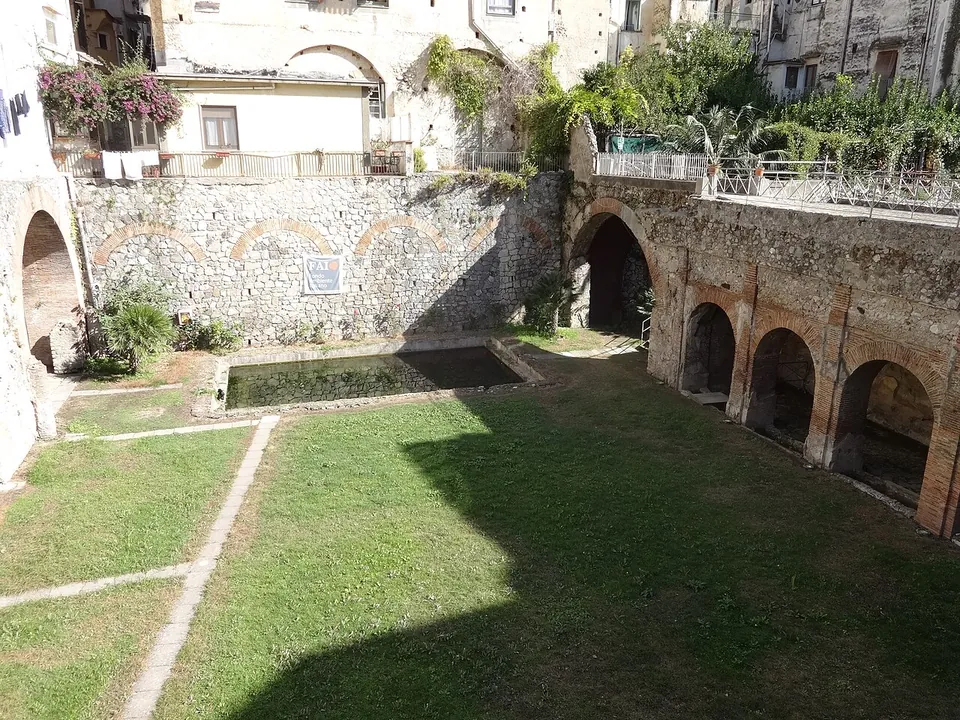
Photo: Derbrauni · CC BY-SA 4.0 · Commons
41 km · villa · Campania
Villa Romana of Minori
The villa was built around a garden, the viridarium, which had a pool at its centre and was enclosed on three sides by porticoes (it.wikipedia; the ministry).
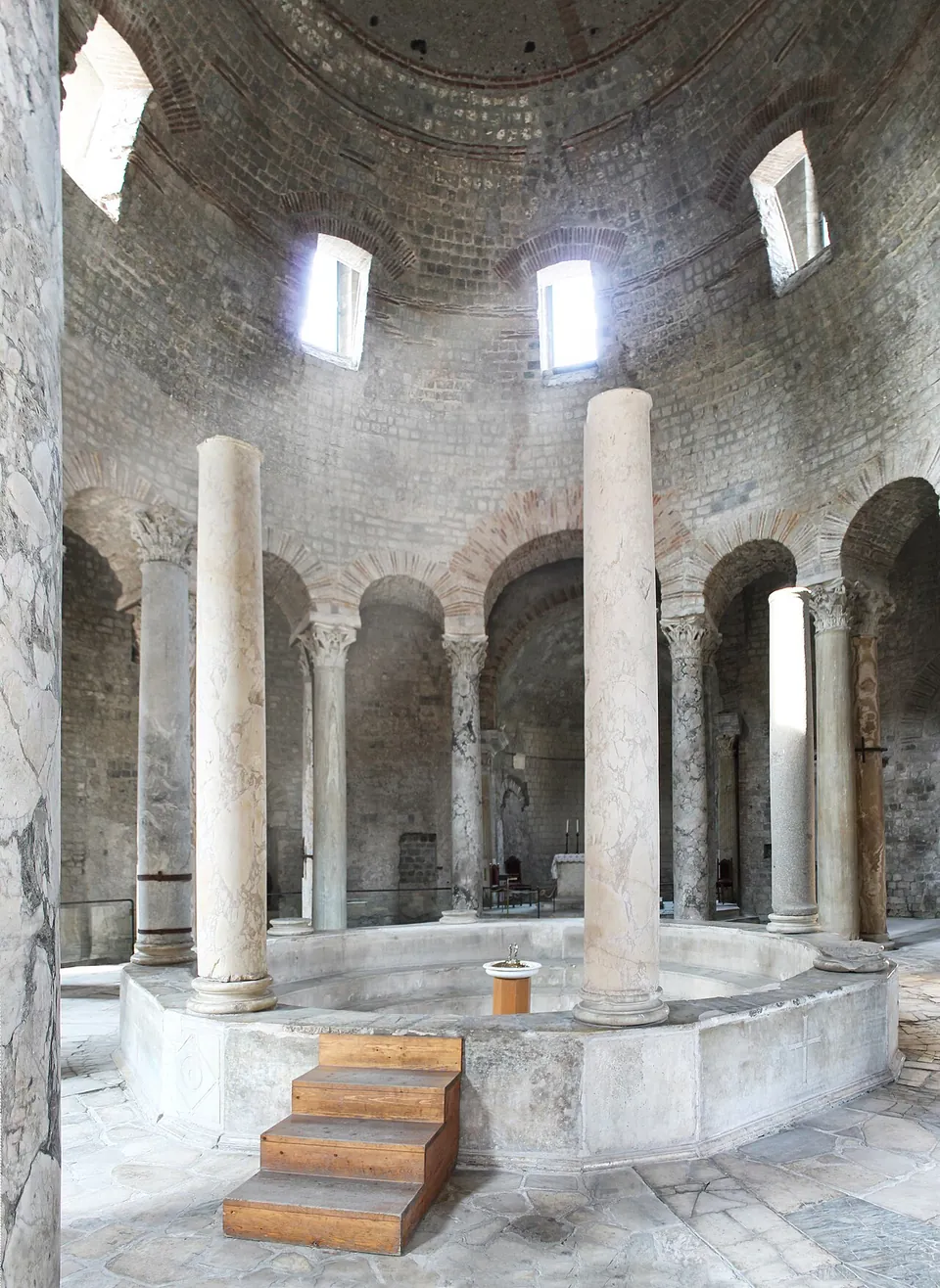
Photo: Nucerino · CC BY-SA 4.0 · Commons
46 km · city · Campania
Nuceria Alfaterna
The baptistery of Santa Maria Maggiore ("La Rotonda") is the set piece.


Straight-line distances.
Sources
Every fact on this page comes from the records below, each used under the licence noted.