The Villa Romana of Minori is a Roman seaside villa of the first century AD, set among the houses of Minori on the Amalfi Coast. The ministry that runs it calls it one of the best-preserved examples of a “villa marittima” on the Tyrrhenian coast. It is closed for restoration until further notice.
What is there today
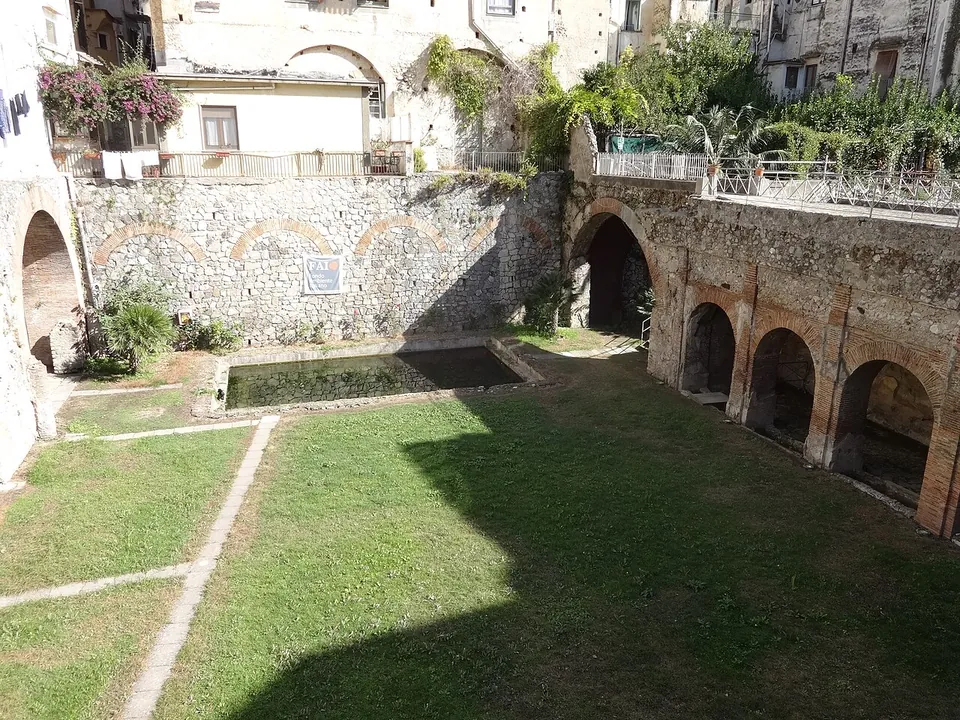
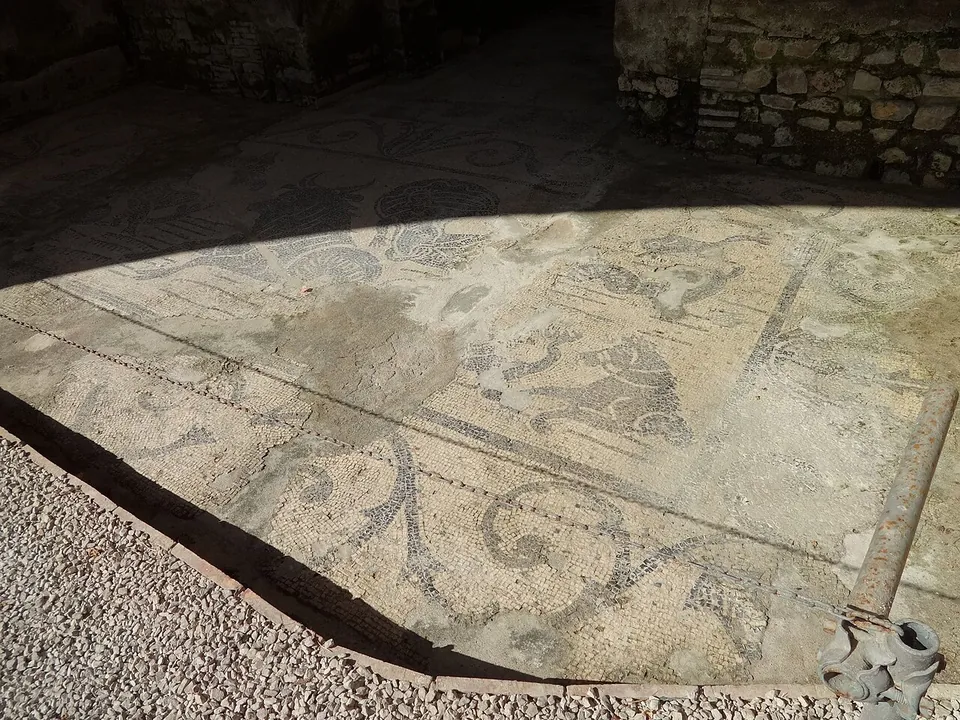
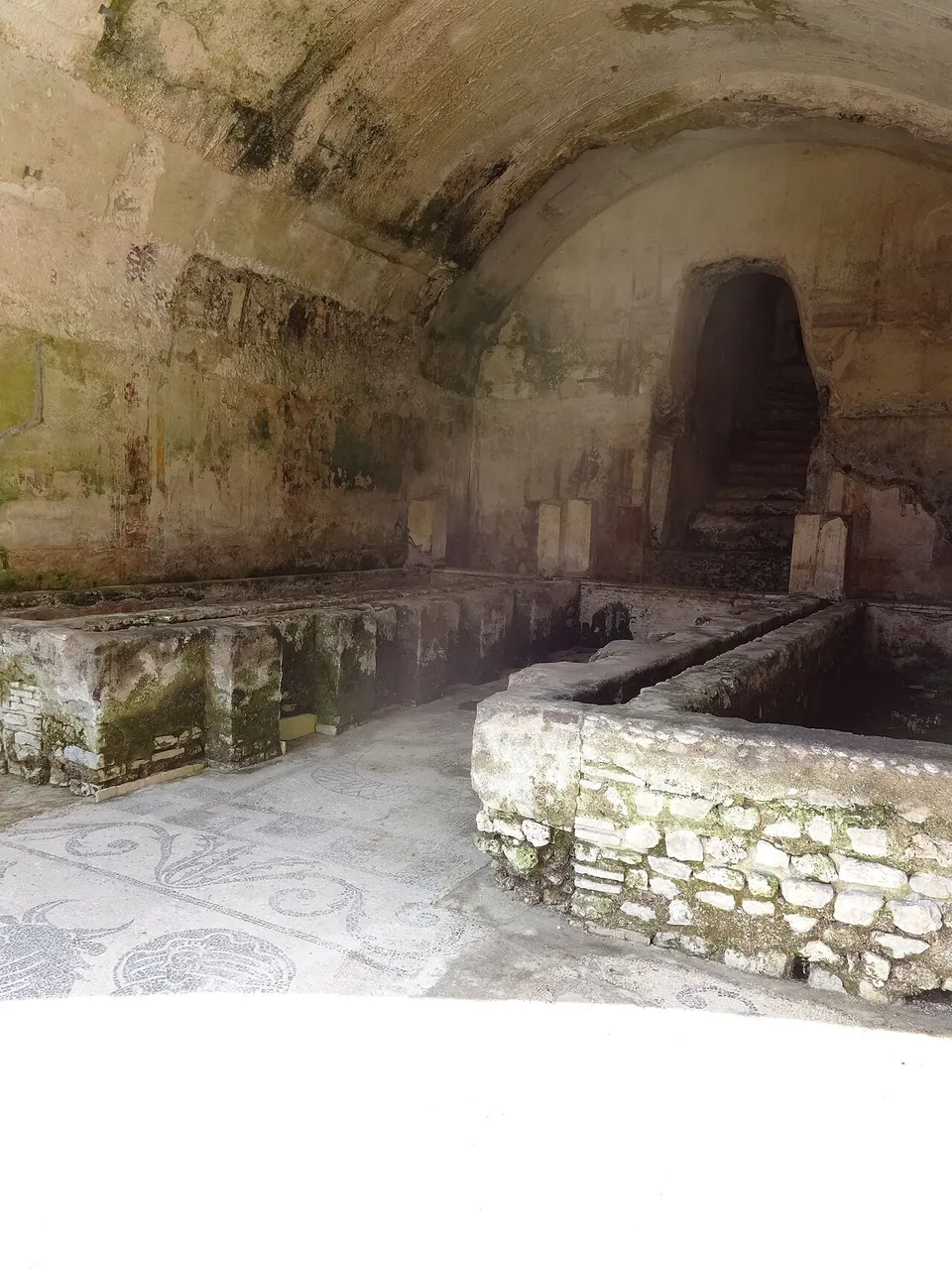
The villa was built around a garden, the viridarium, which had a pool at its centre and was enclosed on three sides by porticoes (it.wikipedia; the ministry). Part of that garden can be seen today, along with the service and reception rooms, which are decorated with stucco and frescoes (the ministry). Several rooms keep their vaults (it.wikipedia). At the heart of the plan is the triclinium-nymphaeum, a vaulted dining room where water ran down a staircase into channels and then on to the pool. Its floor mosaic shows a hunting scene and Nereids riding sea creatures (it.wikipedia). In 2023 that mosaic was cleaned of the debris and moss that had covered it and put back on view (Finestre sull’Arte).
Other rooms include a large hall painted with musical instruments and mythological medallions, a hall with a frieze of theatre scenes and masks, a bath suite with tepidarium and calidarium, and narrow service corridors (it.wikipedia). Only the seaward side of the house can be seen, because many of its other parts were taken over as cellars by the houses later built on the site (it.wikipedia).
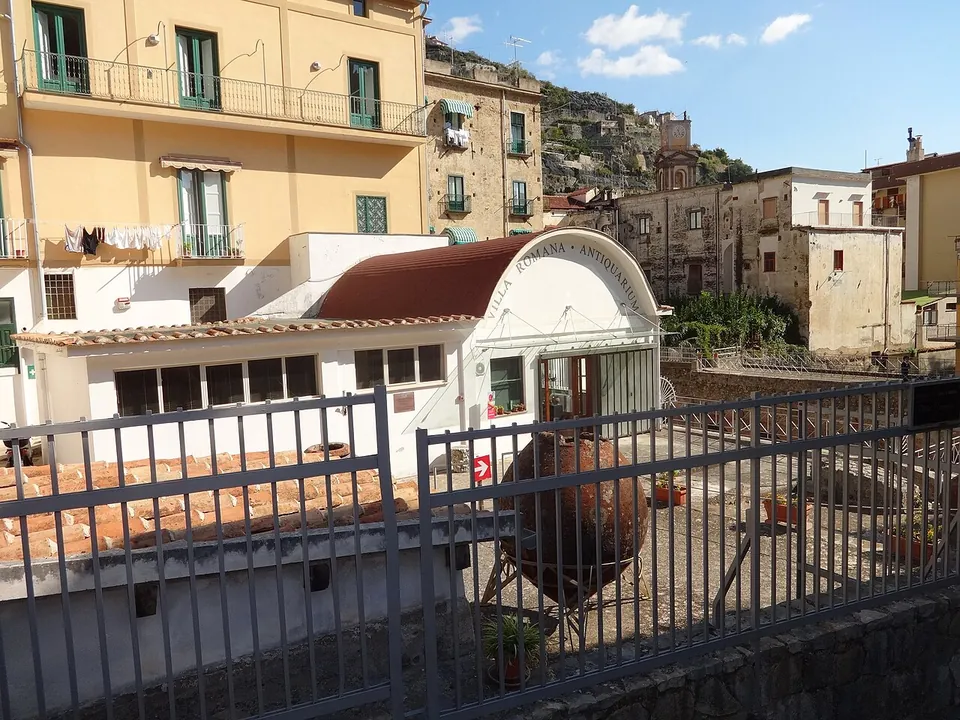
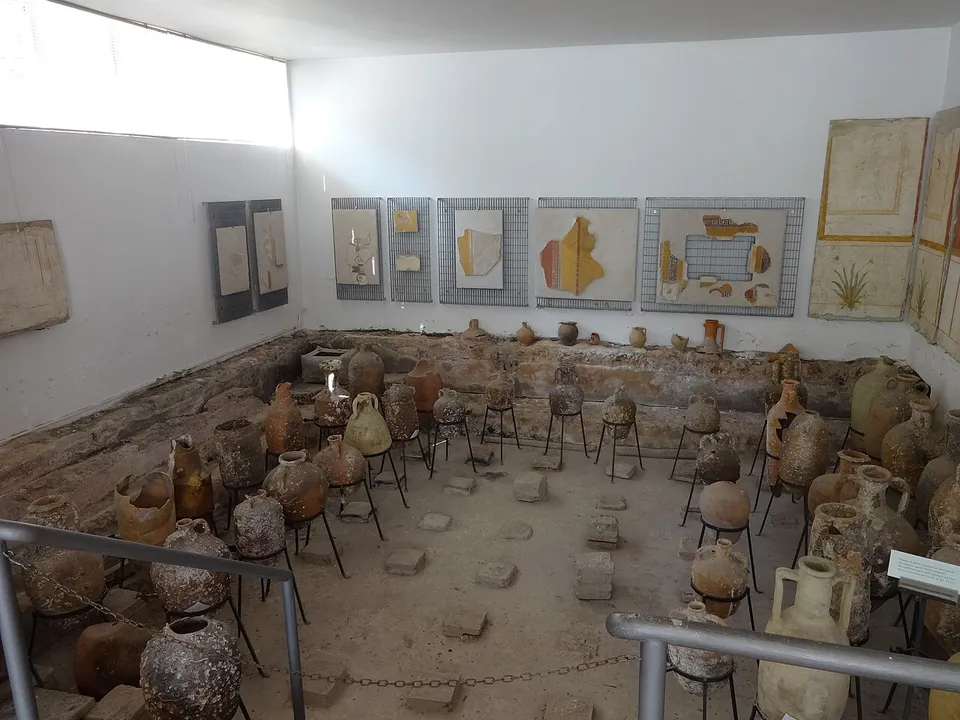
The Antiquarium stands on the terrace at the level of the villa’s upper floor. It shows frescoes and finds from this villa and from other villas in the area (the ministry), among them pottery, amphorae and lamps, and anchors and amphorae from finds on the seabed between Amalfi and Positano (it.wikipedia).
Is it worth the trip?
Not at the moment. The villa and the Antiquarium have been closed since 25 August 2025 while the restoration is finished. The ministry says the site will reopen with a new, fully accessible visitor route and will announce the date on its own channels. In October 2026 the ministry’s page still showed every day closed.
Once it reopens, it is a good stop if you are already on the Amalfi Coast. It is about 100 m from the nearest bus stops. It is also a Roman villa you can walk through under its original vaults, with paintings still on the walls, which is rarer than foundations in a field. It is one house rather than a whole archaeological park, so it fits easily into a day on the coast.
Getting there
Minori lies on the Amalfi Coast, about 11 km west-south-west of Salerno (Pleiades). The site is at via Capo di Piazza 28 (the ministry). Two bus stops named for the SITA buses to Amalfi and to Salerno are mapped about 100 m away, and three car parks between 100 and 150 m (OpenStreetMap).
Before the closure the ordinary hours were 09.00 to 19.00. A full ticket is €6 and a reduced one €2. Under-18s go free, as do others entitled under the ministry’s rules. Tickets are sold online through Musei Italiani, or by card at the automatic machine at the entrance (the ministry, read 22 October 2026).
Visiting details
- Opening hours
- Temporarily closed since 25 August 2025 for restoration works; no reopening date has been announced. Before the closure the ordinary hours were 09.00–19.00.
- Tickets
- €6, reduced €2; free under 18 and for others entitled under the ministry's rules (DM 507/1997). Tickets online through Musei Italiani or by card at the automatic ticket machine at the entrance.
- Parking
- Three car parks are mapped 100–150 m from the site (OSM way/350621373, way/47886964, way/429899515).
Before you go
- The villa and its Antiquarium have been closed since 25 August 2025 while restoration is completed; the ministry will announce the reopening on its own channels. Check before you go.
- The ministry lists online sales and a card-only ticket machine at the entrance; it mentions no cash desk.
Hours and prices checked 22 October 2026 on the operator's own site. Confirm before travelling.
History
The ministry dates the building of the villa to the first years of the first century AD. The paintings of its portico and inner rooms place the original plan in the Julio-Claudian period. The villa stood where the river Reginna Minor reaches the sea, on a stretch of coast where Roman aristocrats built several seaside residences, as finds at Vietri sul Mare, Amalfi, Positano and Li Galli show (it.wikipedia). The hall of theatre scenes is painted in the Third Pompeian Style. A Severan-era refit added the masonry platforms for the dining couches and the mosaic of the triclinium-nymphaeum (it.wikipedia).
Published accounts of how long the villa lasted differ. Pleiades has it in use only from the Julio-Claudian to the Flavian period, ended by a possible landslide. The ministry says it lived on, with changed uses, until the seventh century. it.wikipedia supports the longer span, citing lamps with the monogram of Constantine and pottery. On that account the villa was buried in the end by flood debris from the Reginna Minor.
Roman baths at Minori were first reported in 1873–74. In 1932 a collapse during work on some houses opened an underground room of the villa, and excavation began in 1934. The flood of 26 October 1954 buried the site again before it was dug out once more. In 1956, building work for the Hotel Santa Lucia uncovered further painted rooms, whose paintings are kept in the Antiquarium. Restoration of the triclinium mosaics began in the mid-1990s (it.wikipedia). The site, formerly under the Salerno and Avellino superintendency, now belongs to the Direzione regionale Musei della Campania, which announced the present restoration in November 2022 (the ministry).
More photographs
Nearby
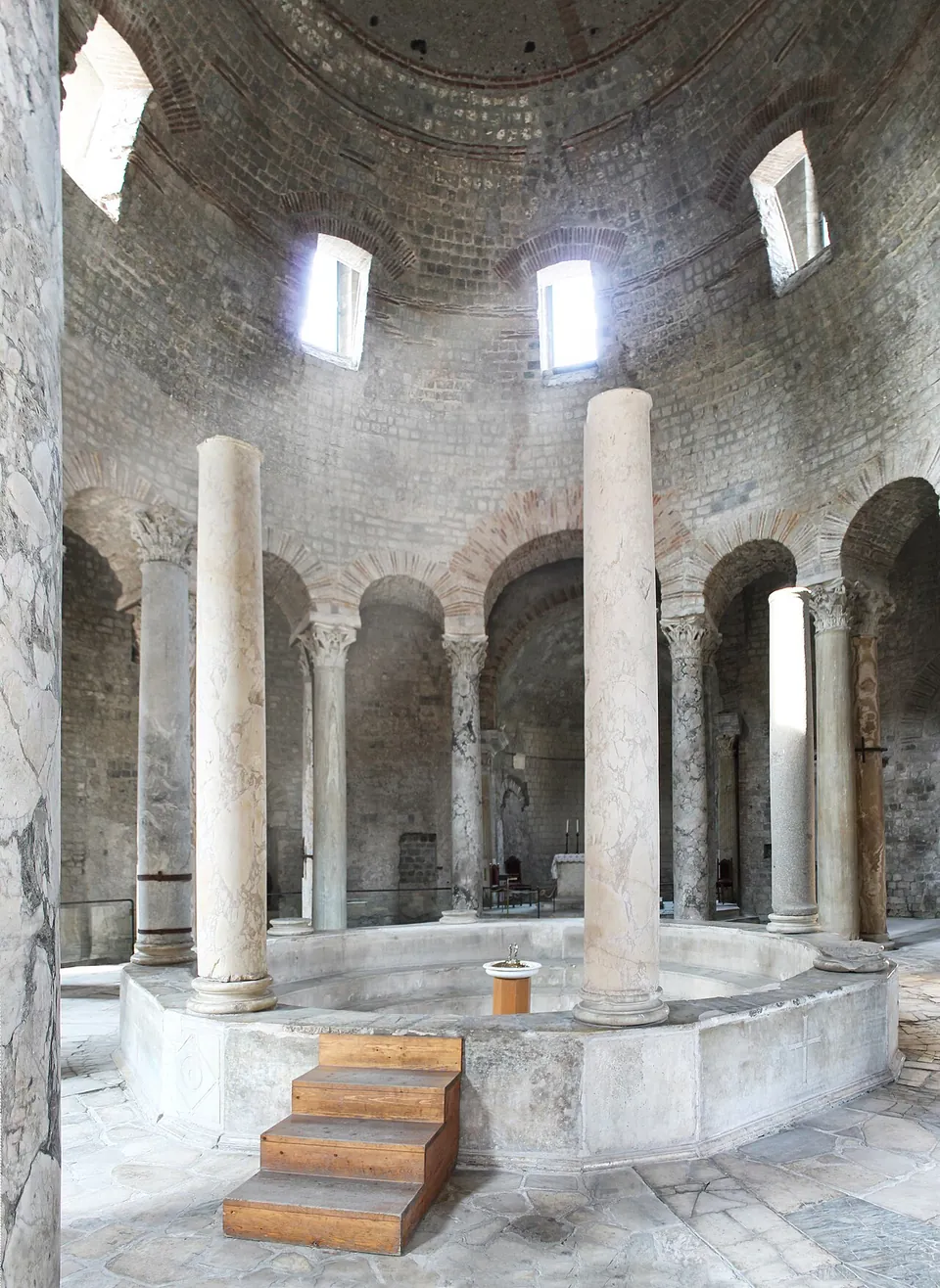
Photo: Nucerino · CC BY-SA 4.0 · Commons
11 km · city · Campania
Nuceria Alfaterna
The baptistery of Santa Maria Maggiore ("La Rotonda") is the set piece.
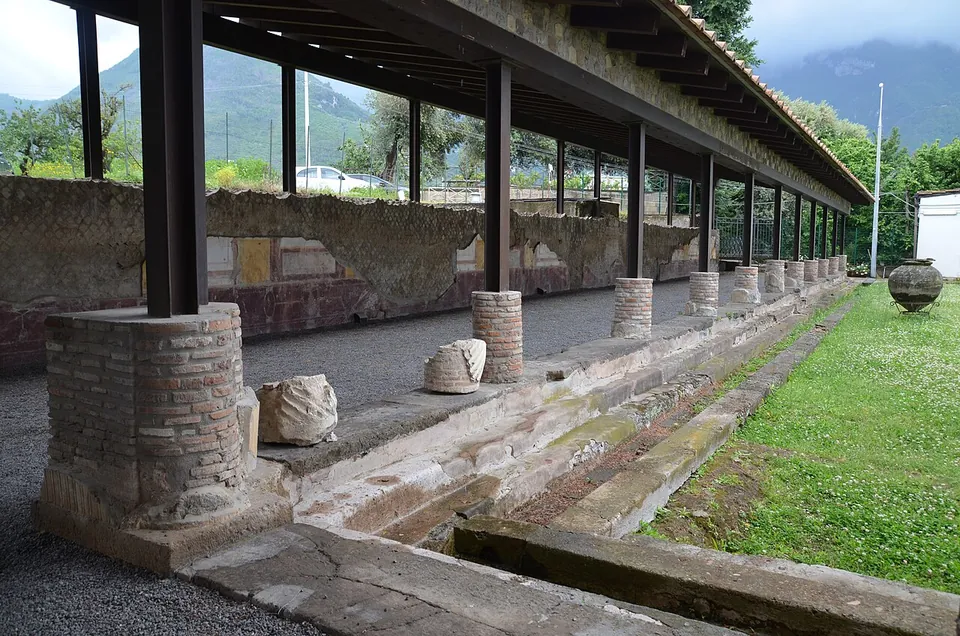
Photo: Carole Raddato · CC BY-SA 2.0 · Commons
12 km · villa · Campania
Stabiae
Two villas and the neighbouring Second Complex are open (the operator).
16 km · city · Campania
Pompeii
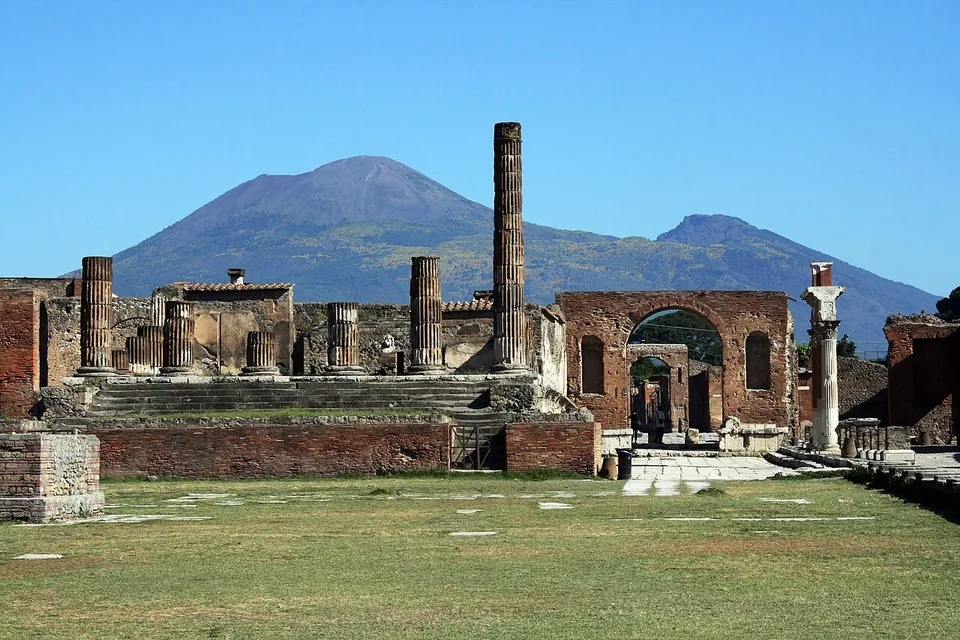
The walled town covered 64 to 67 hectares, and about two-thirds of it has been excavated (en.wikipedia), so this is a day out rather than a single monument: you walk the old streets from one block to the next.


Straight-line distances.
Sources
Every fact on this page comes from the records below, each used under the licence noted.
| Source | Licence |
|---|---|
| Pleiades 432939 | CC BY |
| Wikidata Q7930480 | CC0 |
| Vici.org 13938 | CC BY-SA (text), CC0 (metadata) |
| Ministero della Cultura — Villa romana e Antiquarium di Minori (opening, tickets, closure notice) | licence not recorded |
| Ministero della Cultura — GEP 2024 evening visits at Minori (ordinary hours before the closure) | licence not recorded |
| Ministero della Cultura — start of the restoration of the Villa romana di Minori (press release, 9 November 2022) | licence not recorded |
| Finestre sull'Arte — the great mosaic of Minori's Roman villa returns to public view (2023) | licence not recorded |
| Wikipedia (it) — Villa romana di Minori | CC BY-SA 4.0 |
| Wikipedia (en) — Villa Romana, Minori | CC BY-SA 4.0 |