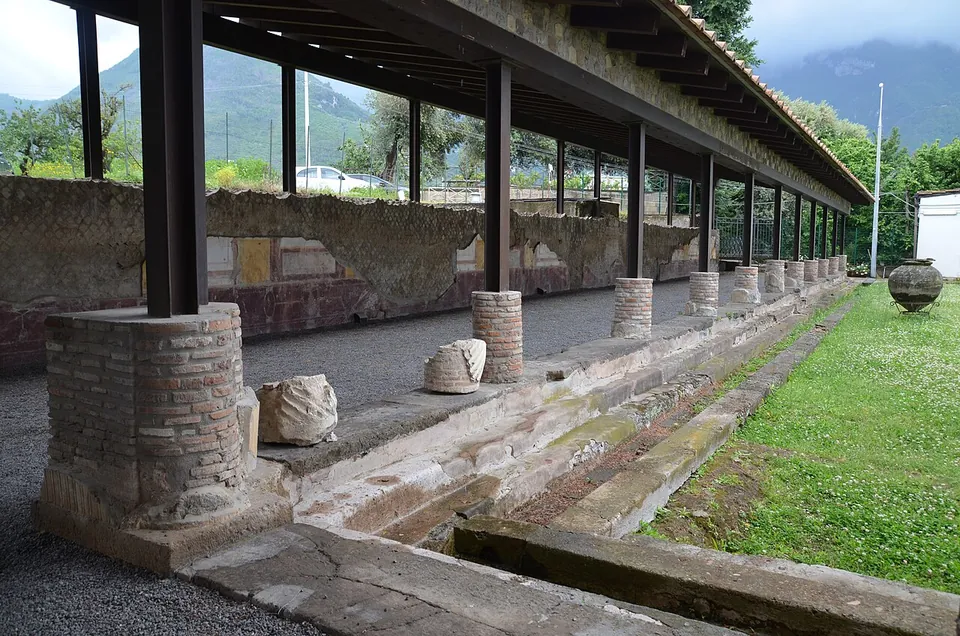
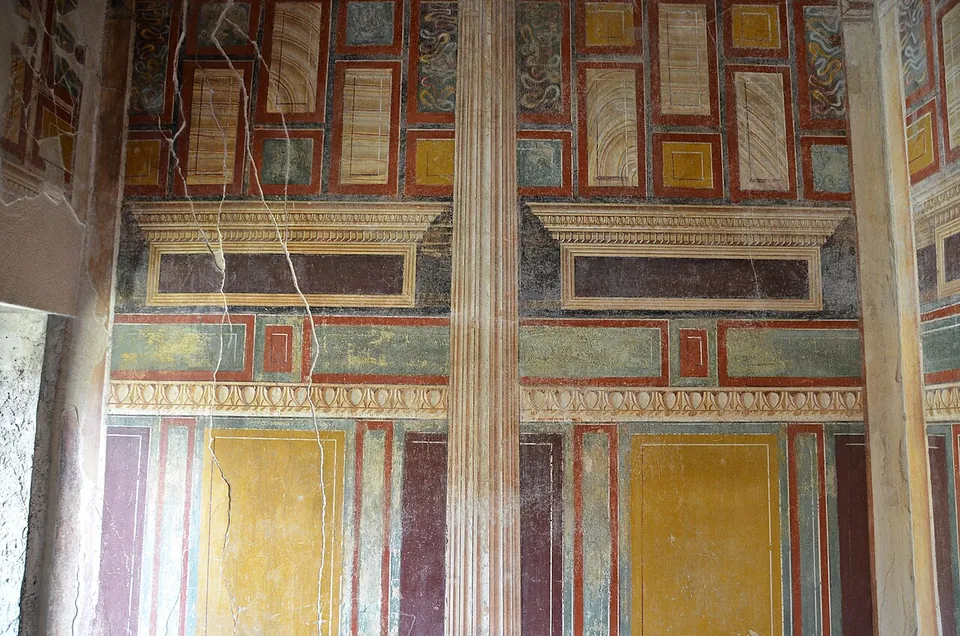
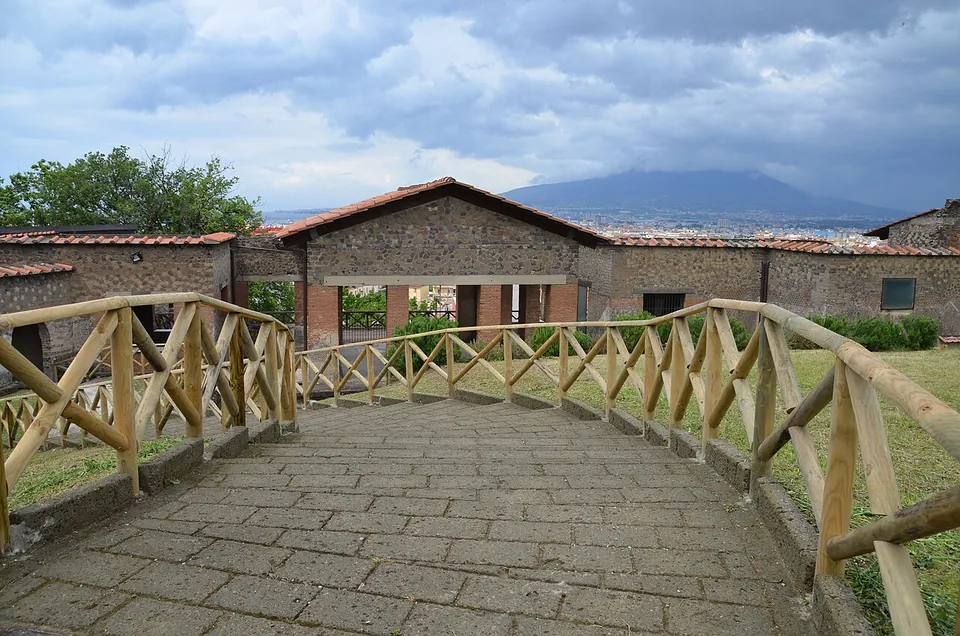
Stabiae was a Roman town on the Bay of Naples, buried with Pompeii in AD 79, and what you visit today are its seaside villas: Villa San Marco and Villa Arianna, two of the great leisure houses built along the edge of the Varano hill in Castellammare di Stabia, with walls, columns and frescoes still in place. Entry to both is free.
What is there today
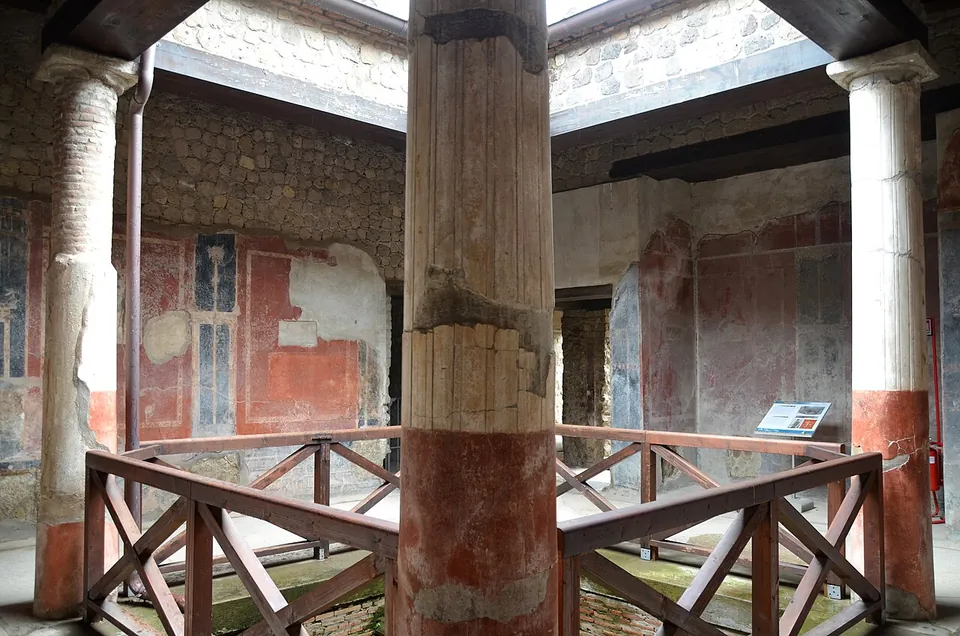
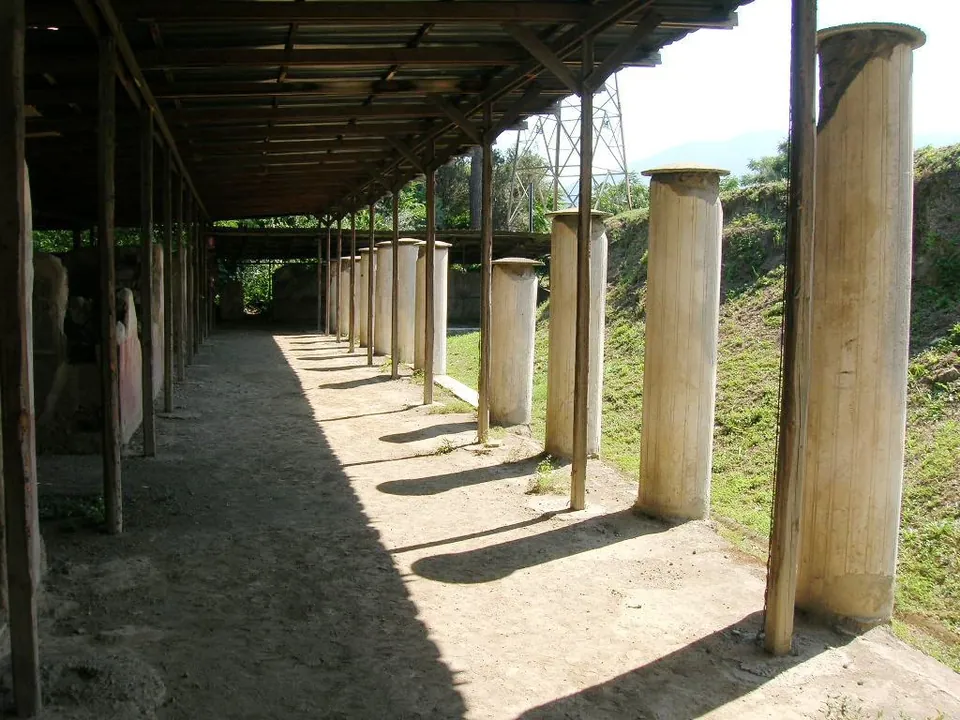
Two villas and the neighbouring Second Complex are open (the operator). Villa San Marco covers more than 1.1 hectares, of which about half has been excavated; it has a long garden peristyle around a 36 by 7 m pool, an upper peristyle, and a bath suite of its own (en.wikipedia). Villa Arianna, about 700 m along the hill, is the oldest of the villas and is known for its frescoes; the mythological scene in its dining room that gives it its name is still on the wall. Next to it, across a narrow lane, are the excavated rooms and peristyle of the so-called Second Complex (the operator). Much of each villa is still buried, and the best paintings were cut from the walls in the 18th century and are in the National Archaeological Museum of Naples (en.wikipedia).
The town of Stabiae itself is not on show. Its streets, forum and houses were mapped near Villa San Marco in 1759 and covered over again (en.wikipedia; OpenStreetMap marks the spot as reburied).
Is it worth the trip?
Yes, if you like Roman wall painting and are already near Pompeii. Wikipedia’s English article calls these villas the largest concentration of excellently preserved, enormous elite seaside villas known in the Roman world, and here you walk through them with frescoes still on the walls rather than in a museum. They cost nothing to enter and lie about 4.5 km south-west of Pompeii (en.wikipedia).
Know what you are getting: these are villas, not a town, and the best-known paintings, the Flora and the Seller of Cupids, are in Naples rather than here (en.wikipedia). The two villas are about 700 m apart, each with its own entrance, so allow time to walk or drive between them. Both close on Tuesdays.
Getting there
The villas are on the Varano hill in Castellammare di Stabia, about 1.8 km from the town centre. By car, leave the A3 Napoli–Salerno motorway at Castellammare di Stabia, follow the SS145 to the Gragnano exit and then Via Passeggiata Archeologica (the operator). A car park is mapped about 140 m from Villa San Marco but is tagged for customers only (OpenStreetMap). By public transport, the operator’s route is the Circumvesuviana Napoli–Sorrento line to Castellammare di Stabia and then EAV bus line 2; no bus stop is mapped at the entrance. The park’s Pompeii Artebus shuttle also links its sites; its timetable is on the operator’s site.
Both villas are open every day except Tuesday: 09.00 to 19.00 from 16 March to 14 October, and 09.00 to 17.00 from 15 October to 15 March, with last entry an hour before closing. They are closed on 25 December and 1 January. Admission is free. If you are also visiting Pompeii, the 30 € Pompeii Plus ticket, valid for three days, adds Oplontis, Boscoreale and the Archaeological Museum of Stabia, which costs 8 € on its own (Parco Archeologico di Pompei, read 22 October 2026; check before travelling).
Visiting details
- Opening hours
- Closed on Tuesdays. 16 March to 14 October 09.00–19.00, and 15 October to 15 March 09.00–17.00; last entry one hour before closing. Closed on 25 December and 1 January.
- Tickets
- Free for Villa San Marco and Villa Arianna. The 30 € Pompeii Plus ticket (valid three days) also covers Pompeii, Oplontis, Boscoreale and the Archaeological Museum of Stabia, which charges 8 € on its own.
- Parking
- A surface car park is mapped about 140 m from Villa San Marco, tagged for customers only; free public toilets are mapped about 185 m away (OpenStreetMap).
Before you go
- Villa San Marco and Villa Arianna are about 700 m apart, each with its own entrance.
- No bus stop is mapped near the entrance; the operator's public-transport route is the Circumvesuviana to Castellammare di Stabia, then EAV bus line 2.
Hours and prices checked 22 October 2026 on the operator's own site. Confirm before travelling.
The villas
Villa San Marco
The villa takes its name from an 18th-century chapel of St Mark built on the site. It was first excavated under the Bourbons between 1749 and 1754 and systematically re-excavated between 1950 and 1962. The first villa, of the Augustan period, was built round a four-columned Ionic atrium; under Claudius it was extended with a panoramic garden and pool enclosed by a three-sided portico, topped by a colonnade of spiral columns (the operator). The upper portico’s painted ceiling, with large mythological scenes, fell in the 1980 earthquake (the operator; en.wikipedia).
The baths are reached through a small atrium painted with cupids, wrestlers and boxers, and run through a caldarium with a large bath, a tepidarium and a frigidarium. Part of a travertine staircase survives from the hairpin ramps that led down towards the coast (the operator). In the garden, the cavities left by the roots of large plane trees were filled with plaster to make casts, the technique used for the eruption’s human victims (en.wikipedia). The owner is not known for certain; tile stamps point to a freedman called Narcissus, tombs nearby to the Virtii family (en.wikipedia).
Villa Arianna and the Second Complex
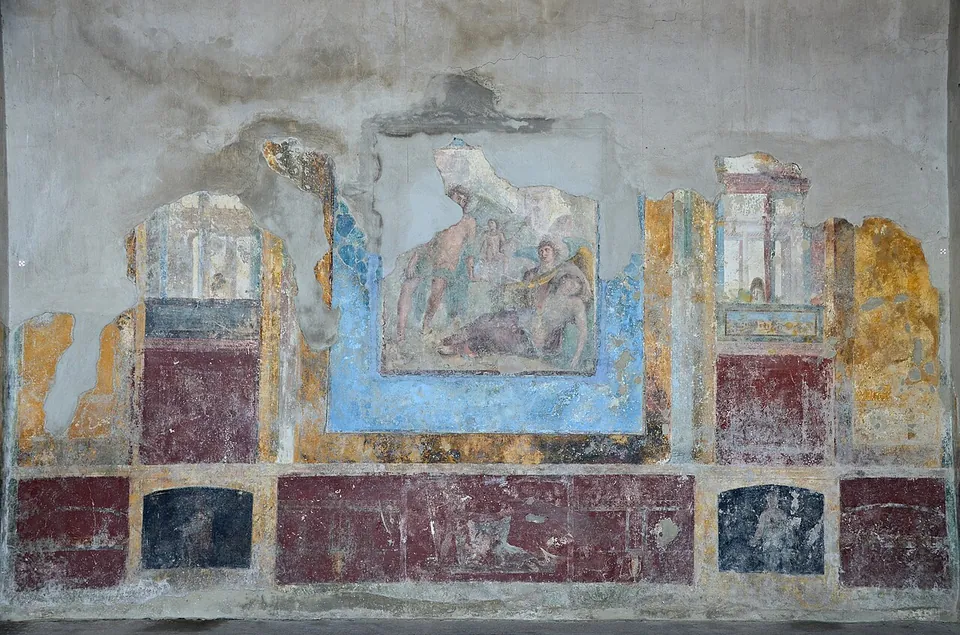
Villa Arianna dates back to the 2nd century BC and was extended over about 150 years (en.wikipedia). It is named after the large painting of Ariadne abandoned by Theseus on the end wall of its dining room. Karl Weber explored almost all of it through tunnels between 1757 and 1762, taking out the best furnishings and frescoes; today about a quarter of a hectare is excavated, and ramps on six levels connect it to the flat ground below. Its four parts are the atrium and surrounding rooms of the late Republic, the service rooms and baths, rooms off a summer dining room of Nero’s time, and a large exercise court added under the Flavians (the operator). The small rooms are painted with flying figures, cupids, miniature landscapes and medallions with busts, and the floors carry black-and-white mosaics (the operator).
The Second Complex sits on the edge of the same plateau, separated from Villa Arianna by a narrow lane. About 0.1 hectares has been exposed, including part of a peristyle with a portico on three sides (the operator). Its black third-style walls are well preserved (en.wikipedia).
History
People lived at Stabiae from at least the 7th century BC, as a necropolis of over 300 tombs shows. It became an Oscan and then a Samnite town, and surrendered to Rome in 308 BC after a long siege. In the Social War it sided against Rome, and on 30 April 89 BC Sulla destroyed it (en and it.wikipedia). Most of the villas were built between that destruction and the eruption of Vesuvius (the operator), though Villa Arianna is older, when Stabiae became a resort of wealthy Romans; Cicero wrote to a friend about the study from which the friend looked out over the Stabian waters of the bay (en.wikipedia).
The earthquake of AD 62 damaged the buildings, and repairs were still unfinished when Vesuvius erupted in 79. Pliny the Elder, who had sailed across the bay from Misenum, died at Stabiae the next day (en.wikipedia). The town was buried less deeply than Pompeii: published figures for the ash range from about 2 m to 5 m (fr and en.wikipedia). Life returned quickly. The road to Nuceria was rebuilt, and the poet Statius wrote of “Stabiae reborn” (en.wikipedia).
Stabiae was discovered in 1749, before Pompeii, and dug by Roque Joaquín de Alcubierre with Karl Weber, but the Bourbon diggers stripped the villas of paintings and objects and filled them in again, and by 1782 Stabiae was reburied and largely forgotten (en.wikipedia). A headmaster, Libero D’Orsi, used the old Bourbon plans to uncover rooms of Villa San Marco and Villa Arianna again from 1950 (en and it.wikipedia). The 1980 Irpinia earthquake closed the site; it reopened in 1995. Since 2004 an Italian-American foundation, Restoring Ancient Stabiae, has worked with the superintendency, and new rooms and gardens have been uncovered in both villas (en.wikipedia).
More photographs
Nearby
5 km · city · Campania
Pompeii
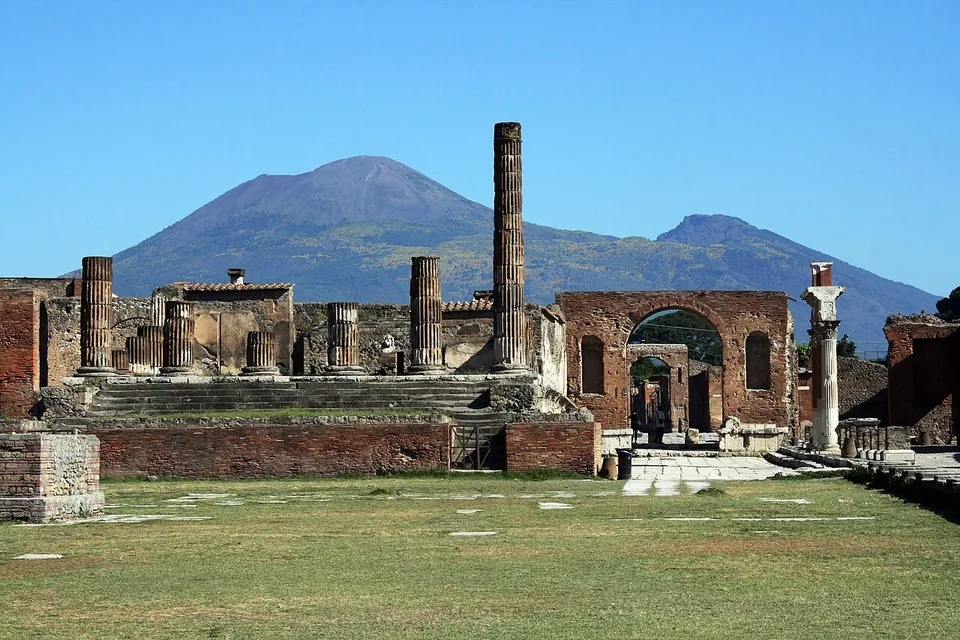
The walled town covered 64 to 67 hectares, and about two-thirds of it has been excavated (en.wikipedia), so this is a day out rather than a single monument: you walk the old streets from one block to the next.
Photo: RealCarlo · CC BY 2.0 · Commons
7 km · villa · Campania
Villa Regina and Antiquarium
Villa Regina is a working farm rather than a luxury house.
Photo: ho visto nina volare from Italy · CC BY-SA 2.0 · Commons


Straight-line distances.
Sources
Every fact on this page comes from the records below, each used under the licence noted.
| Source | Licence |
|---|---|
| Pleiades 433128 | CC BY |
| Wikidata Q547910 | CC0 |
| OpenStreetMap way/150364343 | ODbL |
| Wikipedia (en) — Stabiae | CC BY-SA 4.0 |
| Wikipedia (it) — Stabia | CC BY-SA 4.0 |
| Wikipedia (de) — Stabiae | CC BY-SA 4.0 |
| Wikipedia (fr) — Stabies | CC BY-SA 4.0 |
| Parco Archeologico di Pompei — Stabiae (the operator) | licence not recorded |
| Parco Archeologico di Pompei — Villa San Marco | licence not recorded |
| Parco Archeologico di Pompei — Villa Arianna | licence not recorded |
| Parco Archeologico di Pompei — Stabiae, where we are and how to reach us | licence not recorded |
| Parco Archeologico di Pompei — timetables and tickets | licence not recorded |