Oplontis is an ancient place under modern Torre Annunziata, between Pompeii and Herculaneum, buried by Vesuvius in AD 79 (Pleiades), and what you visit there is one house: Villa A, the so-called Villa of Poppaea, a grand villa that once overlooked the sea, begun in the mid-1st century BC, of whose decoration exceptional traces survive (the operator). It is half an hour from Pompeii by the park’s free shuttle, or a short walk from the Circumvesuviana station; a ticket is €8, and it is closed on Tuesdays.
What is there today
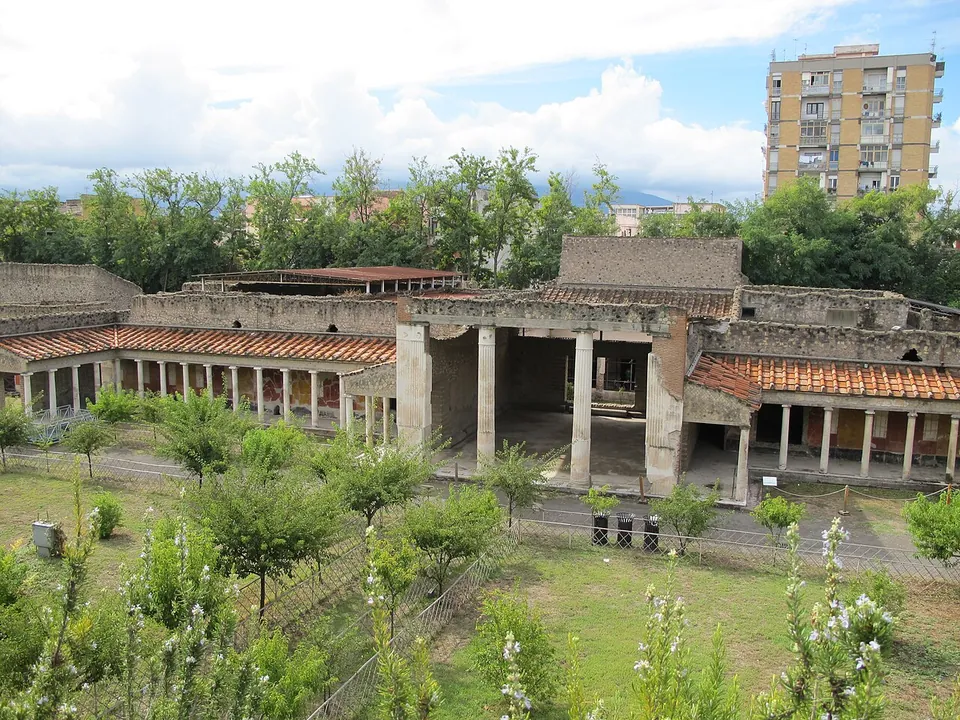
Villa A, the “Villa of Poppaea”. The park calls it the only monument of ancient Oplontis open to visitors: a large residential villa, not yet fully excavated, built in the mid-1st century BC and enlarged in the early Imperial age (the operator). Systematic excavation began in 1964 and in about twenty years brought to light, though not in full, a complex of over 90 rooms (the operator); en.wikipedia puts the exposed share at about 60%, the rest lying under the modern town. The villa sits about 10 m below today’s ground level (en.wikipedia), and the 16th-century Sarno canal still runs along the southern edge of the archaeological area (the operator).
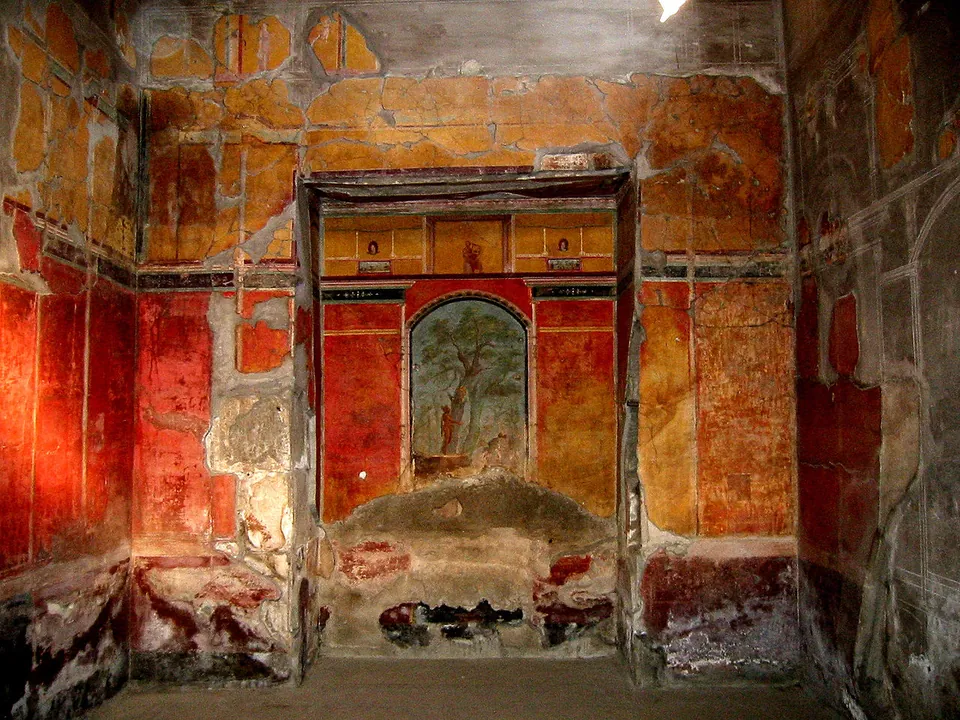
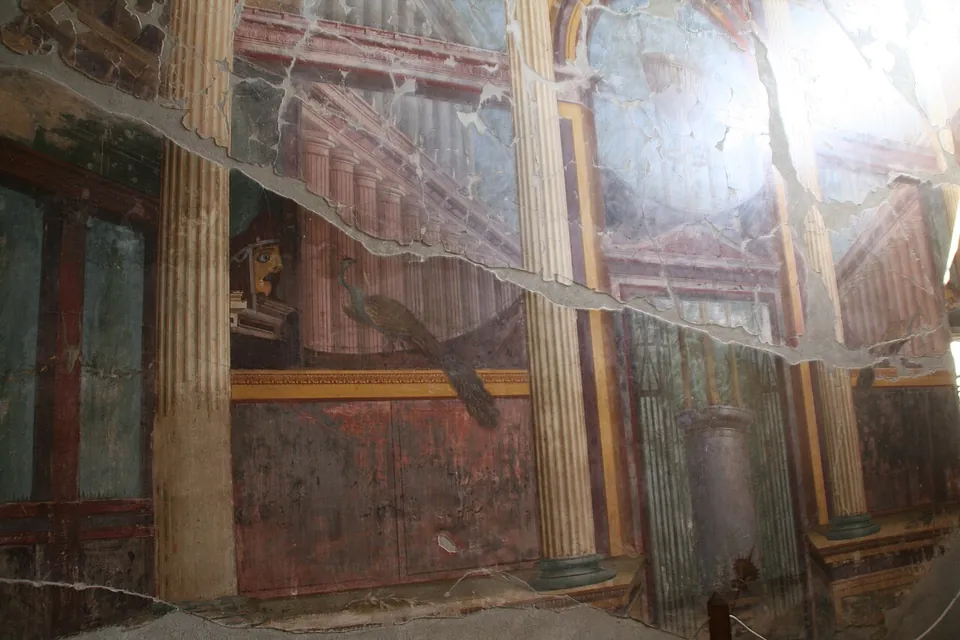
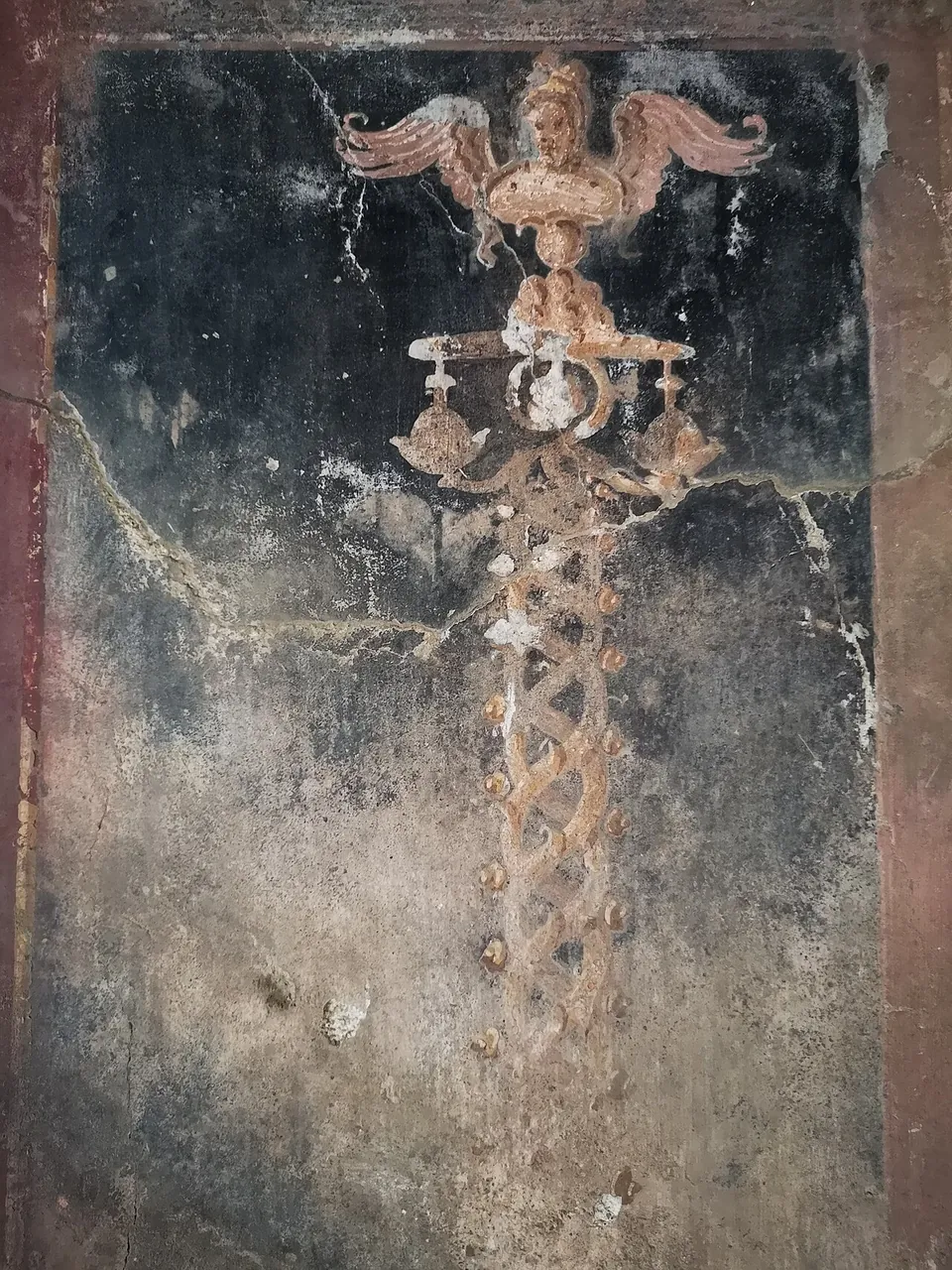
The oldest part is built around a Tuscan atrium with Second Style paintings, with rooms for resting, dining and living lit by windows that once opened on a garden facing the sea (the operator). Those early paintings, from around 60–50 BC, are trompe-l’œil architecture: painted columns, windows and doors (en.wikipedia; it.wikipedia). The villa’s private baths were heated from the kitchen and later turned into a living area (the operator); the hot room keeps its Third Style painting of Hercules in the garden of the Hesperides (en.wikipedia; it.wikipedia). West of the dining room, the hall known for its painted peacock and theatre mask, of which only the great east wall had been uncovered, has been under excavation since 2025 (the operator’s E-Journal, December 2025). From February 2026 the park let groups of ten ticket holders into the dig on Thursday mornings (AGI, 6 February 2026); the park’s own visiting pages do not list these visits.
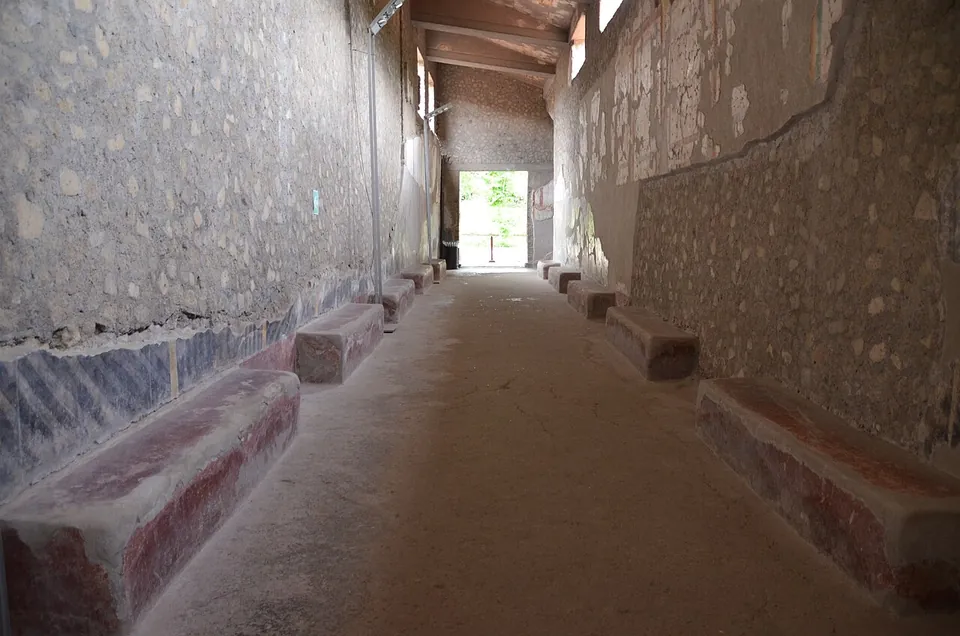
To the east are the slave and servants’ quarters, storerooms and bedrooms around a colonnaded courtyard with a central fountain, and, added around the mid-1st century AD, a swimming pool 61 by 17 m lined with dining rooms, guest apartments and small winter gardens decorated with paintings (the operator). Study of the plant remains identified what grew there, box hedges, oleanders, lemons, plane trees, olives, cypresses, roses and ivy (the operator), and the gardens were replanted only once that was known (en.wikipedia). Some 40 marble sculptures were found here, and many of the finds from Oplontis are in the National Archaeological Museum in Naples (en.wikipedia).
Villa B, of L. Crassius Tertius. About 300 m east stands a different kind of building, probably a depot for storing local farm produce and trading local wine, with living rooms on the upper floor. It was built towards the end of the 2nd century BC around a courtyard with a two-storey colonnade of grey tuff, rebuilt from its original column drums (the operator). Unlike Villa A it was not deserted when the volcano erupted: 54 people died sheltering in one of its vaulted storerooms, some carrying gold and silver coins and fine jewellery (the operator; en.wikipedia). It cannot currently be visited (the operator). In summer 2021 it opened on Fridays with the local Archeoclub (the operator’s notice of 14 July 2021), and the park’s page for the villa now describes it as closed again.
Is it worth the trip?
Yes, if Roman painting is what you came to the Bay of Naples for, or if you have done Pompeii and want a great villa without its crowds: Oplontis had 50,957 visitors in the whole of 2023 (it.wikipedia), while Pompeii caps its entries at 20,000 a day (the operator). The decoration is the draw, and the villa’s earliest paintings are counted among the best examples of the illusionistic Second Style (en.wikipedia).
Know what it is, though. This is one house in the middle of a modern town (it.wikipedia), not a Roman street scene. The house was probably mostly empty when the volcano erupted, under repair after earthquake damage, with many of its architectural and decorative pieces removed (the operator), and many of the finds are now in the Naples museum (en.wikipedia), so do not expect a furnished house. The other villa is shut, and a Tuesday visit finds the gate closed.
Getting there and what it costs
The entrance is on Via dei Sepolcri in Torre Annunziata (the operator). From Naples or Sorrento, the Circumvesuviana’s Naples–Sorrento and Naples–Poggiomarino lines both stop at Torre Annunziata (the operator), and OpenStreetMap maps the Circumvesuviana station “Torre Annunziata - Oplonti” about 230 m from the villa in a straight line. By car, take the Torre Annunziata Scavi exit of the A3 Naples–Salerno motorway; while excavation works continue, drivers approach from Via Regina Margherita di Savoia and pedestrians from Via Gioacchino Murat (the operator). Surface car parks are mapped 260 to 280 m from the site (OpenStreetMap).
From Pompeii, the park’s Artebus shuttle 2 leaves Piazza Esedra roughly hourly from 09.30, with a break at midday, and takes 30 minutes to Oplontis; in winter the last outward run is at 15.15 and in summer at 17.15, and it does not run on Tuesdays. It is free for the park’s visitors, while seats last (the operator).
The villa is open every day except Tuesday, 09.00 to 17.00 from 15 October to 15 March (last entry 16.00) and 09.00 to 19.00 from 16 March to 14 October (last entry 18.00), and closes on 25 December and 1 January. A ticket for Oplontis alone is €8, or €2 for EU citizens aged 18 to 24. A Pompeii ticket does not cover it; the €30 three-day ticket, which adds Oplontis, Boscoreale and the villas and museum of Stabiae to Pompeii, does, and so does the €45 MyPompeii annual card. The park’s tariff page also announces free entry on the first Sunday of the month (pompeiisites.org, read 14 October 2026 — check before travelling).
Visiting details
- Opening hours
- Wednesday to Monday, closed on Tuesdays. 09.00–17.00 (last entry 16.00) from 15 October to 15 March; 09.00–19.00 (last entry 18.00) from 16 March to 14 October. Closed 25 December and 1 January.
- Tickets
- €8; €2 for EU citizens aged 18 to 24. A Pompeii ticket does not include it. The €30 three-day ticket (Pompeii+, Oplontis, Boscoreale and the villas and museum of Stabiae) and the €45 MyPompeii annual card do. Free on the first Sunday of the month. Valid for one entry.
- Parking
- Surface car parks are mapped 260–280 m from the site (OSM way/463637567, way/461216954 "Parcheggio Bar Royal", way/397372381 "Parcheggio Eco Market"). While excavation works go on, the park says cars reach the site from Via Regina Margherita di Savoia and pedestrians from Via Gioacchino Murat.
Before you go
- Closed on Tuesdays, when the free shuttle from Pompeii does not run either.
- Only Villa A, the "Villa of Poppaea", is open. Villa B (of L. Crassius Tertius), 300 m away, cannot currently be visited.
- The park asks visitors not to bring bulky luggage into the archaeological area.
Hours and prices checked 14 October 2026 on the operator's own site. Confirm before travelling.
History
The name survives only on the Tabula Peutingeriana, the medieval copy of a Roman road map, which shows Oplontis as a stop six miles from Herculaneum and three from Pompeii and Stabiae, with the symbol for thermal baths; no ancient writer mentions it, and where the name comes from is uncertain (en.wikipedia). The park compares the buildings found here to a suburb of Pompeii, under its jurisdiction (the operator).
Villa A was found by chance at the end of the 16th century, when the Conte di Sarno canal was being built. Francesco La Vega tunnelled into it in 1785 but gave up because of the foul air; a small open-air dig in 1839 reached the servants’ courtyard, and the Bourbon state then bought and protected the site. Excavation proper began in 1964 on the initiative of local enthusiasts, and Villa B was found in 1974, while a gym was being built for a school (the operator).
The villa’s owner is not known for certain. A painted inscription on an amphora names Secundus, a slave or freedman of Poppaea Sabina, Nero’s second wife, so the villa may have belonged to her or her family (the operator; de.wikipedia); modern scholarship has cast doubt on whether she ever owned or lived in it (en.wikipedia). In AD 79 the eruption here was more violent than at Pompeii and Herculaneum: walls and columns were broken and thrown sideways, not only roofs brought down (en.wikipedia). Since 1997 Oplontis has been on the UNESCO World Heritage List together with Pompeii and Herculaneum (it.wikipedia).
More photographs
Nearby
2 km · villa · Campania
Villa Regina and Antiquarium
Villa Regina is a working farm rather than a luxury house.
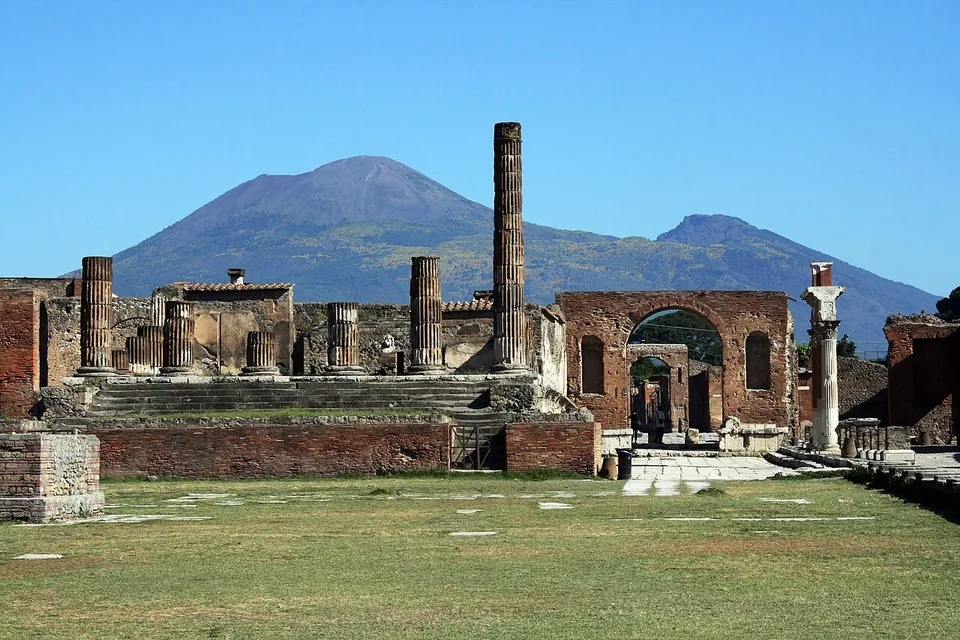
Photo: Glen Scarborough from The Central Coast, Australia · CC BY 2.0 · Commons
3 km · city · Campania
Pompeii
The walled town covered 64 to 67 hectares, and about two-thirds of it has been excavated (en.wikipedia), so this is a day out rather than a single monument: you walk the old streets from one block to the next.
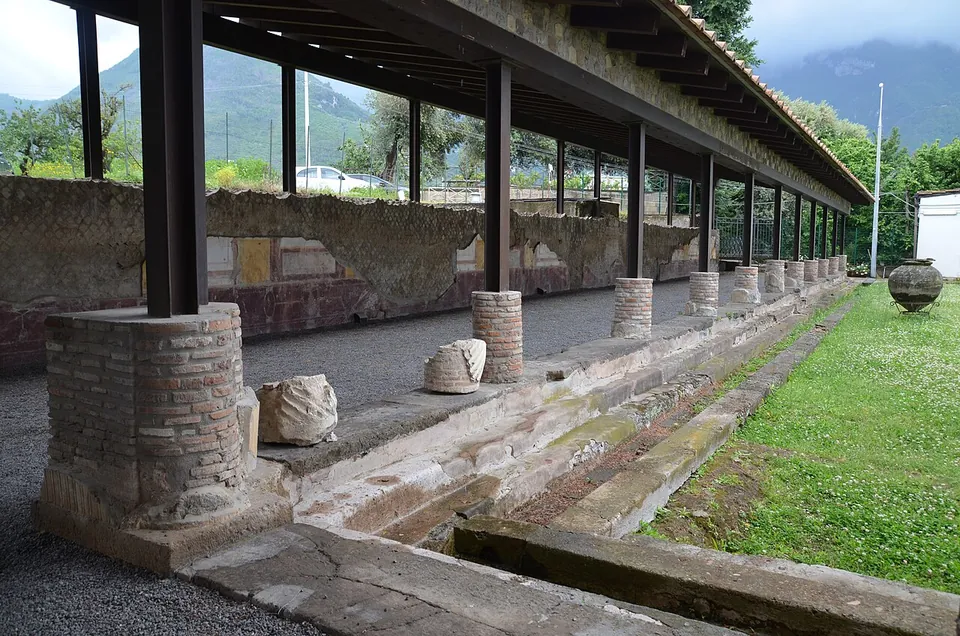
Photo: Carole Raddato · CC BY-SA 2.0 · Commons
7 km · villa · Campania
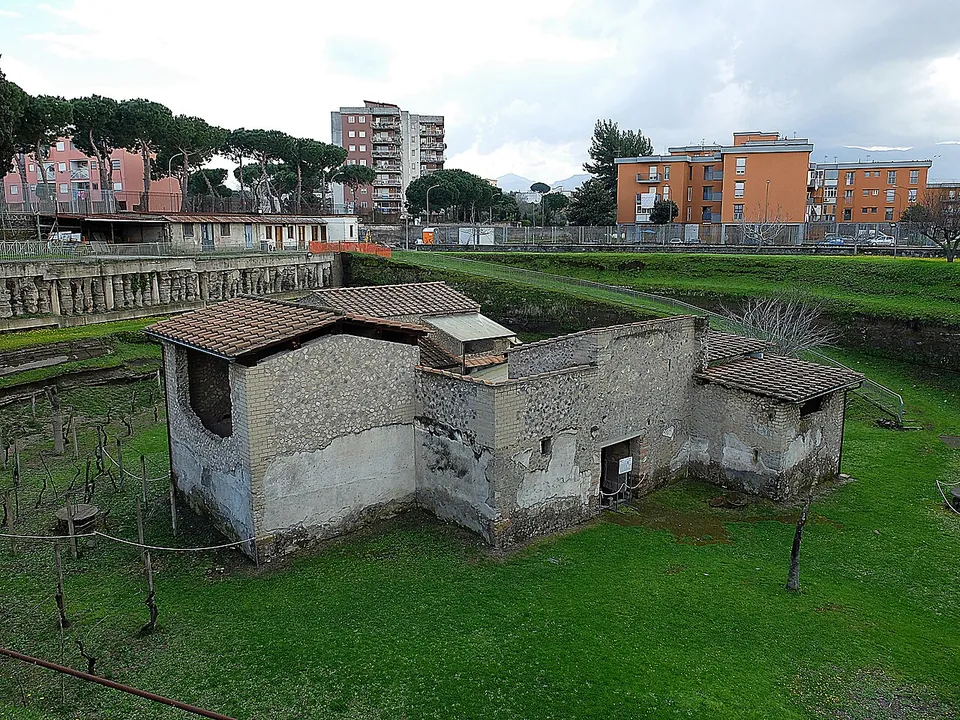
Stabiae
Two villas and the neighbouring Second Complex are open (the operator).


Straight-line distances.
Sources
Every fact on this page comes from the records below, each used under the licence noted.