

What is there today
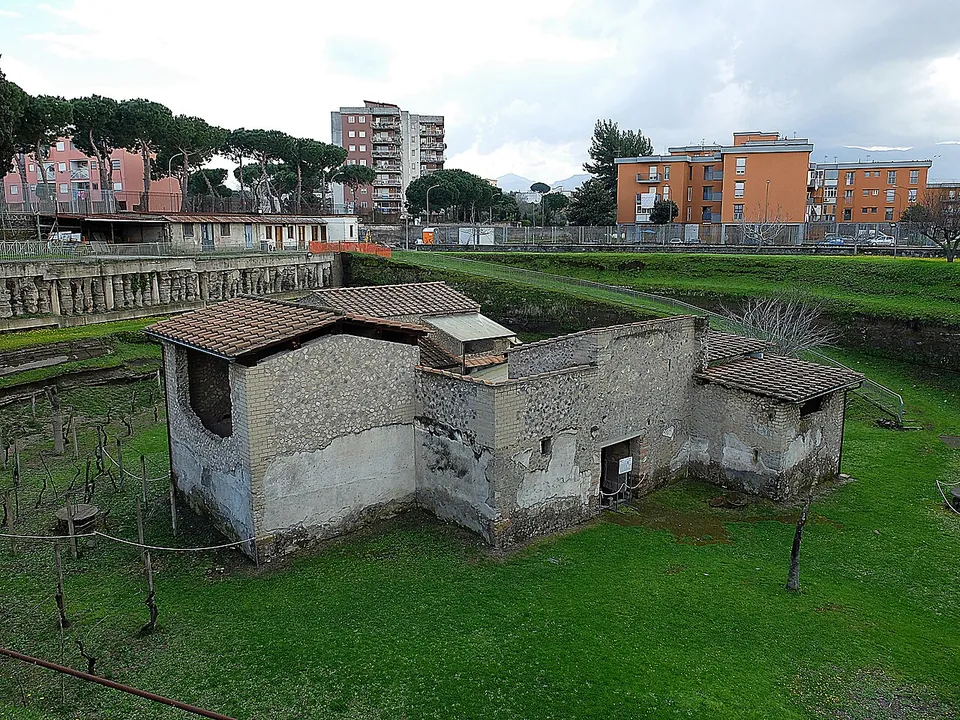
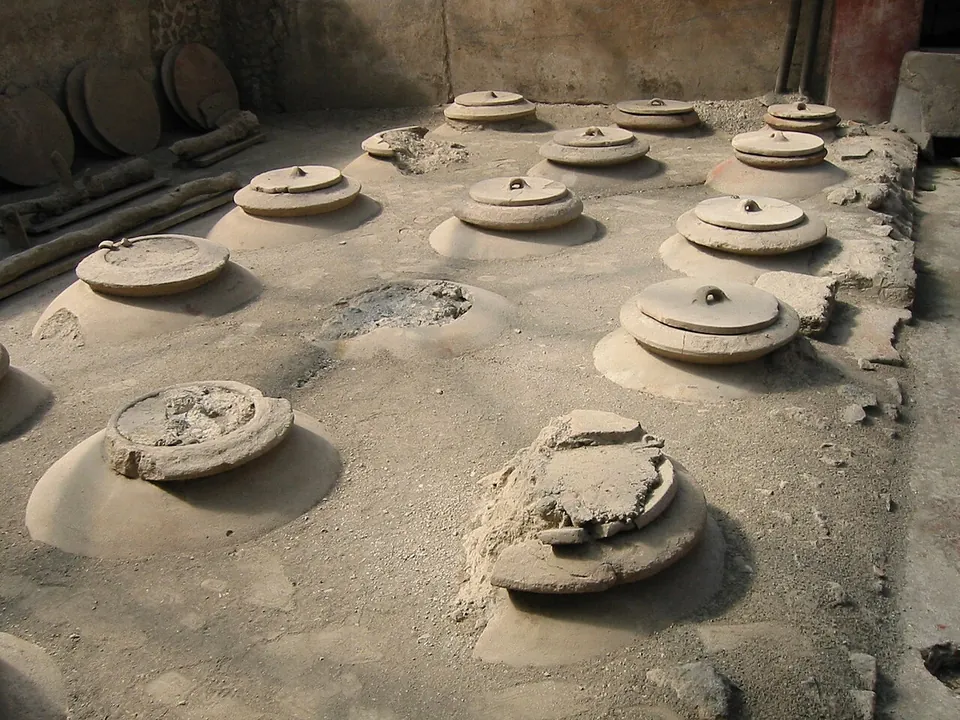
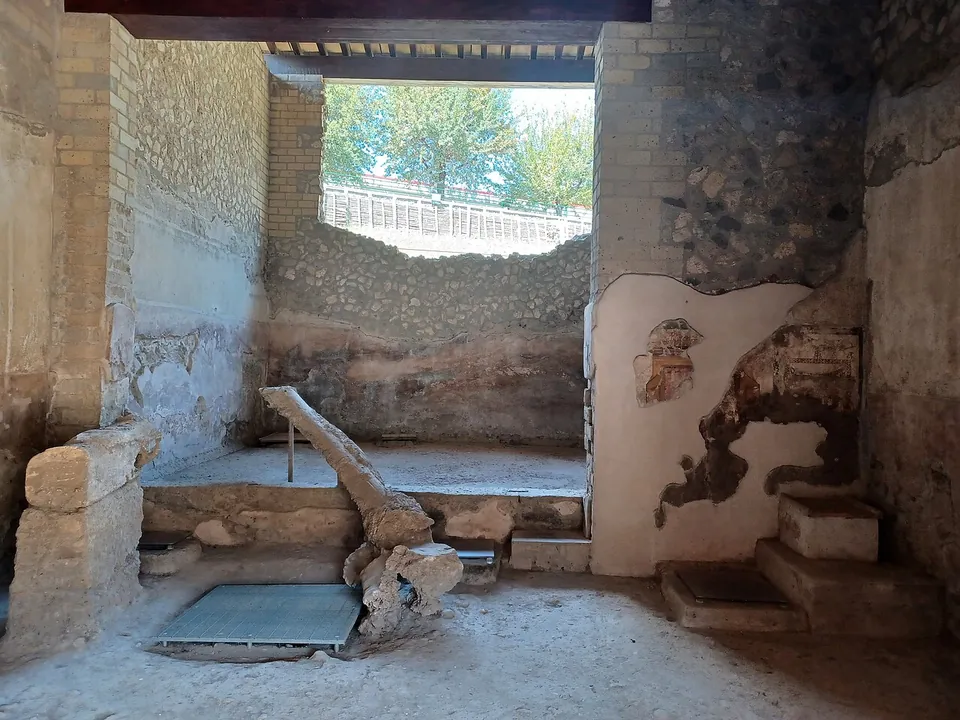
Villa Regina is a working farm rather than a luxury house. It was found in 1977 under about 8 m of volcanic ash, pyroclastic material and later deposits, and unlike the neighbouring villas dug up by treasure hunters it was excavated as an archaeological site and left open (en.wikipedia). You see the vat where the grapes were crushed, a cast of the wooden wine press, and the wine cellar with its storage jars (dolia) buried in the ground (it.wikipedia): eighteen of them, holding about 10,000 litres between them (en.wikipedia). A courtyard is colonnaded on three sides with red and white stuccoed columns, plaster casts were made of the entrance doors from the hollows they left, and vines have been replanted in the holes left by the Roman vines’ roots (en.wikipedia).
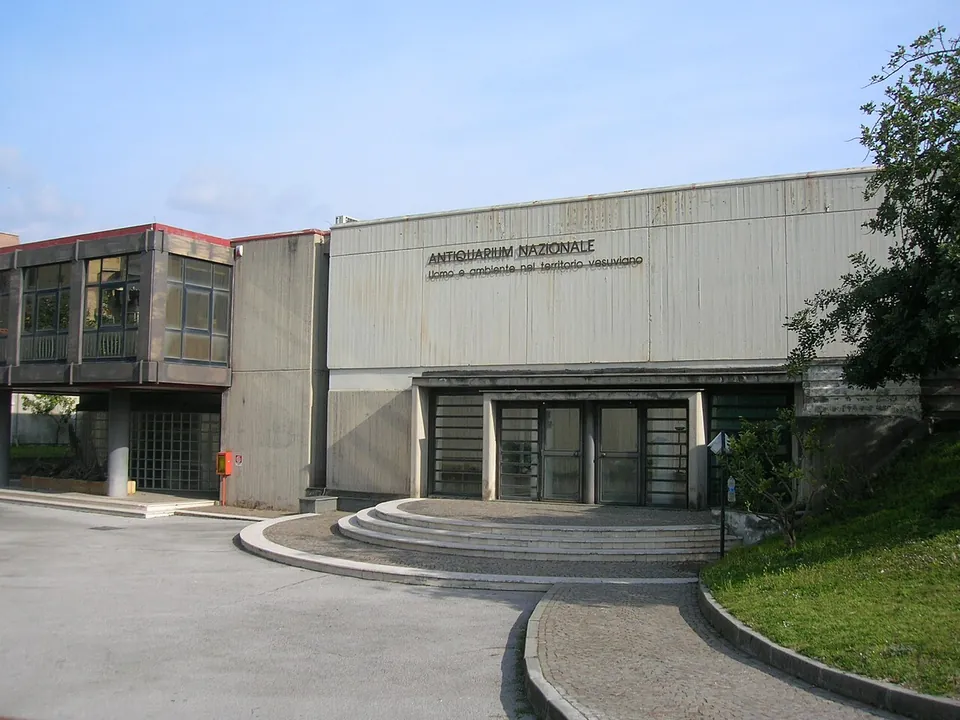
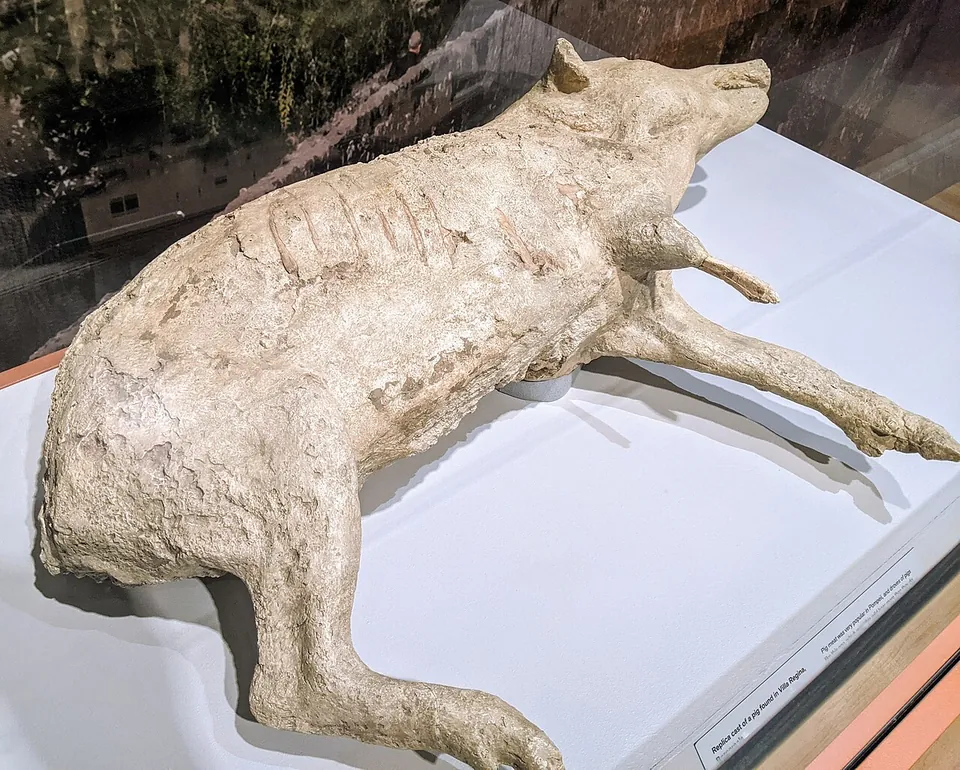
The Antiquarium, opened in 1991 next door, explains the Vesuvian countryside before the eruption (it.wikipedia). A corridor of illustrations shows how the woodland and the marsh of the river Sarno changed over time; the first room covers plants and animals, cosmetics, livestock, farming and medicine, with hoes, fish hooks, wine amphorae and the casts of a dog still wearing its collar and of a pig. The second room holds finds from the Boscoreale villas: a small marble herm, a cup and lamps from Villa Regina, and from the Villa della Pisanella a lava-stone olive mill, bronze seals and a model of its great wine cellar with 84 dolia (it.wikipedia). Since the museum reopened in October 2023, a further room is given to the excavations still under way at the suburban villa of Civita Giuliana, with the ceremonial chariot found there in 2021 (Ministry of Culture).
Is it worth the trip?
If you hold the €25 Pompeii+ ticket, yes: Villa Regina and the Antiquarium are already paid for, and the park’s free shuttle brings you here in a quarter of an hour. It is the place around Pompeii where you see how the land was farmed rather than how the town lived, and the vines growing again in the Roman root holes make the point better than any panel.
As a separate outing it is a small site. The villa is one farmhouse in a hollow surrounded by the modern town, and the most famous things found at Boscoreale are not here: the frescoes of the Villa of Publius Fannius Synistor hang in New York, Naples, Paris and Mariemont, and the Boscoreale Treasure is mostly in the Louvre. The €8 ticket is fair for what is here, but it is not a reason on its own to make the journey from Naples.
Getting there and what it costs
The entrances are on Via Settetermini and Viale Villa Regina in Boscoreale, about 1 km north-west of Pompeii’s Villa of the Mysteries. The Circumvesuviana railway has a Villa Regina stop, and by car the A3 motorway has exits at Torre Annunziata Sud (towards Salerno) and Boscoreale (towards Naples) (the operator). Bus stops of the regional operator EAV are mapped about 170 m away; no public car park is mapped at the gate, only private and customers’ car parks 140–230 m off (OpenStreetMap).
From Pompeii, the park’s Pompeii Artebus shuttle 1 leaves Piazza Esedra every hour from 09.30, with a break from 13.00 to 14.00, stops at Porta Ercolano by the Villa of the Mysteries to pick up passengers, and reaches Boscoreale about fifteen minutes later. It is free for park visitors, subject to space. The last run that takes passengers out leaves at 15.00 in winter and 17.00 in summer; the one after it runs out empty to bring visitors back (the operator).
It is open daily, 09.00 to 19.00 from 16 March to 14 October (last entry 18.00) and 09.00 to 17.00 from 15 October to 15 March (last entry 16.00), and closed on 25 December and 1 January. A ticket for Boscoreale alone is €8, or €2 for EU citizens aged 18 to 24. Villa Regina and the Antiquarium are also included in the €25 Pompeii+ ticket, which covers the ancient city, the Villa of the Mysteries and the Villa of Diomedes, and in the €30 three-day ticket that adds Oplontis and the Stabiae sites; both include the shuttle. Entry is free on the first Sunday of the month (pompeiisites.org, tariffs from 12 January 2026, read 22 October 2026 — check before travelling).
Visiting details
- Opening hours
- Daily 09.00–19.00 from 16 March to 14 October (last entry 18.00), and 09.00–17.00 from 15 October to 15 March (last entry 16.00). Closed 25 December and 1 January.
- Tickets
- €8 for Boscoreale on its own; €2 for EU citizens aged 18 to 24. Villa Regina and the Antiquarium are also included in the €25 Pompeii+ ticket (the ancient city with the Villa of the Mysteries and the Villa of Diomedes) and in the €30 three-day ticket for all the park's sites, both with the shuttle bus. Free on the first Sunday of the month.
- Parking
- No public car park is mapped at the entrance; the car parks mapped 140–230 m away are private or for customers only (OpenStreetMap).
Before you go
- The villa and museum are about 1 km north-west of Pompeii's Villa of the Mysteries, outside the ancient city; the park's free Artebus shuttle links them to Pompeii.
Hours and prices checked 22 October 2026 on the operator's own site. Confirm before travelling.
The villas under Boscoreale
In Roman times this countryside was farmland despite its closeness to Pompeii, specialising in wine and olive oil (en.wikipedia), and Pleiades calls the area especially well known for its country villas of the first century BC. Many were found towards the end of the 19th century, often by treasure hunters, and buried again (en.wikipedia). Five of them are described below; none can be visited.
Villa della Pisanella. First found in 1868 (Pleiades; it.wikipedia) or 1876 (en.wikipedia), and explored between 1894 and 1898 before being reburied (it.wikipedia). It was a farm villa of about 0.1 hectares with baths, and its wine cellar held 84 dolia. In 1895 a chest in the wine-pressing room yielded the Boscoreale Treasure: more than a hundred pieces of silver tableware, gold jewellery and about a thousand gold coins (en.wikipedia; published counts of the silver differ). It was sold off to dealers and collectors; most of it is now in the Louvre, and some pieces are in the British Museum (en.wikipedia).
Villa of Publius Fannius Synistor. Built between about 50 and 30 BC — published dates differ within that range (de.wikipedia; en.wikipedia) — and excavated in 1899–1900 by Vincenzo De Prisco. Its late Second Style frescoes were cut from the walls, auctioned and are now in museums in Europe and North America, after which the excavation was filled in again (de.wikipedia): among them the Metropolitan Museum of Art in New York, the National Archaeological Museum in Naples, the Louvre and the Musée royal de Mariemont in Belgium (it.wikipedia). A bedroom reconstructed from its frescoes has been a feature of the Metropolitan’s Roman gallery since 2007 (en.wikipedia). The name comes from a bronze drinking vessel scratched with it; a bronze seal suggests that Lucius Herennius Florus may have been the owner (de.wikipedia).
Villa del fondo Ippolito Zurlo, in the contrada Giuliana, was excavated by De Prisco in 1897 and reburied (Pleiades). The Villa of Asellius was excavated under De Prisco in 1903 and 1904 on the property of Giuseppe De Martino; wall paintings and objects were recovered before it was reburied, and its exact location is poorly recorded (Pleiades). The villa on the D’Acunzo property, near Boscoreale station, was excavated and reburied in 1903 (Pleiades); its finds include the remains of a wooden and bronze balance and seven statuettes of gods now in the Walters Art Museum in Baltimore (it.wikipedia). Finds from the D’Acunzo villa and from the villa of Asellius are among those shown in the Antiquarium’s second room (the operator).
History
Villa Regina dates from the 1st century BC and was remodelled under Augustus and again under the Julio-Claudian emperors; it was decorated in the Third and Fourth Styles of wall painting. After its discovery in 1977 it was explored in the early 1980s and uncovered completely; a cart and a press were found inside, and casts were taken of the roots of the vines (it.wikipedia). Pollen analysis has identified the trees and flowers grown around it, and confirmed that grapes were cultivated on the estate (en.wikipedia). An oil lamp of the 3rd to 5th century AD shows that someone tunnelled into the buried villa in late Roman times (en.wikipedia).
The Antiquarium was opened in 1991 by the archaeological superintendency of Pompeii (it.wikipedia), in a building on land given by the town of Boscoreale (Ministry of Culture). It is now one of the sites of the Archaeological Park of Pompeii, alongside Pompeii, Oplontis and Stabiae (the operator).
More photographs



Nearby
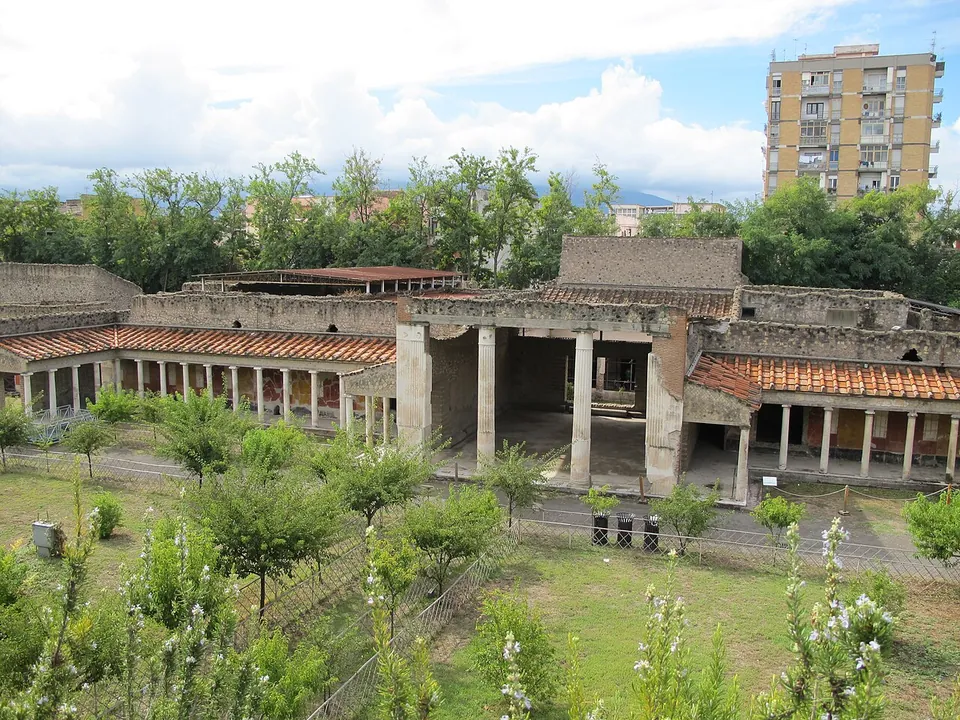
Photo: ho visto nina volare from Italy · CC BY-SA 2.0 · Commons
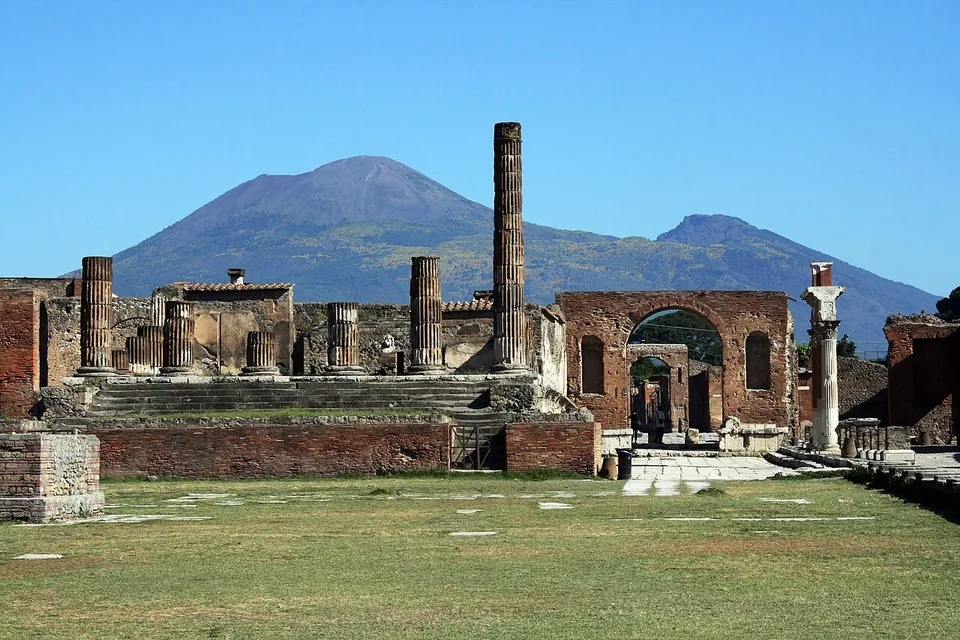
Photo: Glen Scarborough from The Central Coast, Australia · CC BY 2.0 · Commons
2 km · city · Campania
Pompeii
The walled town covered 64 to 67 hectares, and about two-thirds of it has been excavated (en.wikipedia), so this is a day out rather than a single monument: you walk the old streets from one block to the next.
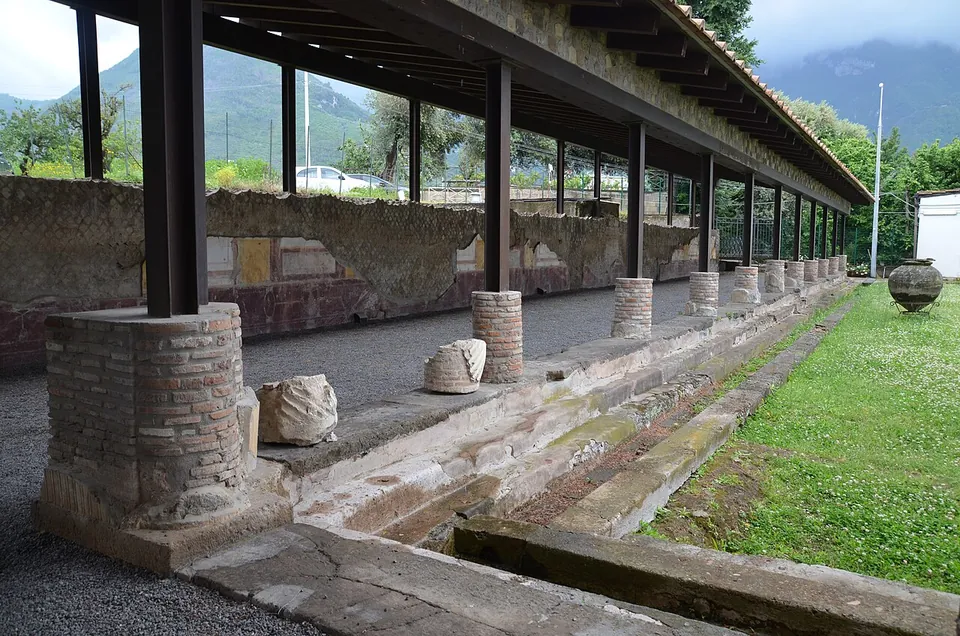
Photo: Carole Raddato · CC BY-SA 2.0 · Commons
7 km · villa · Campania
Stabiae
Two villas and the neighbouring Second Complex are open (the operator).


Straight-line distances.
Sources
Every fact on this page comes from the records below, each used under the licence noted.