


Photo: Carole Raddato · CC BY-SA 2.0 · Commons

bath · Sardinia
Antiquarium Turritano
The park holds three Roman bath buildings, a house with figured mosaics, a colonnaded courtyard and a stretch of the city wall (the operator).
Ticketed
Colonia Iulia Turris Libisonis, Turris Libyssonis, Ad Turrim Libysonis, Turribus
city · Sardinia, Italy
2 places to see, the best preserved and best known first.
Photo: Carole Raddato · CC BY-SA 2.0 · Commons
bath · Sardinia
The park holds three Roman bath buildings, a house with figured mosaics, a colonnaded courtyard and a stretch of the city wall (the operator).
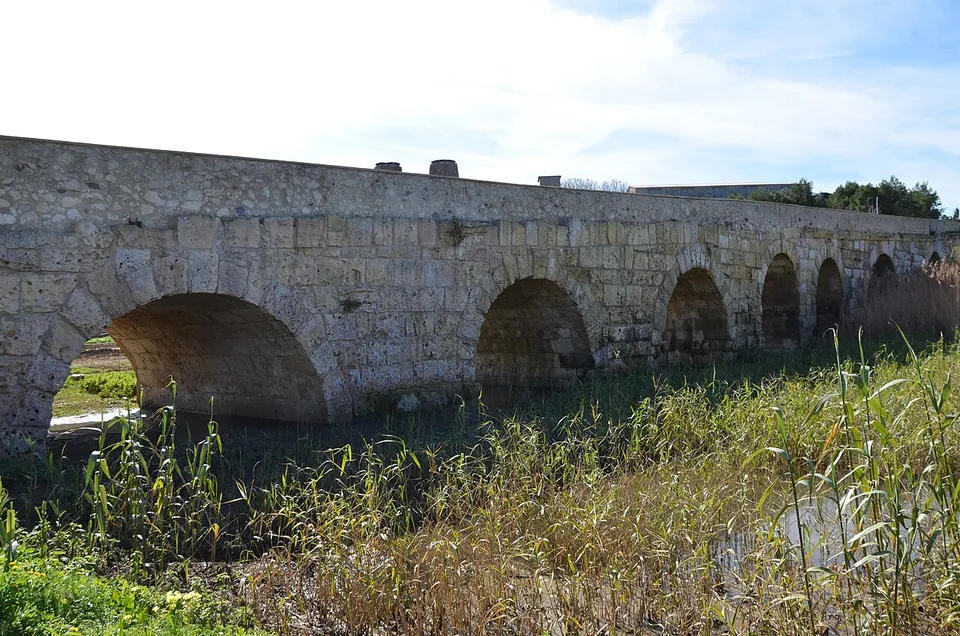
Photo: Carole Raddato · CC BY-SA 2.0 · Commons
Turris Libisonis was the Roman colony founded in the 40s BC at the mouth of the Riu Mannu on Sardinia’s north-west coast, and modern Porto Torres is built on top of it. What you can see is an archaeological park beside the town’s archaeology museum, and, a few hundred metres away, a seven-arched Roman bridge.
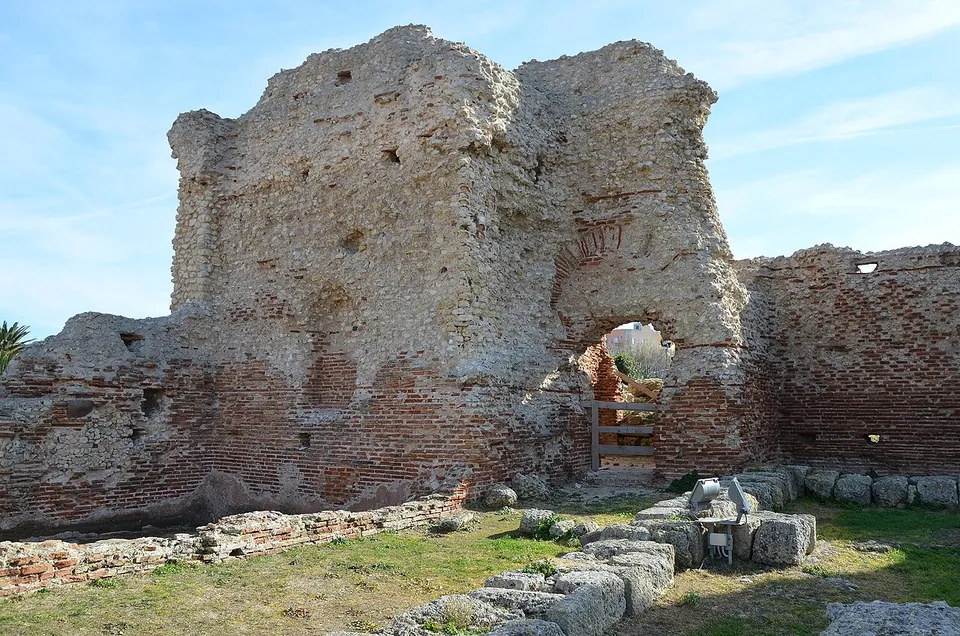
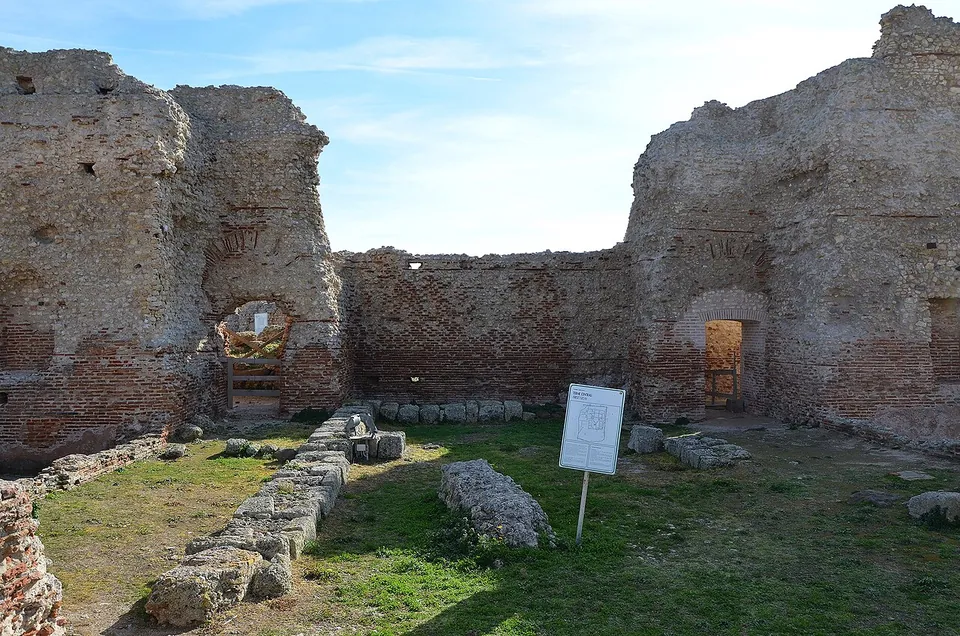
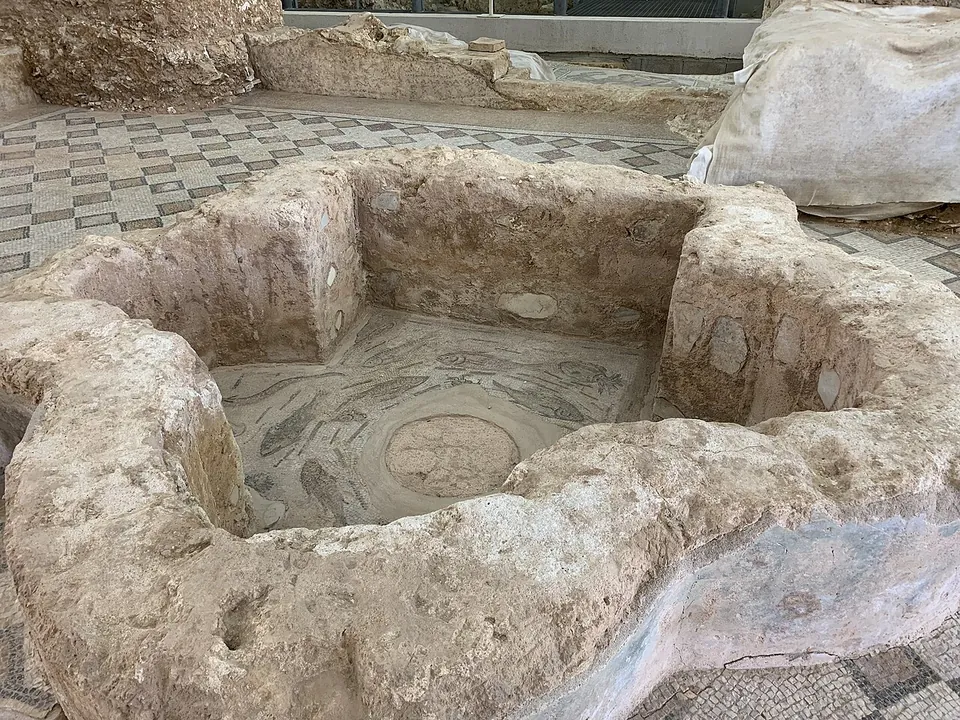
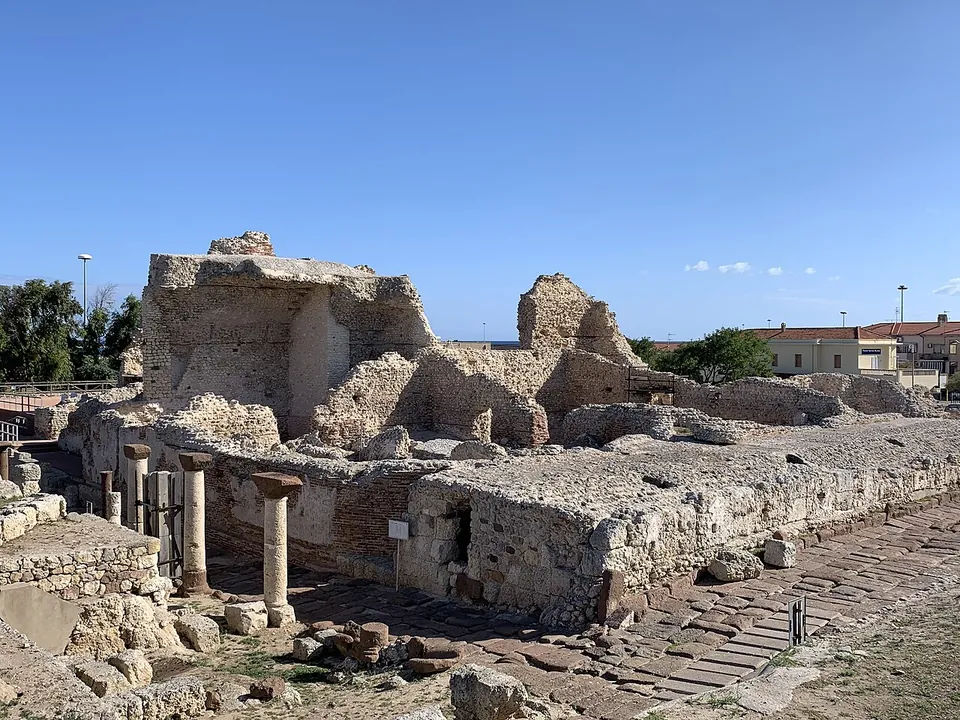
The park lies next to the Antiquarium Turritano and holds the heart of the old town (it.wikipedia). Its largest ruin is the public bath complex in the middle of the park, which the museum calls the Central Baths and it.wikipedia says is sometimes called the Palazzo di Re Barbaro. Its outer walls are still standing, and it.wikipedia calls it the largest bath complex in Sardinia after Fordongianus. The museum’s own guide to the area lists two smaller bath buildings besides, the Pallottino and Maetzke baths, as well as a peristyle and the Domus of Orpheus, a house of around AD 250 found beneath the porch of the Central Baths. Its mosaics show Orpheus playing the lyre and the Three Graces, and a three-lobed basin is lined with a mosaic of 18 kinds of fish and molluscs. On the west side of the hill above the river, a stretch of the city wall has been uncovered, 2.5 m thick and built of large limestone blocks (the operator). Streets in the town were paved with trachyte slabs (it.wikipedia).
Before its current rearrangement the museum showed finds from the town’s burial grounds, statuary and objects recovered from the sea on the ground floor, and material from the Central Baths and a marble collection upstairs. An extension on the ground floor opens onto part of a bath building, with the small pillars that held up its heated floor (it.wikipedia).
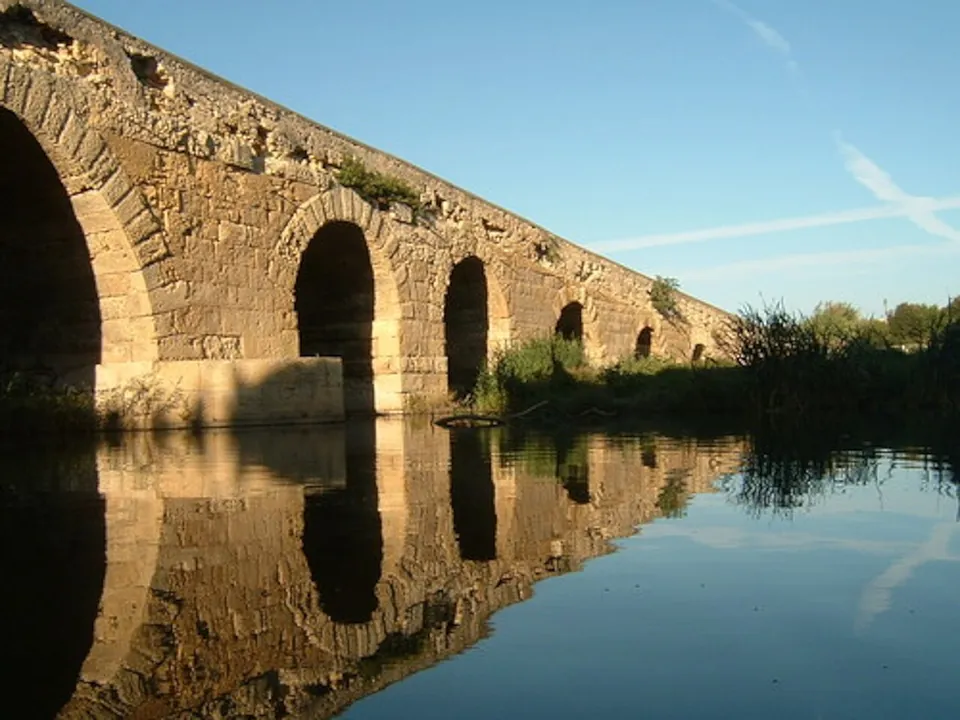
The Roman bridge over the Riu Mannu is 135 m long, with seven arches of limestone and trachyte. it.wikipedia calls it the most important Roman bridge in Sardinia because it is so well preserved. It carried traffic until the 1980s. Restoration since 2020 has removed the asphalt from its original paving and added a raised timber walkway for walkers and cyclists, and a final phase of structural work began in 2024 (it.wikipedia).
The museum with its park and the bridge are this town’s two stops, each with its own page.
Not at the moment, for the park. The museum and the archaeological area have been closed since 2 May 2026 for a new display and accessibility work, and no reopening date has been announced (the operator). The closure notice does not cover the bridge, which carries a walkway for walkers and cyclists, but no operator page says whether the walkway is open while the restoration continues.
When the park reopens, it is a compact visit in the middle of a working port town. The baths stand to wall height rather than as foundations, the mosaics of the Domus of Orpheus are worth seeing, and the bridge is a short walk away. It is little known. If you are already in north-west Sardinia, it is worth a stop, but it is not a reason to travel to the island on its own.
Porto Torres is on the north-west coast of Sardinia, about 16 km from Sassari (Pleiades gives 10 miles). The museum is at Via Ponte Romano 99. Porto Torres Marittima railway station is right beside it, buses stop on the covered promenade of Via Mare about 300 m away, and there is a free public car park (the operator).
The museum and the park have been closed since 2 May 2026, and on 21 October 2026 the operator had not yet announced a reopening date (antiquariumportotorres.cultura.gov.it). The hours and tariff last published before the closure are on the Antiquarium Turritano page; check the museum’s site for the reopening date before you go.
Before you go
Hours and prices checked 21 October 2026 on the operator's own site. Confirm before travelling.
Turris Libisonis was founded between 46 and 41 BC, by Julius Caesar or by Octavian. With the small settlement of Usellus it was the first fully Roman colony in Sardinia, and Pliny the Elder, the first writer to name it, calls it the island’s only Roman foundation (it.wikipedia). The Phoenicians had used the harbour before (it.wikipedia; Pleiades).
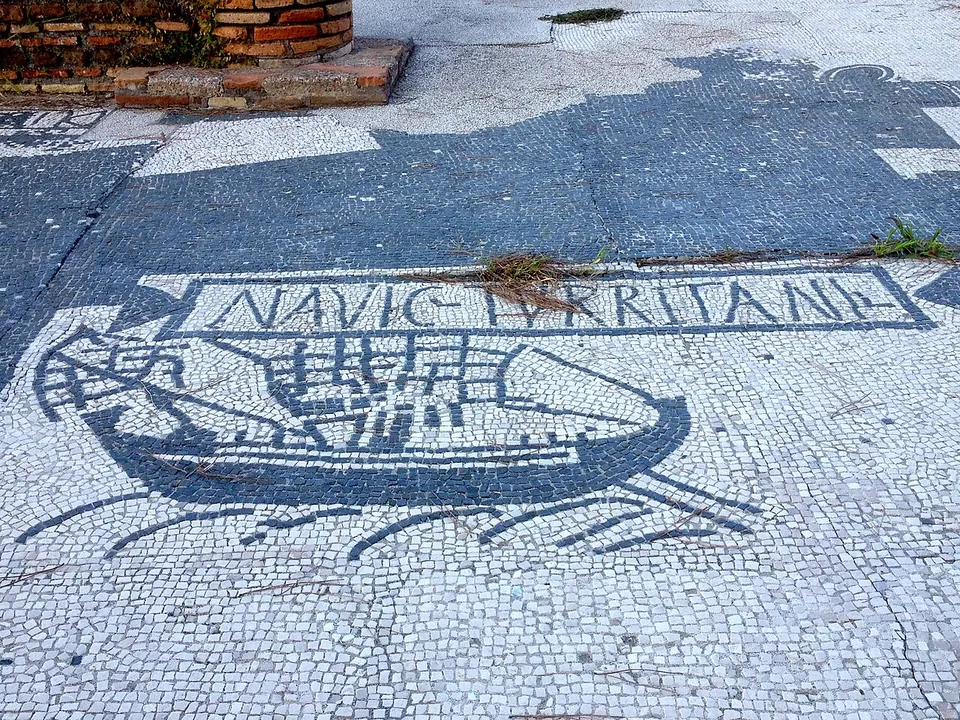
The town lived by its port. Grain from the farmland around today’s Sassari and Sorso, silver and lead from the Argentiera mines, and local tuna and garum were shipped out through it. There were two harbours, one on the river and one on the sea. A marble inscription records a mole or breakwater built in AD 211–212 to protect the harbour from the north-east or north wind. Mosaics and inscriptions show craftsmen from Rome and Ostia at work in the town, which traded with Rome through Ostia until about AD 300 (it.wikipedia). An inscription of AD 244 attests a temple of Fortune and a basilica. Cults from abroad, Egyptian ones above all, are recorded: Bubastis, Isis, Jupiter Ammon and Mithras (it.wikipedia).
The colony reached its peak under the Severans, and it.wikipedia counts the Central Baths and the Pallottino baths among the public works of that time; its article on the same bath building under the name Palazzo di Re Barbaro gives a first phase around the 1st century AD and a rebuilding around the 3rd. The Antiquarium Turritano’s page takes the park building by building. Excavation has dated the city wall to the late 2nd or early 3rd century (the operator). A road ran south to Karalis, modern Cagliari, and part of today’s SS131 follows its line. An aqueduct about 30 km long brought water from springs near Sassari, but almost nothing of it survives (it.wikipedia).
From the late 3rd century parts of the town were abandoned and burial grounds spread over them, staying in use until the 7th century. The Vandal invasion of the 5th century sped up a decline that had begun in the 3rd, as people moved inland to the area of Sassari, which had replaced it as the north’s main town by the 13th century (it.wikipedia). Published accounts of the Pallottino baths differ: it.wikipedia says Massimo Pallottino excavated them in 1941–42, while the museum says Doro Levi dug them in the 1930s and that they are named after Pallottino, who replaced Levi as head of the antiquities service in Sardinia in 1938. The Domus of Orpheus came to light in recent excavations (the operator).
Every fact on this page comes from the records below, each used under the licence noted.
| Source | Licence |
|---|---|
| Pleiades 472035 | CC BY |
| Wikidata Q101405676 | CC0 |
| OpenStreetMap way/279209543 | ODbL |
| Wikipedia (it) — Colonia Iulia Turris Libisonis | CC BY-SA 4.0 |
| Wikipedia (it) — Antiquarium Turritano | CC BY-SA 4.0 |
| Wikipedia (en) — Antiquarium Turritano | CC BY-SA 4.0 |
| Wikipedia (it) — Palazzo di Re Barbaro | CC BY-SA 4.0 |
| Wikipedia (it) — Ponte romano di Porto Torres | CC BY-SA 4.0 |
| Antiquarium Turritano — visit, hours and tickets (the operator) | licence not recorded |
| Antiquarium Turritano — notice of closure from 2 May 2026 (the operator) | licence not recorded |
| Antiquarium Turritano — partial closure of the museum, 15 December 2025 (the operator) | licence not recorded |
| Antiquarium Turritano — the city walls (the operator) | licence not recorded |
| Antiquarium Turritano — Domus of Orpheus (the operator) | licence not recorded |
| Antiquarium Turritano — Central Baths (the operator) | licence not recorded |
| Antiquarium Turritano — Pallottino Baths (the operator) | licence not recorded |


