theatre · Tuscany
Roman Theatre of Volterra
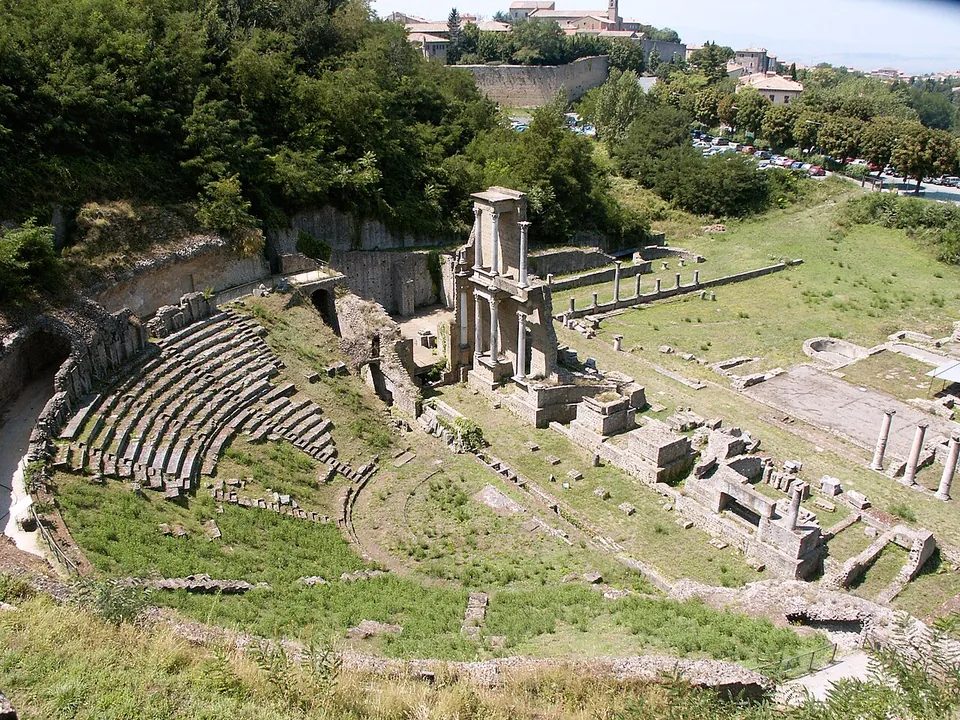
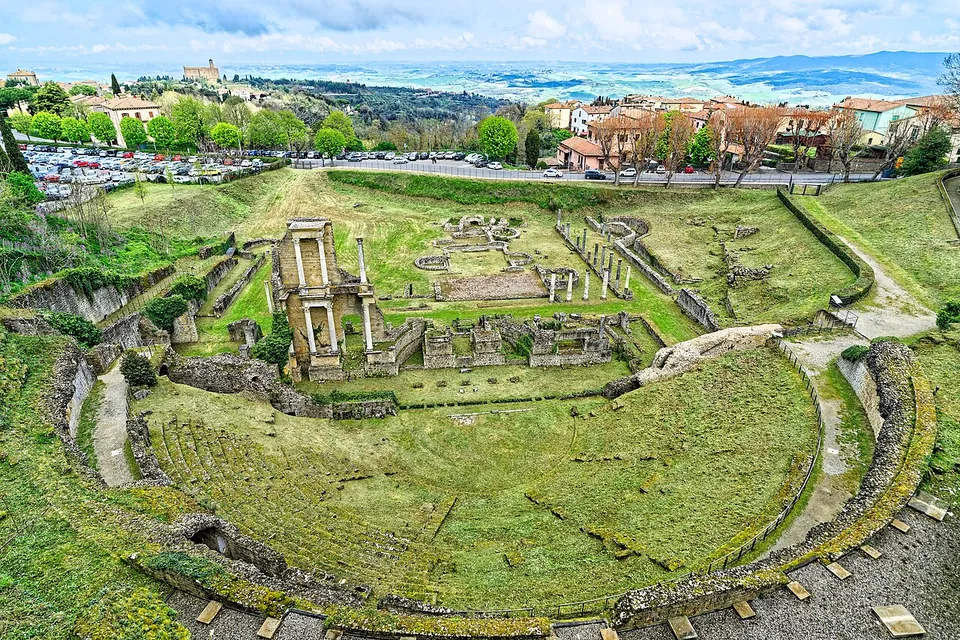
The seating still curves round the slope: two tiers, of nine and ten rows, divided by a narrow walkway.
Ticketed
Velathri, Vlathri, Οὐολατέρραι
city · Tuscany, Italy
1 place to see, the best preserved and best known first.
theatre · Tuscany
The seating still curves round the slope: two tiers, of nine and ten rows, divided by a narrow walkway.
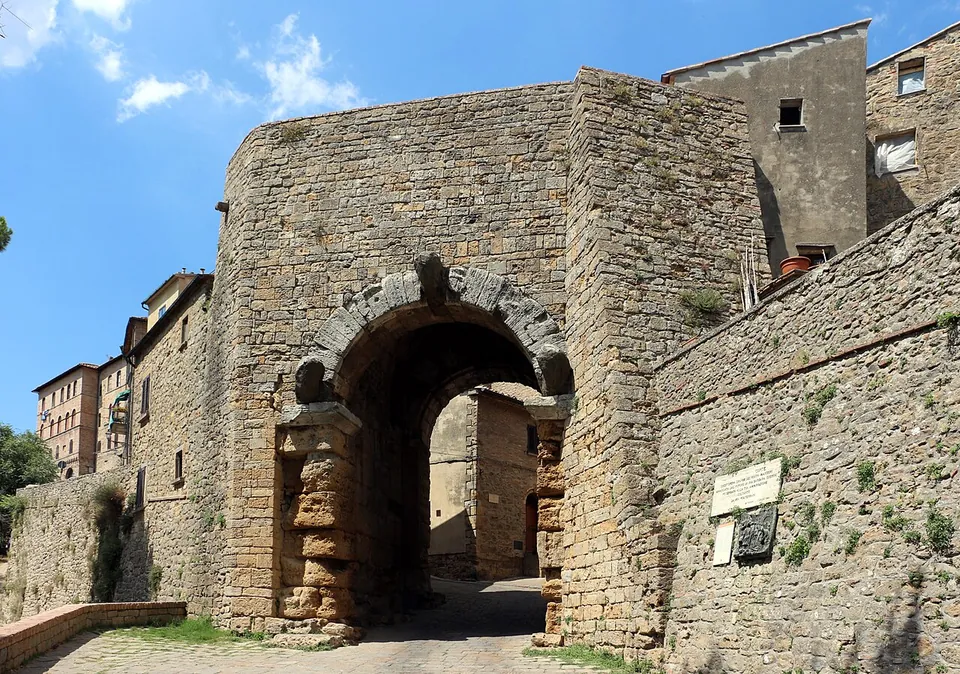
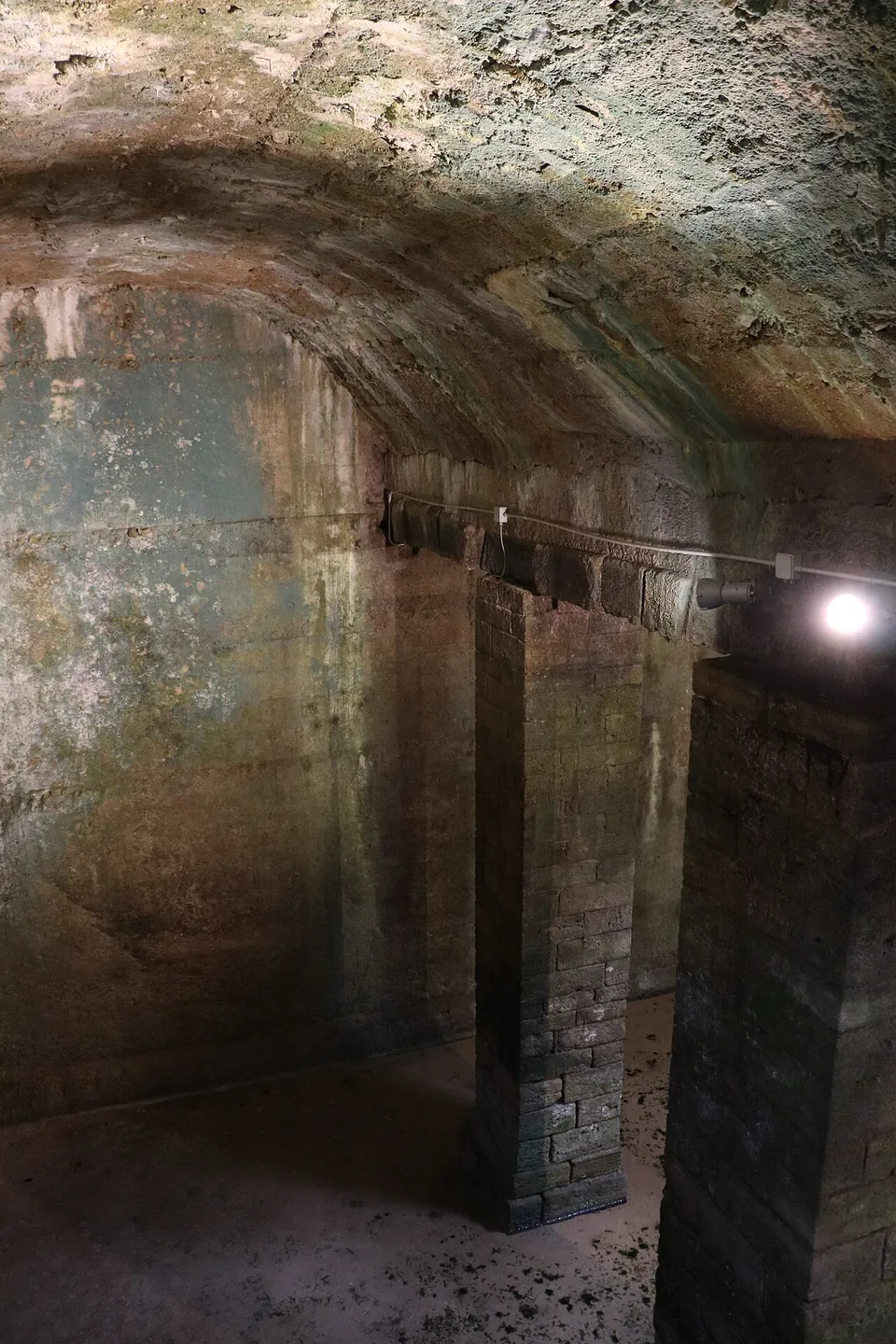
Volterra is a walled hilltop town in Tuscany that was the Etruscan city of Velathri and the Roman Volaterrae. Its Roman set piece is a theatre of the age of Augustus, just outside the medieval walls, which has its own page; the town adds an Etruscan gate, the Etruscan acropolis with a Roman cistern, and an amphitheatre still being excavated (en.wikipedia; the Comune di Volterra).
The Roman remains sit in and around a town that also keeps substantial Etruscan and medieval buildings (en.wikipedia), and all of them lie within about 650 m of the main square.
Yes, if you are anywhere in central Tuscany. The theatre is counted among the best-preserved Roman theatres in Italy (en.wikipedia). Combine it with Porta all’Arco and the acropolis and you have a half-day; the Etruscan museum and the medieval centre fill the rest of a day.
Two things to know. The Roman part of Volterra is compact: one ticketed theatre, an Etruscan gate, a cistern and a dig site, not a Roman city to walk through. And between 3 November and 9 March the archaeological areas open only by booking, so a winter visit needs planning.
The nearest railway station, Volterra Saline–Pomarance, is not in the town but in the frazione of Saline di Volterra, at the end of the line from Cecina (it.wikipedia). A bus station is mapped about 100 m from the centre (OpenStreetMap). By road, the SS68 links Volterra west to the coast and the SS1 Aurelia (it.wikipedia). There is paid parking in the underground La Dogana car park near the main square (OpenStreetMap); the theatre’s page names the car park at its entrance.
The Etruscan acropolis keeps the same seasonal hours as the theatre, set out on the theatre’s page: open daily from 10 March to 2 November, and only by booking from 3 November to 9 March. With the archaeological areas’ tariff the town also lists a Volterra Card, €23 (reduced €18, family €32, free under 6); its page does not say which other sites the card covers (the Comune di Volterra, read 20 October 2026; check before travelling).
Before you go
Hours and prices checked 20 October 2026 on the operator's own site. Confirm before travelling.
Volterra was one of the twelve cities of the Etruscan League (en.wikipedia). An Etruscan army was defeated by the Romans near the town in 298 BC, and from the end of the 3rd century BC Volterra seems to have been a federate ally of Rome; in 205 BC it supplied grain and ship timbers for Scipio’s fleet (it.wikipedia). Its people received Roman citizenship in 90 BC, but the town then sided with Marius and was besieged by Sulla himself from 82 to 80 BC. After the Social War it became a municipium, and by the age of the triumvirs or of Augustus at the latest a colonia (it.wikipedia).
Under Augustus the wealthy Caecina family gave the town its theatre, whose story, from its dedication to its excavation in the 1950s, is on the theatre’s page (en.wikipedia). The poet Persius (Aulus Persius Flaccus) was born in Volterra in AD 34 (en.wikipedia; it.wikipedia). The town kept its status as a colonia, had a bishop by the later 5th century and was still a city to the historian Agathias in the mid-6th, while archaeology shows its public buildings falling apart in the 5th and 6th (it.wikipedia).
The amphitheatre appeared in July 2015, when work on a stream bank exposed a curved line of masonry; no ancient or later writer had recorded it, which is why it was made known as “l’anfiteatro che non c’era”, the amphitheatre that wasn’t there (it.wikipedia).
30 km · villa · Tuscany
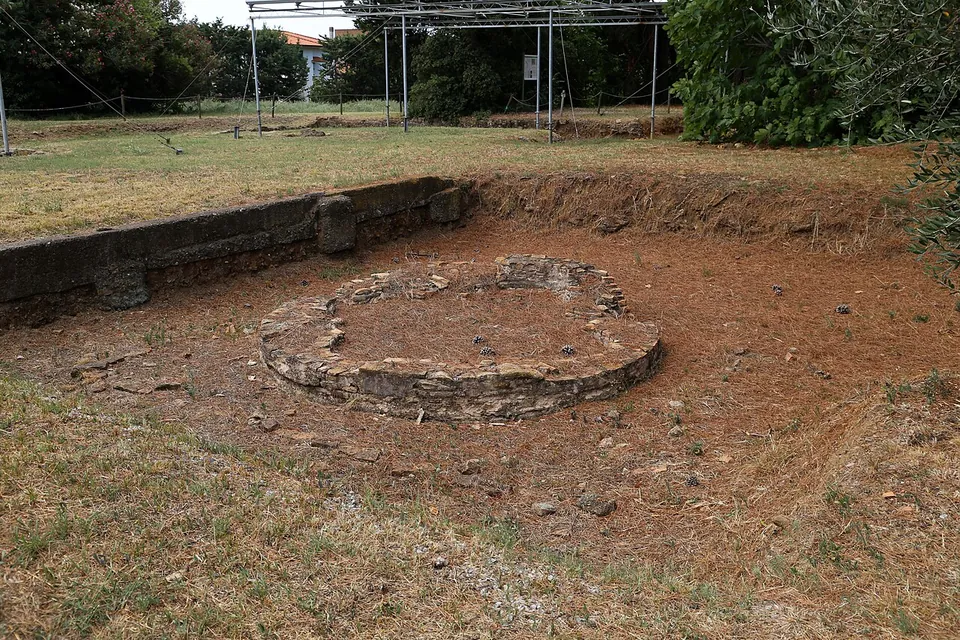
The villa survives as low walls and floor levels, partly in a shaded park among tall trees and partly under metal shelters over the excavations.
Straight-line distances.
Every fact on this page comes from the records below, each used under the licence noted.
| Source | Licence |
|---|---|
| Pleiades 403292 | CC BY |
| Wikidata — Volterra (Q103305, the modern town) | licence not recorded |
| Wikipedia (en) — Volterra | CC BY-SA 4.0 |
| Wikipedia (it) — Volterra | CC BY-SA 4.0 |
| Wikipedia (en) — Roman Theatre at Volterra | CC BY-SA 4.0 |
| Wikipedia (it) — Teatro romano di Volterra | CC BY-SA 4.0 |
| Wikipedia (it) — Porta all'Arco (Volterra) | CC BY-SA 4.0 |
| Wikipedia (it) — Anfiteatro romano di Volterra | CC BY-SA 4.0 |
| Pleiades — Porta all'Arco | licence not recorded |
| Pleiades — Roman theatre of Volaterrae | licence not recorded |
| Pleiades — Roman amphitheatre of Volterra | licence not recorded |
| Comune di Volterra — Aree archeologiche (hours and admission, the operator) | licence not recorded |
| Comune di Volterra — L'Anfiteatro Romano di Volterra | licence not recorded |