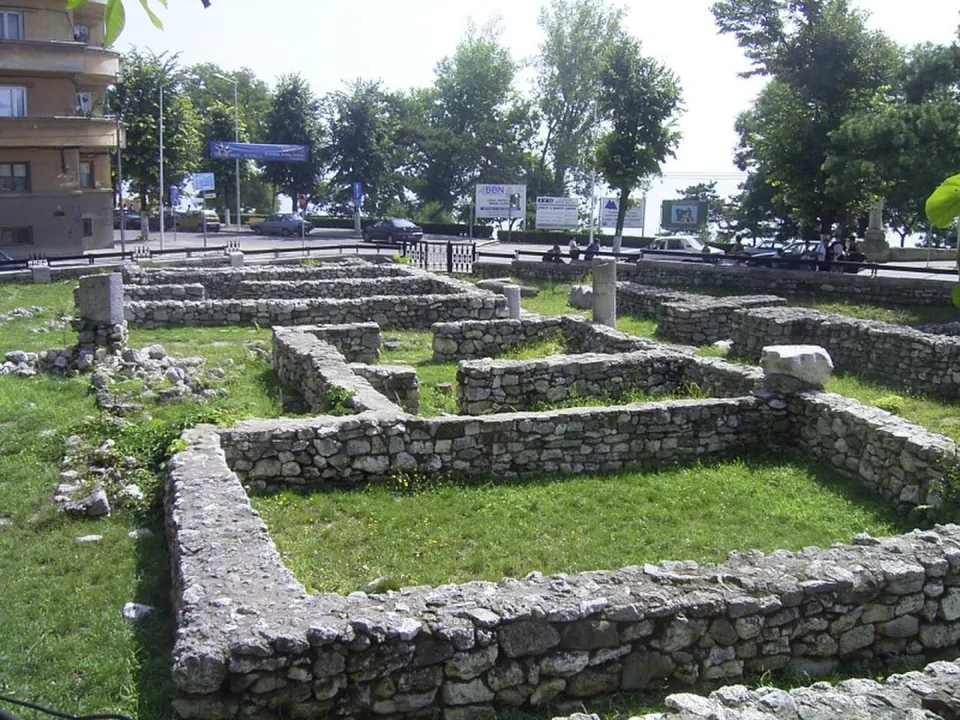
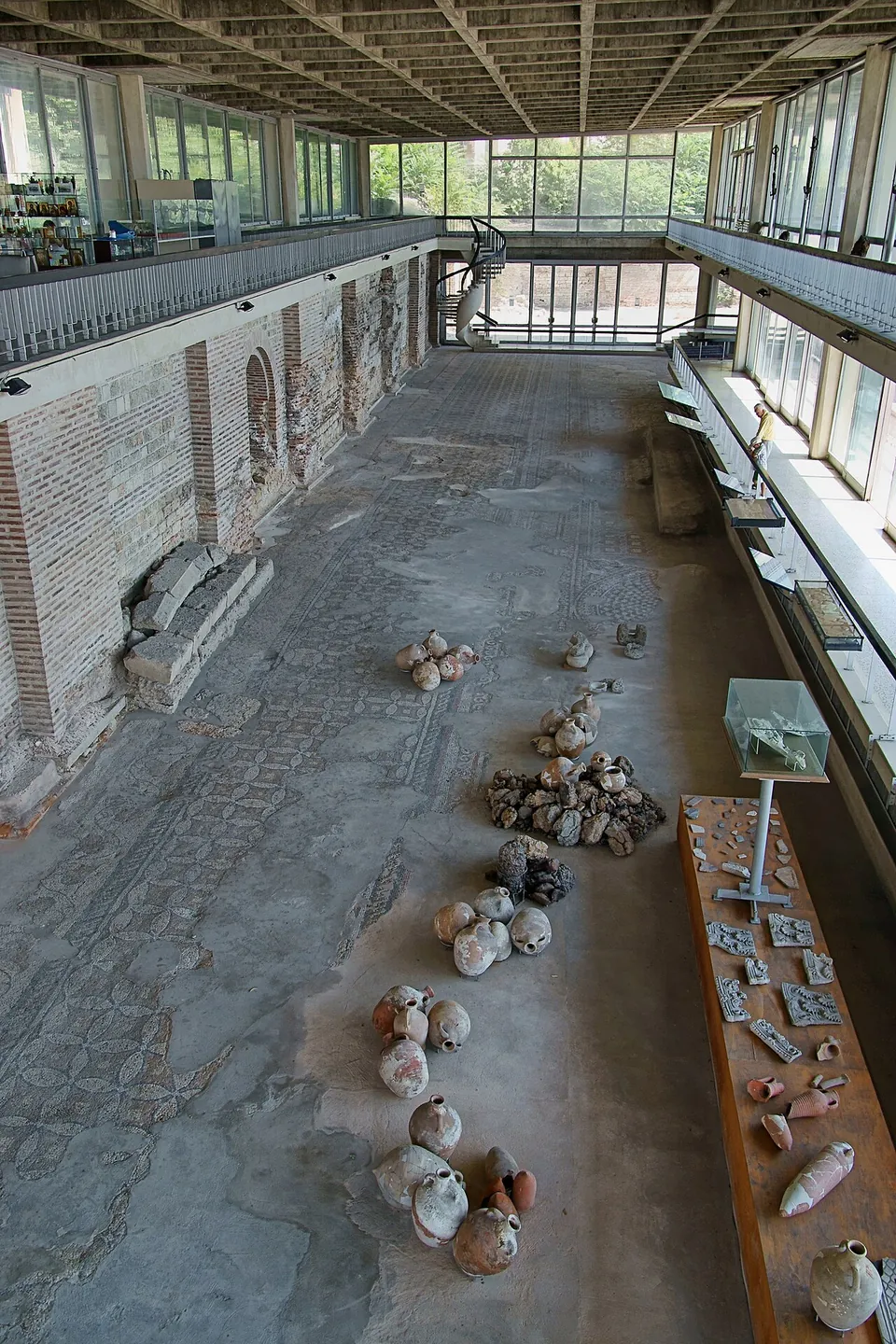
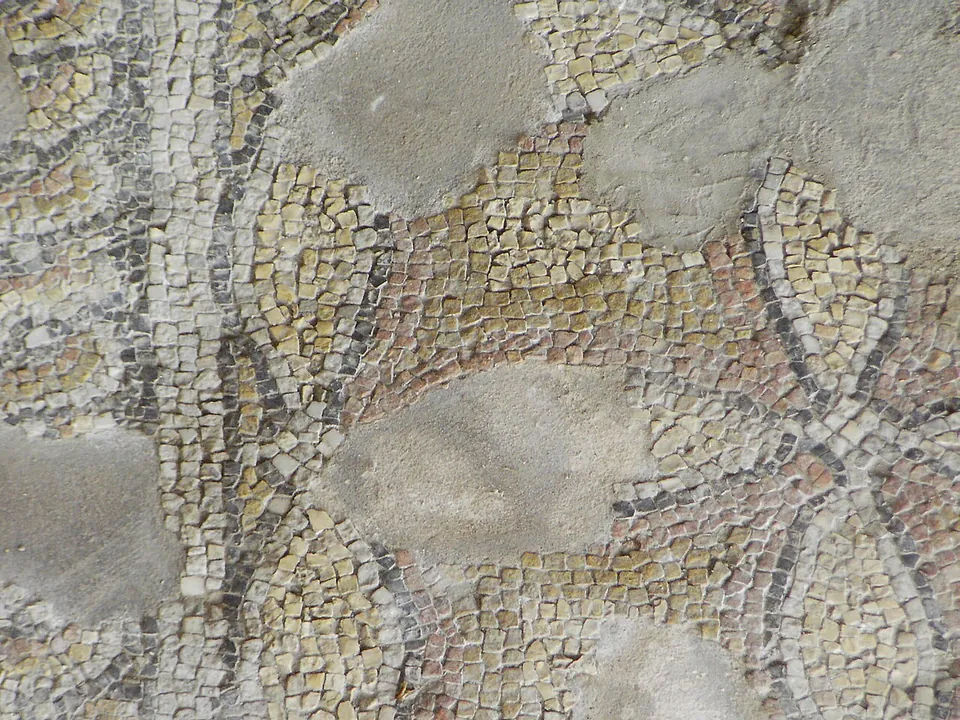


Tomis was a Greek colony on the Black Sea that became the Roman capital of Scythia Minor, and it lies under the modern city of Constanța. Its great sight is the Roman Mosaic Edifice, a late Roman harbour building whose mosaic floor, one of the longest known, can still be seen from a gallery in its own hall; around it, excavated walls, baths and the remains of an amphitheatre are scattered through the old town.
What is there today
The Roman Mosaic Edifice was built in the 4th century, probably under Constantine the Great, on the western cliff above the modern port, replacing earlier harbour buildings; it linked the level of the city with that of the ancient harbour on several terraces (ro.wikipedia). Its hall, 100 m long and 20 m wide, had a mosaic pavement of about 2,000 m², of which about 850 m² survive, along with part of the long wall, once faced with white and coloured marble and opening towards the sea in arches. Below it are vaulted storerooms; the museum shows the goods and ship’s gear found in them, among them anchors and amphorae, and the former storerooms hold inscriptions from across Dobruja (ro.wikipedia). It was found during building work in 1959 and stands in a modern exhibition hall (ro.wikipedia).
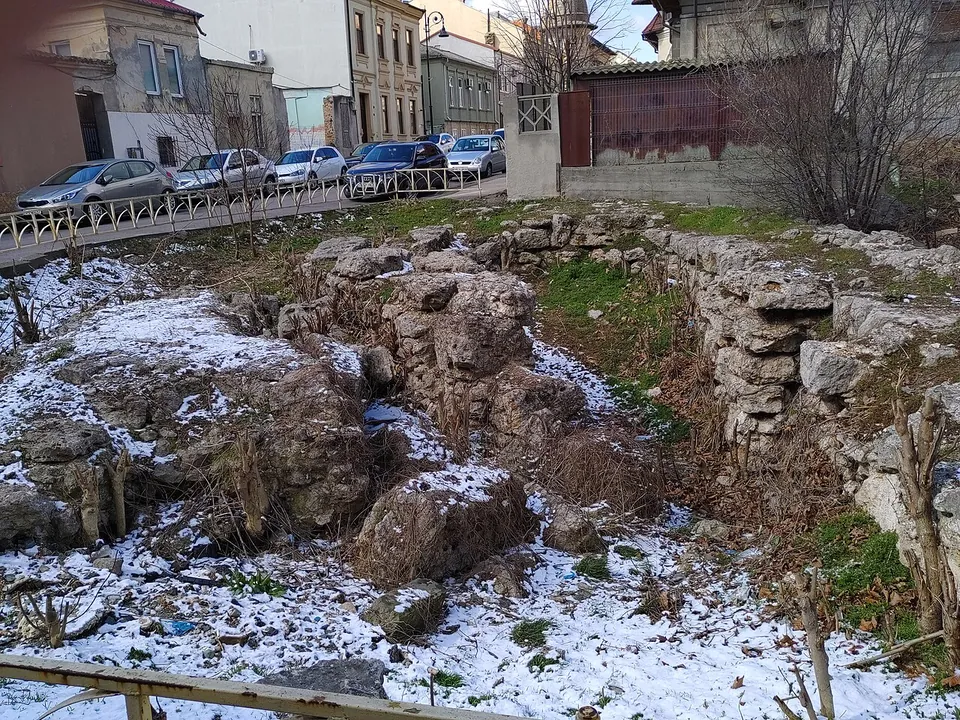
Most of the ancient city is covered by modern Constanța, which makes archaeology difficult (en.wikipedia). Excavated walls are laid out in the old town, and the Roman baths and the amphitheatre are protected parts of the same ensemble. The operator also opens a painted tomb of the late Roman period (the operator).
Is it worth the trip?
Yes, for the mosaic. It is the reason to come, and it is in the middle of a city you may visit anyway for the coast. The rest of Tomis is fragments among streets and buildings, worth a walk round the old town rather than a trip of its own.
Getting there
The Mosaic Edifice stands on Piața Ovidiu, in the old town of Constanța above the port. Car parks are mapped about 240 m from the point this page uses (OpenStreetMap).
From 1 October 2026 to 30 April 2027 the operator, the Museum of National History and Archaeology in Constanța (MINAC), opens the Mosaic Edifice and the Painted Tomb Wednesday to Sunday, 09.00 to 17.00. Its tariff page lists a “Mozaic” ticket at 16 RON, about €3.00, with 8 RON for pensioners and 4 RON for pupils and students, but shows a 25 RON ticket in the Mosaic Edifice’s own entry, so check at the door (minac.ro, read 3 October 2026). The summer schedule for 2027 was not yet published.
Visiting details
- Opening hours
- The Roman Mosaic Edifice and the Painted Tomb open Wednesday to Sunday, 09.00–17.00, from 1 October 2026 to 30 April 2027 (the operator's cold-season schedule). The summer schedule for 2027 was not yet published on 3 October 2026.
- Tickets
- The operator's tariff page lists a "Mozaic" ticket at 16 RON (about €3.00), 8 RON for pensioners and 4 RON for pupils and students, and also shows a 25 RON ticket in the Mosaic Edifice's own entry; check at the door.
- Parking
- Car parks are mapped about 240 m from the point (OSM way/1174243447 and way/654461378).
Hours and prices checked 3 October 2026 on the operator's own site. Confirm before travelling.
History
Tomis was founded as a Greek colony in the 7th or 6th century BC; published dates range from 633 to about 600 BC (de.wikipedia; Pleiades; en.wikipedia). It had a fine harbour and a short cut inland to the Danube (en.wikipedia). The Romans took the region in 29 BC, and the city became part of the province of Moesia (en.wikipedia). In AD 8 Augustus exiled the poet Ovid here; he wrote the Tristia and the Epistulae ex Ponto at Tomis and died here in AD 17 (Pleiades).
The Goths attacked in 269 but destroyed only the suburbs outside the walls. From Diocletian’s time Tomis was the capital of Scythia Minor, and it was later called Constantiana. The Avars besieged it in the winter of 597/598, and the Bulgars took it in 680 (en.wikipedia); the mosaic edifice was used, with repairs, until the early 7th century, when the ancient city was abandoned (ro.wikipedia).
More photographs

Nearby
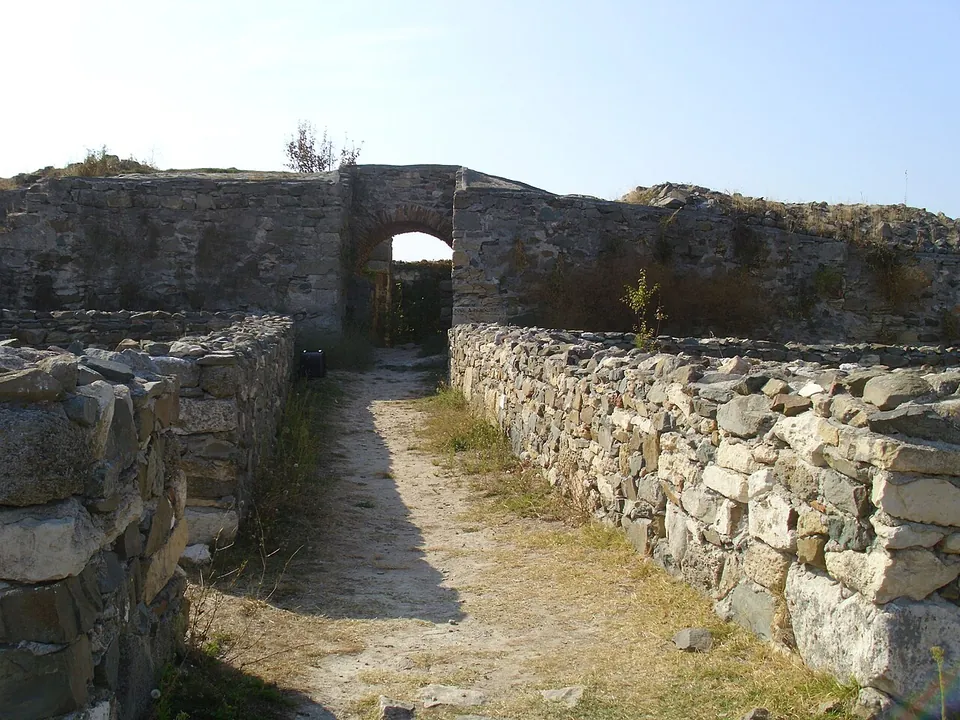
Photo: Mv ank · CC BY-SA 3.0 · Commons
43 km · city · Constanța County
Histria
The site is two cities in one, and it helps to know which is which.
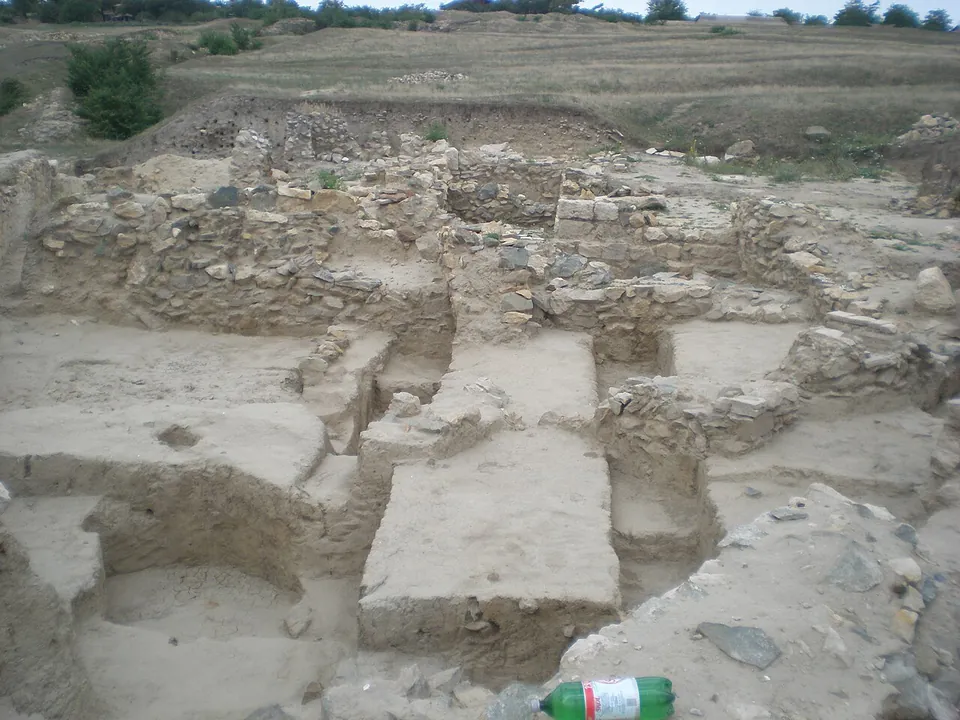
Photo: Leontin l · CC BY-SA 4.0 · Commons
48 km · fort · Constanța County
Ulmetum
The fortress is an irregular trapezoid of about 2 ha, with 13 towers and two main gates, to the south-west and the north-west; the north-west gate was walled up at some point in its history (MINAC).


Straight-line distances.
Sources
Every fact on this page comes from the records below, each used under the licence noted.
| Source | Licence |
|---|---|
| Pleiades 217016 | CC BY |
| Wikidata Q2441154 | CC0 |
| Vici.org 2171 | CC BY-SA (text), CC0 (metadata) |
| Wikidata — Constanța Roman mosaic edifice (Q12727357) | licence not recorded |
| Wikipedia (ro) — Edificiul roman cu mozaic din Constanța | CC BY-SA 4.0 |
| Wikipedia (en) — Constanța (Ancient history) | CC BY-SA 4.0 |
| Wikipedia (de) — Tomoi | CC BY-SA 4.0 |
| MINAC — visiting hours and prices (the operator) | licence not recorded |
| MINAC — cold-season visiting hours, from 1 October 2026 (the operator) | licence not recorded |