

What is there today
The modern town covers the Roman one entirely, and most of the remains found have been covered again once archaeologists had recorded them (fr.wikipedia). Three places show what survives.
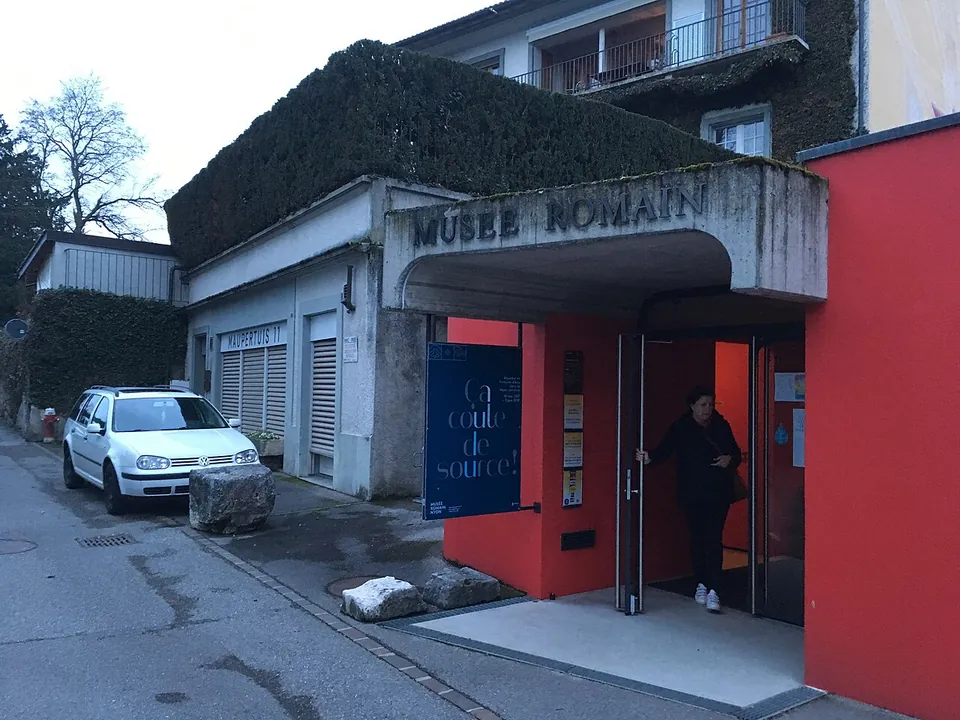
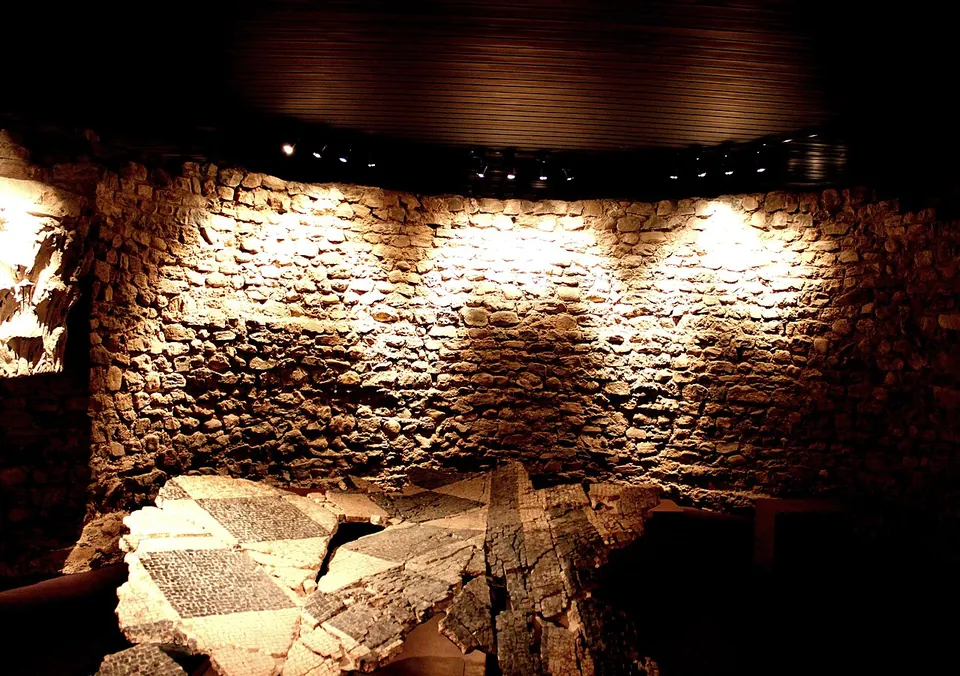
The Roman museum (Musée romain) is laid out underground in the foundations of the forum’s basilica, its space bounded by the line of the ancient walls (fr.wikipedia); remains of the basilica and the forum can be seen inside (de.wikipedia). The collection covers everyday objects such as amphorae, oil lamps, pottery, coins and jewellery, as well as decorated stone blocks, models of Noviodunum and wall paintings from a nearby villa (fr.wikipedia).
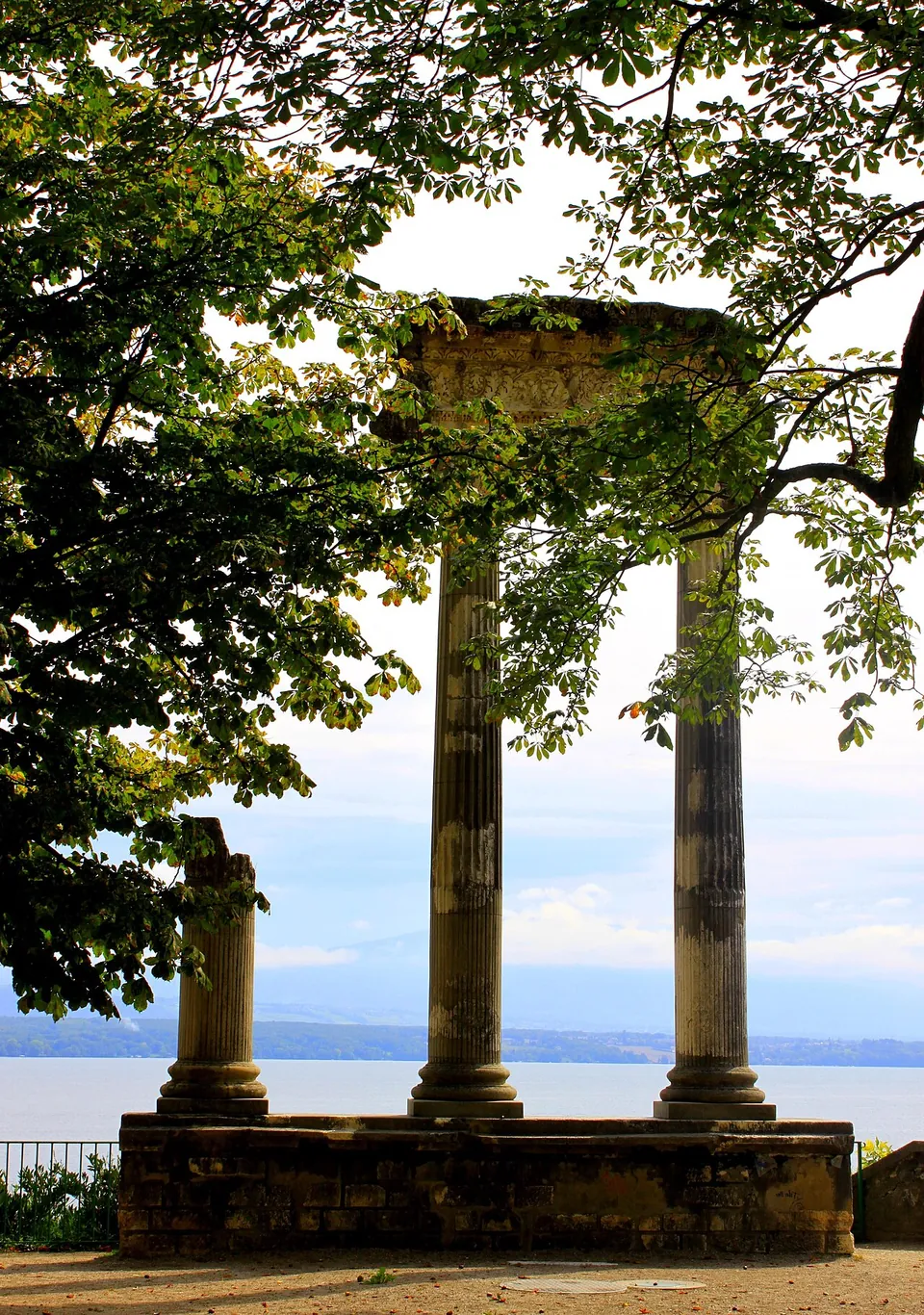
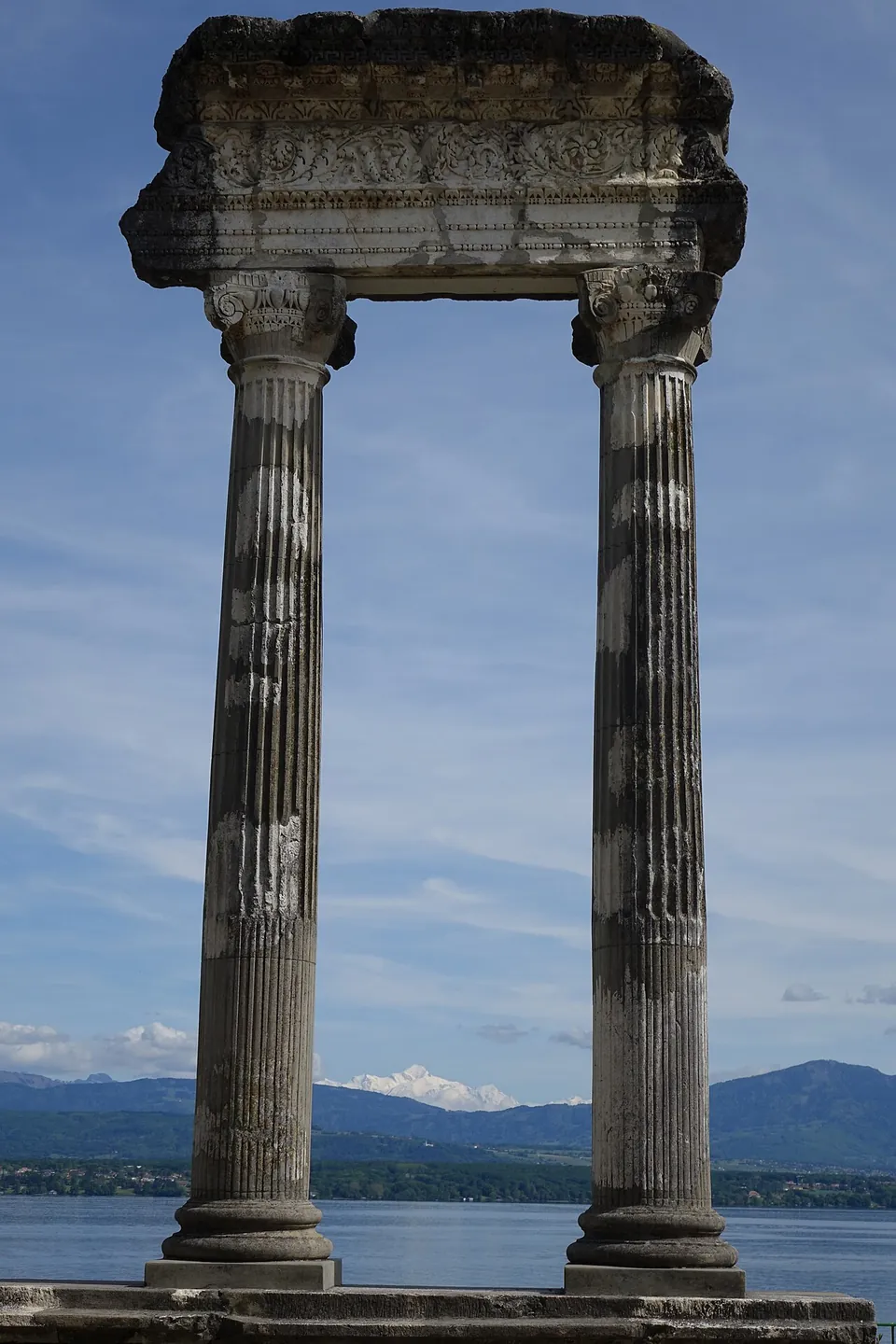
Three Roman columns stand on the Esplanade des Marronniers, near the castle, two of them at their full height. They belonged to the cryptoporticus of the sacred area of the second forum, built around AD 50, and measured 7.5 m with their carved top piece; they were found under the Rue Delafléchère and set up here in 1958, for the town’s 2,000th anniversary (Vaud tourism). Photographs show them on a terrace with the lake behind (Wikimedia Commons).
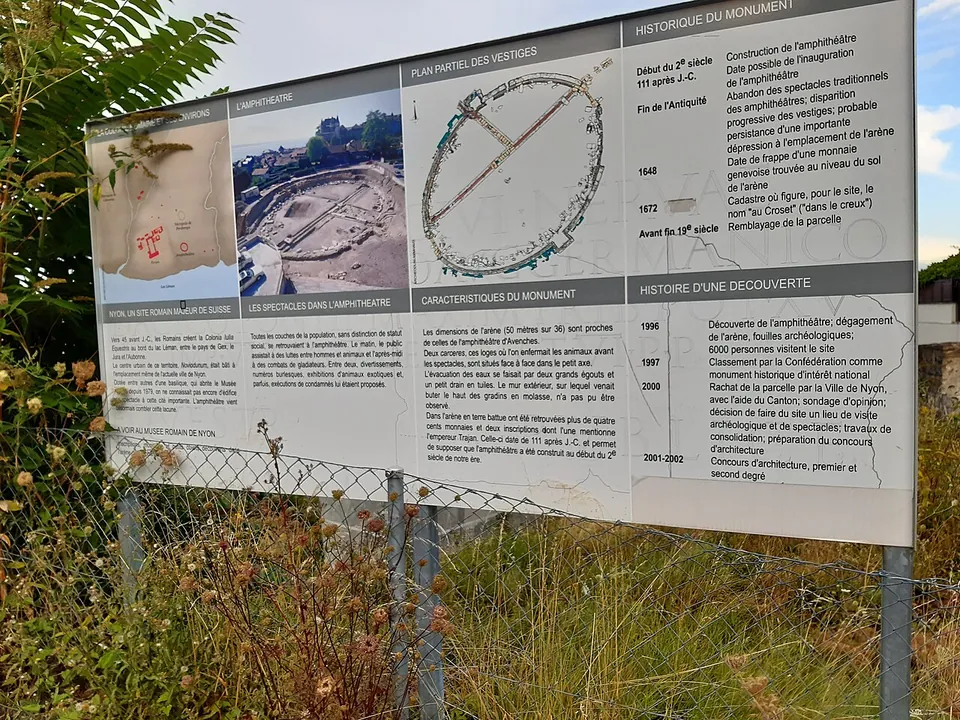
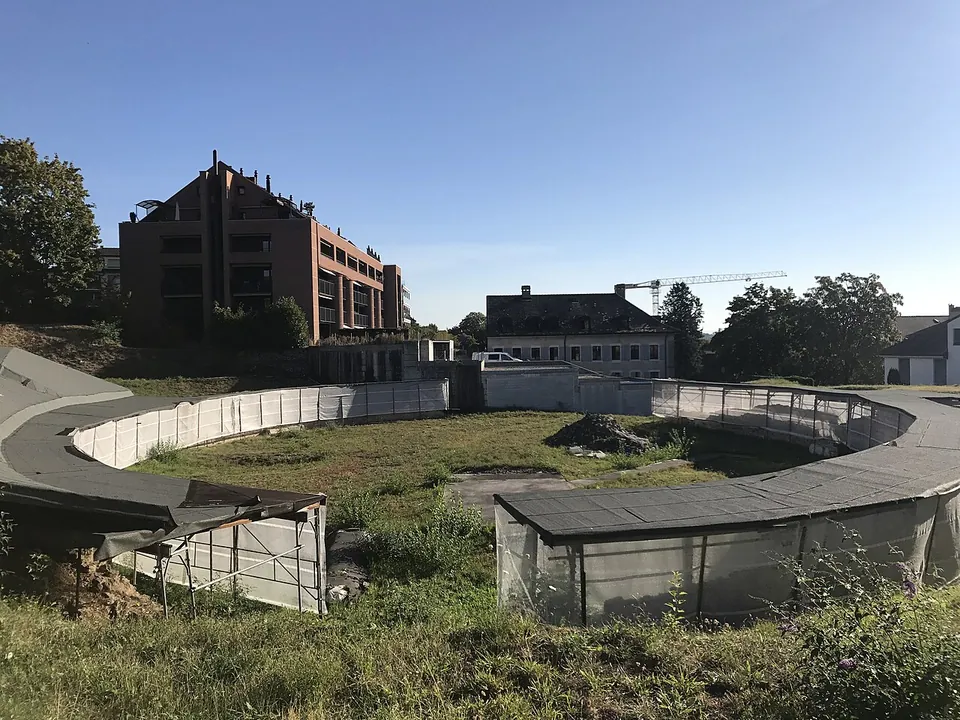
The amphitheatre was found by chance in 1996, set against the slope that runs down to the lake (fr.wikipedia). Its arena measures 50 by 36 m, close to the size of the one at Avenches, and two cells where animals were kept before the shows face each other across its short axis (the information board on site). Photographs from 2018 and 2020 show the low arena wall under protective covers inside a fence, a grassed arena and the board at the fence (Wikimedia Commons).
Is it worth the trip?
Yes, as a half day in Nyon. The museum is where Roman Nyon is actually shown, and the columns are a quick stop with the lake behind them. The amphitheatre is the weak part for now: photographs show it fenced and under covers, so expect to see it mostly from outside until the town’s project to present it is carried out, though the museum offers visits of the arena combined with its exhibition about it, which runs until 10 January 2027 (the museum).
Getting there
The museum is at Rue Maupertuis 9 in Nyon, and the amphitheatre is about ten minutes’ walk from it (the museum). The Bel-Air underground car park (fee) is mapped about 70 m from the town point and the Petit-Perdtemps stop about 100 m (OpenStreetMap).
The museum opens Tuesday to Sunday, 10.00–18.00, and is closed on Mondays except public holidays. Entry is CHF 12 (about €12.80), or CHF 8 for students, apprentices, the unemployed, seniors, people with disabilities and groups of ten or more, and free under 16. Everyone gets in free on the first Sunday of the month, and a combined ticket covers one visit to each of Nyon’s three museums within 12 months (mrn.ch, read 7 October 2026 — check before travelling). The columns are outdoors on a public esplanade (OpenStreetMap).
Visiting details
- Opening hours
- Musée romain: Tuesday to Sunday 10.00–18.00; closed on Mondays except public holidays. The columns are outdoors on a public esplanade.
- Tickets
- CHF 12 (about €12.80); CHF 8 (about €8.55) for students, apprentices, the unemployed, seniors, people with disabilities and groups of ten or more; free under 16, and free for everyone on the first Sunday of the month. A combined ticket covers one visit to each of Nyon's three museums within 12 months.
- Parking
- The Bel-Air underground car park (fee) is about 70 m from the town point (OpenStreetMap).
Before you go
- The amphitheatre is fenced, with its walls under protective covers (photographs of 2018 and 2020). The town is preparing a project to present it, and a vote on the credit for the works is planned for the second half of 2026 (the museum).
Hours and prices checked 7 October 2026 on the operator's own site. Confirm before travelling.
History
The colony was founded under Julius Caesar on land that ran from Lake Geneva to the Jura. Its first settlers were cavalry veterans given land at the end of their service, and it was meant to keep watch on the Helvetii and close the way into Gaul (fr.wikipedia). Under Augustus the town on the hill was laid out on a grid with a forum, of which only the basilica is known; under Tiberius a sacred area was added and baths were built; a market hall followed under Claudius or Nero, a new basilica between 50 and 70, and the amphitheatre early in the 2nd century (fr.wikipedia). One of two inscriptions found in the arena names the emperor Trajan and dates from 111, possibly the year it was inaugurated (the information board).
The town was partly destroyed in the Alamannic invasions of the second half of the 3rd century, and blocks from its buildings were reused in the walls of Geneva and Lausanne. It was not abandoned: coins, pottery and burials show people living there into the early Middle Ages (fr.wikipedia). Its name, Noviodunum, is Celtic and means “new fort” (en.wikipedia).
More photographs



Nearby
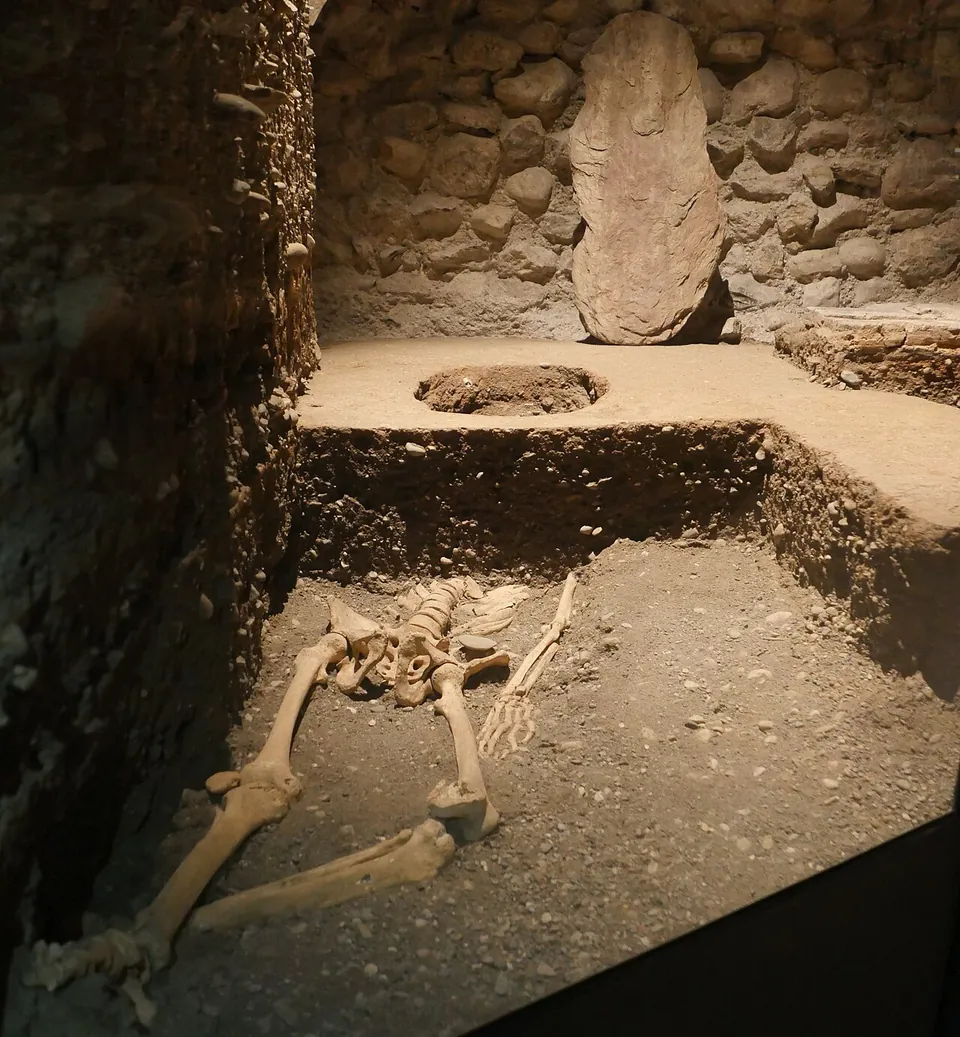
Photo: RomanDeckert · CC BY-SA 4.0 · Commons
21 km · church · Geneva
Archaeological site of St. Pierre Cathedral, Geneva
The visit goes down under the cathedral.
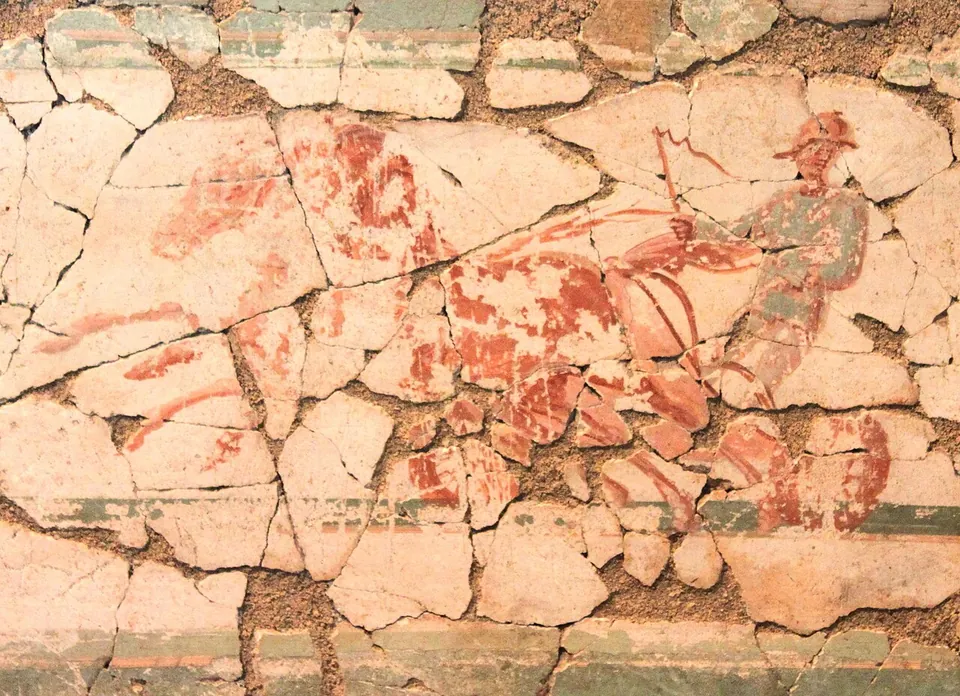
Photo: Odrade123 · CC BY-SA 3.0 · Commons
35 km · villa · Lavaux-Oron District, Vaud
Roman villa of Pully
The heart of the visit is a semicircular pavilion of the villa that has been uncovered and can be visited (Lausanne Tourisme).
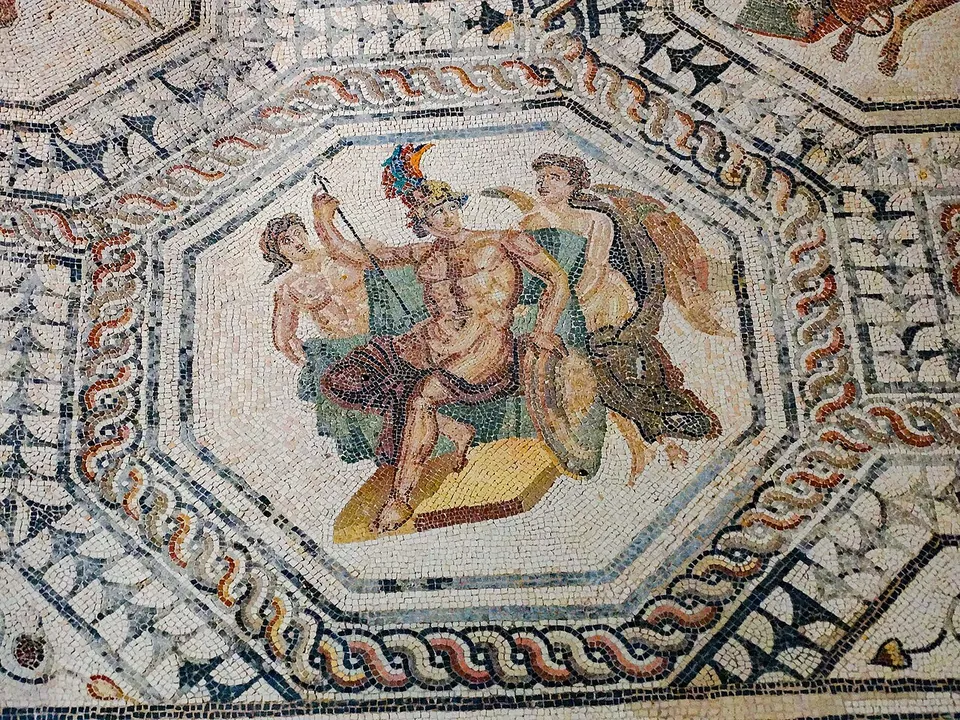
Photo: Leemburg-CH · CC BY-SA 4.0 · Commons
46 km · villa · Jura-Nord vaudois District, Vaud
Orbe-Boscéaz
The mosaics are all there is to see: the operator says plainly that the nine floors, found in the 19th and 20th centuries, are the only remains visible today.


Straight-line distances.
Sources
Every fact on this page comes from the records below, each used under the licence noted.
| Source | Licence |
|---|---|
| Pleiades 177496 | CC BY |
| Wikidata Q2984231 | CC0 |
| OpenStreetMap node/429660690 | ODbL |
| Wikipedia (en) — Noviodunum (Switzerland) | CC BY-SA 4.0 |
| Wikipedia (fr) — Colonia Iulia Equestris | CC BY-SA 4.0 |
| Wikipedia (fr) — Musée romain de Nyon | CC BY-SA 4.0 |
| Wikipedia (de) — Nyon | CC BY-SA 4.0 |
| Pleiades — Roman amphitheater at Noviodunum | licence not recorded |
| Wikidata — Nyon amphitheatre (Q29001164) | licence not recorded |
| Wikidata — Three Roman columns of the forum (Q29891322) | licence not recorded |
| KGS inventory 9696 — Colonia Iulia Equestris, ville romaine / Nyon, ville médiévale (BABS) | licence not recorded |
| Musée romain de Nyon — visit, hours and prices (the operator) | licence not recorded |
| Musée romain de Nyon — exhibition "Amphithéâtre ?" (the operator) | licence not recorded |
| Vaud tourism — Roman columns in Nyon | licence not recorded |