

Carnuntum was a Roman legionary fortress on the Danube and the capital of Upper Pannonia, and it is the most important and most thoroughly excavated ancient site in Austria. Today it is a partly rebuilt Roman city quarter at Petronell, an amphitheatre, a large museum and the Heidentor, a 4th-century triumphal arch that still stands alone in the fields.
What is there today
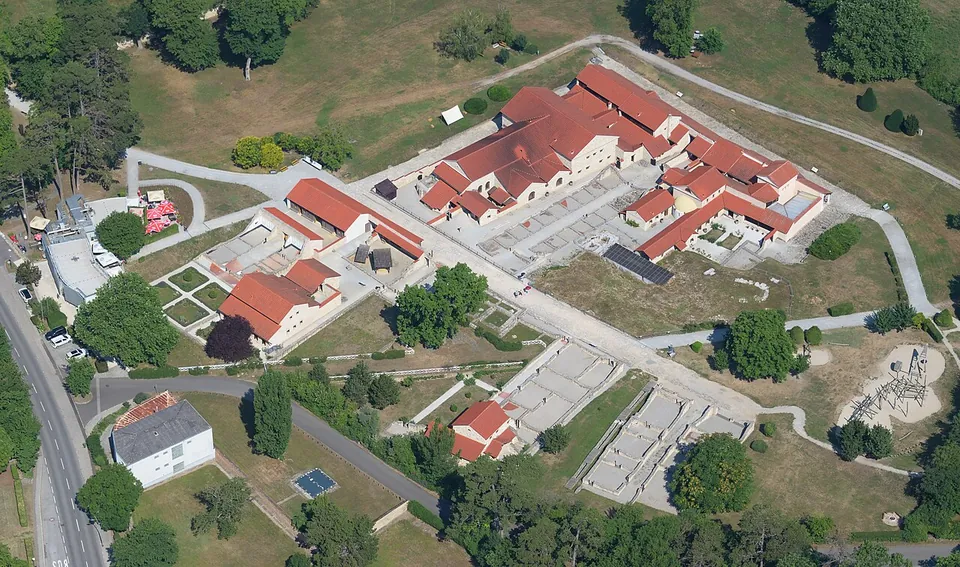
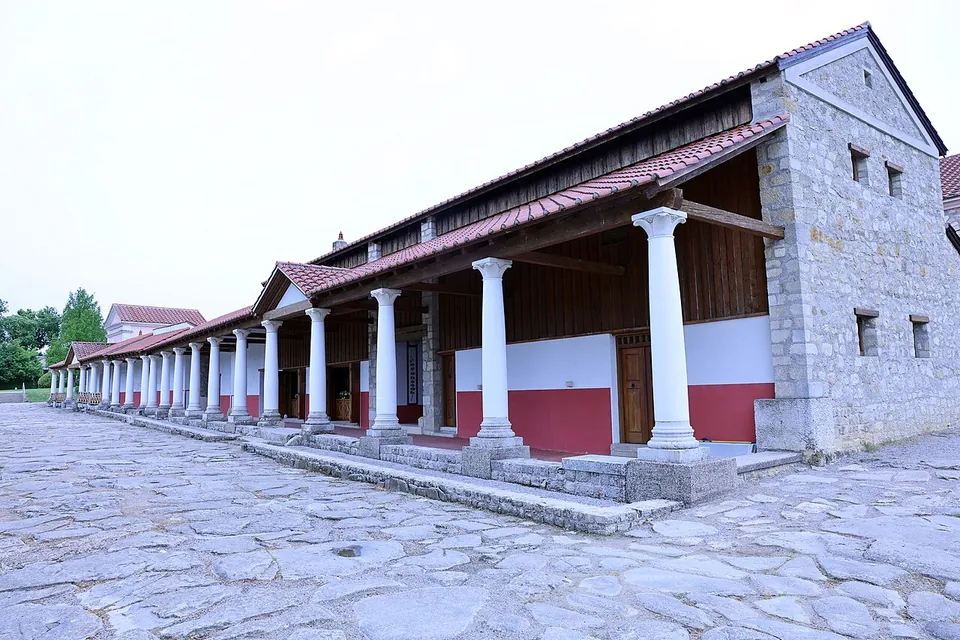
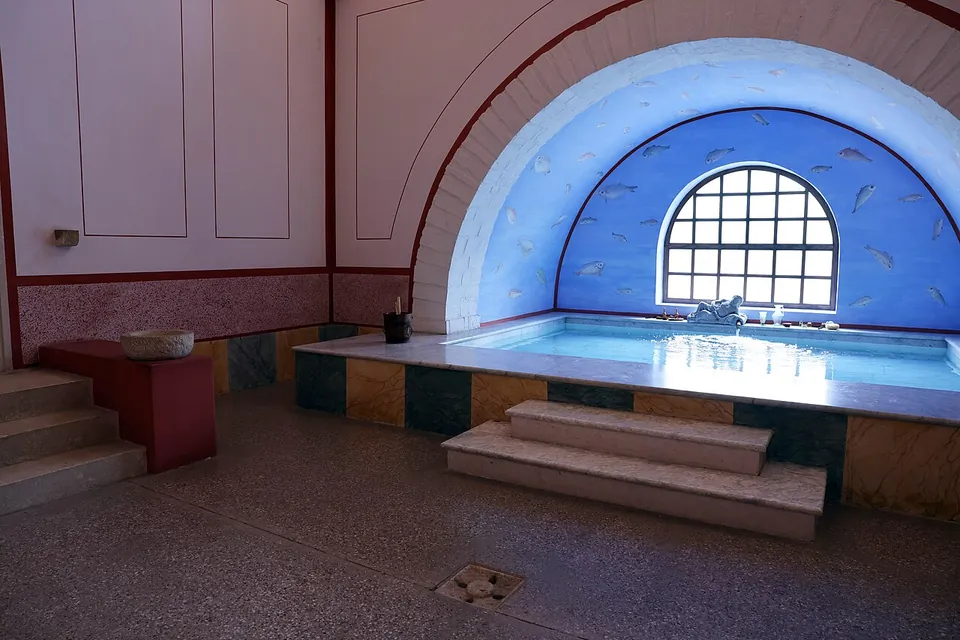
The heart of a visit is the Roman city quarter in the park beside Schloss Petronell. A typical quarter of the civil town, about half a per cent of its area, has been excavated there, its walls restored or conserved and its streets uncovered down to the paving that can be seen today. Four of its houses have been rebuilt as they stood in the 4th century and opened to the public, built so that the Roman walls inside them would survive, and could be shown again, if the rebuilding were ever removed. A model of the city at 1:300 stands beside the visitor centre, and the foundations of the civil town’s great baths are conserved and open to visitors (de.wikipedia).
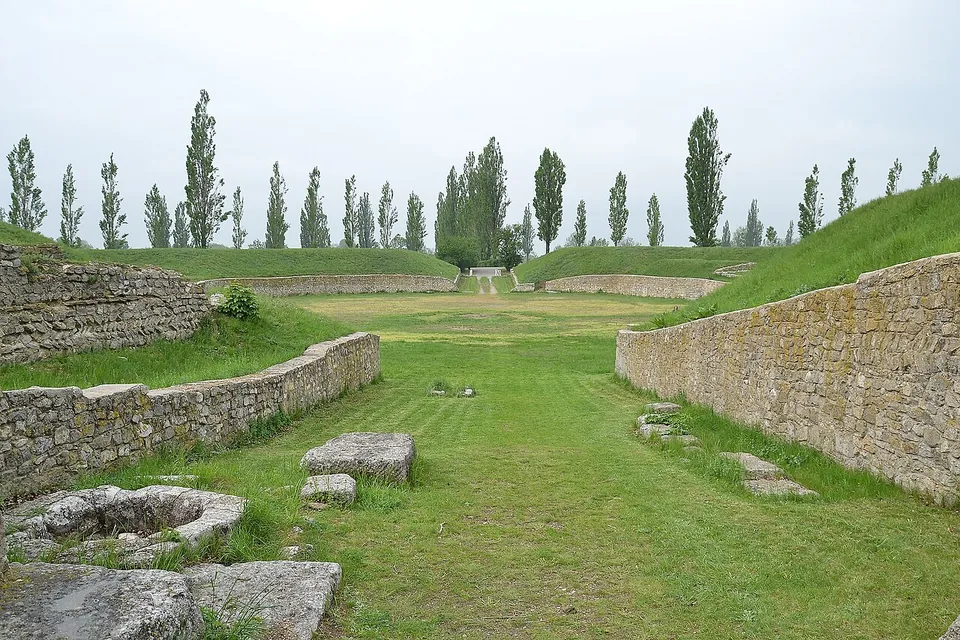
South of the town, the amphitheatre of the civil town held up to 13,000 spectators; it was built almost entirely in stone in the 2nd century, and the building measures about 128 by 111 m around an arena of 68 by 52 m (de.wikipedia). Beside it, ground radar found a gladiator school of around 200, the fourth largest known; since 2015 a timber reconstruction of its training arena has stood on the original spot (de.wikipedia).
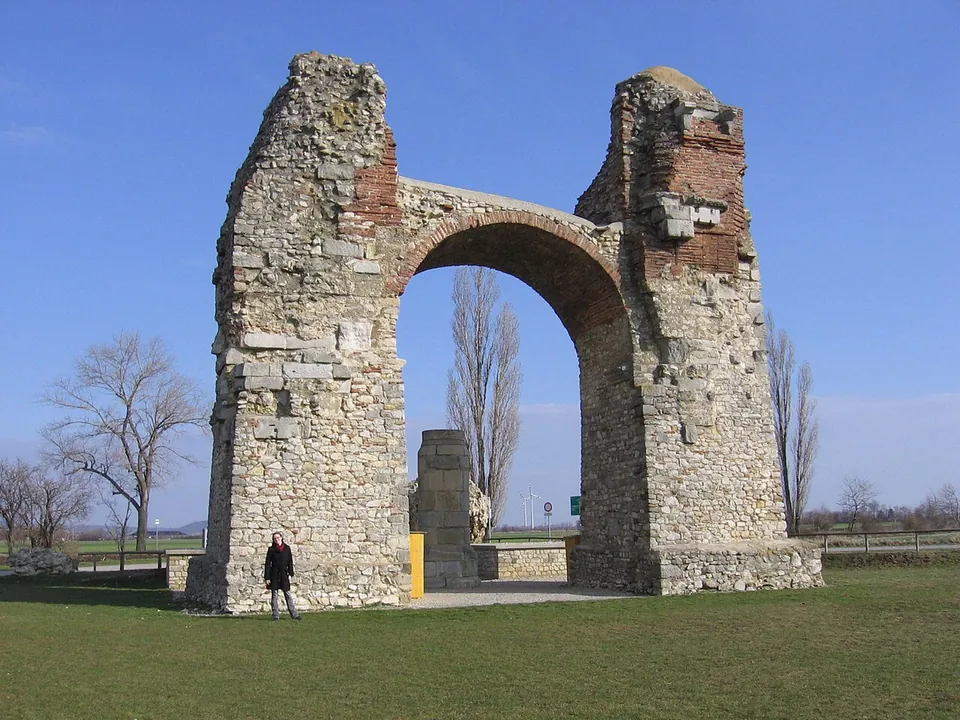
The Heidentor stands in its own display area about 900 m south of the civil town (de.wikipedia). It was a four-way arch, of which one arch remains (en.wikipedia); two-thirds of it is gone, yet it has outlasted every other building of the ancient city and still impresses, and it was investigated and conserved between 1998 and 2001 (de.wikipedia). It was put up between 354 and 361 (Pleiades), in the reign of Constantius II, as a monument to his victories over the Germanic tribes (de.wikipedia).
The finest finds are in the Museum Carnuntinum in the next village, Bad Deutsch-Altenburg, a villa-style building of 1901–1904 that is Austria’s largest Roman museum; about 4,000 objects are on show (de.wikipedia). The legionary fortress itself, largely excavated in the 20th century, was filled in again, and its walls show only as a rise in the ground (de.wikipedia).
Is it worth the trip?
Yes. This is the one Roman site in Austria worth a day of its own, and it is an easy trip from Vienna or Bratislava, since it lies halfway between them (en.wikipedia). Be clear about what you are seeing: the houses in the quarter are modern rebuildings on Roman foundations, which makes the city legible but is not the same as standing ruins. The Heidentor and the amphitheatre are the real thing, and both are free. The ticketed quarter and the museum close for the winter after 15 November.
Getting there
The Roman city quarter is in Petronell-Carnuntum, with a free car park about 150 m away, a bus stop (“Petronell Freilichtmuseum”) about 100 m away and Petronell-Carnuntum railway station about 950 m away (OpenStreetMap). The Heidentor is about 1.2 km south of the quarter, the amphitheatre about 900 m west-south-west, and the Museum Carnuntinum is at Badgasse 42 in Bad Deutsch-Altenburg.
The quarter is open daily 09.00–17.00 from 6 September to 15 November 2026, and the museum daily 09.00–17.00 from 14 March to 15 November 2026. A day ticket for both is €15, €14 for concessions and €8 for ages 6 to 18; under-sixes go free, and groups of 20 or more pay €14 each. The amphitheatre and the Heidentor need no ticket (carnuntum.at, read 5 October 2026).
Visiting details
- Opening hours
- Roman city quarter in Petronell - daily 09.00–17.00 from 6 September to 15 November 2026. Museum Carnuntinum, Bad Deutsch-Altenburg - daily 09.00–17.00 from 14 March to 15 November 2026. Both close for the winter; the next season's dates are not yet published.
- Tickets
- €15; concessions €14; ages 6–18 €8; under-6s free; groups of 20 or more €14 each. One day ticket covers the Roman city quarter and the Museum Carnuntinum. The amphitheatre of the civil town and the Heidentor are free, without a ticket.
- Parking
- Free surface car park about 150 m from the Roman city quarter in Petronell (OSM way/133743119, fee=no).
Hours and prices checked 5 October 2026 on the operator's own site. Confirm before travelling.
History
The historian Velleius Paterculus wrote of a Celtic centre called Carnuntum “in the kingdom of Noricum”, which has never been located, and from the 1st century AD the area became a base for expansion into free Germania (de.wikipedia). Carnuntum is first mentioned in AD 6 as a winter camp of Tiberius (Pleiades); under Claudius (41–54) a timber-and-earth fortress and two civil settlements followed, and around AD 100 the fortress was rebuilt in stone. A cavalry fort was added in the mid-2nd century, and at times up to 6,500 men were stationed in the two camps (de.wikipedia).
By the early 2nd century about 50,000 people lived here (de.wikipedia), and from then on the civil town was the seat of the province of Upper Pannonia (de.wikipedia). Marcus Aurelius led his campaigns against the tribes north of the Danube from Carnuntum during the Marcomannic Wars; at the end of the 2nd century the governor, Septimius Severus, was proclaimed emperor here by the Danube legions; and in 308 the tetrarchs held their imperial conference at Carnuntum. A severe earthquake struck in the mid-4th century, and with shrinking garrisons and the upheavals of the migration period the town declined. Valentinian I still used it as a base for a campaign in the late 4th century, and during the 5th century the fortress was abandoned (de.wikipedia).
It is the only legionary fortress between Regensburg and Belgrade not covered by modern building (de.wikipedia), and since 2021 it has been part of the Danube Limes World Heritage Site (hu.wikipedia).
More photographs


Nearby
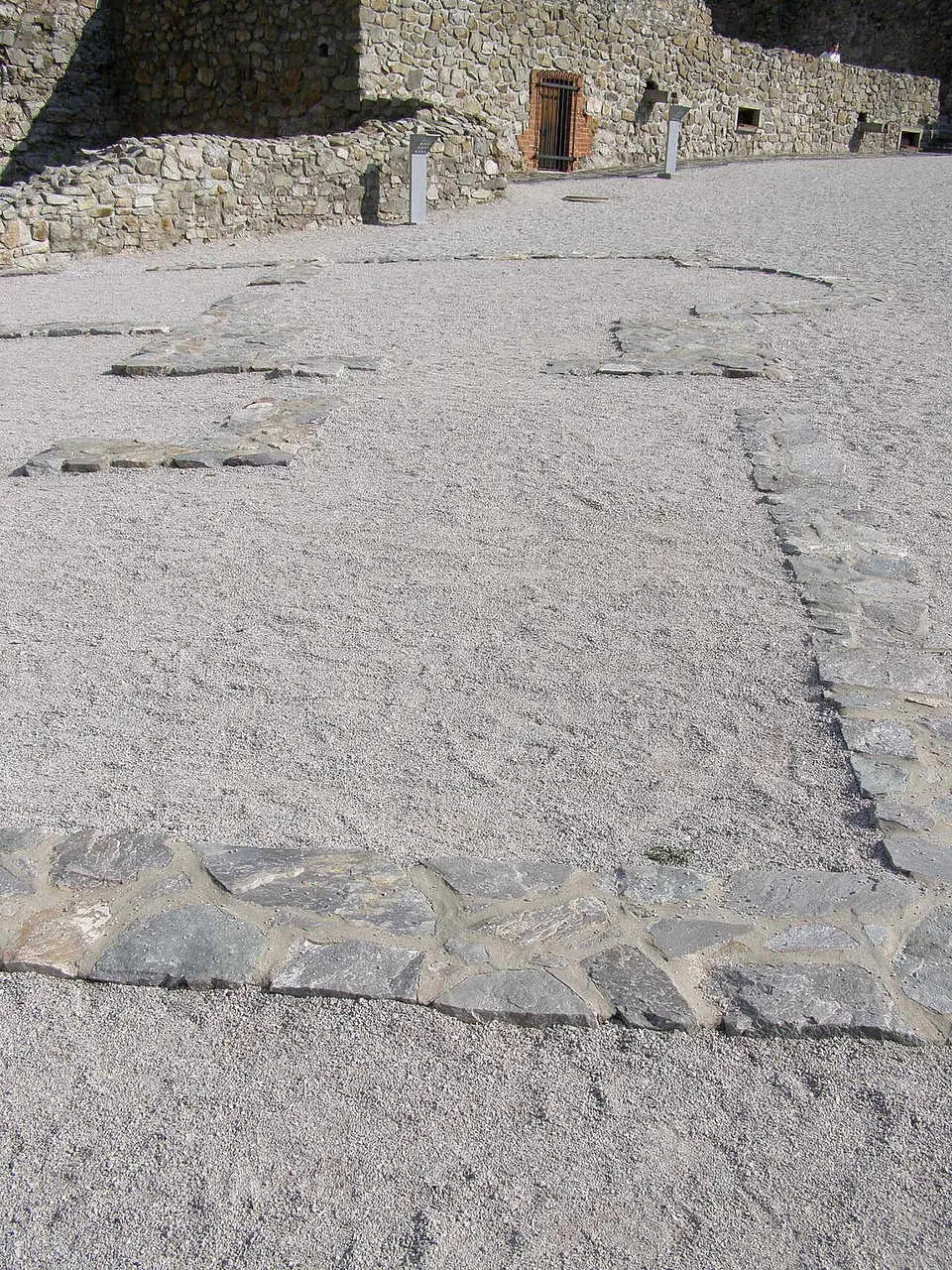
Photo: Lure · CC BY-SA 3.0 · Commons
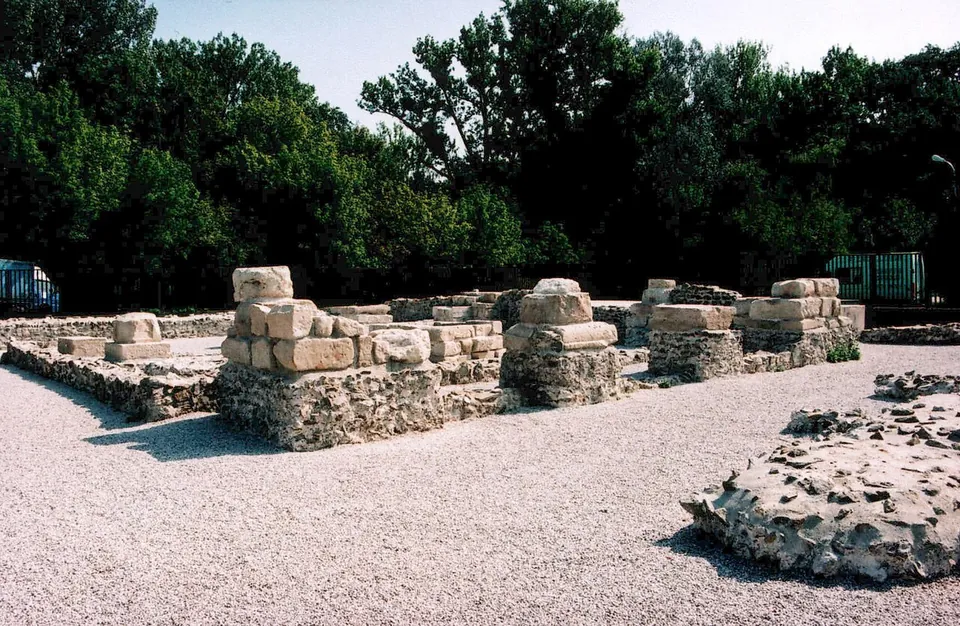
Photo: Pudelek (Marcin Szala) · CC BY-SA 3.0 · Commons
22 km · fort · Bratislava Region
Castra Gerulata
The conserved remains of the fort sit in fenced grounds among family houses, opened to visitors in 1987 (the operator).
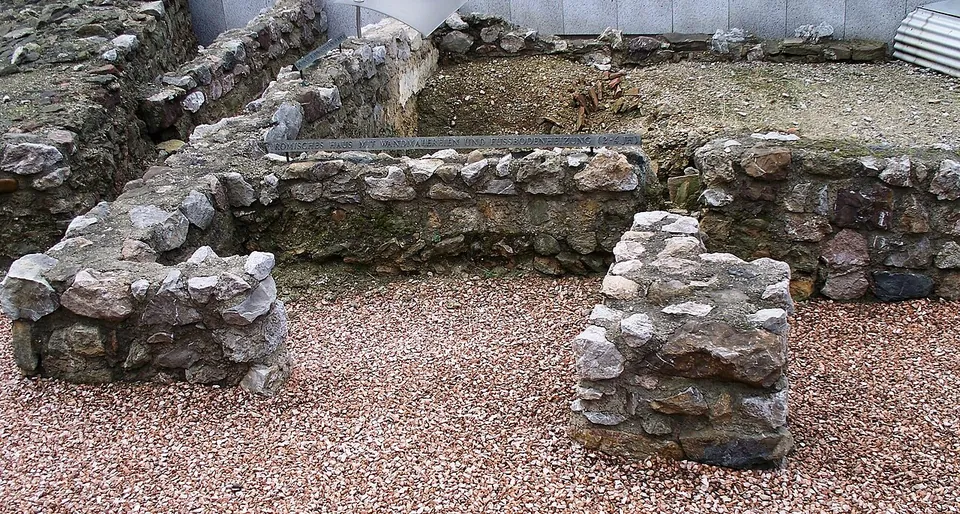
Photo: High Contrast · CC BY 3.0 de · Commons


Straight-line distances.
Sources
Every fact on this page comes from the records below, each used under the licence noted.
| Source | Licence |
|---|---|
| Pleiades 128376 | CC BY |
| Wikidata Q508815 | CC0 |
| OpenStreetMap way/62019490 | ODbL |
| Pleiades — Heidentor | licence not recorded |
| Pleiades — Carnuntum amphitheatre | licence not recorded |
| Wikipedia (de) — Carnuntum (Militärlager) | CC BY-SA 4.0 |
| Wikipedia (de) — Carnuntum (Zivilstadt) | CC BY-SA 4.0 |
| Wikipedia (de) — Heidentor (Carnuntum) | CC BY-SA 4.0 |
| Wikipedia (en) — Carnuntum | CC BY-SA 4.0 |
| Wikipedia (en) — Heidentor | CC BY-SA 4.0 |
| Wikipedia (hu) — Carnuntum | CC BY-SA 4.0 |
| Römerstadt Carnuntum — prices and opening hours (the operator) | licence not recorded |
| Römerstadt Carnuntum — Museum Carnuntinum (the operator) | licence not recorded |