

What is there today
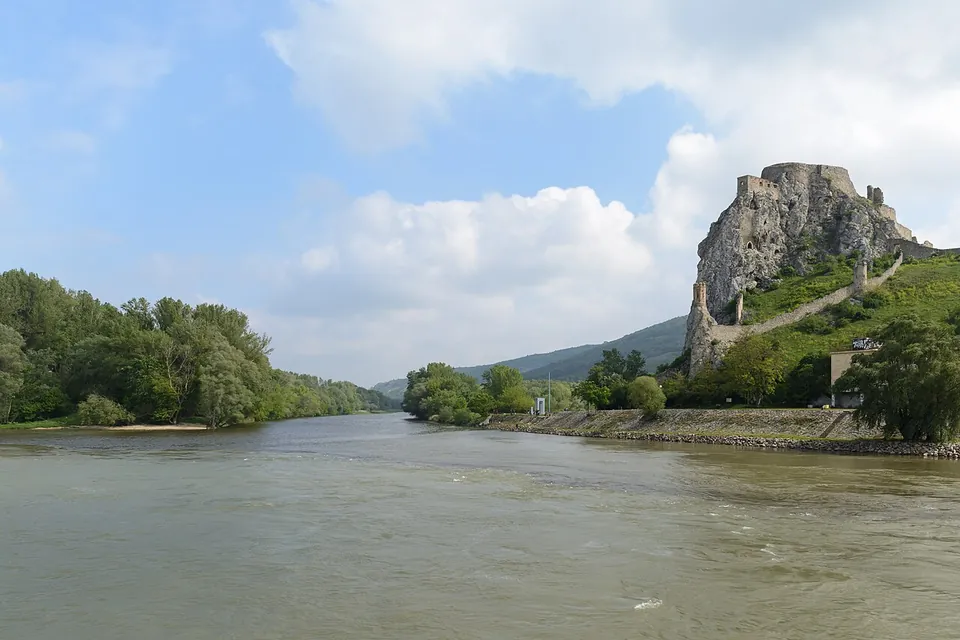
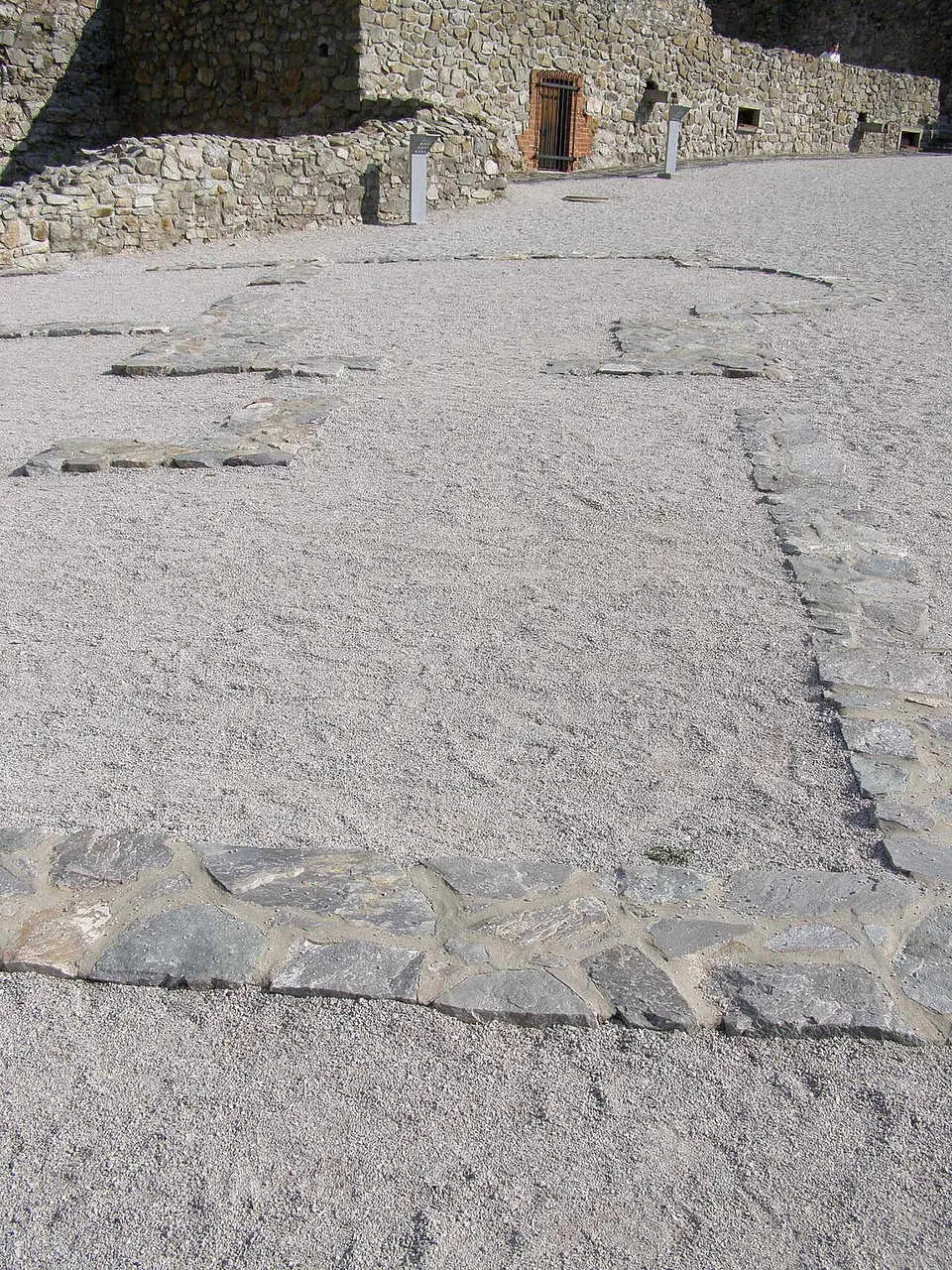
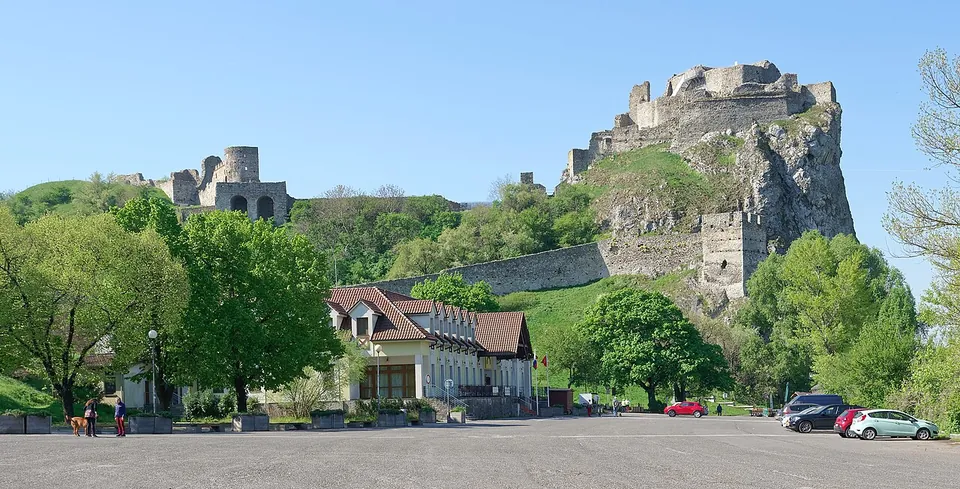
Mostly a castle. What you climb through are the lower, middle and upper castle of a medieval fortress spread over 6 hectares (the operator). The Roman part is a short chapter within it, in two places. Near the Gothic western gate stands the cella memoriae, a Roman building of rubble stone with a doorway of dressed sandstone blocks, rebuilt several times in its use; its plan resembles an ancient tomb, which gave it its name. It is shown under a timber shelter with one of the first green roofs built in Slovakia, restored in 2022 and opened to visitors again (the operator), and it serves as an exhibition pavilion in the lower castle, to the right of the entrance (the operator, 2023). In the middle castle, the foundations of a Roman building found in excavations of the 1930s show as a plan in stone at ground level, in a gravel courtyard (a photograph of 2012 on Wikimedia Commons); the largest of the Roman buildings is in the courtyard of the middle castle (the operator).
The castle’s permanent exhibition covers Devín from the 13th to the 20th century, with more than 300 archaeological finds (the operator), and panels on the excavations of 2021–2023 stand in the exhibition pavilion of the lower castle (the operator, 2023).
Is it worth the trip?
For the castle, yes: it is one of the most visited castle sites in Slovakia, and its views over the meeting of the Danube and the Morava are part of the visit (the operator). For Rome alone, less so. The Roman remains are a ground plan and one building under a roof, and the rest of what you see is medieval. If you have time for only one Roman stop in Bratislava, Gerulata in Rusovce is the site built around its Roman remains; come to Devín for the castle and take the Roman chapter with it.
Getting there
The castle is at Muránska 10 in the borough of Devín, Bratislava (the operator). A free public car park is about 290 m from the castle’s map point (OpenStreetMap); no bus stop is mapped within 300 m of it.
It is open Tuesday to Sunday all year and closed on Mondays: 10.00–18.00 in April, May and September, 10.00–19.00 from June to August, 10.00–17.00 in October and March, and 10.00–16.00 from November to February, with last entry 45 minutes before closing. It is closed on Good Friday, 24–26 and 31 December and 1 January, and from November to March the permanent exhibition is closed. A ticket is €8 from April to October and €6 in winter, reduced €4 / €3 for children aged 6–15, pupils, students and seniors over 65, with family tickets and free entry under 6. The upper castle is not step-free (the operator, read 10 October 2026; check before travelling).
Visiting details
- Opening hours
- Tuesday to Sunday all year, closed on Mondays. 10.00–18.00 in April, May and September; 10.00–19.00 from June to August; 10.00–17.00 in October and March; 10.00–16.00 from November to February. Last entry 45 minutes before closing. Closed on Good Friday, 24–26 and 31 December and 1 January. From November to March the permanent exhibition is closed.
- Tickets
- €8 from April to October, €6 from November to March; reduced €4 / €3 (children aged 6–15, pupils and students, seniors 65+); family tickets €18 / €14 (2 adults and 3 children) and €10 / €8 (1 and 2); free under 6. Prices may differ on event days.
- Parking
- A free public car park about 290 m from the castle's map point (OpenStreetMap way/11072599).
Before you go
- The upper castle is not step-free (the operator).
Hours and prices checked 10 October 2026 on the operator's own site. Confirm before travelling.
History
Celts lived in the Devín area for about a century at the end of the Iron Age. Terra sigillata, metalwork and above all coins found here show their contacts with the Roman Empire, and their settlement was destroyed by Germanic tribes in the 20s or 30s of the 1st century AD (the operator).
At the end of the 1st century BC the Romans moved their frontier north to the Danube, and Devín became part of the Limes, one of the strategic outposts of the Roman camp at Carnuntum. From the beginning of the 1st century AD a direct Roman presence here can be assumed (the operator). The earliest Roman remains are the foundations of a wooden tower and many small finds. Devín is unusual for its number of Roman stone buildings: the remains of four have been uncovered. The largest, in the courtyard of the middle castle, dates from the 3rd century and was rebuilt in the 4th; a late Roman masonry building in the lower castle may have served as an early Christian place of worship (the operator). An iron cross was found in that building, the cella memoriae, but archaeologists do not agree on whether it was a Christian building. Either way, the operator reads it as evidence that the Danube was not a strict cultural border: Romans settled on its north bank too. Their builders used stone, good mortar and bricks stamped by the brickworks that made them, military brickworks with the names of legions and cohorts (the operator).
Few finds survive from the Migration Period, but one of the most interesting is a charred loaf of leavened bread of the 5th century (the operator). The hill became a major stronghold of Great Moravia, and in the Middle Ages the great fortress was built whose ruins stand today; Napoleon’s troops badly damaged it at the beginning of the 19th century (the operator).
Nearby
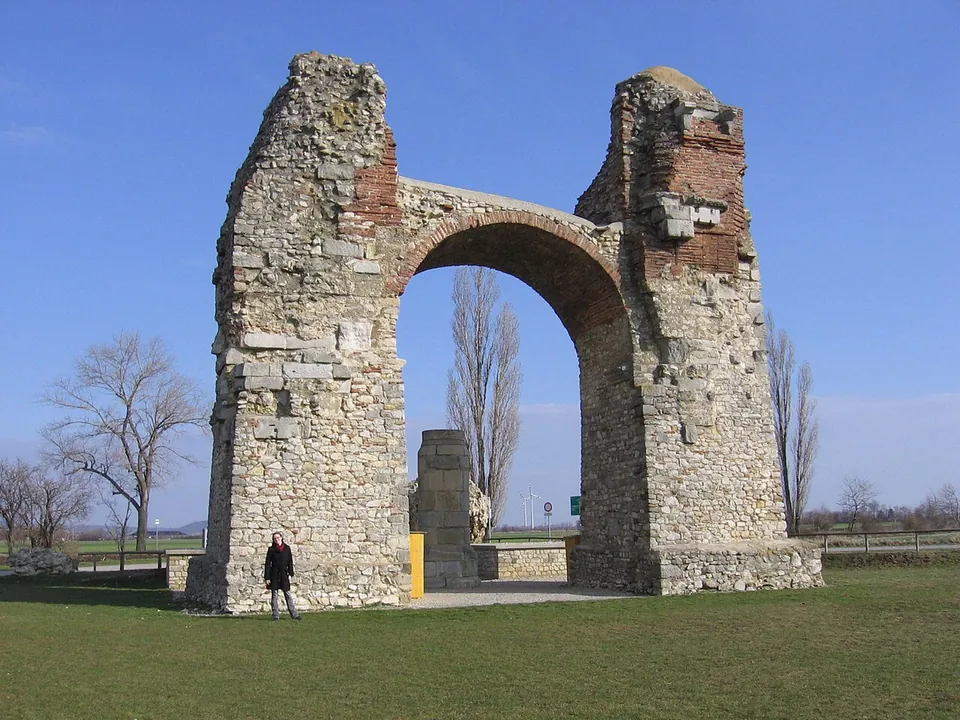
Photo: Michael Dufek at de.wikipedia · CC BY-SA 3.0 · Commons
11 km · city · Bruck an der Leitha District
Carnuntum
The heart of a visit is the Roman city quarter in the park beside Schloss Petronell.
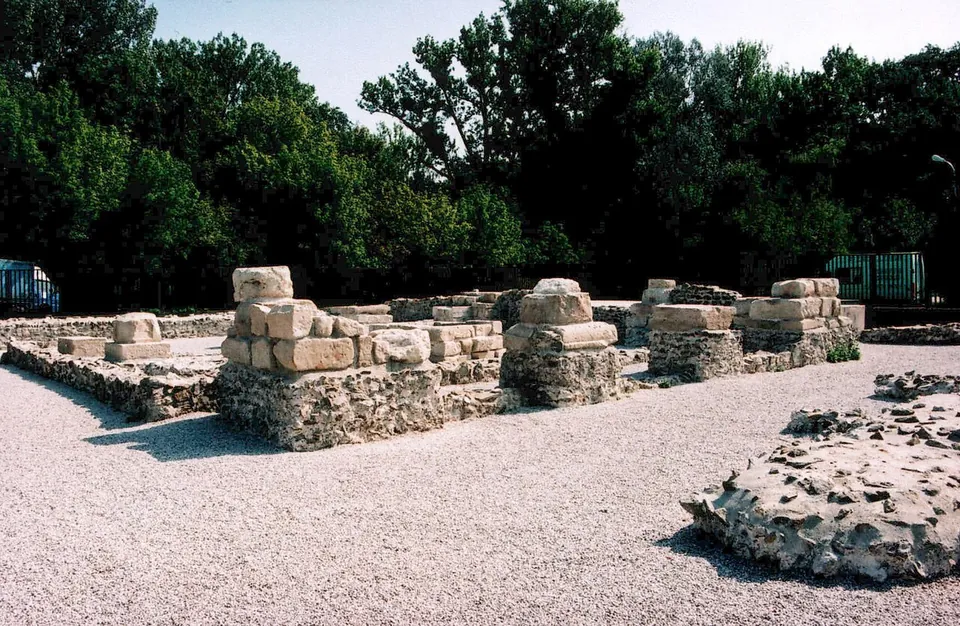
Photo: Pudelek (Marcin Szala) · CC BY-SA 3.0 · Commons
18 km · fort · Bratislava Region
Castra Gerulata
The conserved remains of the fort sit in fenced grounds among family houses, opened to visitors in 1987 (the operator).
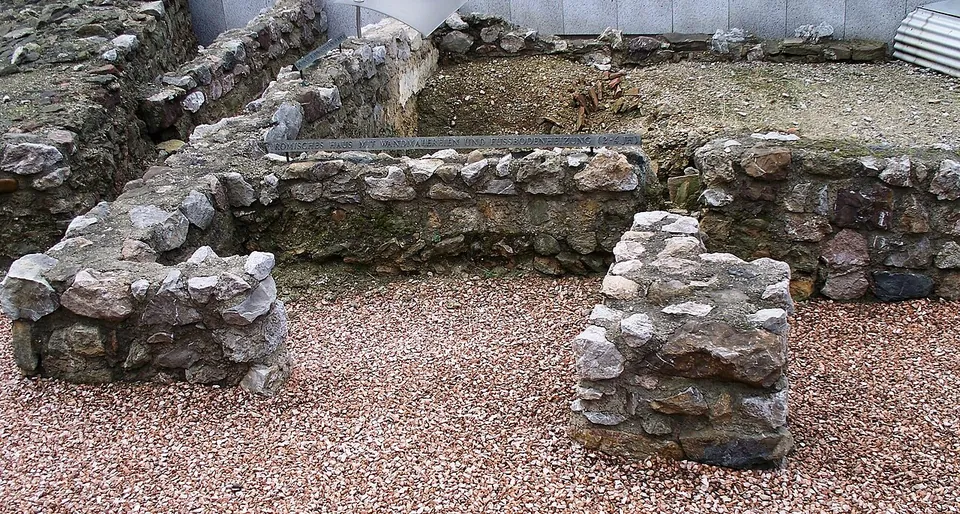
Photo: High Contrast · CC BY 3.0 de · Commons


Straight-line distances.
Sources
Every fact on this page comes from the records below, each used under the licence noted.
| Source | Licence |
|---|---|
| Pleiades 128391 | CC BY |
| Hrad Devín — opening hours (Bratislava City Museum, the operator) | licence not recorded |
| Hrad Devín — admission (Bratislava City Museum) | licence not recorded |
| Hrad Devín — Cella Memoriae (Bratislava City Museum) | licence not recorded |
| Hrad Devín — history (Bratislava City Museum) | licence not recorded |
| Hrad Devín ponúka viacero noviniek (Bratislava City Museum press release, 13 September 2023) | licence not recorded |
| Wikipedia (sk) — Devín (hrad) | CC BY-SA 4.0 |
| Wikipedia (en) — Devín | CC BY-SA 4.0 |