Vindobona is the Roman legionary fortress beneath the centre of Vienna, together with the military and civil towns that grew beside it. Almost nothing of it stands above ground, but the foundations of officers’ houses can be seen in the basement of the Römermuseum on Hoher Markt, and an open excavation on Michaelerplatz shows walls of several periods.
What is there today
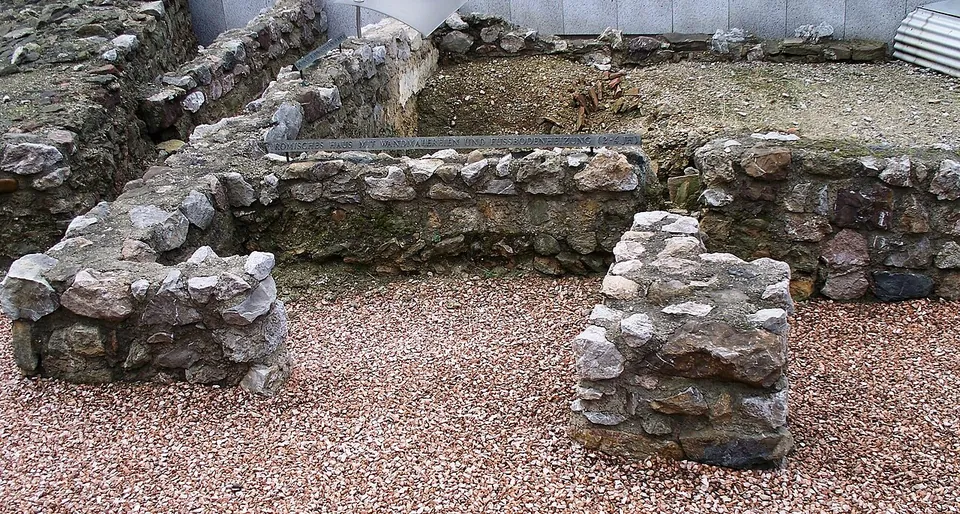
The Römermuseum, run by Wien Museum, is the place to start. In its basement are the remains of two officers’ houses of the fortress, excavated when the buildings at Hoher Markt 3 and 4 were put up: wall foundations, the underfloor heating of a tribune’s house and a drainage channel (the operator; de.wikipedia). The rest of the museum shows finds, reconstructions and animations, from daily life to inscriptions (the operator).
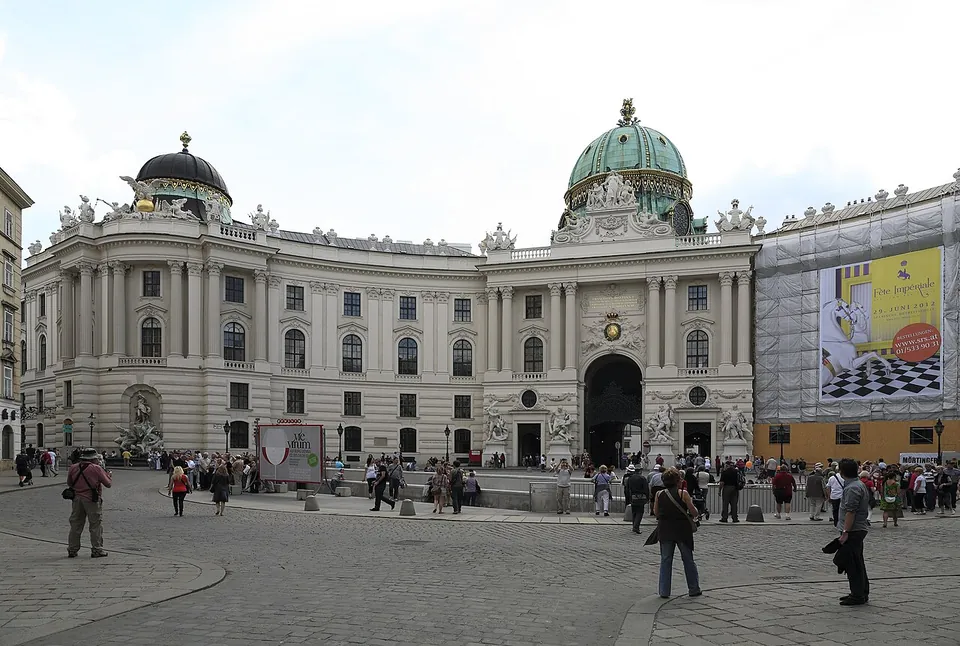
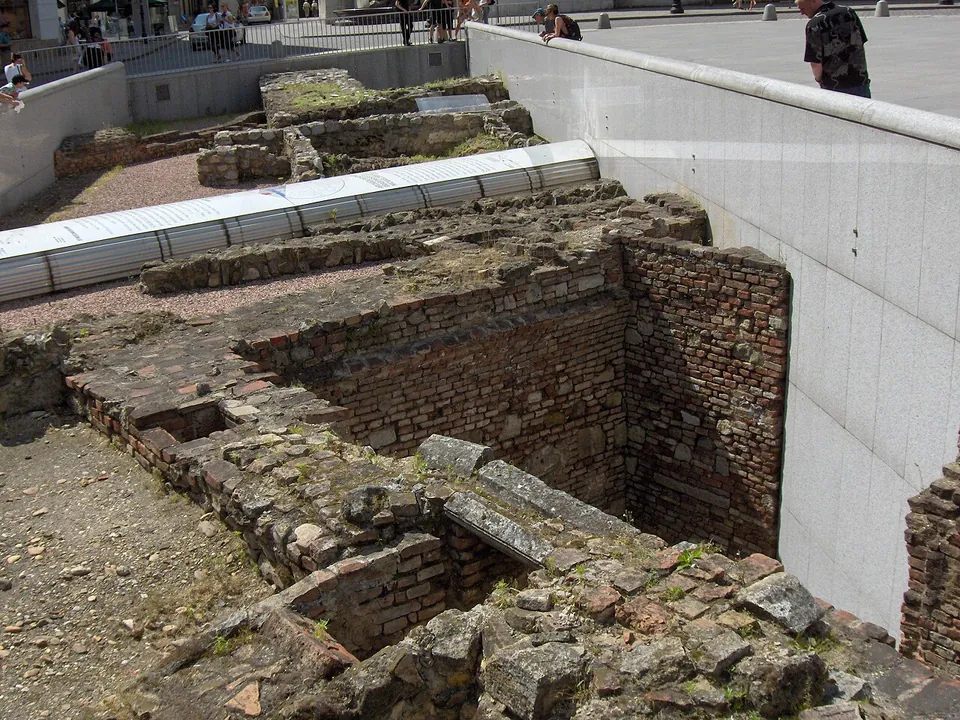
Michaelerplatz, in front of the Hofburg, is the other place where you can see something without a ticket. Excavation there found part of the military town and a Roman street crossing; Hans Hollein’s redesign of the square keeps a rectangular open cut through several layers of the city’s history, with conserved walls from different periods, not only Roman ones (de.wikipedia).
Smaller traces are scattered through the old town. Under the fire brigade headquarters on Am Hof a stretch of the fortress’s sewer has been uncovered and made accessible in a display room, and a few squared stones from the fortress baths stand on the stairway between Sterngasse and Marc-Aurel-Straße (de.wikipedia). No operator publishes visiting times for the Am Hof room, and a Habsburg-history portal lists it as closed for restoration, so do not plan a visit around it. The most remarkable finds are in the Wien Museum on Karlsplatz. Of the civil town, south-east of the fortress, no building remains are visible at all (de.wikipedia).
Is it worth the trip?
Not on its own account. Vindobona is a Roman city you have to imagine under a modern one, and dense modern building has hampered even the archaeologists (de.wikipedia). If you are in Vienna anyway, though, the Römermuseum is an easy and rewarding hour: the walls and heating in the basement are Roman remains where they were found, it is a few minutes from Stephansplatz, and under-19s go free. Add Michaelerplatz on the way to the Hofburg. For Roman Pannonia standing above ground, the place to go is Carnuntum, halfway between Vienna and Bratislava.
Getting there
The Römermuseum is at Hoher Markt 3 in the Innere Stadt, about 250 m from Stephansplatz U-Bahn station, and Michaelerplatz is about 550 m west of the museum (OpenStreetMap). The museum is open Tuesday to Friday 09.00–17.00 and Saturday and Sunday 10.00–17.00, and closed on Mondays and on 1 January, 1 May and 25 December. A ticket is €9, or €7 reduced; under-19s go free, and so does everyone on the first Sunday of the month (wienmuseum.at, read 5 October 2026). For now the museum is not wheelchair-accessible: the stair lift is being renovated, and the excavations can only be reached by stairs.
Visiting details
- Opening hours
- Römermuseum, Hoher Markt 3 - Tuesday to Friday 09.00–17.00, Saturday and Sunday 10.00–17.00, closed on Mondays and on 1 January, 1 May and 25 December.
- Tickets
- Römermuseum €9, reduced €7; free for under-19s, and for everyone on the first Sunday of the month. The excavation on Michaelerplatz is an open cut in a public square.
Before you go
- The Römermuseum is not wheelchair-accessible at present - its stair lift is being renovated - and the excavated houses in the basement are reached only by stairs (the operator).
Hours and prices checked 5 October 2026 on the operator's own site. Confirm before travelling.
History
Vindobona began as a Celtic settlement of Noricum and became a Roman military post by the first half of the 1st century AD (Pleiades). A tombstone of a member of the Legio XV Apollinaris and the remains of a timber-and-earth fortification point to a first base on the frontier road by the early 1st century at the latest; the legionary fortress and the civil settlements are attested from the late 1st century, and at times up to 6,000 soldiers may have been stationed there (de.wikipedia). The place was first counted part of Noricum, was attached to Pannonia under Tiberius, and belonged to Pannonia Superior after Trajan divided the province, as its westernmost legionary base (de.wikipedia).
A military town grew around the fortress, and a civil town to the south-east that probably became a self-governing municipium in the early 3rd century. Estimates of the population run from 15,000–20,000 (en.wikipedia) to about 30,000 people in and around Vindobona in its heyday, from the 2nd to the first half of the 3rd century (de.wikipedia). In the 4th century the commander of the Danube fleet moved his headquarters here from Carnuntum. After its suburbs were destroyed, the fortress lived on as a fortified settlement until the early 5th century, when the army gave it up; a remnant population stayed into the early Middle Ages, and the ruins were afterwards almost wholly quarried away or buried (de.wikipedia). The visible and buried remains have been part of the Danube Limes World Heritage Site since 2021 (de.wikipedia).
Nearby
20 km · fort · Tulln District
Castra Cannabiaca
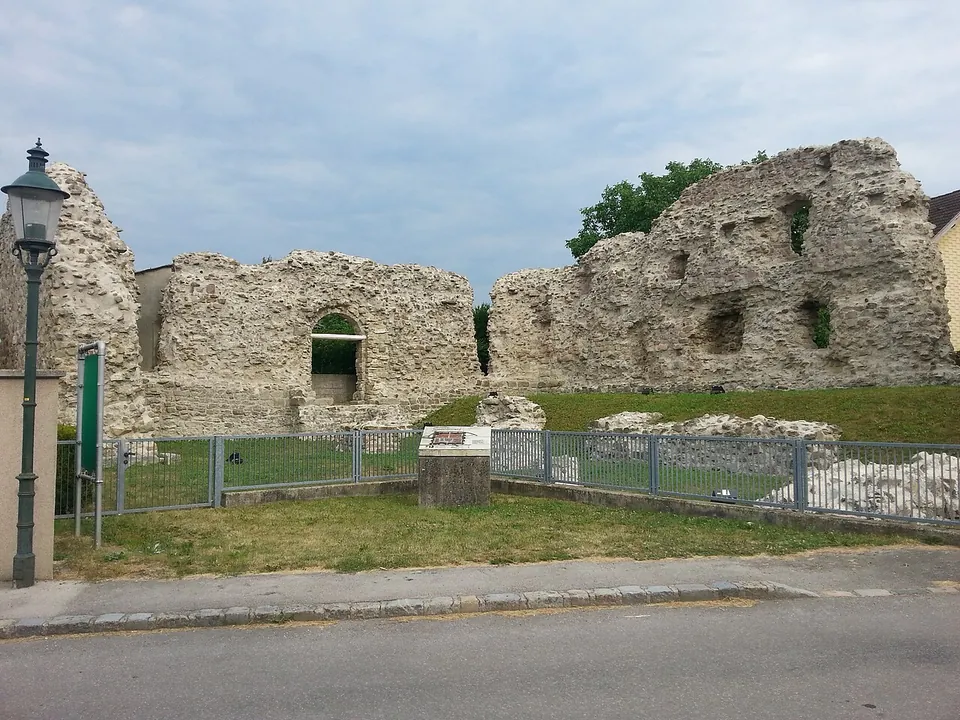
The burgus, a small fort built inside the north-west corner of the larger one, is the centrepiece.
27 km · fort · Tulln District
Comagena – Tulln an der Donau
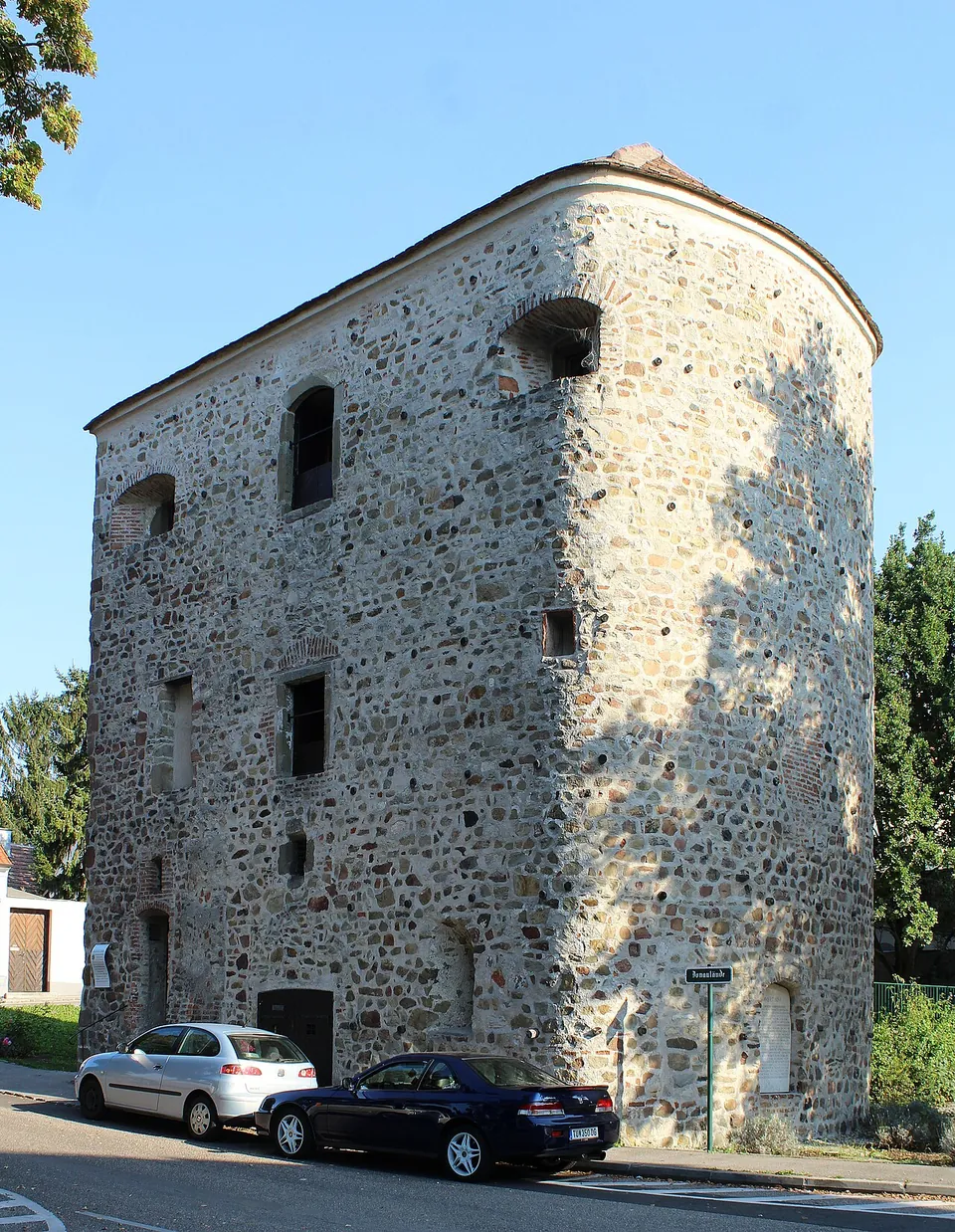
The Römerturm, also called the Salzturm because it was used to store salt in the 18th and 19th centuries, is the reason to come.
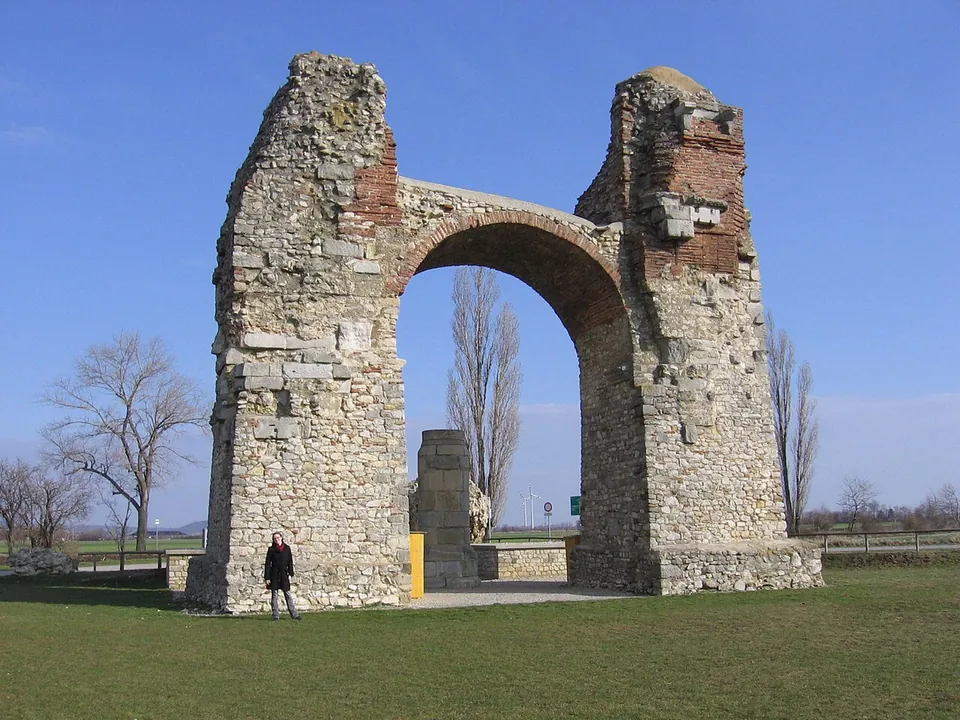
Photo: Michael Dufek at de.wikipedia · CC BY-SA 3.0 · Commons
38 km · city · Bruck an der Leitha District
Carnuntum
The heart of a visit is the Roman city quarter in the park beside Schloss Petronell.


Straight-line distances.
Sources
Every fact on this page comes from the records below, each used under the licence noted.
| Source | Licence |
|---|---|
| Pleiades 128537 | CC BY |
| Wikidata Q871525 | CC0 |
| Vici.org 1936 | CC BY-SA (text), CC0 (metadata) |
| OpenStreetMap node/1958085082 | ODbL |
| Pleiades — Mun. Vindobona (the civil town) | licence not recorded |
| Wikipedia (de) — Vindobona | CC BY-SA 4.0 |
| Wikipedia (en) — Vindobona | CC BY-SA 4.0 |
| Wien Museum — Römermuseum (the operator) | licence not recorded |
| Die Welt der Habsburger — Römische Baureste am Hof (status of the Am Hof room) | licence not recorded |