

What is there today
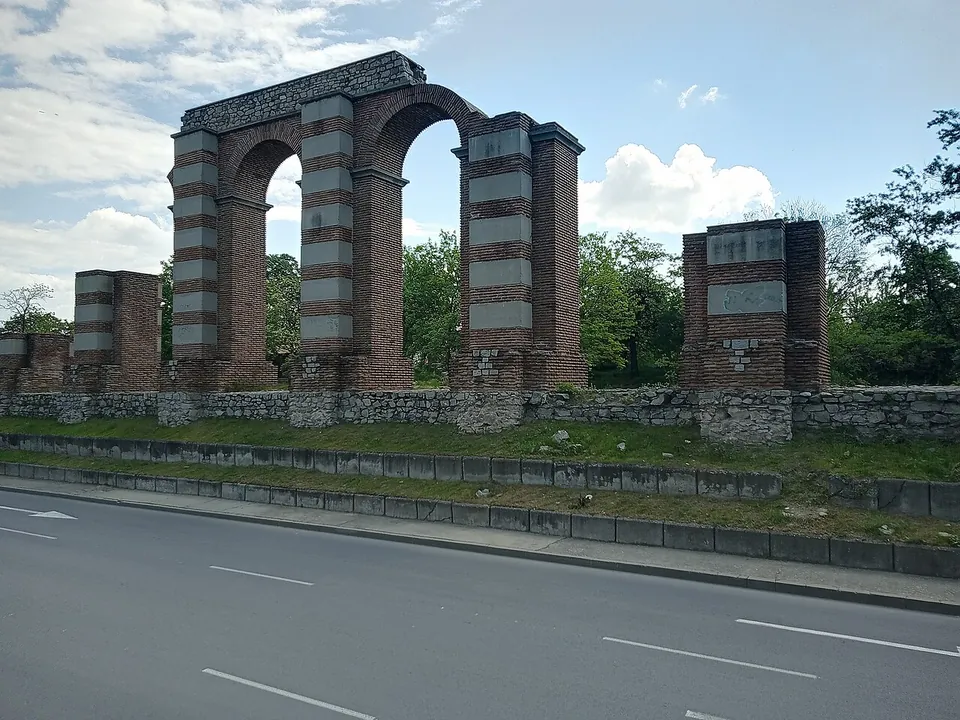
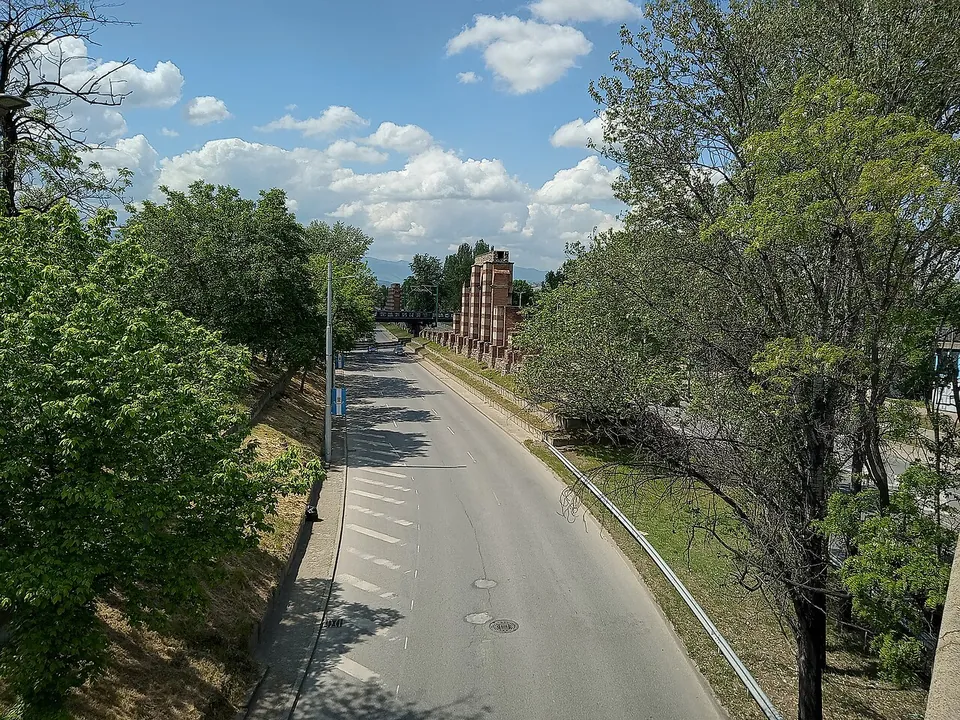
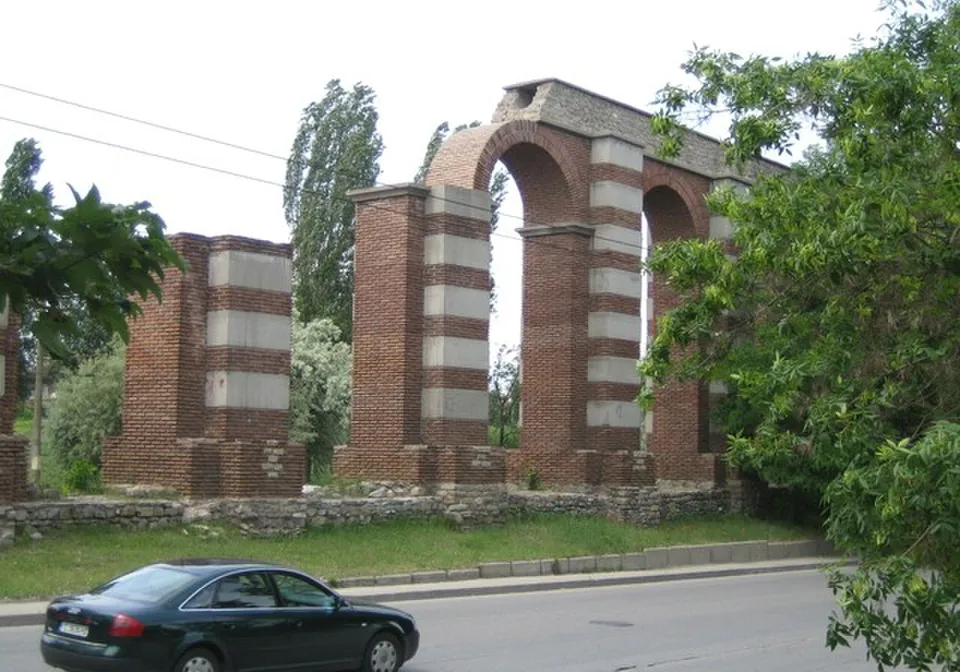
What you see is a row of tall piers in opus mixtum, courses of squared stone alternating with courses of brick, with a few arches restored between them, in the central strip of Komatevsko Shose Boulevard at the Komatevo junction. The western aqueduct was the more massive of the two: its piers stood on a continuous wall 4.4 m wide, set on wooden piles driven into the ground, and it ran for about 6 km (bg.wikipedia).
The water came from three spring captures on the slopes of the Rhodopes, two near Markovo and one near Kuklen. From them a pipeline of clay pipes and two aqueducts on arches met around Komatevo and ran on to the city side by side, 30–40 m apart. In the city the water ran in clay pipes under the streets to public fountains, with lead branches to houses; the whole system is estimated to have delivered about 43,000 m³ a day (bg.wikipedia). bg.wikipedia calls the aqueducts of Philippopolis the only structures of their kind found in Bulgaria. The base of a pier near the stadium in the city centre is thought to belong to the western aqueduct (bg.wikipedia; en.wikipedia).
Is it worth the trip?
As a short stop on the way in or out of Plovdiv, yes: Roman arches standing in a city street are rare in Bulgaria. Expect a roadside monument, much of it restored, rather than a site to linger at.
Getting there
The arches are at the Komatevo road junction in the south-west of Plovdiv, about 2.5 km from the centre, in the central strip of Komatevsko Shose Boulevard (bg.wikipedia; OpenStreetMap). A bus stop is mapped about 80 m away and a car park about 270 m away (OpenStreetMap). The arches stand in the open beside the road.
Visiting details
- Tickets
- Free
- Parking
- A car park is mapped about 270 m away (OSM way/574762729); the nearest bus stop is about 80 m away (OpenStreetMap).
History
No source in hand dates the building of the aqueducts. An aqueduct crossed the area of the stadium in the 4th century, and the remains of its pier there are thought to be part of the western aqueduct (en and bg.wikipedia). The three pipelines are thought to have met in a distribution tank on the western slopes of Dzhendem Tepe, apparently destroyed when the modern tunnel was built (bg.wikipedia).
Nearby
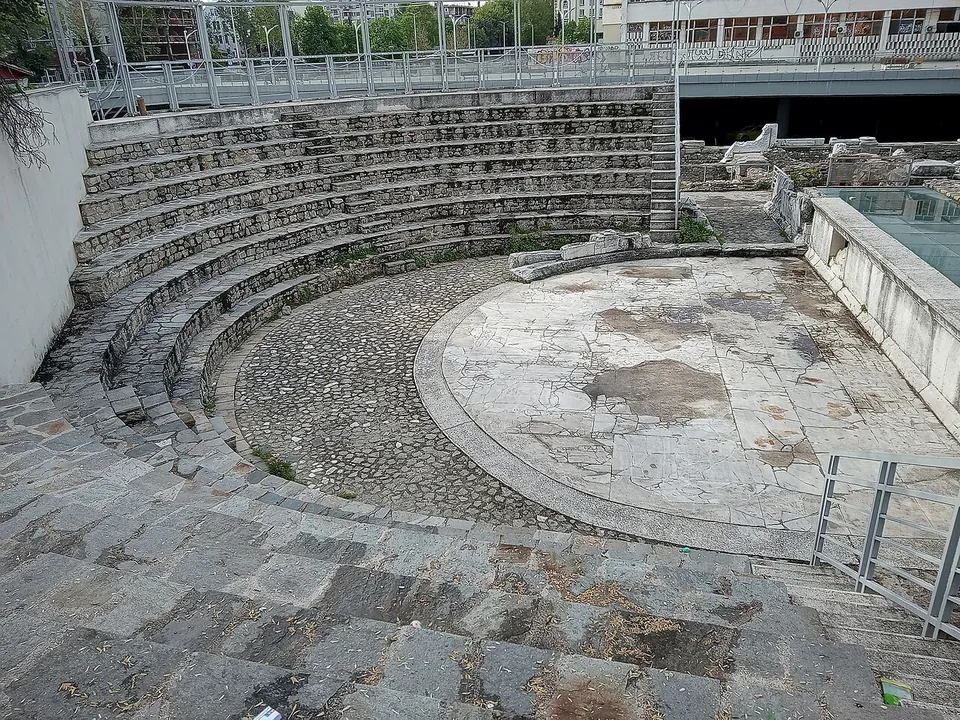
Photo: Gitanes232 · CC BY-SA 4.0 · Commons
3 km · theatre · Plovdiv Province
Odeon of Philippopolis
The odeon has all the parts of a covered theatre: a stage building, an orchestra and tiered seating.
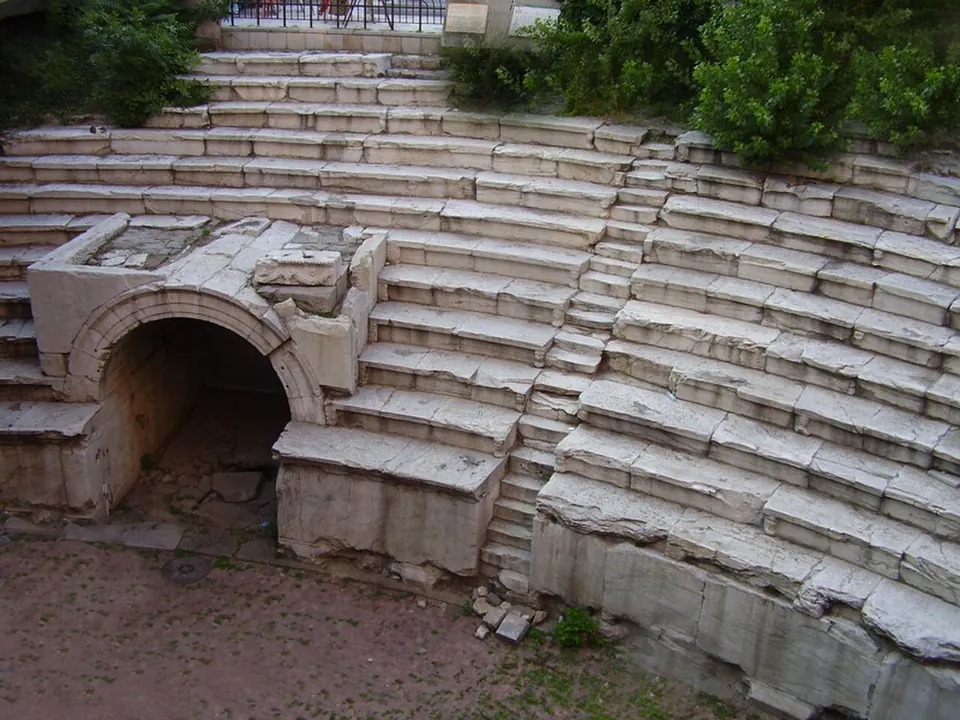
Photo: Kmrakmra · CC BY-SA 3.0 · Commons
3 km · site · Plovdiv Province
Stadium of Philippopolis
What you see is the sphendone, the curved end of the stadium, partly restored.
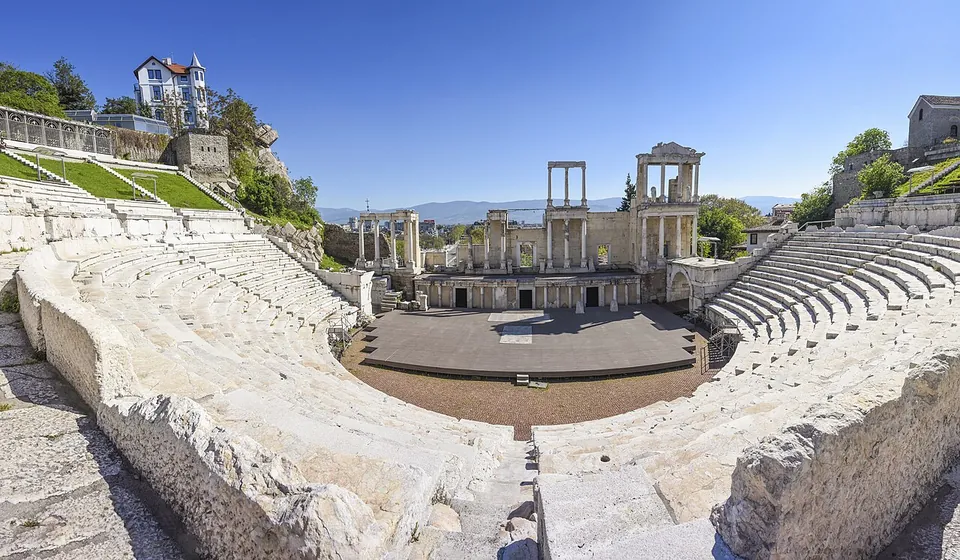
Photo: Община Пловдив · CC BY-SA 4.0 · Commons
3 km · city · Plovdiv Province
Philippopolis – Plovdiv
The stops each have their own page: the Roman theatre, set into the hillside of the Old Town and one of the best-preserved Roman theatres anywhere; the stadium, whose northern curved end has been partly restored on Roman Stadium Square; the odeon, the council house of the Roman city, which also served as a theatre; the Small Basilica, an early Christian church found during building work in 1988; and the Eirene Residence, a 3rd-century house with 160 m² of mosaic floors in the underpass beneath Tsar Boris III Boulevard (en.wikipedia).


Straight-line distances.
Sources
Every fact on this page comes from the records below, each used under the licence noted.
| Source | Licence |
|---|---|
| Wikidata Q20500960 | CC0 |
| Vici.org 11777 | CC BY-SA (text), CC0 (metadata) |
| OpenStreetMap way/490364144 | ODbL |
| Wikipedia (bg) — Водоснабдяване на Филипопол | CC BY-SA 4.0 |
| Wikipedia (en) — Stadium of Philippopolis | CC BY-SA 4.0 |