


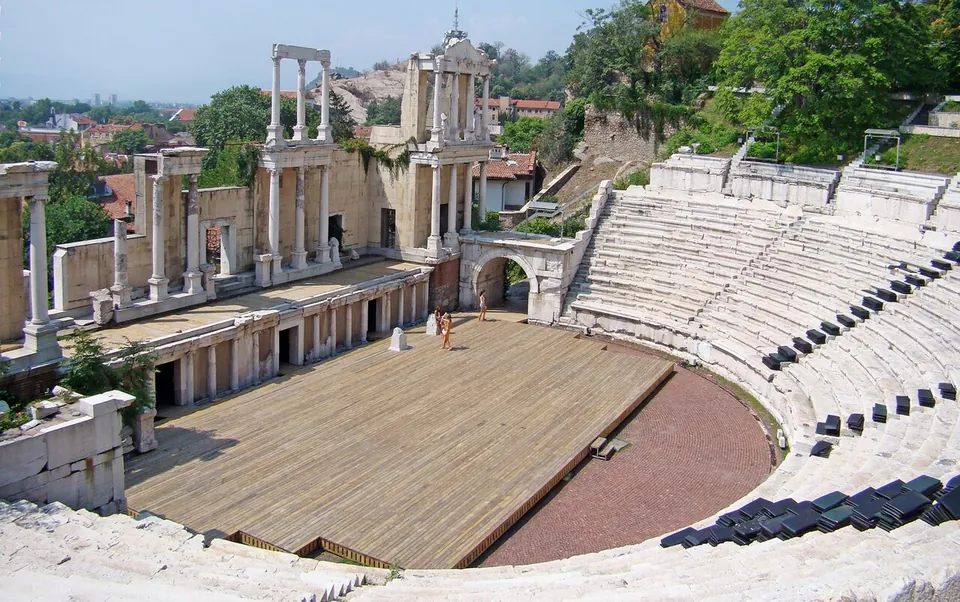
Photo: Edal Anton Lefterov · CC BY-SA 3.0 · Commons

theatre · Plovdiv Province
Roman theatre of Philippopolis
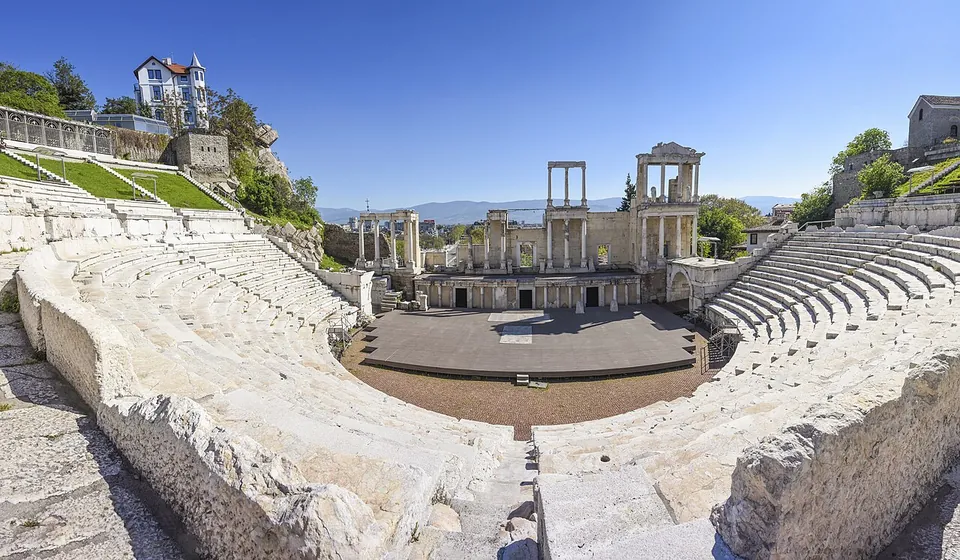
The theatre is a semicircle 82 m across.
Ticketed
Trimontium, Филипопол
city · Plovdiv Province, Bulgaria
5 places to see, the best preserved and best known first.
Photo: Edal Anton Lefterov · CC BY-SA 3.0 · Commons
theatre · Plovdiv Province
The theatre is a semicircle 82 m across.
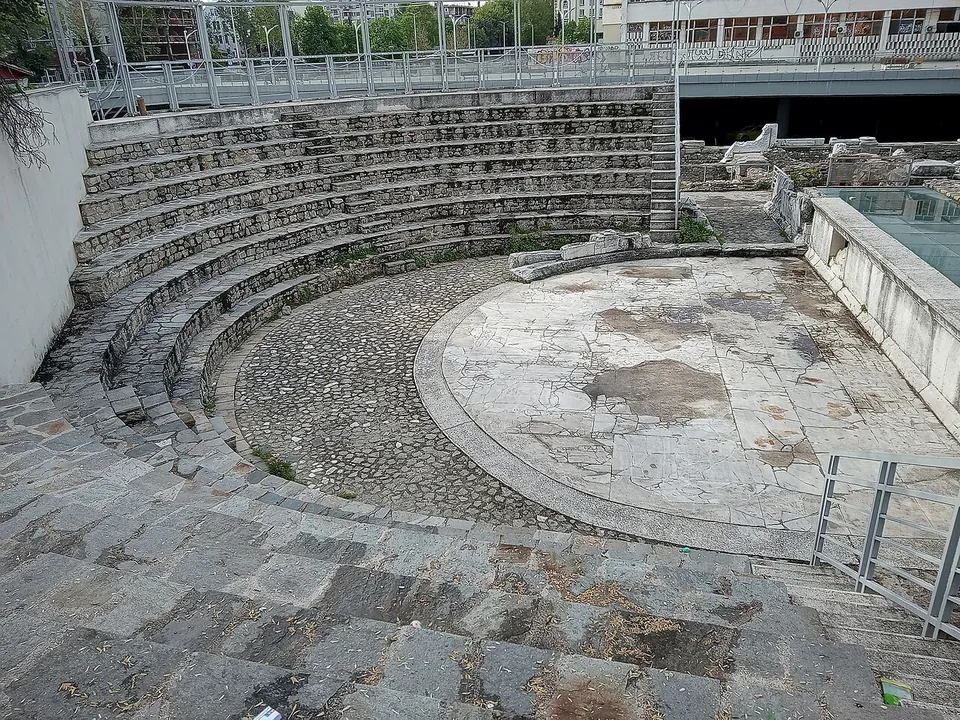
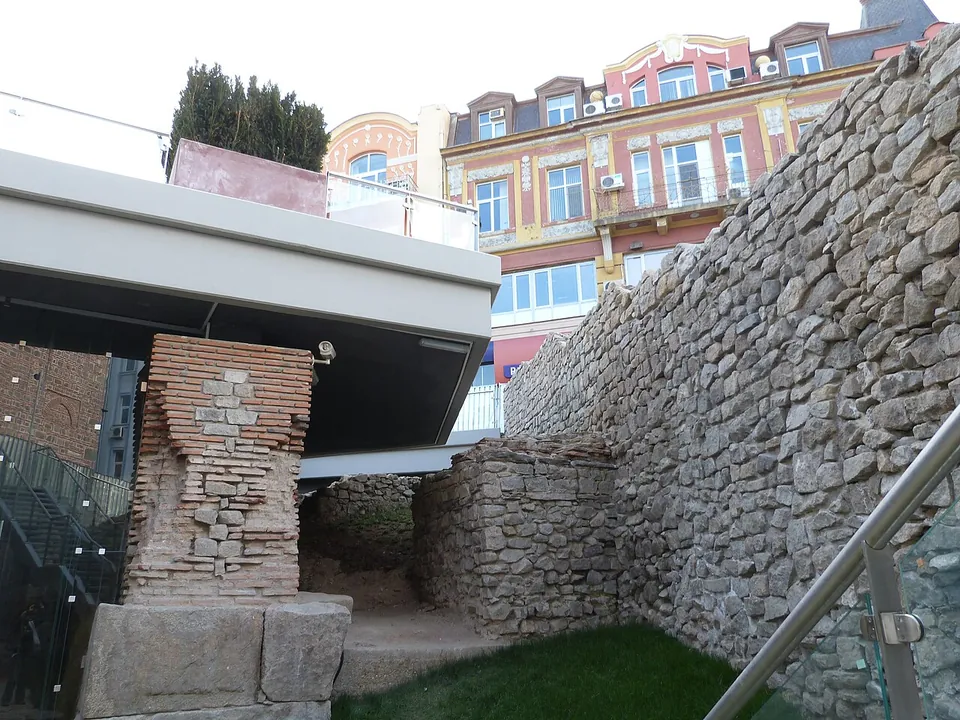
Photo: Gitanes232 · CC BY-SA 4.0 · Commons
theatre · Plovdiv Province
The odeon has all the parts of a covered theatre: a stage building, an orchestra and tiered seating.
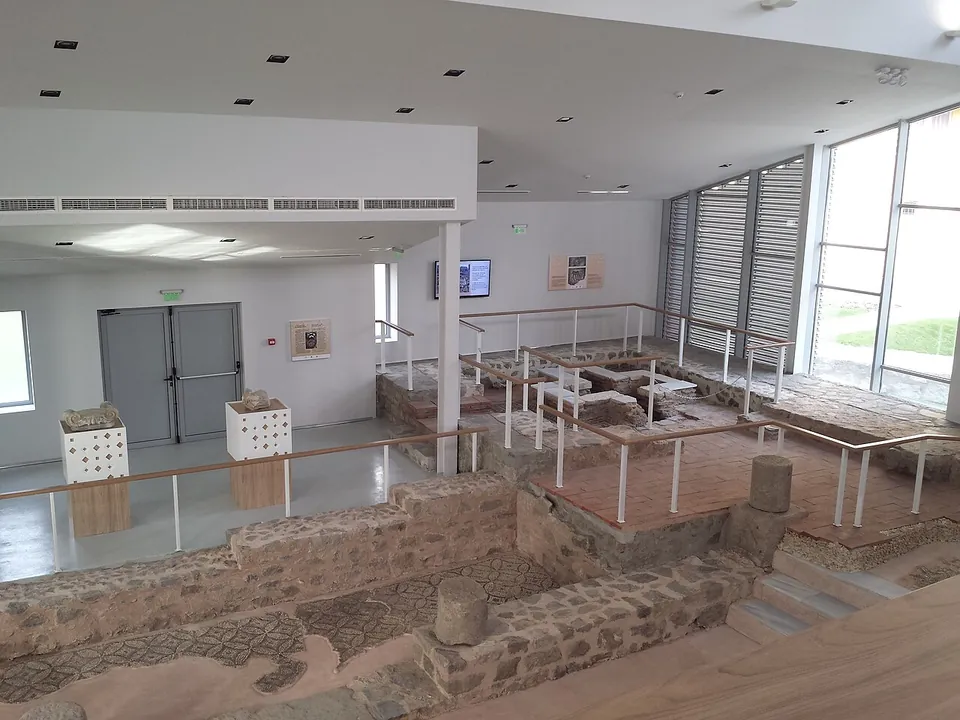
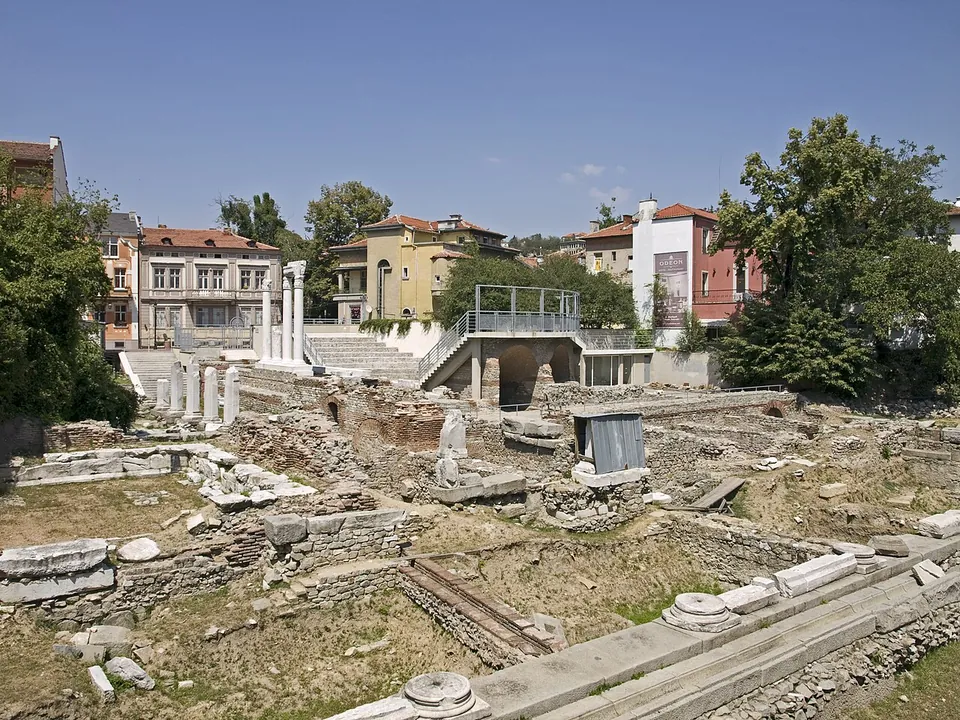
Photo: Realsteel007 · CC BY-SA 4.0 · Commons
church · Plovdiv Province
The church had three aisles, one apse and a narthex, and measures 20 m long with its apse and 13 m wide; a small chapel stood on the south side and a baptistery against the north aisle.
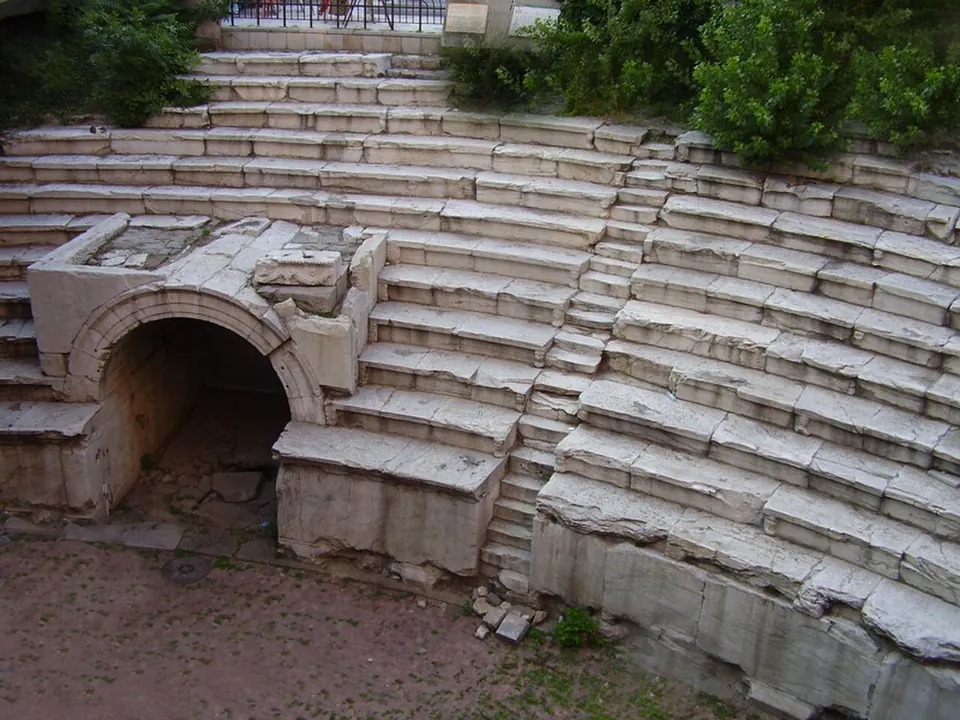
Photo: Kmrakmra · CC BY-SA 3.0 · Commons
site · Plovdiv Province
What you see is the sphendone, the curved end of the stadium, partly restored.
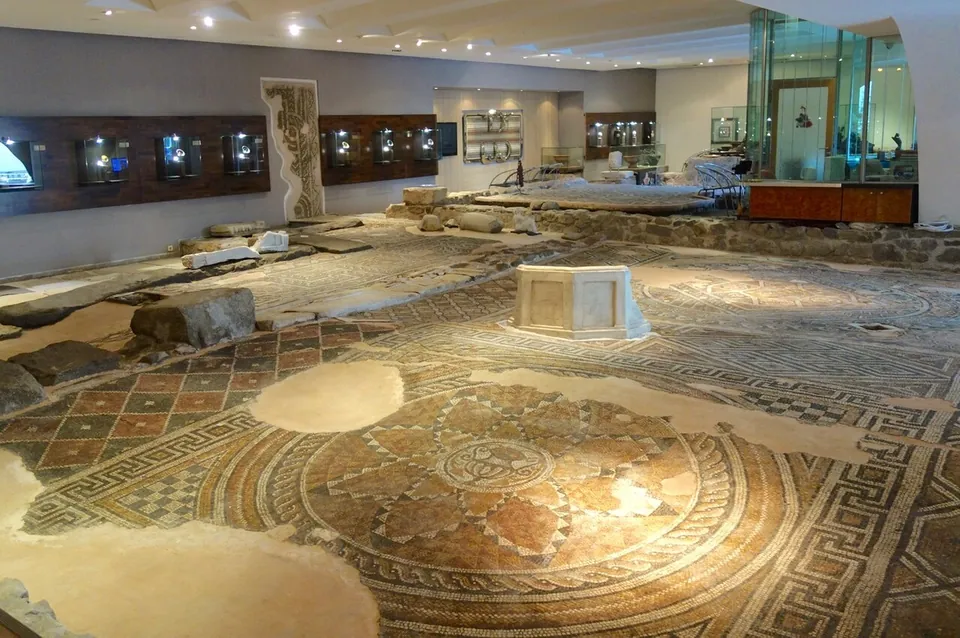
Photo: Realsteel007 · CC BY-SA 4.0 · Commons
site · Plovdiv Province
The house was a peristyle house, its living rooms grouped round a courtyard with columns, the service rooms to the south, and a separate wing for the servants with its own door to the street.
The stops each have their own page: the Roman theatre, set into the hillside of the Old Town and one of the best-preserved Roman theatres anywhere; the stadium, whose northern curved end has been partly restored on Roman Stadium Square; the odeon, the council house of the Roman city, which also served as a theatre; the Small Basilica, an early Christian church found during building work in 1988; and the Eirene Residence, a 3rd-century house with 160 m² of mosaic floors in the underpass beneath Tsar Boris III Boulevard (en.wikipedia). The remains of a library, 25 m from the odeon, are described on the odeon’s page.
Between them, more of the Roman city is on show. The Bishop’s Basilica, also called the Great Basilica, is the largest late antique church found in Bulgaria; it was built in the middle of the 4th century, and it is preserved with its floor mosaics in a new museum, opened in 2021 (en.wikipedia). The stadium alone was about 250 m long and 50 m wide and could seat up to 30,000 people (en.wikipedia). The Eastern Gate of Philippopolis is open at all hours (the operator).
Yes. The theatre, the stadium and the odeon lie within a few hundred metres of each other, and the theatre is in good enough condition to be used for performances again. It is a city rather than a site: the remains are spread through ordinary streets, so plan on several hours on foot rather than a single visit, and expect each stop to keep its own hours and tickets.
Plovdiv is in south-central Bulgaria, 144 km south-east of Sofia, on both banks of the Maritsa (en.wikipedia). The point on the map is in the city centre beside the stadium; the theatre is about 170 m from it, the odeon about 440 m and the Small Basilica about 740 m. Paid parking is mapped about 35 m and 60 m away (OpenStreetMap).
The stadium’s curved end on Roman Stadium Square is free. The theatre costs €3.58 for an adult, and a 72-hour “Ancient and Eternal” ticket at €30.68 covers every site the municipal institute Old Plovdiv runs, with the screening at the stadium; its ticket page still prints the old lev price beside each euro amount (oldplovdiv.bg, read 1 October 2026 — check before travelling).
Philip II of Macedon founded Philippopolis as a Greek city in 342 BC, on the site of the Thracian settlement of Pulpudeva. Rome conquered the Macedonian kingdom in 168 BC, and Philippopolis became the capital of the Roman province of Thracia, which the emperor Claudius created in AD 46. It stood at the centre of the road network of inland Thrace: the Via Militaris was crossed here by roads running to the Danube, the Aegean and the Black Sea. Marcus Aurelius built a new wall around the city (en.wikipedia).
The Goths under Cniva sacked it in 250. The city shrank but remained a major one: its walls were rebuilt, and new Christian basilicas and baths went up in the 4th century. The Huns sacked it again in 441/442; its walls, renewed under Justinian, held against the Avars in the 580s, and it fell to the Bulgars in 863 (en.wikipedia).
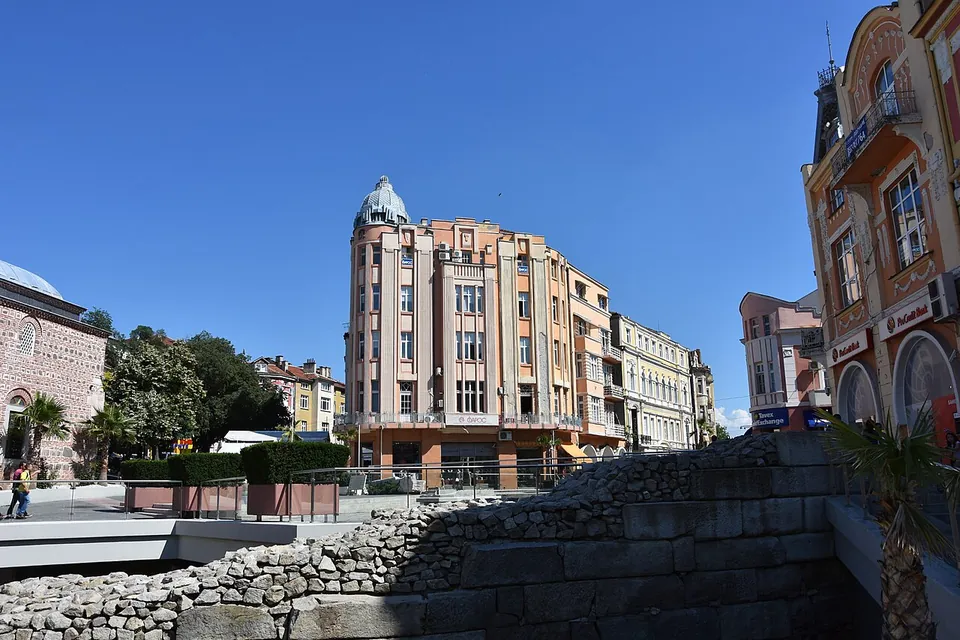
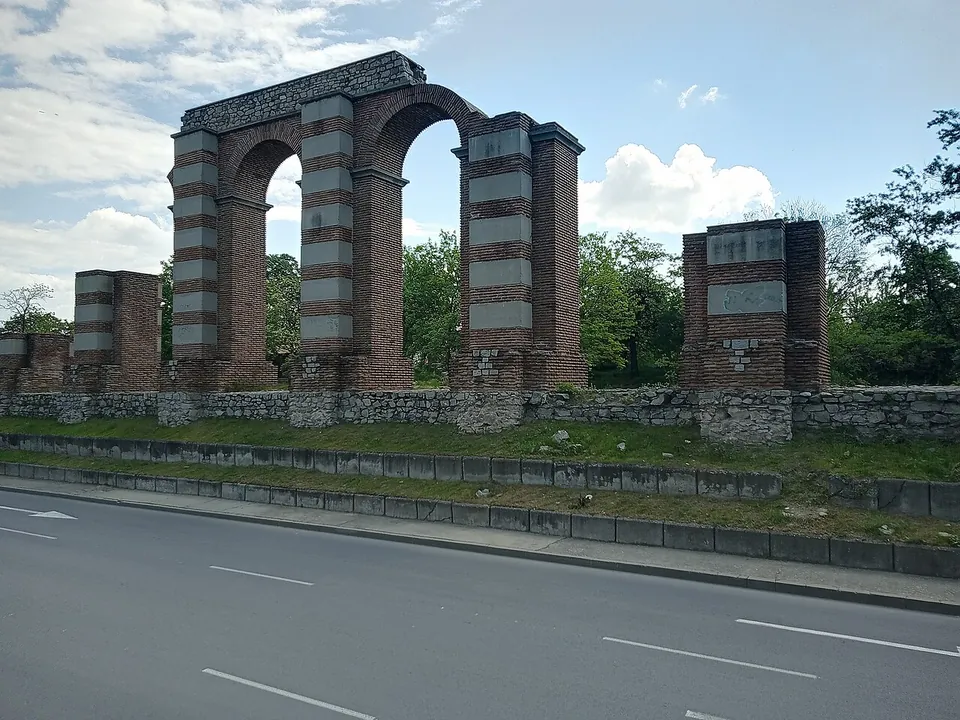
Photo: Gitanes232 · CC BY-SA 4.0 · Commons
3 km · aqueduct · Plovdiv Province
What you see is a row of tall piers in opus mixtum, courses of squared stone alternating with courses of brick, with a few arches restored between them, in the central strip of Komatevsko Shose Boulevard at the Komatevo junction.
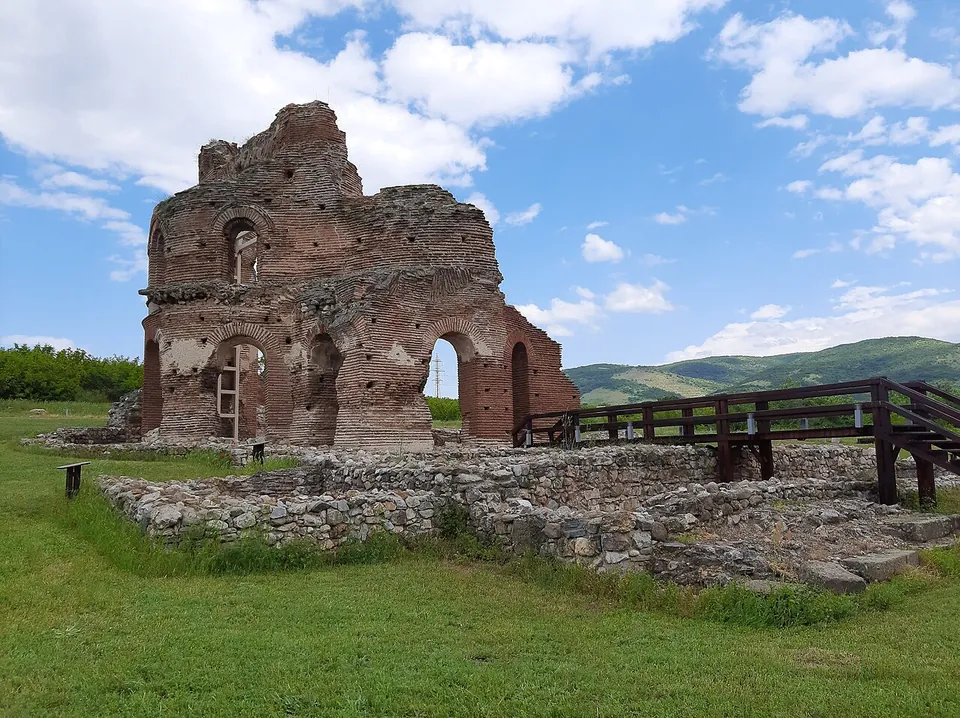
Photo: Spasimir Pilev · CC BY-SA 4.0 · Commons
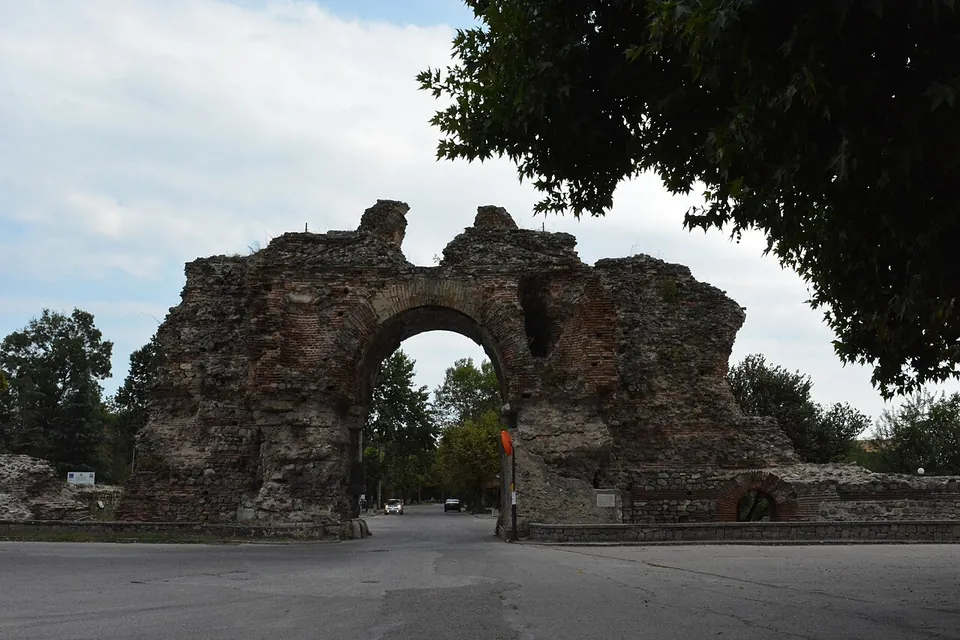
Photo: BlackfishFoto · CC BY-SA 4.0 · Commons
40 km · city · Plovdiv Province
The walls run for 2,327 m round about 20 ha, 2.60–4 m thick and up to 12.5 m high, and once had 44 towers, four main gates and six smaller ones; the south and west gates survive best, the south gate rising to 13 m (bg.wikipedia).
Straight-line distances.
Every fact on this page comes from the records below, each used under the licence noted.
| Source | Licence |
|---|---|
| Pleiades 216927 | CC BY |
| Wikidata Q27047924 | CC0 |
| Wikipedia (en) — Plovdiv | CC BY-SA 4.0 |
| Wikipedia (en) — Stadium of Philippopolis | CC BY-SA 4.0 |
| Wikipedia (en) — Odeon of Philippopolis | CC BY-SA 4.0 |
| Wikipedia (en) — Great Basilica, Plovdiv | CC BY-SA 4.0 |
| Wikipedia (en) — Small Basilica, Plovdiv | CC BY-SA 4.0 |
| Wikipedia (en) — Domus Eirene | CC BY-SA 4.0 |
| Wikipedia (en) — Thracia | CC BY-SA 4.0 |
| Wikipedia (sl) — Filipopolis | CC BY-SA 4.0 |
| Old Plovdiv (Starinen Plovdiv), the municipal institute — ticket prices and opening hours | licence not recorded |


