

What is there today
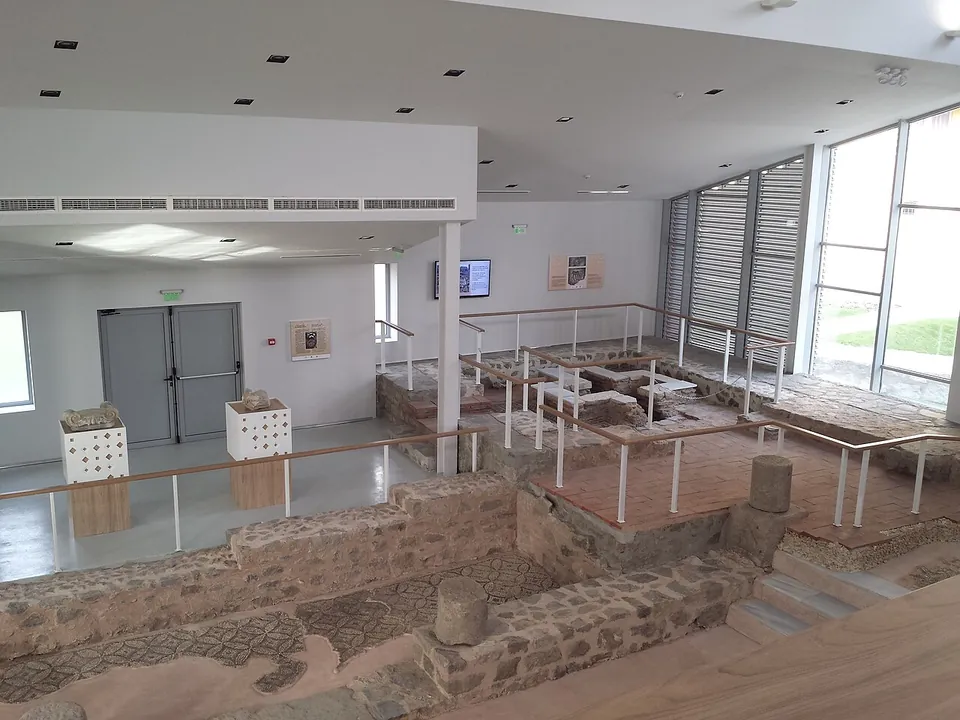
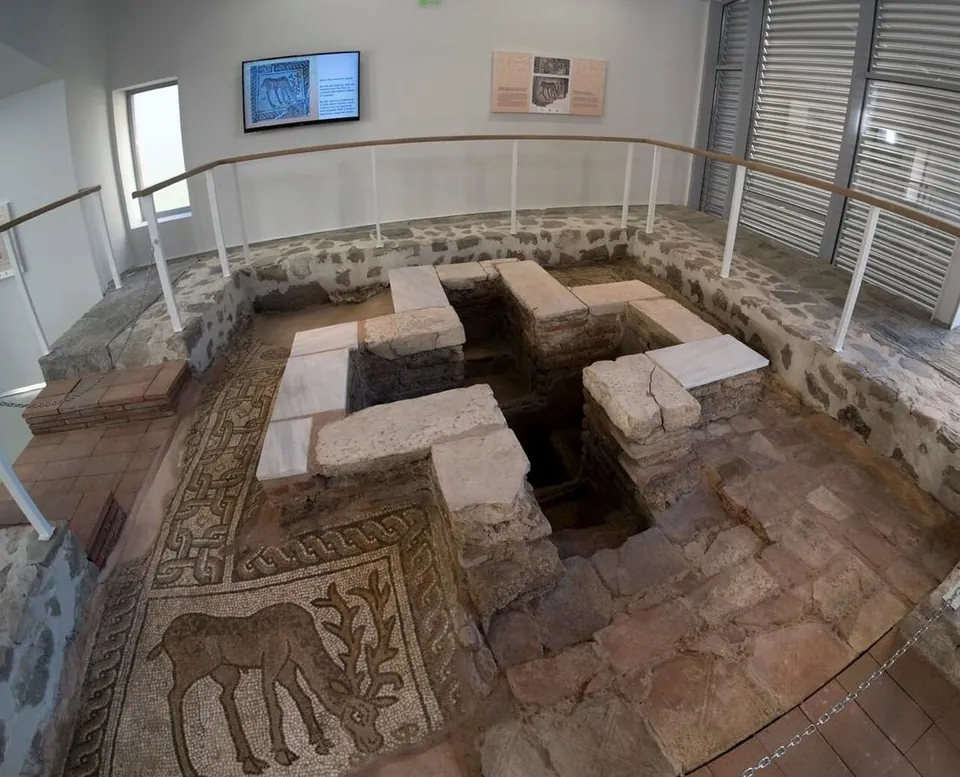
The church had three aisles, one apse and a narthex, and measures 20 m long with its apse and 13 m wide; a small chapel stood on the south side and a baptistery against the north aisle. It was richly fitted, with a marble colonnade between the aisles, a marble altar screen, a pulpit and a bench for the clergy in the apse (bg.wikipedia; en.wikipedia). Its floors are covered with many-coloured mosaics of geometric patterns, vases and garlands, rosettes and Solomon’s knots, counted among the best work of the mosaicists of Philippopolis (bg.wikipedia). The square baptistery has a cross-shaped font and a mosaic with a stag, doves and other Christian symbols (en.wikipedia; bg.wikipedia).
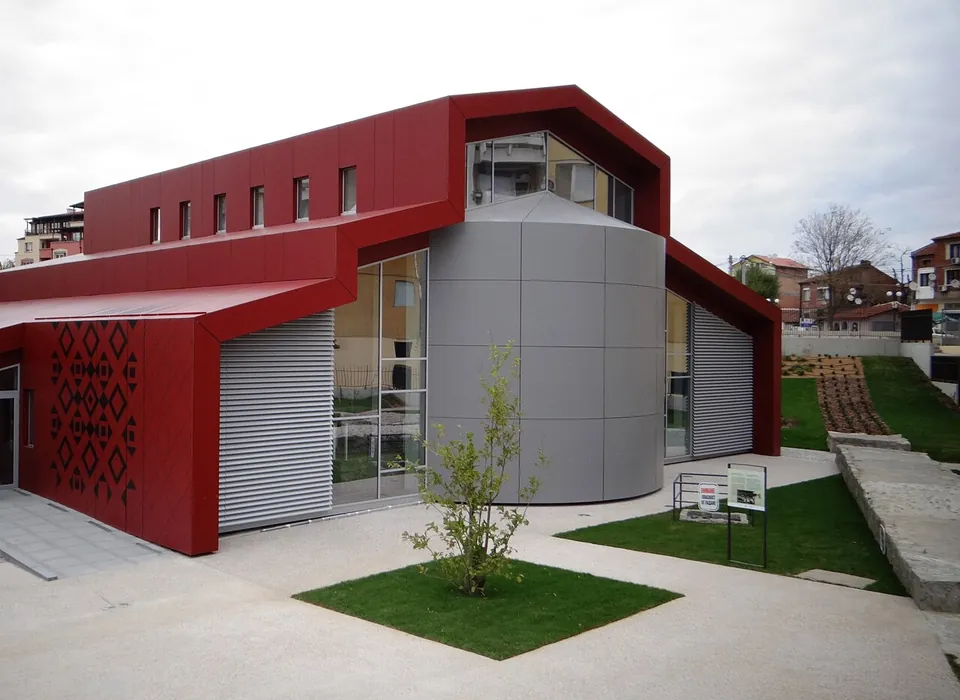
Since 2013 the remains have stood under a protective building, where a glass platform covers the 5th-century mosaics, in a small park that also shows part of the eastern city wall with a tower, a stretch of ancient street and the courtyard of a house (bg.wikipedia).
Is it worth the trip?
Yes, as part of a walk through Roman Plovdiv. It is a single small church, but the mosaics are fine and well presented, and the site is almost fully accessible to visitors with limited mobility (bg.wikipedia).
Getting there
The basilica is on Knyaginya Maria Luiza Boulevard in central Plovdiv (en.wikipedia), about 570 m from the Roman theatre. A car park is mapped about 40 m away and the Paparatsi bus stop about 45 m away (OpenStreetMap).
It is open daily, 09.30 to 18.00, with a lunch break from 12.30 to 13.00. A ticket is €3.58 for adults and €1.53 for students and visitors over 65; a combined ticket with the Bishop’s Basilica and the Eirene Residence is €12.78 (oldplovdiv.bg, read 1 October 2026).
Visiting details
- Opening hours
- Daily 09.30–18.00, closed for lunch 12.30–13.00.
- Tickets
- €3.58 for adults and €1.53 for students and visitors over 65 (the operator's single-site ticket); free under 7. A combined ticket for the Bishop's Basilica, the Small Basilica and the Eirene Residence costs €12.78.
- Parking
- A car park is mapped about 40 m away (OSM way/1200608928); the Paparatsi bus stop is about 45 m away (OpenStreetMap).
- On foot
- About 1 min from the parking
Hours and prices checked 2 October 2026 on the operator's own site. Confirm before travelling.
History
The basilica stood at the eastern edge of the ancient city, against the outer wall, near the eastern cemetery and a martyrs’ shrine on the road to Constantinople. It was built in the second half of the 5th century in honour of Flavius Basiliscus, commander in Thrace, who drove the rebel Goths back from Philippopolis in 471; a six-line dedication in the mosaic before the altar praised him. When Basiliscus, emperor from 475, was overthrown by Zeno after 20 months, the first lines of the inscription were removed (bg.wikipedia).
Soon afterwards the church burned down. It was rebuilt with a floor raised by about 0.70 m, and the baptistery was added; it served until the end of the 6th century, when it was abandoned (bg.wikipedia). It was found in 1988 during the building of an apartment block, restored from 2010 with the support of the America for Bulgaria Foundation, the Ministry of Culture and the municipality, and opened to visitors on 1 May 2014 (en.wikipedia; bg.wikipedia).
Nearby
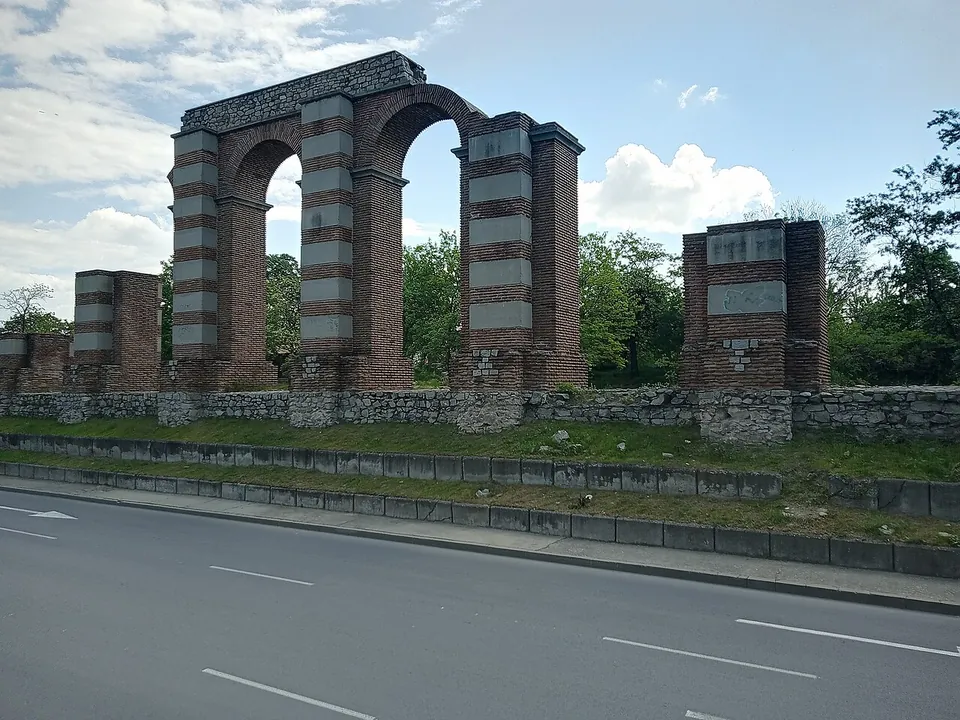
Photo: Gitanes232 · CC BY-SA 4.0 · Commons
3 km · aqueduct · Plovdiv Province
Aqueducts of Plovdiv
What you see is a row of tall piers in opus mixtum, courses of squared stone alternating with courses of brick, with a few arches restored between them, in the central strip of Komatevsko Shose Boulevard at the Komatevo junction.
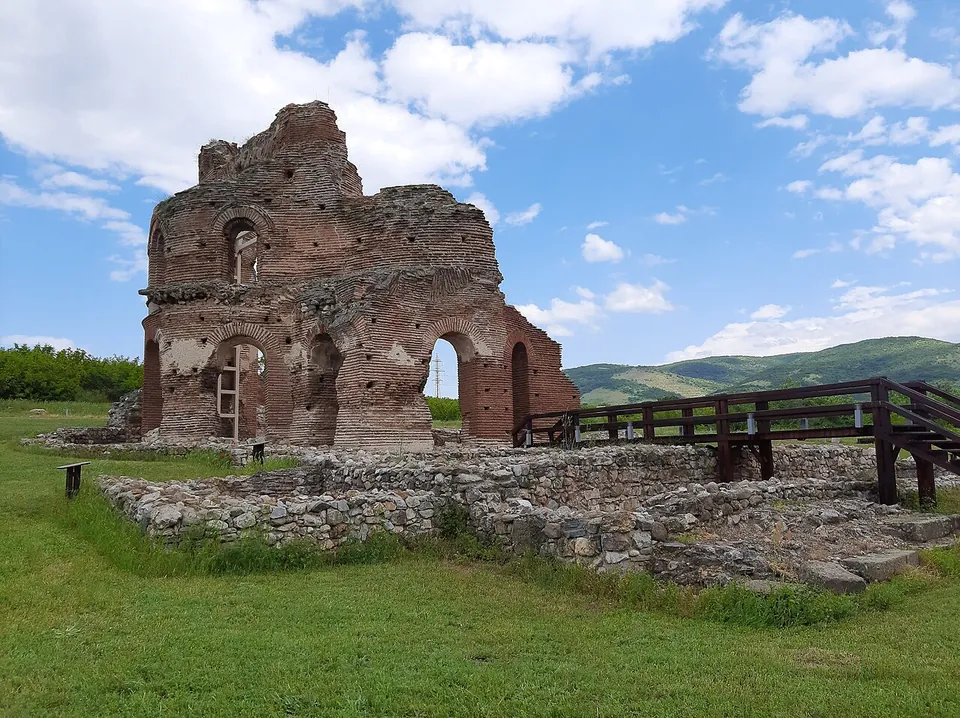
Photo: Spasimir Pilev · CC BY-SA 4.0 · Commons
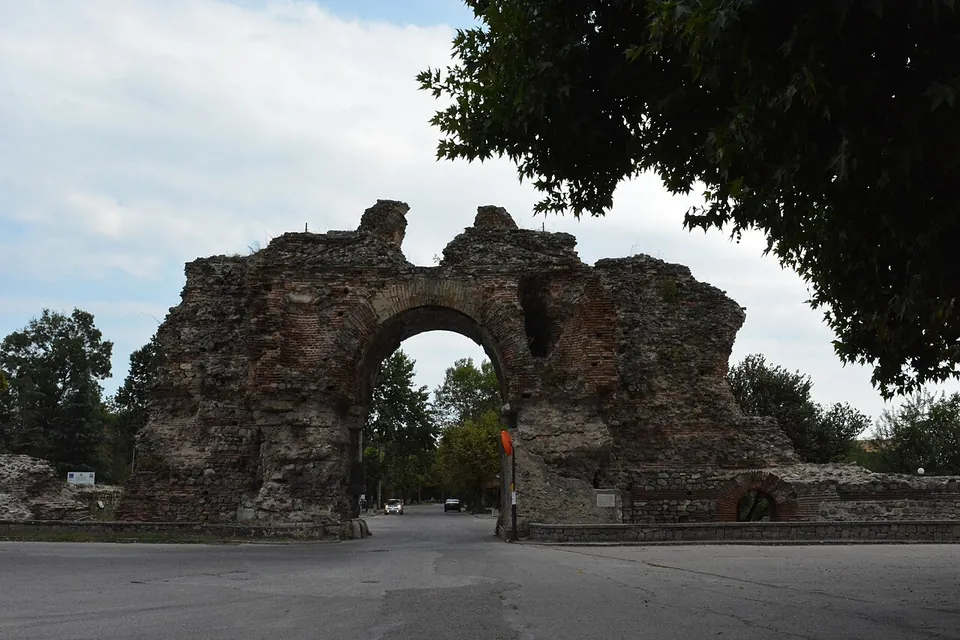
Photo: BlackfishFoto · CC BY-SA 4.0 · Commons
40 km · city · Plovdiv Province
Diocletianopolis
The walls run for 2,327 m round about 20 ha, 2.60–4 m thick and up to 12.5 m high, and once had 44 towers, four main gates and six smaller ones; the south and west gates survive best, the south gate rising to 13 m (bg.wikipedia).


Straight-line distances.
Sources
Every fact on this page comes from the records below, each used under the licence noted.
| Source | Licence |
|---|---|
| Wikidata Q16744679 | CC0 |
| OpenStreetMap way/145774622 | ODbL |
| Wikipedia (bg) — Малка базилика (Пловдив) | CC BY-SA 4.0 |
| Wikipedia (en) — Small Basilica, Plovdiv | CC BY-SA 4.0 |
| Old Plovdiv (Starinen Plovdiv), the municipal institute — ticket prices and opening hours | licence not recorded |