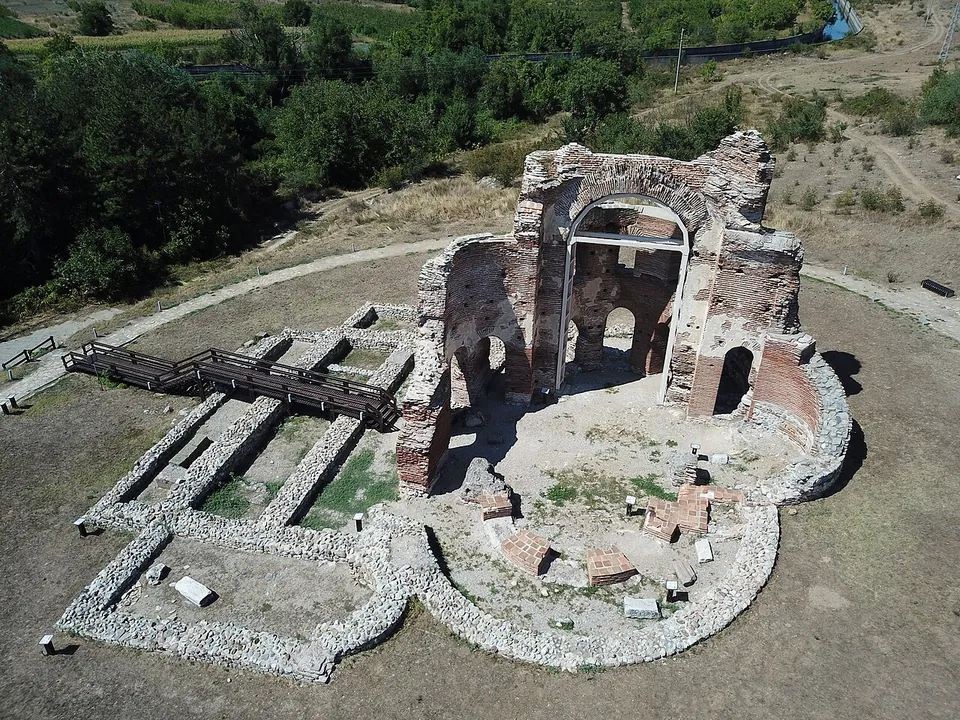
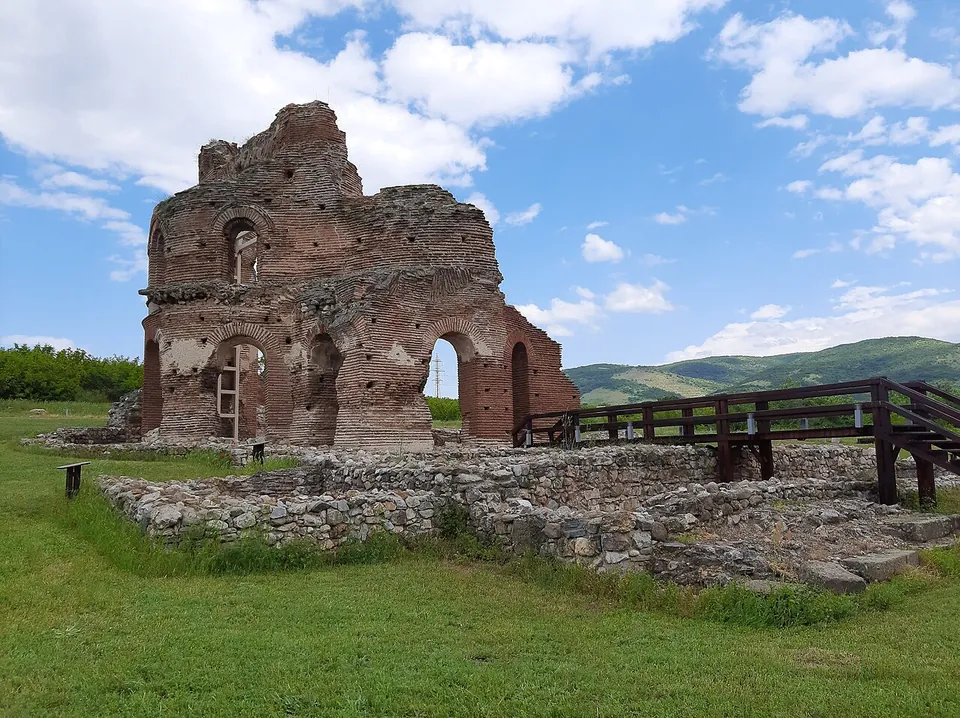
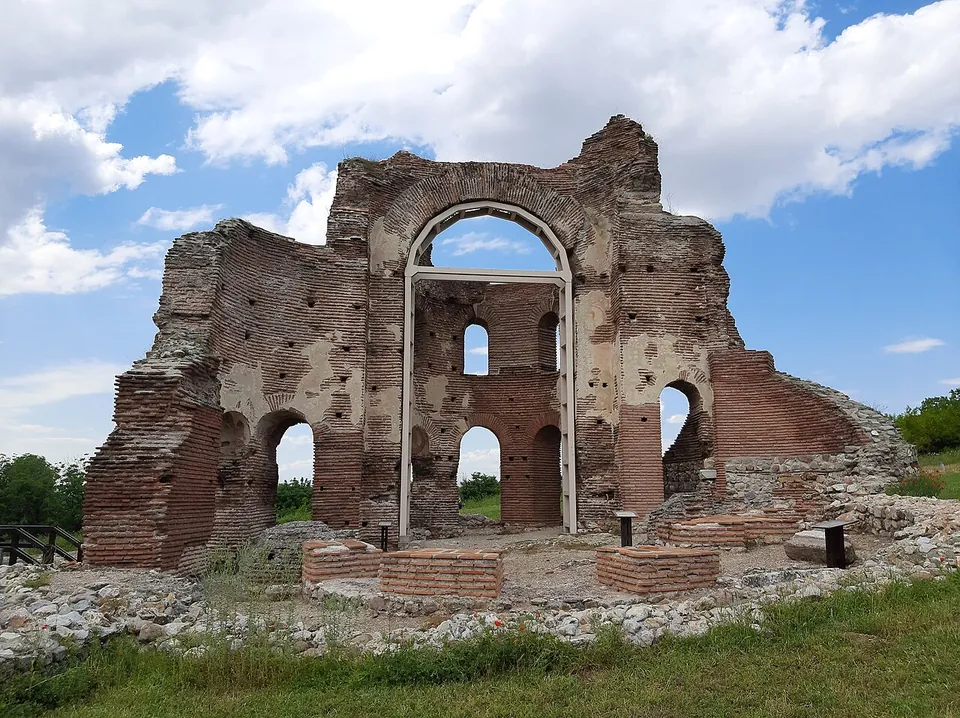


What is there today
The church measured 32.70 m by 25.90 m. Its north wall, the best preserved, stands about 14 m high; the building had four semi-domes around a central dome, almost none of which survives, a narthex and an outer narthex, a baptistery with a pool faced in pink marble against the north side of the narthex, and a chapel on the south side (en.wikipedia). The floor was laid with mosaic and the walls painted; some of the decoration is in the National Historical Museum in Sofia, while frescoes left on the walls are exposed to the weather (en.wikipedia; bg.wikipedia).
It is one of only three brick churches of that period preserved in Bulgaria, with St Sophia in Sofia and the Old Bishopric in Nesebar (en.wikipedia). Since a restoration completed in 2013 the walls have been held by metal beams in place of the old wooden scaffolding, and a visitor centre has been built beside it (en.wikipedia).
Is it worth the trip?
Yes, from Plovdiv: it is a short drive, and a late Roman church still standing 14 m high is a rare sight. It is a single ruin in open country, so pair it with Plovdiv’s Roman sites rather than travelling for it alone.
Getting there
The church is about 1 km from Perushtitsa, at the foot of the Rhodopes. A footpath of about 700 m leads to it from the main road towards the town, where there is a small car park and a sign at the turning (bg.wikipedia). The only car park OpenStreetMap maps near the church is private. We could find no opening hours or fee published by an operator; OpenStreetMap tags the visitor centre, run by the Perushtitsa town museum, as charging a fee.
Visiting details
- Tickets
- Unknown
- Parking
- bg.wikipedia describes a small car park on the main road towards Perushtitsa, where a 700 m footpath leads to the church; the only car park mapped near the church itself is private (OSM way/1308973174).
- On foot
- About 10 min from the parking
Before you go
- We could find no operator page with opening hours or a fee (searched 3 October 2026). OpenStreetMap maps a visitor centre beside the church, run by the Perushtitsa town museum and tagged with a fee, but gives no amount or hours.
History
The church was probably built under the emperor Anastasius I (491–518), though bg.wikipedia dates it as early as the 4th century, and it is thought to have been a martyrium, built to hold the relics of a popular saint (en.wikipedia). The name comes from the red of its bricks (en.wikipedia). In the 10th and 11th centuries it was rebuilt, with some side passages walled up using bricks from the church itself, a second layer of frescoes was painted, and a cemetery grew up around it; it was in use until the 14th century (en.wikipedia; bg.wikipedia).
It was first excavated in 1915, and again from 1921 with funds from the American Byzantinist Thomas Whittemore. Shored up with wooden scaffolding in 1985, it reopened in 2013 after restoration (en.wikipedia).
Nearby
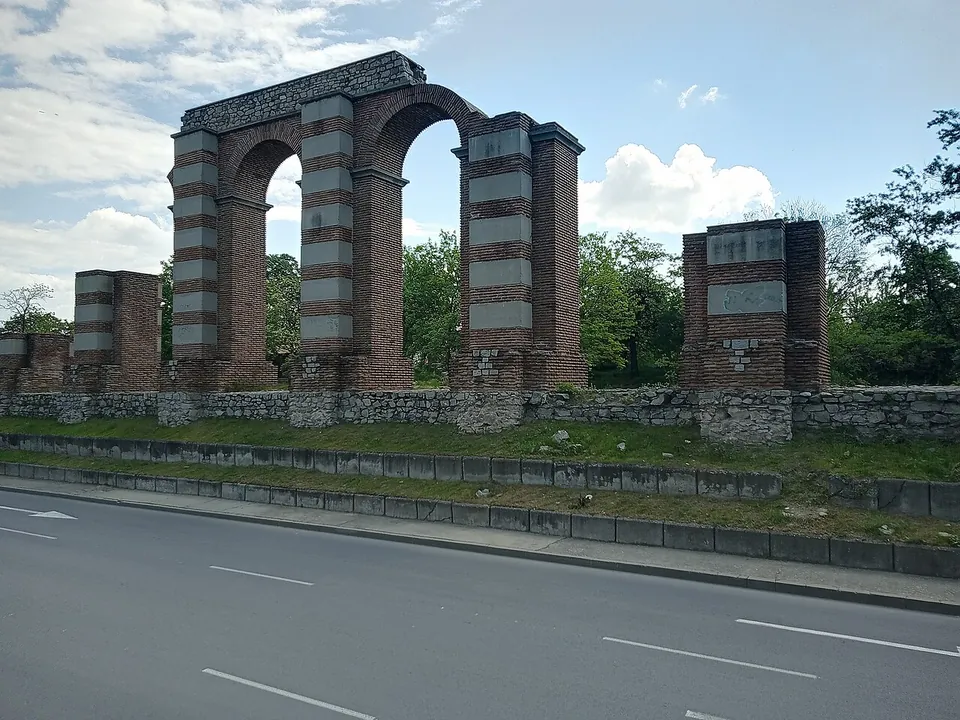
Photo: Gitanes232 · CC BY-SA 4.0 · Commons
15 km · aqueduct · Plovdiv Province
Aqueducts of Plovdiv
What you see is a row of tall piers in opus mixtum, courses of squared stone alternating with courses of brick, with a few arches restored between them, in the central strip of Komatevsko Shose Boulevard at the Komatevo junction.
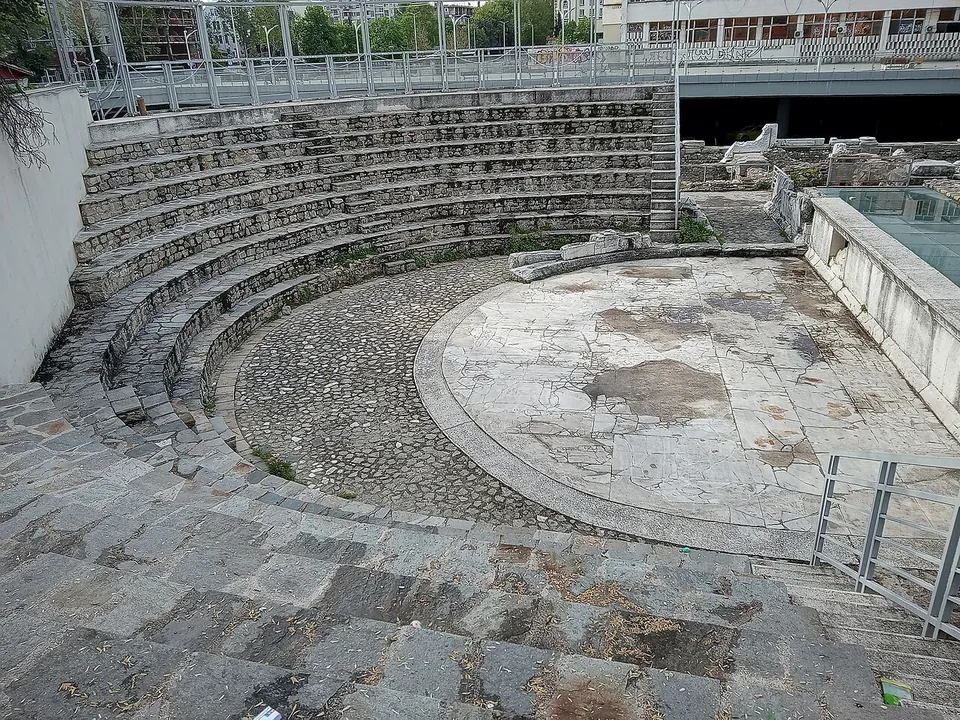
Photo: Gitanes232 · CC BY-SA 4.0 · Commons
18 km · theatre · Plovdiv Province
Odeon of Philippopolis
The odeon has all the parts of a covered theatre: a stage building, an orchestra and tiered seating.
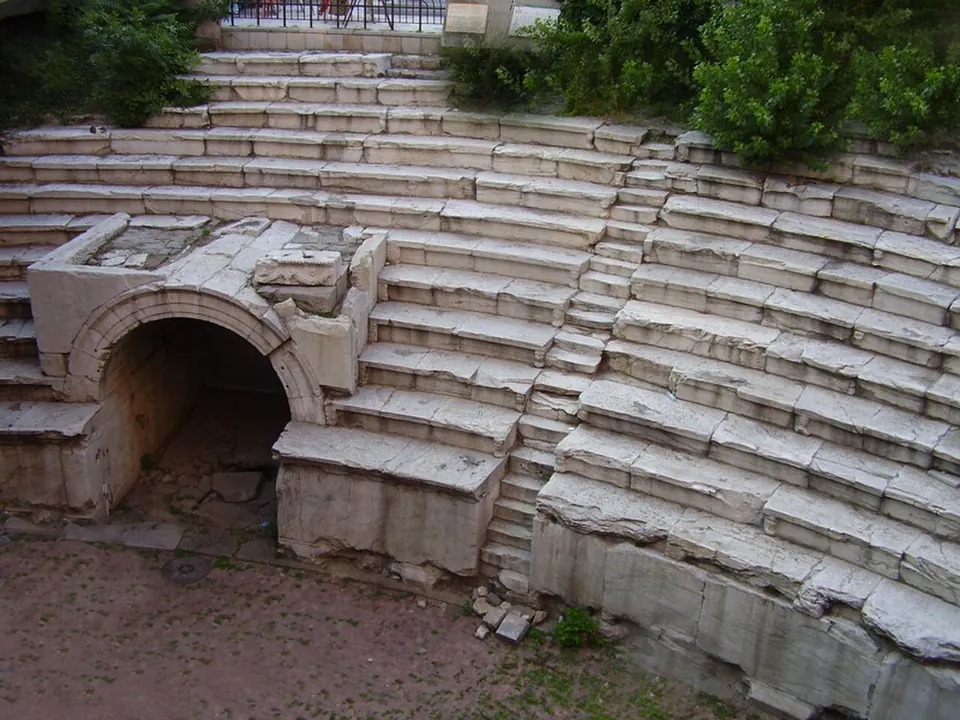
Photo: Kmrakmra · CC BY-SA 3.0 · Commons
18 km · site · Plovdiv Province
Stadium of Philippopolis
What you see is the sphendone, the curved end of the stadium, partly restored.


Straight-line distances.
Sources
Every fact on this page comes from the records below, each used under the licence noted.
| Source | Licence |
|---|---|
| Pleiades 216926 | CC BY |
| Wikidata Q7303885 | CC0 |
| OpenStreetMap way/103842853 | ODbL |
| Wikipedia (en) — Red Church (Bulgaria) | CC BY-SA 4.0 |
| Wikipedia (bg) — Червената църква | CC BY-SA 4.0 |