

What is there today
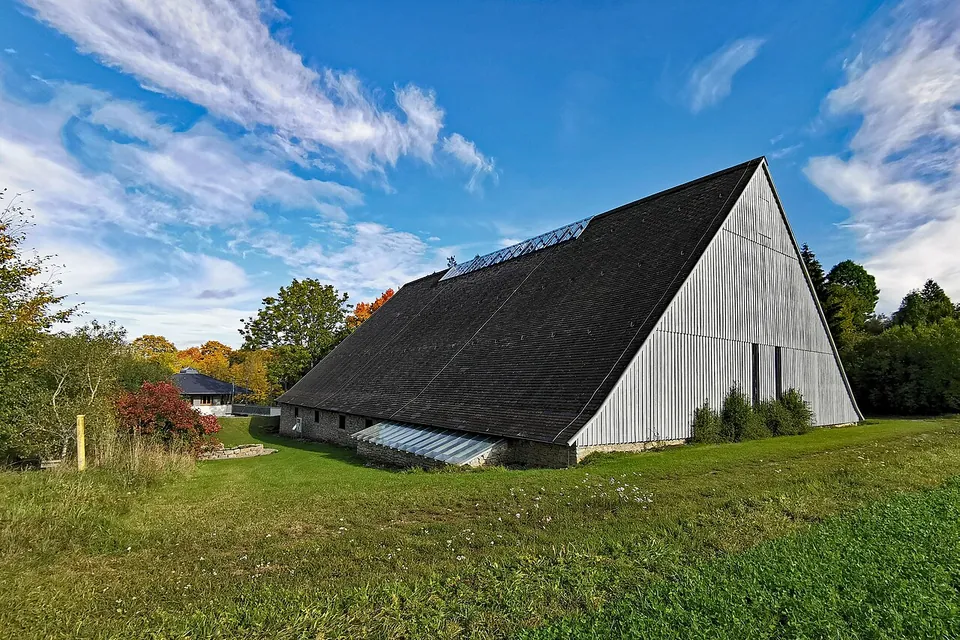
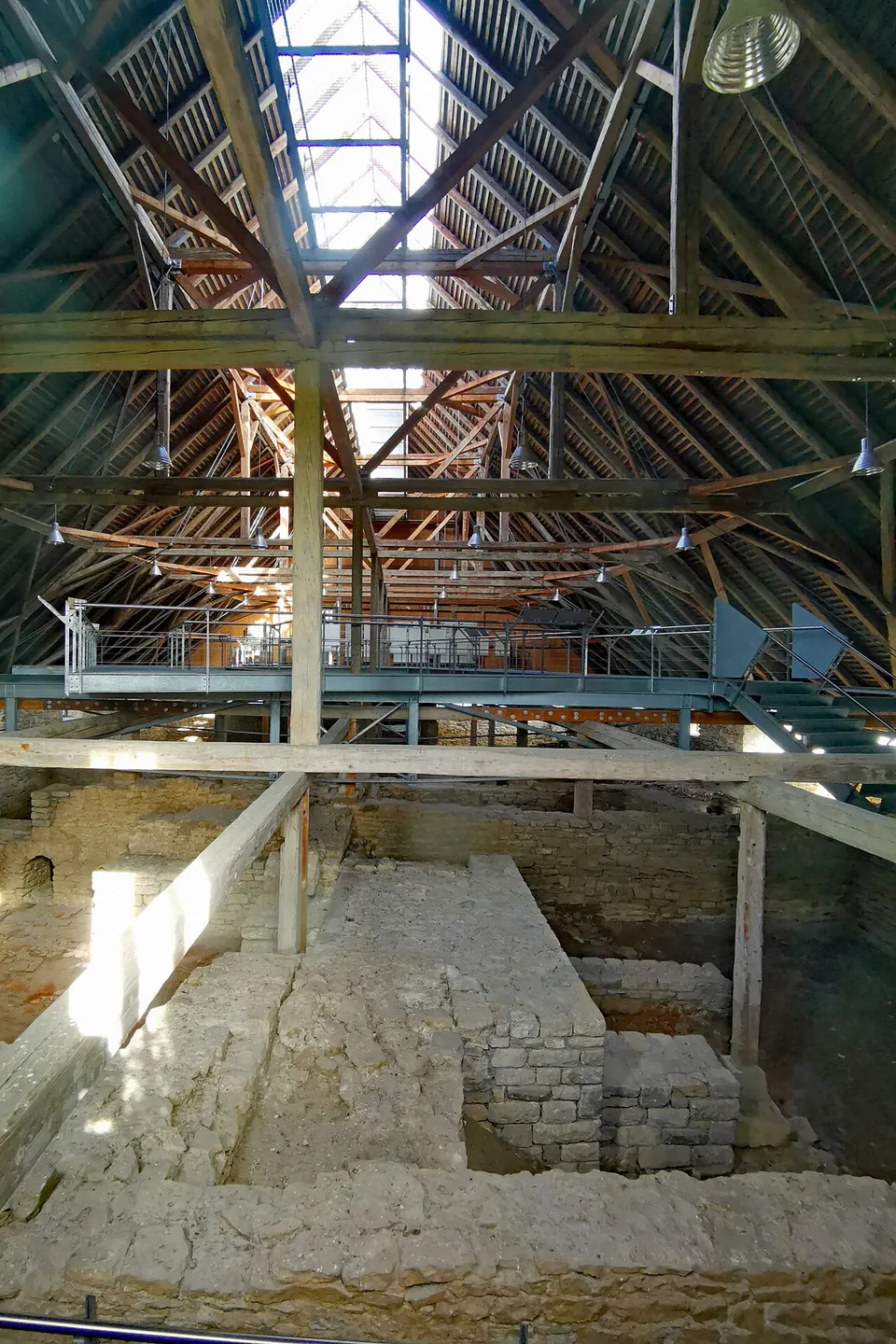
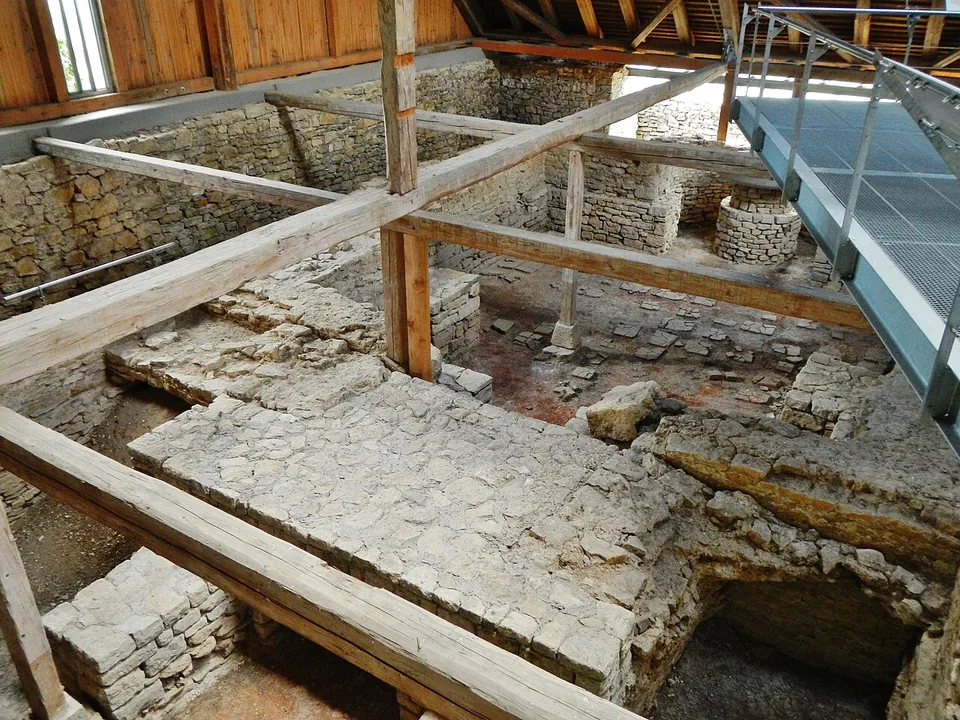
One building. Inside the shelter a walkway takes you over the excavated and conserved remains of the bath, with information panels and display cases of original finds (de.wikipedia). It was a compact bath of the block type covering about 570 m² without its annexes; nearly half of that was the changing and resting room with a cold plunge, and the hot and warm rooms were heated by a hypocaust, the Roman underfloor heating (de.wikipedia; the operator). The operator calls it one of the oldest Roman fort baths of its kind north of the Alps.
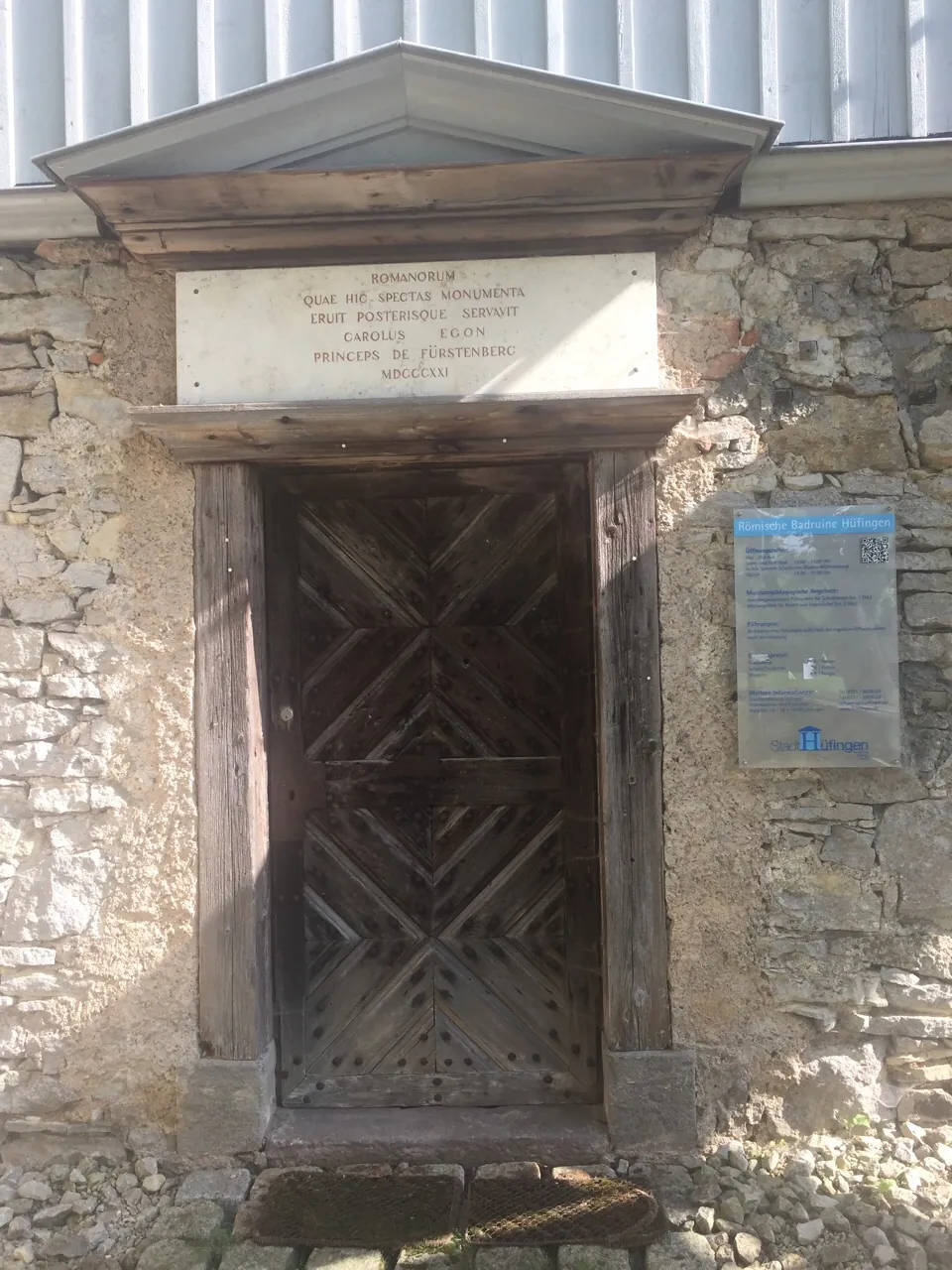
The shelter is part of the story. Karl Egon II, Prince of Fürstenberg, had the bath dug out in 1820, and in 1821 it was given one of the first protective museum buildings in Germany (de.wikipedia), built in the shape of the field barns typical of the Schwarzwald-Baar area (the town of Hüfingen). A Latin tablet over the door still records him.
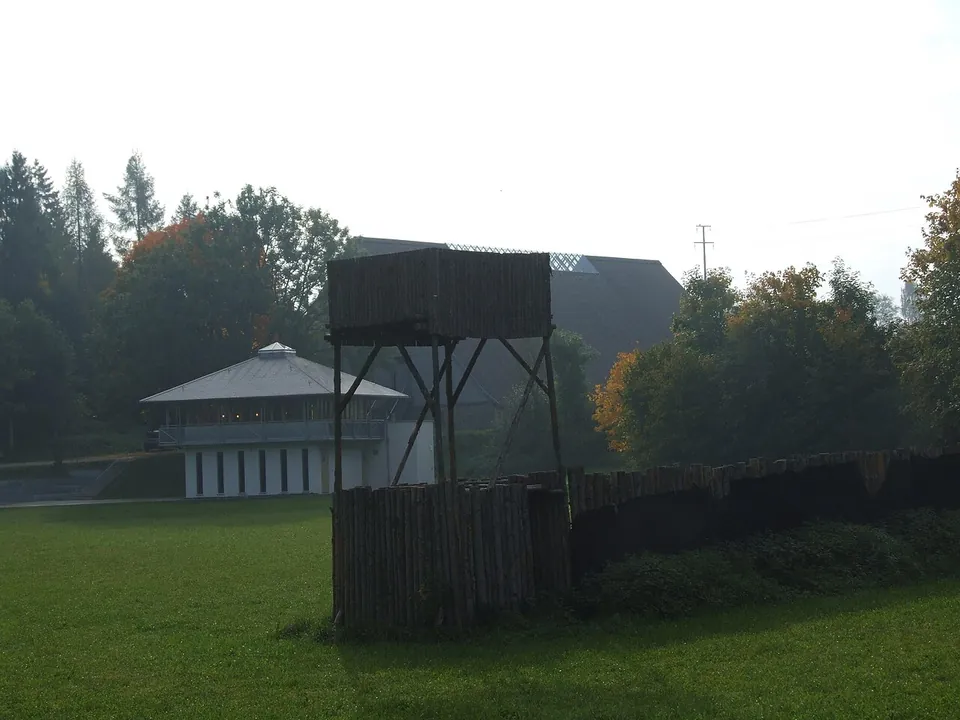
The fort itself is not visible. It lies under the fields of the Galgenberg hill just east of the bath, and the civilian settlement north of the fort and the river Breg is largely covered by an industrial estate; nothing of either can be seen above ground (de.wikipedia).
Is it worth the trip?
If you are in the area on a Sunday afternoon between May and October, yes: it is a cheap, short, well-presented stop, and the 1821 shelter makes it unusual. It is not a destination to plan a journey round. There is one building to see, and the opening hours are narrow - Sunday and holiday afternoons for half the year, and closed all winter.
Getting there
The bath is on the Schosenweg on the south-western edge of Hüfingen. From Hüfingen station it is about a 15-minute walk through the old town gate to Dögginger Straße, then following the “Römerbad” signs (the operator). Drivers have free public parking about 200 m away, including room for a coach or motorhome. Public toilets are mapped beside the building (OpenStreetMap).
It opens from 1 May to 31 October on Sundays and public holidays, 14.00 to 17.00, and is closed from November to April; the town of Hüfingen also lists daily opening at the same hours during the Baden-Württemberg summer school holidays. Admission is €3.00, or €1.50 for children from six, pupils and students up to 28; adults in groups of ten or more pay €2.50. A guided tour for up to 50 people costs €45 on top of admission (Staatliche Schlösser und Gärten Baden-Württemberg, read 2 November 2026 - check before travelling). The building is not step-free, and dogs are allowed on a lead.
Visiting details
- Opening hours
- Open 1 May to 31 October on Sundays and public holidays, 14.00–17.00; closed 1 November to 30 April. The town of Hüfingen's page adds daily opening during the Baden-Württemberg school summer holidays, which the state operator's page does not list.
- Tickets
- €3.00; reduced €1.50 (children from 6, pupils and students up to 28, and some other groups with proof); adults in groups of 10 or more €2.50. A guided tour for up to 50 people is €45 (€35 for children and pupils) on top of admission.
- Parking
- Free public parking about 200 m away, with room for a coach or motorhome (the operator); OSM maps a free car park about 140 m from the building (way/32056807).
Before you go
- Open only on Sunday and public-holiday afternoons from May to October.
- Not step-free - the operator says the building is not accessible to wheelchair users as it stands.
Hours and prices checked 2 November 2026 on the operator's own site. Confirm before travelling.
History
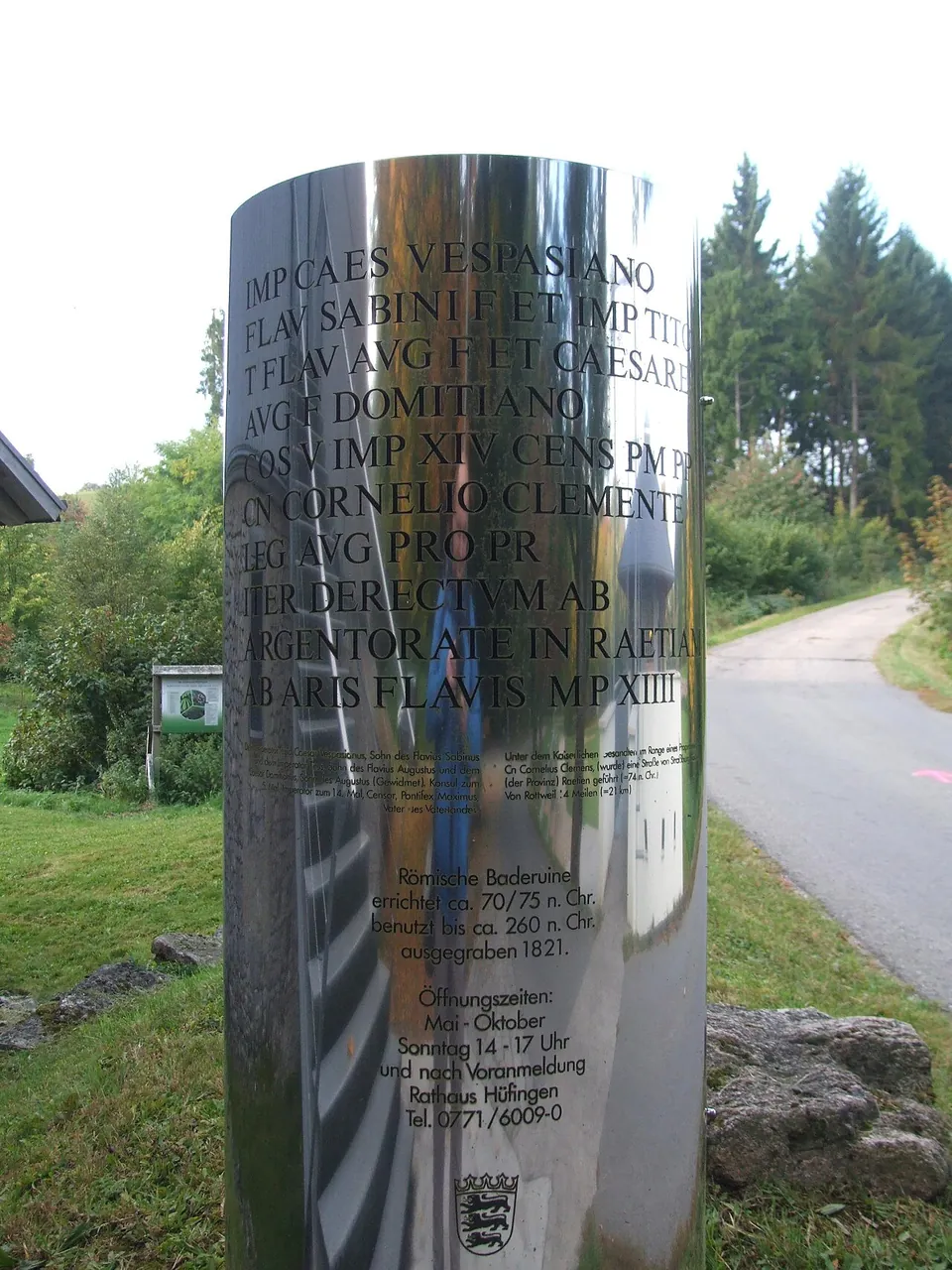
The fort probably began in the early Claudian period, between AD 41 and 45, and was enlarged at least twice, the last time around 70-75 under Vespasian. It sat on a spur above the Breg at a junction of Roman roads, where the road from the legionary fortress of Vindonissa met the road along the Danube, and by its last phase it covered 3.4 to 3.6 hectares behind a timber-and-earth rampart and at least 18 ditches. Its garrison, at least in the last phase, is thought to have been a cavalry unit (an ala) whose name is not known. When the frontier moved forward around 80-85, the fort probably lost its purpose (de.wikipedia).
The bath was probably built around AD 70, a little later than the fort, in a small valley below the Galgenberg (de.wikipedia). Settlers as well as soldiers bathed there, the civilians for a small fee (the operator), and the people of the settlement went on using it after the garrison left. The settlement lived on the road traffic into the 3rd century (de.wikipedia).
The place was identified in 1820 as the Brigobanne of the Tabula Peutingeriana. The Reich Limes Commission excavated here from 1913 to 1932, and Hüfingen is the only fort on the older Danube line of the Raetian Limes that the commission recorded (de.wikipedia).
More photographs



Nearby
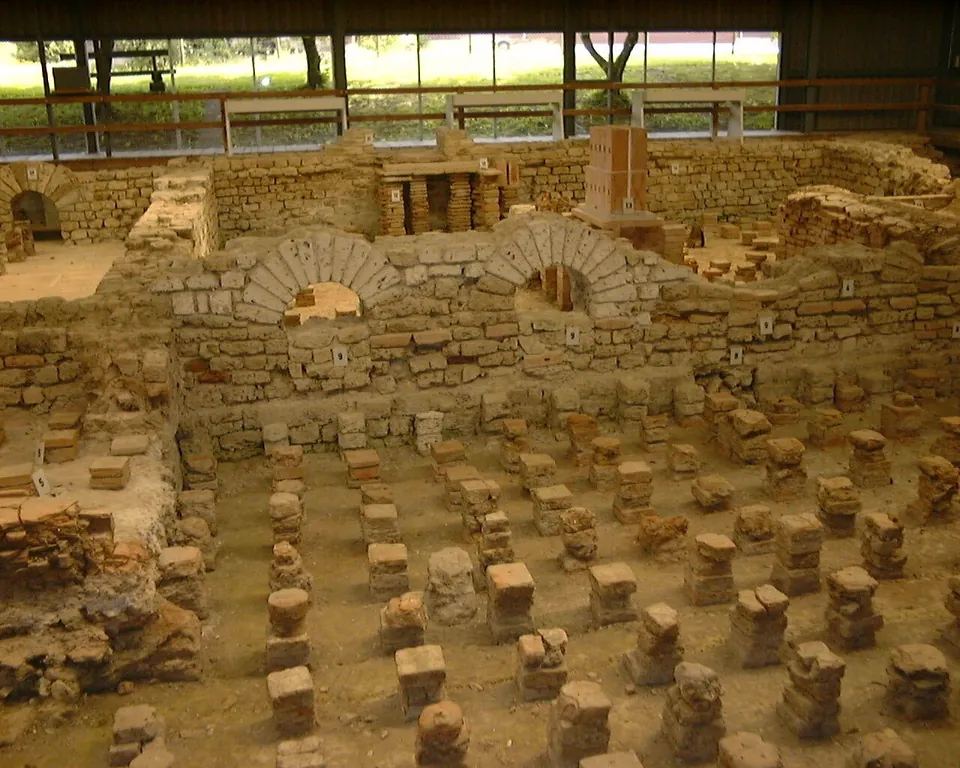
Photo: Nowic · CC BY-SA 3.0 · Commons
20 km · bath · Schleitheim District, Schaffhausen
Iuliomagus
The Thermenmuseum shows the remains of the Roman baths (de.wikipedia): walls of the bath rooms and rows of small brick pillars, under a roof (Wikimedia Commons photograph).
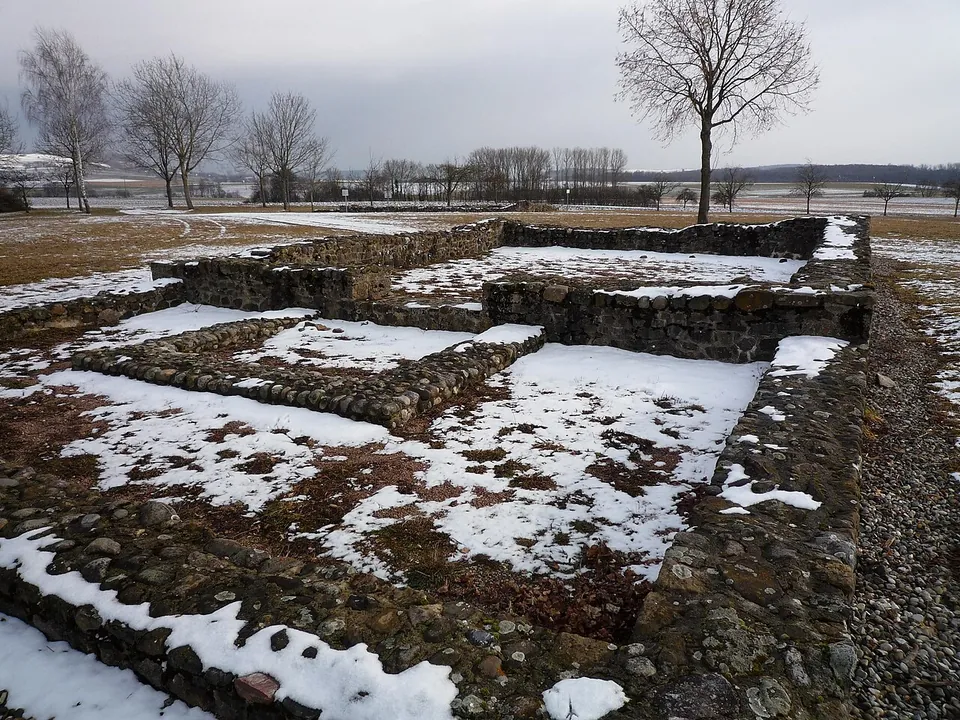
Photo: Kauk0r · CC BY-SA 3.0 · Commons
22 km · villa · Baden-Württemberg
Villa rustica of Büßlingen
The walls are what you see, and they are low: the town of Tengen describes the farm as almost completely restored in its foundations, and de.wikipedia says the ground plans were rebuilt with modern methods, completing whatever original masonry survived.
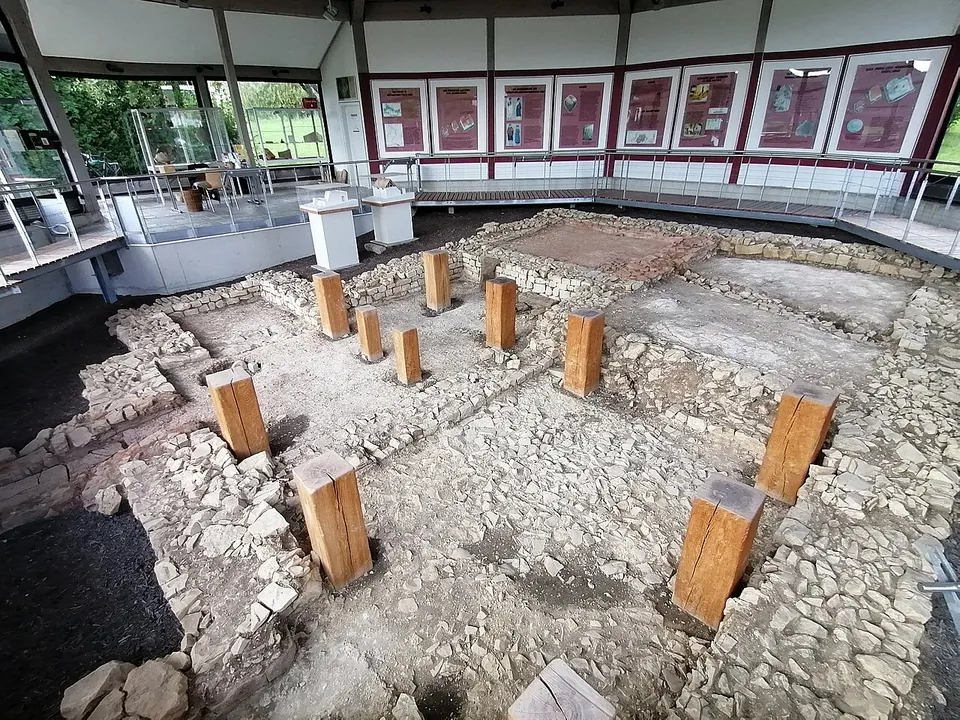
Photo: Schwartenmagen · CC BY-SA 4.0 · Commons
23 km · bath · Baden-Württemberg
Römisches Bad
What you see are the bath's foundation walls, conserved where they were excavated and roofed over with a shelter that has been open to the public since May 1998, so a visit works in any weather (de.wikipedia; the operator).


Straight-line distances.
Sources
Every fact on this page comes from the records below, each used under the licence noted.
| Source | Licence |
|---|---|
| Pleiades 187326 | CC BY |
| Wikidata Q1312863 | CC0 |
| Vici.org 9699 | CC BY-SA (text), CC0 (metadata) |
| OpenStreetMap way/32239390 | ODbL |
| Wikipedia (de) — Kastell Hüfingen | CC BY-SA 4.0 |
| Wikidata — Römerbad Hüfingen (Q116152637) | licence not recorded |
| vici.org — Römerbad Hüfingen (8254) | licence not recorded |
| Römische Badruine Hüfingen — opening hours (Staatliche Schlösser und Gärten Baden-Württemberg, the operator) | licence not recorded |
| Römische Badruine Hüfingen — prices (the operator) | licence not recorded |
| Römische Badruine Hüfingen — getting there (the operator) | licence not recorded |
| Römische Badruine Hüfingen — notes for visitors (the operator) | licence not recorded |
| Stadt Hüfingen — Römische Badruine | licence not recorded |