

What is there today
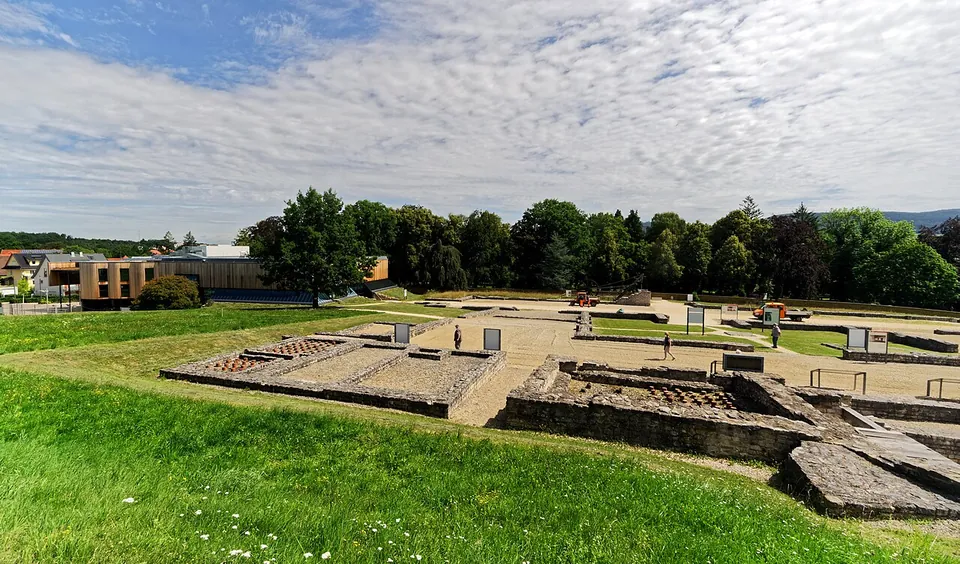
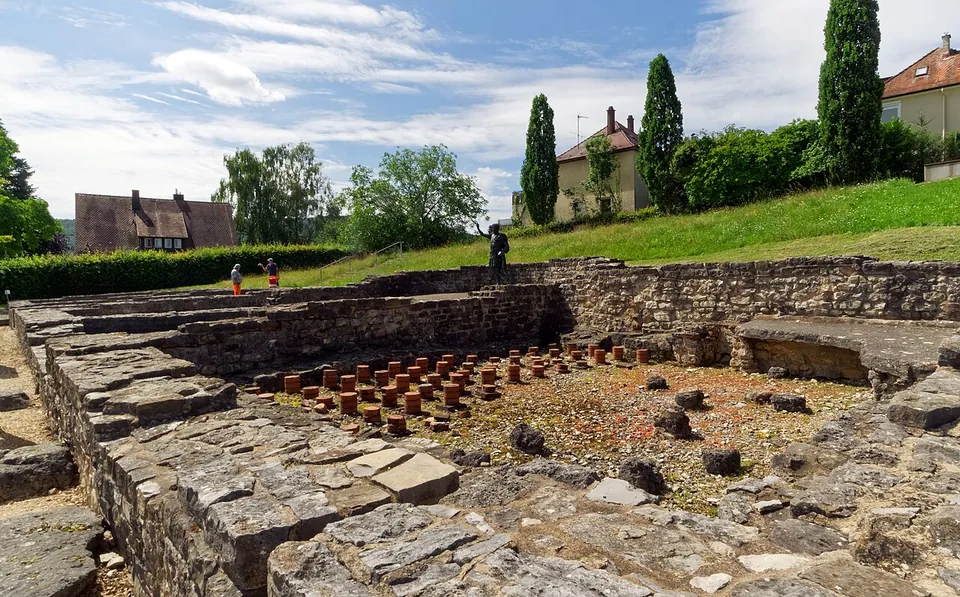
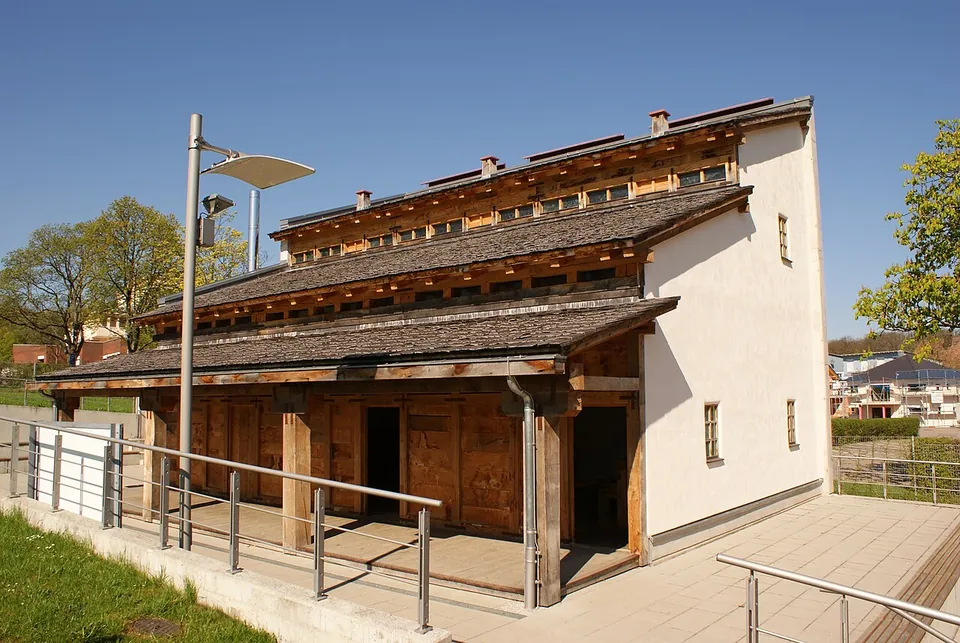
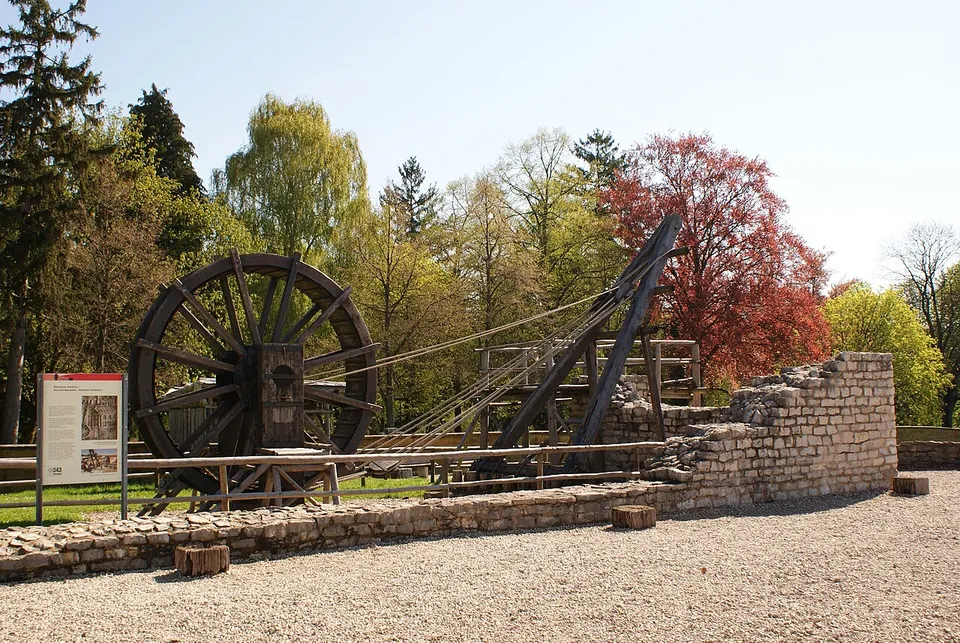
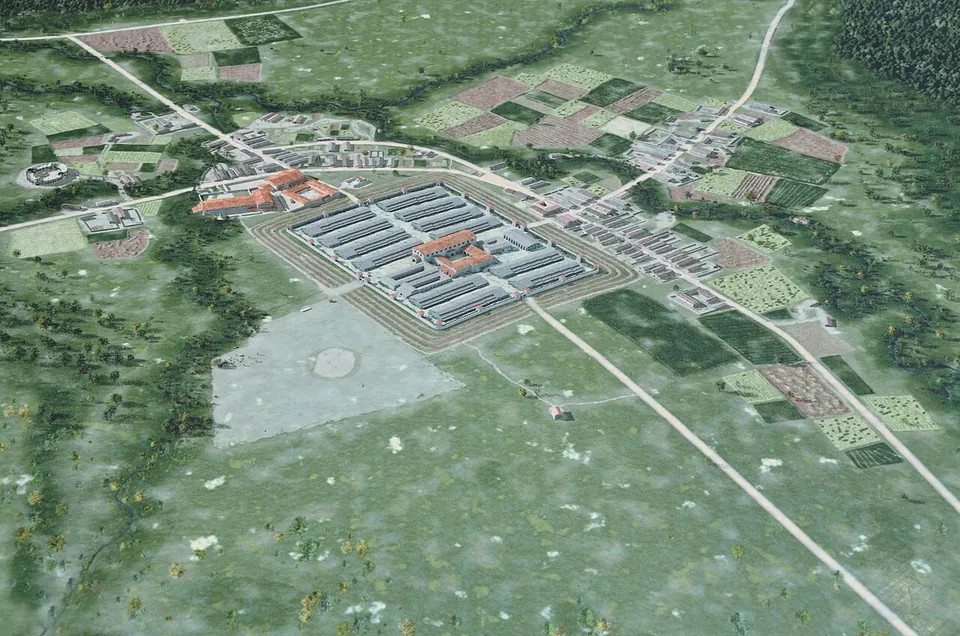
Most of the fort is out of reach. The town cemetery covers almost all of its front part, and building work in the 1930s did irreparable damage to the rear without any excavation first (de.wikipedia). What was saved is the middle strip, bought by the state of Baden-Württemberg and the town in 1977 and laid out as an archaeological park in 2005. A signposted circuit leads to the excavated foundations of the headquarters building (principia), partly rebuilt on the spot, and to a section of a soldiers’ barrack built as a model in 2005; a wooden Roman crane has been set up in front of the great hall that fronted the headquarters. Since building over the site left no barrack plan to copy in Aalen itself, the barrack follows the excavations at Heidenheim, where the same regiment had been stationed before. Along the path above the shrine of the standards stand copies of inscribed and carved stones from along the frontier, among them two of the fort’s own building inscriptions (de.wikipedia).
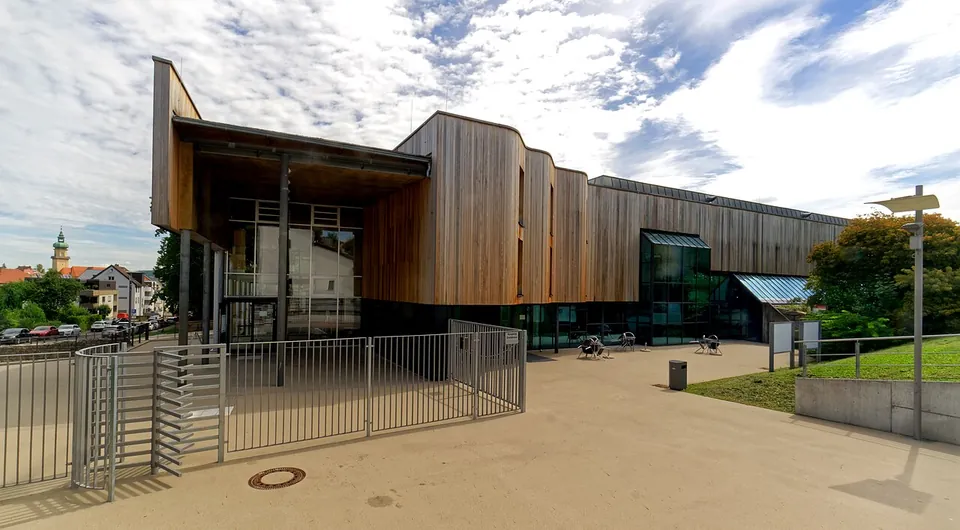
The museum on the site shows more than 1,200 original finds: its ground floor is given to the fort and its village, its upper floor to the rest of the frontier in Baden-Württemberg (de.wikipedia). Outside the park, the position of the fort’s main gate is marked with paving stones set into the ground, and the foundations of St John’s Church just in front of it, stripped of their plaster, show Roman blocks reused from demolished buildings (de.wikipedia).
Is it worth the trip?
Yes, if you take the museum and the park together: the finds indoors and the headquarters plan outside make one visit, on one ticket, and the operator suggests two hours for the museum and another 60 to 90 minutes for the park. Come for a ground plan rather than for ruins. What you walk among are foundations and low walls; the park covers only the middle of the fort, and nothing of the civilian village outside it has been preserved (de.wikipedia). The fort is part of the Upper German-Raetian Limes, a UNESCO World Heritage Site since 2005, and the museum is one of its information centres.
Getting there
The museum and park are at St.-Johann-Straße 5, about ten minutes’ walk from the centre of Aalen and sixteen from the main station. Buses 32, 33, 34, 35, 42 and 44 run from the bus station in front of the main station to the Stadthalle/Limesmuseum stop. Drivers can park at Berliner Platz across the road or at the signposted Stadthalle car parks (the operator).
It is open Tuesday to Sunday and on public holidays from 10.00 to 17.00, and closed on Mondays and on 24, 25 and 31 December and 1 January; the park can be entered only while the museum is open. A ticket is €6, or €4 reduced (ages 6 to 16, students, seniors and others), with a family ticket at €13.50 and free entry under 6. It covers the museum, the park and the current special exhibition, and is valid all day. An audio guide plays free on your own phone (limesmuseum.de, read 30 October 2026 — check before travelling). The park is step-free but gravelled and sloping, so it is not suitable for wheelchairs; only the barrack can be entered in one.
Visiting details
- Opening hours
- Tuesday to Sunday and public holidays 10.00–17.00; closed on Mondays and on 24, 25 and 31 December and 1 January. The archaeological park is open only during the museum's hours and locked at other times.
- Tickets
- €6; €4 reduced (ages 6–16, pupils, students, jobseekers, holders of a disability card, seniors) and for groups of 15 or more; family ticket €13.50; free under 6. The ticket covers the museum, the archaeological park and the current special exhibition, and is valid all day. A €8 combined ticket adds the Alamannenmuseum in Ellwangen.
- Parking
- Car parks at Berliner Platz, across the road from the museum, and the signposted car parks of the Stadthalle (the operator); the nearest mapped car park, 110 m from the point, is paid (OpenStreetMap way/446681292).
Before you go
- The park is step-free but not wheelchair-accessible, because of coarse gravel and the slope; only the rebuilt barrack can be entered in a wheelchair. The turnstile for leaving the park after closing time is too narrow for wheelchairs, walkers, prams and bicycles.
Hours and prices checked 30 October 2026 on the operator's own site. Confirm before travelling.
History
The fort was built in stone around 150–155, under Antoninus Pius, when the frontier was moved forward. At 277 by 214 metres, about 6 hectares, it was the most important military base on the southern part of the Upper German-Raetian Limes (de.wikipedia). The only garrison on record is the Ala II Flavia milliaria, a cavalry regiment of about 1,000 men, which moved here from the fort at Heidenheim, 20 km to the south, and built the fort itself. Regiments of that size were rare — the empire had no more than seven or nine — and their commanders ranked above those of other auxiliary units; the commander at Aalen seems to have been responsible for the whole western section of the Raetian frontier (de.wikipedia).
Building inscriptions record the headquarters being built in 163/164, under Marcus Aurelius and Lucius Verus, and restored in 208 under Septimius Severus. The latest coins found on the fort site were struck in 253, and together with traces of burning on the buildings they point to the end of the garrison and its village. The frontier as a whole fell in 259/260 (de.wikipedia).
The ruins were never quite forgotten: in 1531 the humanist Beatus Rhenanus wrote of extensive Roman foundations in Aalen. The fort’s outline was found in 1890 and excavated by the Imperial Limes Commission in 1894 and 1895, before anything had been built over it. The museum was built on the fort’s interior in 1964, and the headquarters building was excavated from the late 1970s to 1986 under Dieter Planck (de.wikipedia). The town’s name may come from the Latin ala, the word for a cavalry regiment (de.wikipedia).
More photographs



Nearby
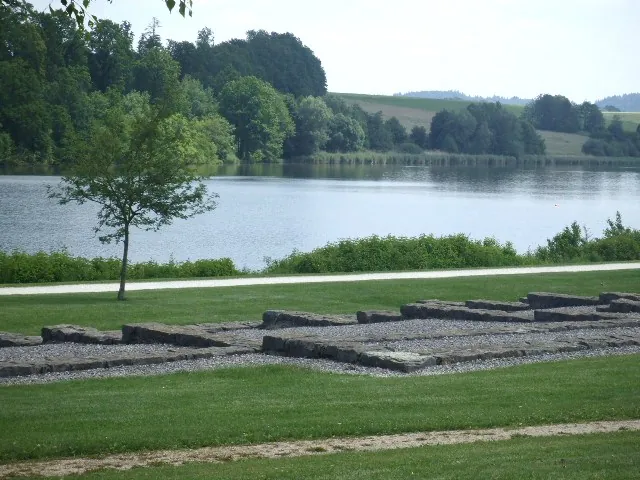
Photo: Veit Feger · Public domain · Commons
9 km · fort · Baden-Württemberg
Castra of Buch
Not much stands, but the site is laid out so that you can read it.
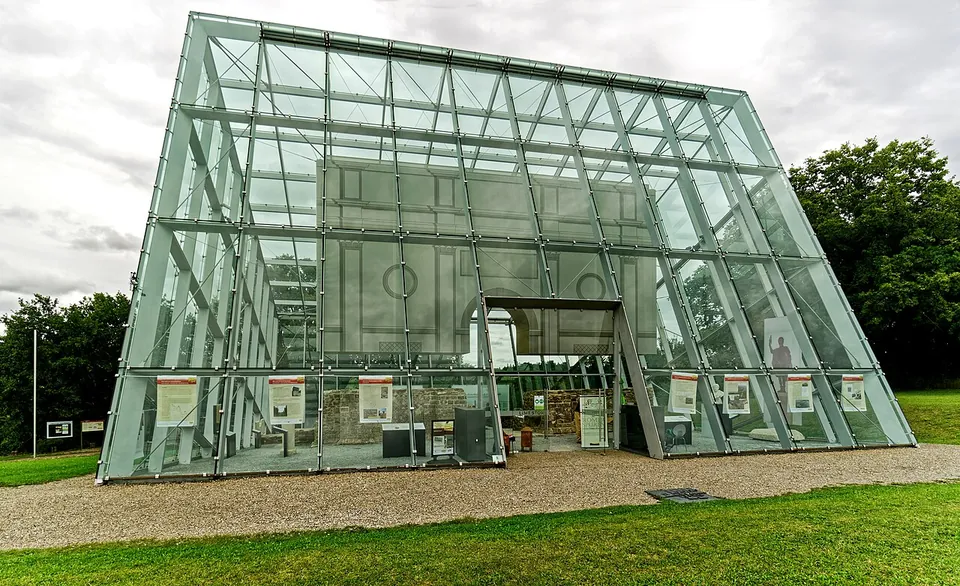
Photo: Holger Uwe Schmitt · CC BY-SA 4.0 · Commons
11 km · gate · Baden-Württemberg
Limes gate Dalkingen
The stone walls of the gatehouse, excavated in 1973–74 and restored for display, now stand inside a glass-and-steel shelter built in 2010.
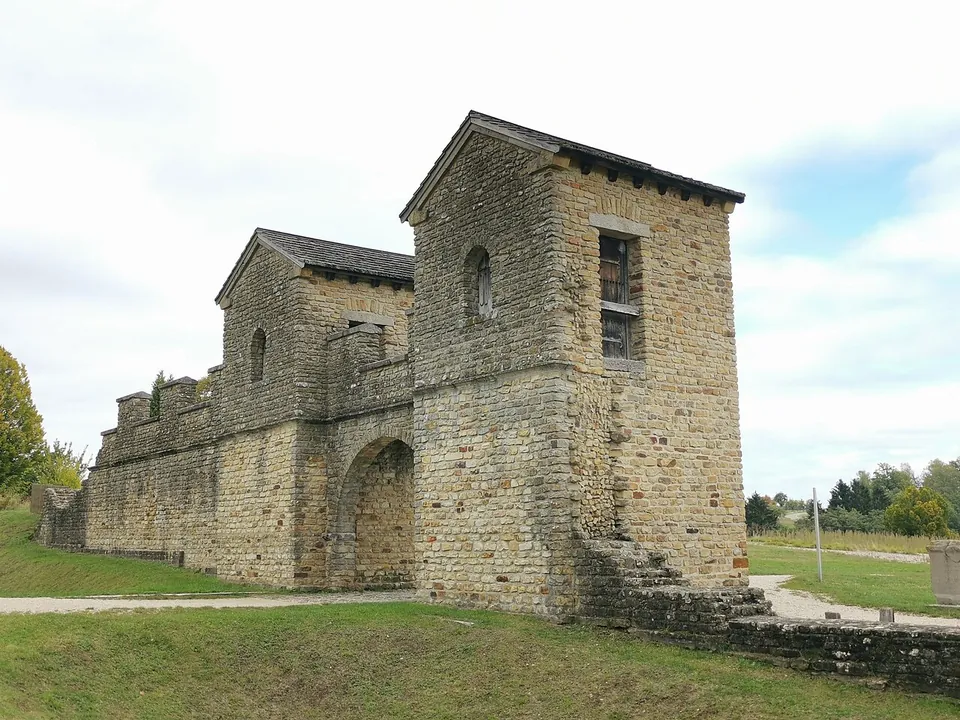
Photo: Z thomas · CC BY-SA 4.0 · Commons
33 km · fort · Baden-Württemberg
Welzheim East Roman Fort
The gate is the thing to see: a twin-towered entrance with a passage 3.6 m wide, rebuilt together with a section of the wall (de.wikipedia).


Straight-line distances.
Sources
Every fact on this page comes from the records below, each used under the licence noted.
| Source | Licence |
|---|---|
| Pleiades 118537 | CC BY |
| Wikidata Q1660247 | CC0 |
| Vici.org 4427 | CC BY-SA (text), CC0 (metadata) |
| OpenStreetMap way/26497368 | ODbL |
| Wikipedia (de) — Kastell Aalen | CC BY-SA 4.0 |
| Wikipedia (de) — Limesmuseum Aalen | CC BY-SA 4.0 |
| Limesmuseum Aalen — visiting, hours and admission (the site's operator) | licence not recorded |